-
-
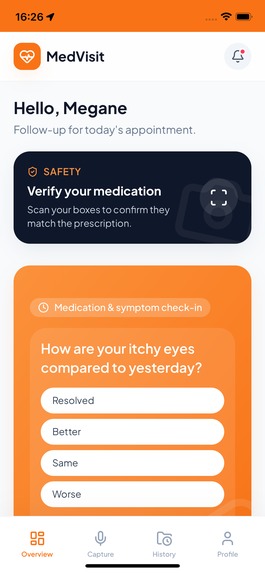
MedVisit - Overview Page
-
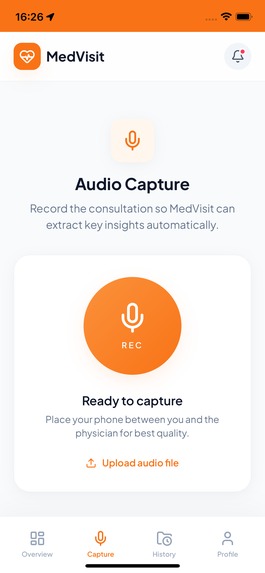
MedVisit - Capture Page
-
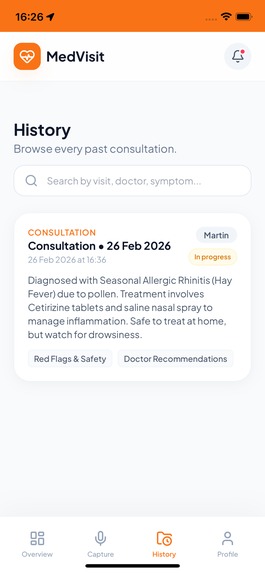
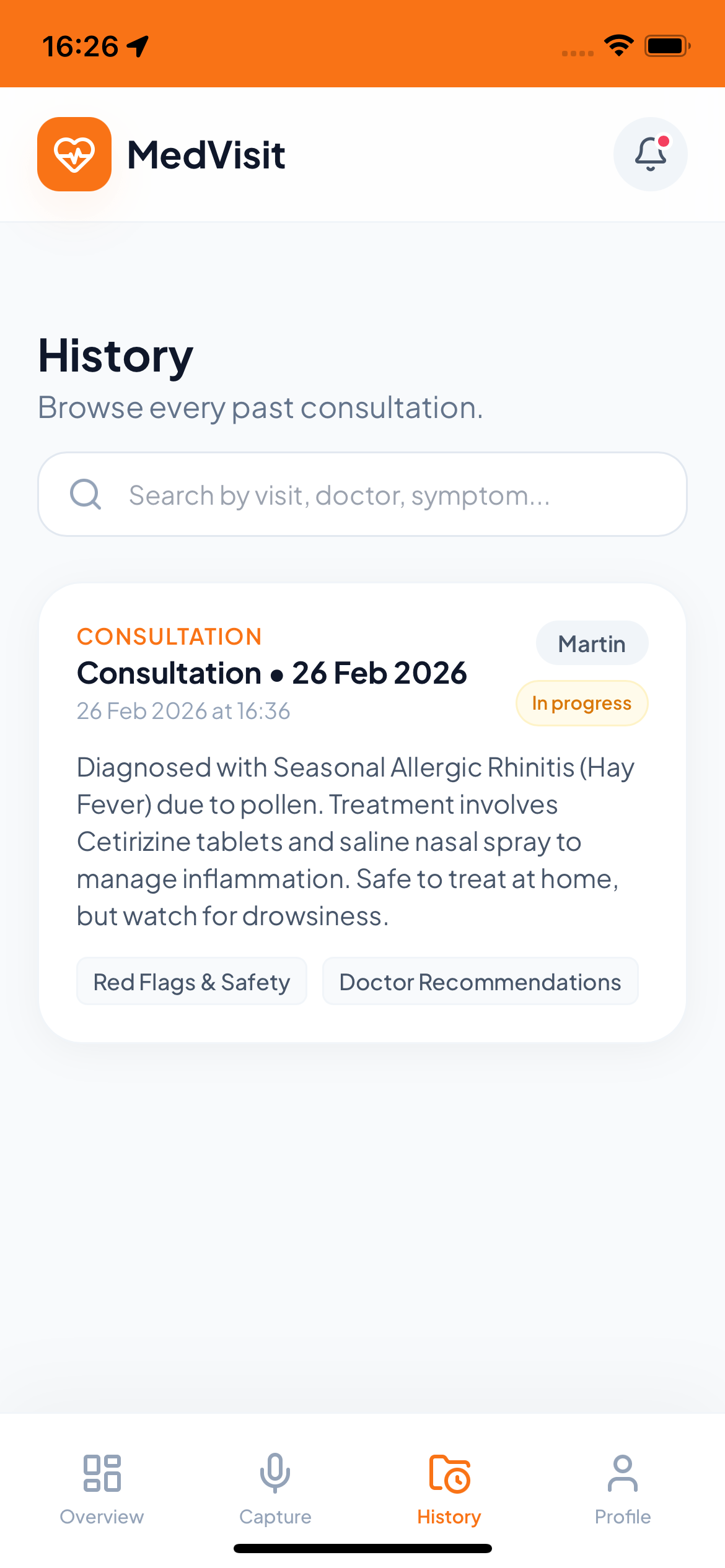
MedVisit - History Page
-
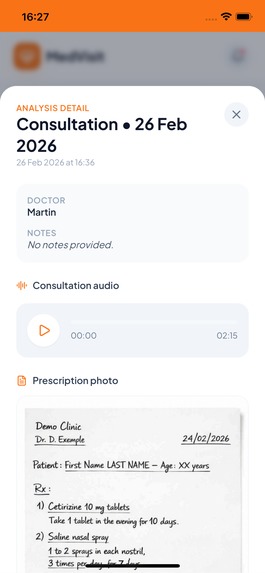
MedVisit - Smart Analysis
-
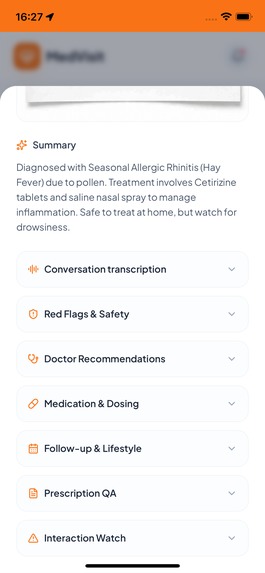
MedVisit - Smart Analysis Result
-
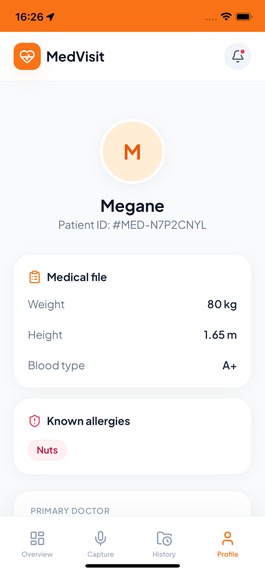
MedVisit - Settings Page
-
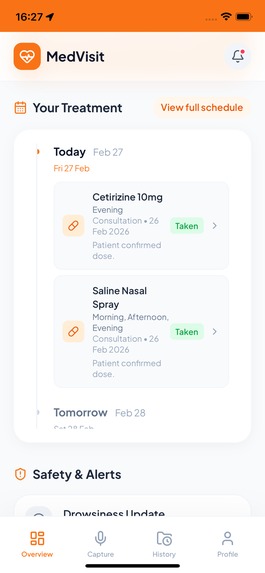
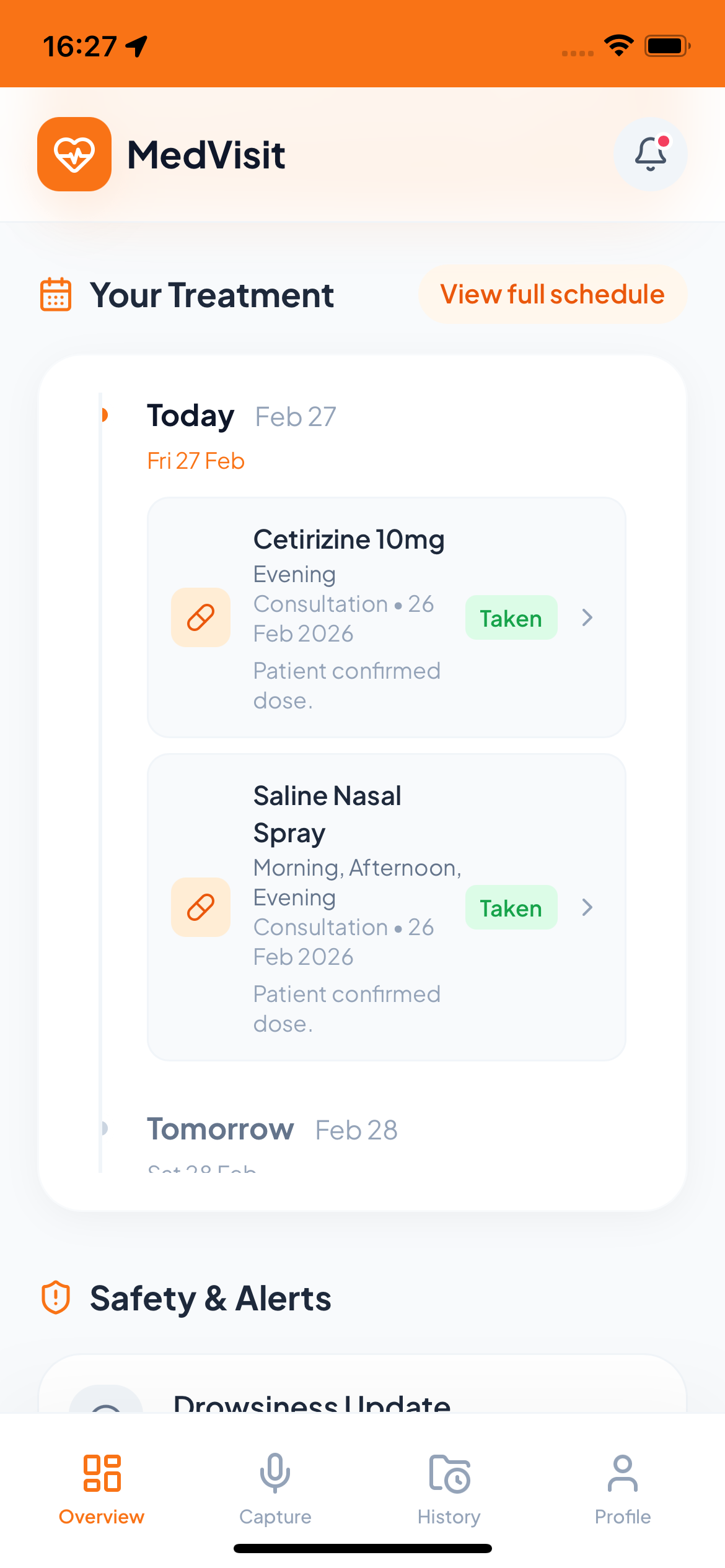
MedVisit - Treatment Timeline
-
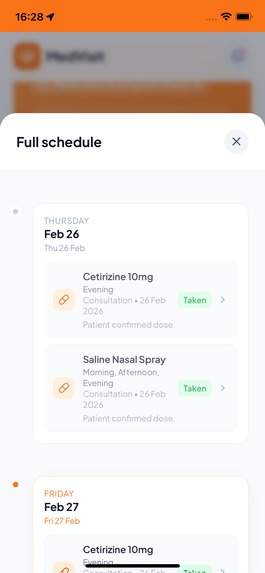
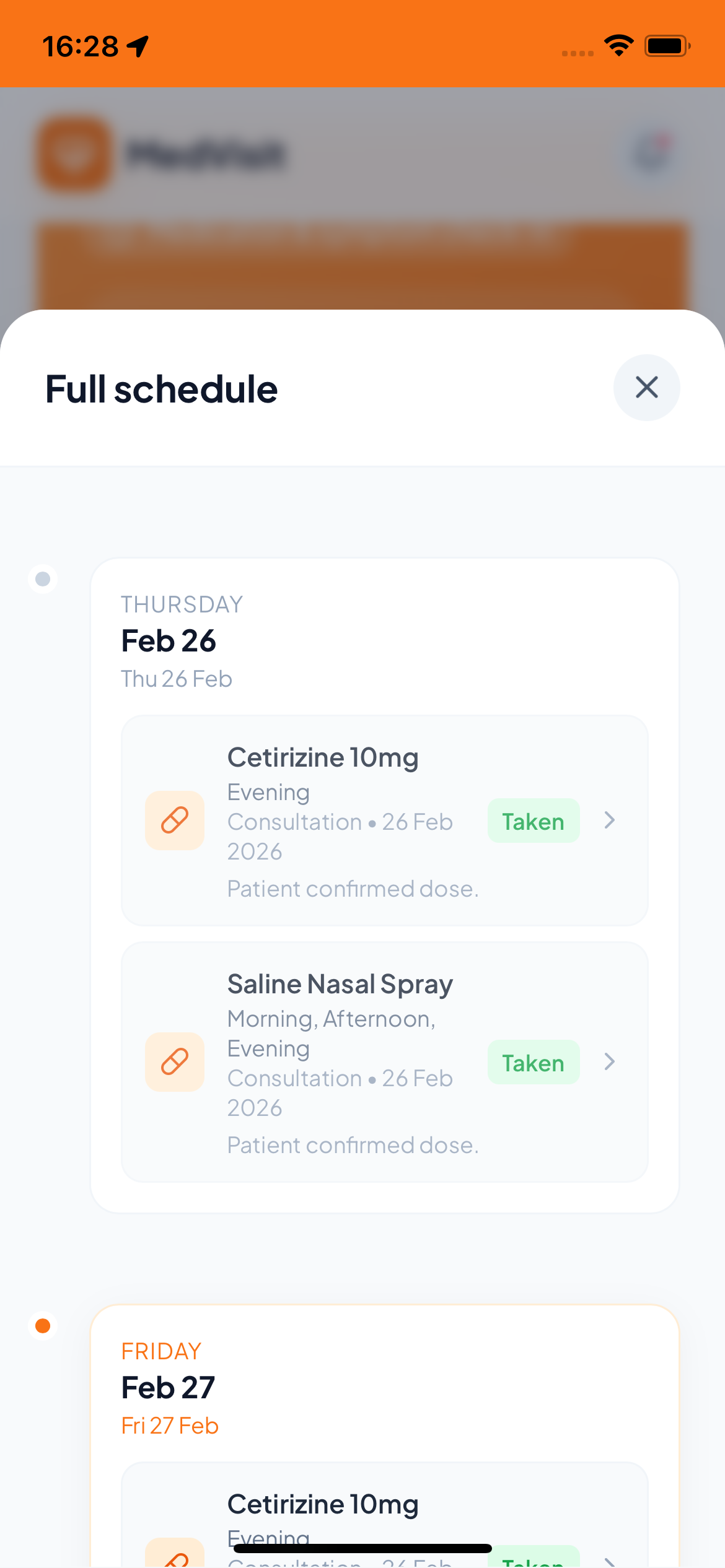
MedVisit - Treatment Schedule
-
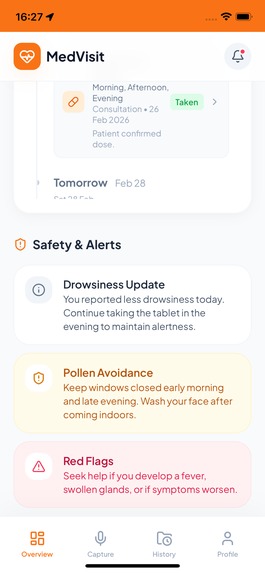
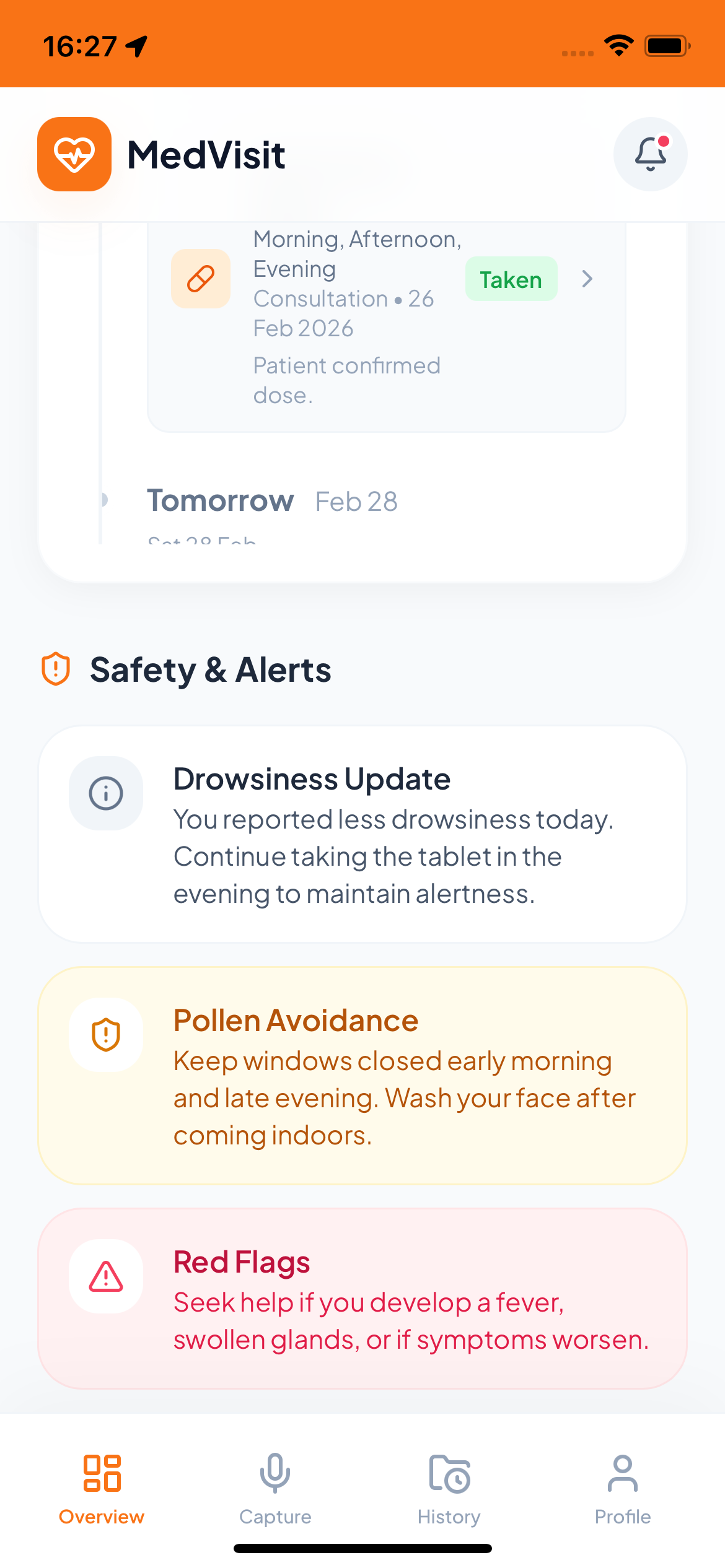
MedVisit - Safety & Alerts
-
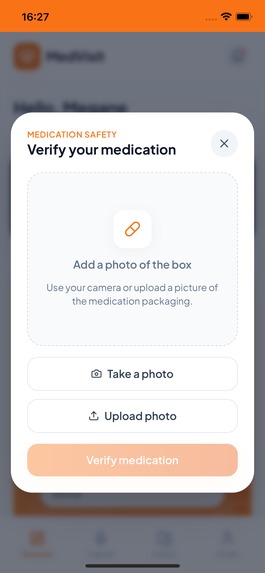
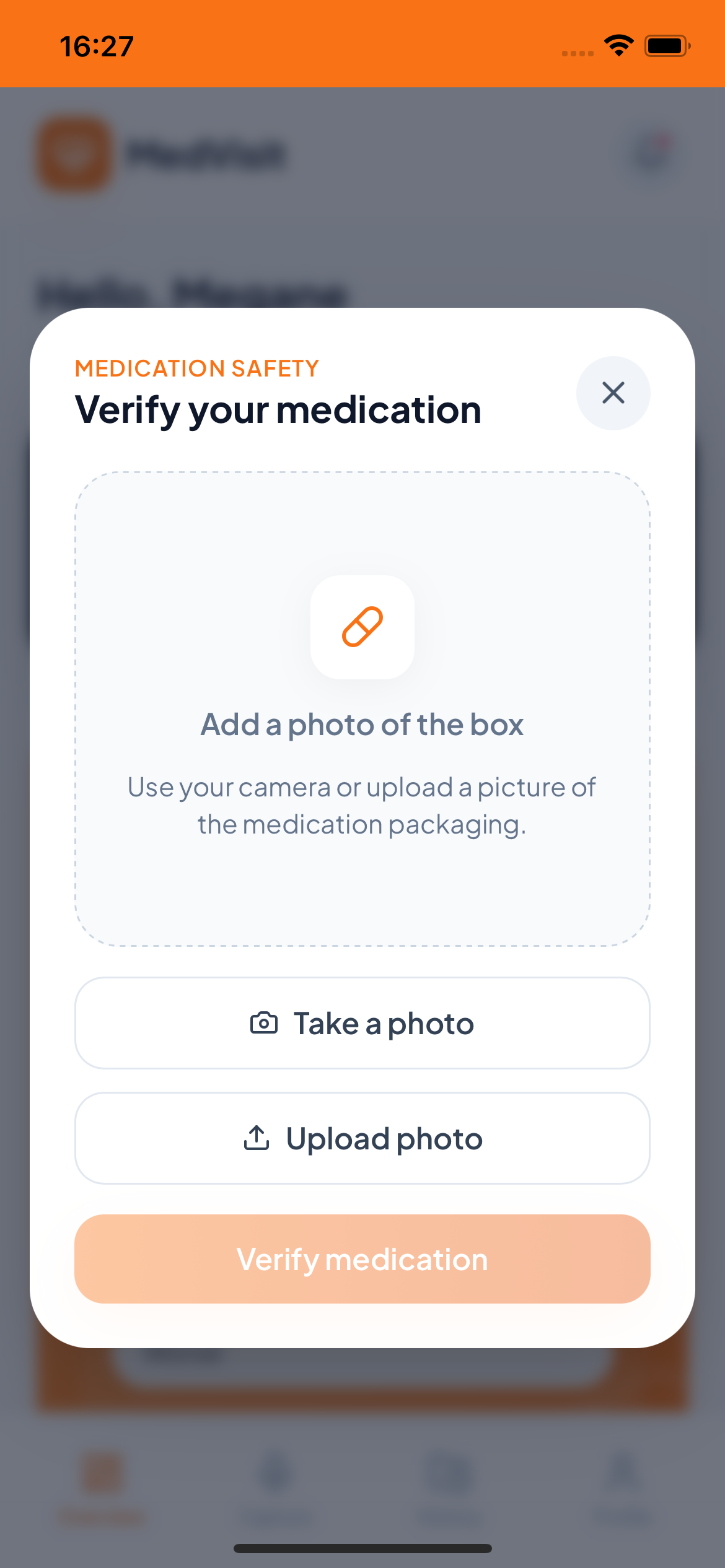
MedVisit - Medication Safety Checker
🧠 Project Story – MedVisit
Track and category: Healthcare and MedTech
Inspiration
Medical consultations are filled with critical information — diagnoses, prescriptions, warnings, and follow-up instructions. Yet, patients often leave the room trying to remember everything they just heard. Research shows that a significant portion of medical information is forgotten within hours, especially among elderly patients or those under stress.
We wanted to address a simple but overlooked problem: healthcare still relies heavily on human memory. MedVisit was inspired by the idea that medical clarity should not depend on recall — it should be structured, accessible, and continuously supported by intelligent systems.
What it does
MedVisit is an AI-powered web application and installable PWA that helps patients capture, understand, and safely follow their medical consultations.
It allows patients to:
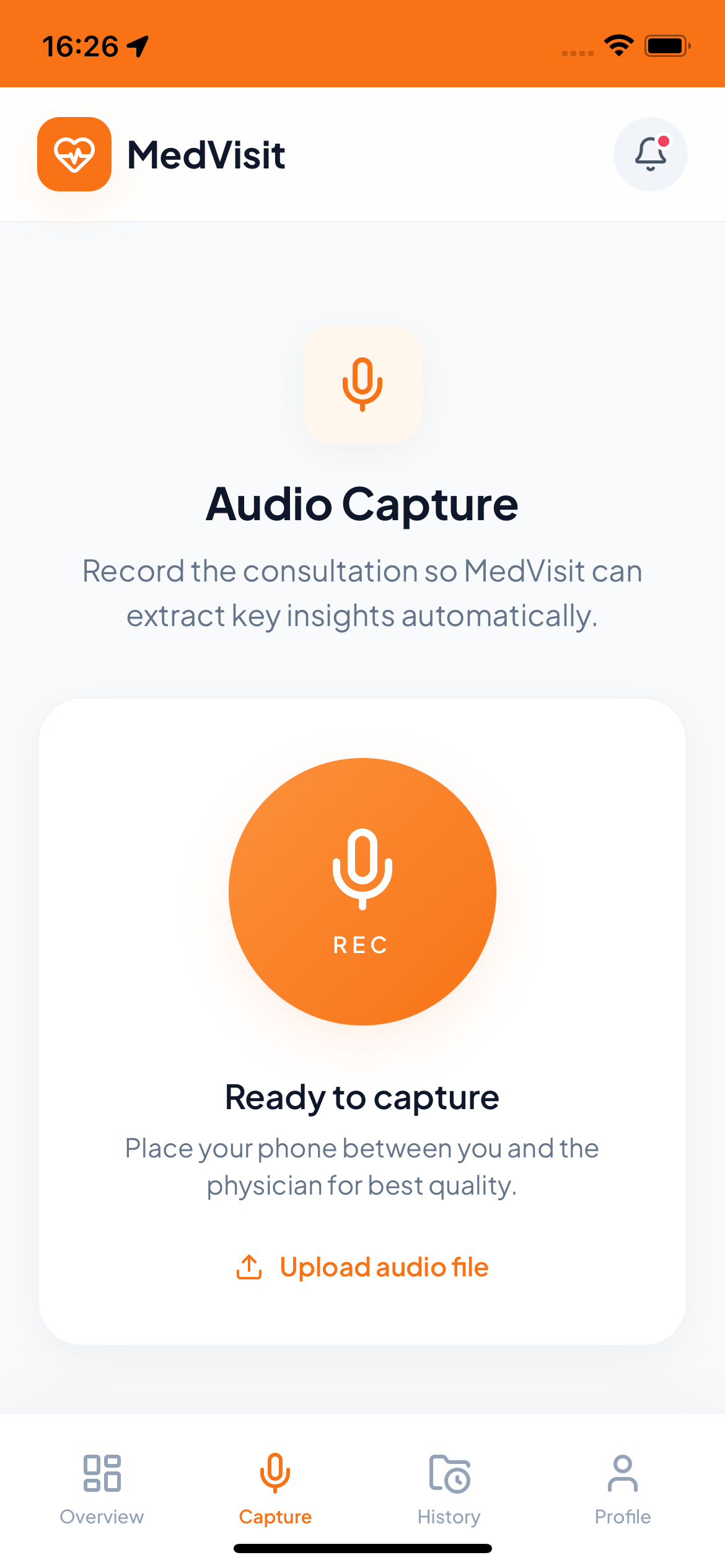
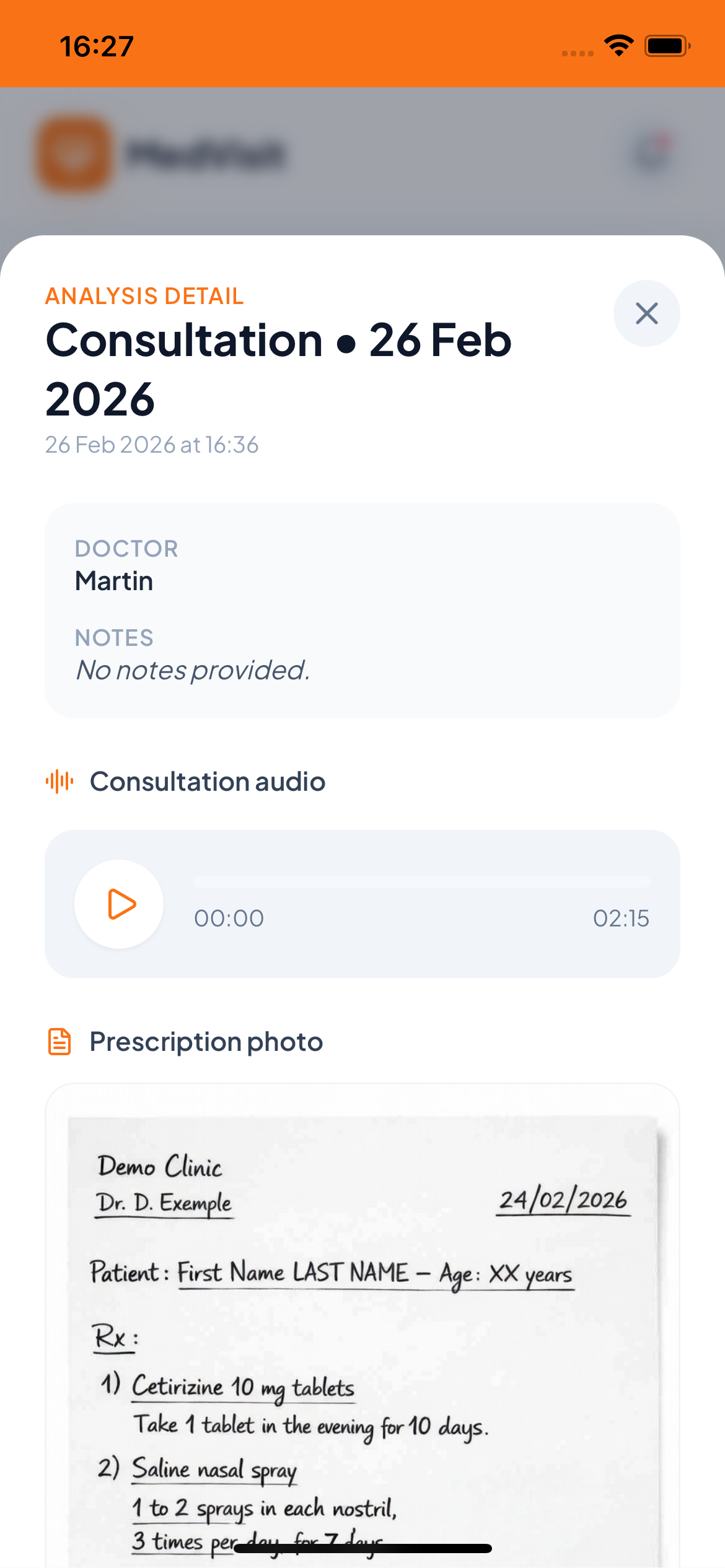
- Record or upload a consultation.
- Attach a prescription photo.
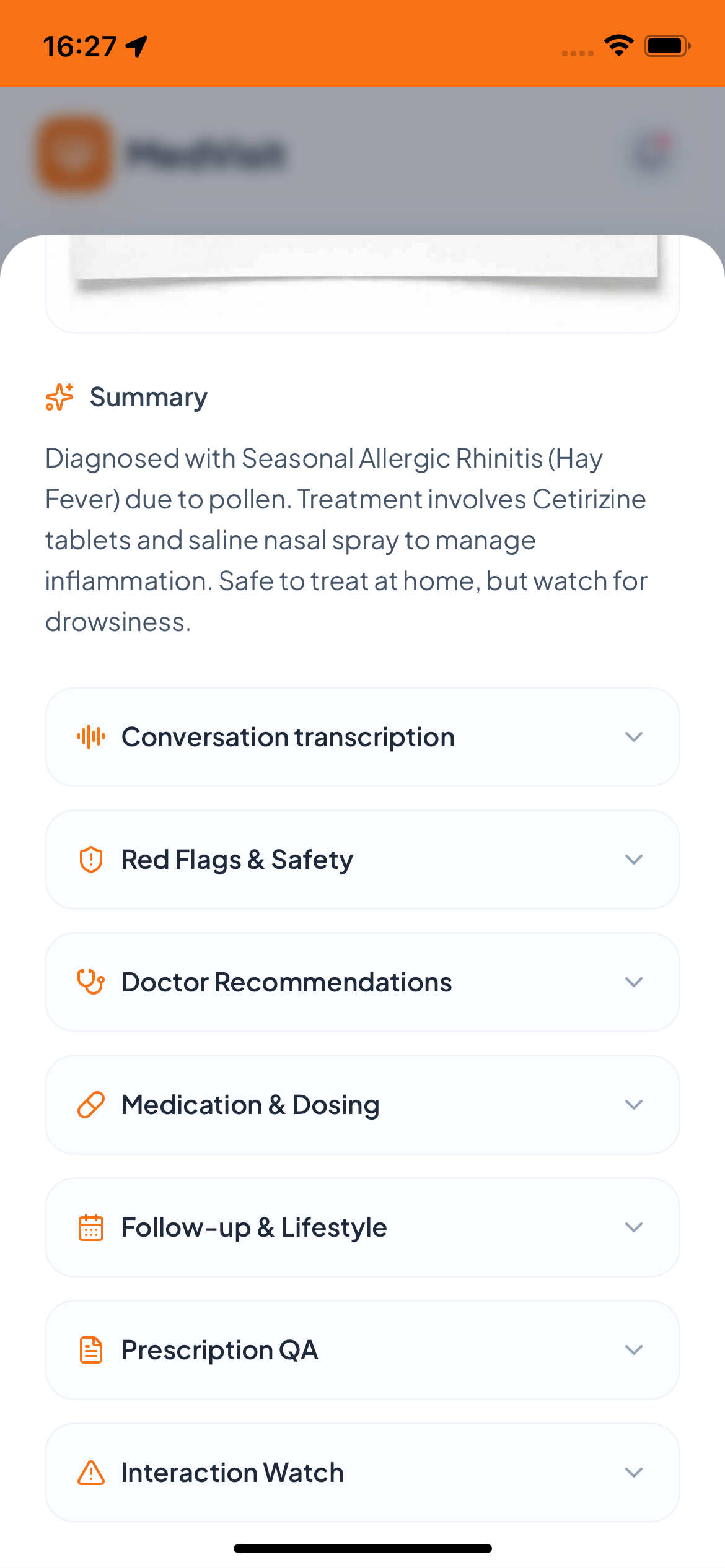
- Receive a structured AI-generated summary and full transcription.
- Track medications through a day-by-day treatment timeline.
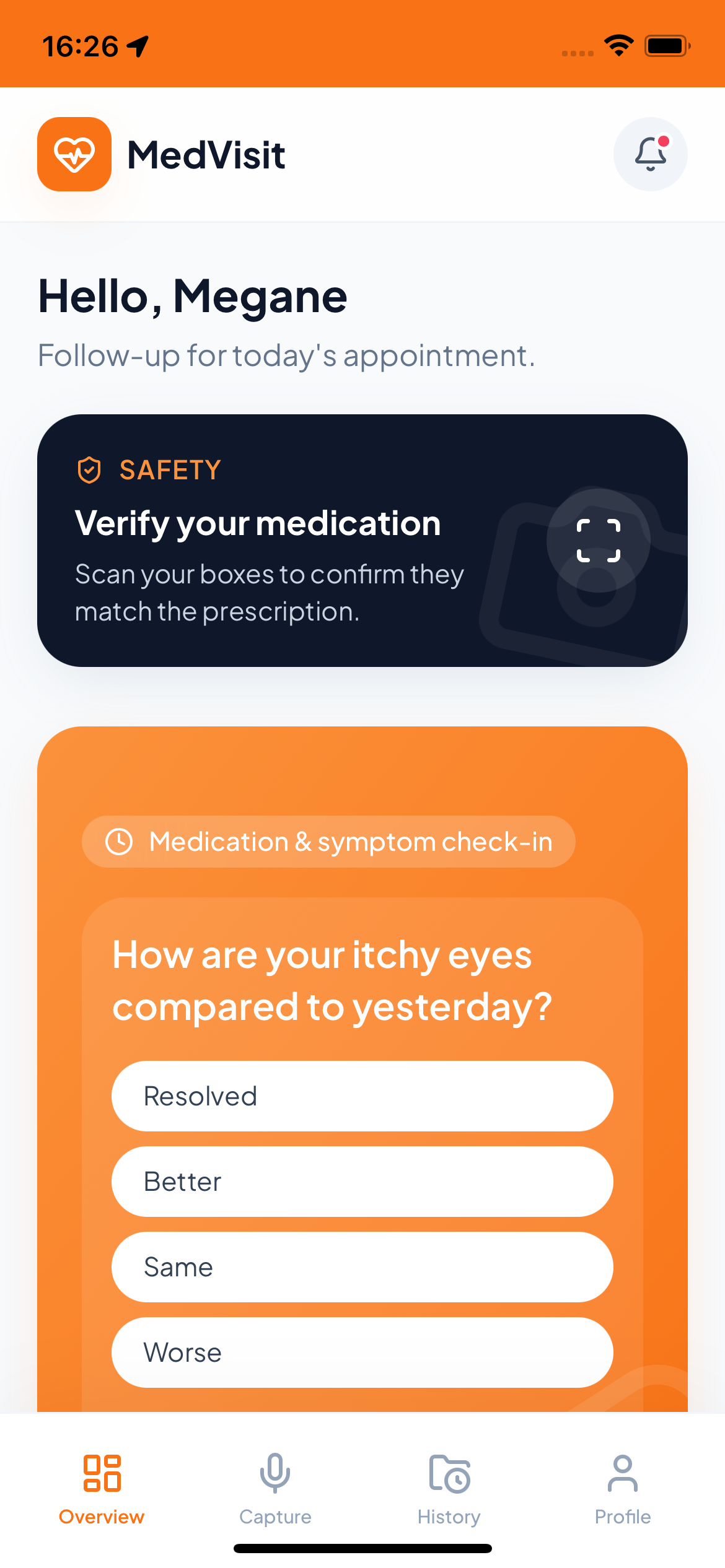
- Perform daily health and medication check-ins.
- Receive dynamic Safety & Alerts based on symptoms and prescription history.
- Verify medication packaging through AI-powered image analysis.
- Review a complete consultation history at any time.
By combining consultation audio, prescription data, and longitudinal health tracking, MedVisit transforms fragmented medical information into structured, actionable clarity.
How we built it
System Architecture
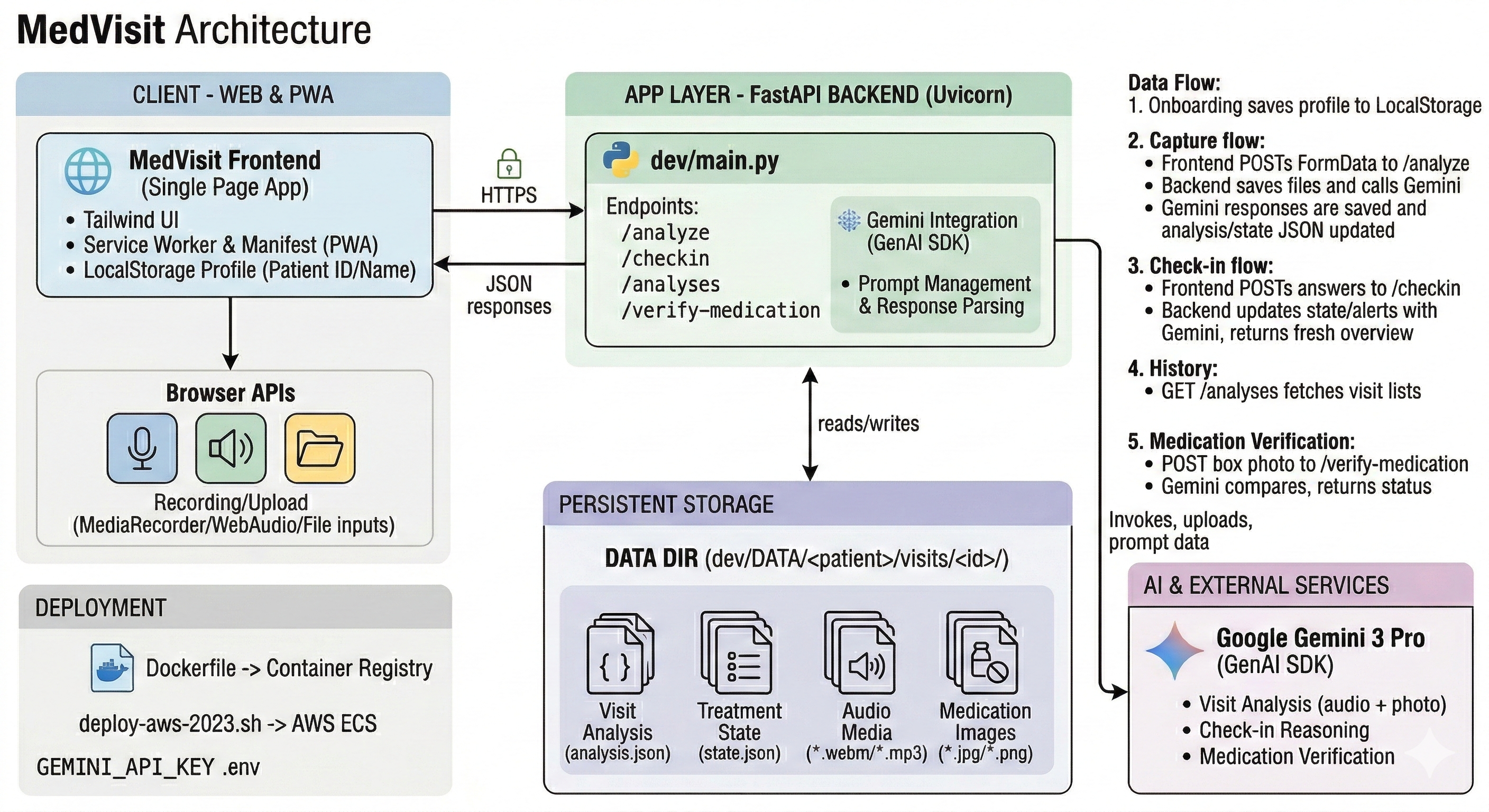
MedVisit is built around a multimodal AI architecture combining audio transcription, image analysis, and longitudinal reasoning...
MedVisit was built using:
- FastAPI for the backend architecture.
- Google Gemini (gemini-3-pro-preview) for multimodal AI reasoning.
- TailwindCSS + vanilla JavaScript for a responsive, mobile-first frontend.
- A file-based patient storage system ensuring structured visit history.
- MediaRecorder + Web Audio API for real-time audio capture.
- Service workers and manifest configuration to deliver an installable PWA experience.
Gemini powers the core workflows:
- Consultation transcription and structured analysis.
- Prescription image understanding.
- Cross-visit reasoning.
- Dynamic check-in analysis and safety alert generation.
- Medication box verification via image comparison.
The system continuously merges past consultations with real-time patient input to provide adaptive follow-up.
Challenges we ran into
One of the biggest challenges was building reliable longitudinal reasoning. Medical visits are not isolated events — prescriptions overlap, symptoms evolve, and treatments change. Designing prompts and system logic that allow Gemini to reason across multiple consultations required careful structuring of data and state management.
Another challenge was maintaining clarity in AI outputs. Medical information must be structured, precise, and patient-friendly. Balancing technical accuracy with accessible language required multiple iterations of prompt engineering.
Finally, building a smooth demo experience — combining audio recording, file uploads, AI processing, and dynamic UI updates — required careful orchestration between frontend and backend components.
Accomplishments that we're proud of
We are proud of building a fully functional end-to-end system that:
- Captures consultations in real time.
- Generates structured medical insights within seconds.
- Dynamically updates treatment timelines.
- Cross-references consultations for improved safety.
- Provides medication verification through AI vision.
- Runs as an installable PWA for accessibility and portability.
Most importantly, MedVisit doesn’t just summarize visits — it creates an intelligent patient companion that evolves with every interaction.
What we learned
We learned that AI in healthcare is most powerful when it augments human memory rather than replaces medical expertise.
We also learned how critical structured data representation is when working with multimodal AI systems. Clear state management and well-designed prompts are essential to ensure safe, consistent outputs.
Finally, we learned that user experience matters as much as AI capability. Trust, clarity, and simplicity are key when designing patient-centered tools.
What's next for MedVisit
Next, we plan to integrate on-device AI models capable of running locally on the user’s device. This would significantly enhance privacy, security, and accessibility — especially in low-connectivity environments.
By enabling local inference for transcription, prescription analysis, and safety monitoring, MedVisit could reduce dependency on cloud infrastructure while ensuring that sensitive medical data remains under the patient’s control.
We also plan to expand multilingual support, strengthen clinical validation workflows, and integrate export features for secure sharing with healthcare professionals.
Our long-term vision is to build a privacy-first, AI-powered patient safety layer that supports medical care everywhere.
Built With
- amazon-ec2
- amazon-web-services
- cloud
- fastapi
- gemini
- gemini3
- html5
- javascript
- mediarecorder
- pwa
- python
- tailwindcss
- uvicorn

Log in or sign up for Devpost to join the conversation.