-
-
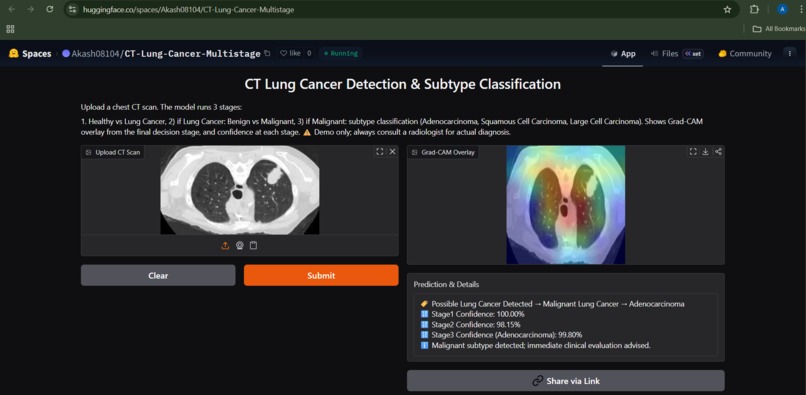
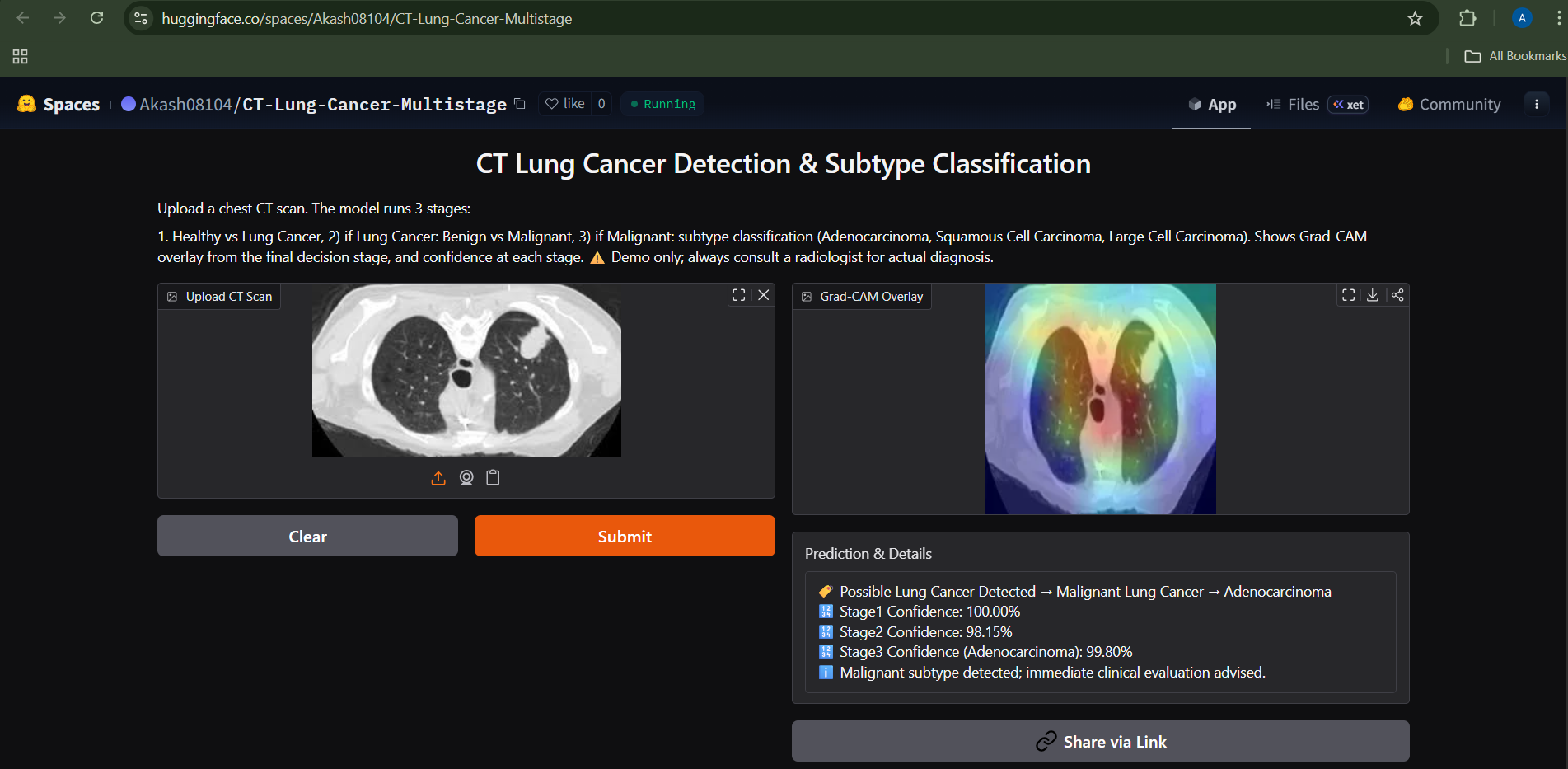
CT scan image of specified Lung cancer
-
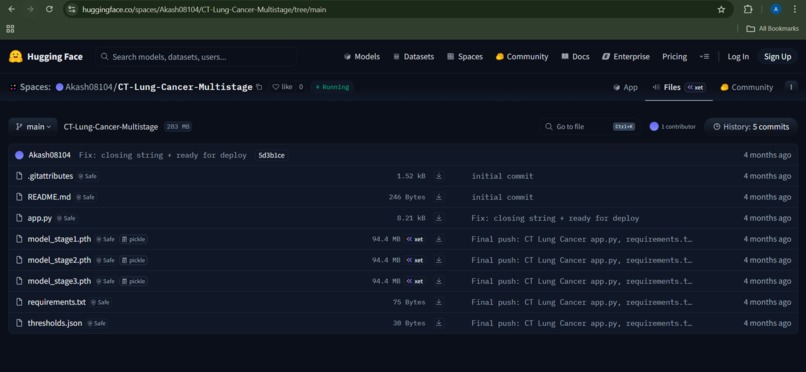
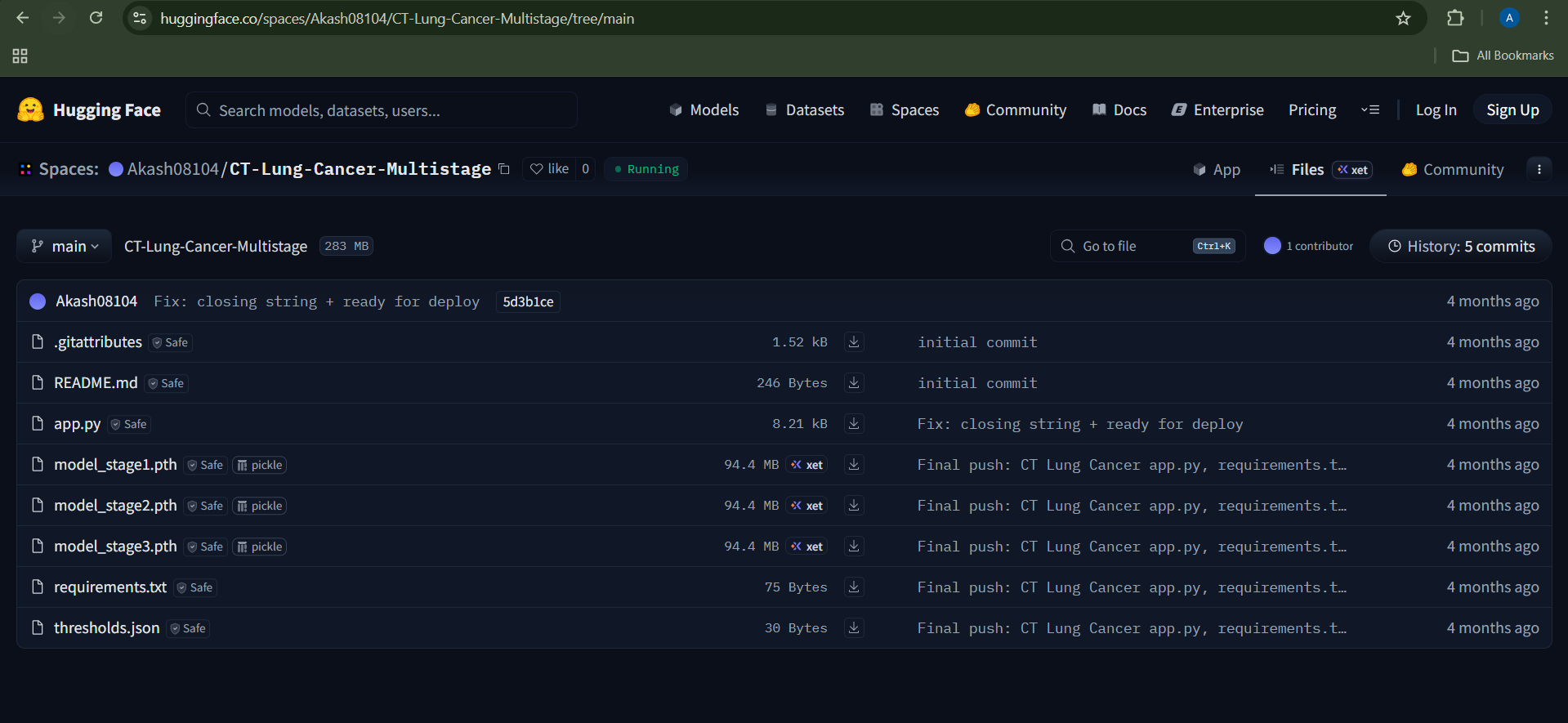
files
-
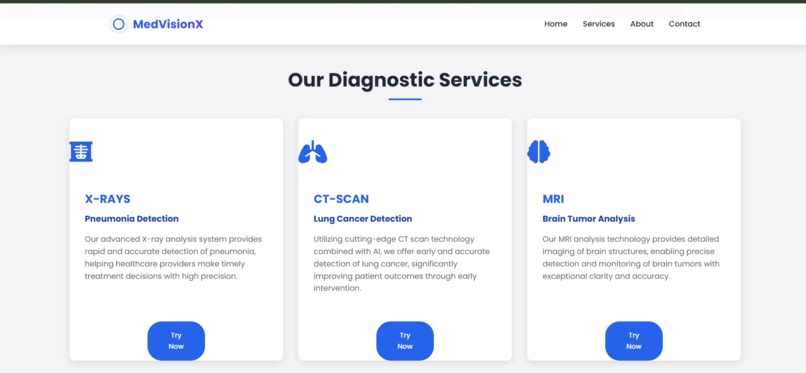
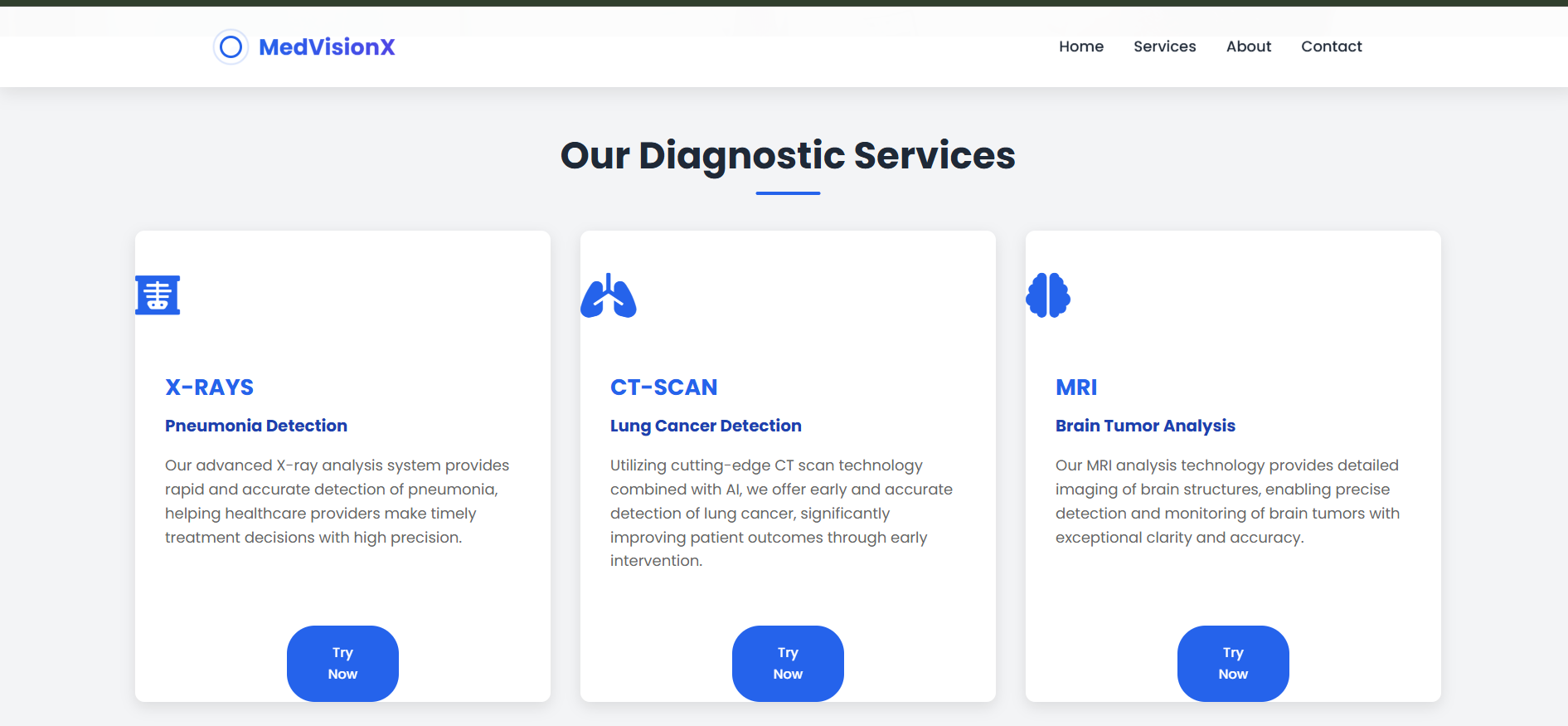
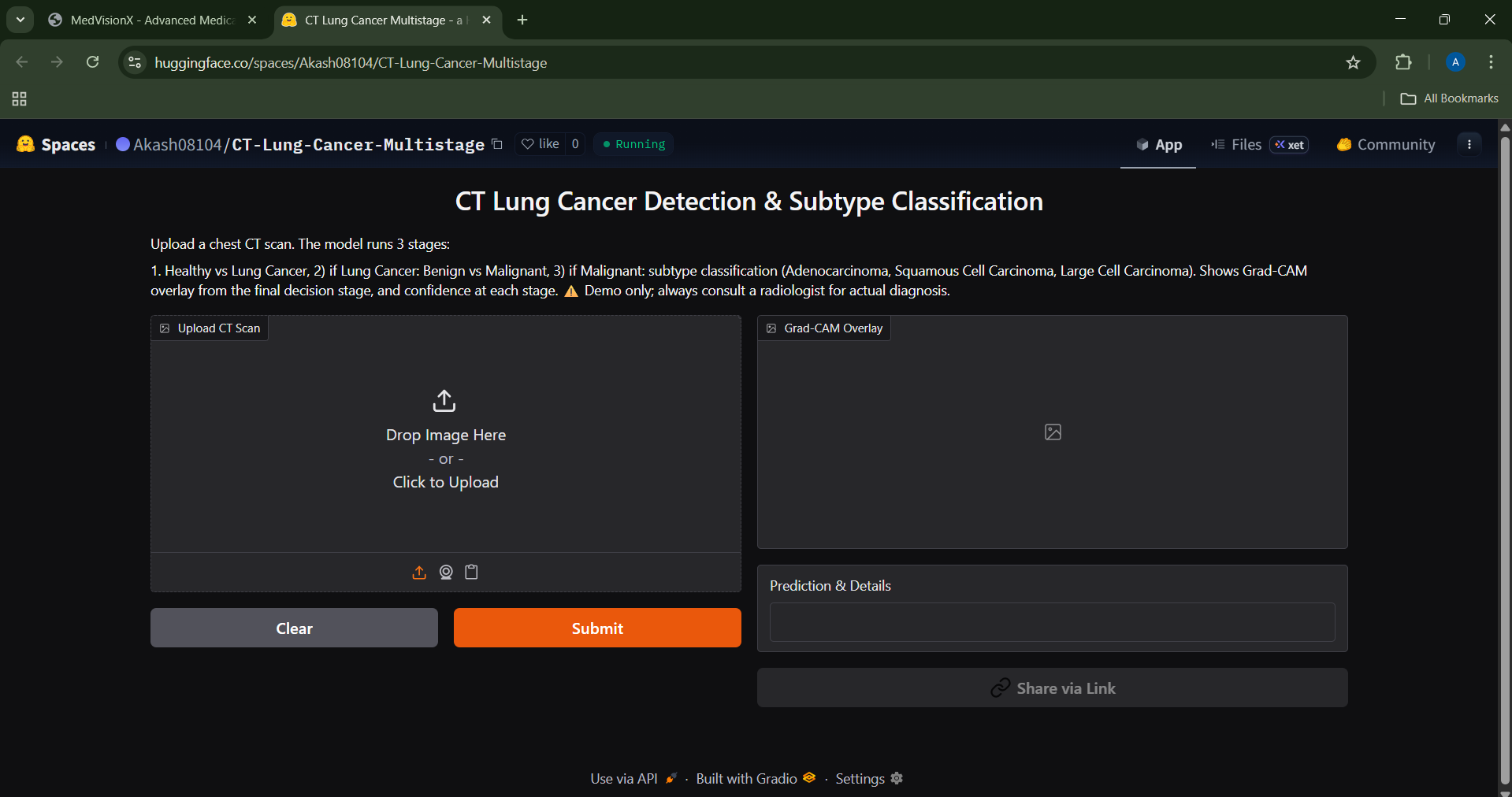
frontpage of the webApp
-
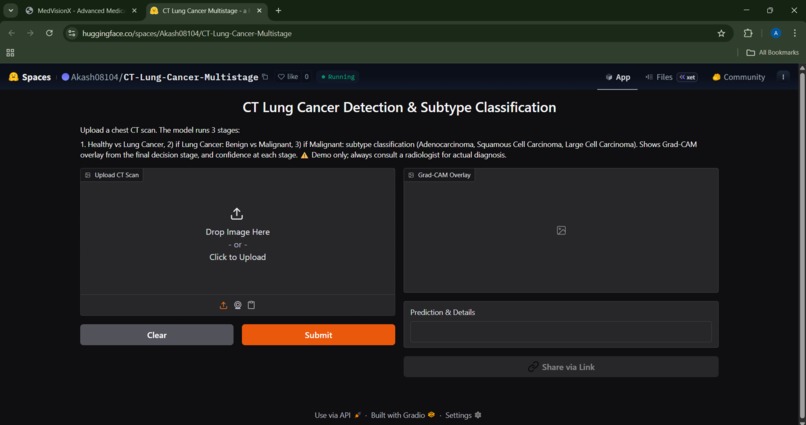
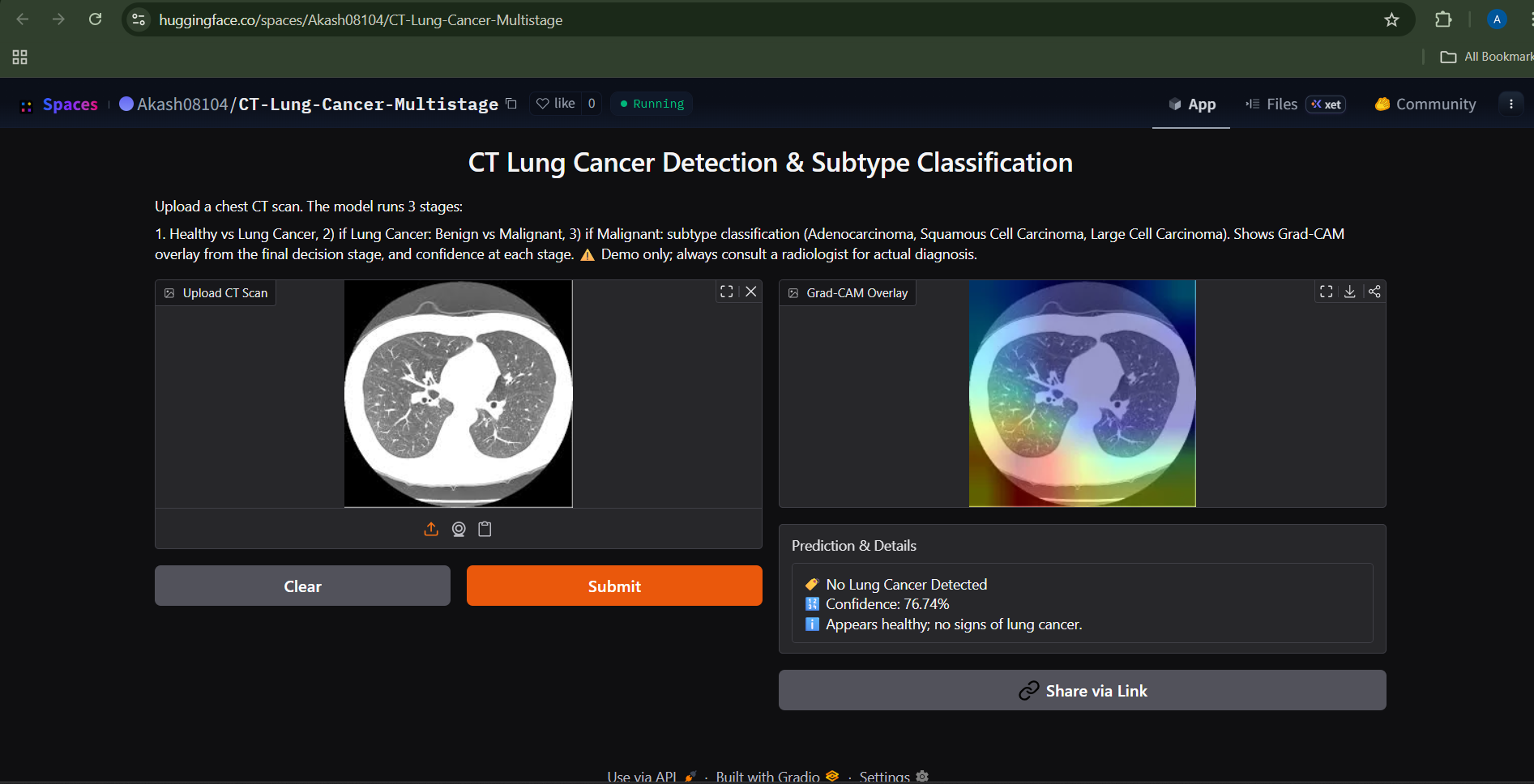
CT Scan lung cancer detection of hugging face Deployed model from the WebApp
-
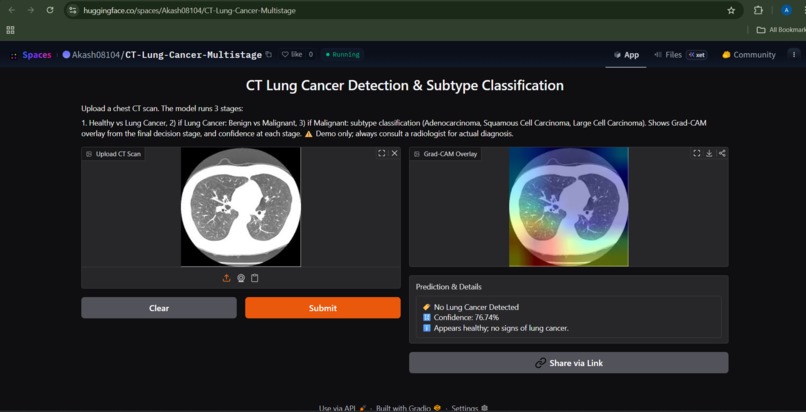
CT scan image of Normal cancer
Inspiration
Healthcare accessibility in rural areas inspired us to build MedVisionX. During our research, we came across real-life stories where patients from remote regions suffered late diagnoses of lung cancer and brain tumors due to a lack of specialized radiologists. We realized that AI can bridge this gap by providing accurate and fast analysis of medical images, supporting doctors and medical students in early disease detection and diagnosis.
What it does
MedVisionX is an AI-powered system that analyzes CT, MRI, and X-ray scans to detect diseases such as lung cancer, brain tumors, and pneumonia. It predicts whether the scan is normal or shows signs of disease, along with a confidence score and a Grad-CAM heatmap that highlights affected regions. The system is accessible via a simple web interface, allowing anyone — from doctors to students — to use it for diagnosis or educational purposes.
How we built it
Framework: PyTorch and Transfer Learning using ResNet50 Data Preprocessing: OpenCV, NumPy, and CLAHE for enhancing image clarity Dataset: We used publicly available Kaggle medical imaging datasets for MRI brain tumor detection and CT lung cancer classification. These datasets contain thousands of labeled images, enabling robust model training and validation. Visualization: Grad-CAM to show heatmaps for interpretability Interface: Built using Gradio for an interactive, user-friendly experience Training Environment: Google Colab GPU for deep learning computation Deployment: Hugging Face Spaces for cloud-based accessibility
Challenges we ran into
Handling imbalanced datasets across medical categories (healthy vs diseased) Differentiating between similar tumor patterns in CT/MRI scans Managing large model sizes during deployment on limited resources Ensuring AI interpretability and preventing overconfidence in wrong predictions
Accomplishments that we're proud of
Built a multi-stage AI diagnosis system with over 87% accuracy Successfully deployed the project on Hugging Face for public use Designed an interpretable Grad-CAM heatmap visualization Created a dual-purpose platform: clinical diagnostic aid and educational simulator Brought AI-driven healthcare solutions closer to rural and resource-limited hospitals
What we learned
Deep understanding of AI in medical imaging and healthcare ethics The importance of explainable AI in building trust among healthcare professionals How to optimize and deploy models efficiently for real-world applications Learned teamwork, time management, and practical problem-solving during hackathon development
What's next for MedVisionX: AI-Powered Medical Image Diagnosis System
Expanding to real-time X-ray and pathology image detection Integrating multi-disease analysis in a unified dashboard Collaborating with hospitals for clinical validation and real-world testing Introducing a voice-based medical assistant for visually impaired professionals Developing a mobile app version to make diagnosis possible even offline
USP
Multi-Modal Detection: Works with CT scans, MRIs, and X-rays, identifying multiple diseases such as lung cancer, brain tumors, and pneumonia using a unified deep learning pipeline.
Explainable AI: Integrated Grad-CAM heatmaps show why the AI made a prediction—building trust among doctors and students.
Accessible Anywhere: Deployed on Hugging Face Spaces, usable on any device without complex setup—perfect for rural healthcare and low-resource hospitals.
Educational Integration: Acts as an AI tutor for medical students, helping them understand imaging patterns and disease diagnosis.
Affordable AI Healthcare: Reduces dependency on costly diagnostic centers, making AI-assisted screening available to everyone.


Log in or sign up for Devpost to join the conversation.