-
-
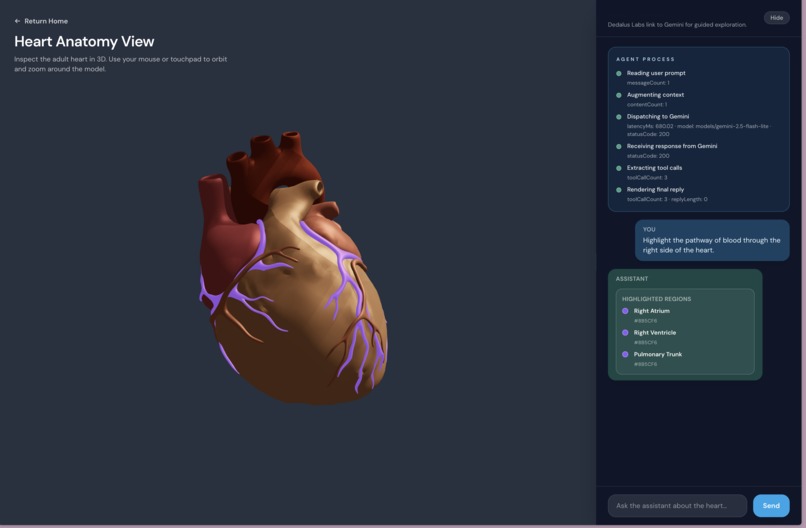
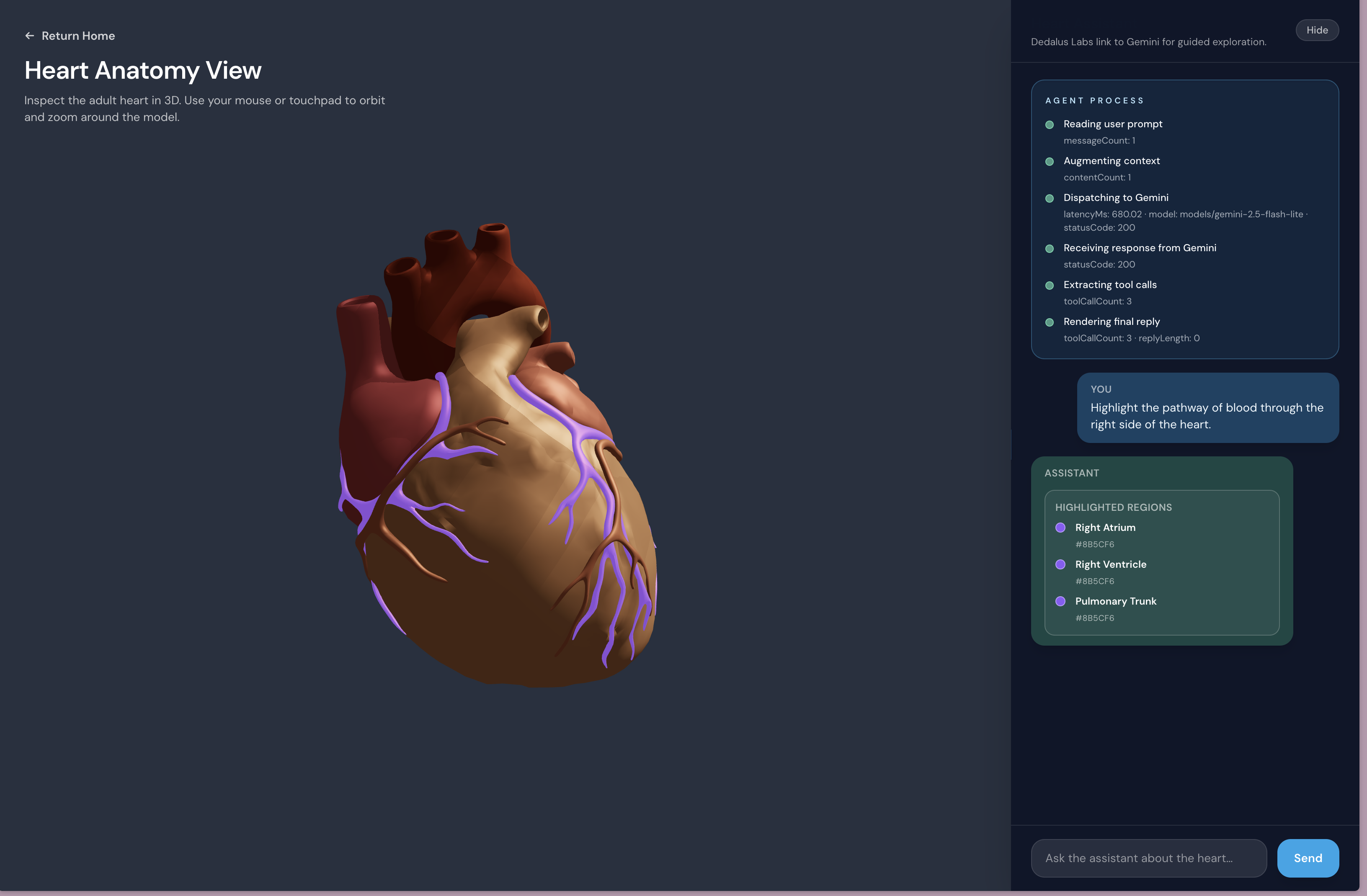
This is our interactive 3D Heart tied to an AI Agent
-
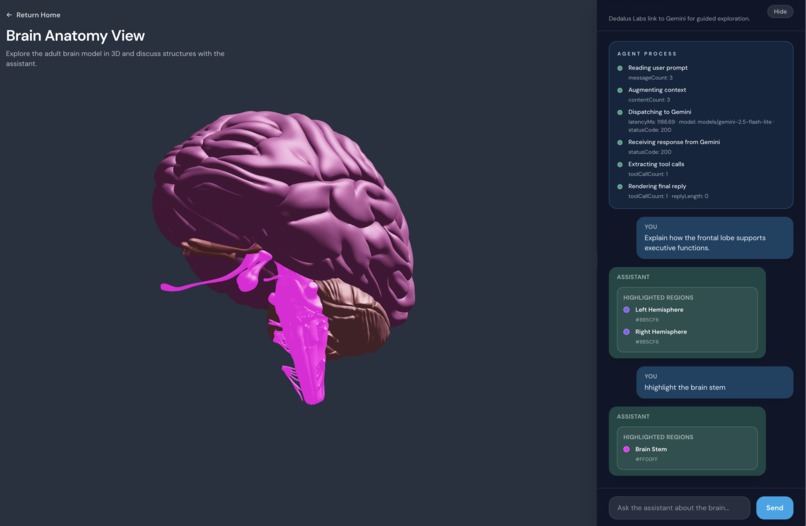
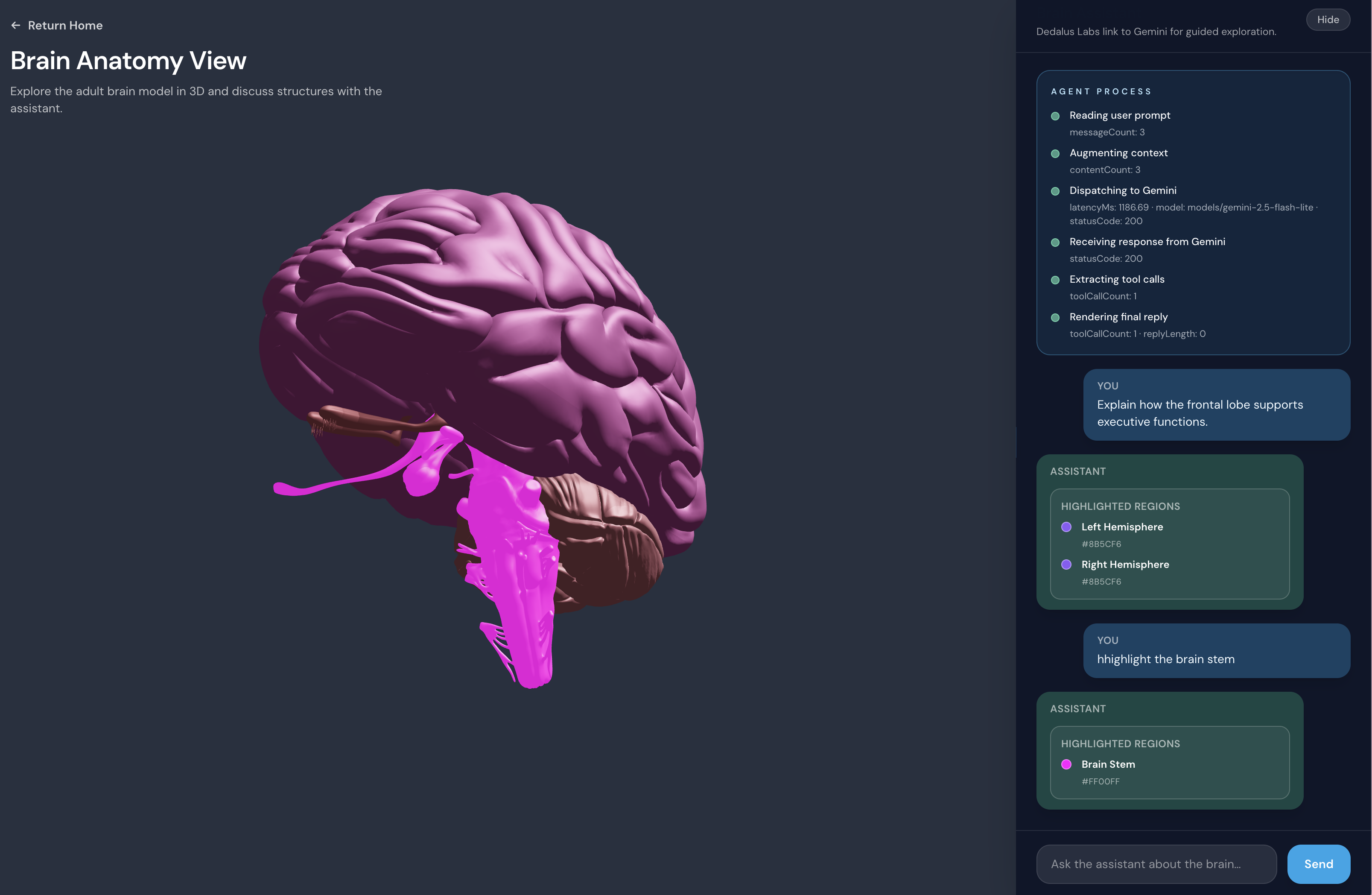
This is our interactive 3D Brain tied to an AI Agent
-
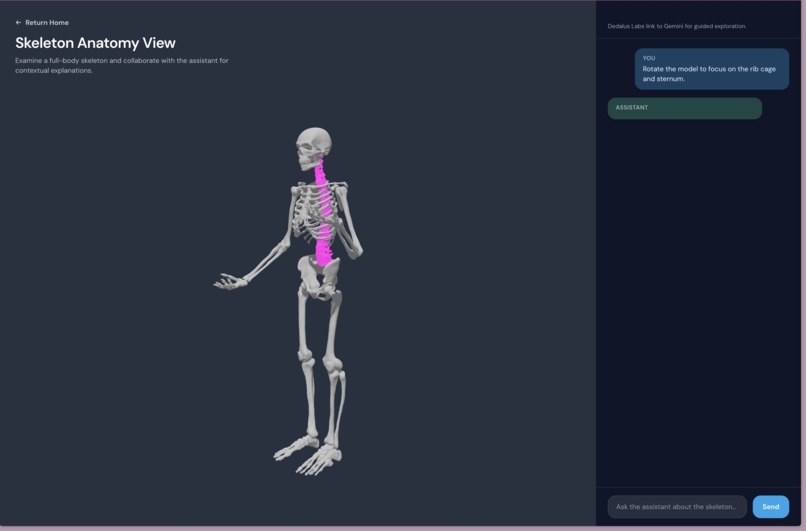
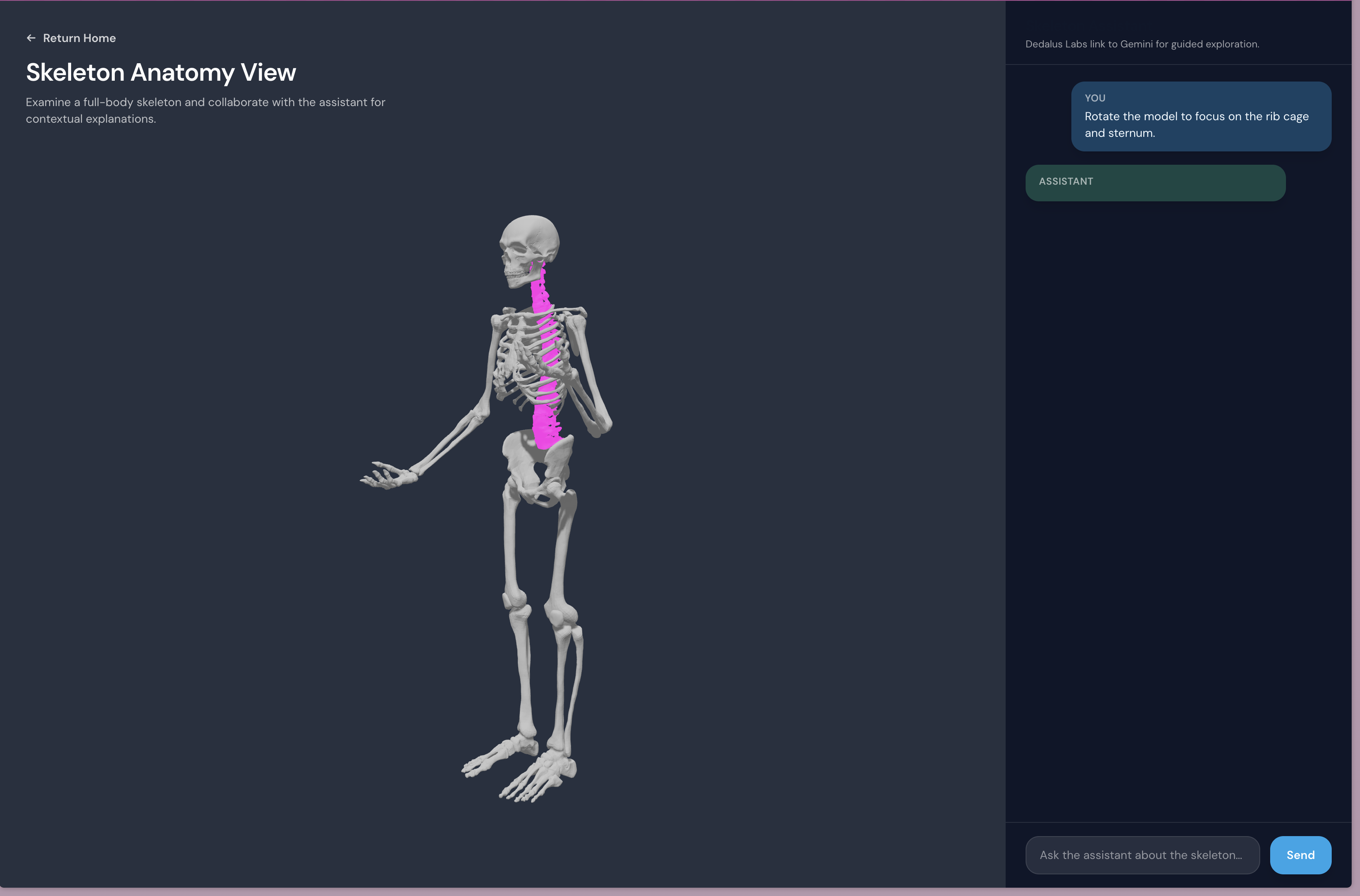
This is our interactive 3D Skeletal model tied to an AI Agent
Inspiration
As members of a medical AI startup, we’ve had the incredible opportunity to work closely with board-certified doctors and healthcare innovators. Through these conversations—and from our own peers at Princeton studying pre-med and pre-health tracks—we realized a common pain point: it’s incredibly hard to visualize anatomy from static textbooks and lectures. Even the most dedicated students struggle to connect what they read to the dynamic, 3D reality of the human body. That insight became our motivation. We wanted to make anatomy come alive—to transform how students, clinicians, and surgeons learn, see, and understand medicine.
What it does
Medverse is the world’s first AI-interactive medical textbook. Instead of memorizing from diagrams, learners can explore 3D models of the brain, heart, and skeleton, guided by an AI tutor that adapts to their level of understanding. You can ask questions like, “show me how blood flows through the heart,” and Medverse will visualize it, explain the physiology, and even quiz you. It’s not just a textbook—it’s an intelligent mentor that makes learning medicine immersive and personal.
How we built it
We built Medverse using React and Three.js to render photorealistic 3D anatomical models, paired with an adaptive AI backend powered by FastAPI and GPT-based reasoning. The system dynamically generates explanations, clinical mnemonics, and interactive overlays in real time. Our team combined technical expertise in machine learning, full-stack development, and medical modeling to bridge education and AI seamlessly.
Challenges we ran into
Integrating AI narration with real-time 3D rendering was one of our biggest hurdles—ensuring low latency while maintaining anatomical precision took a lot of optimization. We also faced challenges sourcing anatomically accurate models and aligning them with the AI’s explanations. Finally, tuning the AI to respond in clear, concise medical language (without overcomplicating or oversimplifying) was a delicate balance.
Accomplishments that we're proud of
We’re proud that we built a working, visually stunning prototype that merges interactive anatomy with adaptive AI tutoring—all in just a hackathon timeframe. Hearing medical students say “this is what I wish I had in med school” was our proudest moment. It validated that our work could make real impact in education and clinical preparation.
What we learned
We learned how powerful collaboration between AI engineers, healthcare professionals, and students can be. We also realized that accessibility matters—visual and interactive learning isn’t just a luxury, it’s essential for mastering medicine. Most importantly, we learned that technology in healthcare education should be empathetic—designed not just for innovation’s sake, but to truly help people learn and practice better.
What's next for Medverse
We plan to expand Medverse beyond anatomy to cover pathophysiology, surgery simulations, and interactive case studies. Our next goal is to partner with universities and hospitals to integrate Medverse into real medical curricula and surgical training. Long term, we envision an AI medical companion that supports students from their first anatomy class all the way to their first operation—making medical education more visual, intuitive, and human.


Log in or sign up for Devpost to join the conversation.