-
-
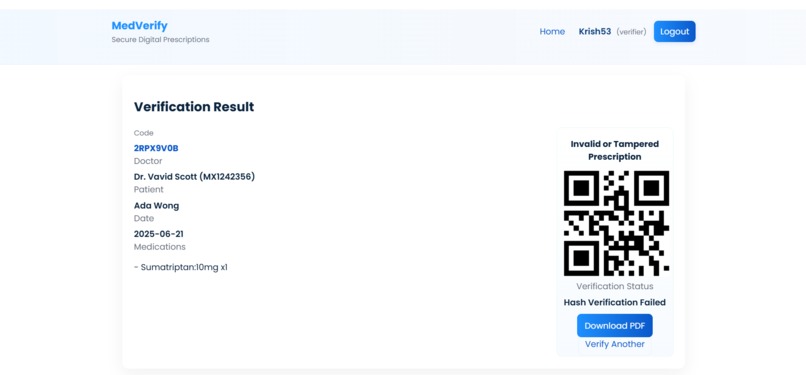
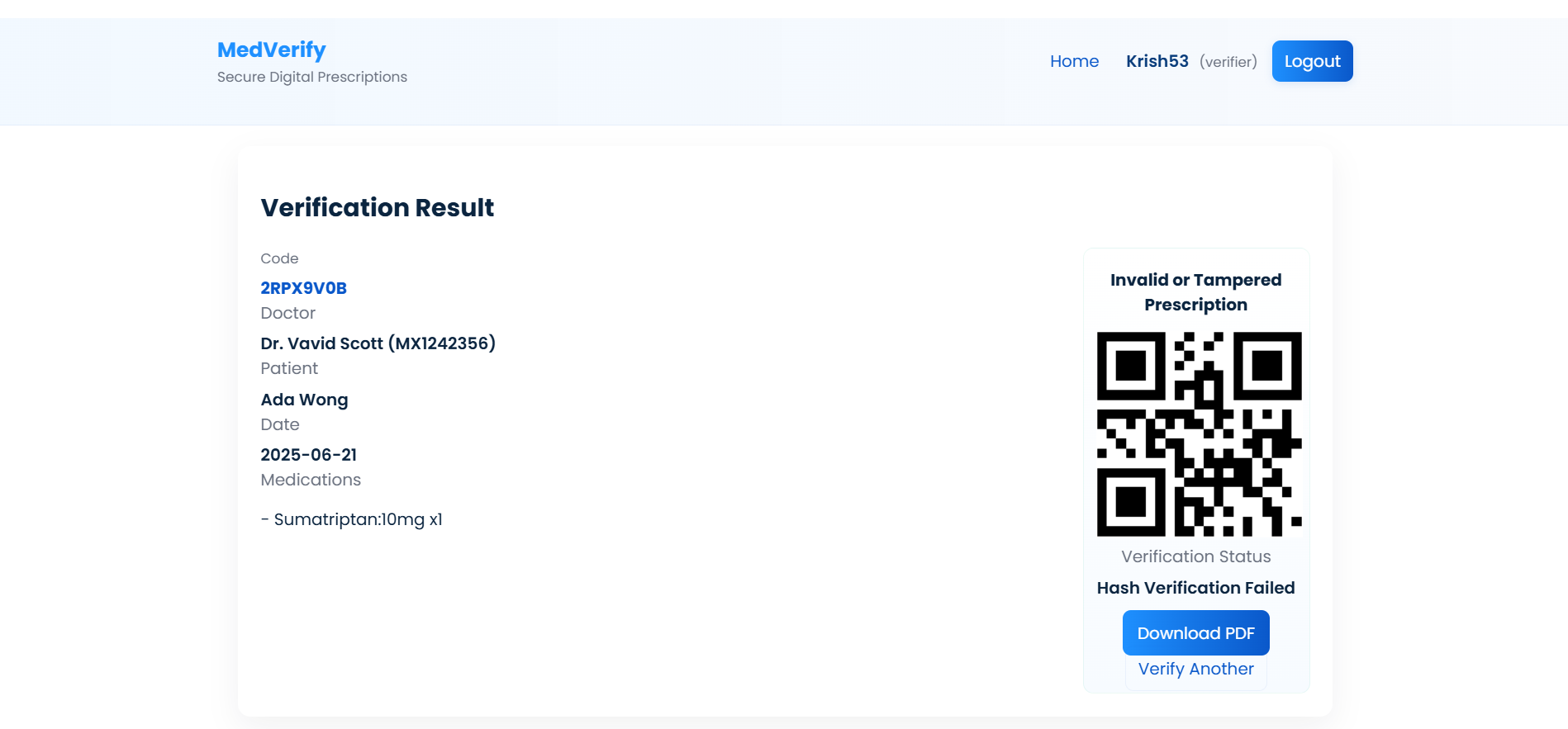
Fake Prescription
-
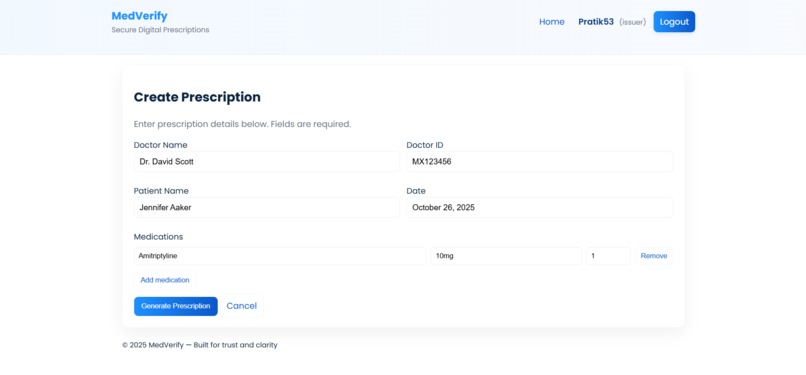
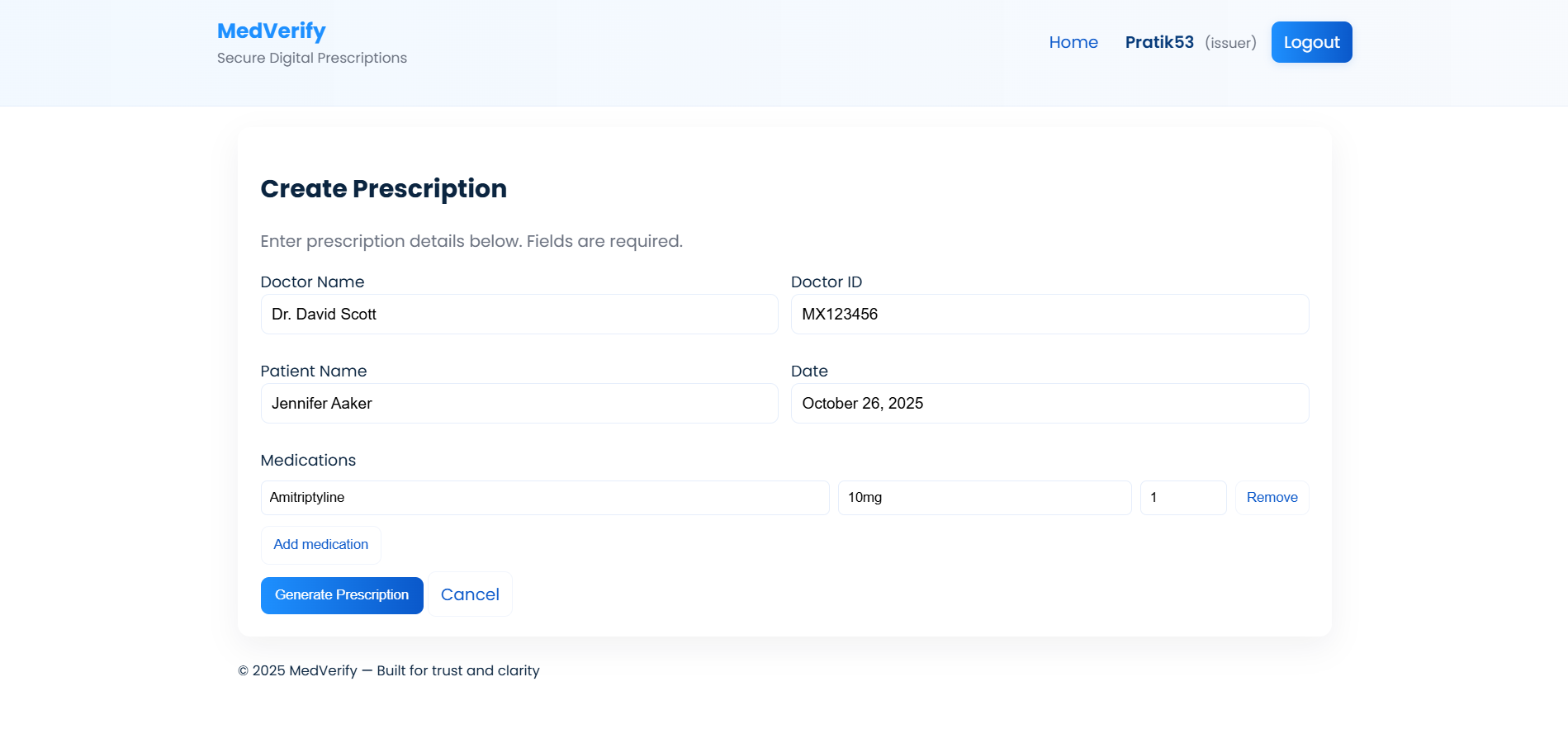
Prescription Creation Page
-
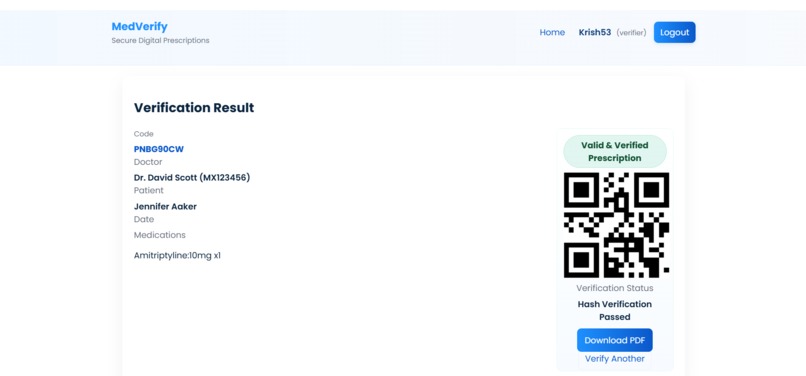
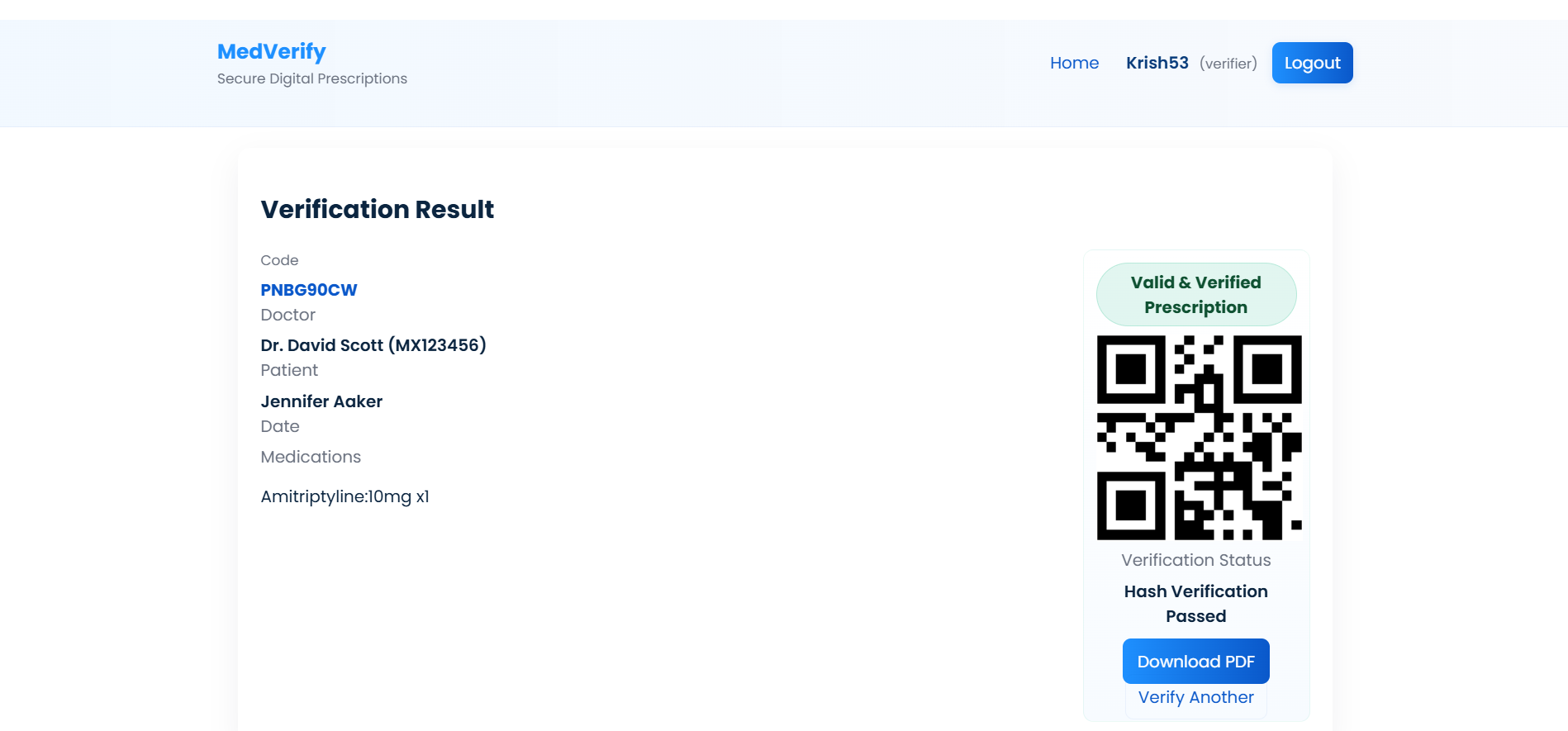
Real Prescription
-
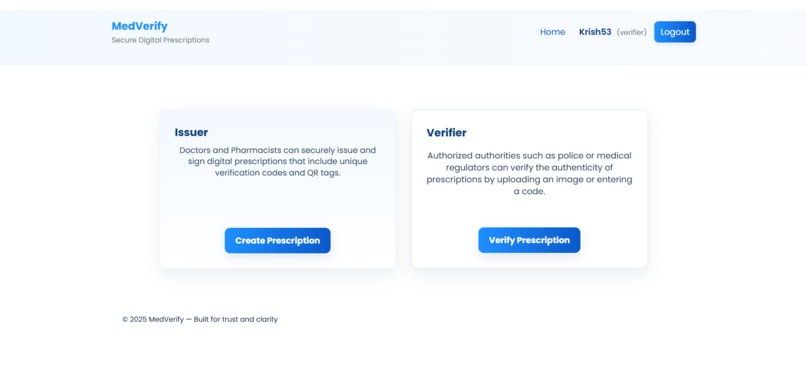
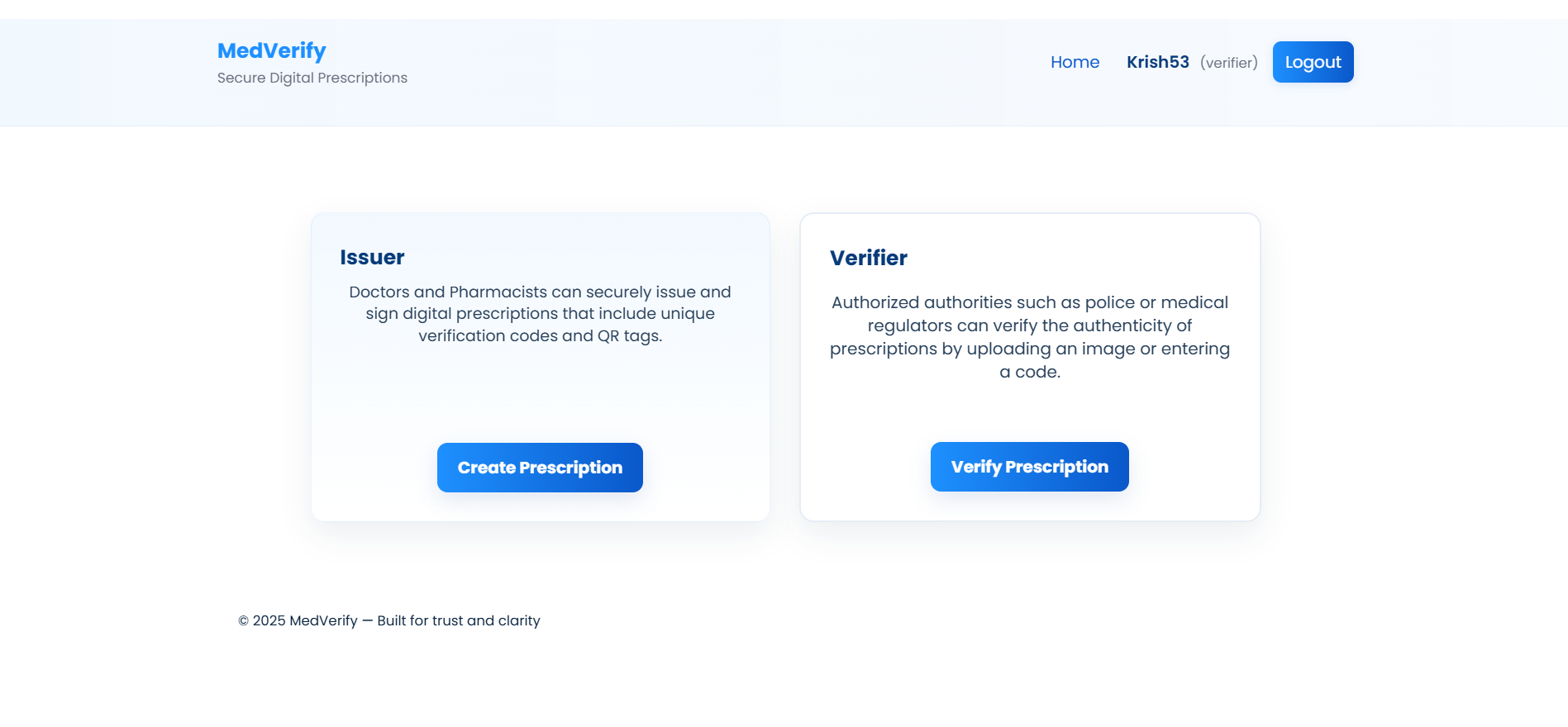
Home Page
-
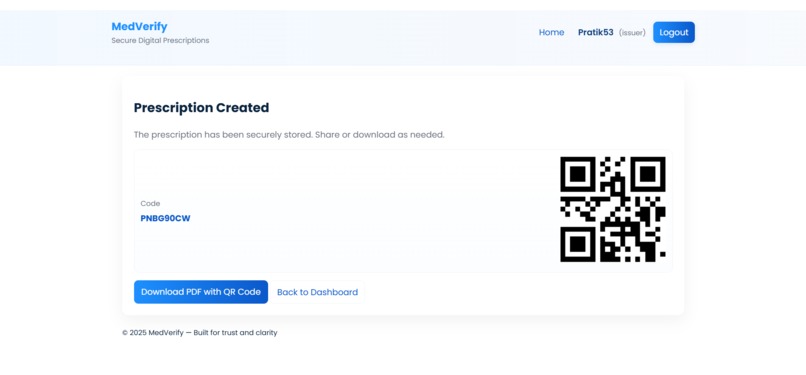
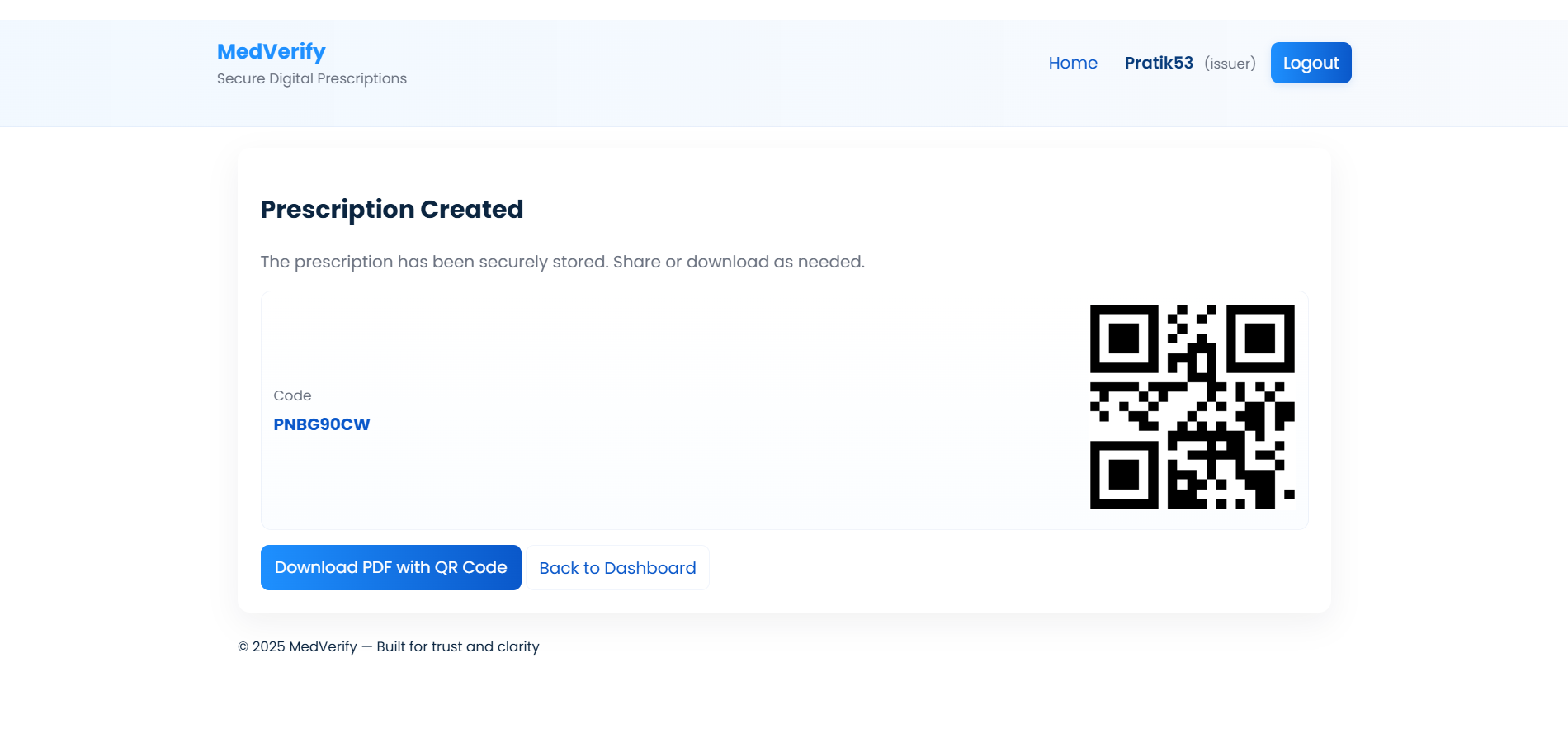
Prescription Created
🩺 Inspiration
This was our first hackathon, and we wanted to work on something that could make a real impact. During brainstorming, we realized that prescription fraud is still a big issue — fake or tampered prescriptions can lead to serious harm.
We thought, what if there was a secure digital system that made verifying prescriptions easy and reliable? That idea became MedVerify — a simple, digital-first platform to help doctors issue verified prescriptions and help others confirm their authenticity.
💊 What it does
MedVerify is a Digital Prescription Verification System with two types of users:
- Issuers (Doctors or Pharmacists) can create and sign digital prescriptions that include a unique verification code and a QR code.
- Verifiers (Authorities or Pharmacists) can check if a prescription is real by scanning the QR code, typing in the code, or uploading an image.
The system uses OCR (Optical Character Recognition) to read uploaded prescription text and compare it with the database, helping confirm whether a document is genuine.
⚙️ How we built it
We built the project using:
- Flask (Python) for the backend.
- SQLite as the database.
- OCR.Space API for text extraction from uploaded prescription images.
- qrcode, pyzbar, and Pillow for generating and reading QR codes.
- ReportLab to create downloadable PDFs with embedded verification codes.
- HTML/CSS for the frontend interface.
Each role (Issuer or Verifier) has its own dashboard. We used Flask sessions to keep logins secure and make sure users only see what they’re supposed to.
🚧 Challenges we ran into
Since this was our first hackathon, a lot of things were new to us.
- Connecting the Flask backend with OCR and QR APIs took time to figure out.
- Managing two user roles (Issuer and Verifier) under one system was tricky.
- We had to debug issues with PDF generation and QR embedding.
- Getting the OCR results to match our database records was harder than expected.
- Coordinating the frontend and backend integration under time pressure was a big learning experience.
🌟 Accomplishments that we're proud of
- We built a working end-to-end system in just two days.
- Integrated OCR and QR successfully for verification.
- Created a clear dashboard for both Issuers and Verifiers.
- Generated secure, downloadable PDFs with unique codes.
- Learned how to work together as a team and finish a project within the hackathon timeframe.
🧠 What we learned
We learned a lot from this hackathon:
- How to use Flask to manage users, sessions, and routes.
- How to integrate APIs (OCR.Space) and libraries (qrcode, ReportLab) into one project.
- How to design a small database using SQLite.
- How to divide work efficiently among a team and manage time.
Most importantly, we learned how to turn an idea into a real, working prototype — even when everything felt new at first.
🚀 What's next for MedVerify
We want to keep improving MedVerify by:
- Adding front end
- Implementing functional hash verification system (the current one is a demo)
- Adding medical license verification for doctors.
- Using blockchain to make prescription logs tamper-proof.
- Building a mobile app version for faster scanning.
- Hosting it on a cloud service with full security.
- Expanding to support different countries and languages.
👥 Team Members
- Pratik Patil
- Krish Shah
- Christian Peytavin
- John Varghese


Log in or sign up for Devpost to join the conversation.