-
-
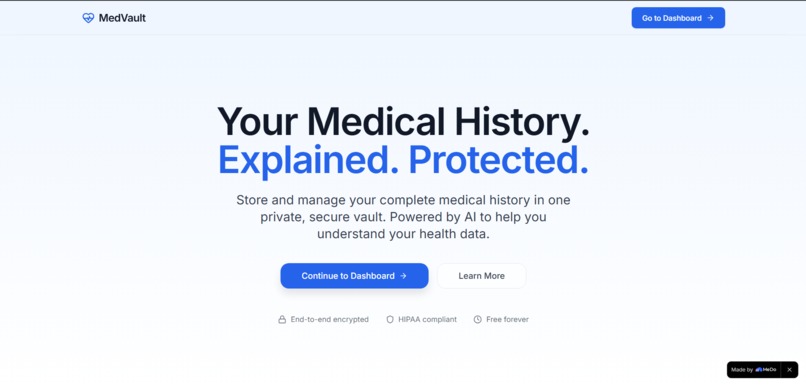
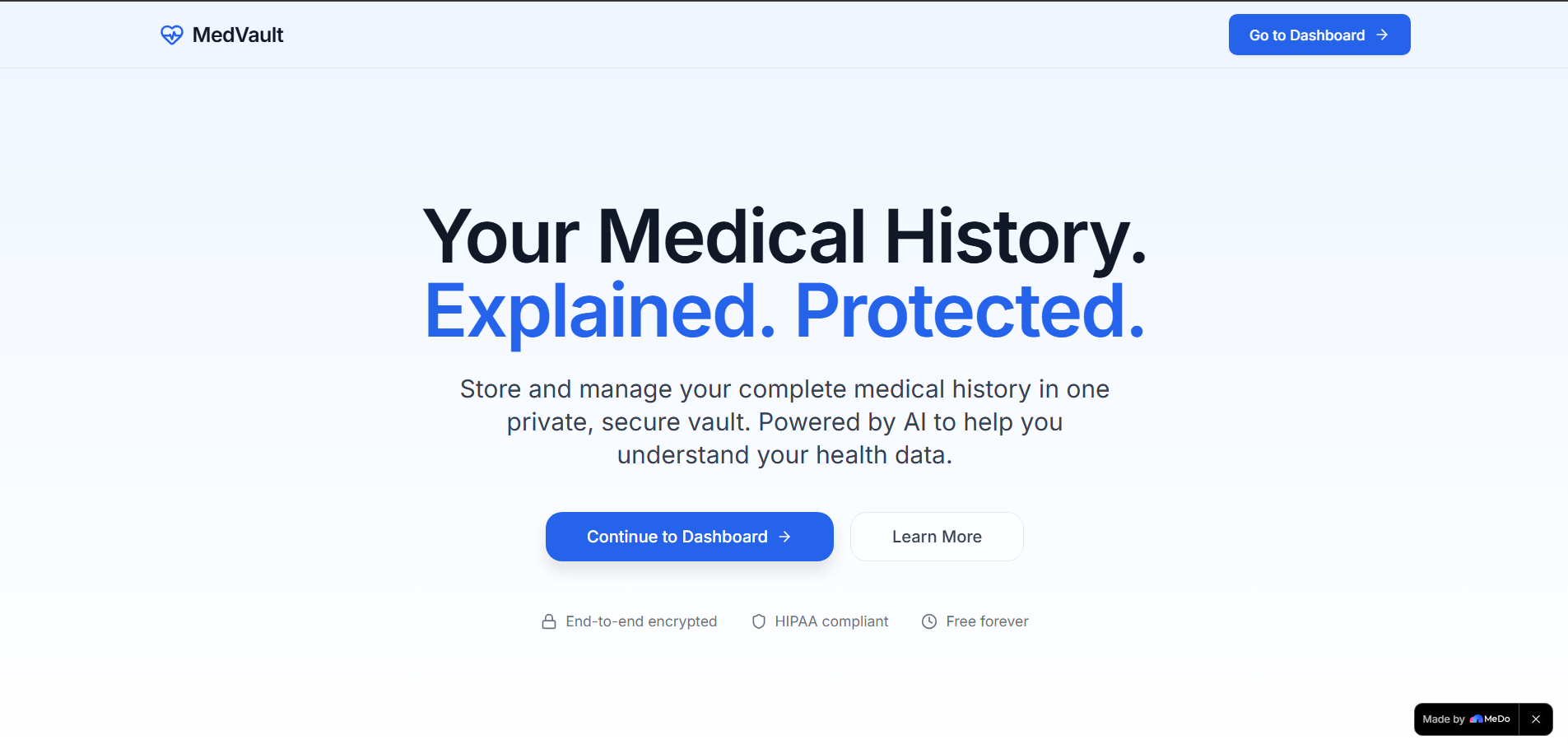
MedVault - Your Medical History. Explained. Protected.
-
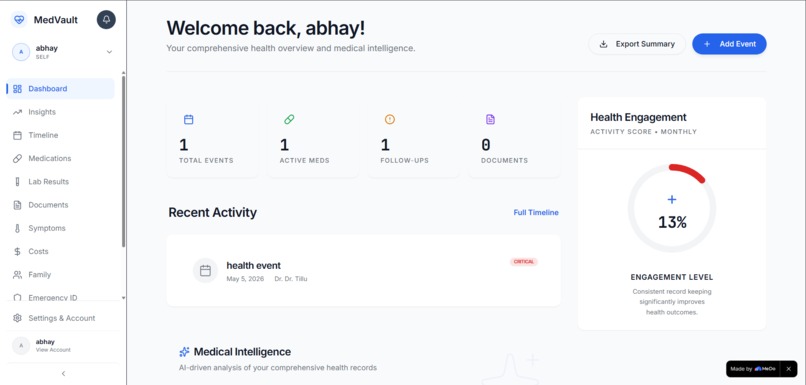
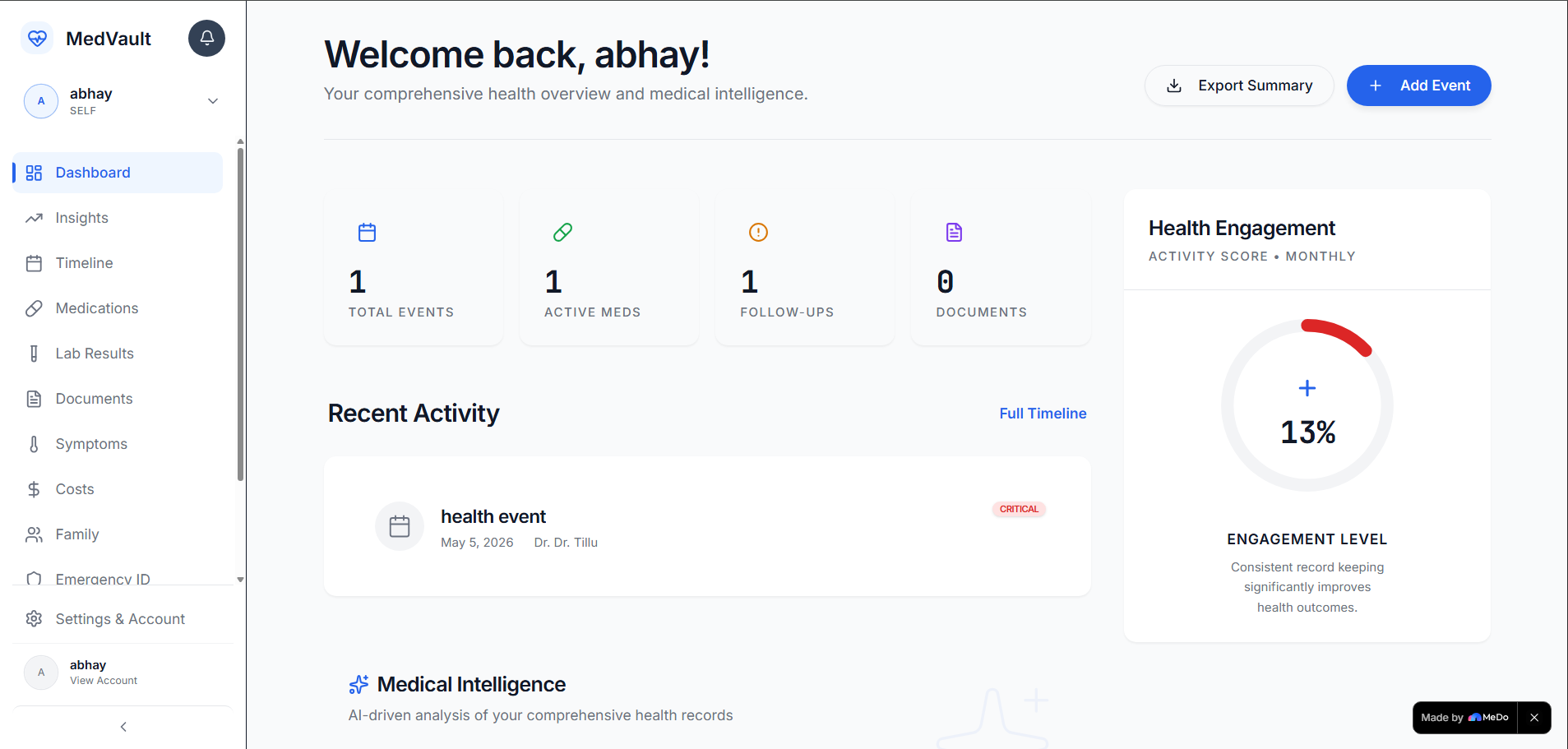
Dashboard - Your comprehensive health overview and medical intelligence.
-
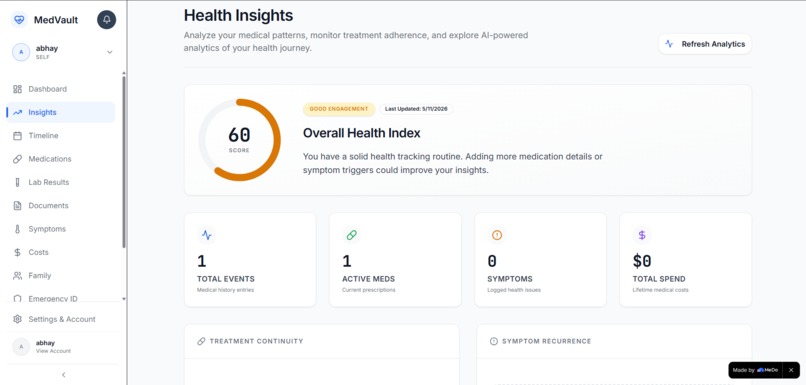
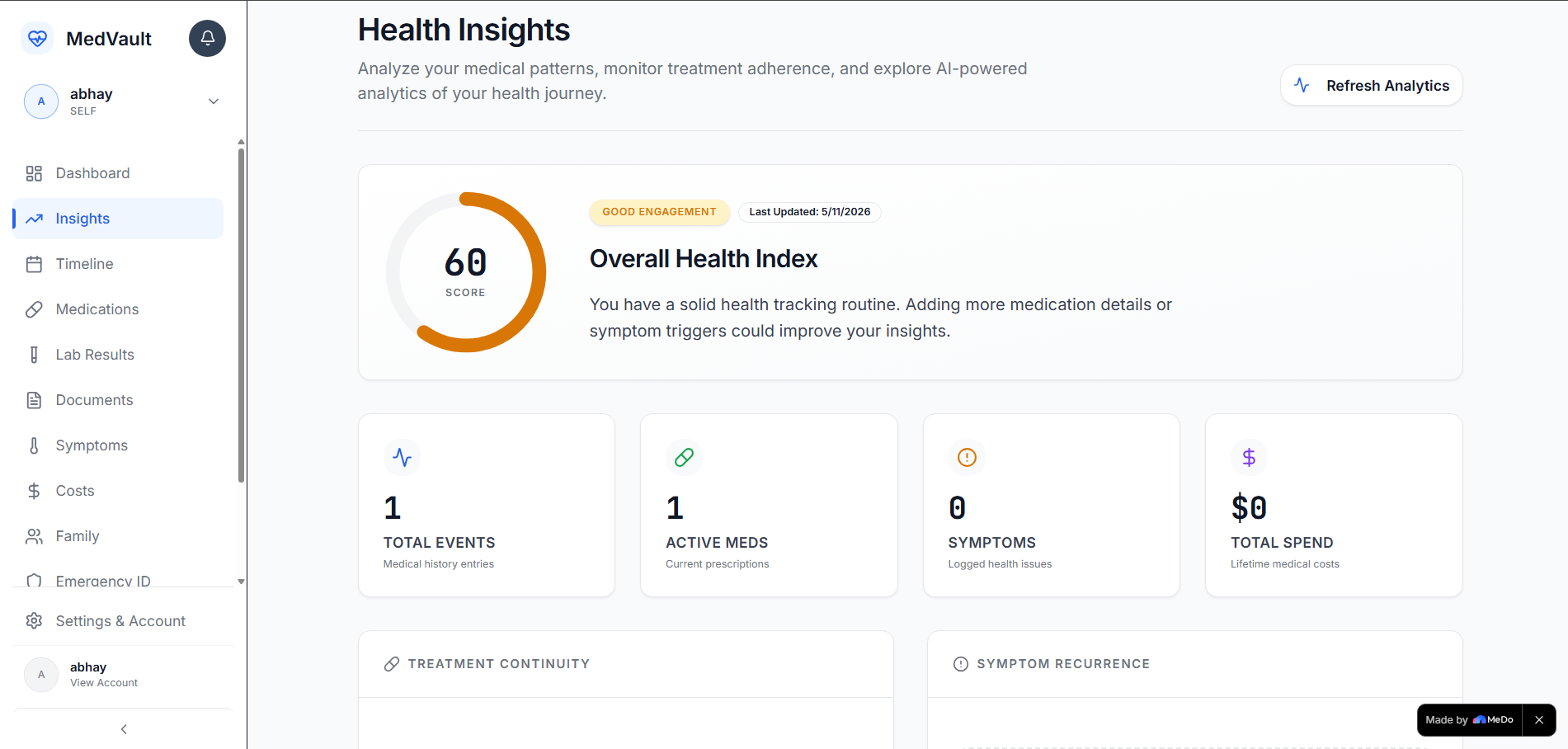
Insights - Analyze your medical patterns, monitor treatment adherence, and explore AI-powered analytics of your health journey.
-
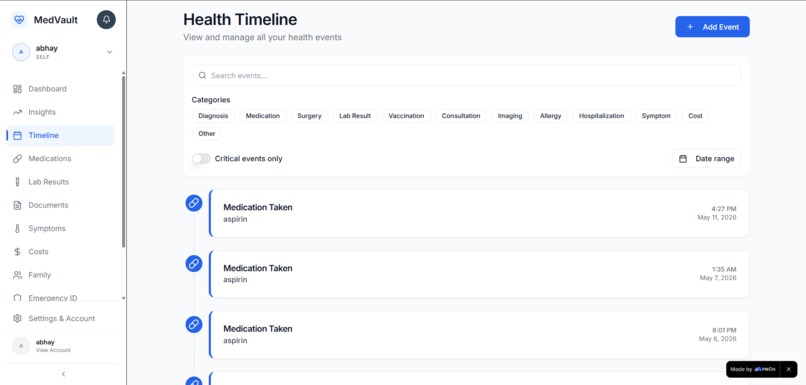
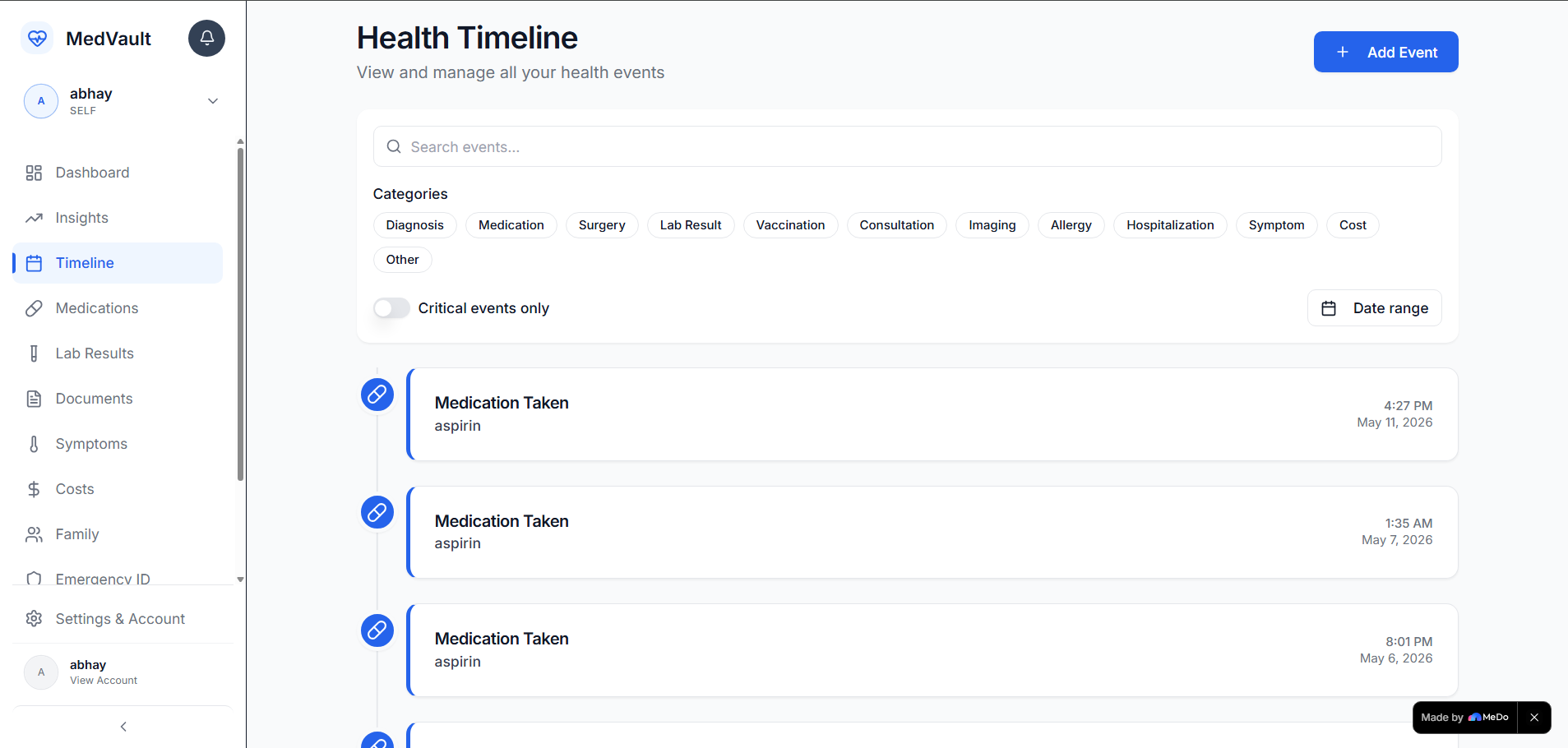
TimeLine - View and manage all your health events
-
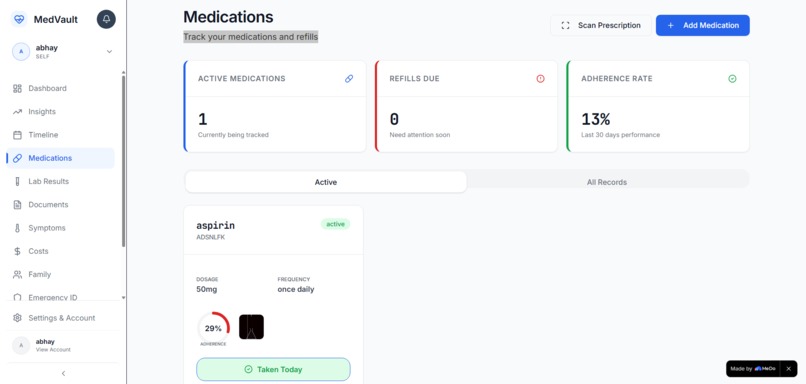
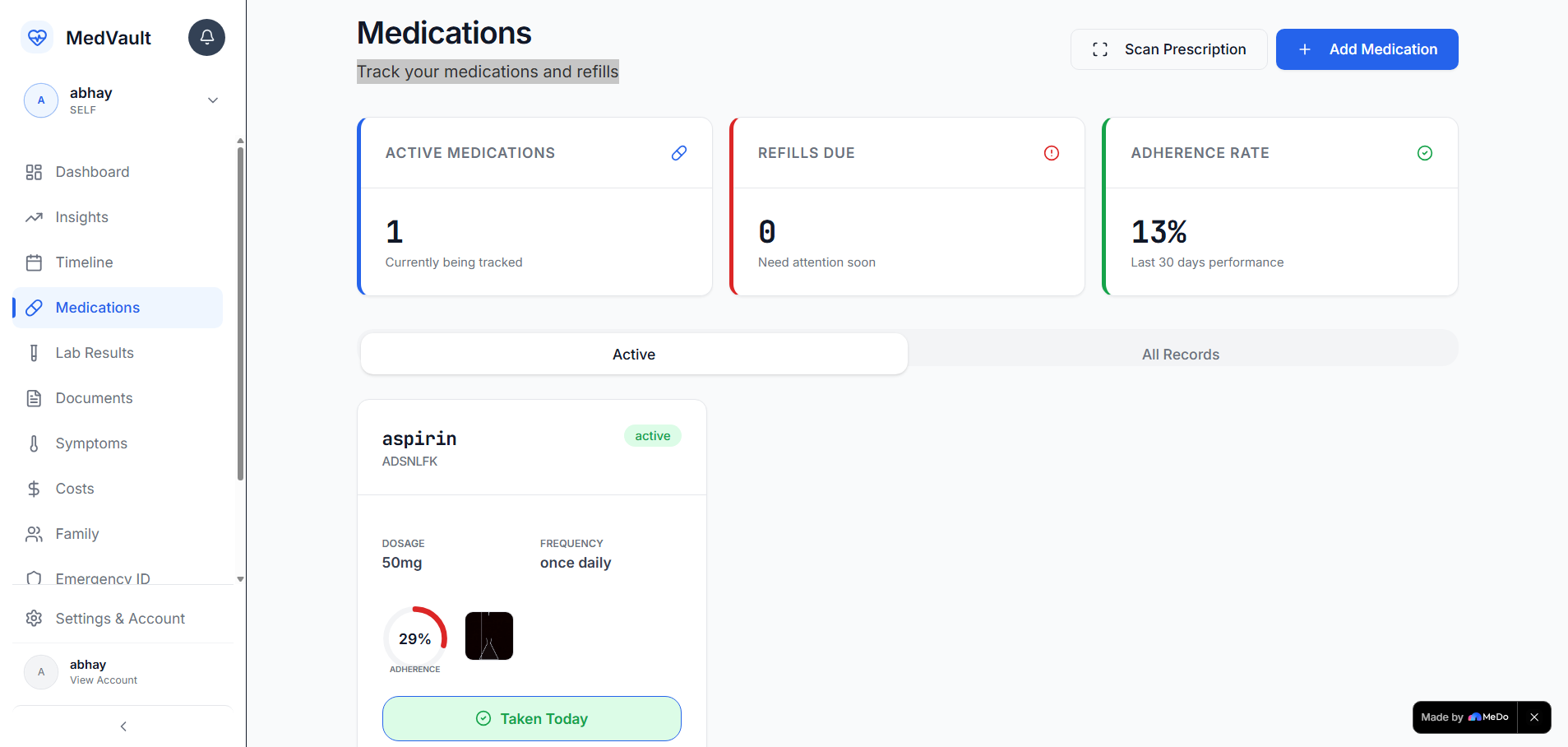
Medications - Track your medications and refills (check in on time to mark as medicine taken).
-
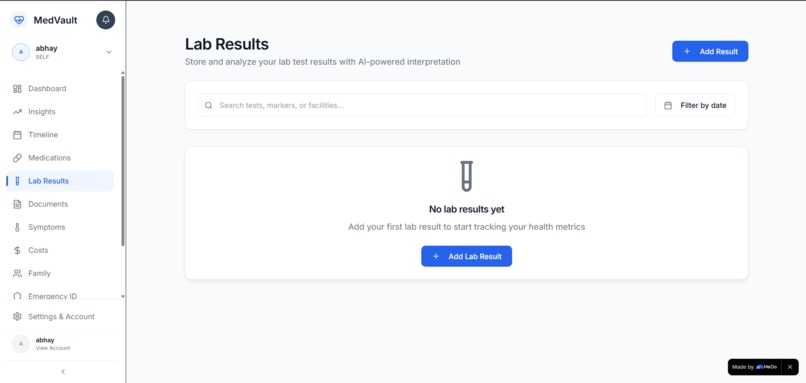
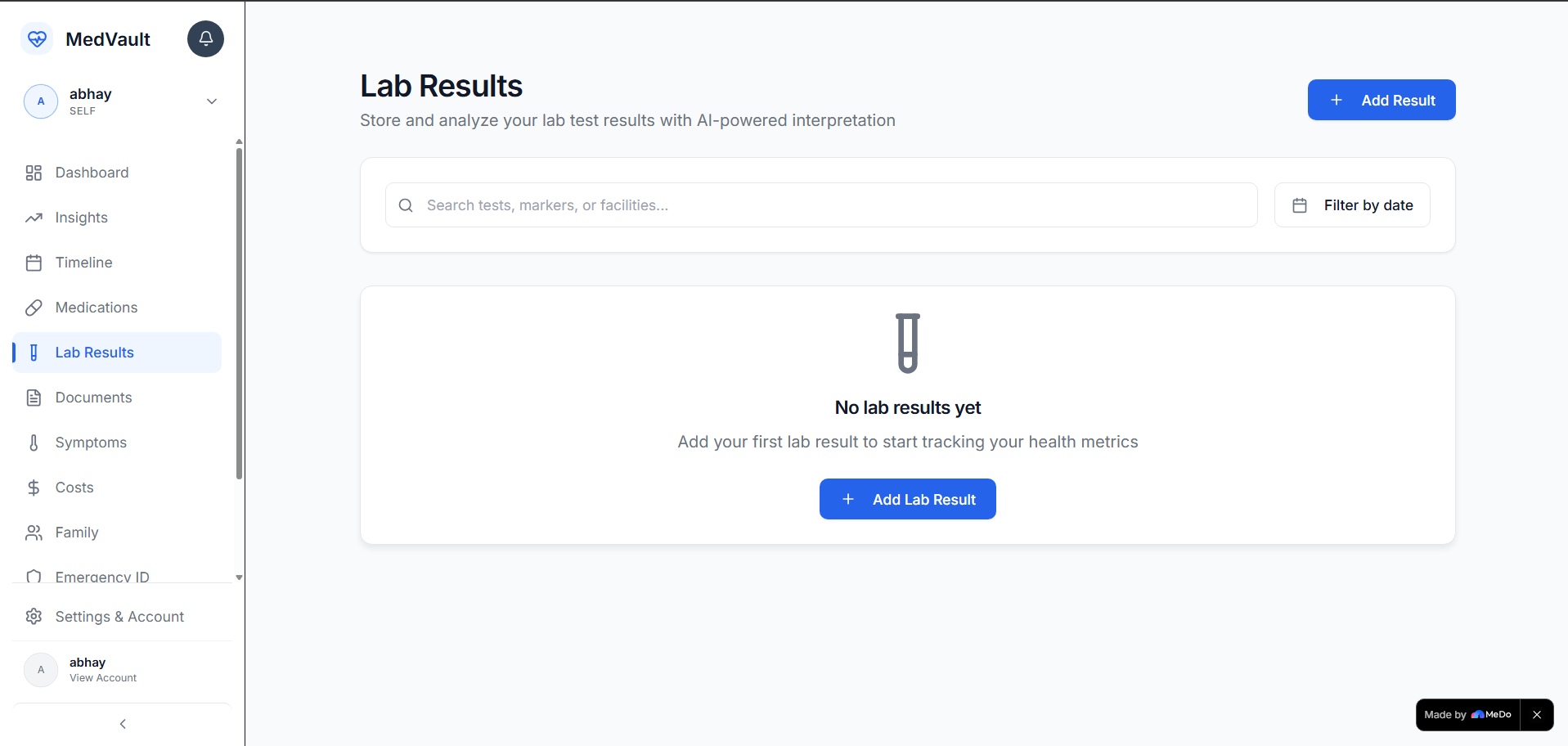
Lab Results - Store and analyze your lab test results with AI-powered interpretation
-
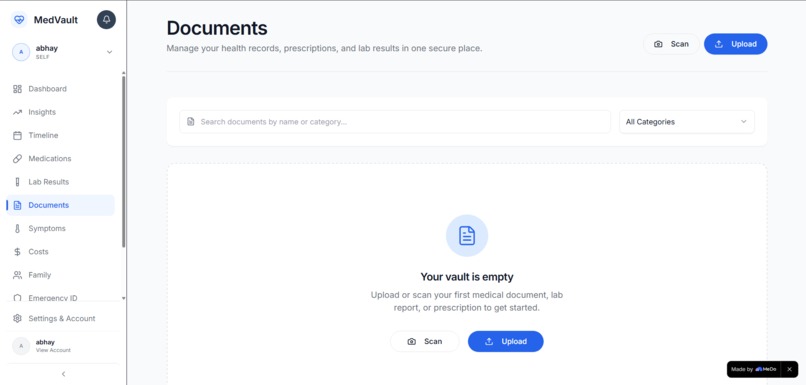
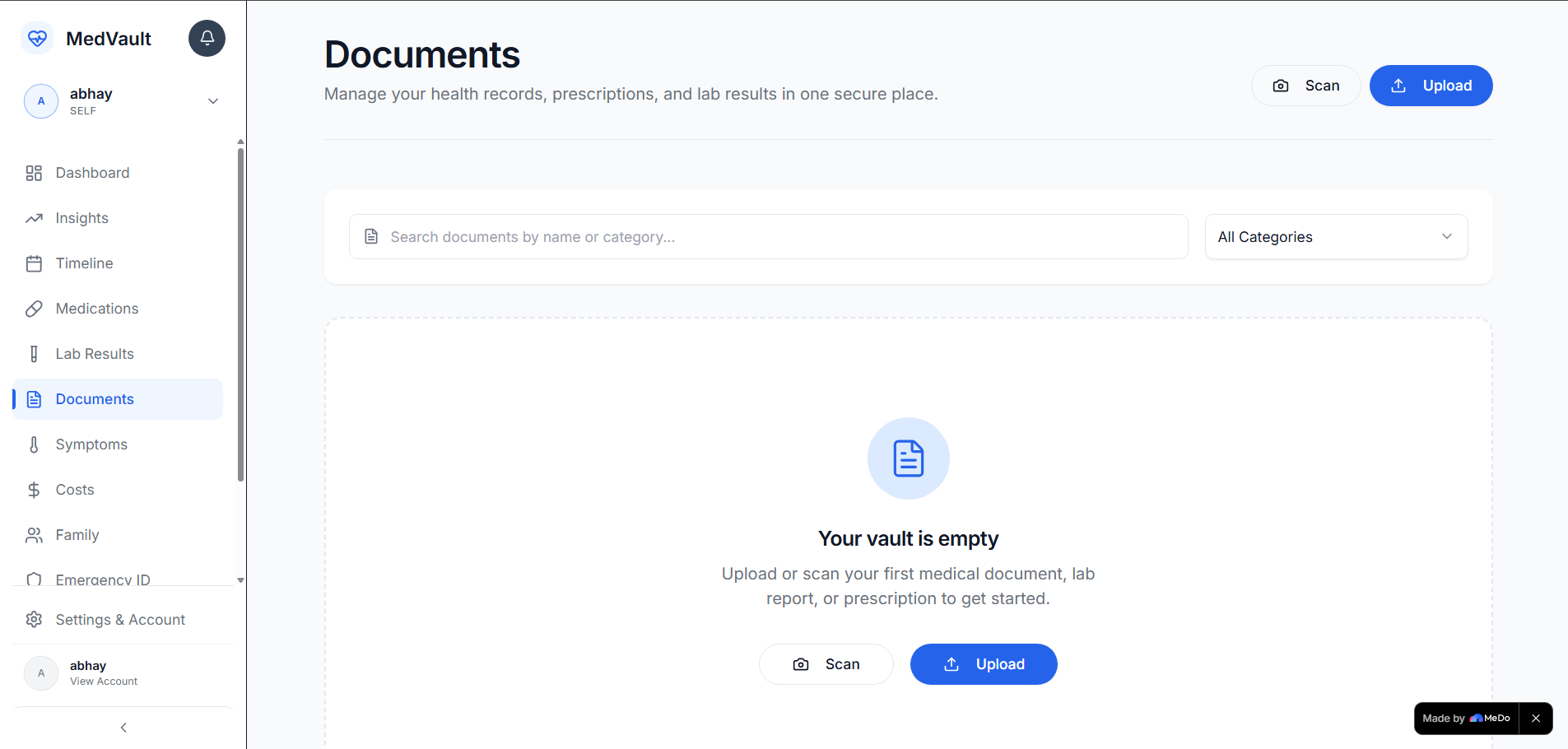
Documents - Manage your health records, prescriptions, and lab results in one secure place.
-
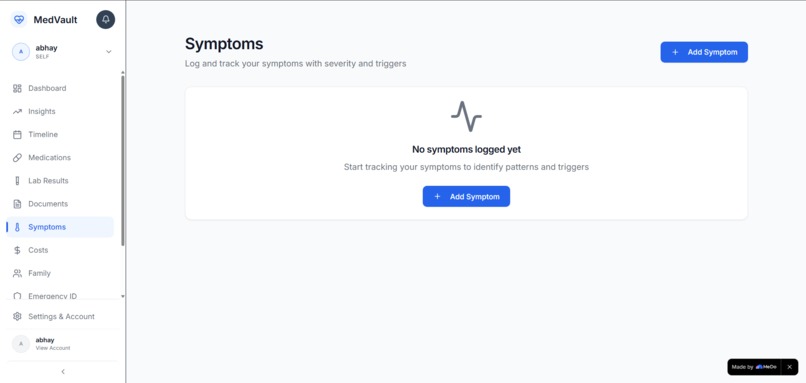
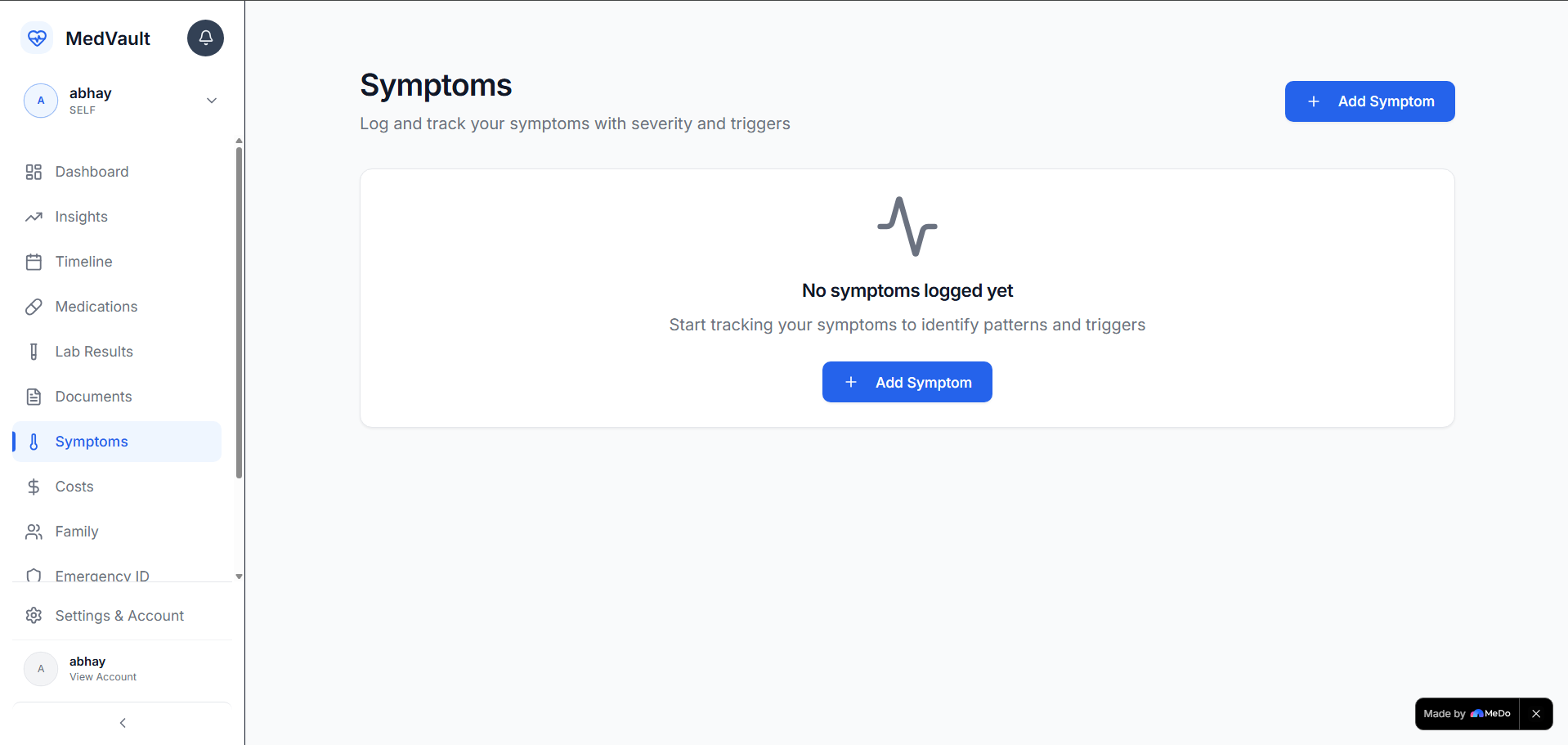
Symptoms - Log and track your symptoms with severity and triggers.
-
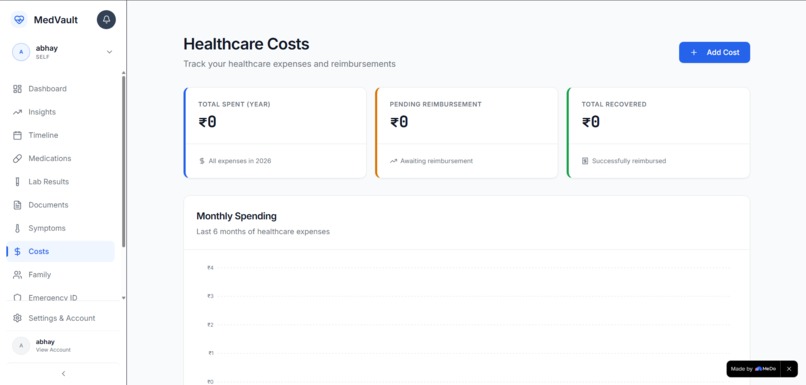
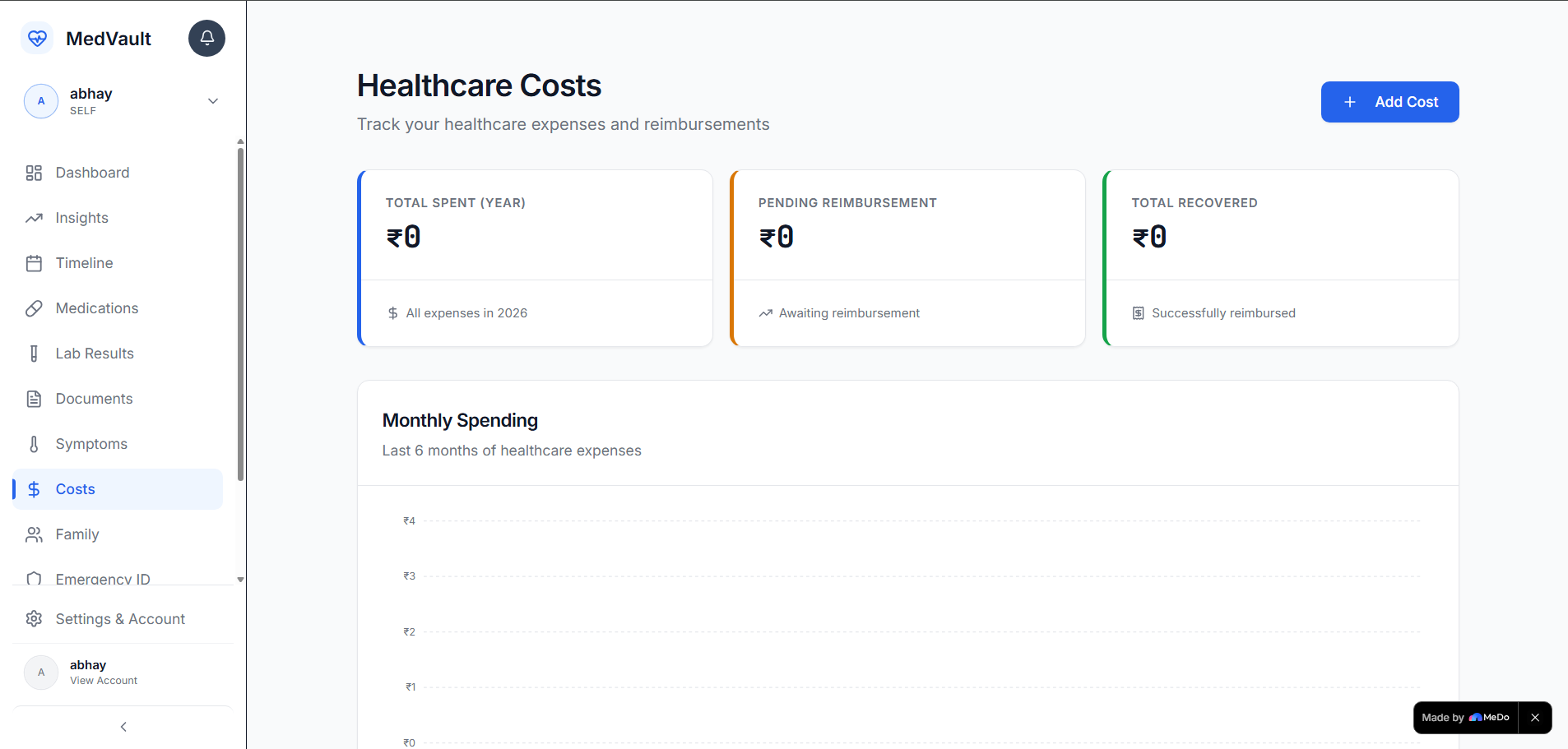
Costs - Track your healthcare expenses and reimbursements.
-
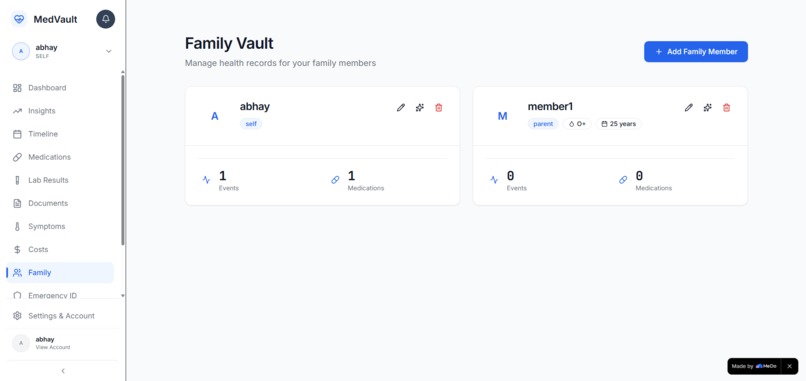
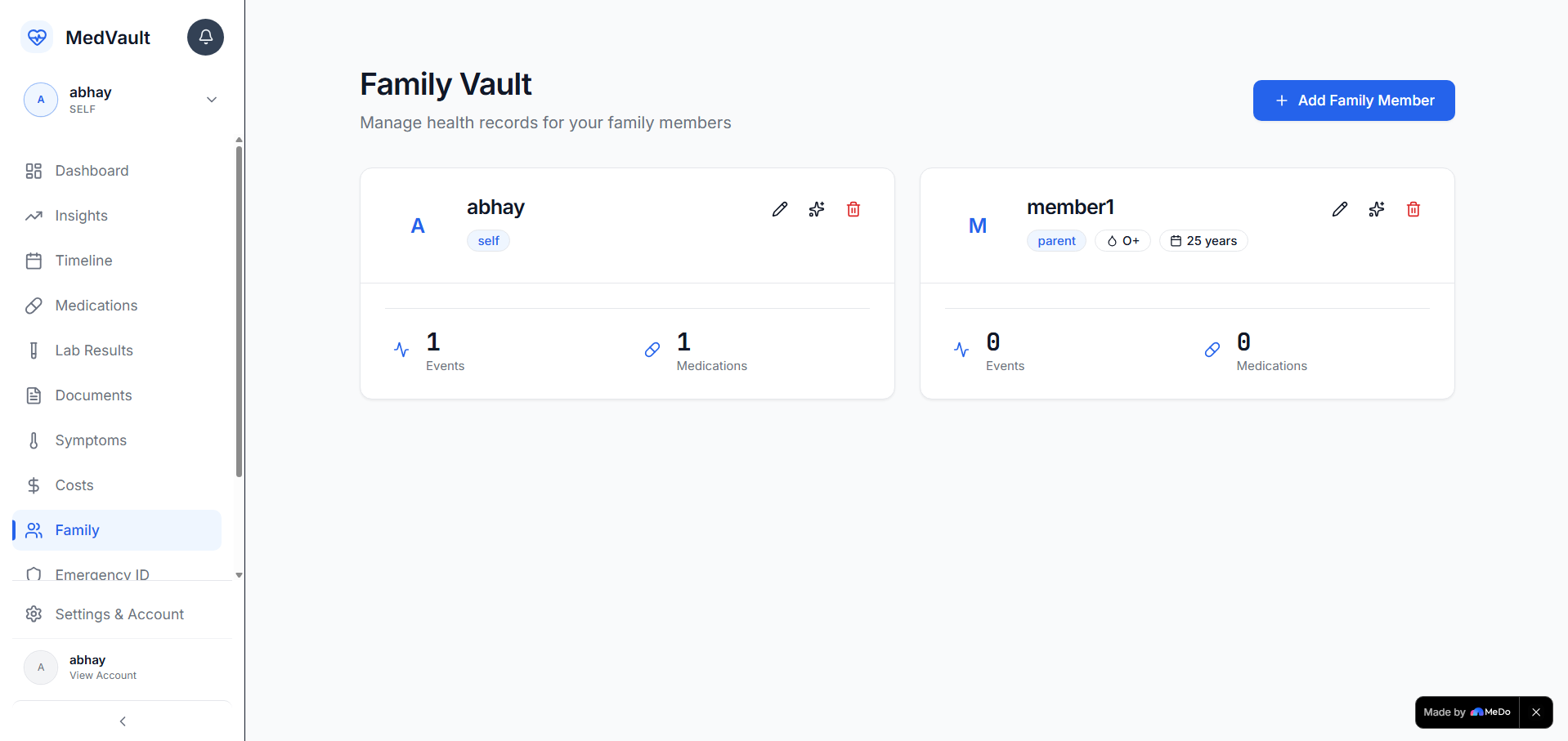
Family - Manage health records for your family members. Add profiles of your family members and keep data separate and safe into one account
-
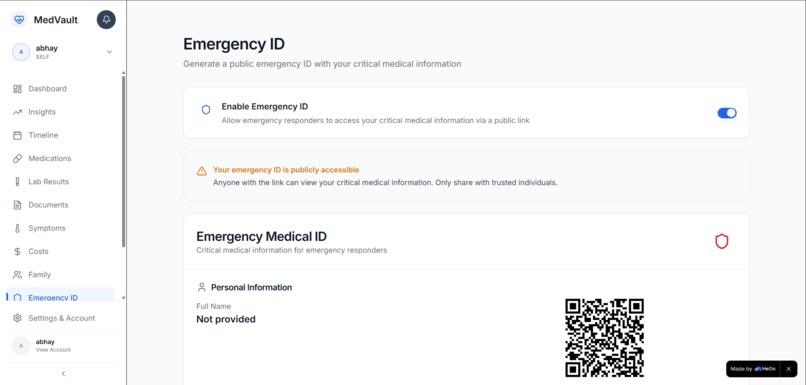
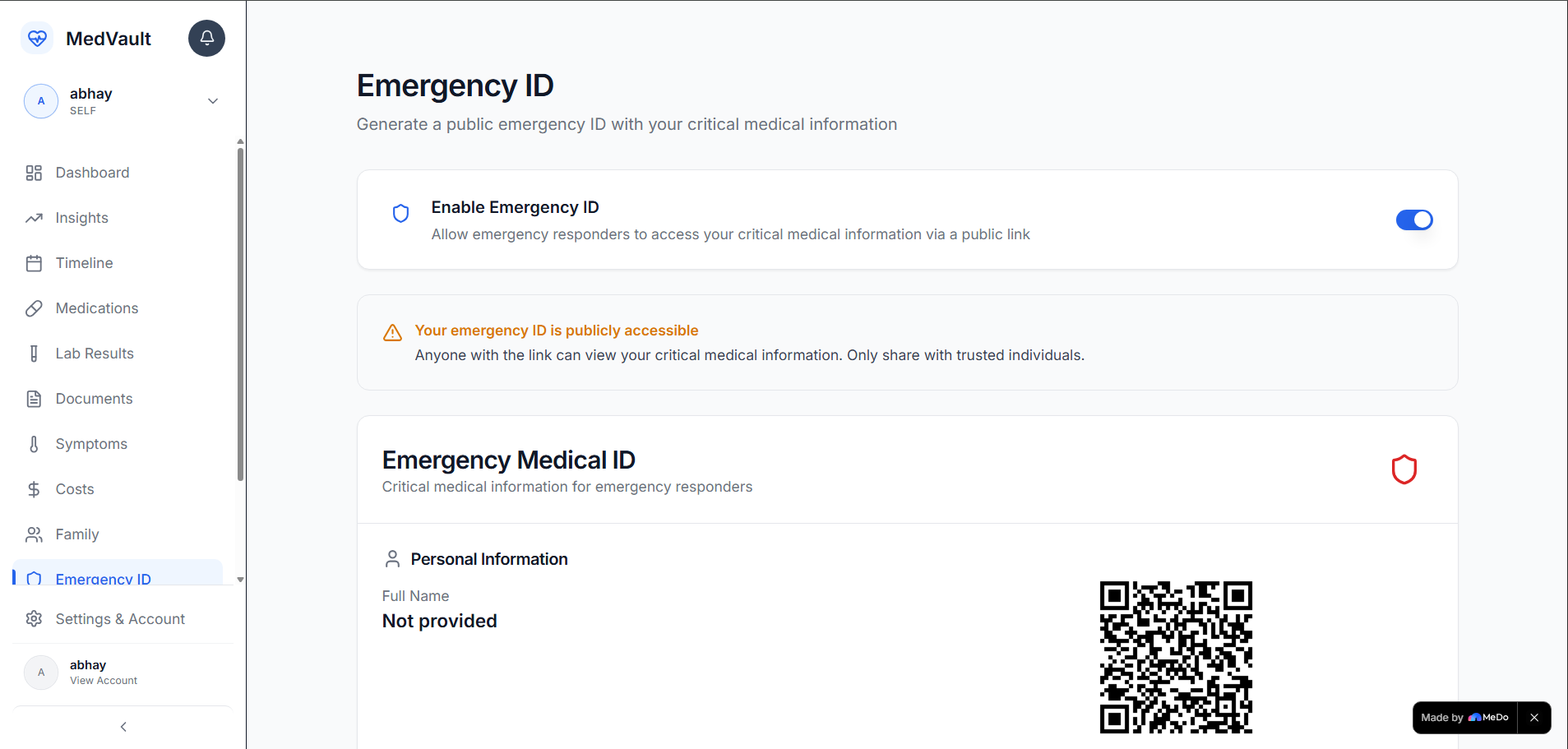
Emergency ID - Allow emergency responders to access your critical medical information via a public link.
-
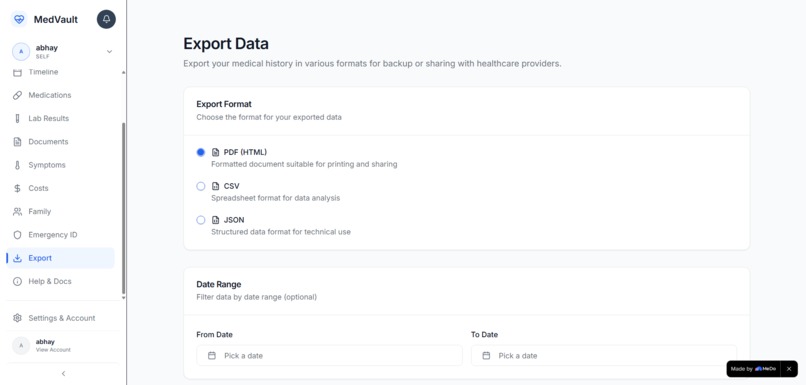
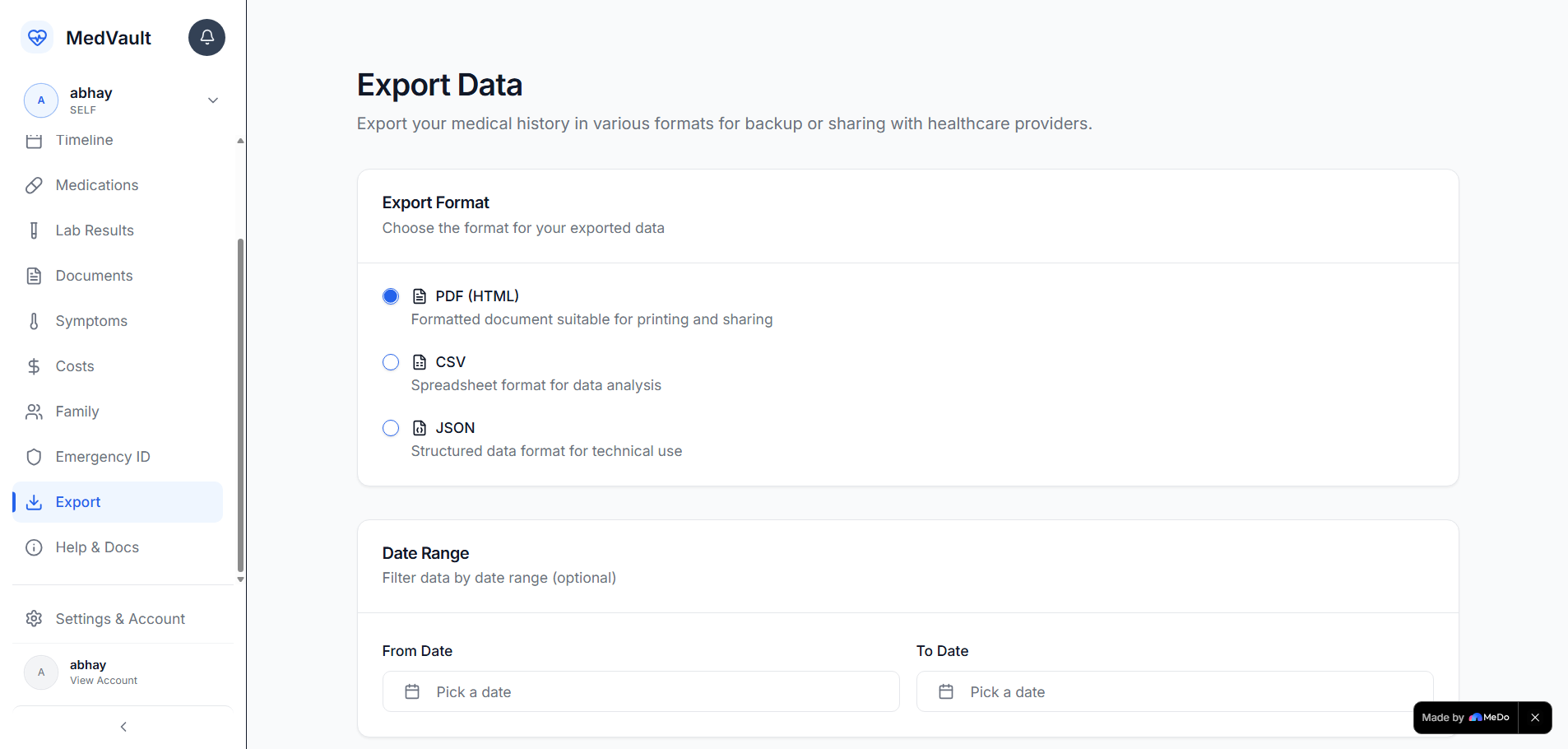
Export - Export your medical history in various formats for backup or sharing with healthcare providers.
-
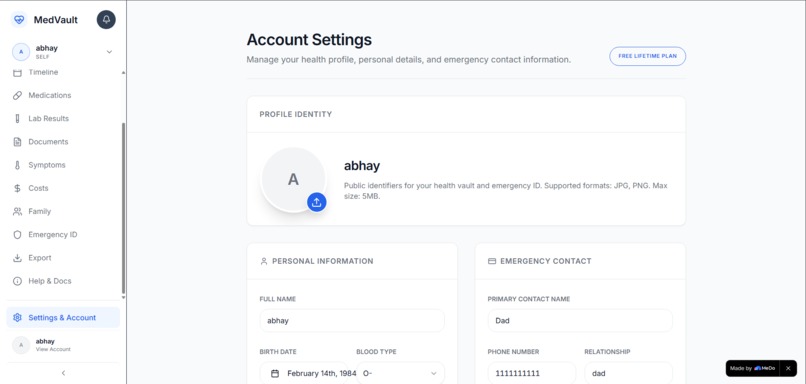
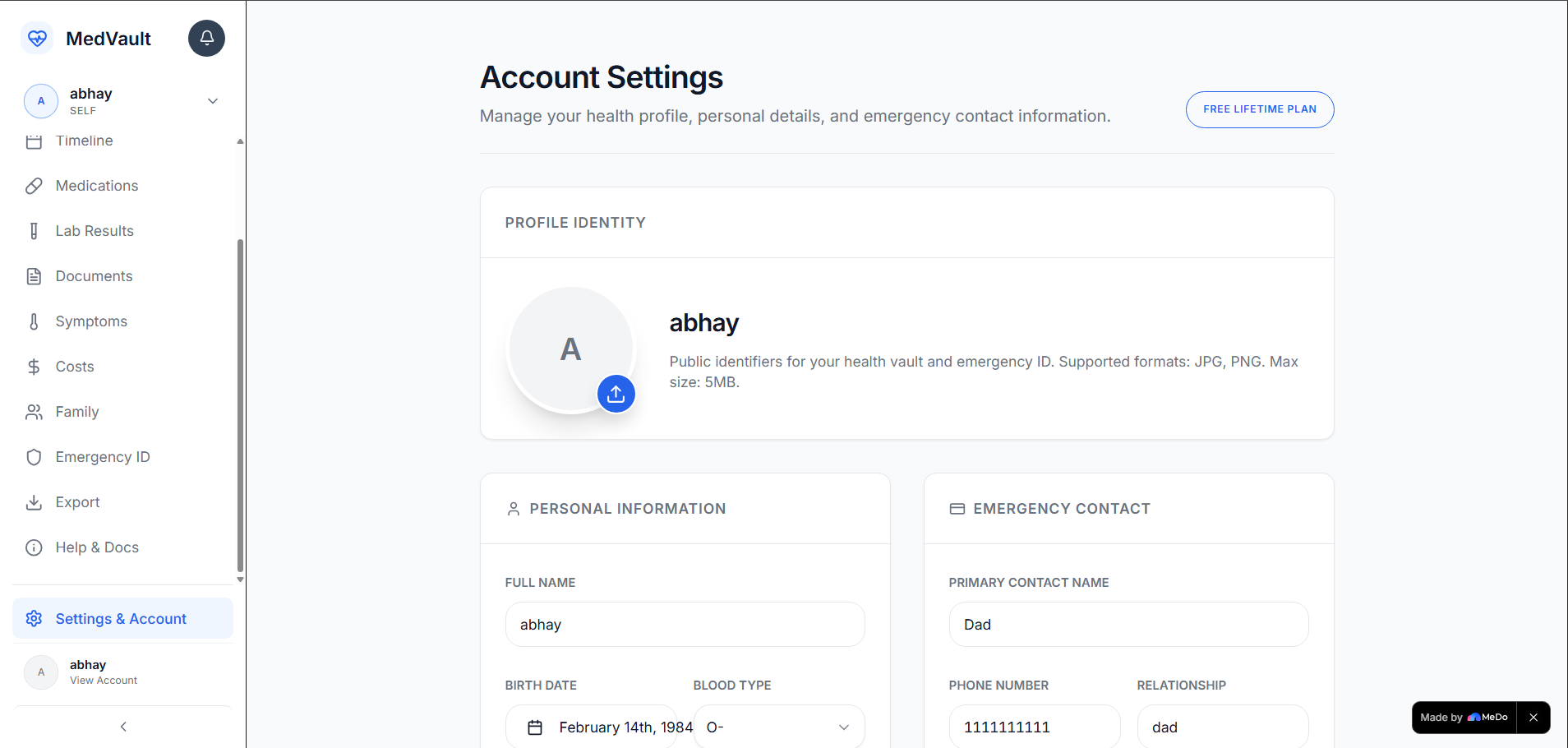
Settings & Account - Manage your health profile, personal details, and emergency contact information.
-
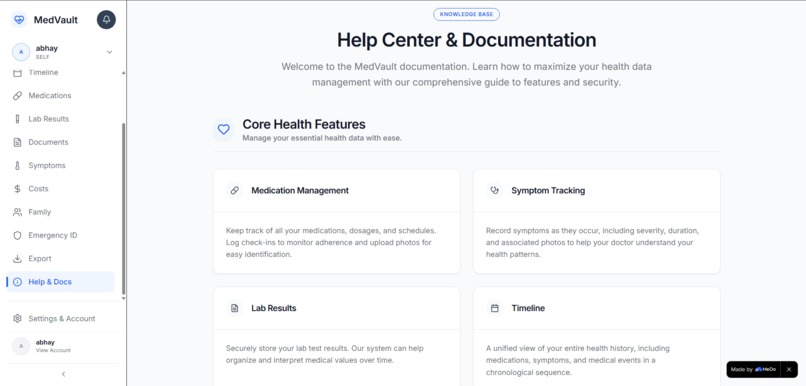
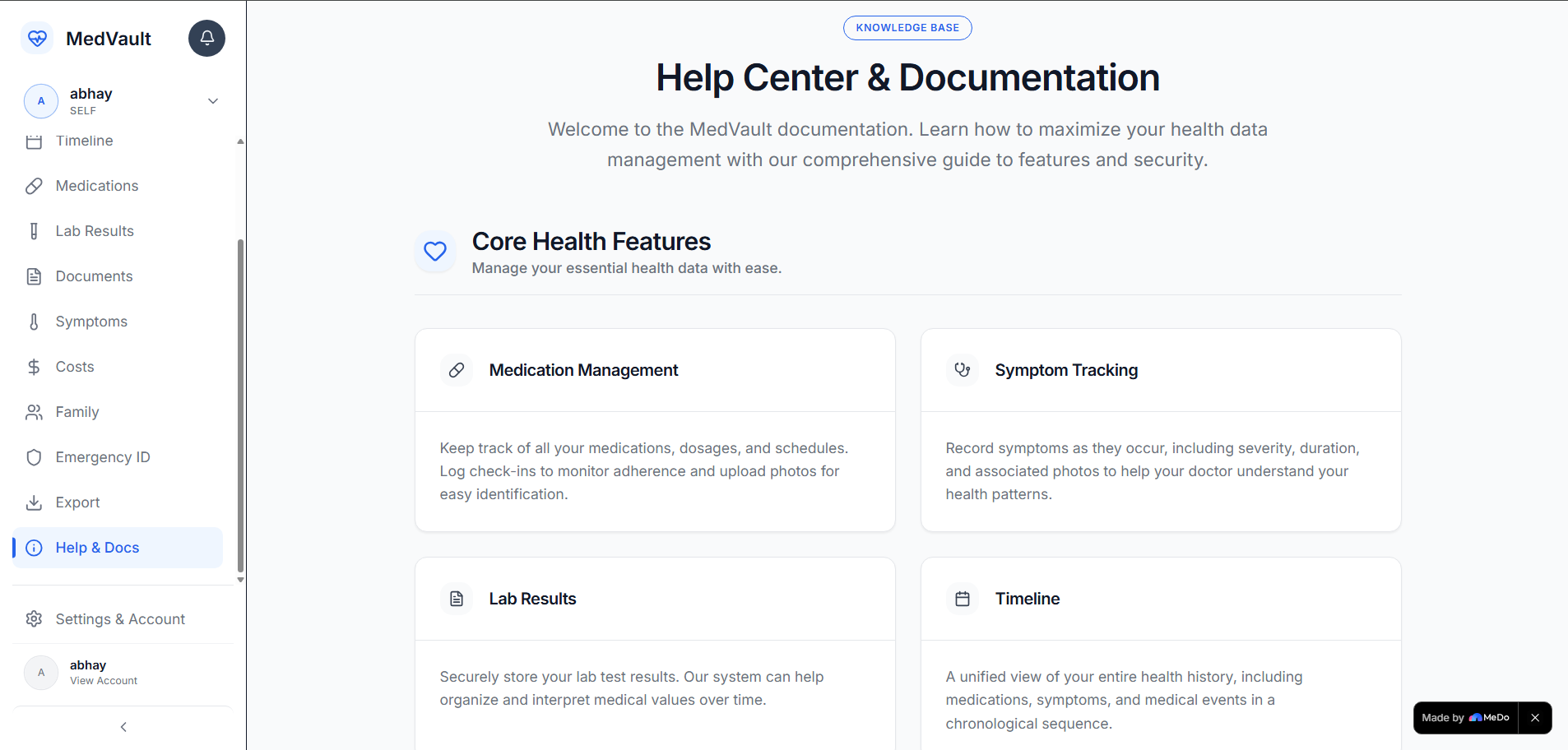
Help Center & Documentation - Learn how to maximize your health data management with our comprehensive guide to features and security.
Inspiration
Healthcare data is broken for normal people.
Your reports are scattered across WhatsApp chats, PDFs, hospital portals, emails, and drawers you never open again. When doctors ask about your medical history, medications, allergies, or past lab results, most people either forget, panic-scroll through galleries, or carry huge folders everywhere.
The bigger problem isn’t just storing medical records — it’s understanding them.
A blood test report may contain life-changing information, but most patients only see confusing numbers, medical jargon, and highlighted values they don’t understand. Existing healthcare apps either focus only on fitness tracking or require hospital integrations that make them inaccessible globally.
We wanted to build something radically simpler:
A personal AI-powered medical memory system.
MedVault was inspired by the idea that everyone deserves a secure, intelligent, always-accessible health companion — not just another storage vault.
The vision became:
Scan your reports Understand your health in plain English Track symptoms and medications Organize family health records Access emergency medical data instantly Own your complete medical history forever
What it does
MedVault is an AI-powered personal health intelligence platform that helps users securely manage and understand their medical history.
Core Features 🧠 AI Lab Intelligence
Users upload lab reports and receive plain-English AI explanations of:
abnormal values possible concerns medical context follow-up questions to ask doctors 📂 Secure Medical Vault
Store:
prescriptions blood reports scans handwritten notes discharge summaries vaccination records
with OCR-powered search and organization.
🕒 Health Timeline
A unified chronological timeline of:
diagnoses surgeries medications symptoms vaccinations lab results
so users can instantly understand their health journey.
💊 Medication Tracker
Track:
active medications refill reminders dosage schedules prescription history 👨👩👧 Family Vault
Manage medical records for:
parents children spouses
inside isolated profiles under one account.
🚨 Emergency ID
Generate a secure emergency profile with:
allergies blood group emergency contacts medications critical conditions
accessible through a shareable QR/token for first responders.
📊 Healthcare Cost Tracking
Track healthcare expenses by:
category provider family member reimbursement status 📄 Shareable Health Summaries
Generate exportable summaries for doctors in seconds instead of carrying physical files.
How we built it
MedVault was built using an AI-first workflow powered heavily by MeDo.
Instead of manually building every screen and architecture decision from scratch, we used conversational iteration with MeDo to rapidly prototype, refine, and deploy the platform.
Development Approach
We structured the build in layers:
Product architecture Database schema UI/UX system Feature modules AI integrations Export + sharing systems Emergency workflows Deployment optimization How MeDo helped
MeDo became our:
rapid prototyping engine frontend generator iteration assistant debugging collaborator deployment accelerator
The most impressive part was how quickly we could:
generate full UI sections refine layouts visually build reusable components iterate through multiple app flows connect APIs and backend logic conversationally Tech Stack Frontend React TypeScript Next.js Tailwind CSS shadcn/ui Zustand TanStack Query Recharts Backend Supabase PostgreSQL Supabase Auth Supabase Storage Supabase Realtime Supabase Edge Functions AI Layer OpenRouter Gemini OCR pipelines AI interpretation workflows Other Integrations PDF export systems QR-based emergency access OCR scanning workflows
The complete architecture, database schema, feature breakdown, and implementation system were documented in a detailed production plan.
The most impressive feature MeDo helped create was the AI Lab Intelligence parsing logic, seamlessly generating the UI and frontend logic required to translate complex medical JSON data into a plain-English patient dashboard.
Challenges we ran into
- Making AI medical explanations useful without becoming dangerous
Medical AI is sensitive territory.
We had to carefully design prompts so the AI:
explains results clearly avoids pretending to diagnose encourages doctor consultation handles critical values responsibly
Balancing usefulness and safety was one of the hardest parts.
- OCR for handwritten medical notes
Many countries still rely heavily on handwritten prescriptions and reports.
OCR works well for printed documents — but handwritten medical data is chaotic.
Instead of forcing unreliable AI extraction, we built a safer workflow:
preserve the original scan extract searchable text when possible allow manual tagging avoid dangerous auto-import behavior
That design decision dramatically improved trust.
- Building a scalable health architecture as a solo creator
Healthcare apps usually require:
large teams hospital integrations compliance-heavy systems
We intentionally designed MedVault to work globally without depending on hospital infrastructure.
That meant simplifying:
onboarding data models uploads sharing systems portability
while still making the app feel powerful.
- Preventing feature overload
Health products can become bloated very quickly.
We deliberately removed:
wearable integrations calorie tracking complicated insurance systems social features
to keep the experience focused and emotionally lightweight.
Accomplishments that we're proud of
🏆 Building a full health intelligence ecosystem as a solo-built AI-assisted product
MedVault evolved beyond a simple document vault into a complete personal health operating system.
🧠 AI explanations that feel human
The lab interpretation system translates confusing medical jargon into understandable language while remaining cautious and responsible.
📱 Clean UX despite heavy functionality
Even with:
timelines family profiles documents exports medications AI analysis
the app still feels lightweight and approachable.
🚨 Emergency ID system
One of the most meaningful features.
In emergencies, users can instantly share critical health information through a secure public profile.
⚡ Rapid execution using MeDo
Using conversational AI-driven development dramatically accelerated:
ideation architecture UI generation iteration speed deployment
The project moved from concept to structured full-stack product far faster than traditional workflows.
What we learned
AI is best used as a force multiplier, not autopilot
The biggest lesson: AI dramatically accelerates execution — but product thinking still matters most.
The quality of:
prompts architecture constraints UX decisions
determines the quality of the final product.
Simplicity beats feature quantity
The strongest products solve one painful problem extremely well.
People don’t need 100 health features.
They need:
clarity organization trust accessibility Trust matters more than automation in healthcare
Sometimes the correct UX decision is: “Don’t automate this.”
Especially with medical information.
Designing for user trust became more important than maximizing AI usage.
What's next for MedVault
Planned Features 📈 Predictive Health Insights
Detect trends across:
symptoms medications lab results recurring conditions
before problems escalate.
🌍 Multilingual AI Health Support
Expand medical interpretation into more regional languages.
🧾 Smart Doctor Visit Briefs
Generate one-page summaries before appointments.
📲 Mobile-first PWA Experience
Improve offline access and mobile scanning workflows.
🤝 Secure Sharing Permissions
Granular temporary access for:
doctors caregivers family members 🧠 Health Memory Graph
Connect historical events to identify long-term patterns automatically.
🏥 Future Integrations
Potential integrations with:
wearable devices healthcare APIs insurance systems pharmacy systems
without compromising simplicity.
Built With
- auth
- css
- edge
- figma
- gemini
- github
- javascript
- medo
- next.js
- ocr
- postgresql
- query
- react
- shadcn/ui
- sql
- storage
- supabase
- tailwind
- tanstack
- typescript
- zustand


Log in or sign up for Devpost to join the conversation.