Inspiration
We’ve all seen the frustration in hospitals—patients carrying bundles of paper, doctors losing time repeating questions, and data being missed at critical moments. We asked ourselves: What if all of this could be done with a click? That’s how MedVault was born—to eliminate paperwork, reduce diagnostic delays, and build a reliable digital bridge between patients and providers.
What it does
With just a patient ID, doctors can securely access critical health data like past diagnoses, prescriptions, allergies, and more. Built with real-time syncing, Firebase security, and role-based access controls, MedVault ensures the right people access the right records—instantly. It’s fast. It’s secure. It’s paperless.
How we built it
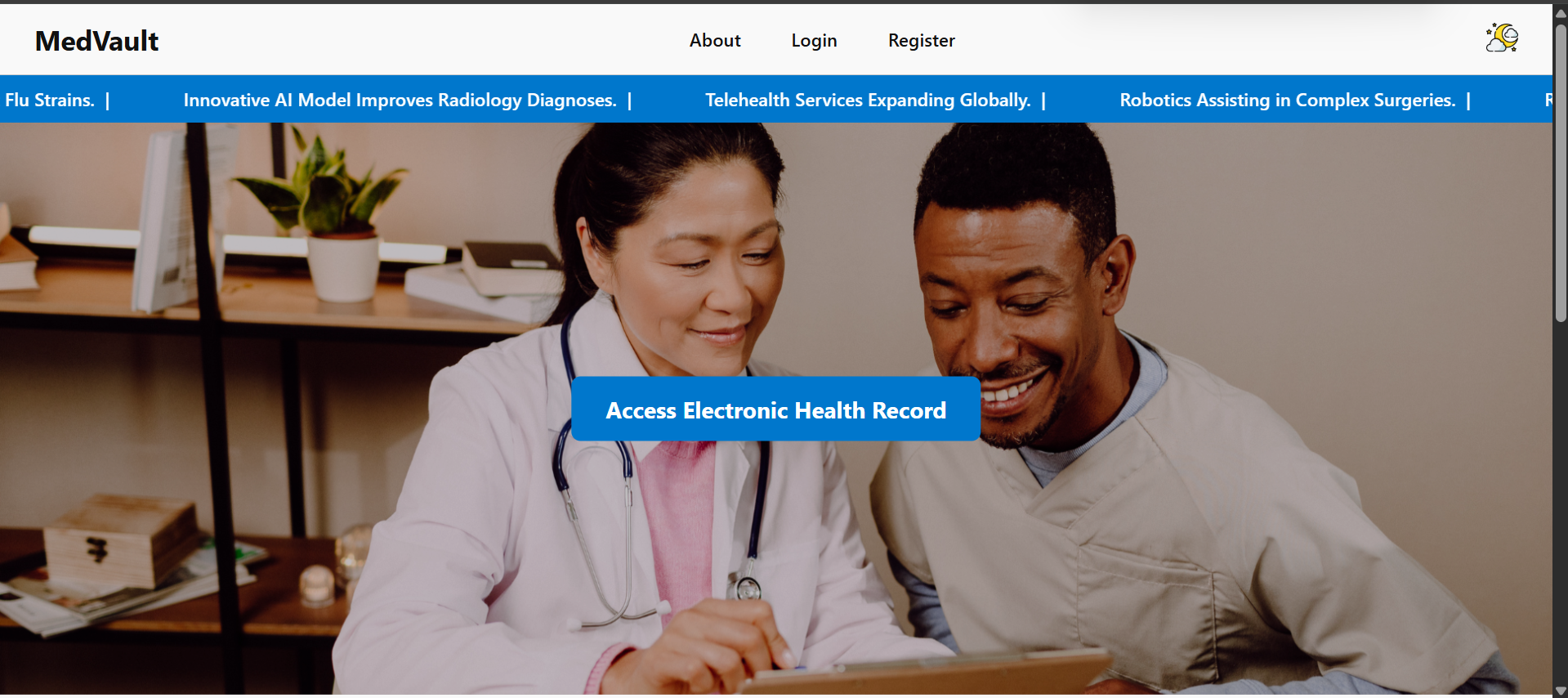
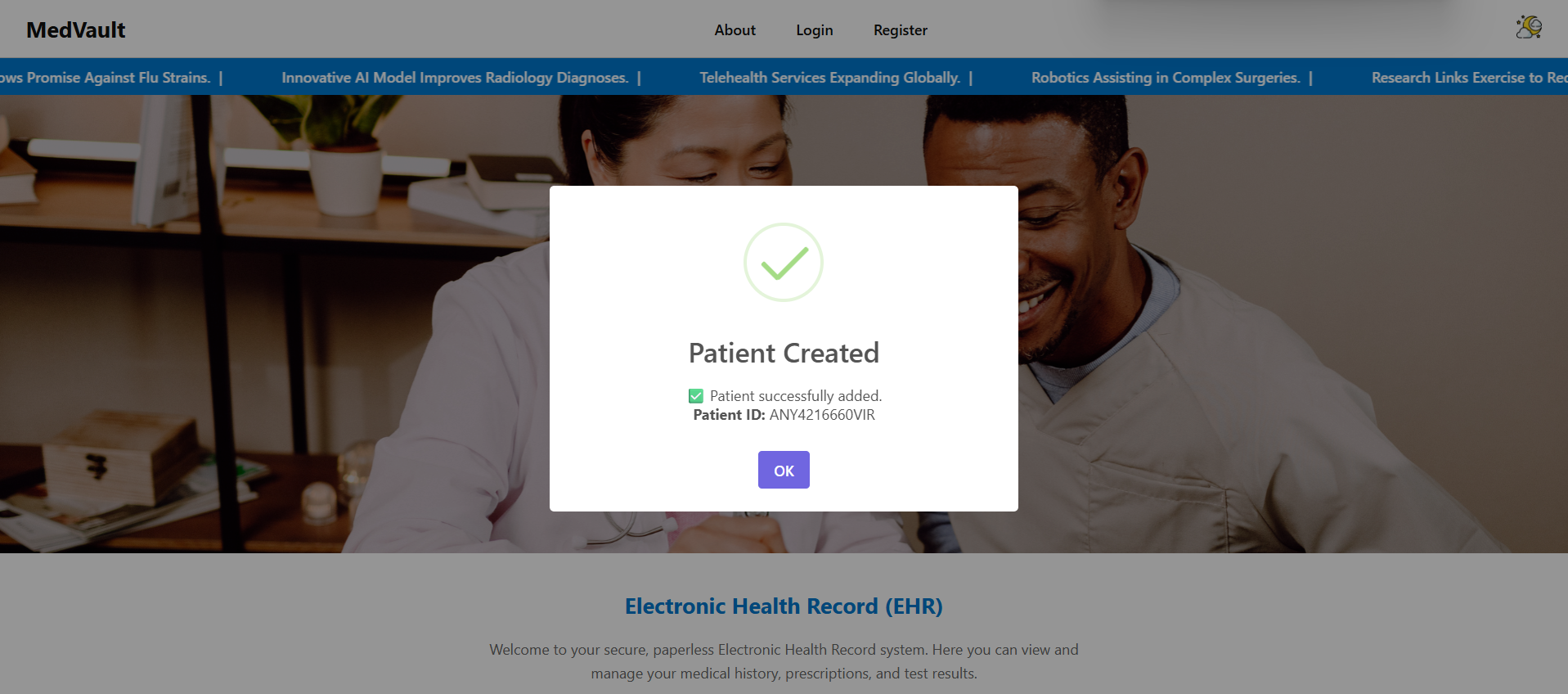
We built the frontend using React.js along with HTML5 and CSS3 to ensure a responsive and modern user interface. For the database, we used Firebase Firestore to store and manage patient records in real time. Authentication was handled using Firebase Auth, allowing secure login and role-based access for doctors, patients, and admins. All backend logic and database queries were implemented using the Firebase Firestore SDK, enabling smooth data retrieval and updates. The platform was deployed using Firebase Hosting, ensuring fast, scalable, and globally accessible performance. To enhance user experience, we integrated SweetAlert2 for clean and interactive popups, and added a Dark/Light Mode Toggle to suit user preferences. We also included features like health news integration, a fully mobile-responsive UI, admin access control, and a patient lookup system based on unique IDs. Throughout development, we prioritized real-world practicality—making it easy for doctors to retrieve patient data instantly while keeping security and simplicity at the heart of the system.
Challenges we ran into
- Data Privacy: Even for a prototype, we enforced controlled access for doctors, patients, and admins.
- Mobile Responsiveness: Ensuring a clean experience across devices took several design tweaks.
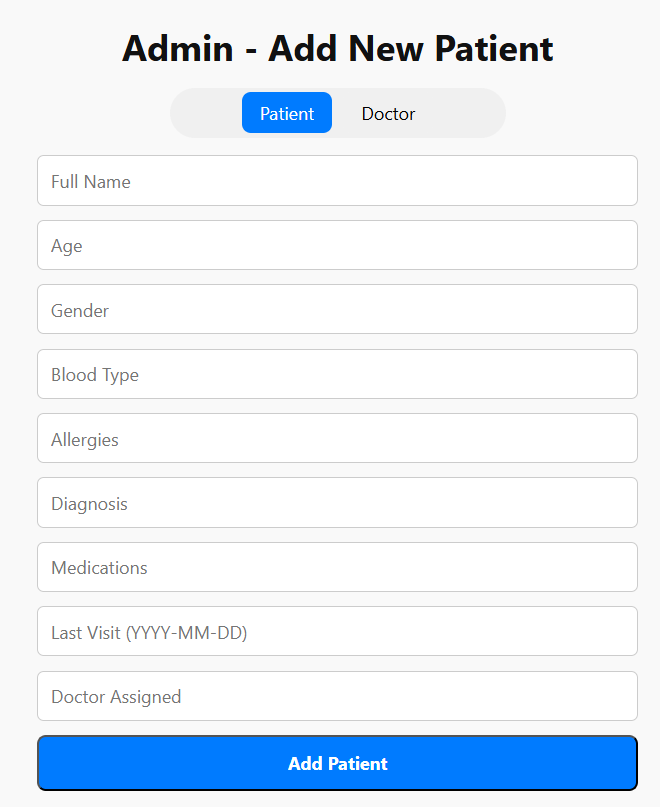
- Form Complexity: Designing forms that collect all crucial patient info without overwhelming the UI.
Accomplishments that we're proud of
- Built a working EHR demo within a short timeframe.
- Created real-time access to patient data using Firebase.
- Made it easy to use, even for non-technical users.
- Added thoughtful touches like theme toggling, medical news marquee, and admin controls.
What we learned
- Doctors need speed and clarity, not complexity.
- Role-based access control is critical to protect sensitive data.
- Integrating even a small-scale EHR requires thoughtful design.
- A polished, responsive frontend improves trust and usability.
- Firebase provides a strong foundation for real-time health apps.
What's next for MedVault - A Paperless EHR
Moving forward, we plan to enhance MedVault with intelligent report uploading, QR-based emergency access, and integration with national health infrastructure. Our objective is to advance toward a more seamless, secure, and scalable digital healthcare solution.


Log in or sign up for Devpost to join the conversation.