
Inspiration
In the rapidly evolving landscape of blockchain technology, smart contracts stand as the cornerstone of decentralized applications, automating transactions and agreements without the need for intermediaries. However, as the complexity and significance of these contracts grow, so does the risk of vulnerabilities and inefficiencies. Inspired by the potential to harness AI in enhancing the security and performance of smart contracts, we envisioned Chainmail - a platform that utilizes natural language processing to critically analyze, suggest improvements, and fortify smart contracts against common pitfalls and emerging threats.
What It Does
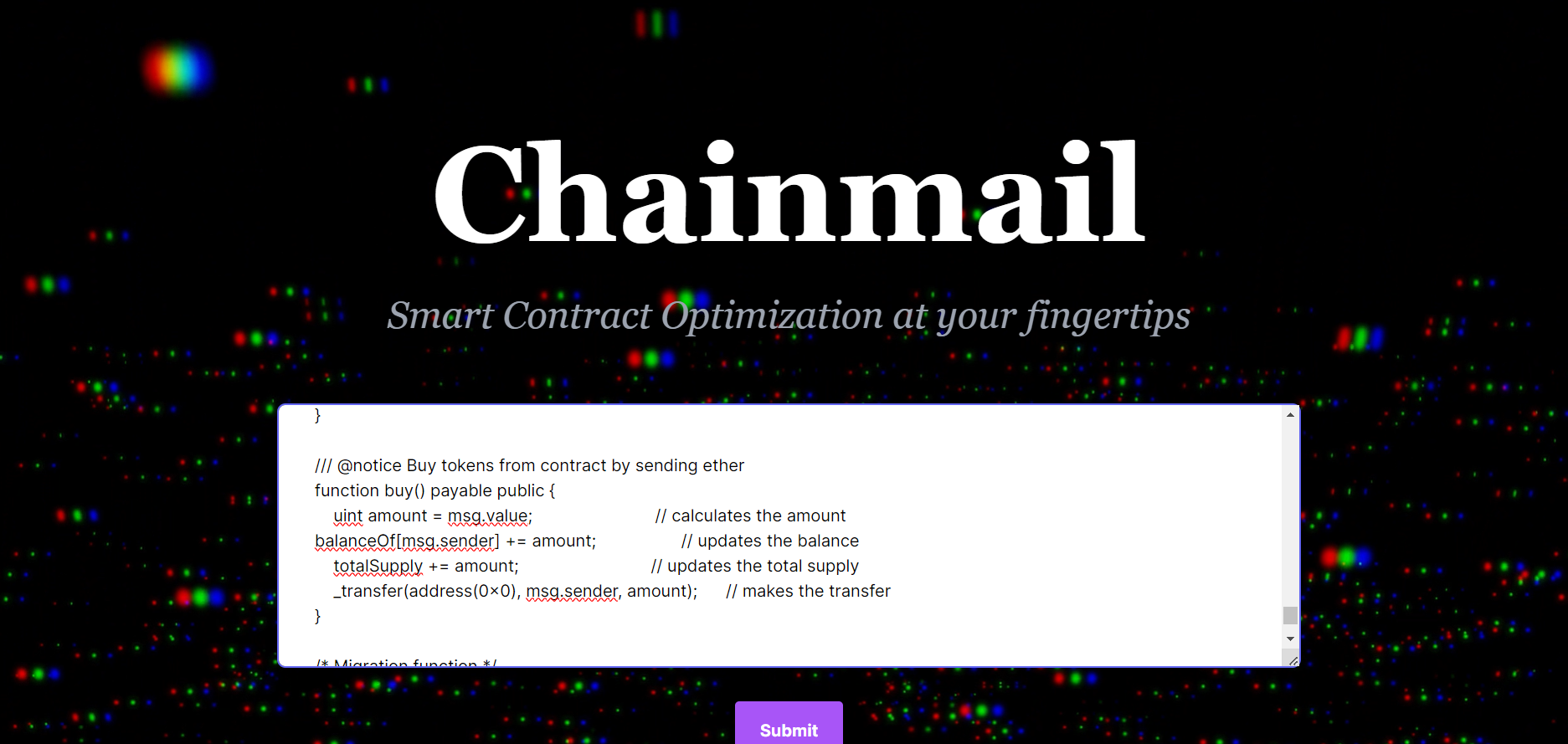
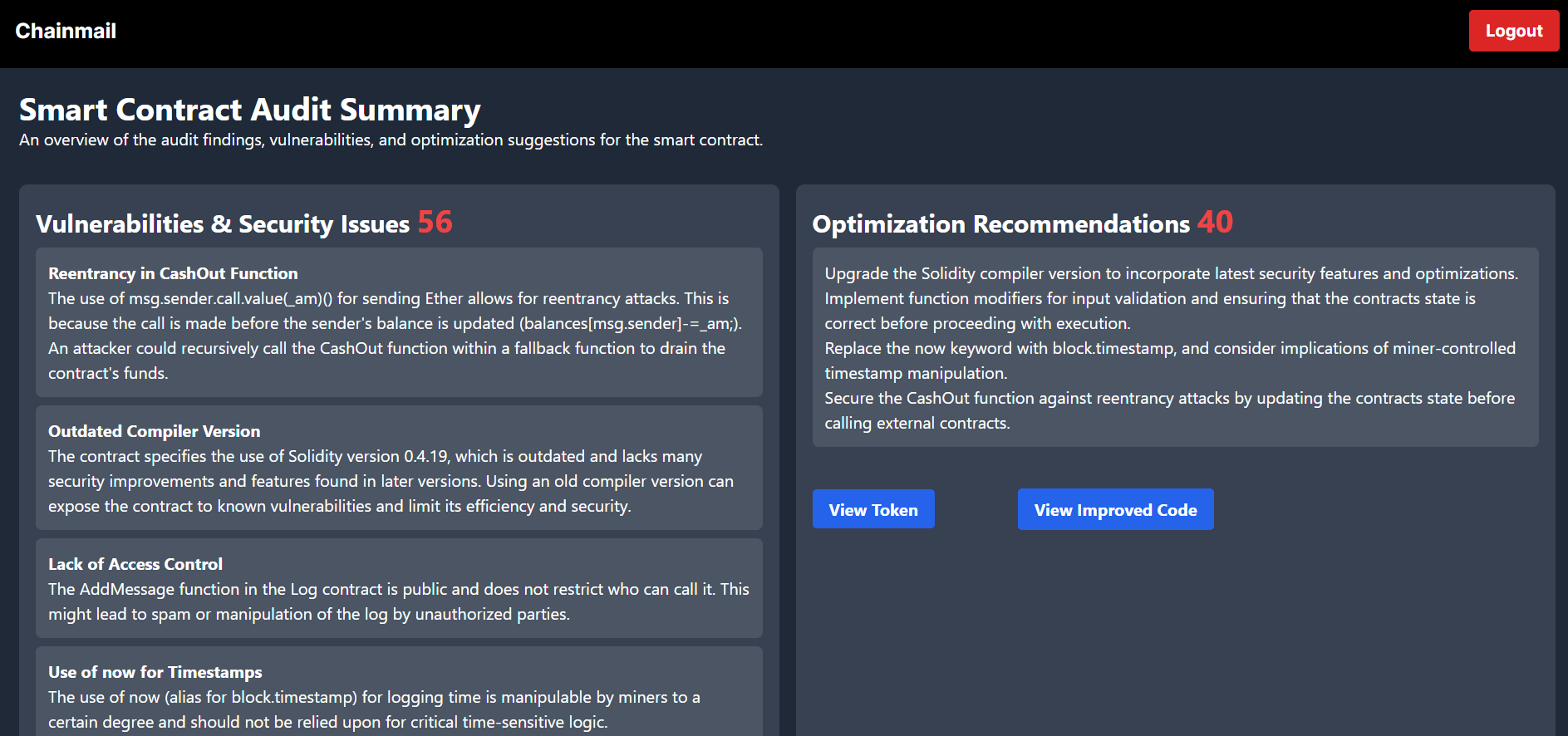
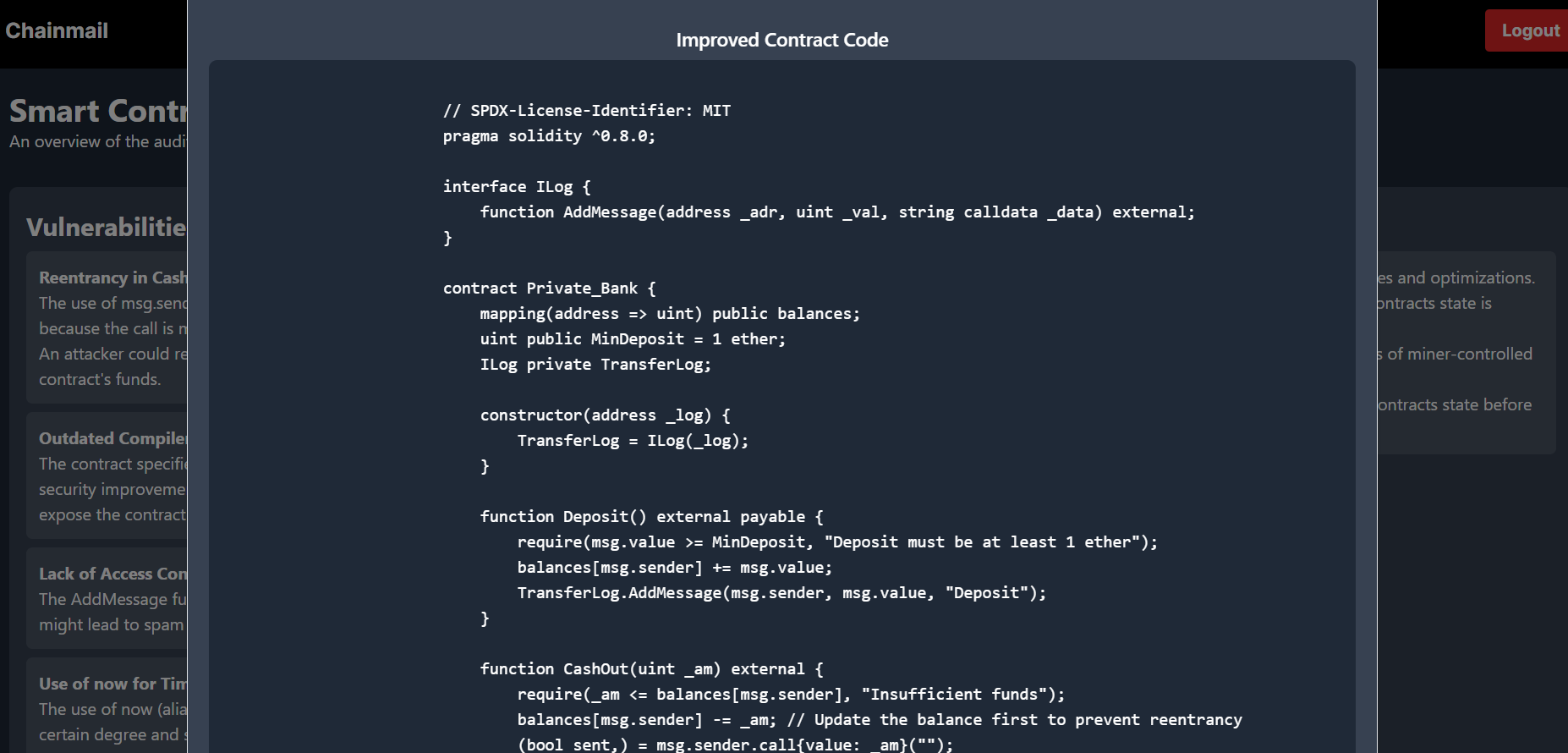
Chainmail leverages machine learning to review smart contracts, pinpoint areas of concern, and recommend enhancements. By inputting a contract, developers receive in-depth feedback on potential vulnerabilities, optimization opportunities, and best practices. Furthermore, each analyzed contract is tokenized and deployed to Arbitrum, creating a unique digital representation of each security audit on the Ethereum blockchain. This tokenization not only certifies the contract's review but also facilitates a transparent and immutable record of its evaluation and suggested improvements.
How We Built It
We started with integrating the OpenAI API to harness the capabilities of ChatGPT-4, enabling it to generally analyze the aspects of smart contracts. We then had to fine tune the model to work well on smart contract security vulnerability detection. For the blockchain component, we developed a Solidity ERC 721 token contract and deployed it on Arbitrum to handle the creation and management of proofs corresponding to each audit. The frontend, crafted with Next.js, offers a user-friendly interface for developers to interact with Chainmail, submit smart contracts for review, and view their tokenized representations.
Challenges We Ran Into
One of the main challenges was fine tuning GPT-4 to accurately understand and critique smart contracts' code, requiring extensive testing to ensure reliability. Additionally, integrating blockchain technology presented its own set of hurdles, particularly in designing a tokenization system that was both efficient and meaningful. Ensuring the security and privacy of submitted contracts was also paramount, leading us to implement robust encryption and authentication mechanisms.
Accomplishments That We're Proud Of
Successfully creating a platform that bridges AI's analytical capabilities with blockchain's security and transparency is our crowning achievement. Chainmail not only stands as a testament to the synergy between these technologies but also empowers developers with a tool that significantly enhances the quality and security of smart contracts.
What We Learned
This project deepened our understanding of both AI and blockchain technology. We learned about the nuances of smart contract development, the intricacies of AI-driven code analysis, and the challenges of integrating disparate technologies into a cohesive, secure platform.
What's Next for Chainmail
Looking forward, we aim to expand Chainmail's capabilities to include more blockchains beyond Ethereum, encompassing a wider array of smart contract languages and standards. We also plan to enhance the AI model's understanding of complex contracts and introduce community-driven features, allowing developers to share insights and improvements. Our ultimate goal is to establish Chainmail as an essential tool in the development and deployment of secure, efficient smart contracts across the blockchain ecosystem.
Built With
- arbitrum
- chainlink
- javascript
- langchain
- next.js
- node.js
- openai
- typescript

Log in or sign up for Devpost to join the conversation.