-
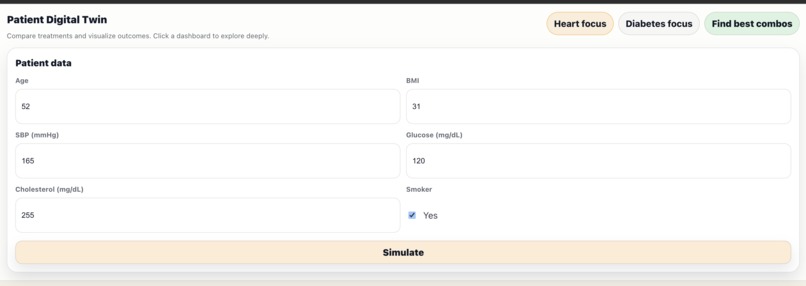
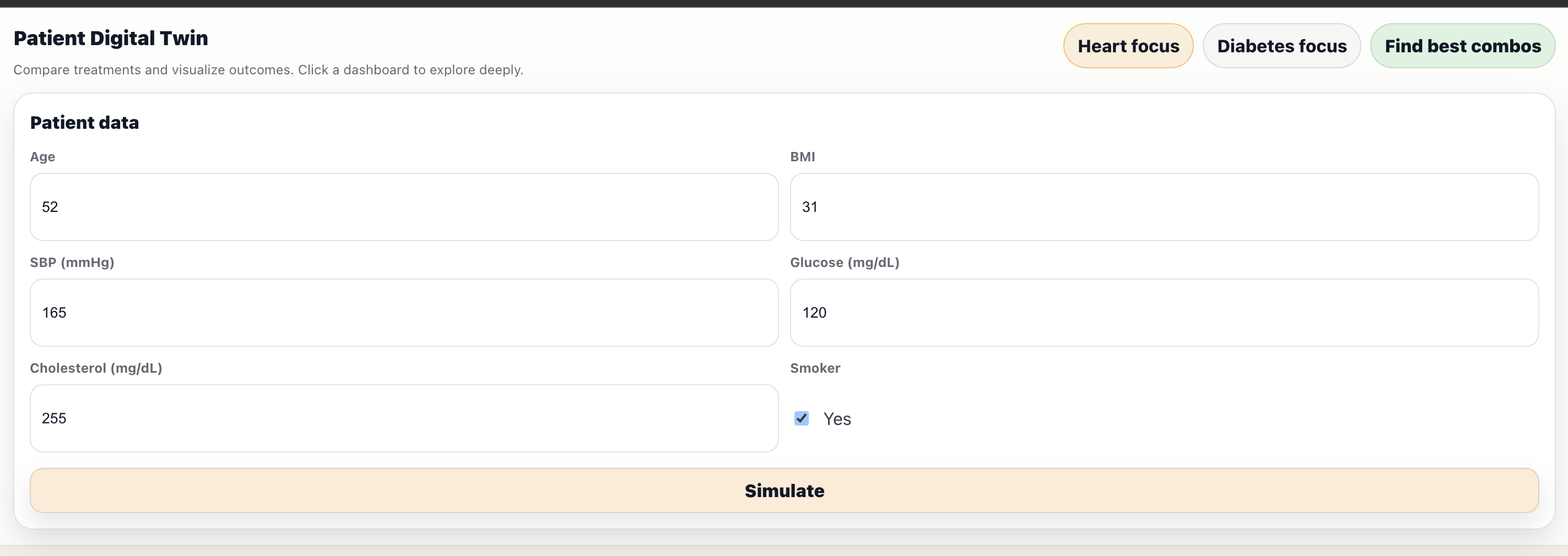
Patient information collection page
-
-
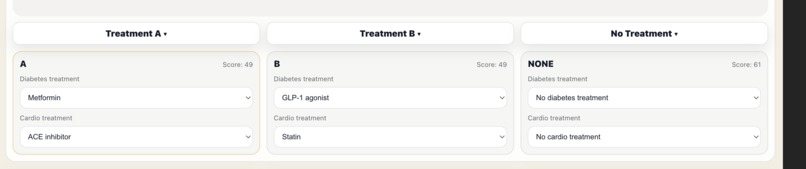
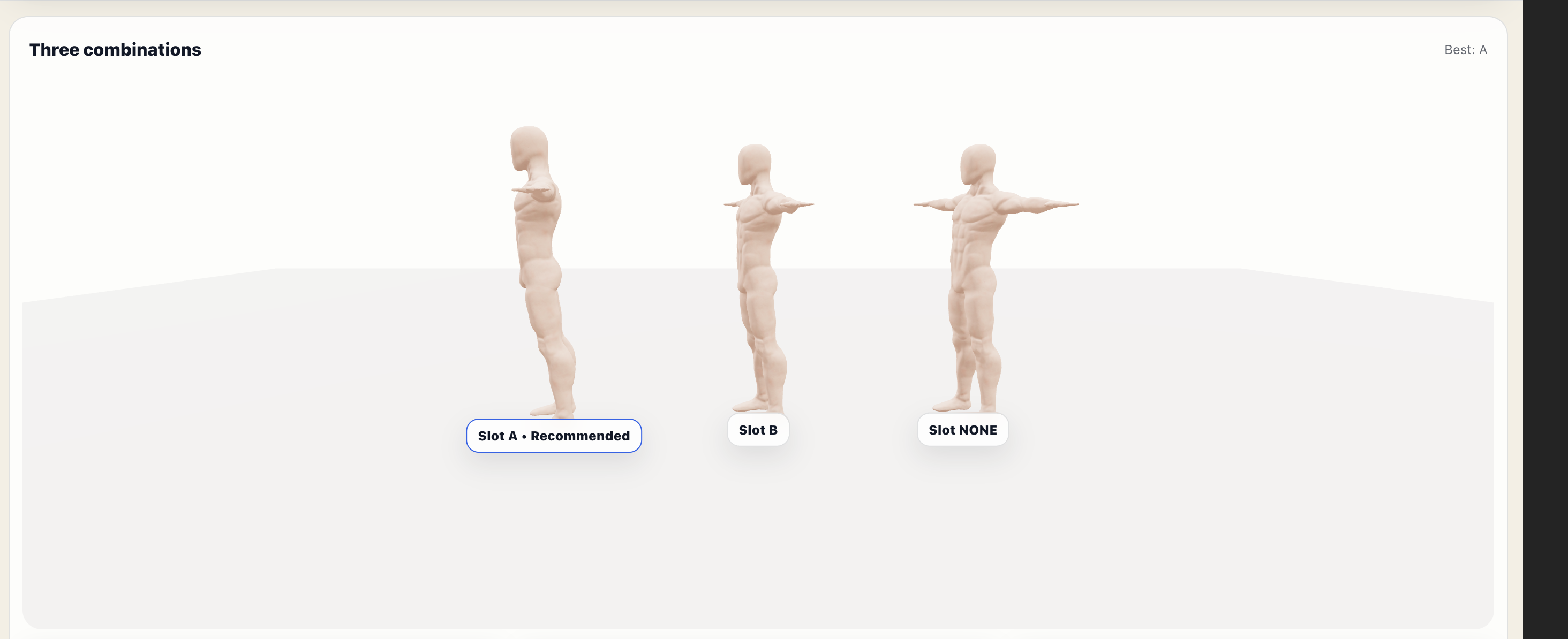
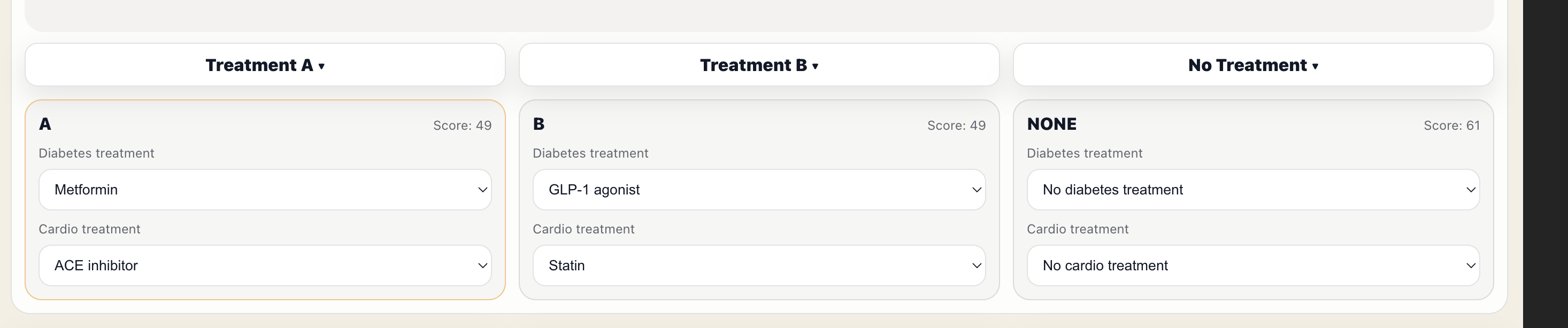
Potential Treatment suggestions
-
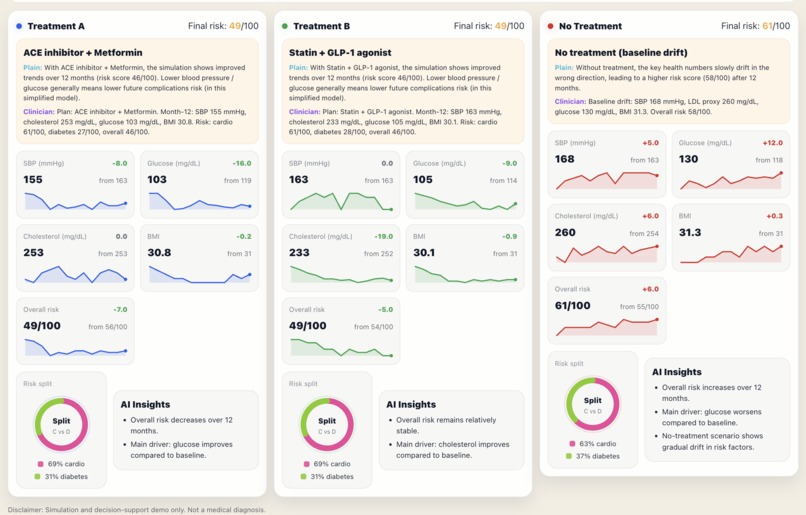
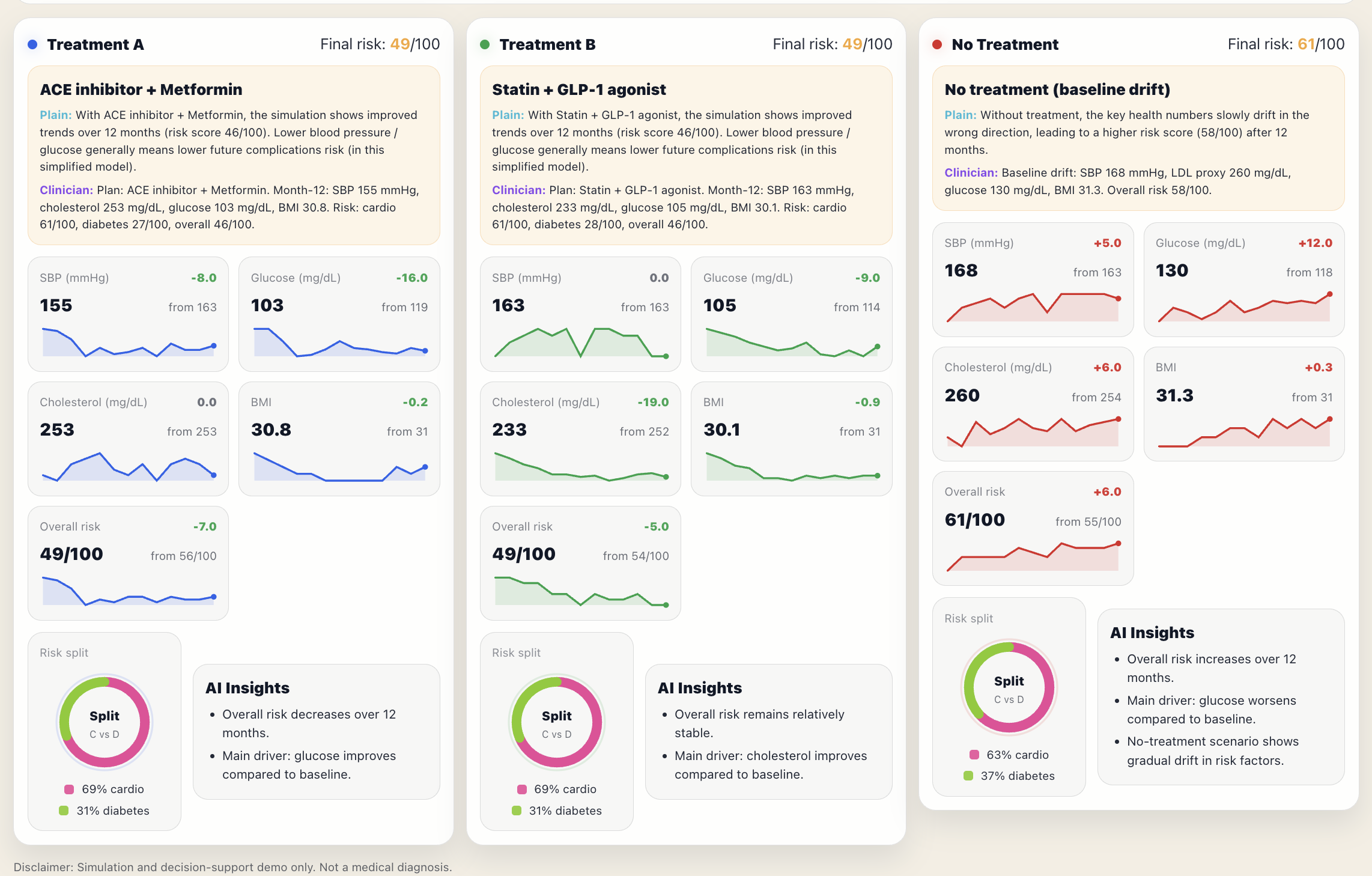
Effectiveness of each treatment type
Inspiration
We were inspired by how powerful the concept of digital twins has become in engineering — and started asking why healthcare still relies on static snapshots of patients. Chronic conditions like cardiovascular disease and type 2 diabetes affect millions, yet treatment decisions are often made without tools to visualise future outcomes. As students interested in healthcare + tech, we wanted to build something that makes personalised medicine more tangible and interactive.
What it does
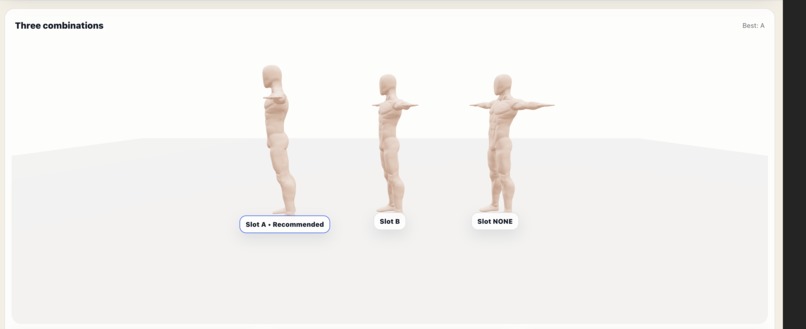
MedTwin is a patient digital twin platform that simulates outcomes for cardiovascular risk and type 2 diabetes. Users create a patient profile and compare multiple treatment scenarios (Treatment A, Treatment B, or no treatment) side-by-side. Using two condition-specific simulation modules on top of a shared patient engine, MedTwin visualizes projected risk changes over time — helping users explore how different interventions may impact long-term health.
How we built it
We designed one unified backend that generates a digital patient profile from basic clinical inputs (age, BMI, blood pressure, cholesterol, glucose/HbA1c). On top of this, we implemented two plug-in simulation modules: CardioSim for cardiovascular risk and DiabetesSim for diabetes control. The frontend provides an interactive dashboard where users can toggle between conditions and compare scenarios through graphs and normalized risk scores. We focused on keeping models simple, interpretable, and scalable.
Challenges we ran into
Our biggest challenge was balancing realism with hackathon scope. We had to carefully limit clinical variables while still producing meaningful simulations. Integrating two conditions into one coherent system — without overcomplicating the UI — was also tricky. Designing clean visual comparisons under time pressure pushed us to iterate quickly and make tough prioritization decisions.
Accomplishments that we’re proud of
We successfully built a working digital twin concept with two disease modules in a single platform. We’re especially proud of creating a shared patient engine, scenario comparison system, and intuitive interface — all while telling a clear story around personalised care. Turning a complex healthcare idea into something interactive and demo-ready was a huge win for our team.
What we learned
We learned how to architect modular systems, rapidly prototype full-stack applications, and translate biomedical concepts into technical features. Most importantly, we learned how powerful clear storytelling and focused scope are when building healthcare tools.
What’s next for MedTwin
Next, we’d love to expand MedTwin with more conditions, richer patient inputs, and improved simulation models. Long term, we envision integrating real clinical datasets and adding clinician-facing features to support decision-making — moving closer to a future where every patient has a living digital twin.

Log in or sign up for Devpost to join the conversation.