💊 Medicine Reminder Application – Project Story
🌟 Inspiration
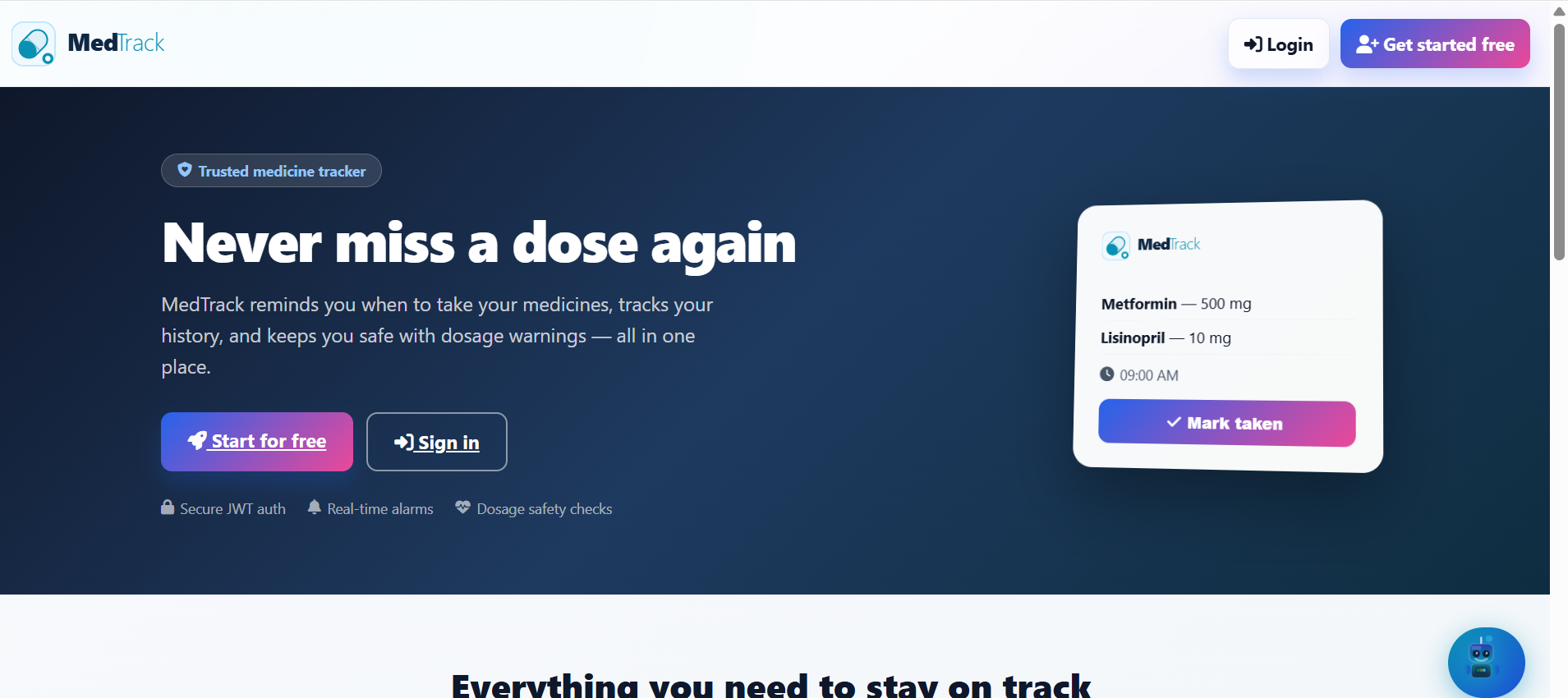
The idea for this project came from observing how easy it is for people—especially elderly patients or those managing multiple prescriptions—to miss doses or take incorrect amounts of medication. Even small mistakes in dosage can have serious consequences.
We wanted to build a solution that not only reminds users to take their medicine, but also actively helps prevent unsafe usage through validation and alerts. The goal was to combine healthcare awareness with backend engineering to create something practical and impactful.
🛠️ How We Built It
The application was developed using a Spring Boot–based architecture, following a clean separation of concerns:
- Backend Framework: Spring Boot (RESTful API design)
- Security: Spring Security with JWT authentication
- Database: MySQL with Hibernate (JPA) for ORM
- Architecture: Controller → Service → Repository layers
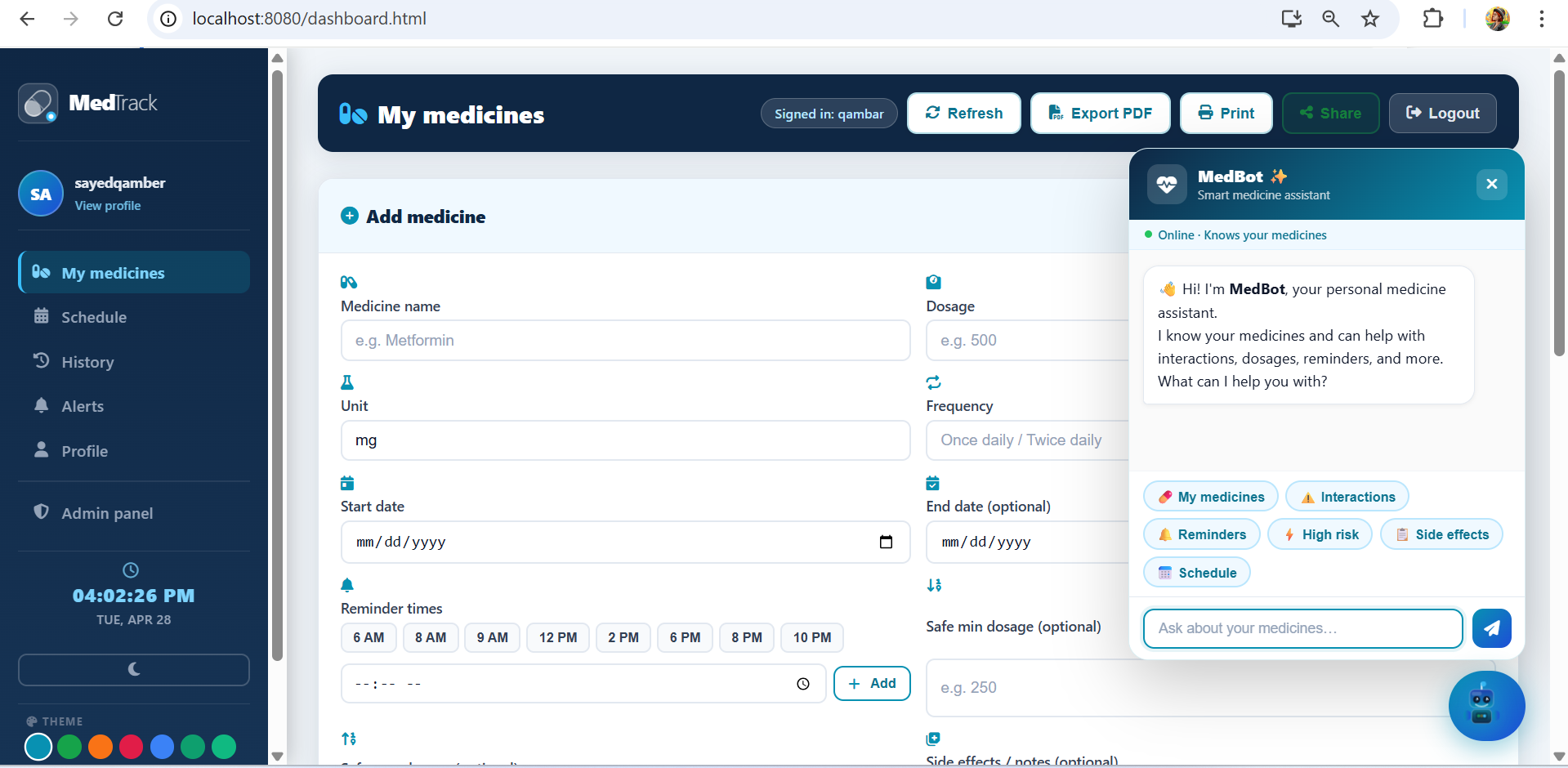
We implemented a scheduled task system that checks reminders every minute and triggers alerts accordingly. Each medicine entry includes dosage limits, allowing the system to validate user input in real time.
The dosage validation logic can be summarized as:
$$ \text{Risk Level} = \begin{cases} \text{Low} & \text{if } d_{min} \leq d \leq d_{max} \ \text{Warning} & \text{if } d < d_{min} \ \text{High Risk} & \text{if } d > d_{max} \end{cases} $$
Where:
- ( d ) = entered dosage
- ( d_{min} ), ( d_{max} ) = safe dosage range
📚 What We Learned
This project helped strengthen both technical and problem-solving skills:
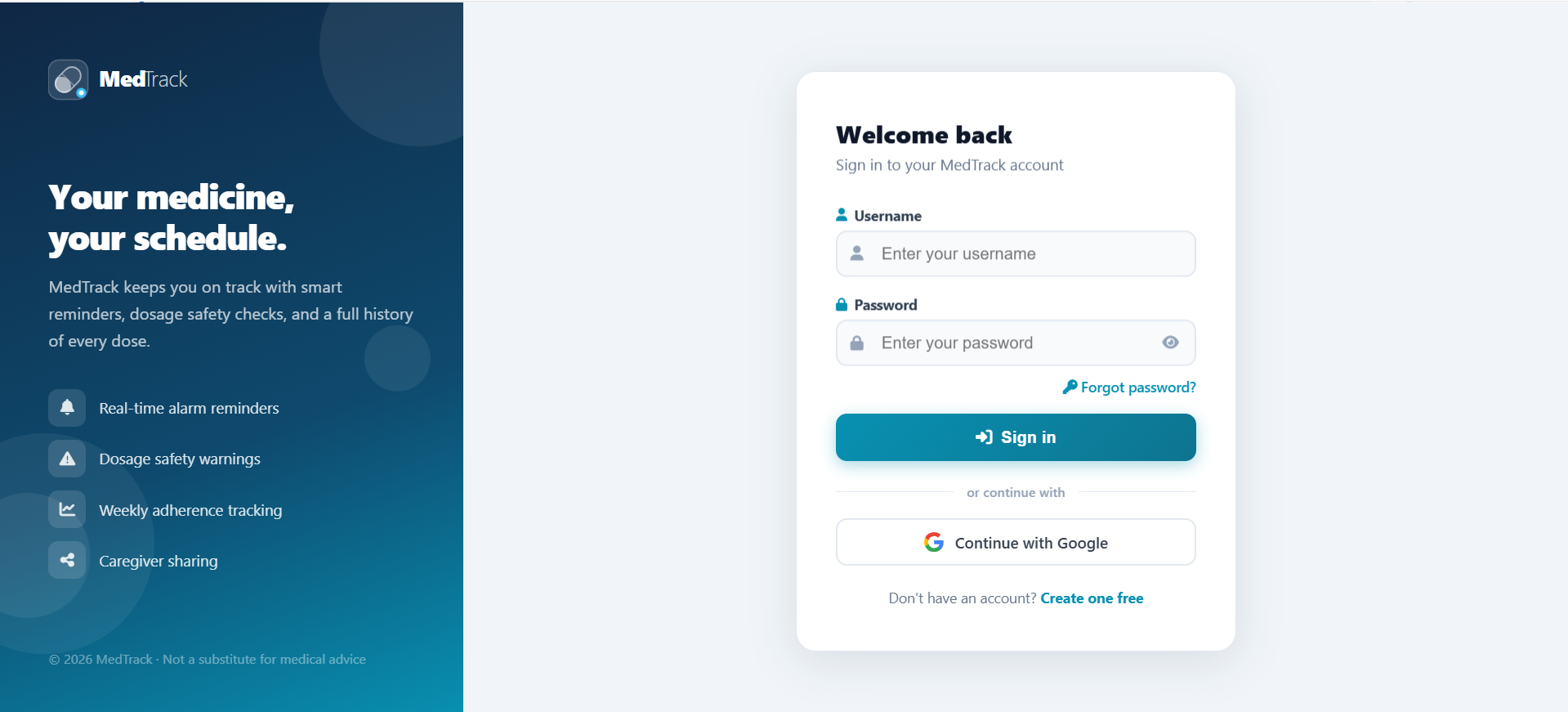
- Designing secure authentication systems using JWT
- Implementing role-based access control for different user types
- Working with Spring Boot scheduling for real-time features
- Structuring scalable backend systems with layered architecture
- Understanding the importance of domain-specific validation in healthcare
We also gained insight into how small UX decisions can significantly impact user safety.
⚠️ Challenges We Faced
1. Dosage Validation Logic Designing a flexible system that works for different medicines and dosage ranges required careful planning. Ensuring accuracy while keeping it user-friendly was a key challenge.
2. Reminder Scheduling Handling time-based reminders reliably (without duplication or delay) required optimizing scheduled tasks and time handling.
3. Security Implementation Configuring JWT authentication and securing endpoints while maintaining usability took multiple iterations.
4. Data Consistency Ensuring that updates to medicines, schedules, and reminders stayed synchronized across the system was critical.
🚀 Final Thoughts
This project demonstrates how backend systems can go beyond CRUD operations and play a meaningful role in real-world problem solving. By integrating validation, automation, and security, we created a system that supports safer medication practices.
It’s a strong step toward building intelligent healthcare applications that are both practical and scalable.
Built With
- css
- html
- java
- javascript
- maven
- springboot


Log in or sign up for Devpost to join the conversation.