-
-
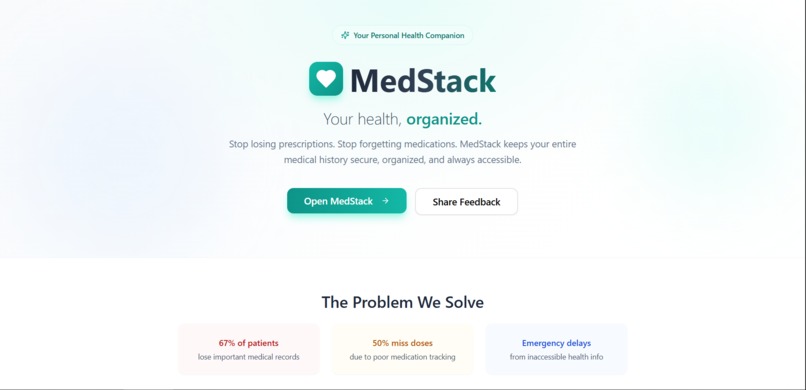
LANDING PAGE
-
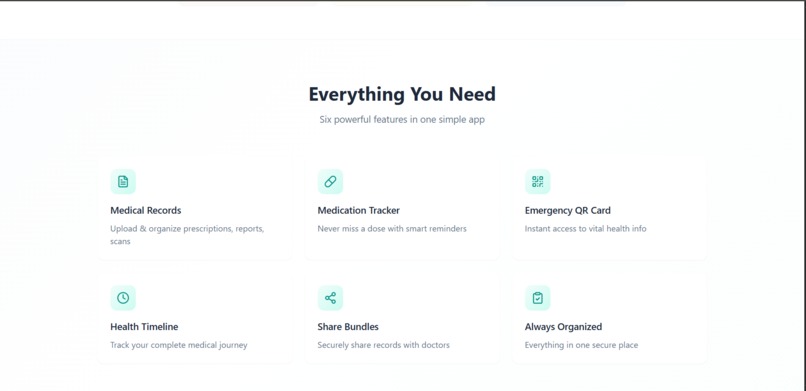
ABOUT APP FEATURES
-
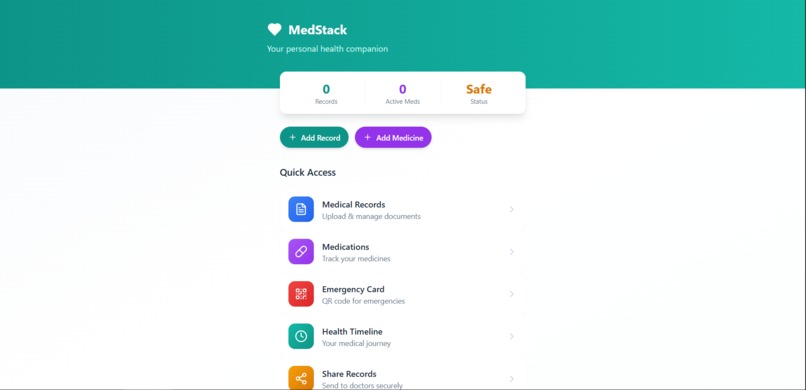
ALL BIO DATA OF PATIENT
-
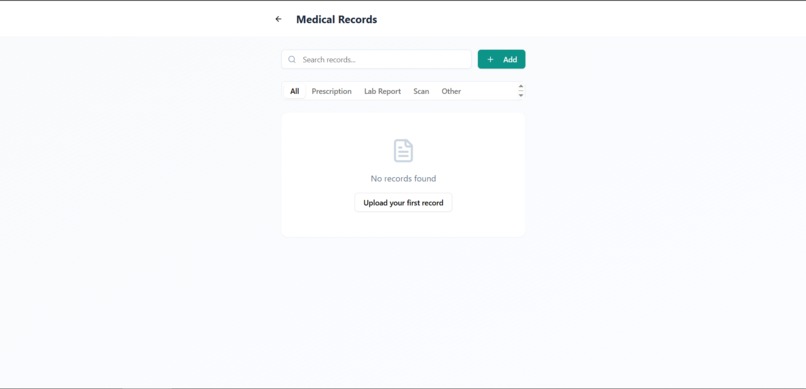
ONE FEATURE
-
ANOTHER FEATURE
Inspiration
What inspired me was the thought that a small piece of information can save a life. A simple note like “allergic to penicillin” or an old ECG can completely change a doctor’s decision.
I wanted to build something meaningful — not just an app, but a tool that can genuinely make healthcare safer and simpler for everyone, especially:
1 elderly people
2 chronic patients
3 students
4 rural families
5 and anyone who has ever lost a medical file
MedStack is my attempt to give people control over their own health story.
What it does
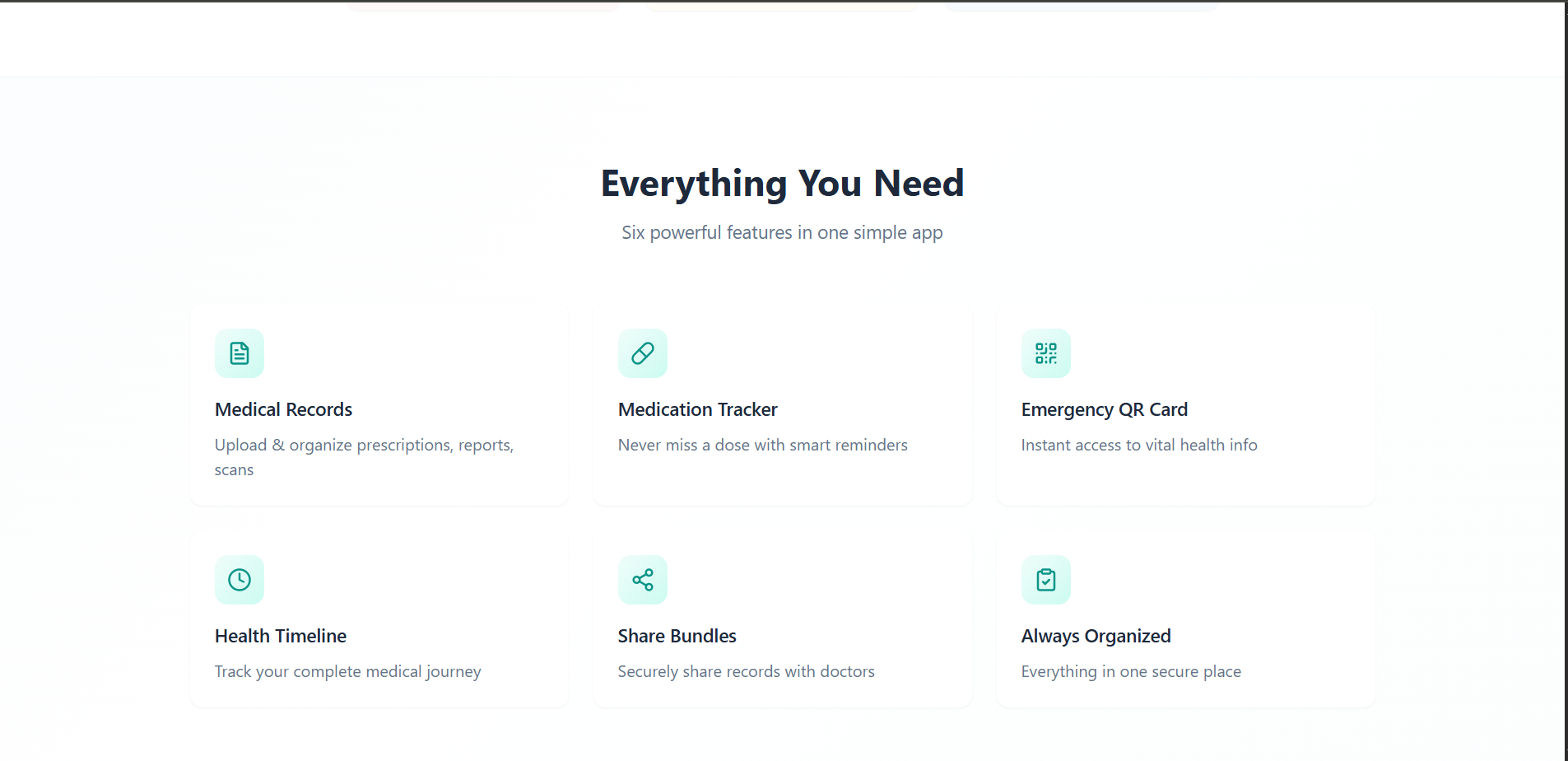
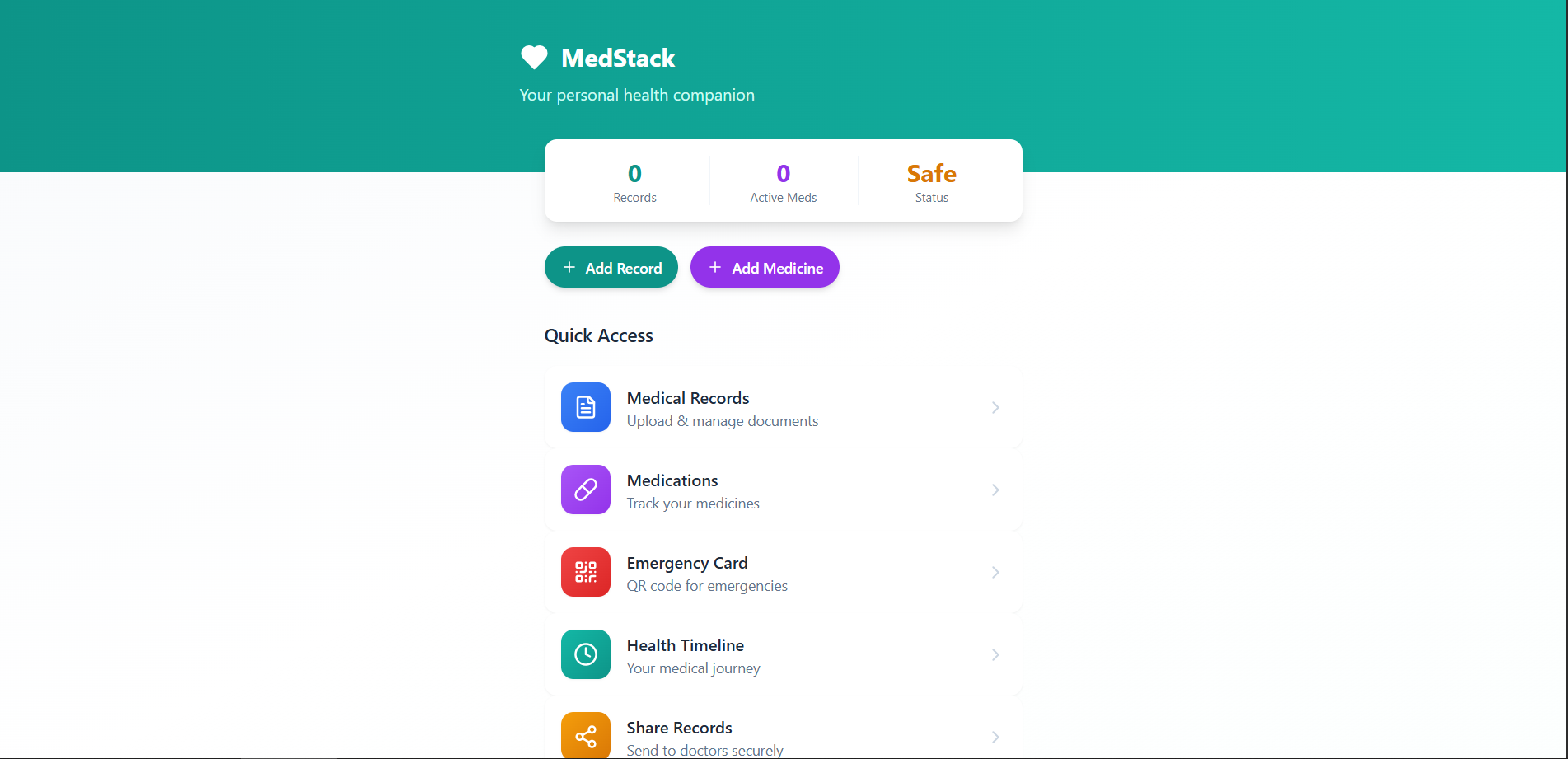
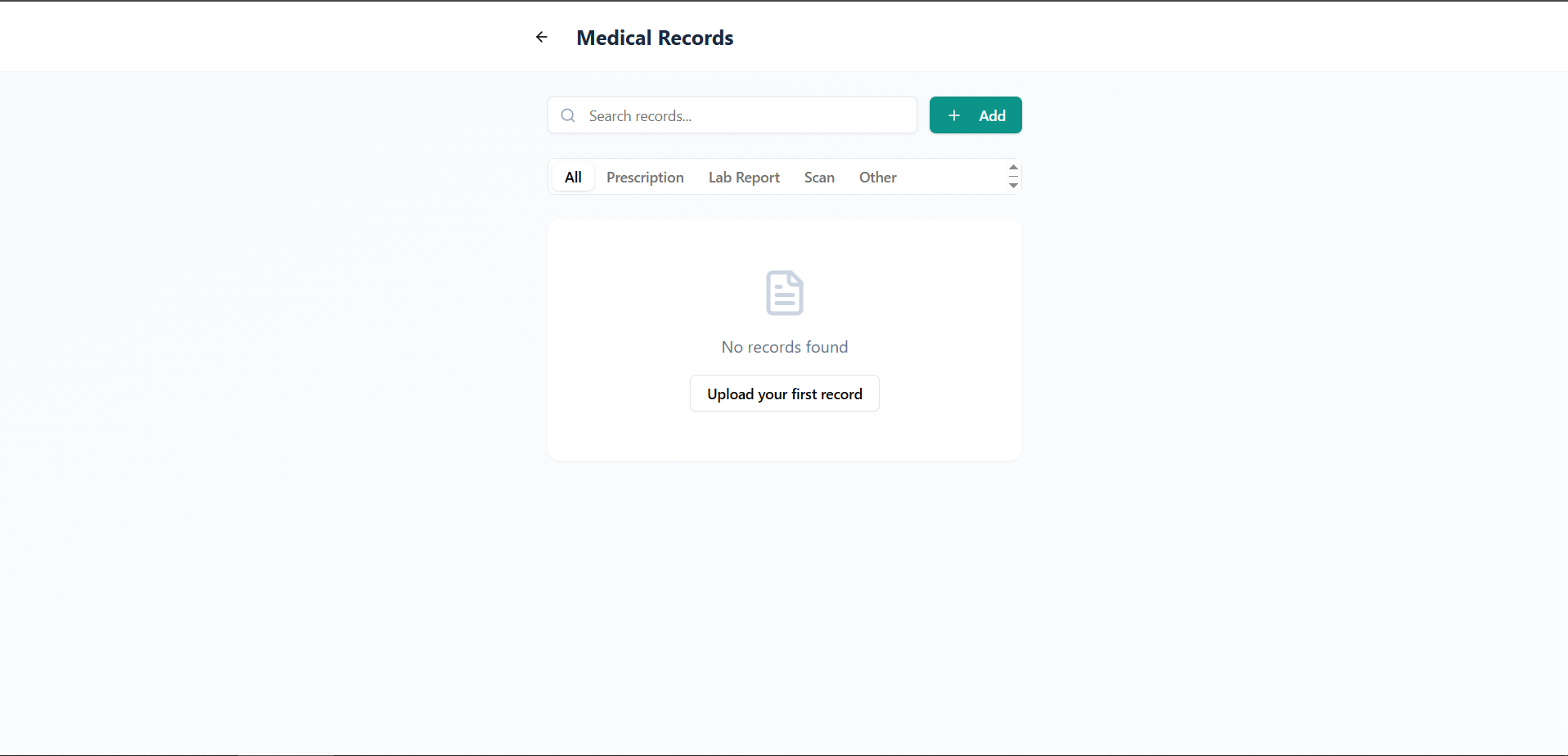
MedStack is a personal medical record organizer that gives people complete control over their health information. It brings all your prescriptions, lab reports, scans, allergies, medical conditions, and medication history into one simple, accessible place.
Instead of keeping scattered paper files from different hospitals, MedStack allows users to:
✔ Upload and store all medical documents
Prescriptions, reports, and test results can be added easily and viewed anytime.
✔ Organize records automatically
Documents are sorted into categories like “Lab Reports,” “Prescriptions,” and “Scans” so you never have to search.
✔ Track medication history
Users can store details of their medicines, dosage, and schedule, making treatment safer and more informed.
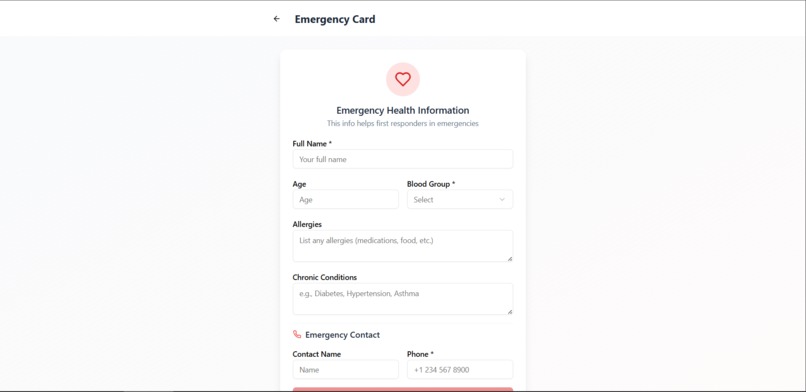
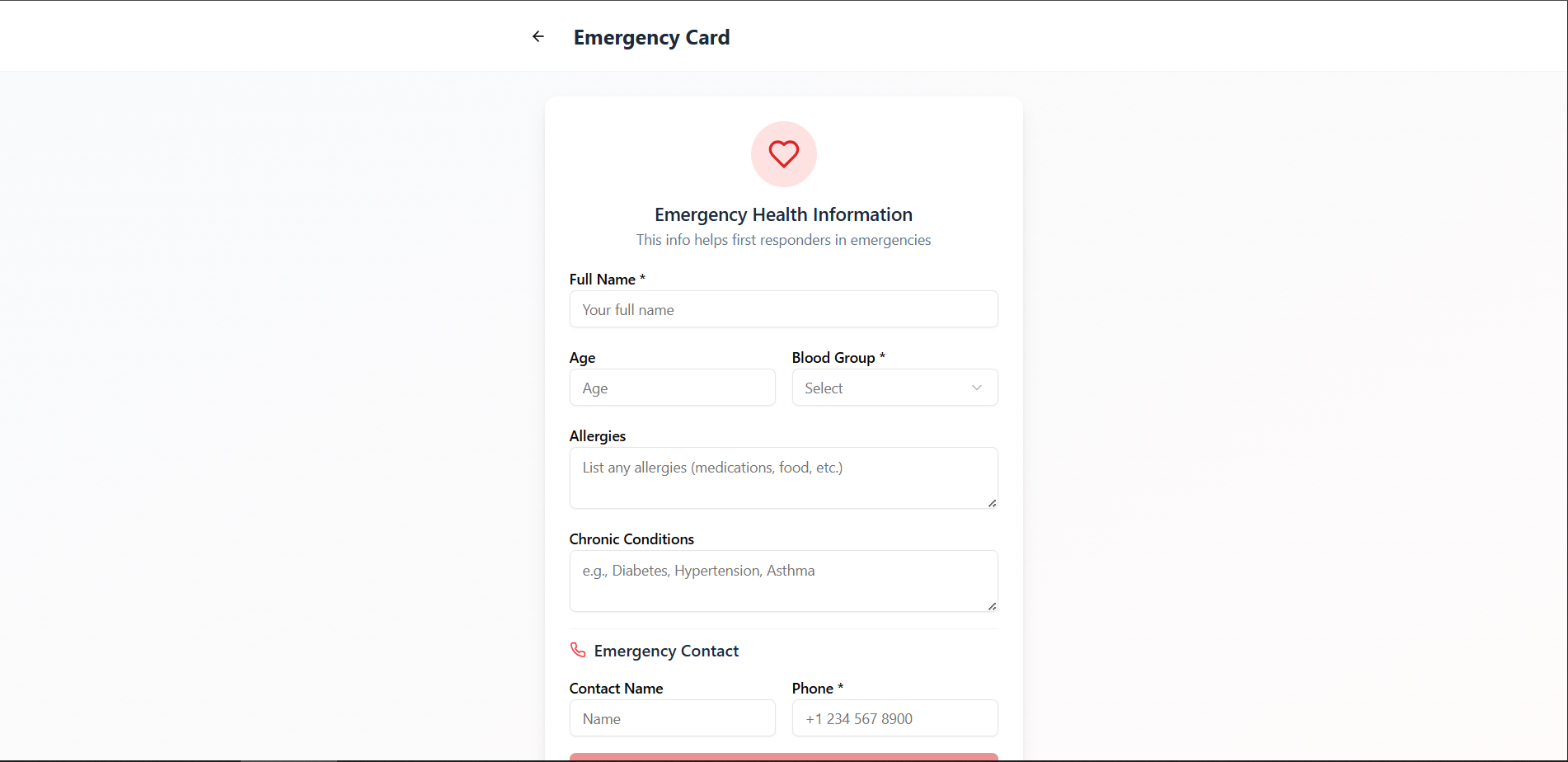
✔ Create an emergency health card
Medical essentials like blood group, allergies, and emergency contacts are generated into a single QR code — extremely useful in urgent situations.
✔ View a medical timeline
Every health event—doctor visits, reports, medicine start/end dates—appears in a clean timeline.
✔ Share medical files quickly
Users can select multiple documents and share them with doctors or family in seconds.
✔ Collect user feedback for validation
A built-in form helps understand how people manage medical records and whether MedStack solves their problems.
How we built it
I built MedSync using Base44, focusing on simplicity, clarity, and accessibility. I structured the project in layers:
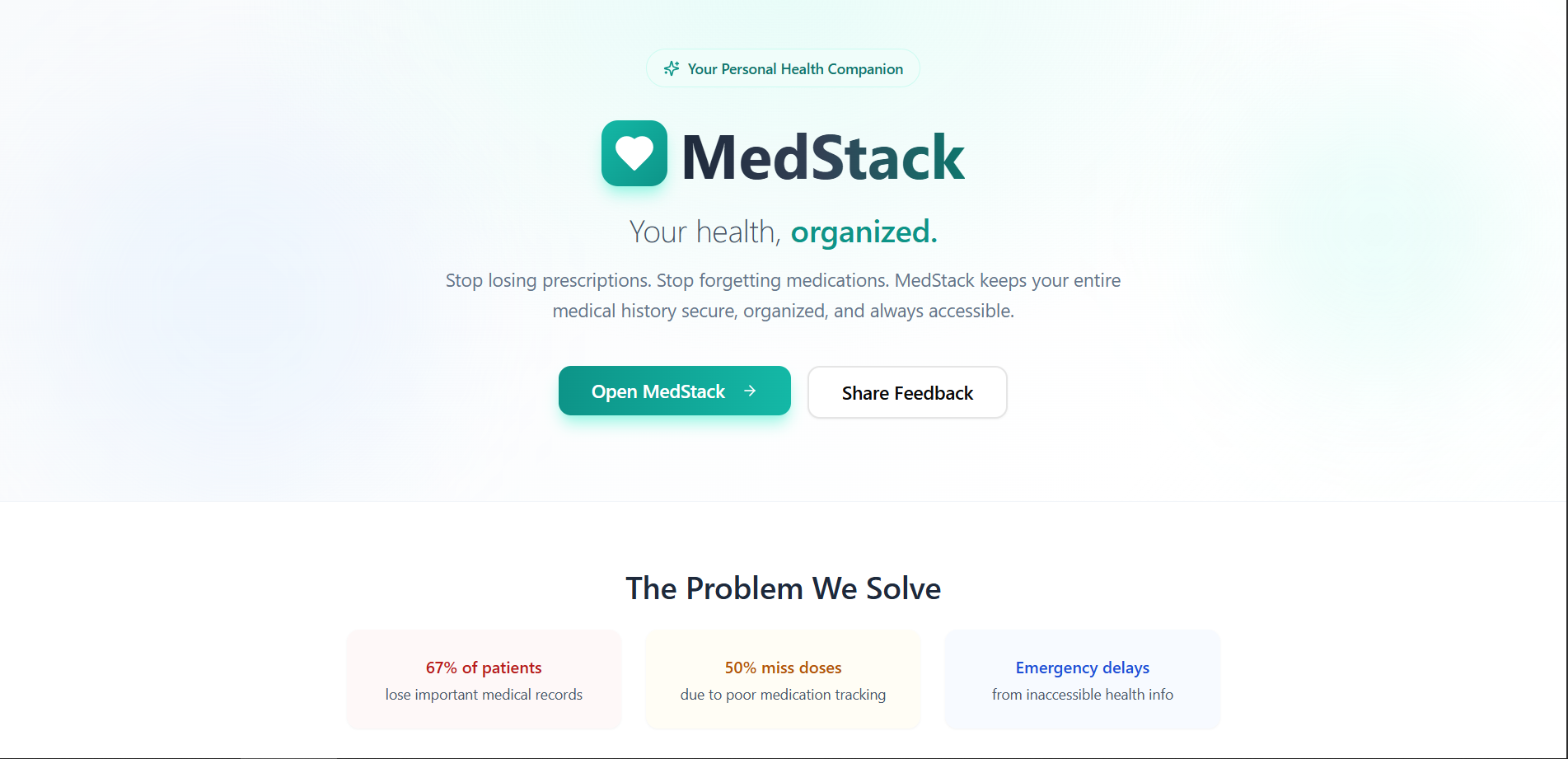
- Landing Page
To clearly express the problem and the value of the solution.
- Medical Record Manager
A clean interface to upload, view, and organize health documents.
- Medication History
A simple but helpful section for tracking medicines and dosages.
- Emergency Health Card
A QR-based page that shows essential information instantly.
- Medical Timeline
A chronological view of all important health events.
- Idea Validation Form
To gather real user feedback and understand medical record issues better.
I kept the UI minimal and human-friendly so that even elderly users can navigate it easily.
Challenges we ran into
I faced a few challenges while building this:
- Designing for All Age Groups
Healthcare apps must work for both students and senior citizens. Balancing simplicity with functionality was difficult.
- Prioritizing Features
There were many ideas, but I had to choose the ones with the biggest impact and simplest implementation.
- Structuring Medical Data
Medical documents come in many shapes and categories. Creating a clean and intuitive system to organize them took careful thought.
- Emotional Responsibility
Building a health-related project felt different — I wanted to make sure the experience was respectful, clear, and genuinely helpful.
Accomplishments that we're proud of
🌟 1. Turning a real-life health problem into a working solution
The biggest accomplishment was transforming a common struggle — losing medical papers — into a simple and effective digital tool. Knowing that MedStack can genuinely help people makes us incredibly proud.
🌟 2. Creating a clean, senior-friendly healthcare interface
Healthcare apps often feel complicated. We designed MedStack to be so simple that even elderly users can upload reports and access their emergency card without confusion. That accessibility matters to us.
🌟 3. Successfully organizing medical records in a structured, easy way
We built a system that turns medical chaos into clarity: prescriptions → reports → scans → medication → emergencies — all neatly organized. Achieving this level of structure within Base44 was a big win.
🌟 4. Building a functional emergency QR card system
The emergency health card was challenging but rewarding. It gives doctors crucial information instantly, and we’re proud of how smooth and fast it works.
🌟 5. Making a timeline that shows a person’s entire health journey
This feature feels powerful — seeing all health events laid out clearly feels reassuring and helpful for both patients and doctors.
🌟 6. Designing MedStack with empathy
We didn’t just build features; we thought about how people feel during medical stress — scared, confused, and overwhelmed. Building something that brings peace and clarity to those moments makes us proud.
🌟 7. Getting user feedback through validation
We included a built-in survey and hearing that people wanted a tool like MedStack motivated us even more. This validation is an accomplishment by itself.
🌟 8. Completing the entire project end-to-end with clear documentation
From idea → design → implementation → validation → landing page → final polish, we completed every part with detail and care.
What we learned
Building MedSync taught me a lot:
1 That even the simplest ideas can solve the biggest problems.
2 That healthcare is not just about hospitals — it’s also about information accessibility.
3 That design matters, especially for people who might be stressed, sick, or elderly.
4 How to think like a user, not a developer.
5 The importance of privacy and data clarity in health tech.
It also helped me understand how to break a large problem into small, manageable features.
What's next for MedStack
MedStack began as a simple idea — to help people keep their medical records organized — but we believe it can grow into something much bigger and truly meaningful.
- Smart Document Scanning & Auto-Extraction
We plan to add OCR-based scanning so users can take a photo of a prescription and MedStack automatically extracts:
1 doctor name
2 medicine names
3 dosage
4 next visit date
This would make uploading even easier, especially for elderly users.
- Multi-User Family Profiles
Families, especially in India, often manage medical files for parents, children, and grandparents. Future versions of MedStack will let users manage multiple people’s health records from one account.
- Doctor & Clinic Integration (Long-Term Vision)
We aim to create a system where hospitals and clinics can directly send reports to MedStack (with patient consent). This would reduce paperwork and make medical transfers seamless.
- Offline Access to Emergency Card
To ensure safety in areas with weak internet, the emergency card will be available offline, so first responders always have access when needed.
- Secure Cloud Backup & Encryption
Privacy is a priority. We want to introduce encrypted cloud backups so that health files stay safe even if the user switches devices.
- Health Insights & Trends
Using data patterns, MedStack could show helpful insights like:
1 recurring symptoms
2 improvement in health markers
3 medication habits
4 frequency of doctor visits
These insights would help users understand their health journey better.
- Local Language Support
Healthcare must be accessible. We want to introduce regional languages so more people — especially rural users — can benefit.
- Integration with Wearable Devices
In the future, MedStack could collect data from smartwatches (heart rate, steps, sleep) and combine it with medical history for a fuller health profile.
- A Trust-Based Health Network
Our long-term dream is to make MedStack a patient-owned health hub, where medical data flows safely between:
1 patients
2 doctors
3 caregivers
4 hospitals
But the control always stays with the patient.

Log in or sign up for Devpost to join the conversation.