-
-
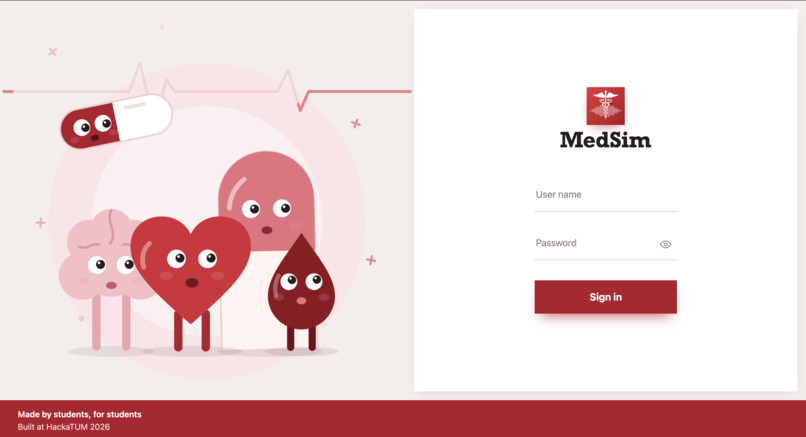
Homescreen
-
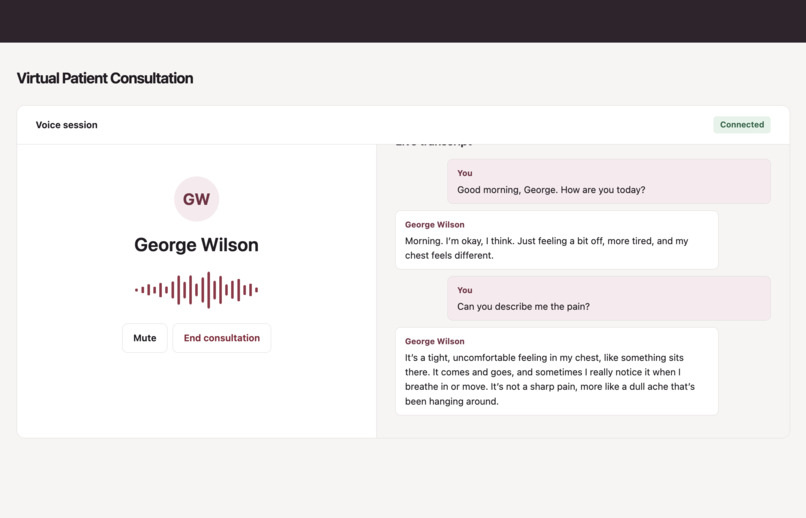
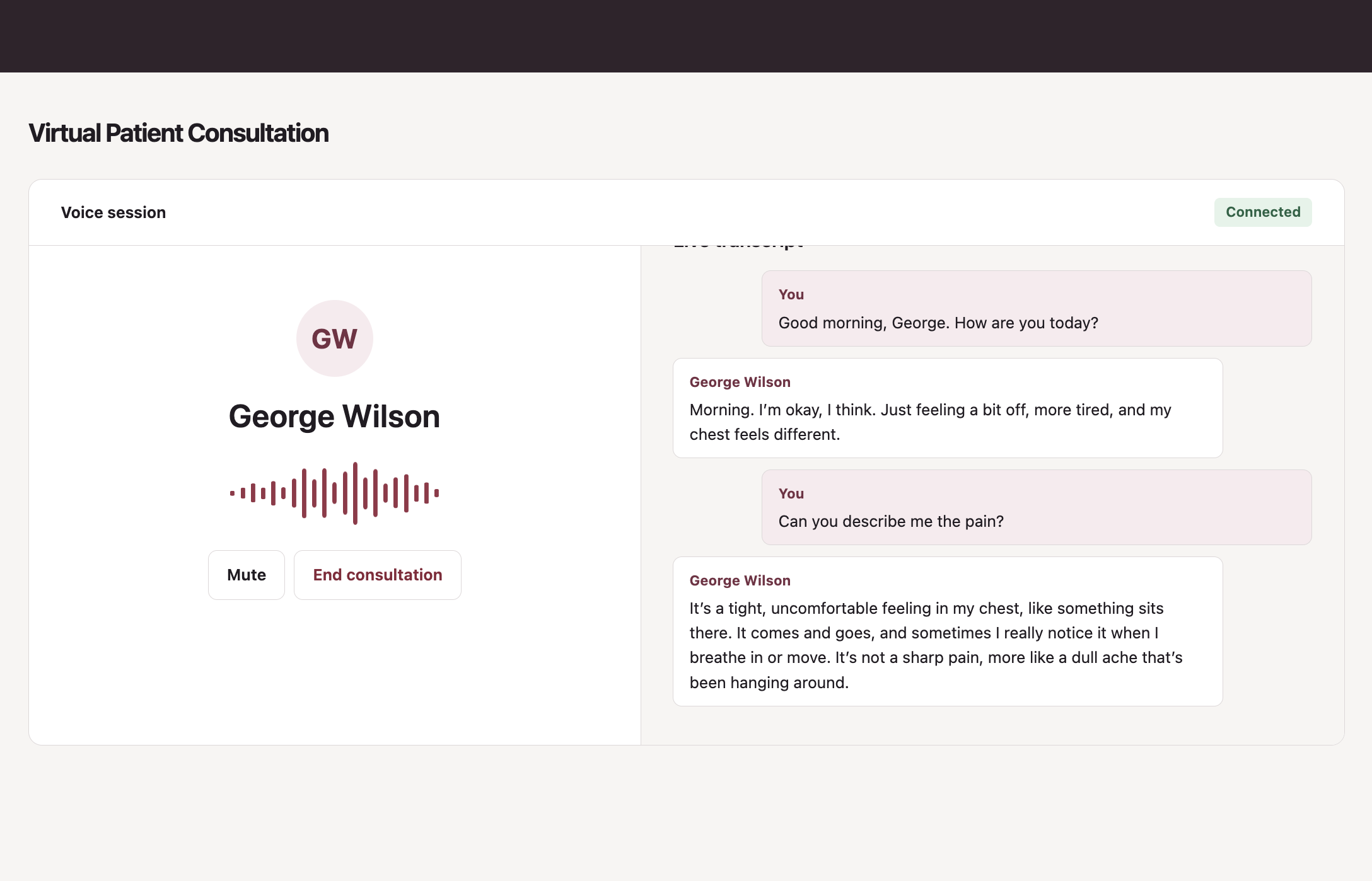
Realtime Voice Conversation with Virtual Patients
-
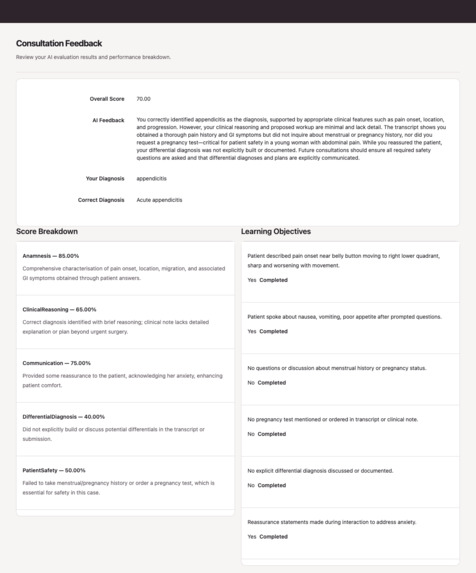
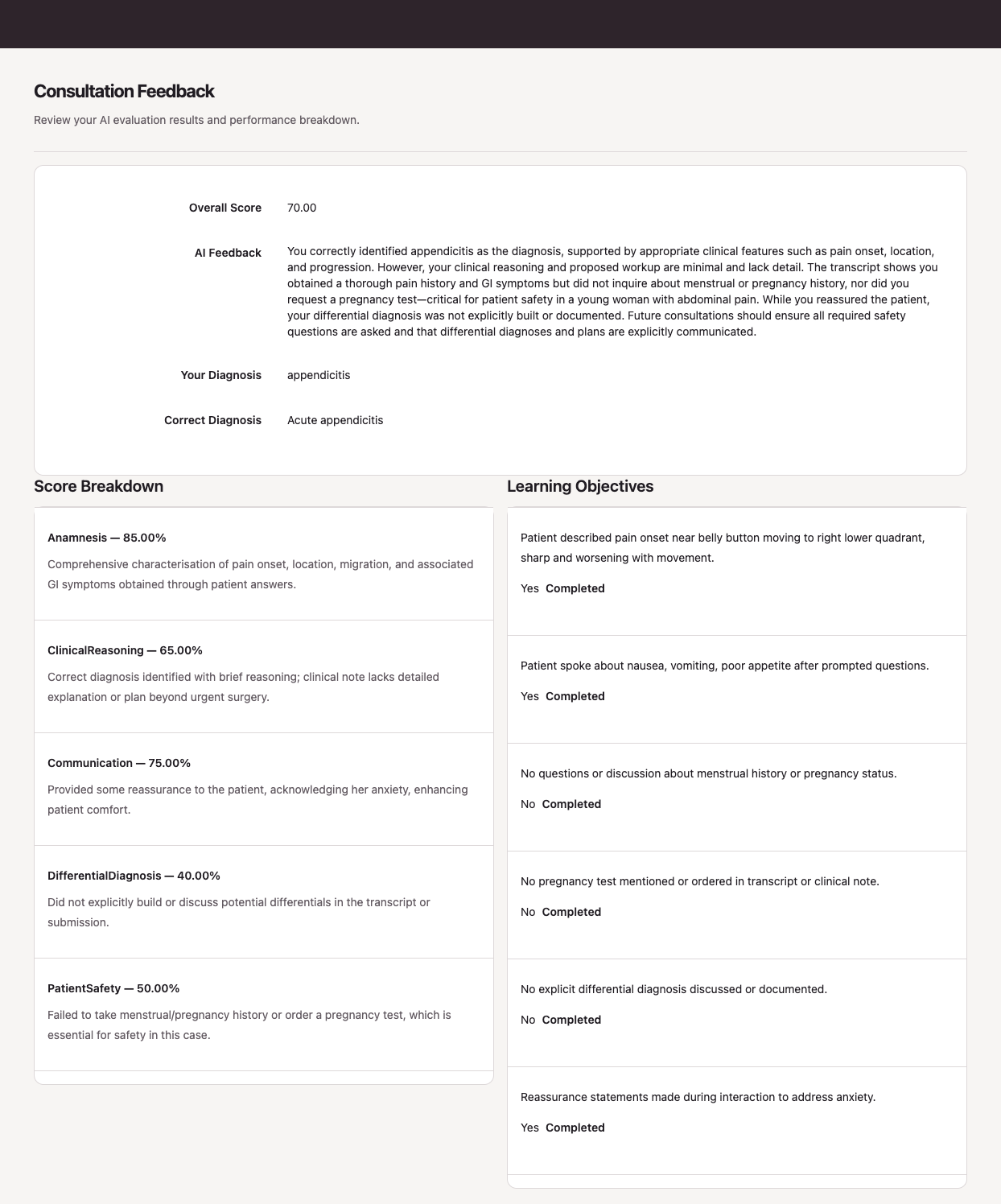
Sample Consultation Feedback
Our aim is to help doctor candidates to have a safe space to make mistakes and make sure they are capable of diagnosing patients in the best way possible.
What it does
MedSim is a voice-based virtual patient simulator. A student starts a consultation and simply talks to an AI patient who answers in real time, with a personality, an emotional state and a hidden diagnosis.
Challenges we ran into
- Making the voice feel natural. Latency, interruptions and keeping the patient in character took a lot of prompt tuning.
- Fair, structured scoring. Getting an LLM to return consistent scores with real evidence from the transcript, and not just generic praise, needed careful prompt design and a strict output format.
- Working inside a low-code platform. Voice streaming needed a custom widget, and many UI changes had to be made by hand in MX Studio Pro.
- Teamwork under time pressure. Merging model changes while two of us edited the same app taught us a lot about version control the hard way.
Accomplishments that we're proud of
- We managed to interview 2 med students to improve our simulation and the feedback consultation.
- A full loop that works end to end: start → speak → examine → diagnose → scored feedback.
- Feedback that is specific. It tells a student, for example, that they explored pain characteristics well but never asked about pregnancy in a young woman with abdominal pain.
- A product that looks and feels like it belongs together, from the login screen to the report.
What we learned
Voice changes everything about how people practice. Students behave differently when they have to say the question out loud, and that is exactly the habit we want to build. We also learned how much the quality of an AI tutor depends on grounding its feedback in evidence instead of opinions.
What's next for MedSim
- A larger case library across specialties with difficulty levels
- A dashboard and history with progress over time, per-category trends and weak-spot suggestions
- Examiner and teacher views so universities can assign cases and see cohort results
- Support for more languages for international medical programs
- Validation of the feedback with clinicians [and a pilot with students at TUM, if you plan one]
Built at HackaTUM 2026. Made by students, for students.
