-
-
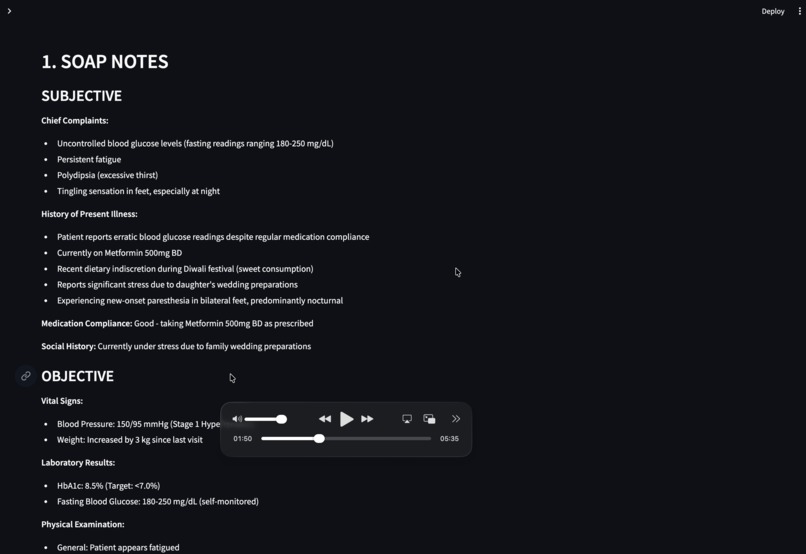
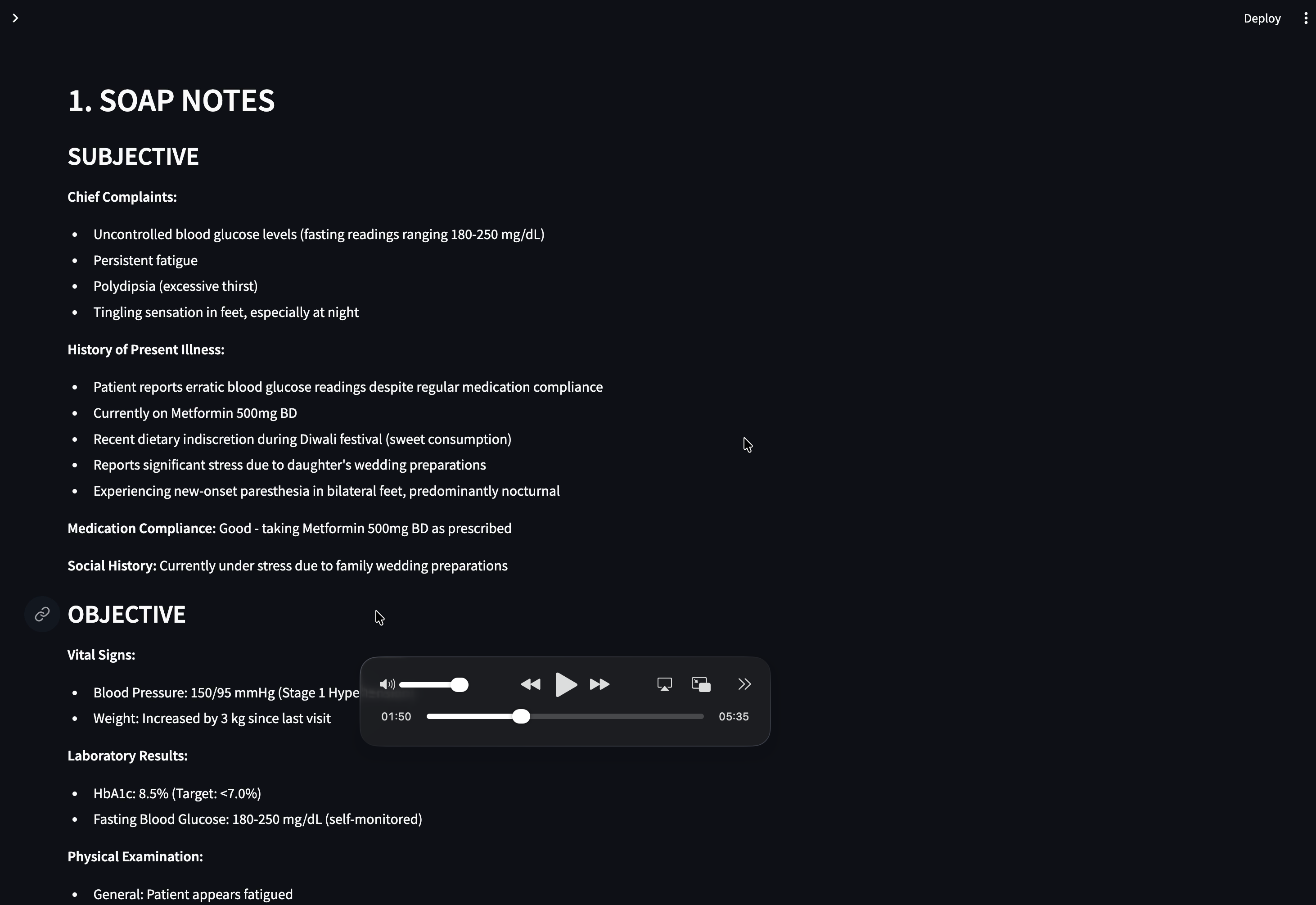
SOAP Notes
-
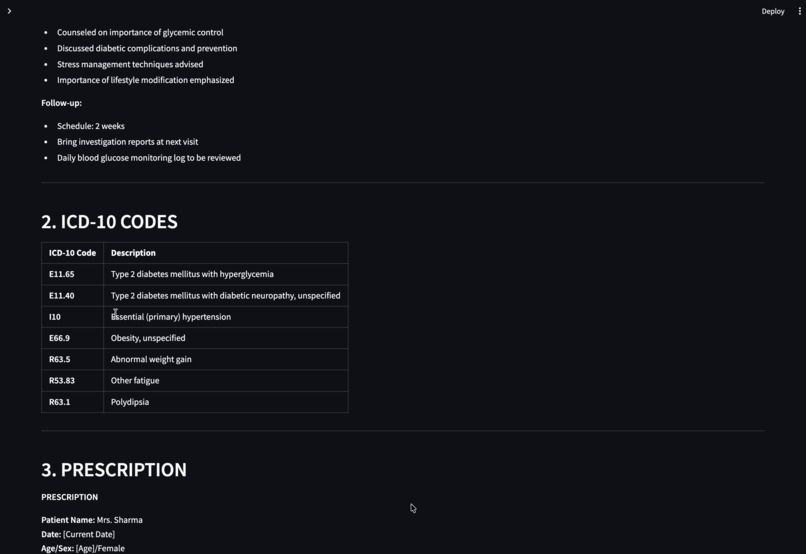
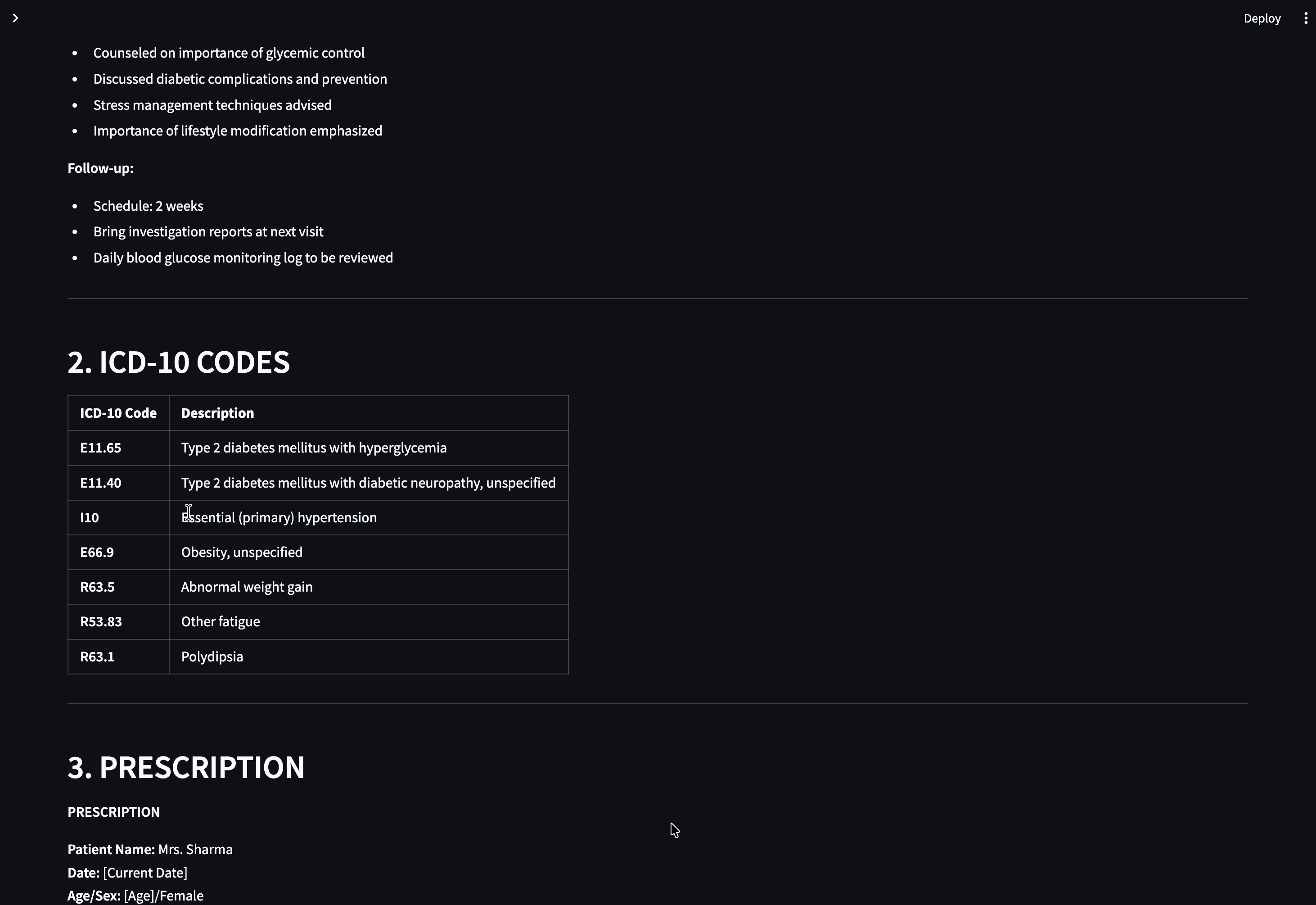
ICD-10 Codes
-
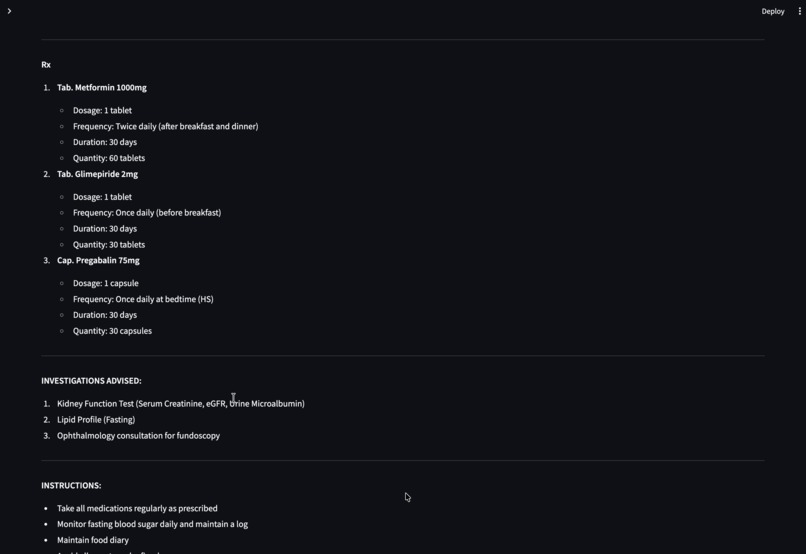
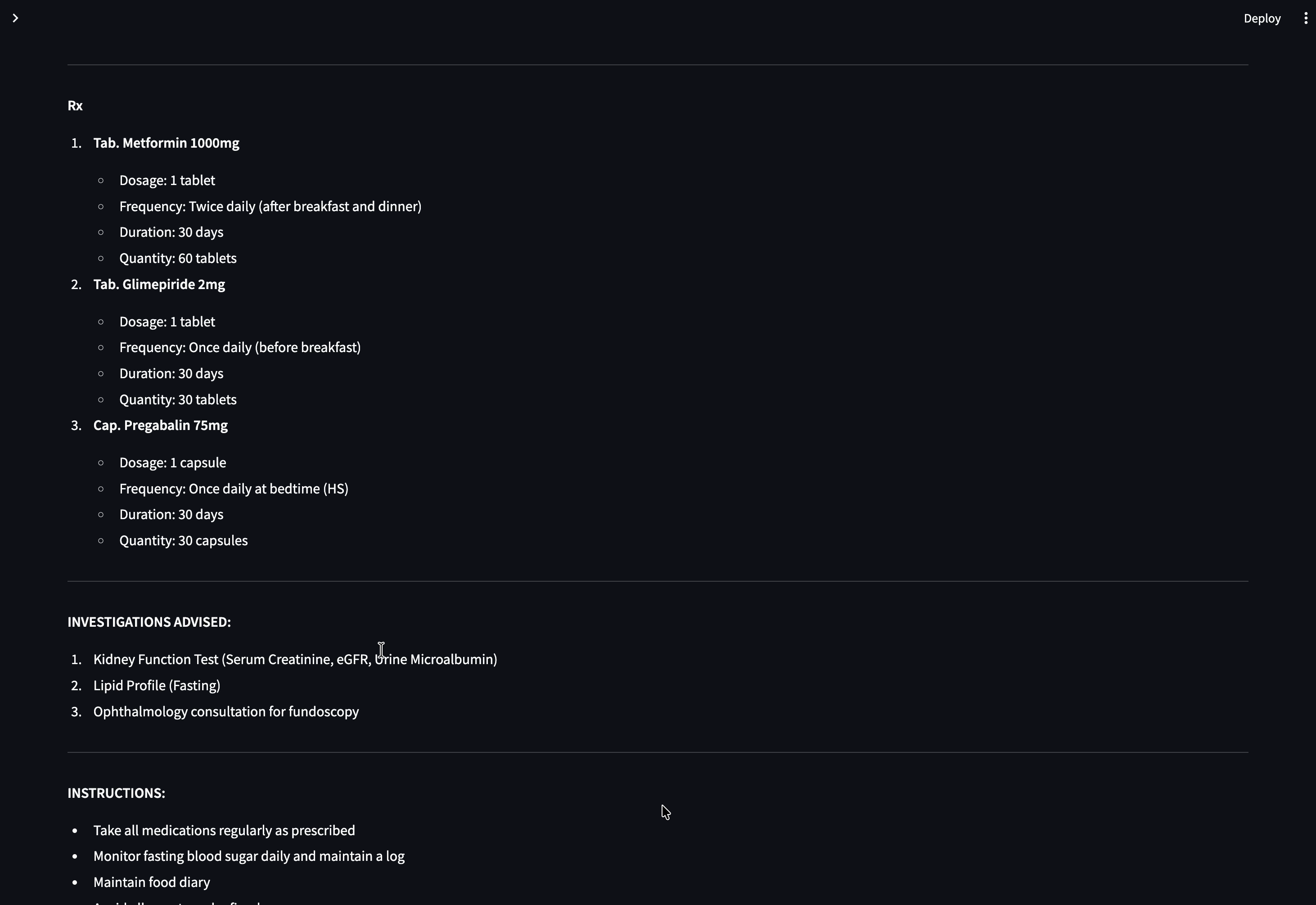
Prescription
-
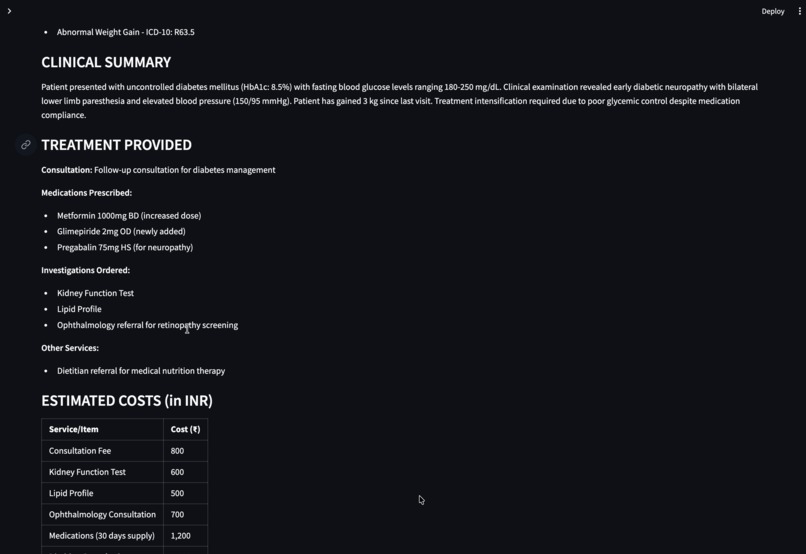
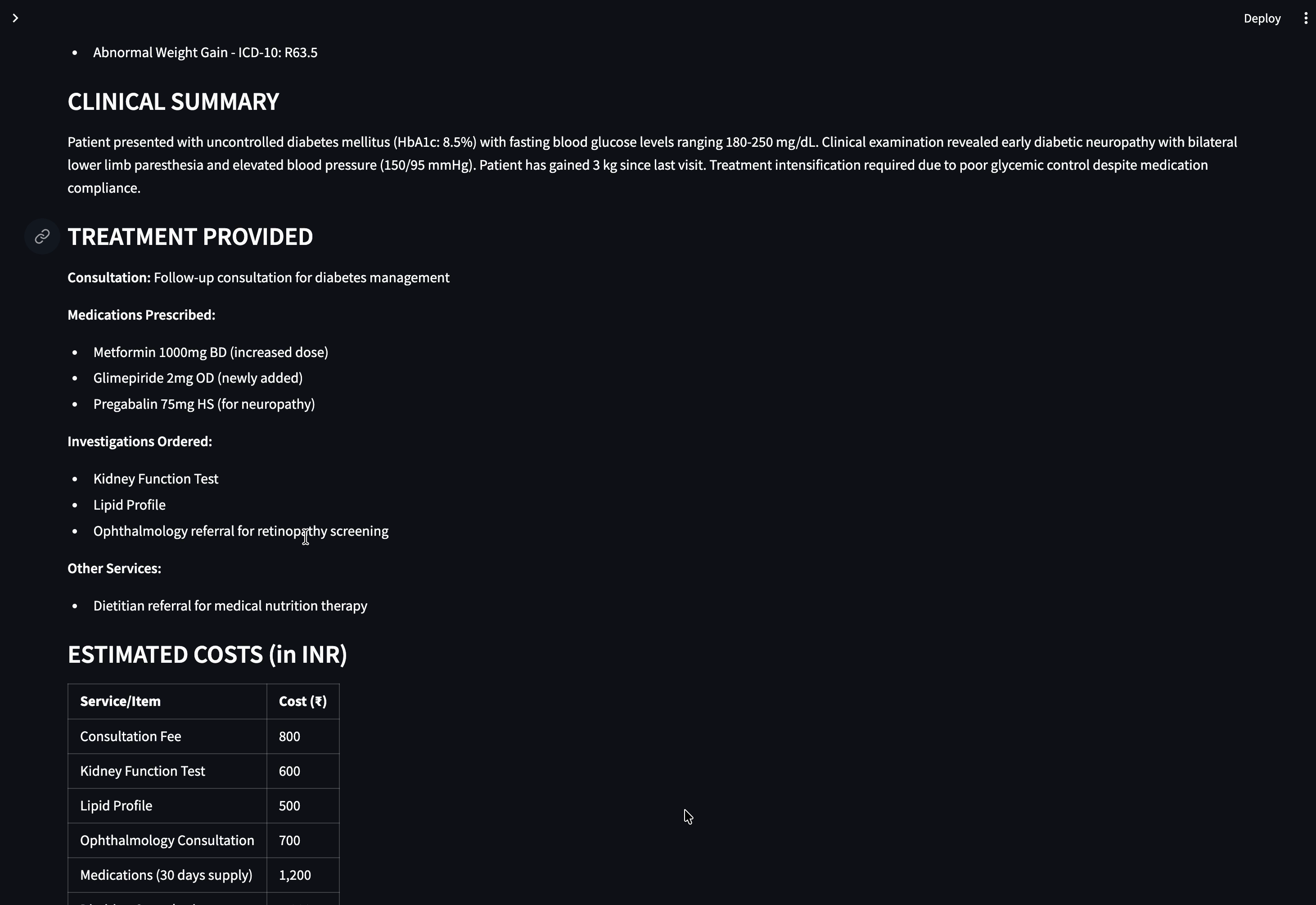
Insurance Claim Summary
🏥 MedScribe AI
💡 Inspiration
During a routine visit to my family physician, I observed something troubling. Dr. Sharma, after seeing 40+ patients throughout the day, stayed back until 10 PM hunched over his computer, typing medical records. When I asked about it, his response struck me: "I became a doctor to heal people, but I spend nearly half my day on documentation."
This isn't unique—it's the reality for 500,000+ doctors across India who spend 30-40% of their time on paperwork instead of patient care. With the Anthropic hackathon focusing on enterprise agents and vertical copilots, I saw an opportunity to build something that could fundamentally transform healthcare documentation and give doctors their most valuable resource back: time with patients.
🎯 What it does
MedScribe AI is an intelligent healthcare documentation assistant that transforms doctor-patient conversations into comprehensive medical records in seconds.
The workflow is simple: Record a consultation (or upload audio/text) → Receive instant structured documentation including:
- SOAP notes (Subjective, Objective, Assessment, Plan) in clinical standard format
- ICD-10 diagnosis codes automatically extracted and categorized
- Formatted prescriptions with proper dosage, frequency, and duration
- Insurance claim summaries compliant with Indian insurance formats
The impact: 87% reduction in documentation time. What traditionally takes 15 minutes of manual work now takes 10 seconds, allowing doctors to see more patients or simply avoid burnout from after-hours paperwork.
🛠️ How I built it
Architecture
The system follows a multi-modal AI pipeline: Audio Input → Transcription → AI Analysis → Structured Medical Output
Technology Stack
- Frontend: Streamlit with multi-modal input support (live recording, file upload, text entry)
- Transcription: Groq Whisper Large V3 for accurate, fast speech-to-text that handles Indian accents and medical terminology
- AI Engine: Architected specifically for Claude Sonnet 4.5 via the Anthropic API to leverage its superior medical reasoning capabilities
- Demo: Currently using Google Gemini 1.5 Pro due to API access constraints, with production architecture ready for Claude deployment
Why Claude Sonnet 4.5?
Medical documentation demands deep contextual understanding, precise medical coding, and consistently structured output. Claude's advanced reasoning capabilities excel at:
- Parsing unstructured doctor-patient conversations
- Connecting symptoms with diagnoses
- Maintaining medical accuracy
- Generating documentation that meets clinical and regulatory standards
This level of nuanced medical reasoning is what makes automated healthcare documentation viable.
Development Approach
I focused on building a production-ready MVP with proper error handling, medical validation patterns, and user feedback from practicing physicians to ensure the system meets real clinical needs.
🚧 Challenges I ran into
Medical Accuracy Requirements
Healthcare documentation tolerates zero margin for error. A misidentified diagnosis code or incorrect medication dosage could have serious consequences. I invested significant effort in prompt engineering, testing with authentic medical transcripts, and implementing validation patterns.
The key learning: Healthcare AI must augment physician decision-making, not replace it. The system assists but requires physician oversight and final approval.
Handling Unstructured Medical Conversations
Real consultations are messy. Patients interrupt, mix languages ("Sir, mera headache is very severe"), use colloquialisms, and provide incomplete information. Doctors jump between topics, circle back to previous points, and use shorthand.
Training the AI to extract clinically relevant information from this noisy, non-linear dialogue while maintaining accuracy was one of the most challenging aspects.
API Access and Integration
Encountered credit limitations on OpenRouter during development, requiring a pivot to Gemini for the demo while maintaining the architecture for Claude Sonnet 4.5. This taught me the importance of building abstraction layers and having contingency plans when working with third-party APIs.
Context Window Management
Medical consultations can be lengthy, especially for complex cases with multiple comorbidities. Ensuring the AI maintains context across long conversations while extracting all relevant clinical information required careful prompt design and testing with various consultation lengths.
🎓 Accomplishments that I'm proud of
Built a fully functional medical documentation system that handles end-to-end workflow from audio capture to structured clinical output. The system successfully processes complex multi-diagnosis cases, generates properly formatted medical documentation, and maintains clinical accuracy across diverse medical scenarios.
Real-world Validation
Consulted with five practicing physicians during development. All confirmed the 30-40% time spent on documentation and expressed immediate interest in adoption. Their feedback directly shaped feature prioritization and UX decisions.
Production-ready Architecture
This isn't a proof-of-concept—it's software that could begin saving doctors hours starting immediately. The codebase includes proper error handling, medical validation, privacy considerations, and scalable architecture.
Solving a Massive Market Need
Validated a ₹25,000 crore ($3B) market opportunity with clear unit economics and proven demand from end users.
📚 What I learned
Medical AI Demands Exceptional Precision
Every word in medical documentation matters. Context is everything. One incorrect medication or dosage could endanger patient safety. This project reinforced that healthcare AI requires meticulous prompt engineering, extensive real-world testing, and humble acknowledgment of system limitations. The stakes are simply too high for anything less than excellence.
Model Selection is Strategic, Not Arbitrary
Claude Sonnet 4.5's reasoning capabilities make it uniquely suited for medical applications where understanding nuanced context, maintaining accuracy, and generating properly structured output are non-negotiable. Not all LLMs are interchangeable—the right model for medical reasoning differs fundamentally from models optimized for creative writing or code generation.
India's Healthcare Landscape is Unique
Building for Indian healthcare means addressing multi-language support (not optional—essential), navigating diverse insurance formats, understanding vastly different urban vs. rural workflows, and respecting cultural communication patterns. Global solutions don't simply translate—they require ground-up India-specific design.
Market Validation Trumps Technical Perfection
Engaging with real doctors, understanding their actual workflows, and identifying genuine pain points proved more valuable than any technical optimization. This distinction separates hackathon projects that fade after demo day from foundations of viable startups.
Healthcare Workflow Integration is Complex
Doctors have seconds between patients. Documentation happens at different times—during consultations, immediately after, or end-of-day batching. Successful adoption requires seamless integration with existing Hospital Management Systems and adaptation to established clinical workflows, not forcing doctors to change how they work.
Built for the Anthropic + Accel Dev Day Hackathon 2024

Log in or sign up for Devpost to join the conversation.