-
-
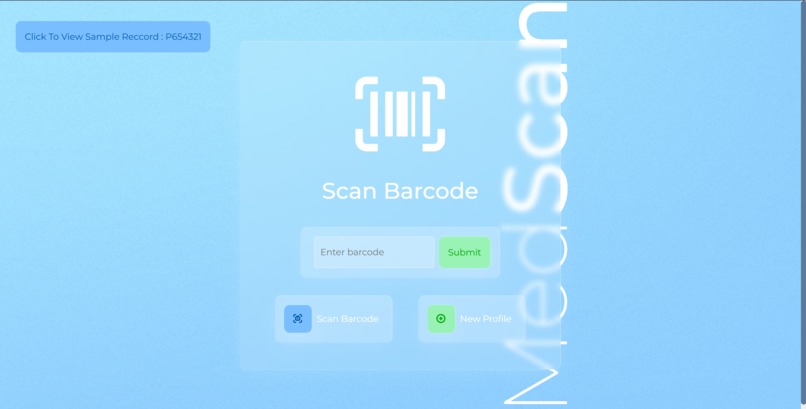
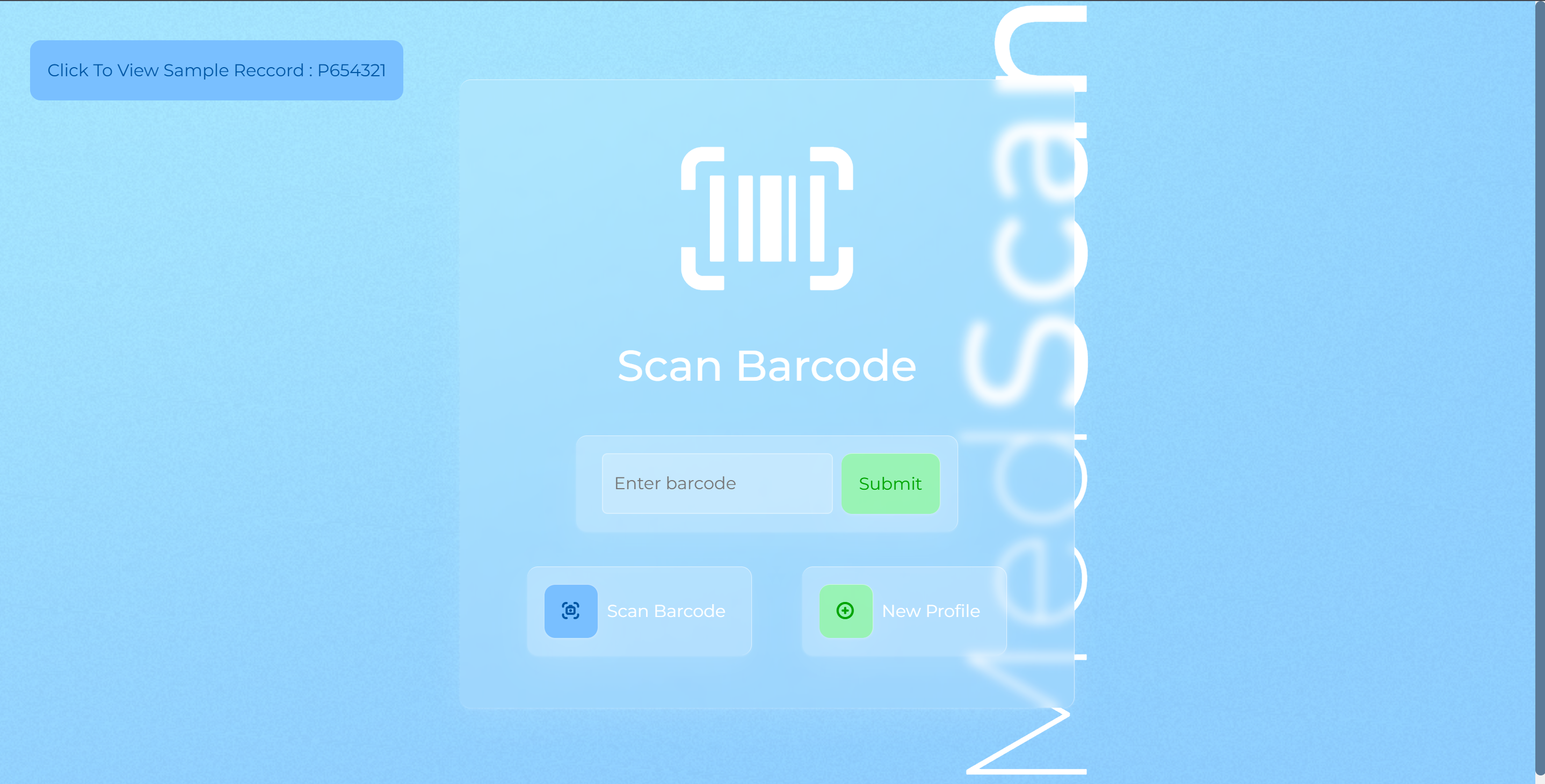
Login / Scan barcode
-
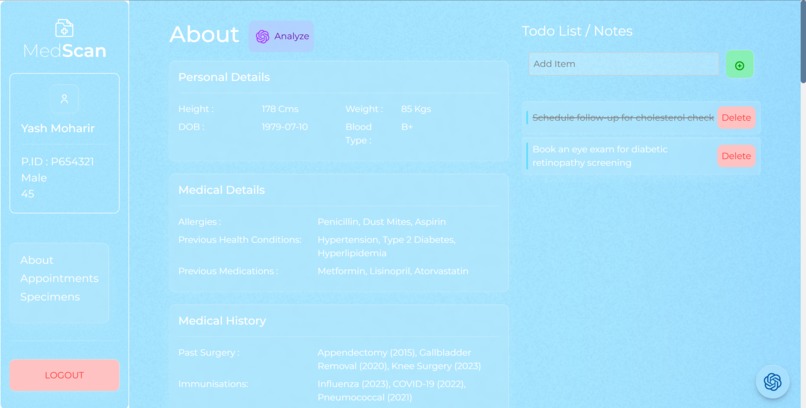
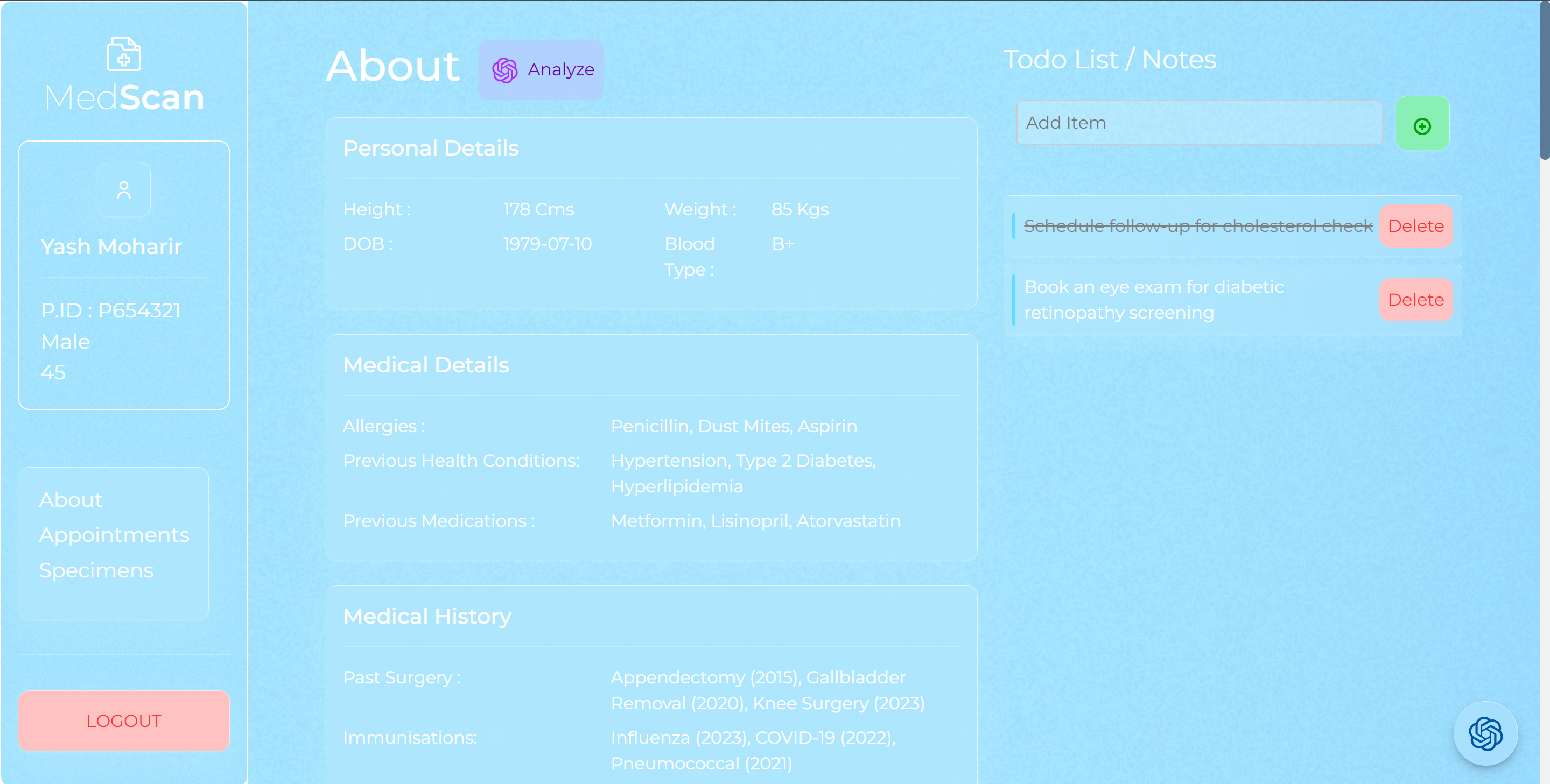
Dashboard
-
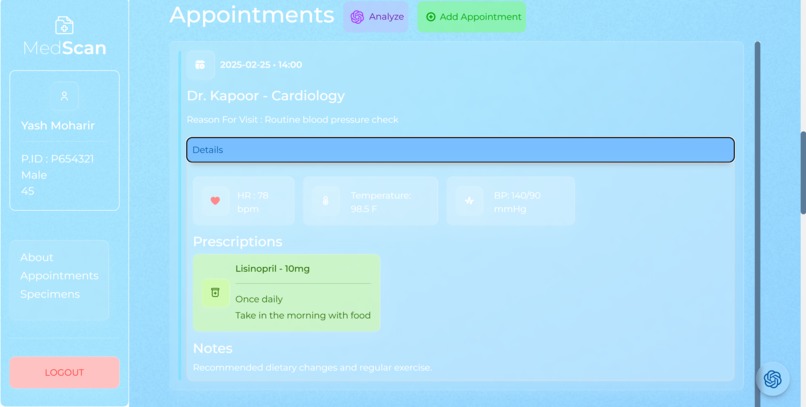
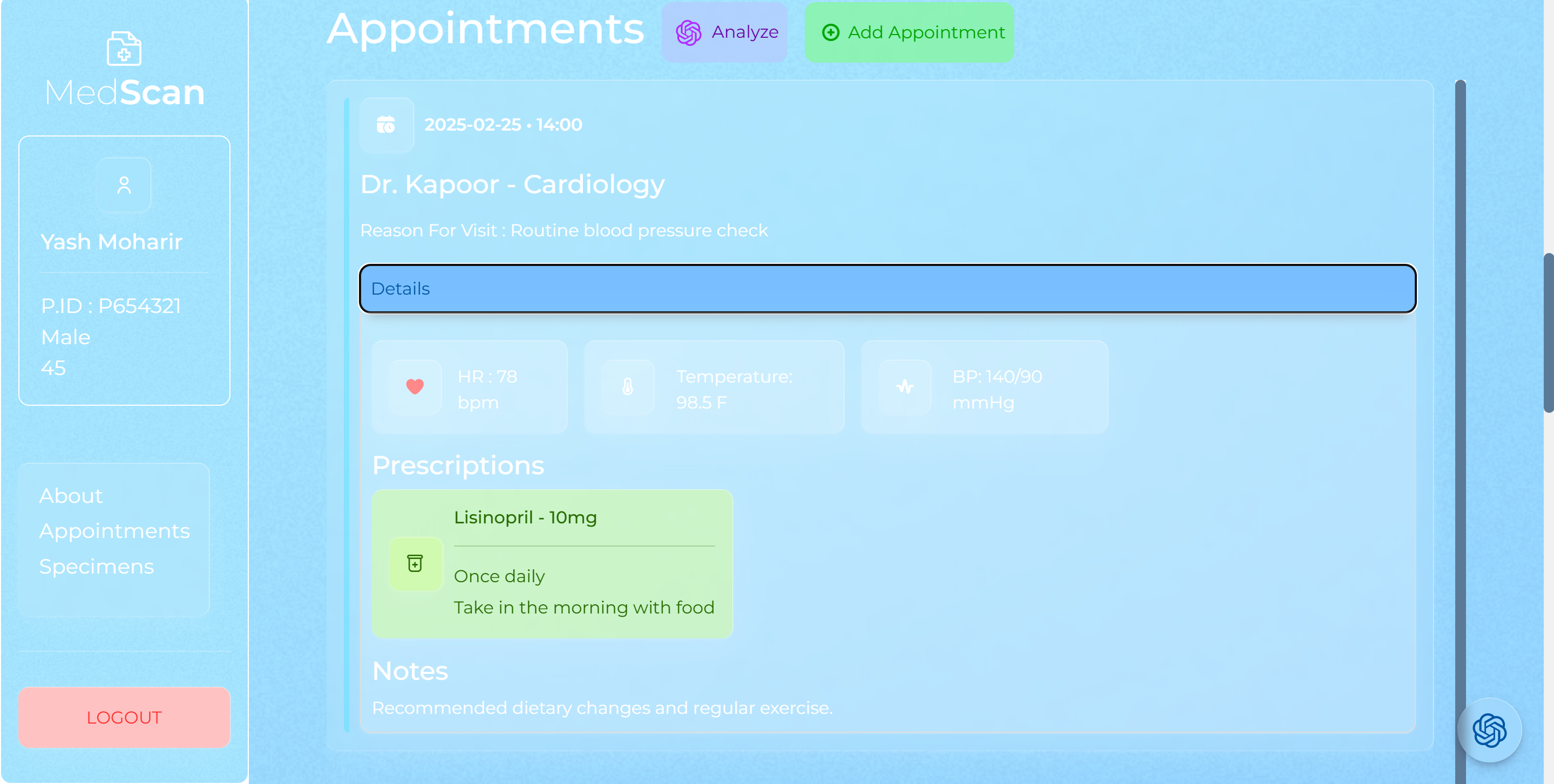
Appointments Data
-
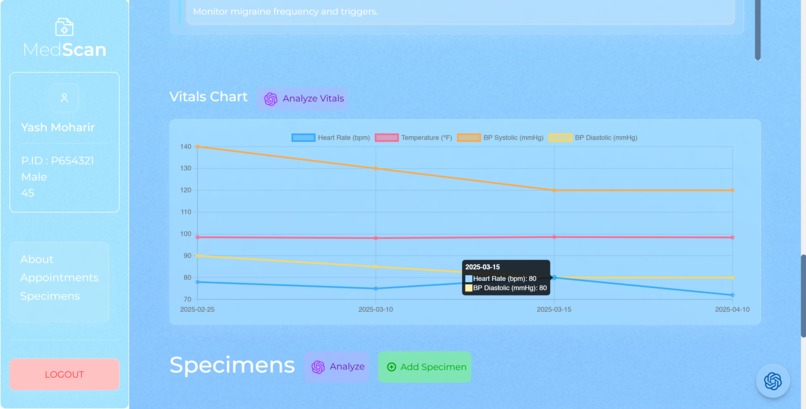
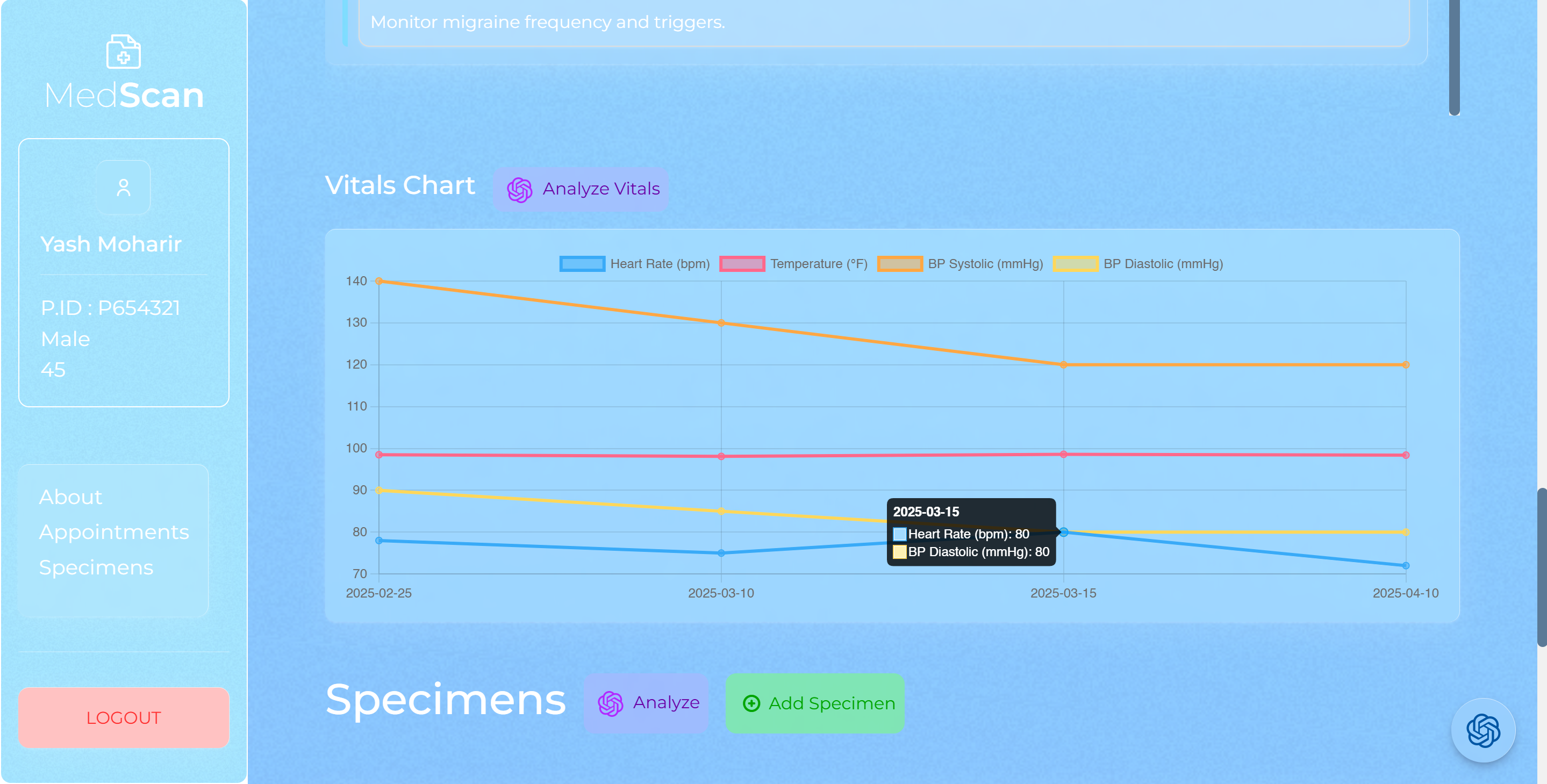
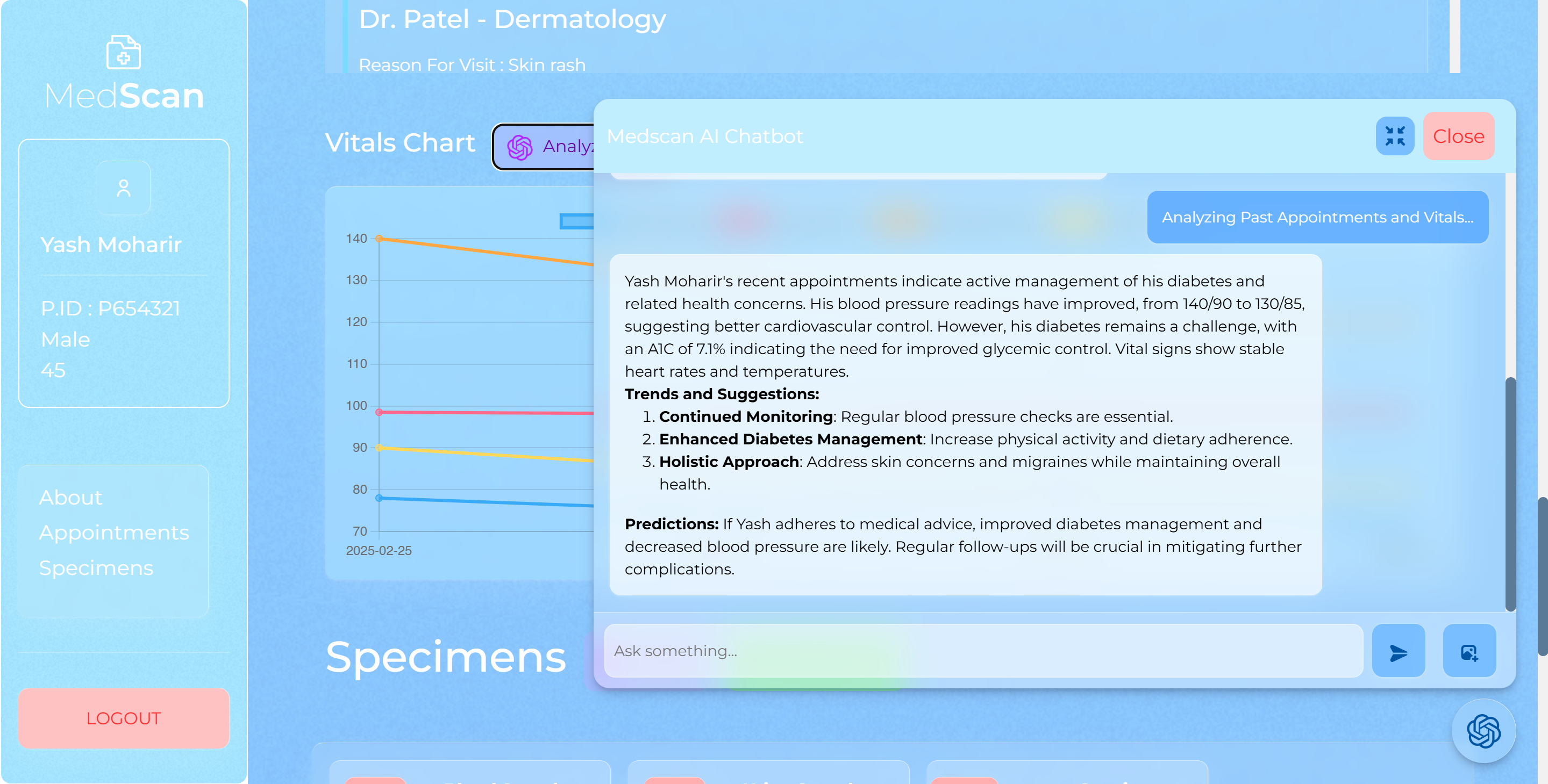
Vitals Graph
-
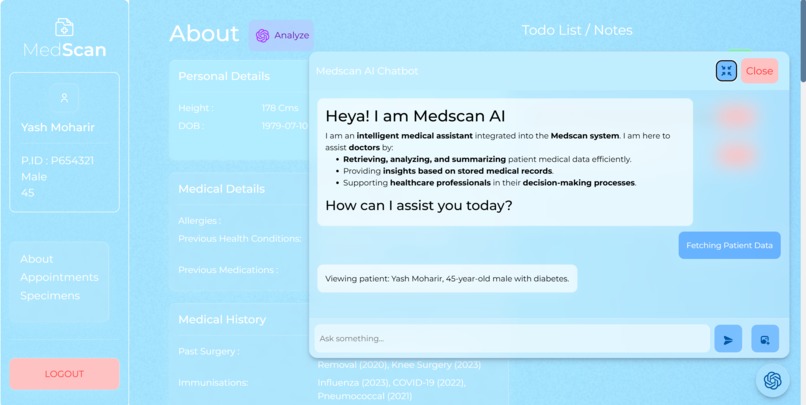
Dashboard - Welcome
-
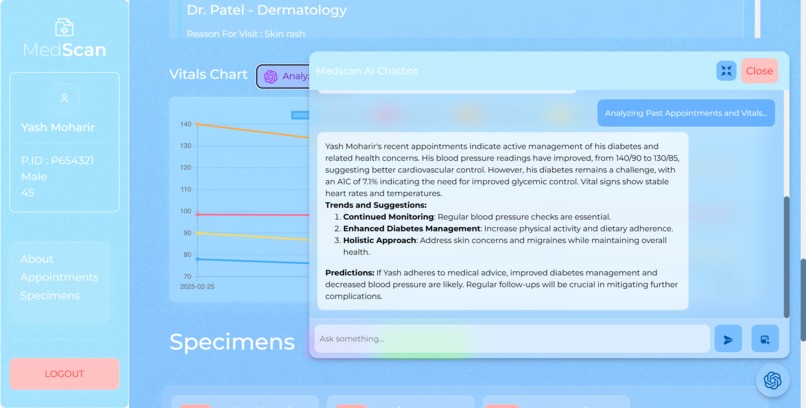
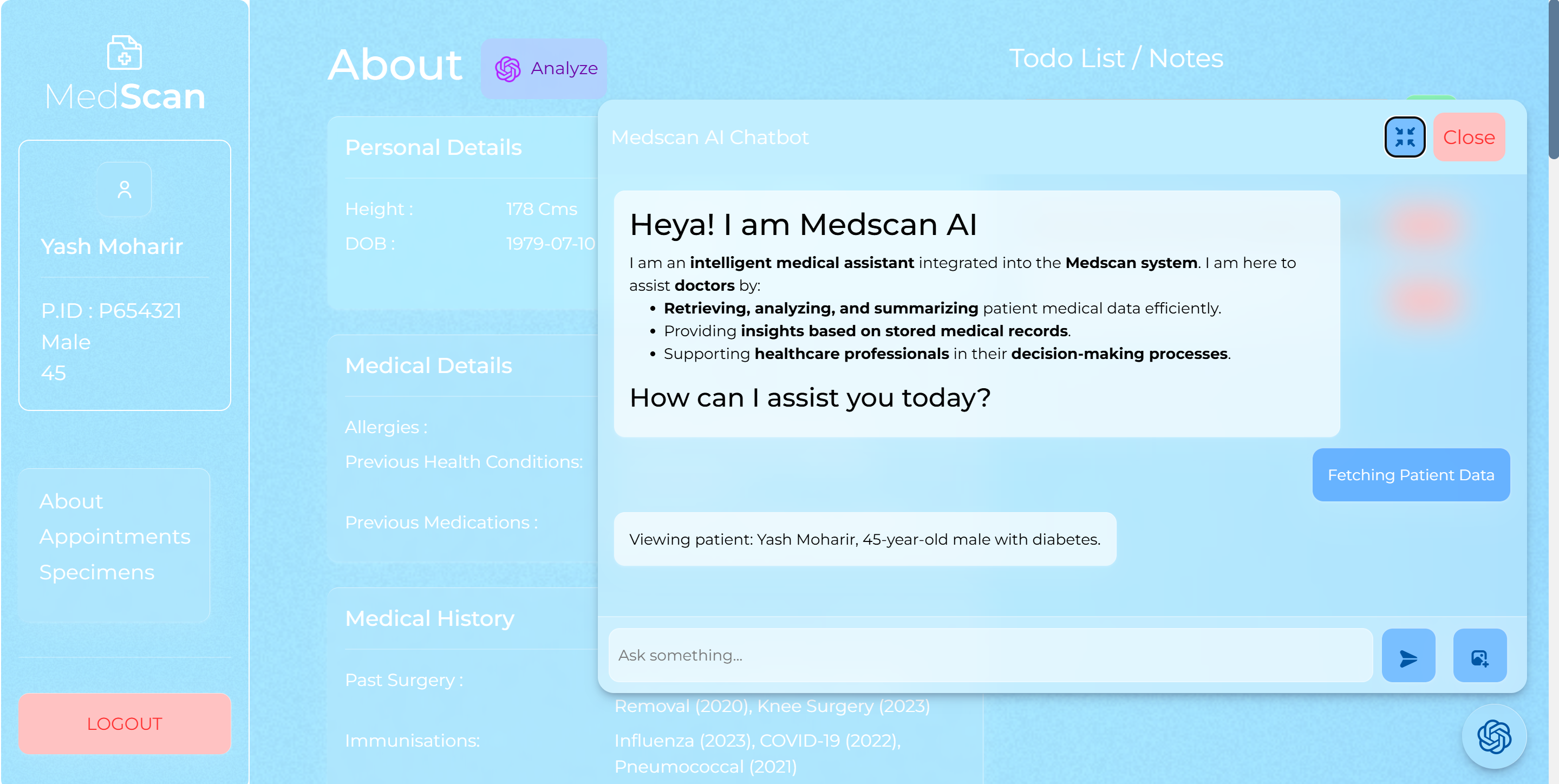
Medscan AI Bot
-
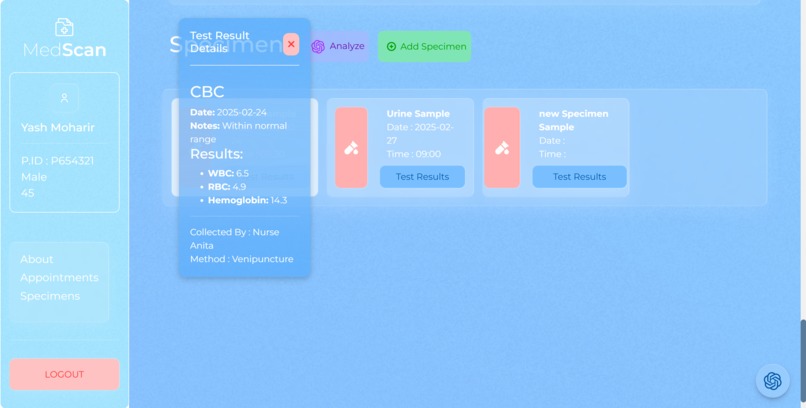
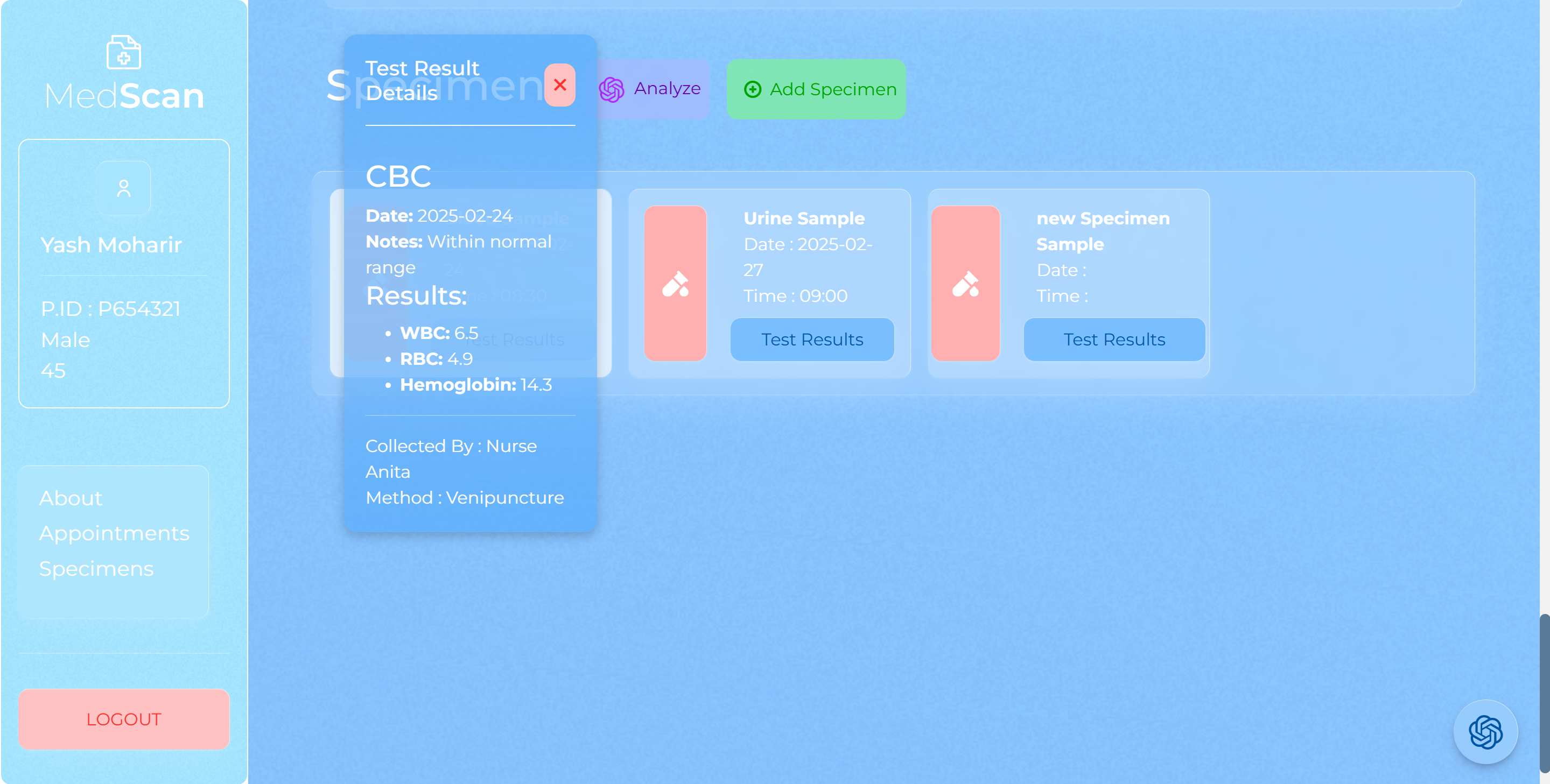
Specimen Data
-
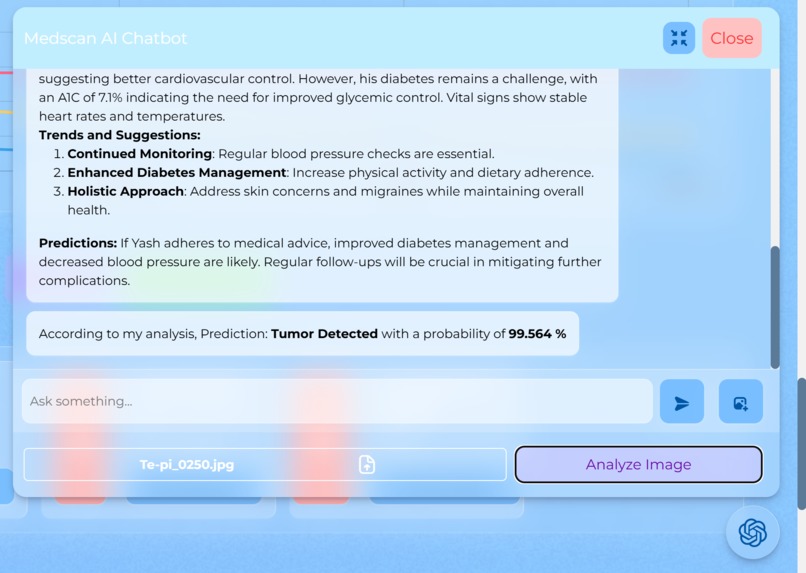
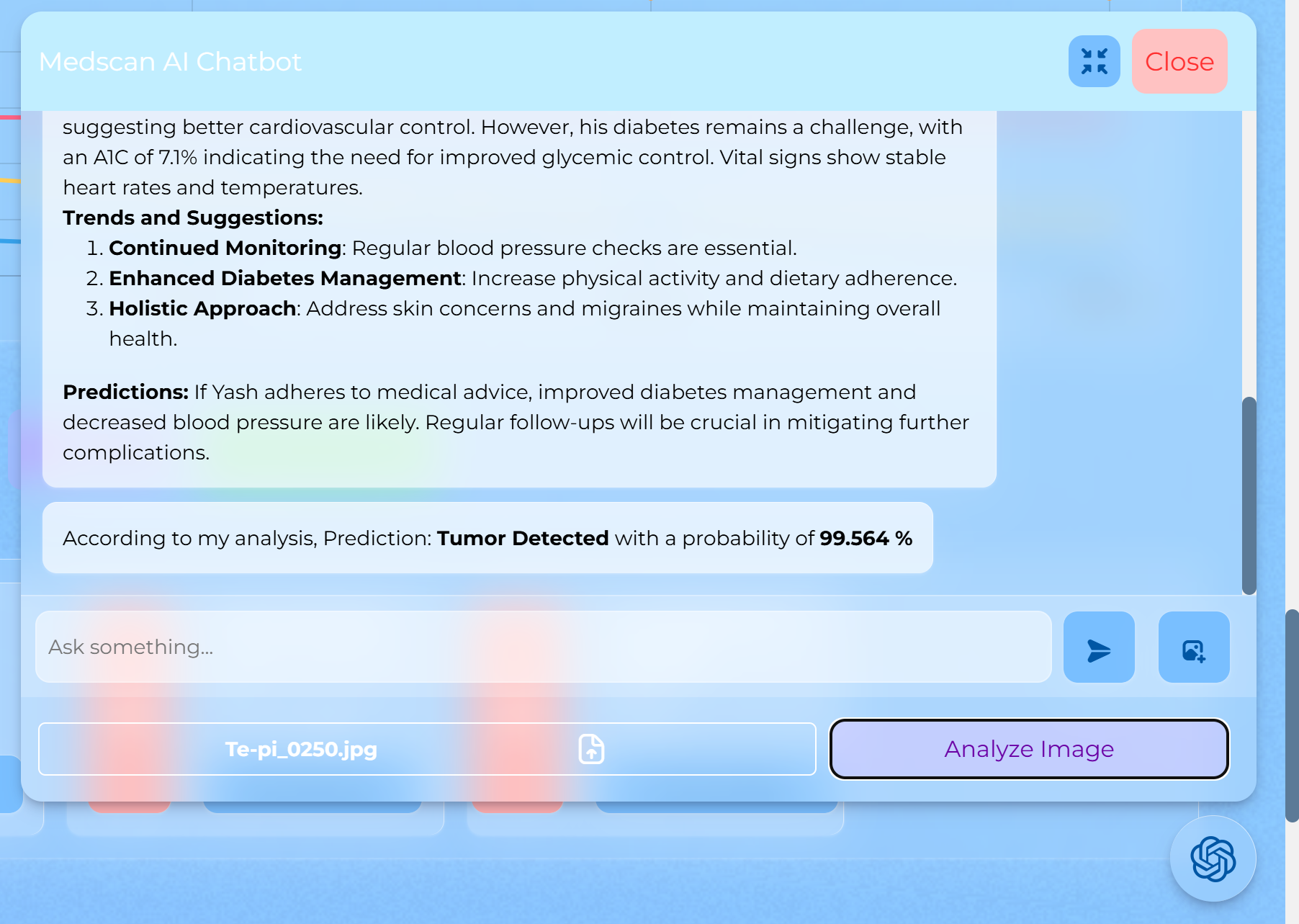
Scanning MRI for tumors
Inspiration
I’ve always been fascinated by how AI can transform industries, and healthcare felt like the perfect place to make a real difference. With the rise of digital medical records, I saw an opportunity to build something that could save time, reduce human error, and give healthcare professionals quicker insights into a patient’s history.
"Everybody lies", a phrase from one of the medical sitcoms, made me wonder how true this is—and how often it results in tragic outcomes. In many cases, misdiagnosis or delayed treatment stems from incorrect or missing medical history.
After some research, I found the following:
📋 Wrong Medical History
- According to a 2015 study published in BMJ Quality & Safety, 12 million adults in the U.S. are misdiagnosed annually, and incomplete or incorrect medical history is a major factor.
- A study by Johns Hopkins Medicine found that diagnostic errors are the most common, most costly, and most deadly medical errors, often tied to inaccurate or missing patient history.
🧪 Specimen or Result Mismatches
- A 2022 review from the College of American Pathologists (CAP) estimated that specimen mislabeling or identification errors occur in 1 out of every 1,000 specimens, with potentially fatal consequences.
- The ECRI Institute lists specimen mislabeling as one of the Top 10 Patient Safety Concerns, causing delayed or incorrect treatment.
- The Journal of Clinical Pathology found that 60% of lab errors happen during the pre-analytical phase, often due to incorrect specimen handling or patient ID mix-ups.
🏥 Vitals & Appointment Issues
- Appointment scheduling errors, delays, or miscommunication can lead to critical delays in diagnosis or treatment, especially for serious conditions like cancer or cardiac issues.
- A study in JAMA Internal Medicine found that missed follow-ups due to poor appointment tracking contributed to 9.7% of diagnostic delays.
- The Agency for Healthcare Research and Quality (AHRQ) states that errors in recording or interpreting vitals can lead to inappropriate treatment decisions, especially in emergency or ICU settings.
- Inconsistent documentation of vital signs was found to be a root cause in 11% of patient safety incidents reported to the UK’s National Patient Safety Agency (NPSA).
What it does
*Medscan AI * is a Universal Health Record system that maintains and records a history of every medical event related to a patient, right from appointments and patient visits to specimen collections and their test results. Only authorized personnel like doctors and nurses can add or edit data. This ensures a reliable medical history, enabling doctors to diagnose with maximum accuracy.
The app is supported by Medscan AI, a smart assistant that helps doctors and healthcare workers quickly analyze patient medical records. It can:
- Summarize key information like medical history, blood reports, vitals, and prescriptions
- Answer doctor queries based on patient data using natural language
- Handle multiple formats like text, tables, and scanned documents
- Provide quick overviews of sections like General Info, Specimen Register, and Appointments
How I built it
I built Medscan using React and Typescript for Type safety, bundled and accelerated using Vite. I used SCSS/SASS as it is directly compiled in Vite environment and is cleaner to use and read. I integrated a wide range of Azure services to make the system cloud-native, intelligent, and scalable. I chose Azure as it is HIPPA compliant, which will help me develop and hopefully deploy this application in future.
✅ Azure Services Used:
| Azure Service | Purpose |
|---|---|
| Azure OpenAI Service | Powers natural language capabilities: summarization, contextual answers |
| Azure App Services | Hosting backend & frontend with GitHub CI/CD |
| Azure Functions | Serverless tasks like parsing, summaries, patient updates |
| Azure Cosmos DB (MongoDB API) | Stores patient records, vitals, and structured history |
| Azure Cognitive Services – Vision | Performs OCR on scanned medical documents |
| Azure API Management | Organizes and secures backend endpoints |
| Azure Application Insights | Real-time monitoring, performance, and crash reports |
| Azure Resource Group | Manages and organizes all app resources |
| Azure Key Vault | Manages sensitive secrets like API keys securely |
| Azure Blob Storage | For securely storing uploaded medical documents in future |
I chose Azure because of its HIPAA-aligned capabilities and seamless integration with GitHub, which gave me confidence to build for real-world healthcare use cases.
Challenges I ran into
- Needed to make sure the AI bot knows the reference to the current patient record -Needed to make sure the AI bot also maintains conversational history to answer successive queries with reference to past queries.
- Fine-tuning AI prompts to understand medical jargon and domain-specific language
- Securing sensitive health information while working with cloud services
- Managed various Azure components and ensured they worked together seamlessly
- Designing a simple, intuitive interface for healthcare professionals
Accomplishments that I'm proud of
- I created a fully functional AI companion that works across structured and scanned patient data
- I managed to build an AI bot which has conversational abilities. Azure does not provide this and I had to figure this on my own.
- Built logic so that the bot is aware of the current profile and user doesn't have to waste time explaining it to the bot.
- Successfully deployed a modular, event-driven app using over 10 Azure services
- Leveraged GitHub Copilot to improve code quality, speed up testing, and eliminate boilerplate
What I learned
- How to build and deploy a real-world cloud solution using the Azure ecosystem
- Working with LLM APIs
- Training my own data and making my own predictive model using Azure ML.
- How to apply Responsible AI principles while handling sensitive data
- How to extract structured insights from unstructured documents using Azure Vision and OpenAI
- The value of modular architecture using Azure Functions and Cosmos DB
- Using Typescript to leverage VS Code auto complete.
What's next for Medscan - AI Companion
- Add voice and audio support for fully hands-free interaction
- Implement risk prediction for early detection using patient history and vitals
- Train the ML model with more document types and more accurate and specific results.
- Integrate DICOM image support for radiology workflows
- Begin pilot testing with healthcare professionals for real-world feedback and iteration
📚 Citations:
📋 Wrong Medical History
🧪 Specimen or Result Mismatches
- College of American Pathologists (2022): https://www.cap.org
- Journal of Clinical Pathology (2010): Link
- ECRI Institute (2023): Link
🏥 Vitals & Appointment Register Issues
Let me know if you want this turned into a Markdown file, Devpost-ready format, or if you need a one-pager PDF for submission.

Log in or sign up for Devpost to join the conversation.