-
-
AI-Powered Medicinal Plant Identification Using Leaf Image Recognition
About the Project
Inspiration
Medicinal plants have been used in traditional healthcare for generations, but identifying them correctly can be difficult, especially for people without botanical knowledge. A wrong identification may lead to confusion or the misuse of plants.
We were inspired to explore how artificial intelligence and computer vision could make medicinal plant identification more accessible. Our goal was to create a system that allows users to identify a medicinal plant simply by uploading an image of its leaf.
What We Built
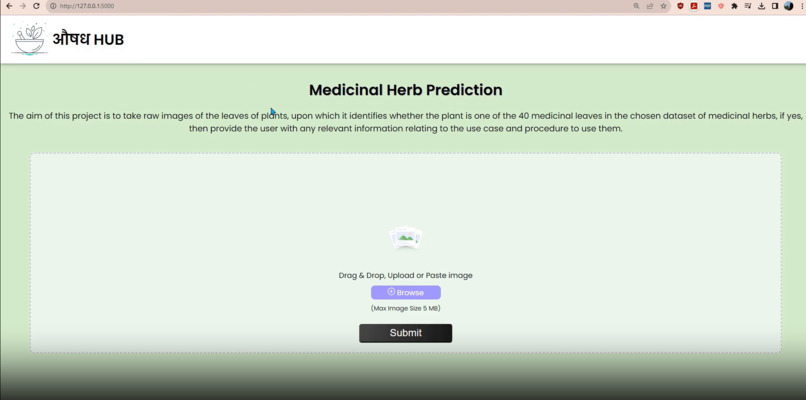
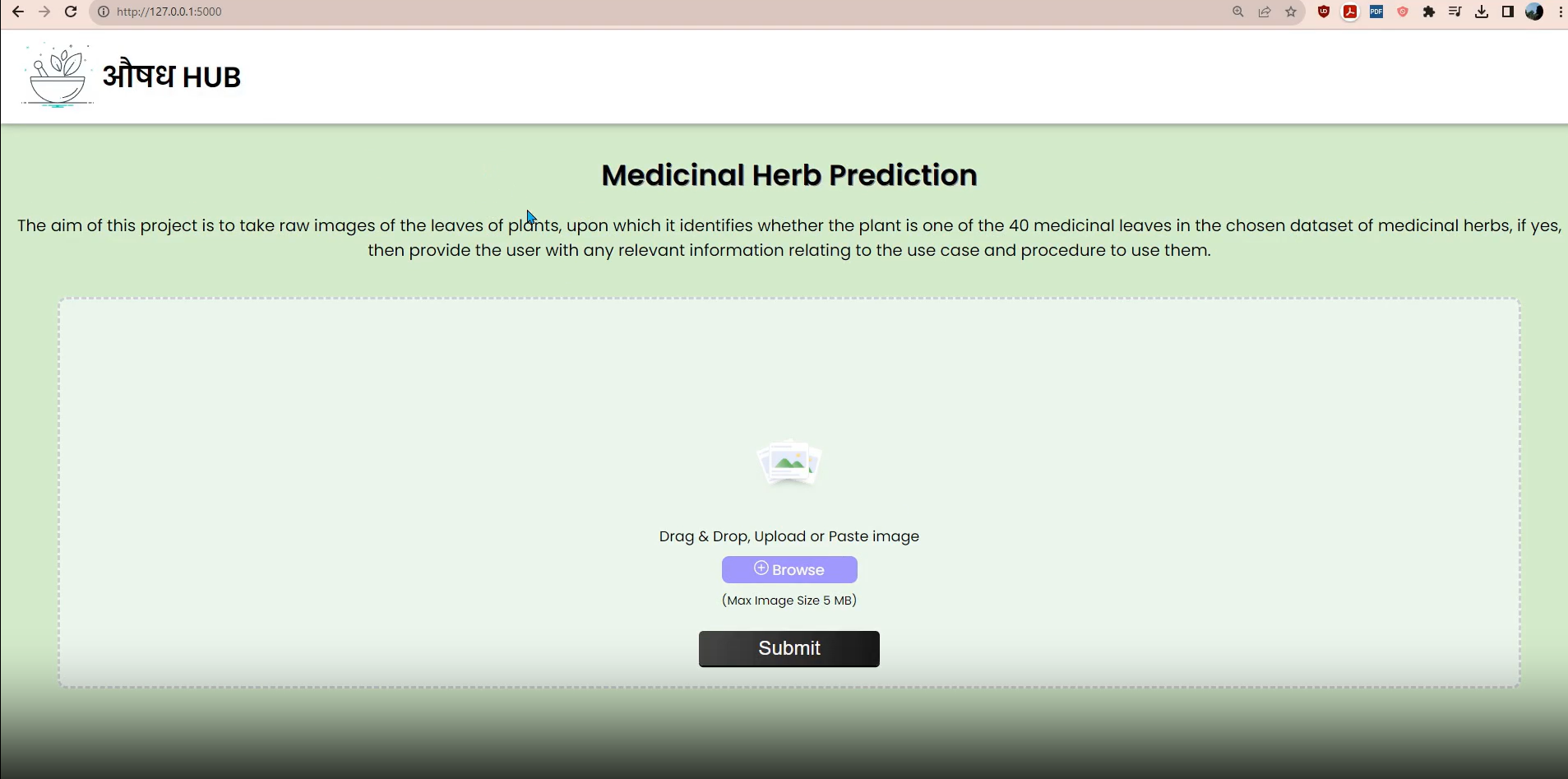
We developed an AI-powered medicinal plant identification system that analyzes leaf images and predicts the corresponding plant species.
The system uses a ResNet50 deep learning model trained through transfer learning to recognize 30 medicinal plant classes. Users can upload a leaf image through a web interface and receive the predicted plant name, confidence score, and relevant plant information.
How We Built It
We built the application using:
- Python and Flask for the backend and application logic.
- PyTorch and ResNet50 for image classification.
- HTML, CSS, and JavaScript for the user interface.
- Transfer learning to adapt a pretrained deep learning model to medicinal plant identification.
The application processes the uploaded image, prepares it for model inference, and returns the prediction through the web interface.
What We Learned
Through this project, we gained practical experience in deep learning, transfer learning, image preprocessing, model integration, and full-stack application development. We also learned how to connect a trained machine learning model with a web application and how to consider deployment constraints when working with large model files.
Challenges We Faced
One of our main challenges was integrating the trained ResNet50 model with the Flask application while maintaining the original prediction functionality. The model's size and dependencies also created difficulties during deployment, particularly when working with free hosting platforms and their resource limitations.
We focused on simplifying the application structure, reducing unnecessary dependencies, and improving model-loading and inference efficiency without compromising the intended classification behaviour.
Future Scope
We aim to improve the system with a broader medicinal plant dataset, additional plant information, better model efficiency, and more accessible deployment so that users can benefit from AI-assisted plant identification.
