Inspiration: Medication errors, harmful drug interactions, and a lack of accessible medical information are major challenges in healthcare. Many patients take multiple medications without fully understanding their potential risks.
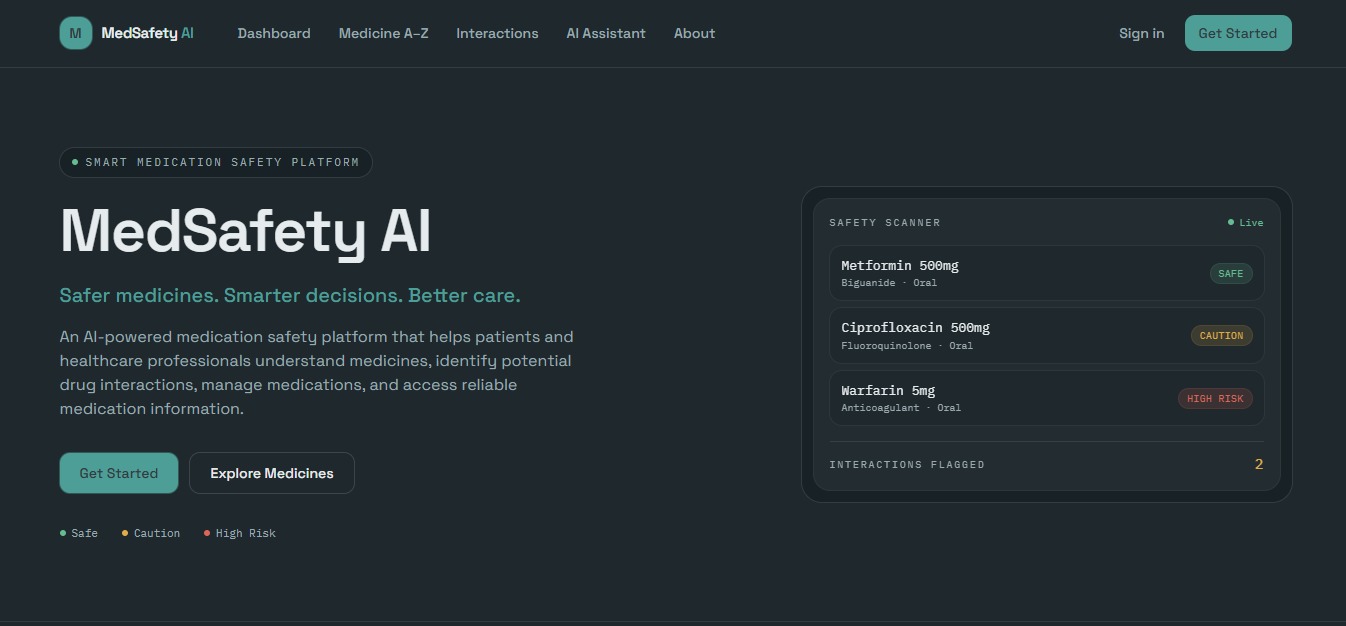
This inspired us to develop MedSafety-AI, an intelligent medication safety assistant designed to help users better understand their medicines, identify potential safety concerns, and make informed healthcare decisions.
Our goal is to make medication safety information more accessible, understandable, and user-friendly through artificial intelligence.
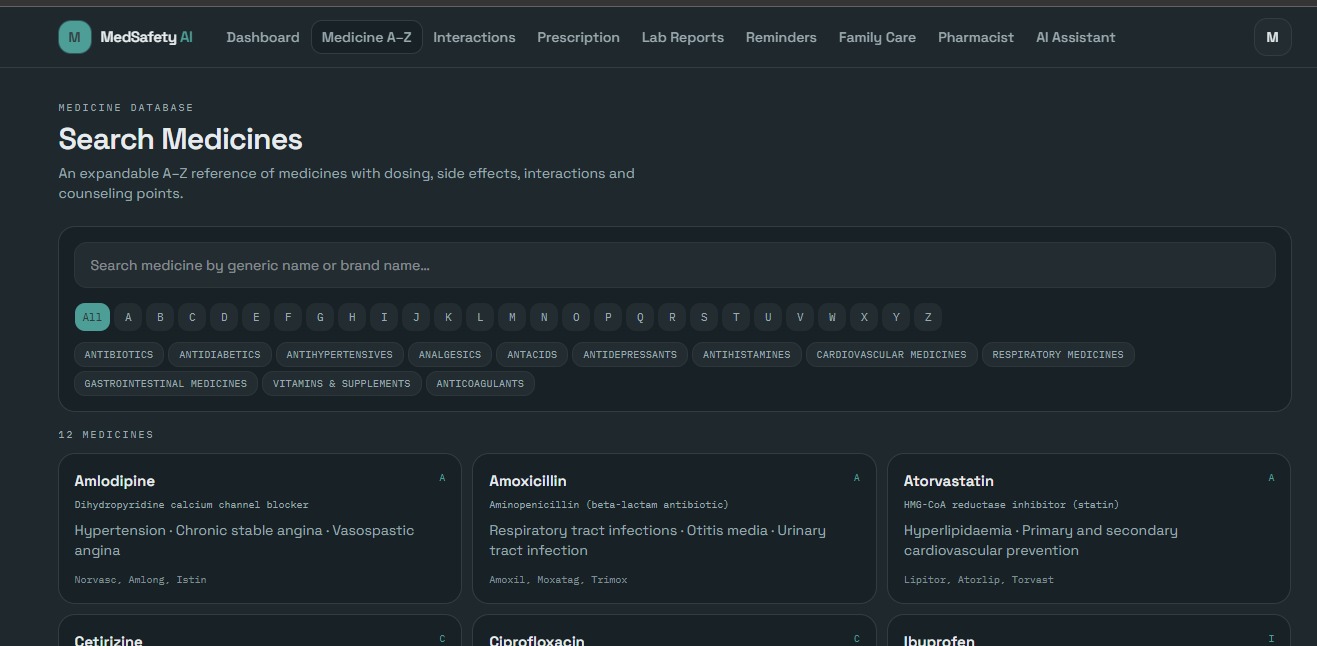
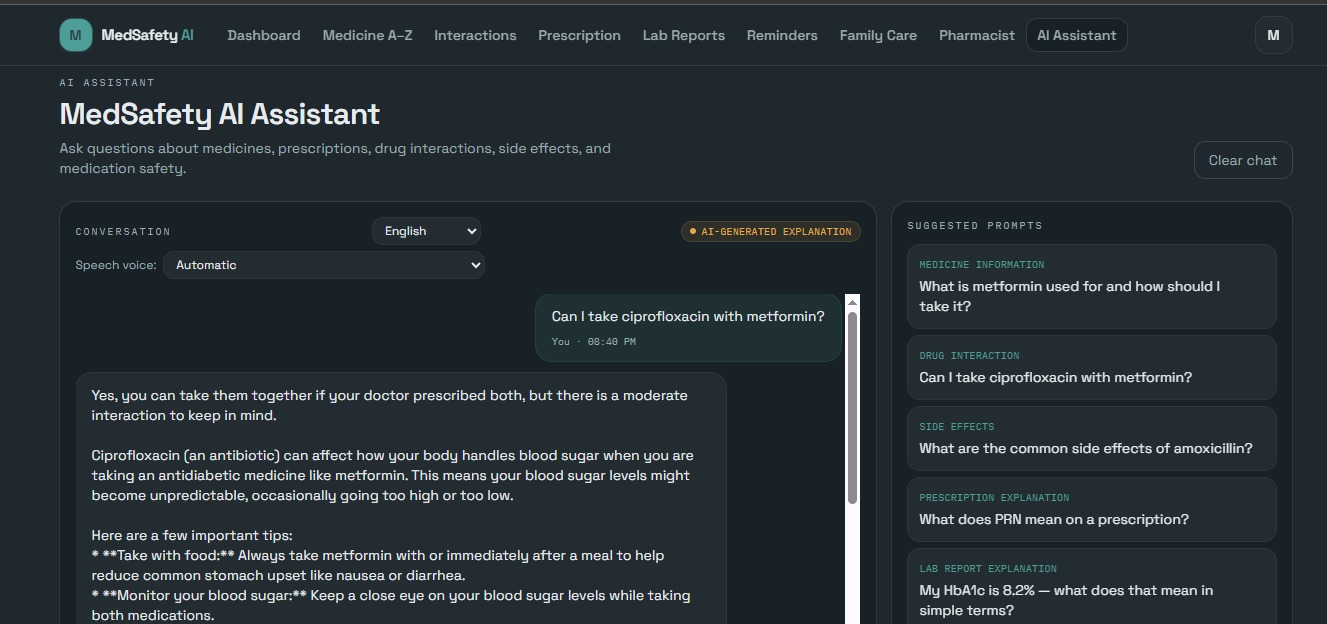
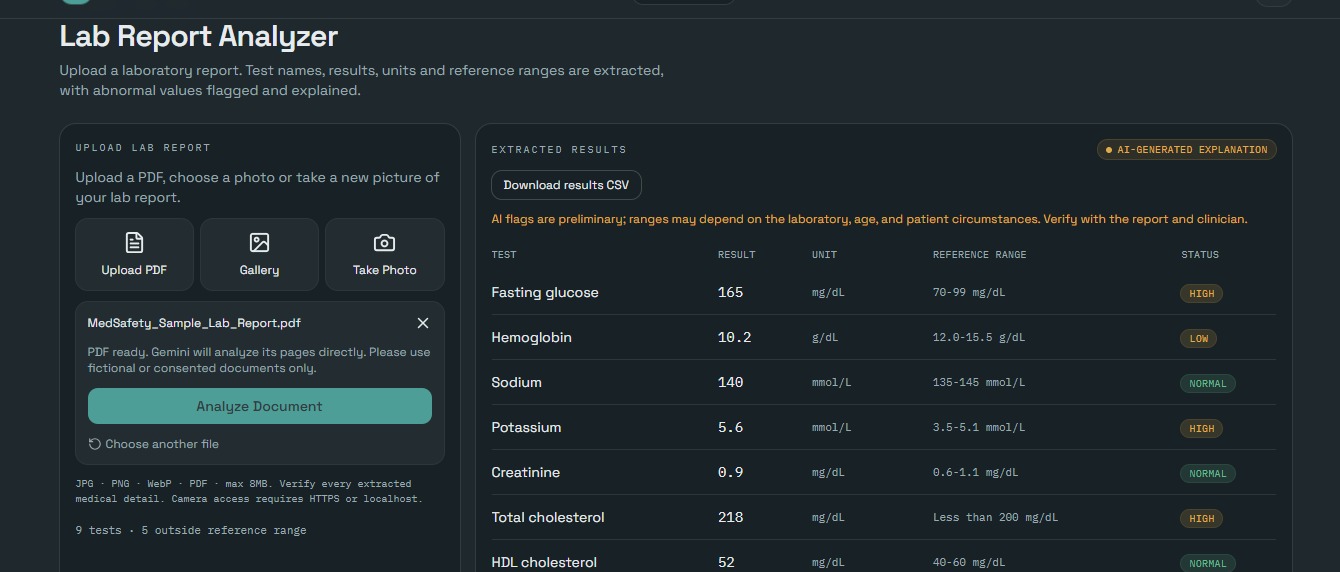
What It Does: MedSafety-AI helps users explore medication safety information through an intelligent, easy-to-use platform.
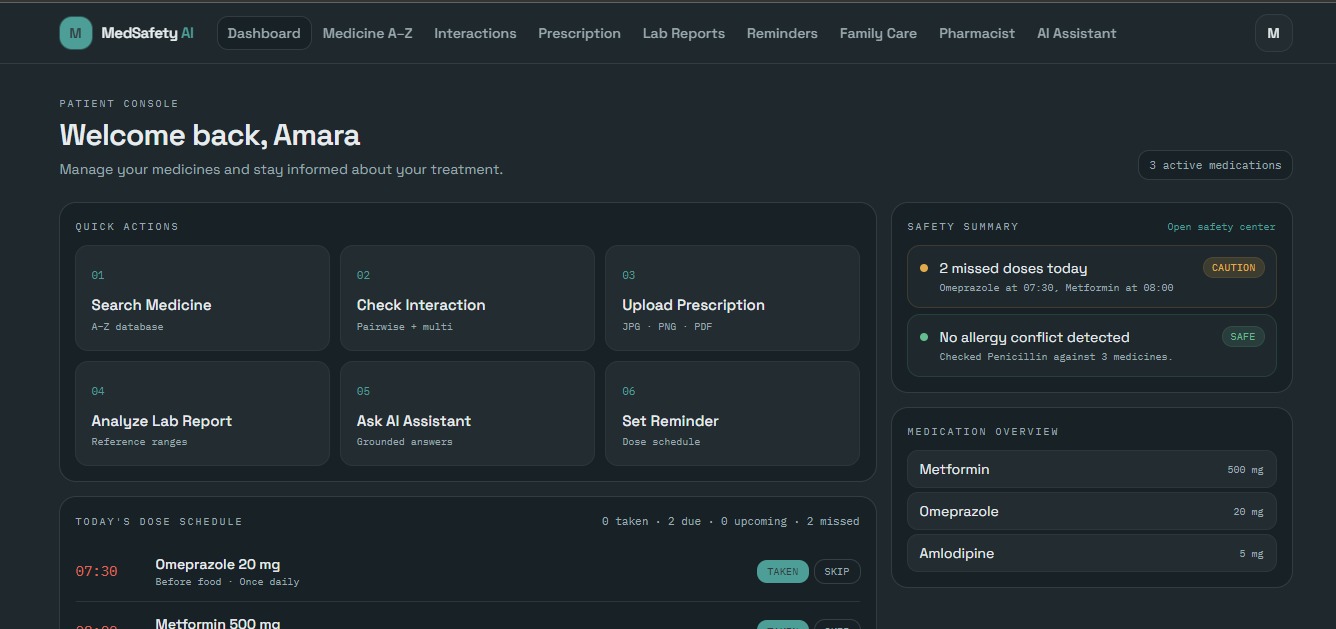
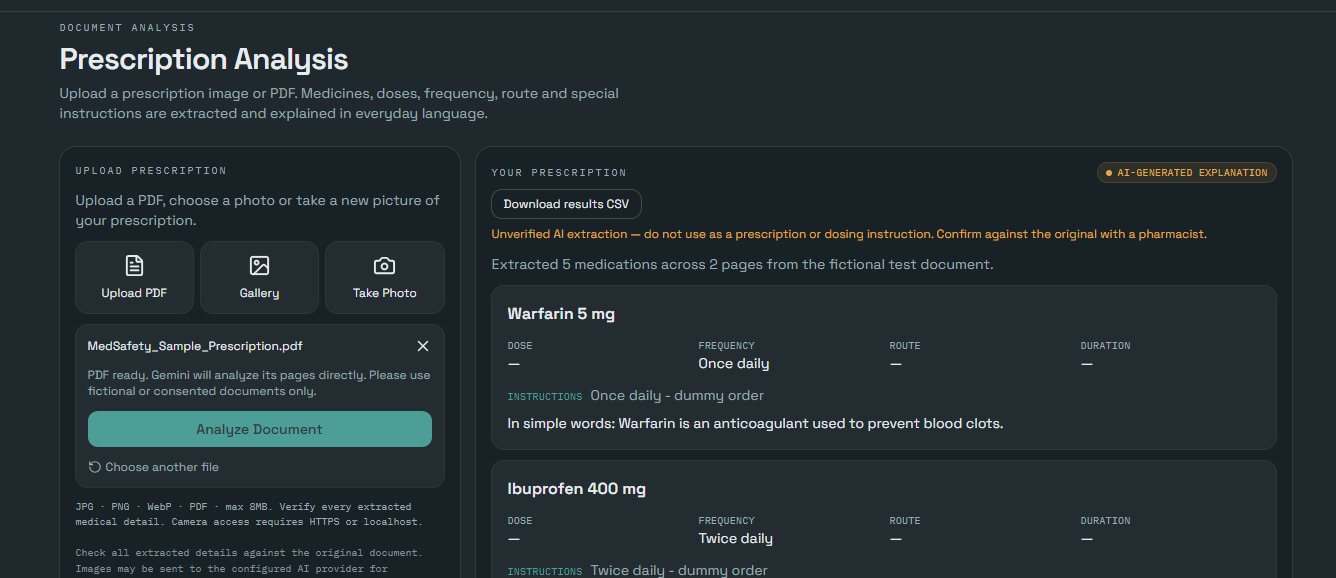
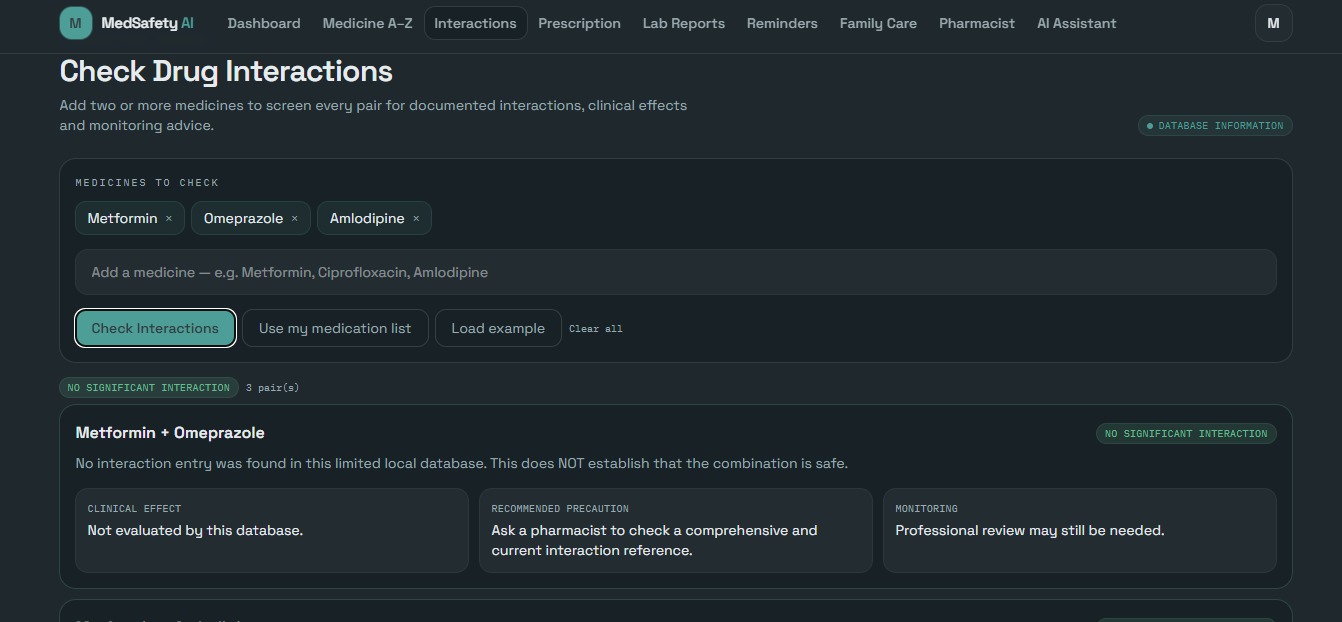
The project aims to: Provide AI-powered answers to medication-related questions. Explain drug interactions and possible side effects. Highlight important medication precautions. Simplify complex pharmaceutical information. Promote medication awareness and responsible medicine use.
MedSafety AI is designed as an educational support tool, not a replacement for professional medical advice.
How We Built It: We designed MedSafety-AI by combining artificial intelligence with healthcare-focused application development.
The development process involved:
- Research:Understanding common medication safety problems and user needs.
- UI/UX Design: Creating an accessible and responsive interface.
- AI Integration: Developing a question-answering workflow for medication-related queries.
- Application Development: Connecting the user interface with the AI processing system.
- Testing: Evaluating usability, response quality, and medication safety considerations.
Our focus was on delivering a simple, practical experience while handling complex medical questions responsibly.
Challenges We Faced: One of our biggest challenges was managing the complexity of medication information. Different drugs may have multiple interactions, contraindications, and precautions that depend on individual patient circumstances.
Other challenges included: Reducing inaccurate or misleading AI-generated information. Presenting technical medical terminology in simple language. Designing an intuitive interface for different types of users. Ensuring users understand the limitations of AI-generated healthcare information. Balancing response speed, usability, and reliability.
What We Learned: During the development of MedSafety AI, we gained valuable experience in:
Applying artificial intelligence to healthcare-related problems. Designing user-friendly AI applications. Understanding medication safety and drug interaction concepts. Developing and testing AI-powered question-answering systems. Recognizing the importance of accuracy, responsible AI, and user safety.
Most importantly, we learned that healthcare AI should prioritize reliability, transparency, and patient safety.
What's Next for MedSafety-AI:
We plan to expand MedSafety AI by exploring: More comprehensive drug interaction checking. Integration with trusted pharmaceutical databases. Multilingual medication information. Medication reminders and safety alerts. Improved AI response validation. Personalized medication education with appropriate safety safeguards.
Our vision is to make medication safety knowledge easier to accept and understand through responsible AI innovation.
