-
-
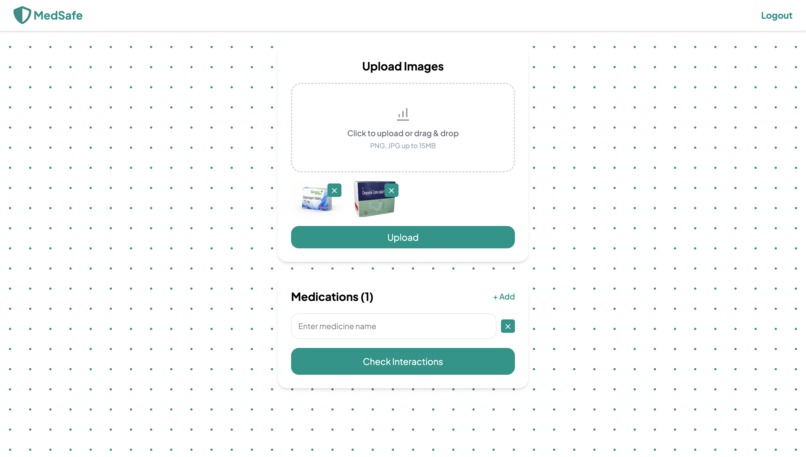
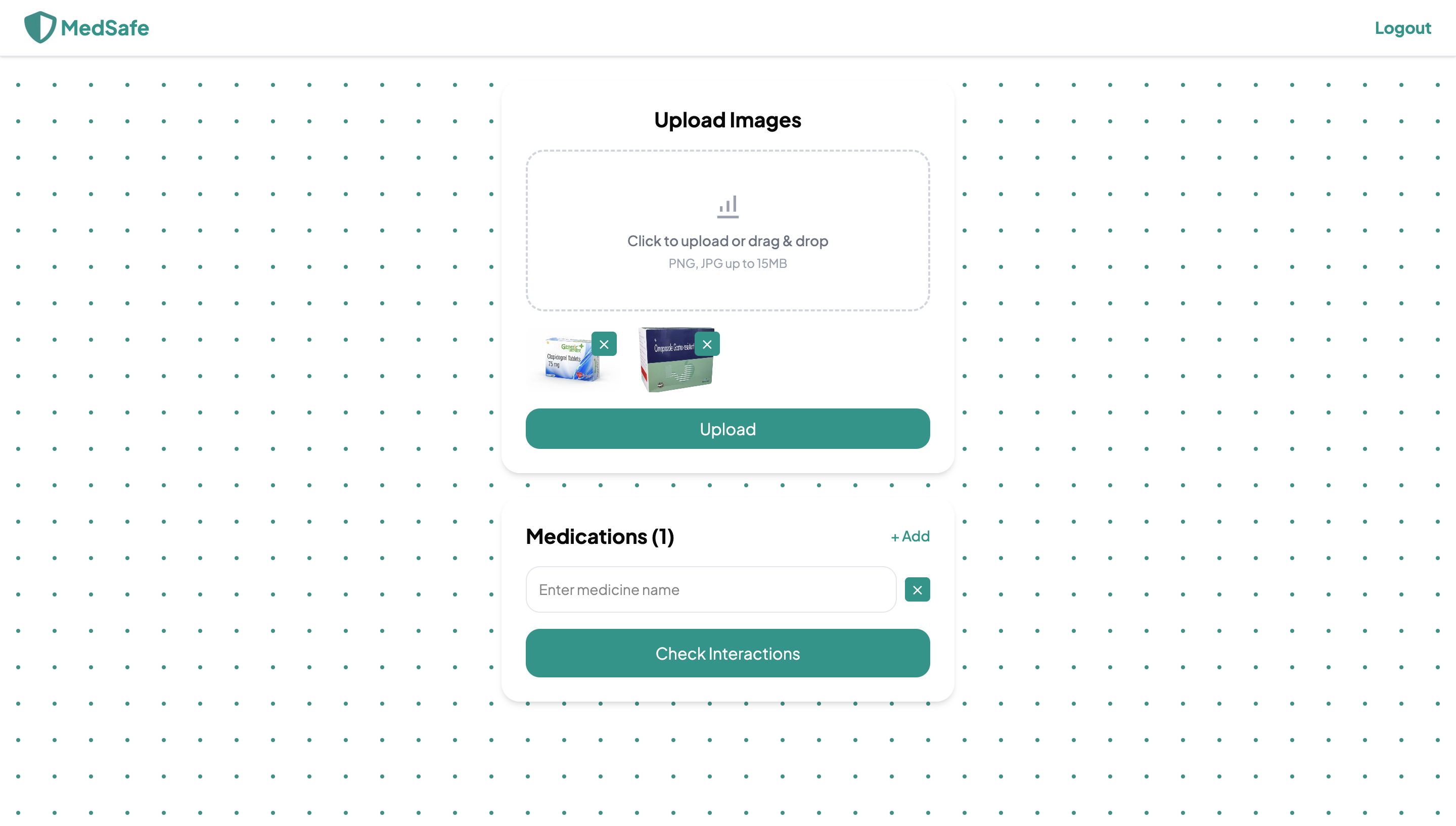
Upload and add
-
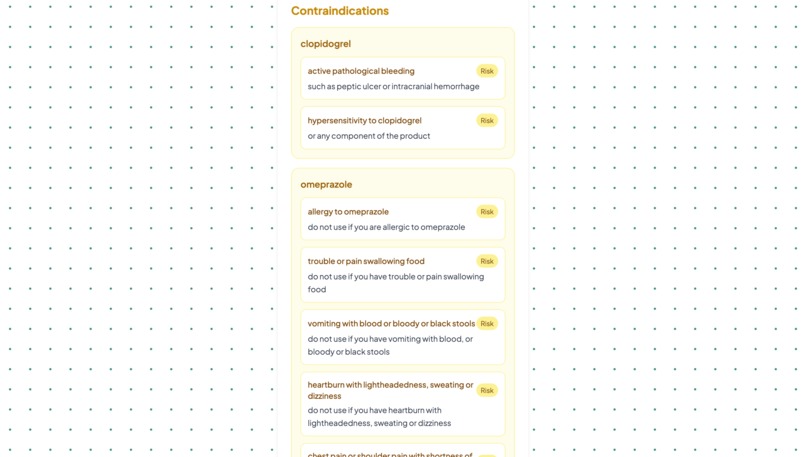
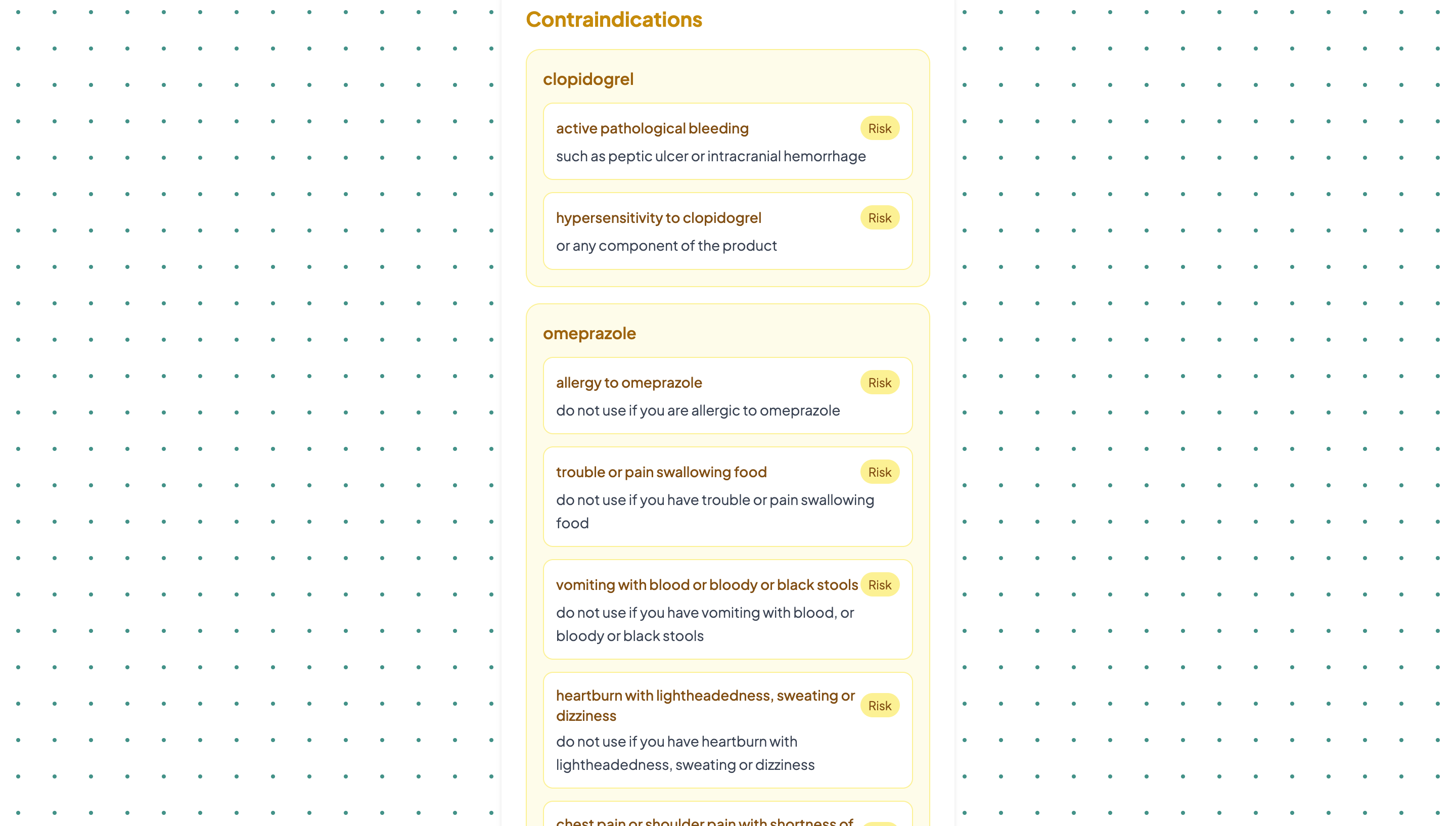
Contraindication results
-
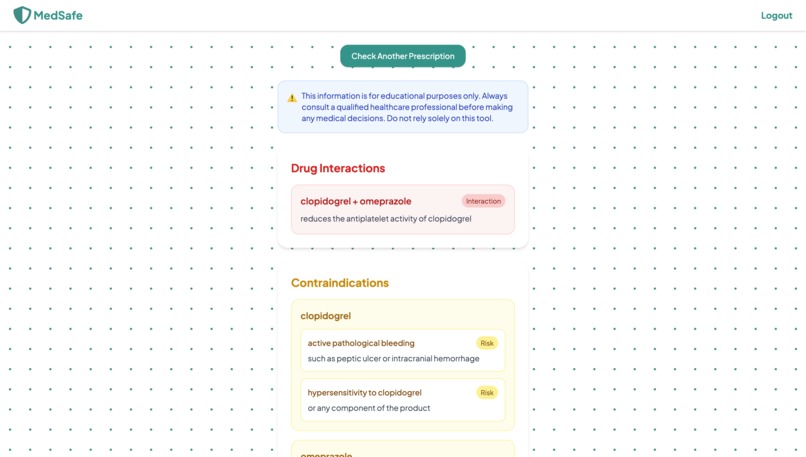
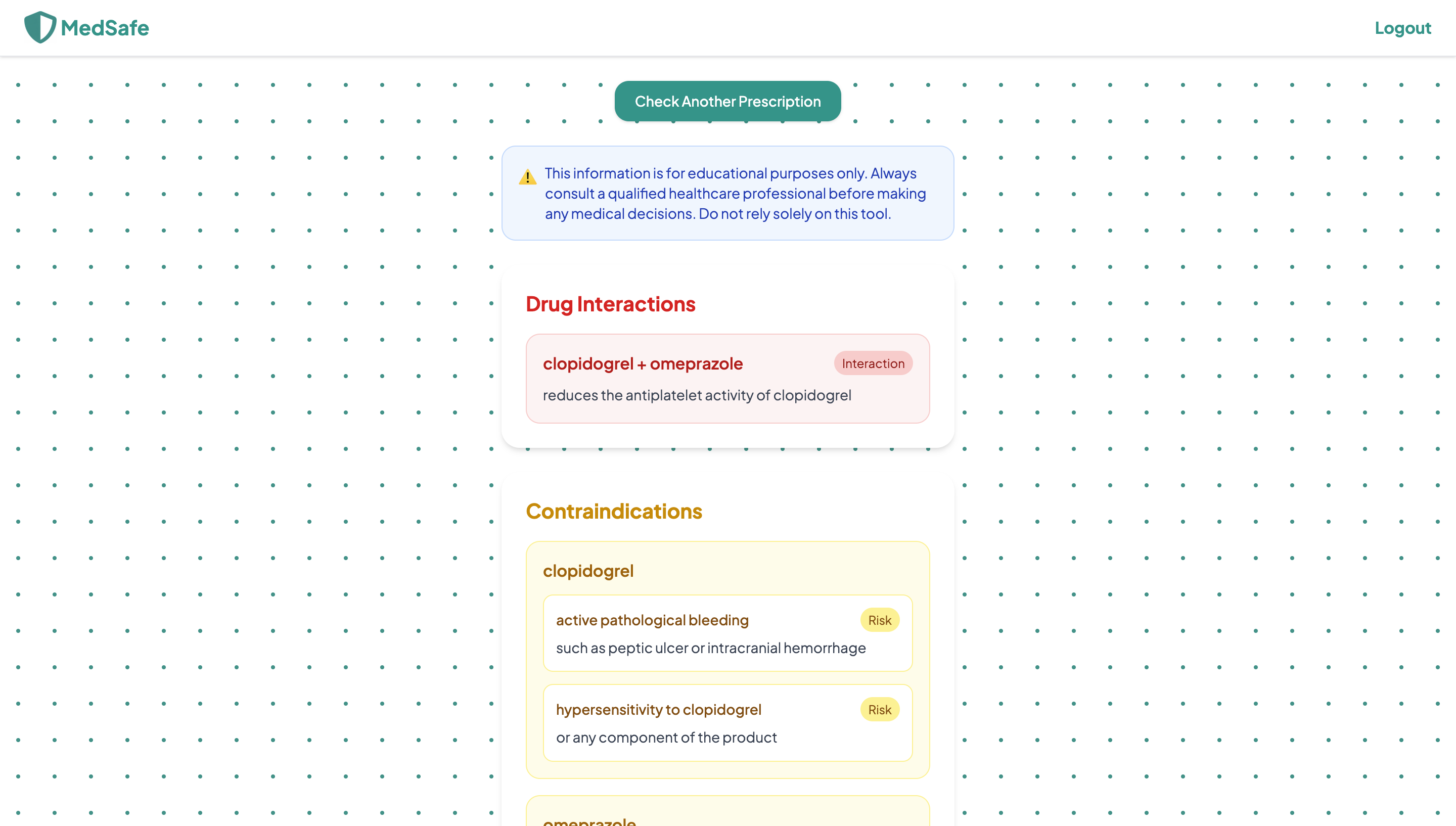
Interaction results
-
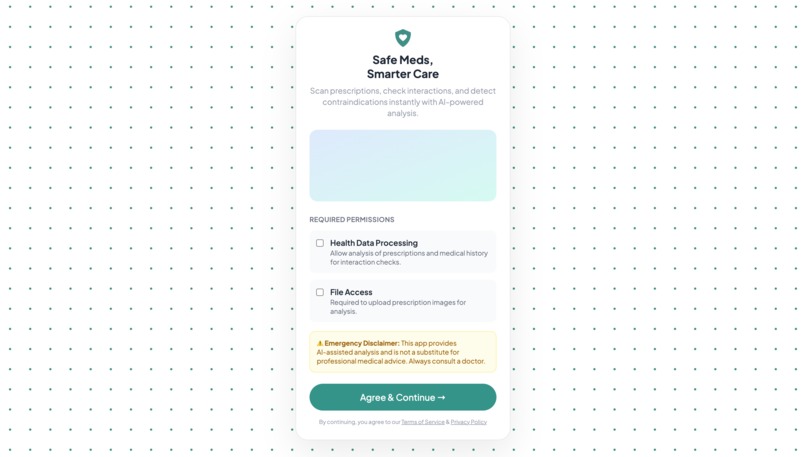
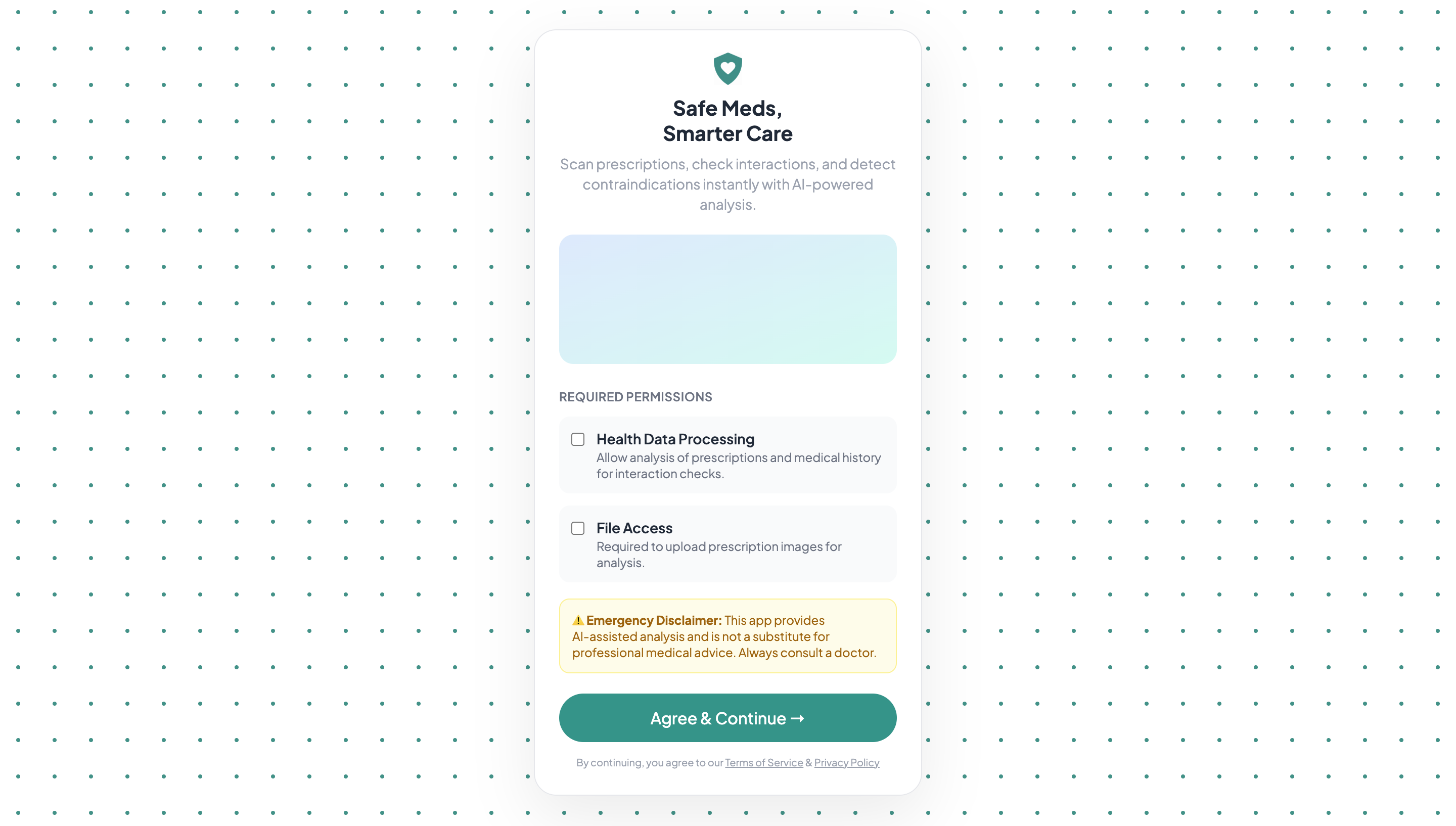
Landing Page
Inspiration
Medication errors and drug interactions are a major cause of preventable harm worldwide. Many people take multiple medicines daily without fully understanding the risks involved. Existing medical data is often scattered, complex, and inaccessible to non-experts.
This inspired us to build medSafe - a system that simplifies drug safety and makes it accessible to everyone.
What it does
medSafe helps users identify potential drug risks in a simple and reliable way.
- Extracts medicine names from prescription images or manual input
- Converts brand names into standardized generic names
- Detects drug interactions and contraindications
- Presents results in clear, user-friendly language
It transforms complex medical data into actionable safety insights.
How we built it
We developed medSafe using a full-stack architecture:
- Frontend: React.js (TypeScript)
- Backend: Node.js
- Database: MongoDB
Core integrations:
- RxNorm API → Drug normalization
- OpenFDA API → Drug safety data
- OpenAI API → Structured data extraction
Workflow logic:
- Input (image/manual)
- Extraction
- User verification
- Normalization
- Interaction analysis
- Data storage
- Output display
Challenges we ran into
- Handling noisy prescription images
- Managing multiple drug name variations
- Dealing with incomplete OpenFDA data
- Dependency on external APIs
- Converting unstructured medical text into structured insights
Accomplishments that we're proud of
- Built a complete end-to-end pipeline
- Implemented RxNorm-based normalization
- Enabled bidirectional interaction checking (A ↔ B)
- Designed a clean, user-friendly interface
- Reduced API calls using database caching
What we learned
- Integration of real-world healthcare APIs
- Importance of data normalization
- Handling unstructured data using AI
- Building systems that balance accuracy, usability, and scalability
- Designing for real-world healthcare impact
What's next for medSafe
- Expand to global drug datasets
- Support multilingual access for users across different regions
- Integrate speech-to-text input to assist differently-abled users and improve accessibility
- Enable healthcare provider integration
Built With
- github
- mongodb
- mongodb-atlas
- node.js-(express)
- openai-api
- openfda-api
- postman
- react.js
- rxnorm-api
- typescript


Log in or sign up for Devpost to join the conversation.