-
-
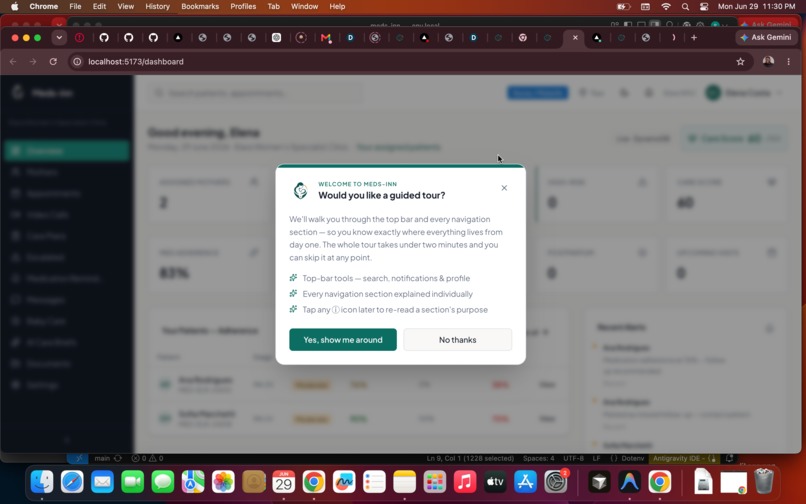
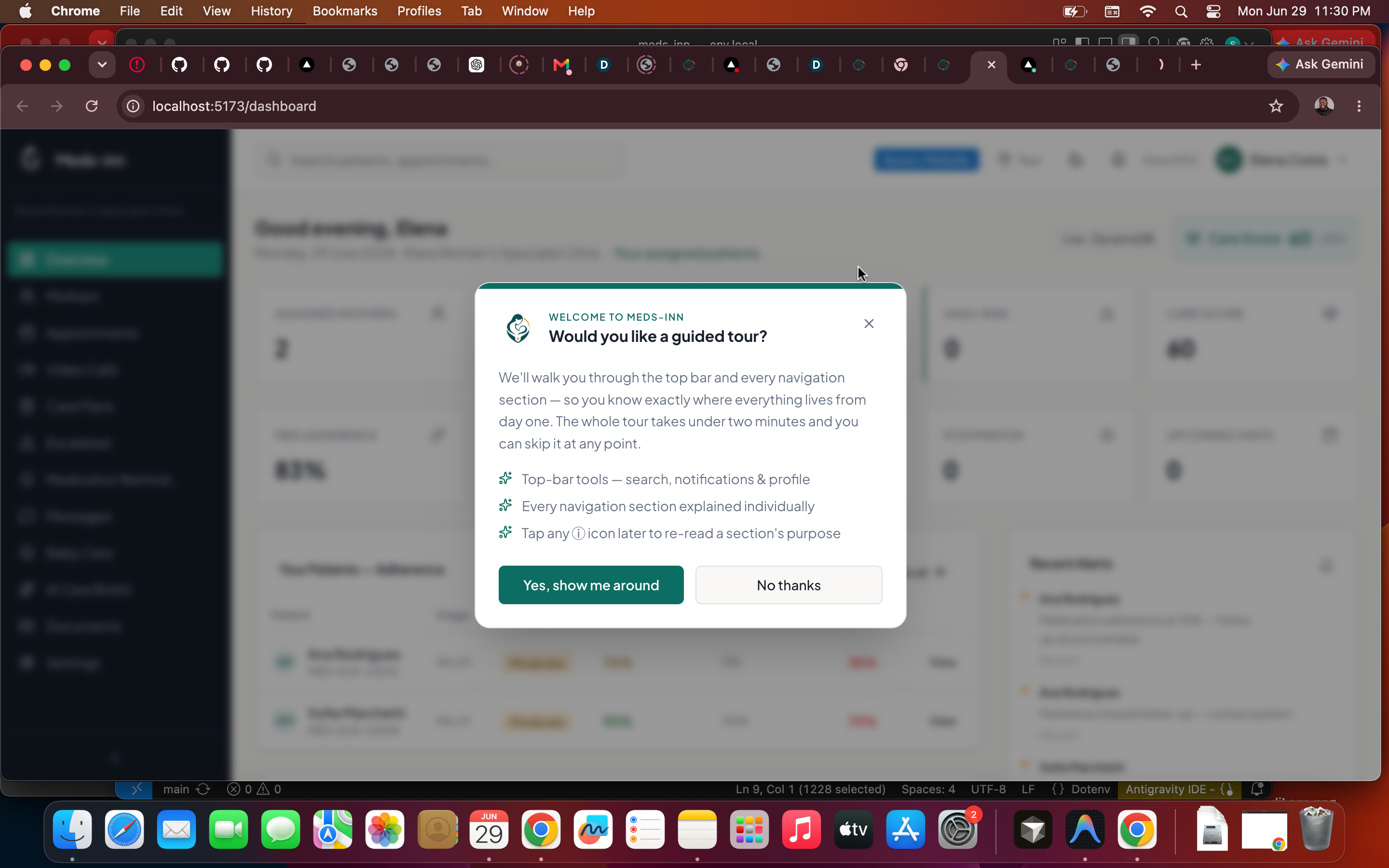
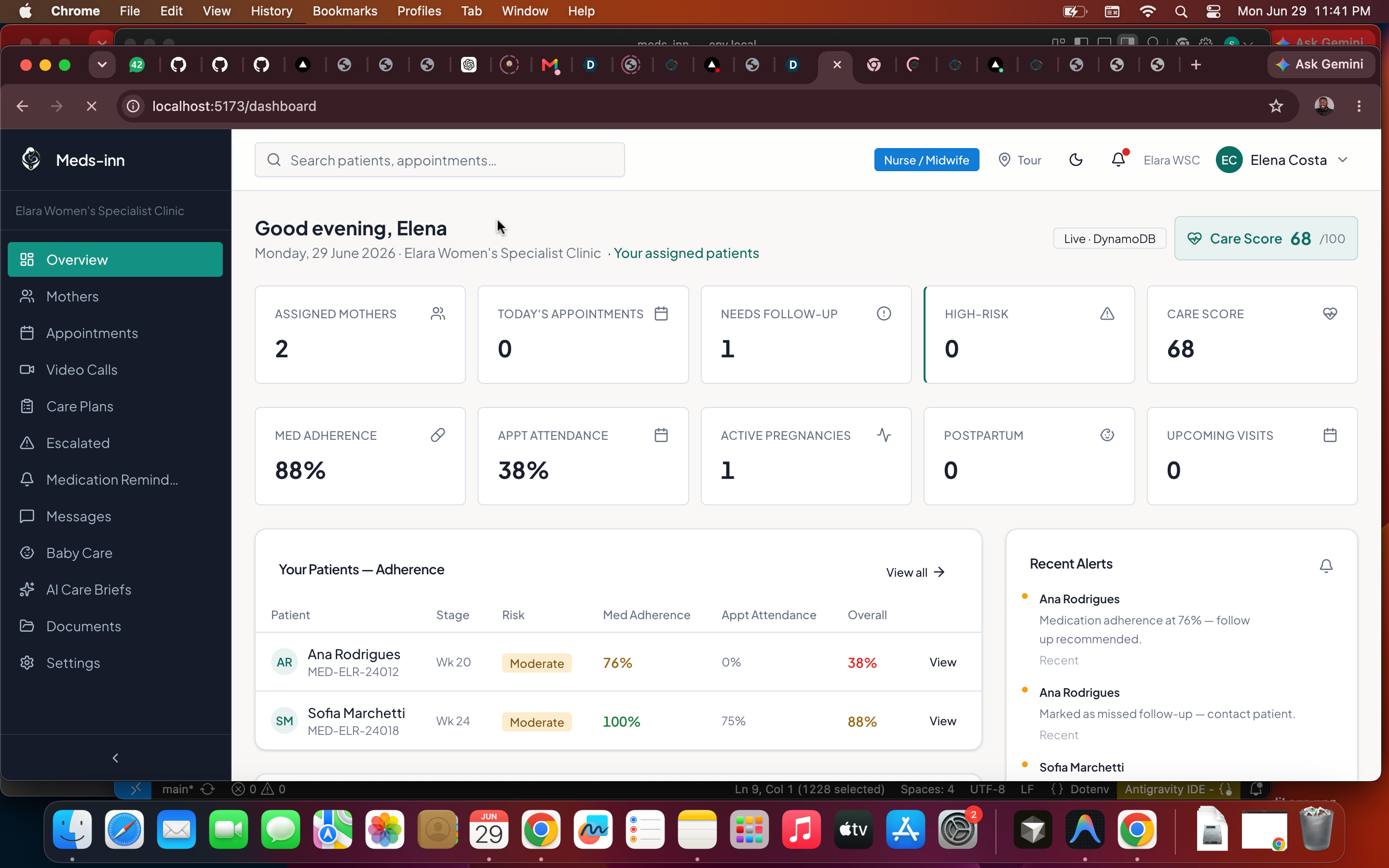
dasgboard tour
-
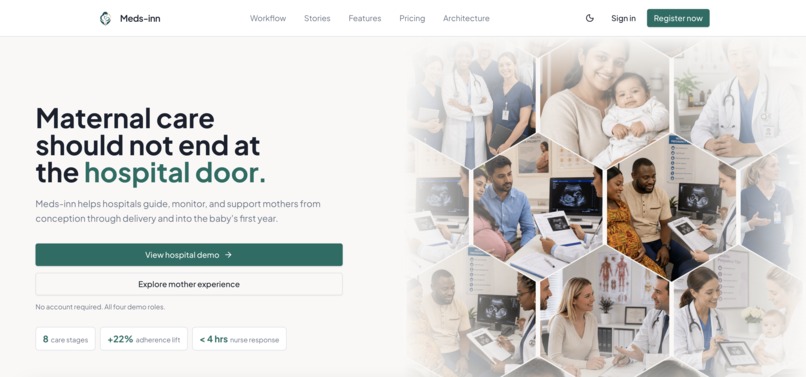
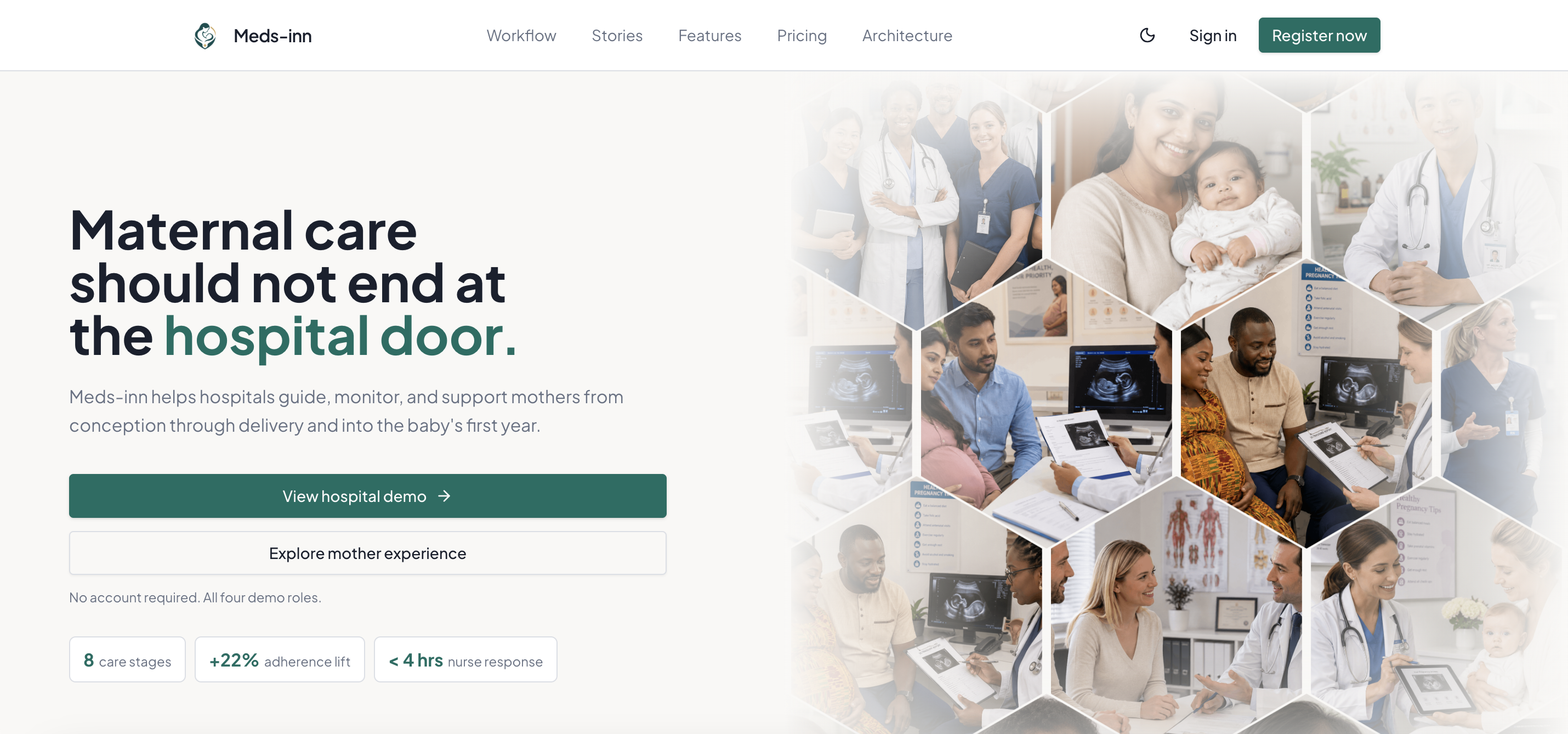
home page
-
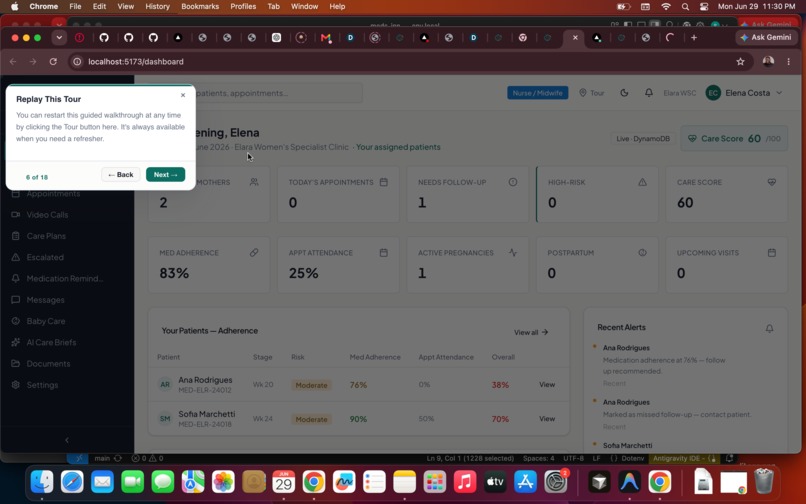
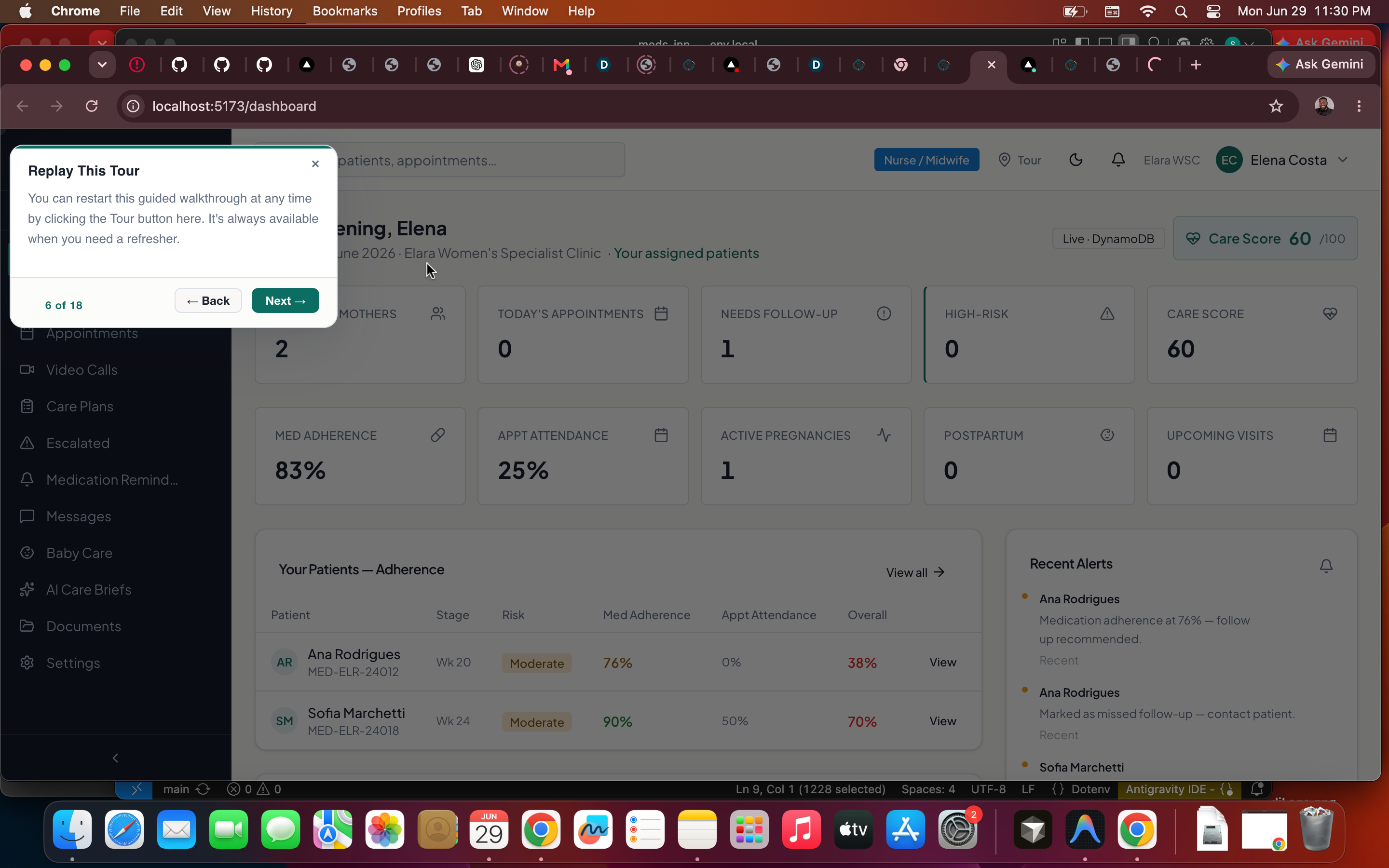
nurse dashboard tour
-
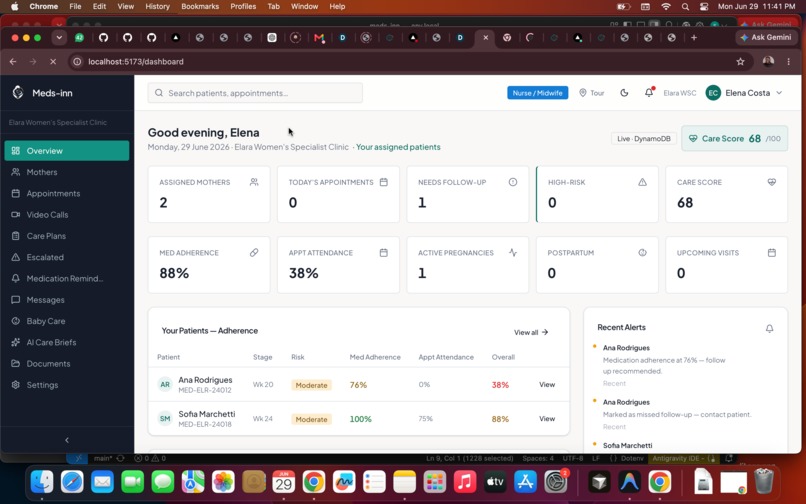
statistic
-
loading modal
About Meds-inn
Pregnancy is not a once-a-month experience, but for many mothers, structured care only happens when they physically visit a clinic. Between appointments, a mother may forget a medication, miss a follow-up, feel unsure about a symptom, lose track of important documents, or simply need calm guidance about what to expect next.
That gap inspired Meds-inn.
Meds-inn is a maternal care companion that helps mothers stay guided from pregnancy through delivery and into the baby’s first year. It brings reminders, appointments, baby milestones, care records, messaging, and AI-assisted care summaries into one simple experience.
The goal is not to replace doctors, nurses, or hospitals. The goal is to make the space between clinic visits safer, clearer, and more organized.
What I Built
For this hackathon, I built Meds-inn as a working maternal care platform with both mother-facing and clinician-facing experiences.
Mothers can use Meds-inn to:
- Complete care onboarding
- Track pregnancy or postpartum stage
- View medication reminders and care tasks
- Log symptoms and daily health updates
- Manage appointments
- Upload and access care documents
- Chat with assigned specialists
- Track baby profiles and milestones
Clinicians can use Meds-inn to:
- View assigned mothers
- Review patient profiles
- Track risk levels and missed follow-ups
- Manage medications and appointments
- Review uploaded documents
- Message patients
- Monitor dashboard metrics
- Access AI-assisted care briefs
One of the most important features is the AI Care Brief. Instead of using AI to diagnose or prescribe medication, Meds-inn uses AI as a support layer. The care brief summarizes a mother’s recent activity, missed reminders, reported symptoms, appointments, and care progress into a clear note that can be reviewed by a clinician or shared during a consultation.
This makes the AI useful without making unsafe medical claims.
How I Built It
Meds-inn is built as a React + Vite application deployed on Vercel, with serverless API routes connected to Amazon DynamoDB.
The frontend uses:
- React 18
- TypeScript
- Vite
- Tailwind CSS
- shadcn/ui
The backend is handled through Vercel serverless /api/* routes. The browser never talks directly to AWS and never receives AWS credentials. All data requests go through the API layer first.
For persistence, I used Amazon DynamoDB with a single-table design called meds-inn-db. The table stores users, mothers, appointments, medications, care plans, documents, messages, baby profiles, and dashboard metrics using composite PK and SK keys.
The DynamoDB model was designed to support multiple entity types in one table, including:
- Mother profiles
- User records
- Appointments
- Medication schedules
- Document metadata and chunks
- Chat threads and messages
- Baby profiles
- Care plans
- Team records
The app also includes role-scoped access. A mother can only access her own records, while nurses and doctors can only access assigned mothers. This was important because the product handles sensitive care-related information.
Why It Matters
Meds-inn focuses on continuity of care.
A mother should not feel disconnected from care just because she is not physically inside a hospital. She should know what stage she is in, what appointments are coming, what reminders matter, what documents she has uploaded, and what information may be useful to share with a professional.
For mothers, Meds-inn is a calm companion.
For clinicians, it becomes a clearer way to understand what has happened between visits.
For future hospital partners, it can become a structured care layer for maternal and child-health programs.
What I Learned
Building Meds-inn taught me that healthcare products need more than good features. They need restraint.
It would be easy to build a tool that sounds impressive by giving medical answers, but that is not always safe. I learned to design AI around support, summaries, and organization instead of diagnosis or prescription.
I also learned how important architecture is when building a product that deals with sensitive information. Even in a hackathon version, I wanted the data flow to be thoughtful: the frontend talks to serverless API routes, the API validates the user, and only then does the server interact with DynamoDB.
This project also pushed me to think about product presentation. A health app should not feel noisy or confusing. It should feel calm, trustworthy, and easy to understand.
Challenges I Faced
The first challenge was scope. Maternal care is a large space, and there were many possible features to build. I had to focus on the features that best communicate the product vision: onboarding, reminders, appointments, documents, baby profiles, messaging, dashboard metrics, and AI care briefs.
The second challenge was designing the DynamoDB data model. Because I used a single-table approach, I had to think carefully about partition keys, sort keys, entity types, and access patterns so the app could support many kinds of records without becoming messy.
The third challenge was medical safety. I wanted Meds-inn to feel intelligent, but not reckless. That is why the AI Care Brief is positioned as a summary tool for care coordination, not a medical decision-maker.
The fourth challenge was building something that feels polished enough for real users while still working within hackathon time. I focused on making the product feel clear, premium, and believable rather than adding too many unfinished ideas.
What’s Next
The next step for Meds-inn is to connect the AI Care Brief to a production AI workflow, add stronger authentication with Amazon Cognito, expand secure document handling, and integrate real notification services for appointment and medication reminders.
Long term, Meds-inn can grow into a maternal care network where mothers use the app directly, while hospitals and clinics can partner with the platform to provide guided support.
Meds-inn is built around one belief:
Maternal care should not end at the hospital door.
Built With
- amazon-dynamodb
- and
- aws-sdk-for-javascript
- localstorage-session-tokens
- lucide-react
- node.js
- react
- recharts
- shadcn/ui
- single-table
- tailwind-css
- typescript
- vercel
- vercel-oidc-aws-credentials-provider
- vercel-serverless-api-routes
- vite


Log in or sign up for Devpost to join the conversation.