Inspiration
This project was inspired by one of our teammates' experience as a research assistant at a local hospital. She saw firsthand how doctors had to waste valuable time retyping information from faxed EMRs into pathology reports, since the text was not selectable. Existing OCR solutions weren’t an option due to confidentiality—patient data couldn’t be uploaded externally. We wanted to create a secure, lightweight, localized platform that lets healthcare providers quickly OCR, edit, and manage records on their own computers. By avoiding heavy LLMs and keeping everything local, the system saves time, reduces redundancy, protects patient privacy, and ultimately helps doctors spend more time focusing on patients.
What it does
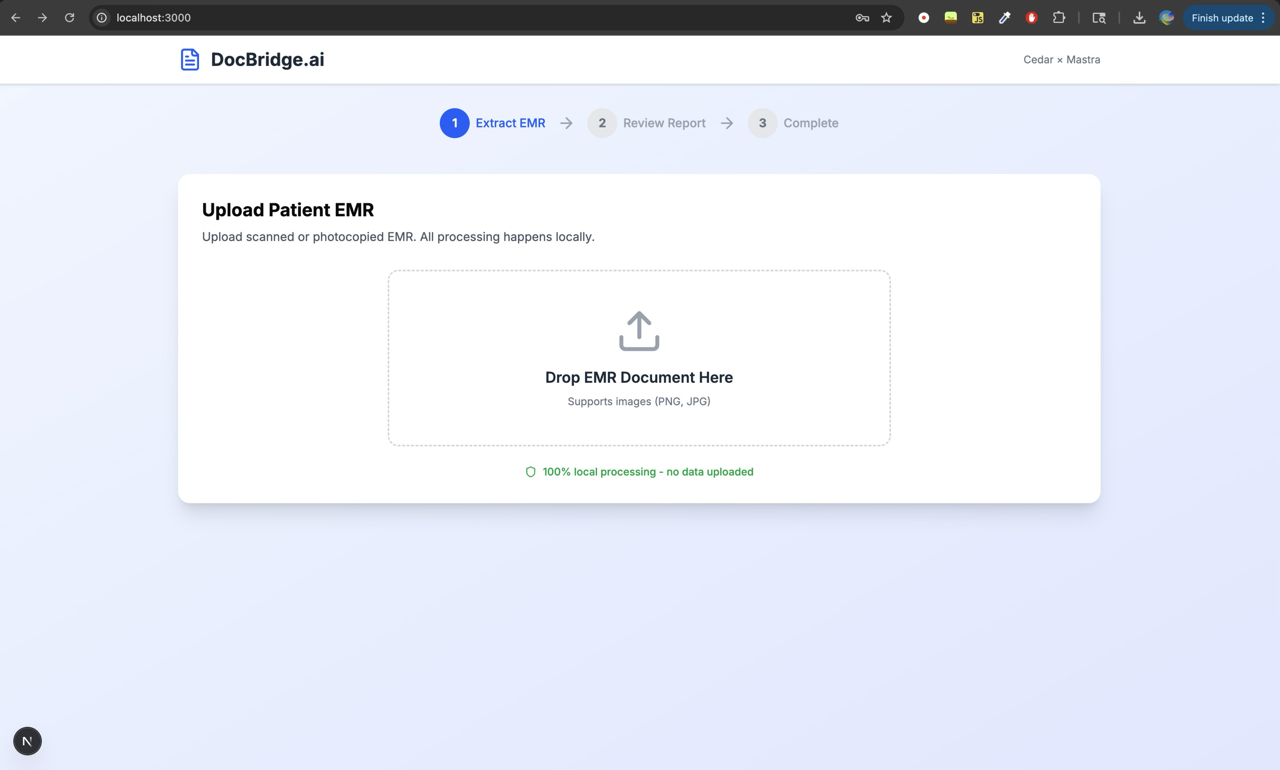
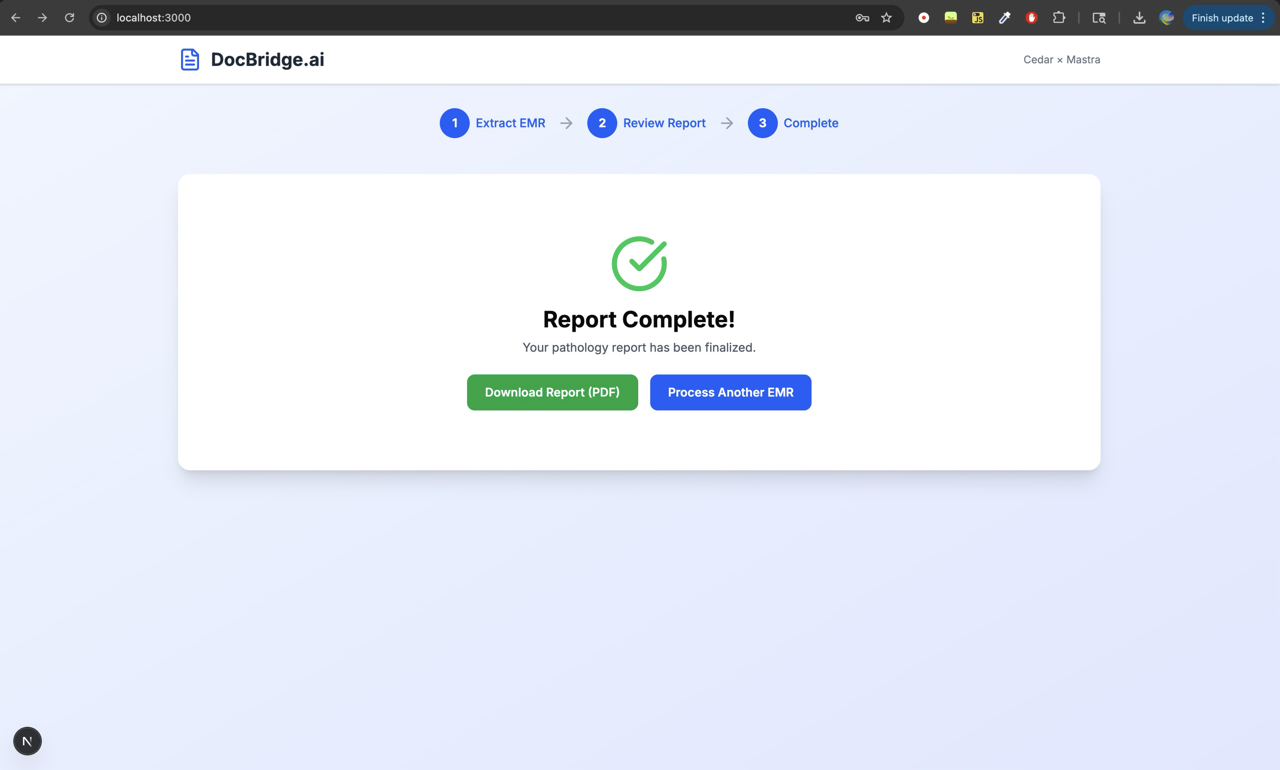
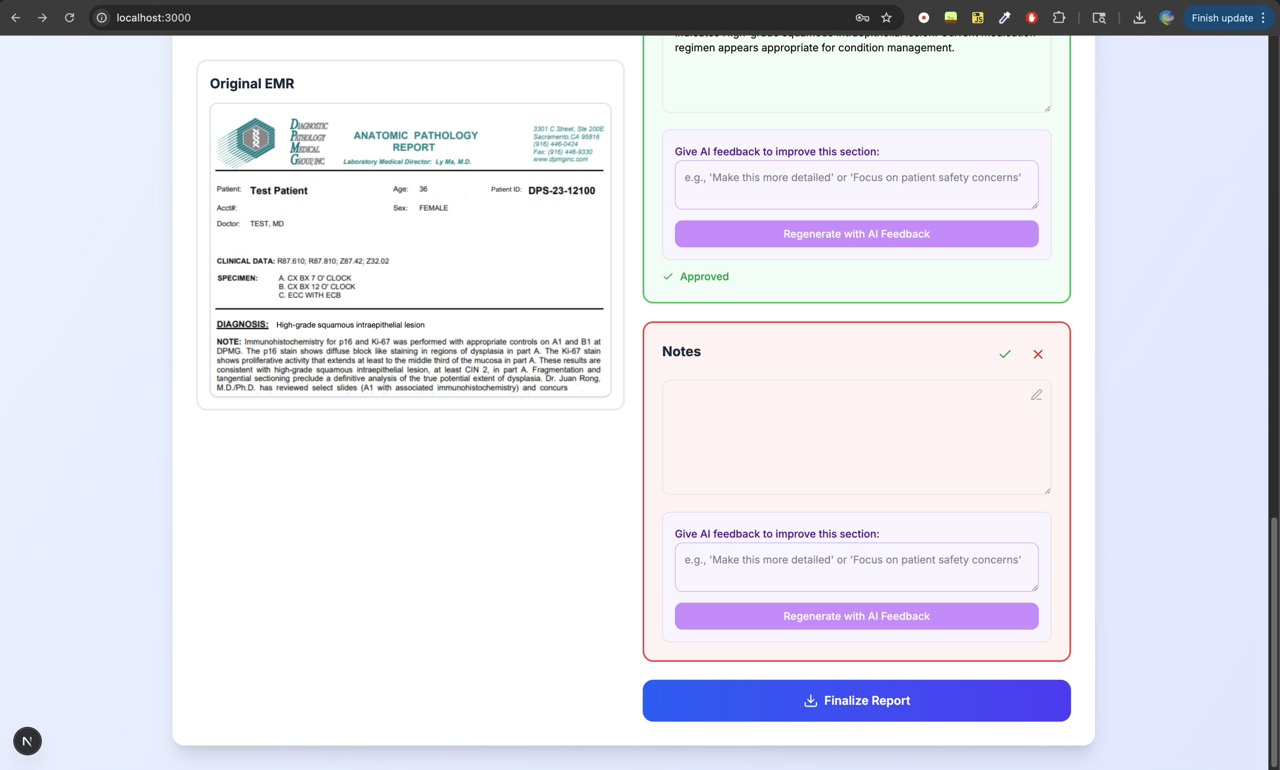
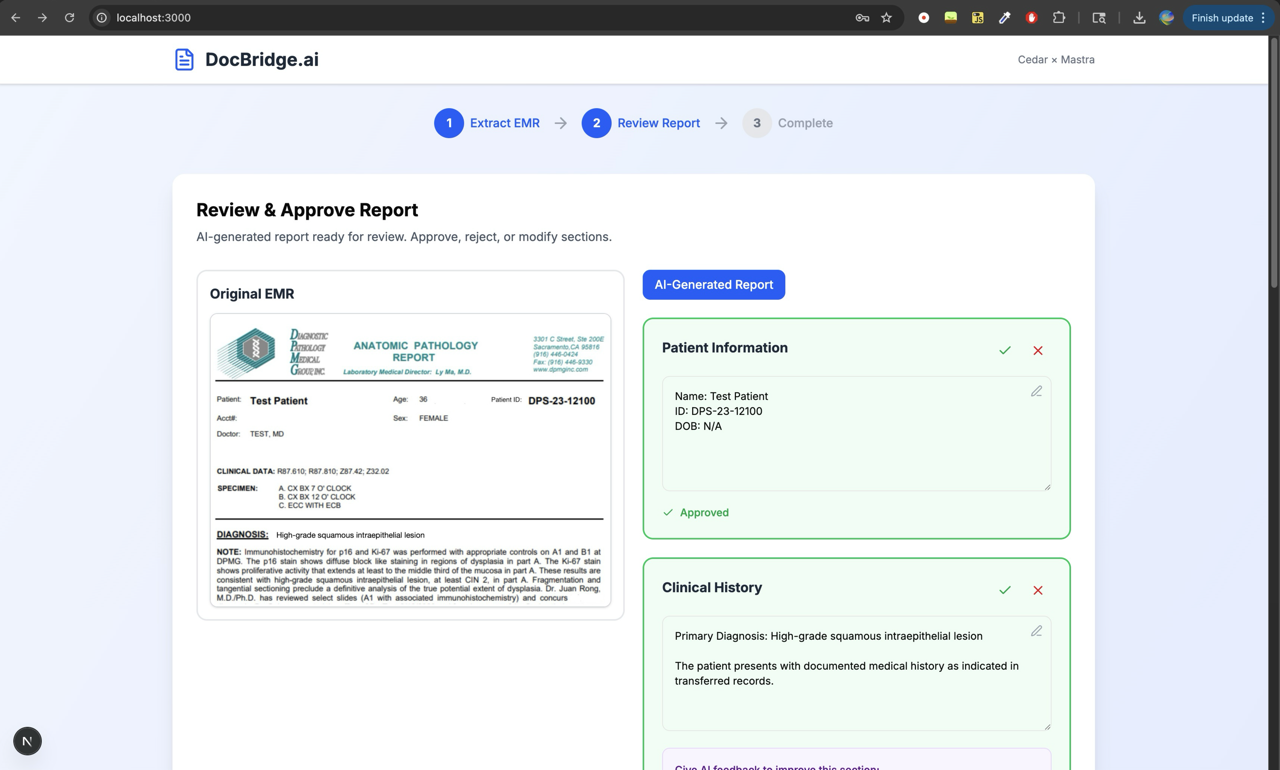
Our app streamlines pathology reporting by converting faxed EMRs into editable text with OCR. Doctors can view the original record alongside the editable version, update patient and clinical details, and finalize reports with one click. An interactive AI tool lets them enter prompts to refine and improve report sections as many times as needed, giving them full control over the output. Reports can be exported as PDFs, and the process scales across multiple EMRs—cutting redundant typing, saving time, and improving accuracy.
How we built it
We built DocuBridge.ai on Cedar OS using TypeScript to handle the reporting templates and UI. For OCR, we used Tesseract.js, ensuring all processing happens locally to keep patient data secure. To improve OCR mapping accuracy without relying on heavy LLMs, we implemented custom regular expressions and refined them repeatedly to handle the wide variety of EMR formats.
Challenges we ran into
A major challenge was keeping the platform lightweight and fully local while still delivering accurate results. Without LLMs, we had to carefully design and test OCR mapping logic, iterating through countless field variations across different EMR structures. Balancing accuracy, usability, and speed under hackathon time pressure pushed us to be creative and resourceful.
Accomplishments that we're proud of
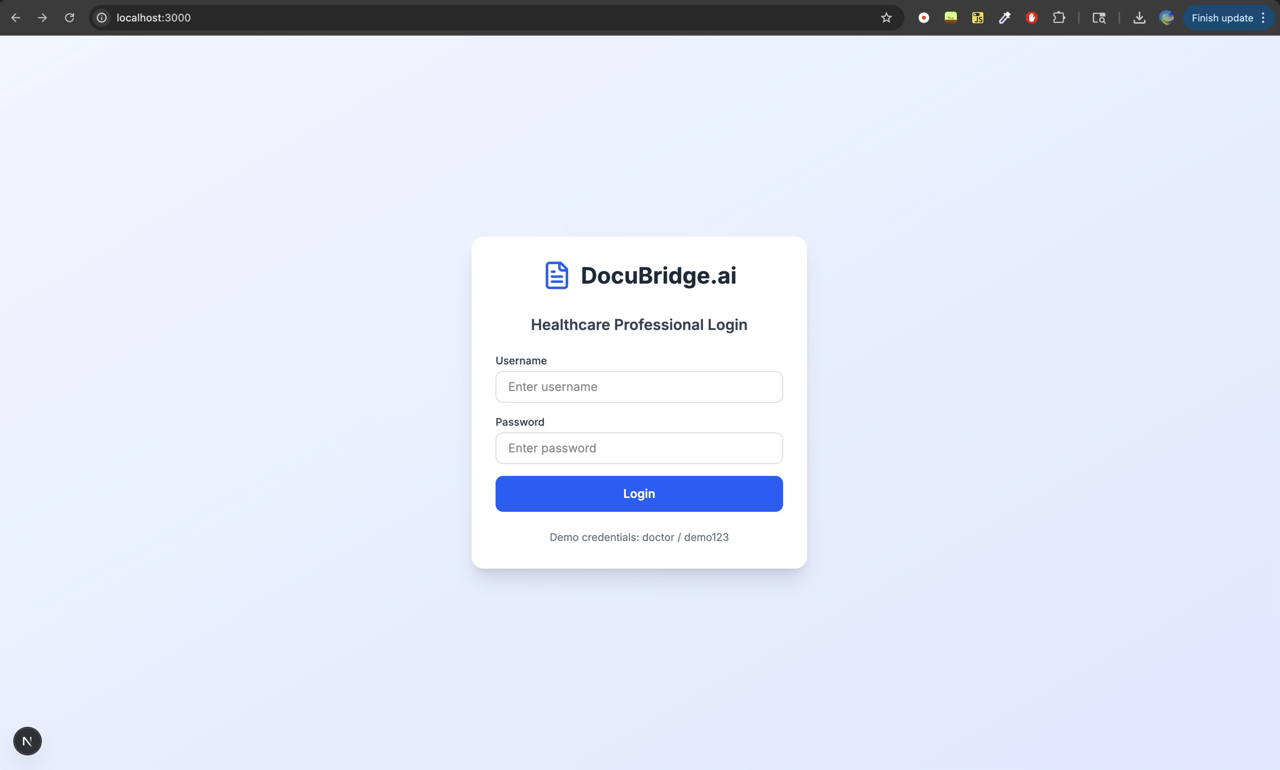
Despite a tight timeline, we delivered a polished, functional prototype that doctors could realistically use. We’re proud that we created a platform that is secure, intuitive, and genuinely solves a problem we’ve observed in real hospital workflows. Building DocuBridge.ai end-to-end in such a short timeframe gave us confidence in our ability to turn ideas into working solutions.
What we learned
We gained hands-on experience with React.js, regex, UI/UX design, Cedar API integration, and Git-based collaboration. Beyond the technical skills, we learned how to work effectively as a team under pressure, gather insights from mentors with industry expertise, and make design choices that prioritize both users and security.
What's next for DocuBridge.ai
We plan to improve OCR mapping accuracy by expanding our regex libraries and refining field detection. We also see potential in adding voice-to-text functionality using Cedar's voice integration feature, allowing doctors to dictate notes directly into reports. Long-term, we aim to integrate DocuBridge.ai seamlessly into hospital systems to further reduce redundancy and help clinicians spend more time with patients.
Built With
- cedaros
- next.js
- ollama
- react
- regex
- tesseract
- typescript


Log in or sign up for Devpost to join the conversation.