🩺 Inspiration
Medical and nursing students are constantly overwhelmed by dense medical literature, complex pharmacological pathways, and the high-stress preparation required for global board exams like the NCLEX. Furthermore, practicing clinical history-taking with real patients in a hospital environment is highly restricted, timed, and intimidating for absolute beginners.
We wanted to bridge this gap by building MedQuiz Companion—a safe, interactive, AI-driven workspace where healthcare students can confidently practice diagnostics, simulate clinical encounters, and boost their learning retention anytime, anywhere.
🚀 What it does
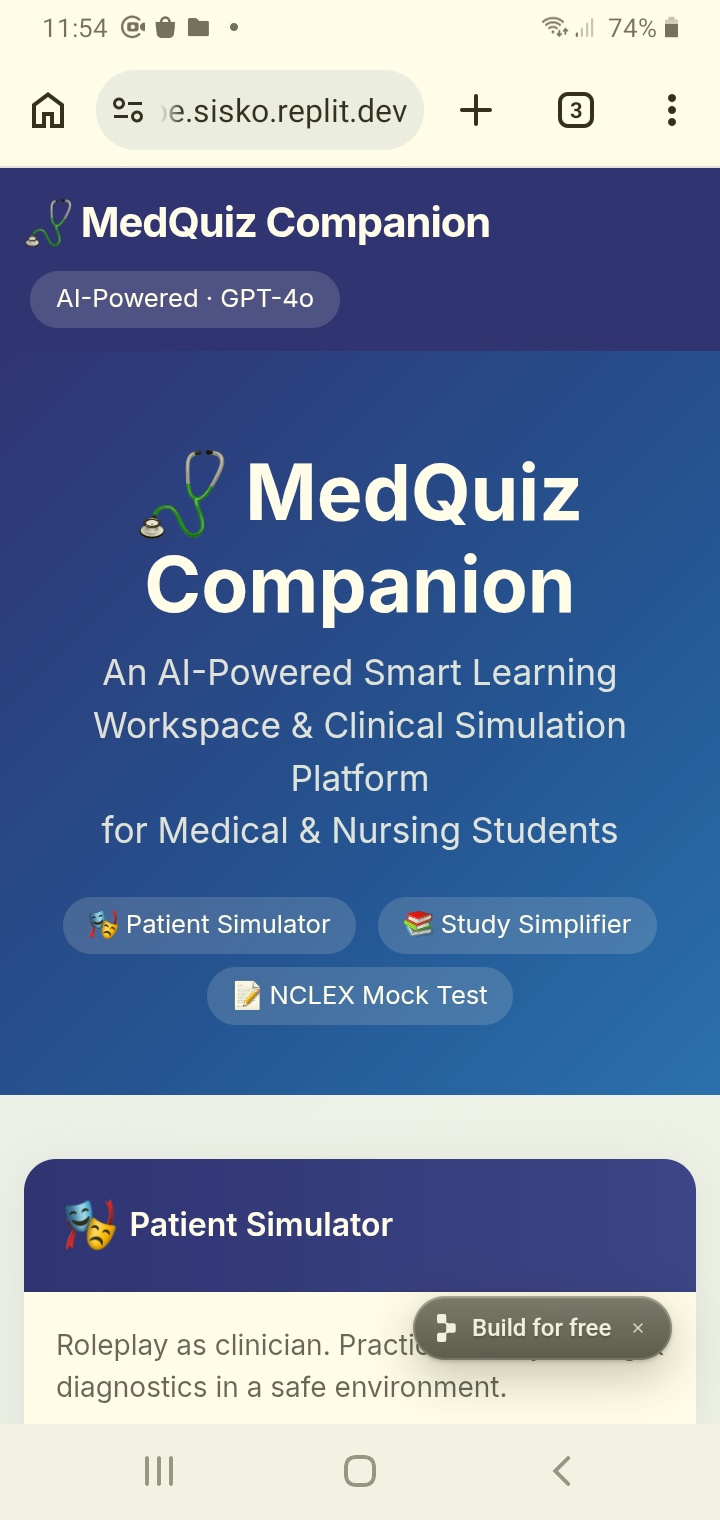
MedQuiz Companion is a comprehensive, production-ready educational workspace featuring three core intelligent modules:
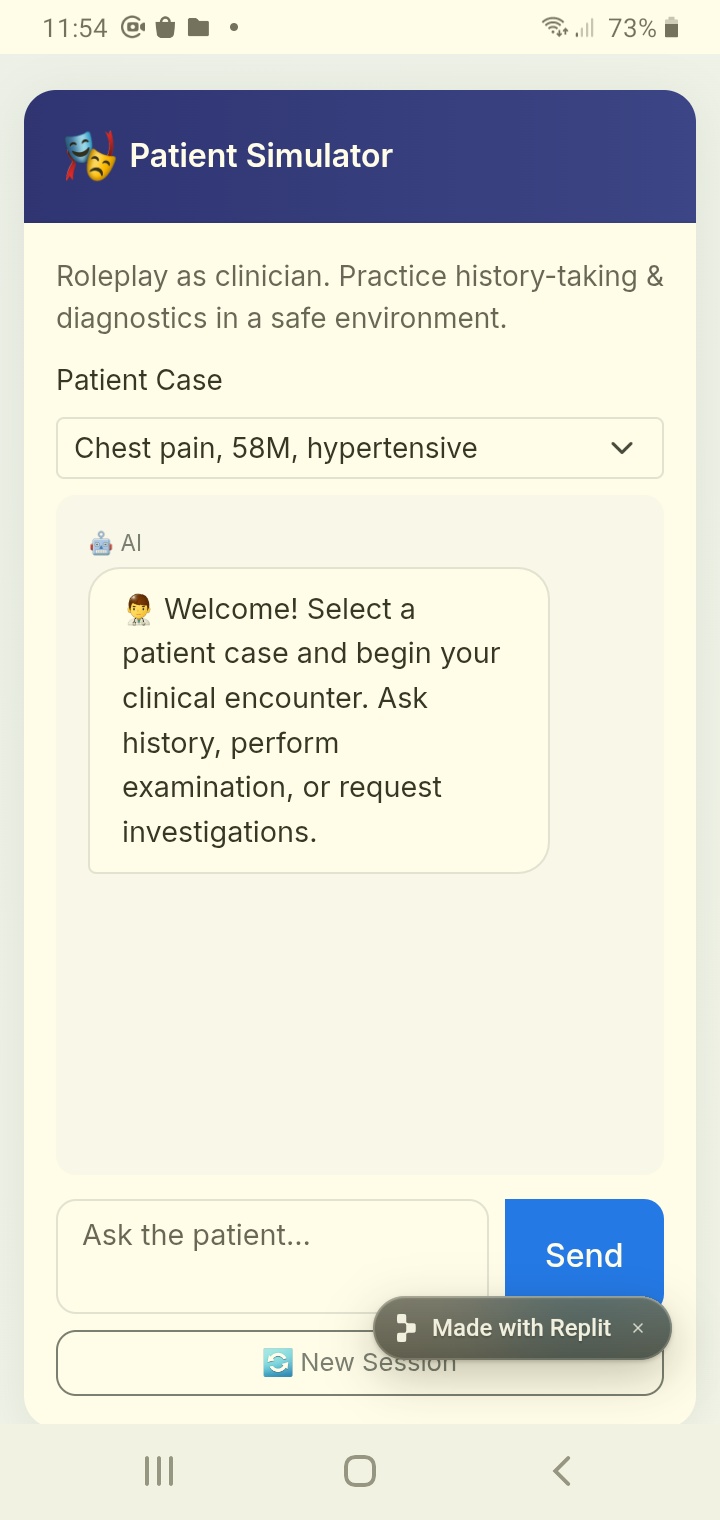
- 🎭 Patient Simulator: A clinical roleplay engine where students interview virtual patients presenting with specific chief complaints (e.g., acute chest pain, asthmatic flare-ups). It simulates real-world history-taking and diagnostic workflows in a risk-free environment.
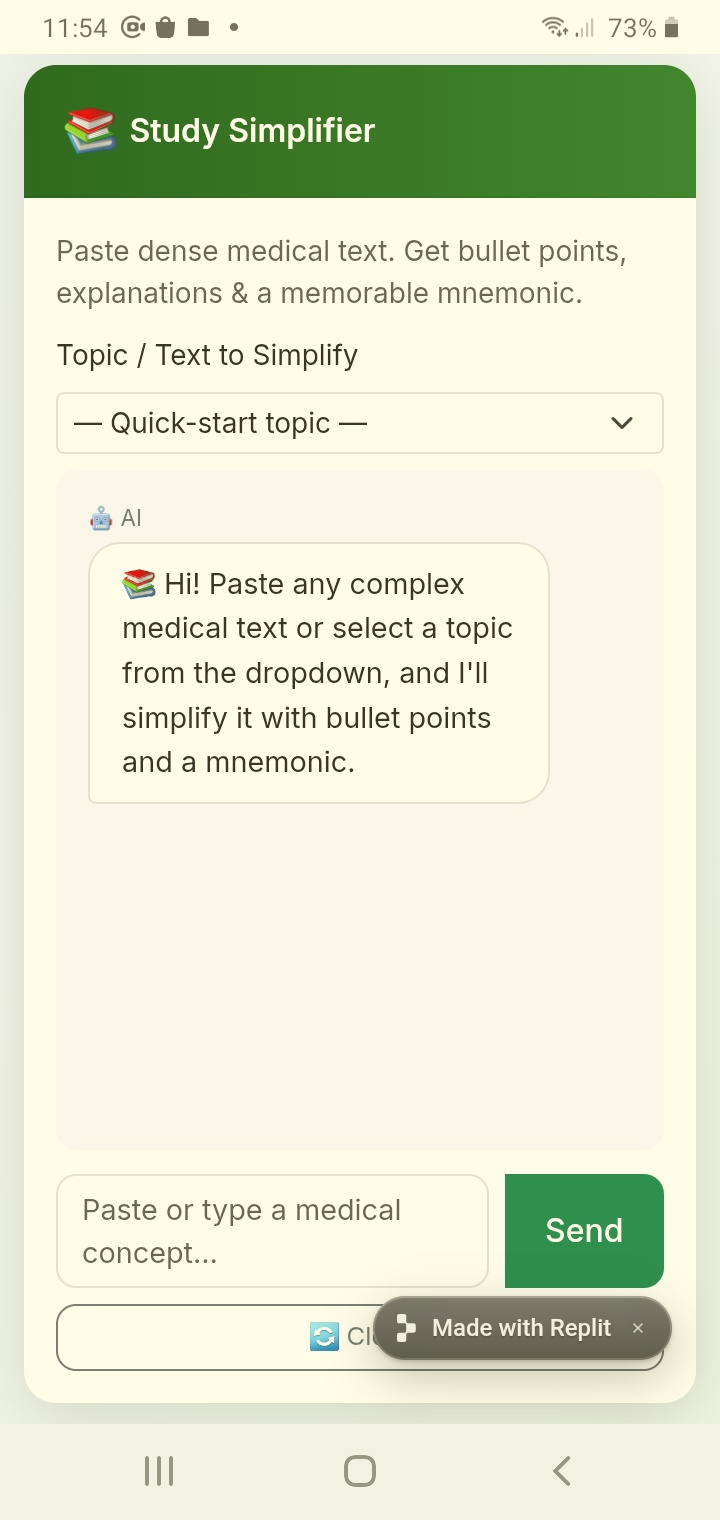
- 📚 Study Simplifier: A powerful text distillation tool that converts heavy, complex medical jargon into bite-sized, high-yield bullet points, alongside custom-generated mnemonics for long-term memory encoding.
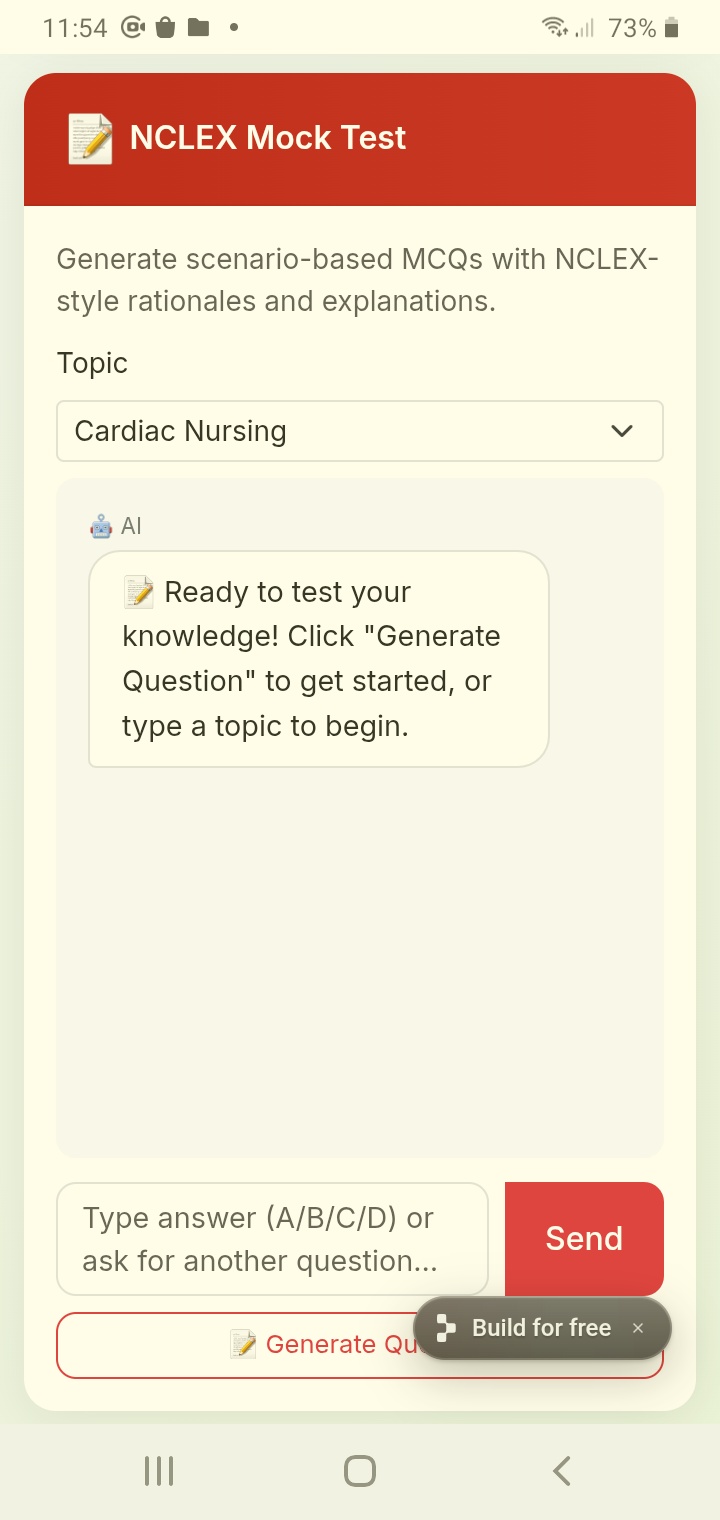
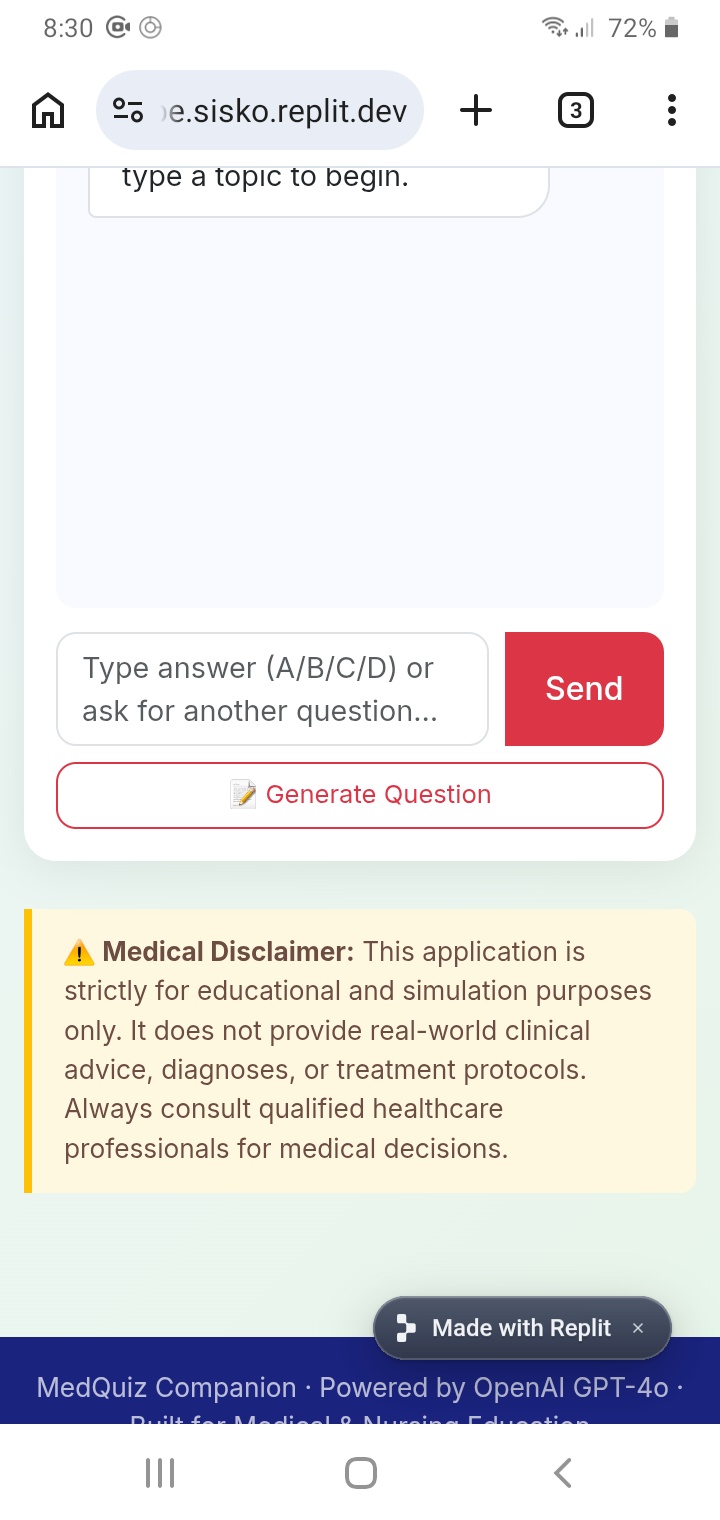
- 📝 NCLEX Mock Test: A dynamic test generator that serves high-yield, scenario-based multiple-choice questions bundled with deeply detailed clinical rationales explaining the exact pathophysiology behind correct and incorrect options.
🛠️ How we built it
The application follows a robust, modular Model-View-Controller (MVC) architectural pattern:
- Backend Core: Built using Python 3.11 and Flask Blueprints to seamlessly isolate API endpoints and routing systems.
- AI Orchestration: Powered by advanced language model inference via the OpenAI API, configured with customized system prompt injection to strictly enforce clinical behavioral boundaries.
- Frontend UI: A clean, highly responsive single-page dashboard designed with Bootstrap 5 and asynchronous JavaScript Fetch API to ensure real-time data streaming without full page reloads.
- Security & Infrastructure: Deployed utilizing secure environment variables via Replit Secrets management, achieving a zero-hardcoded-keys vulnerability status.
⚡ Challenges we ran into
- State & Prompt Context Management: Managing asynchronous multi-turn dialogues in the Patient Simulator while keeping the AI strictly in character as a distressed patient required intense iterative prompt engineering.
- Deployment & Proxy Conflicts: During deployment, we faced strict proxy blocks and network routing conflicts that triggered 404 errors. We successfully resolved this by debugging the server-side environment, shutting down duplicate workflow processes, and configuring the Flask engine natively to synchronize perfectly with the default web preview port (
8080).
🎉 Accomplishments that we're proud of
- High-Fidelity Simulation: Successfully launched a fully functional, dual-mode simulator that dynamically adapts to multiple pre-configured clinical conditions.
- Real-Time Explanations: Developed a highly scalable system that generates complex, board-exam-grade rationales instantaneously.
- Clean Codebase: Maintained an elegant, open-source-ready, and highly secured architectural layout that cleanly separates frontend templates from core backend logic.
📚 What we learned
- Advanced System Prompt Engineering: We mastered how to bound LLMs to act precisely under custom threat models and clinical parameters without letting them break character or output hallucinated advice.
- Full-Stack Debugging: We gained invaluable hands-on experience in dealing with background tasks, debugging runtime environment pathways, and configuring port routing within cloud-based IDE workflows.
🔮 What's next for MedQuiz Companion
- Voice Integration (Speech-to-Text): Integrating natural voice inputs so medical students can verbally interview the virtual patients rather than typing.
- Performance Analytics Dashboard: Adding interactive graphs to track users' historical weak spots across specific nursing and medical sub-specialties.
- Collaborative Flashcards: Implementing a shared database for globally synchronized flashcard decks to foster community-driven collaborative learning.
Built With
- bootstrap
- flask
- github
- gpt-40
- healthcare
- javascript
- openai
- python


Log in or sign up for Devpost to join the conversation.