Inspiration
Healthcare is one of the few things that unites every human being—but access to it remains wildly unequal. Whether it’s someone searching for a specialized hospital in another country, a child in urgent need of rare blood, or a traveler managing their medical reports abroad, the systems remain fragmented, language-locked, or unavailable. We imagined: What if one platform could dissolve those barriers? Medora was born from that vision—a world where people don’t just get care locally, but connect globally to heal, help, and share.
What it does
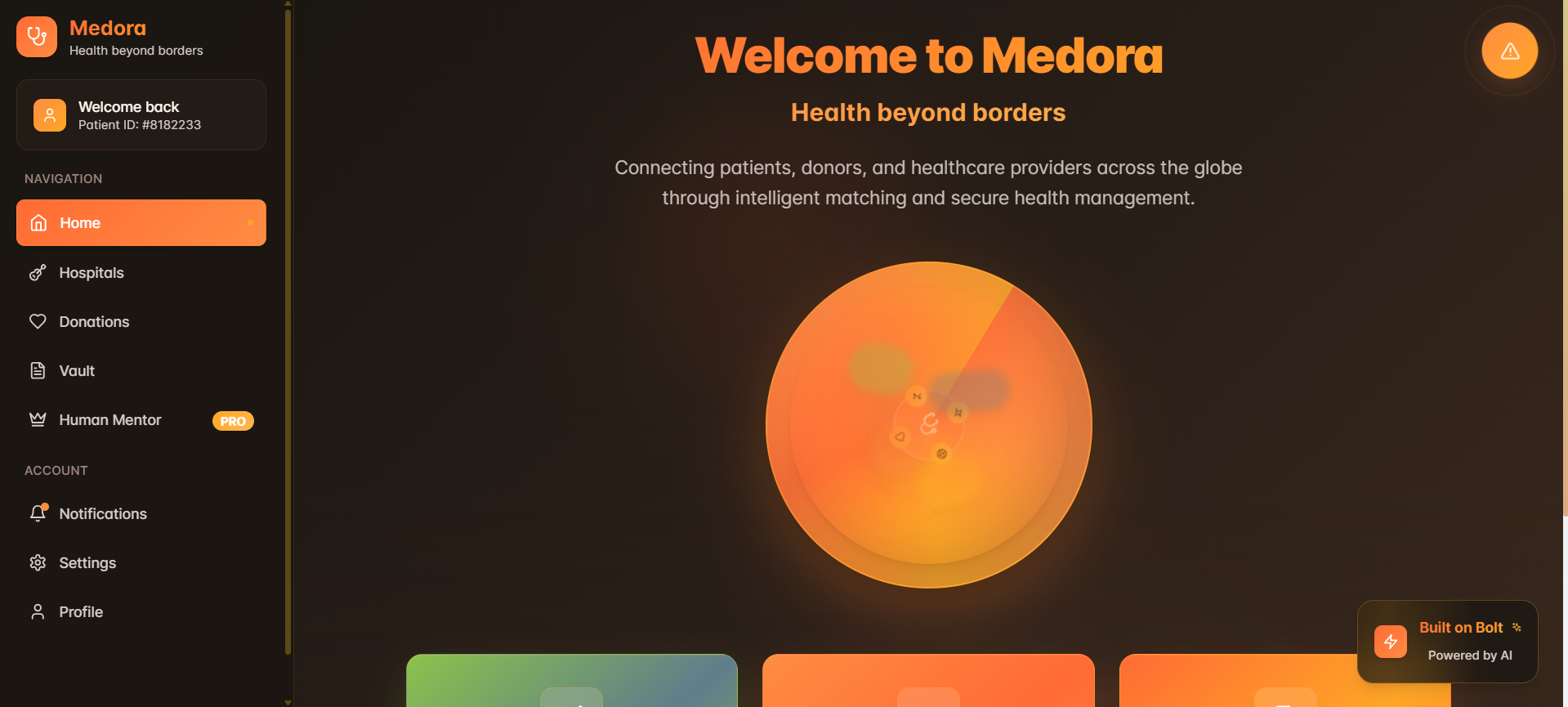
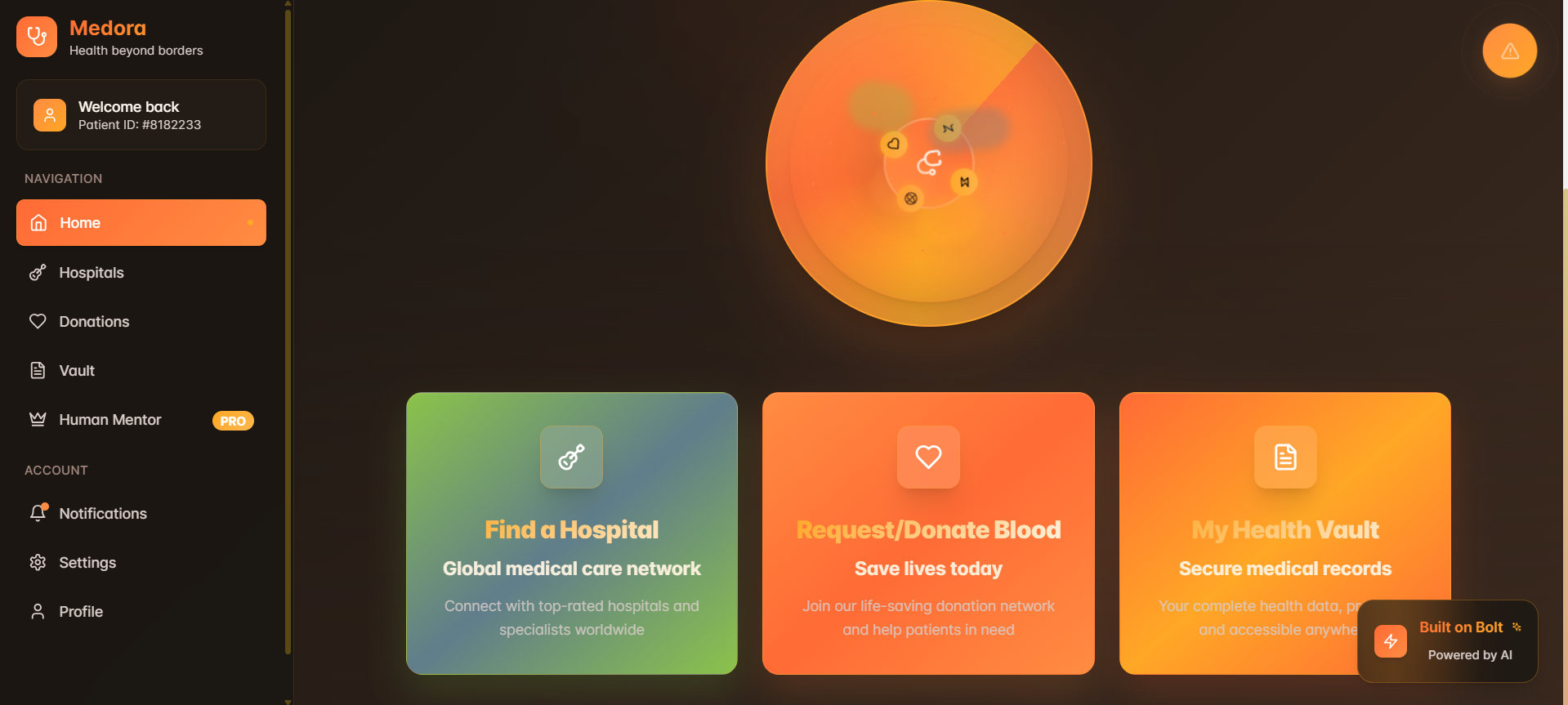
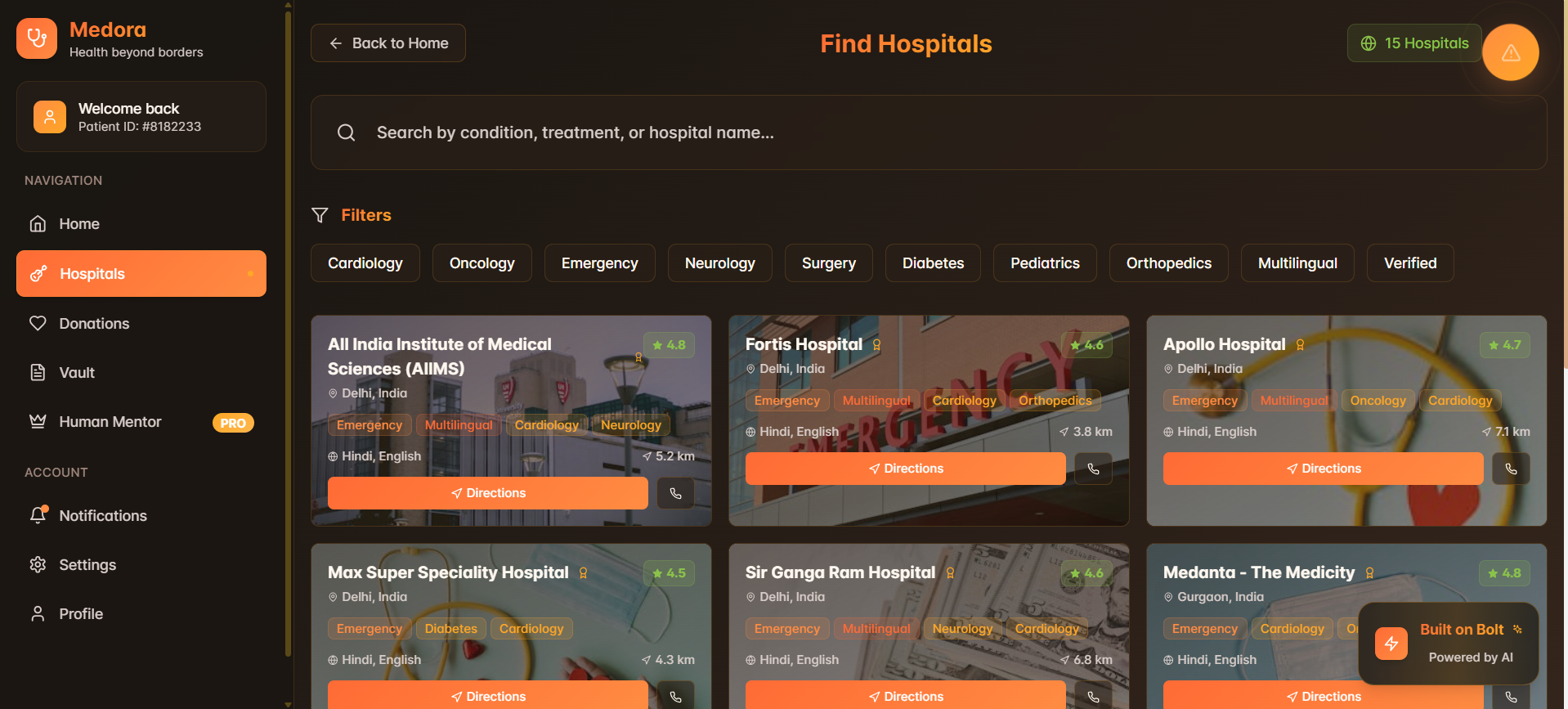
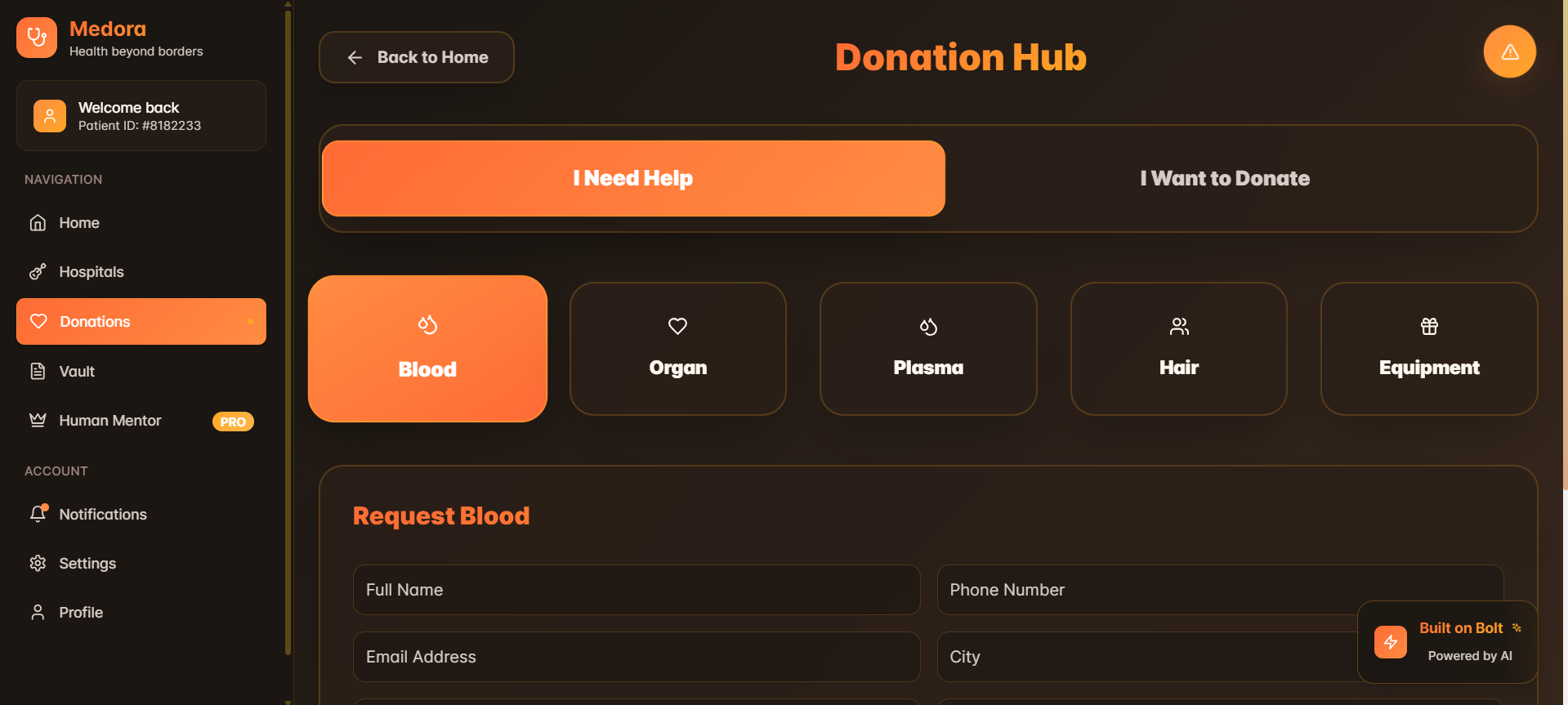
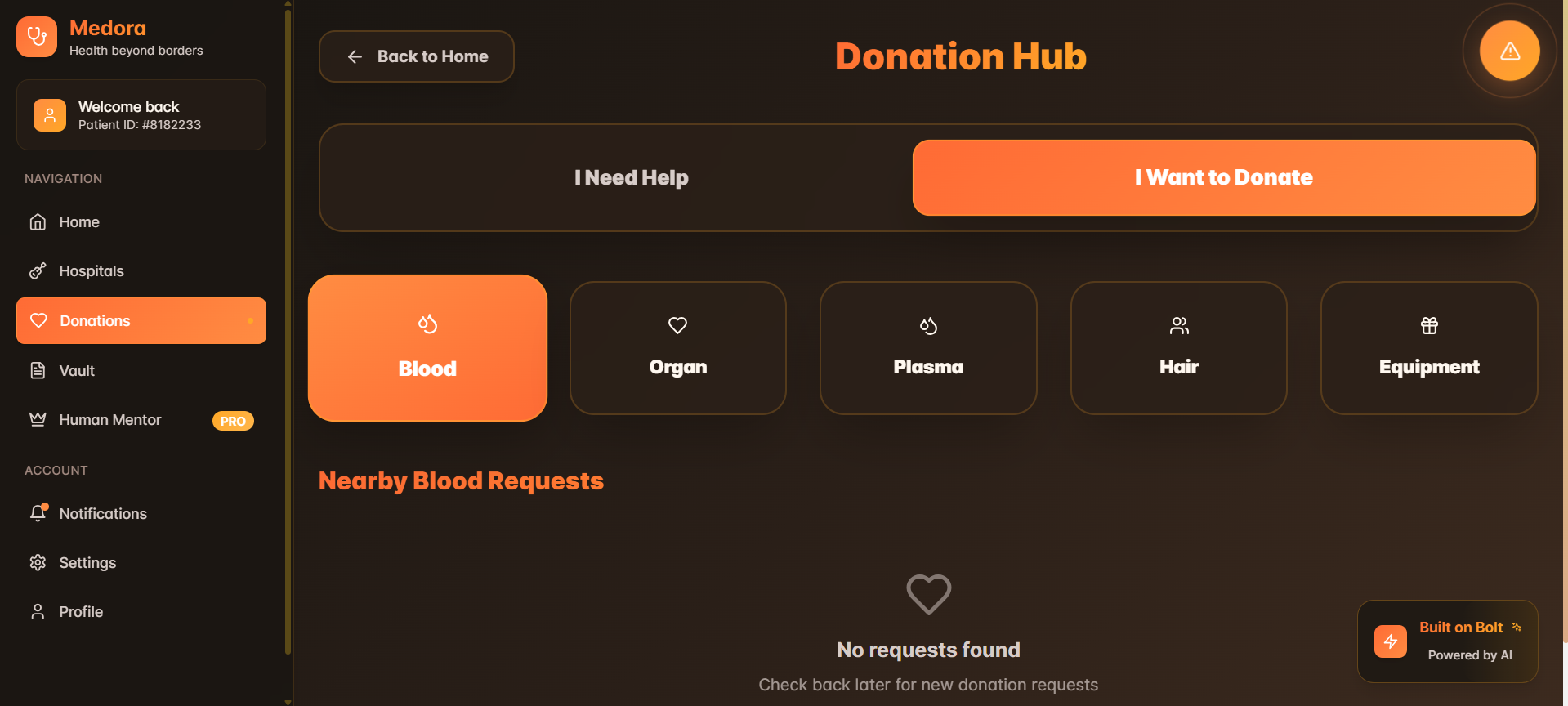
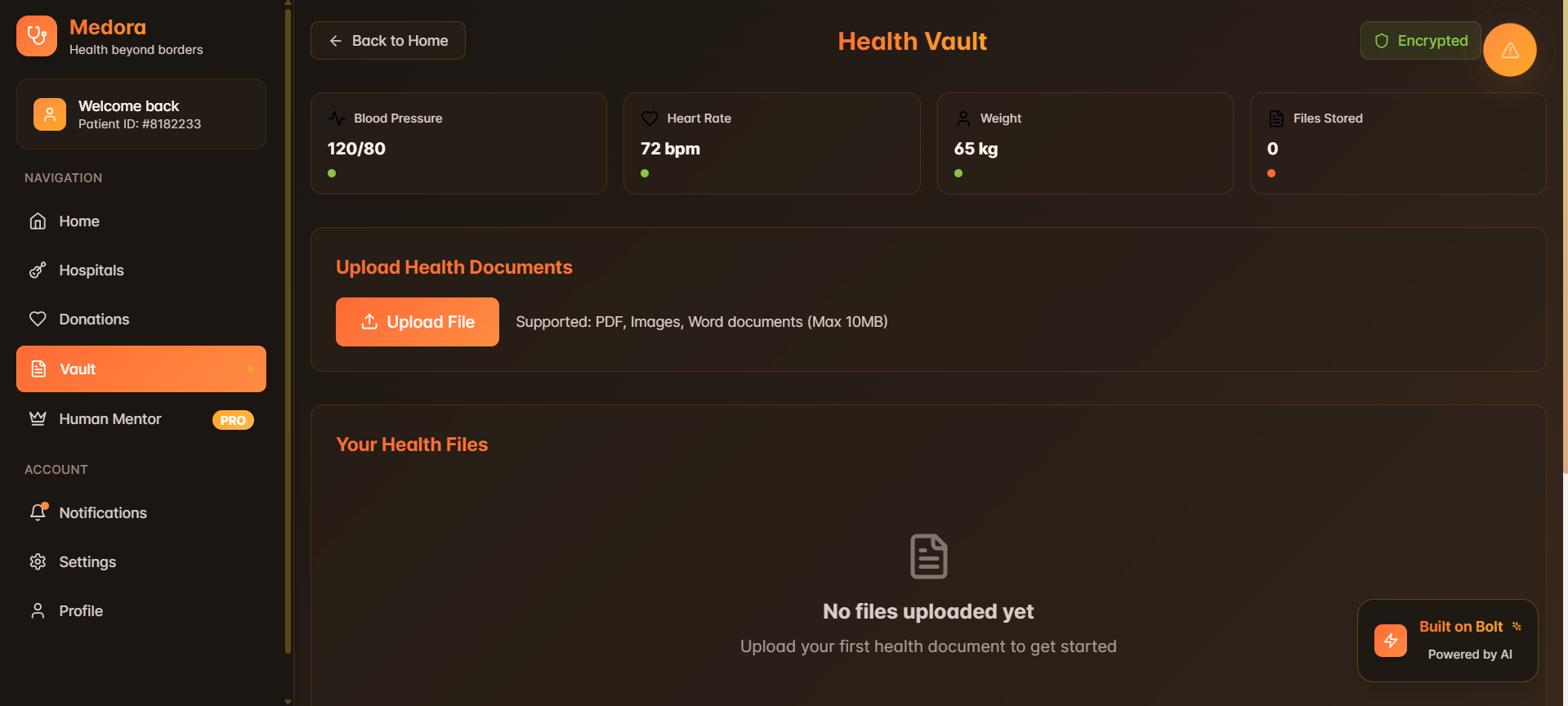
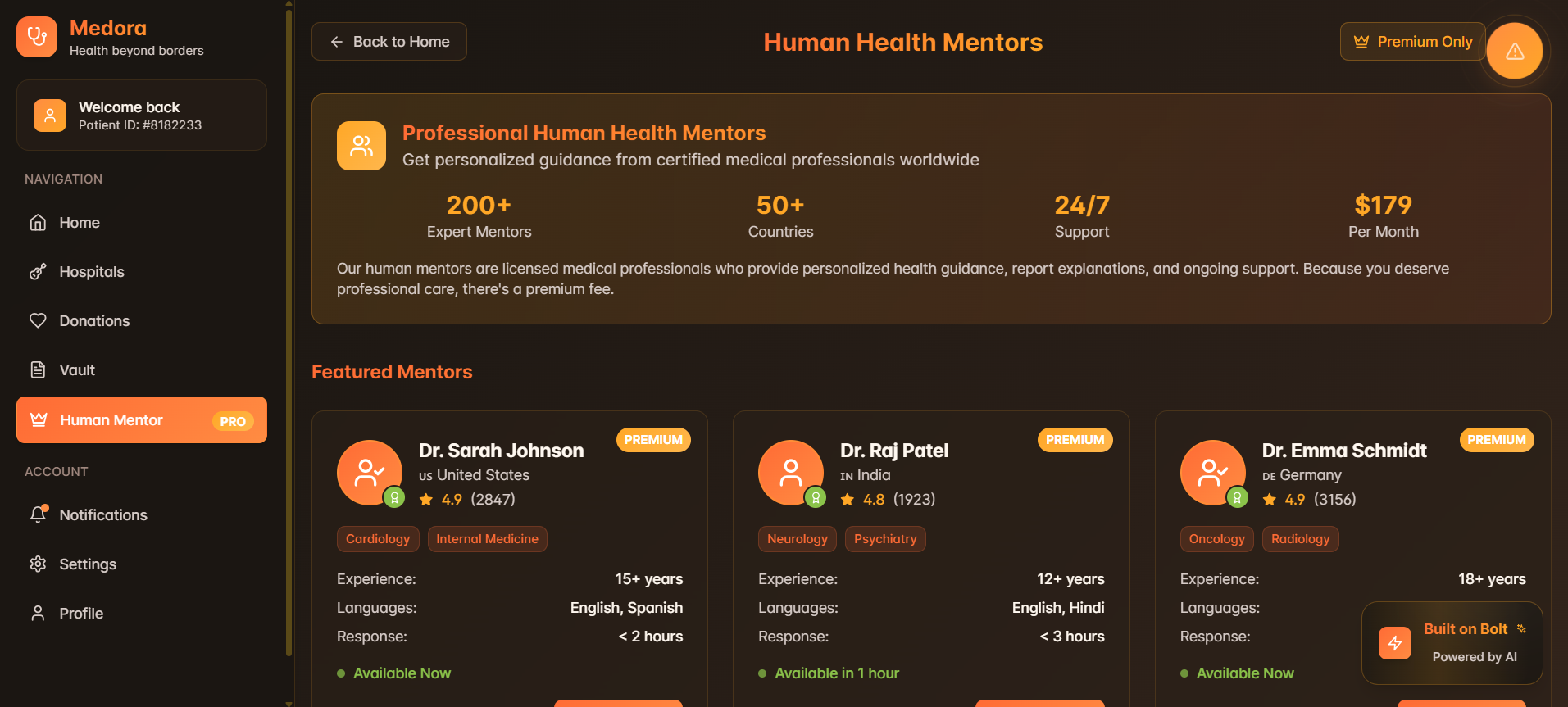
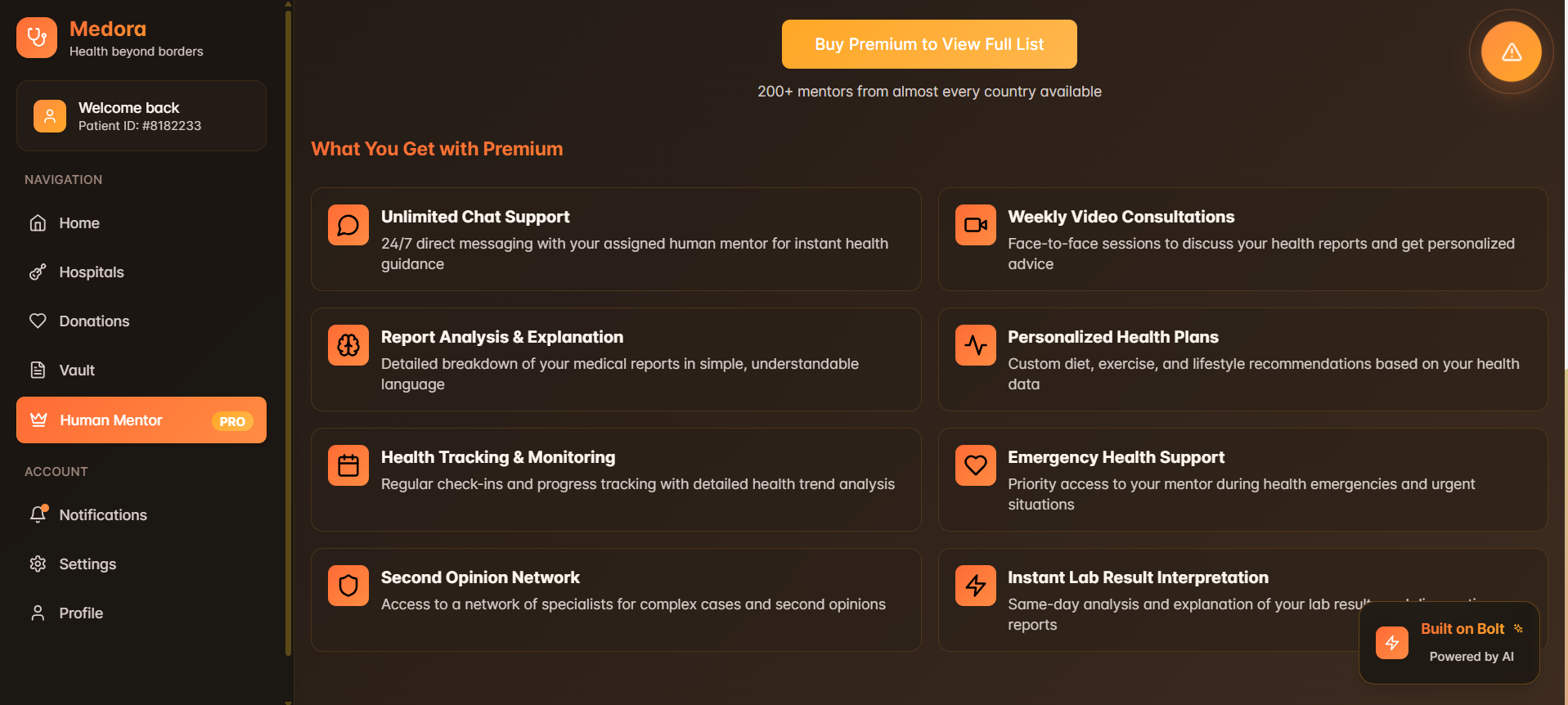
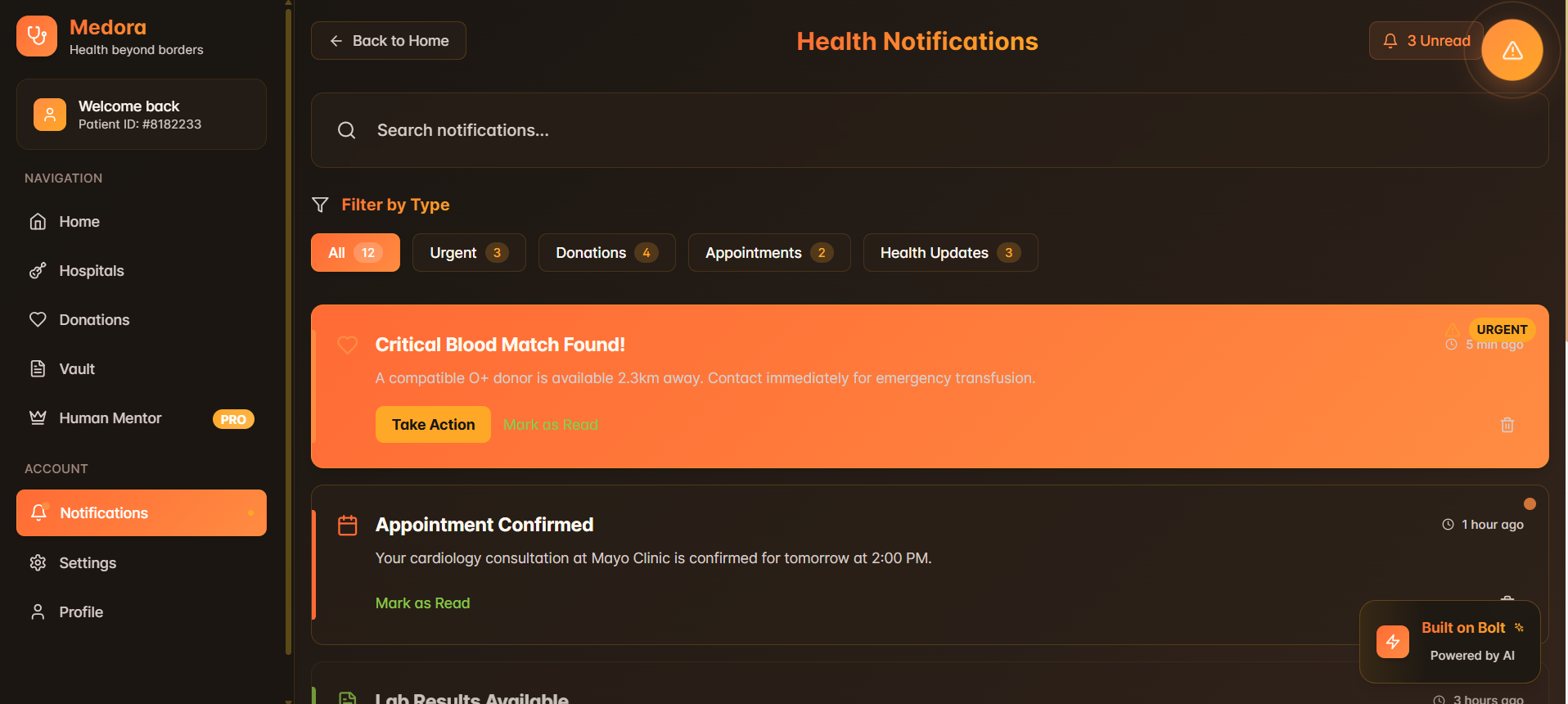
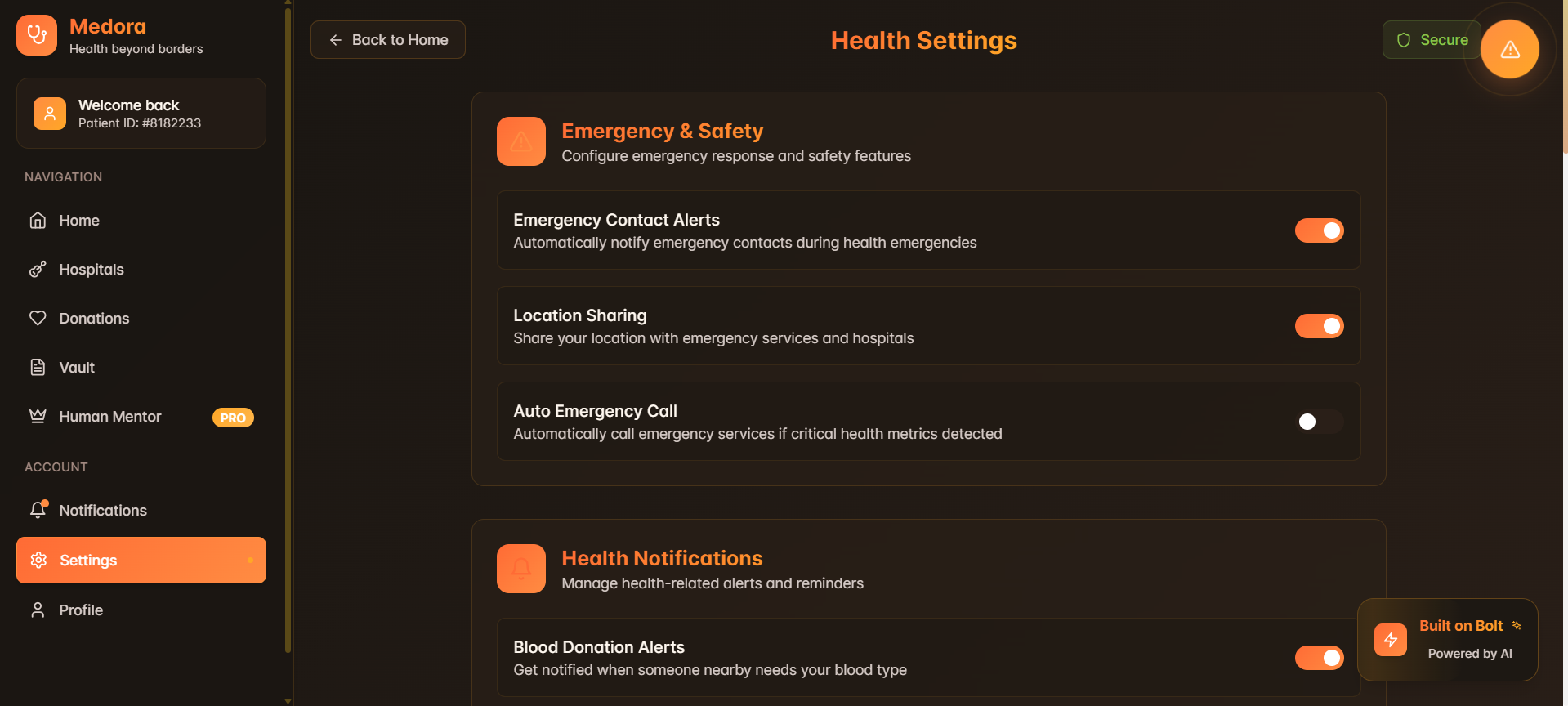
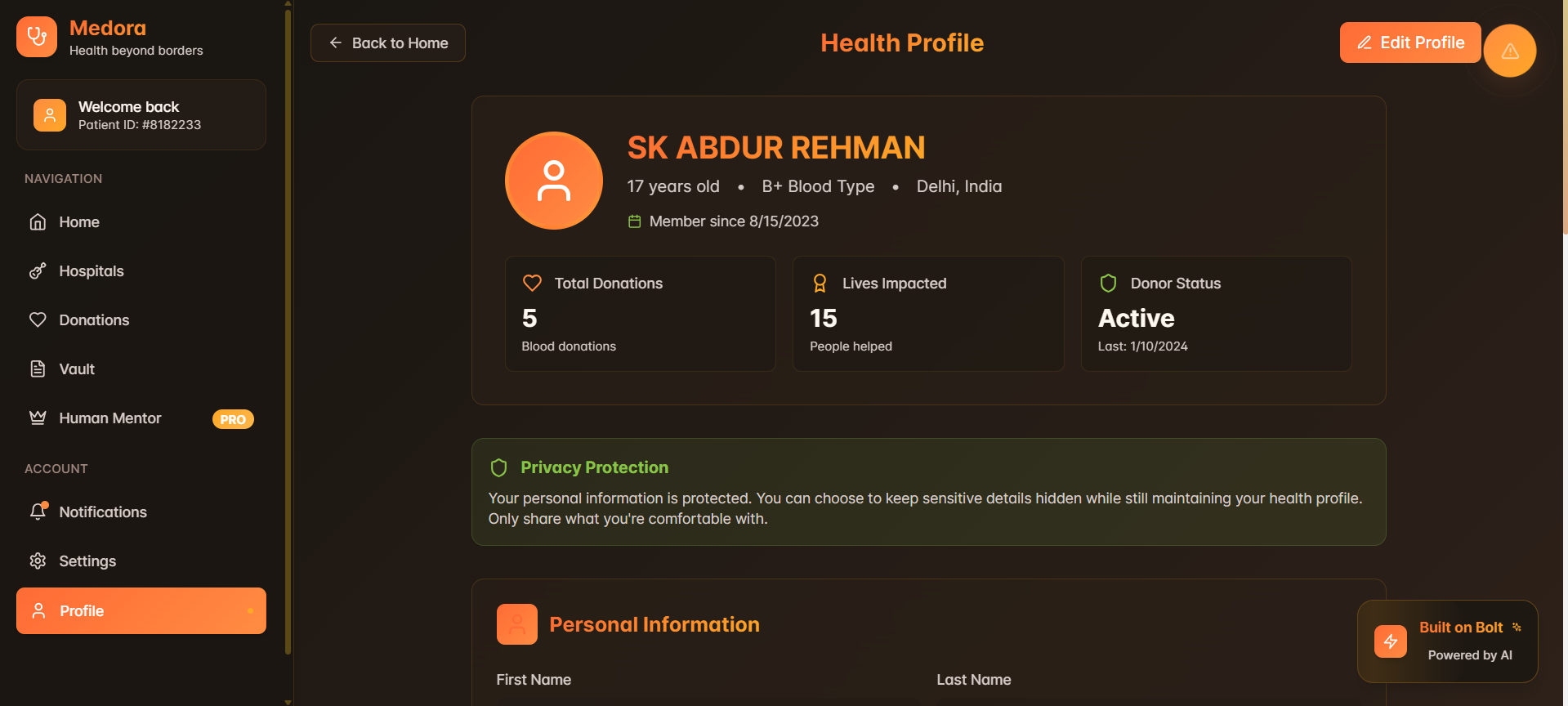
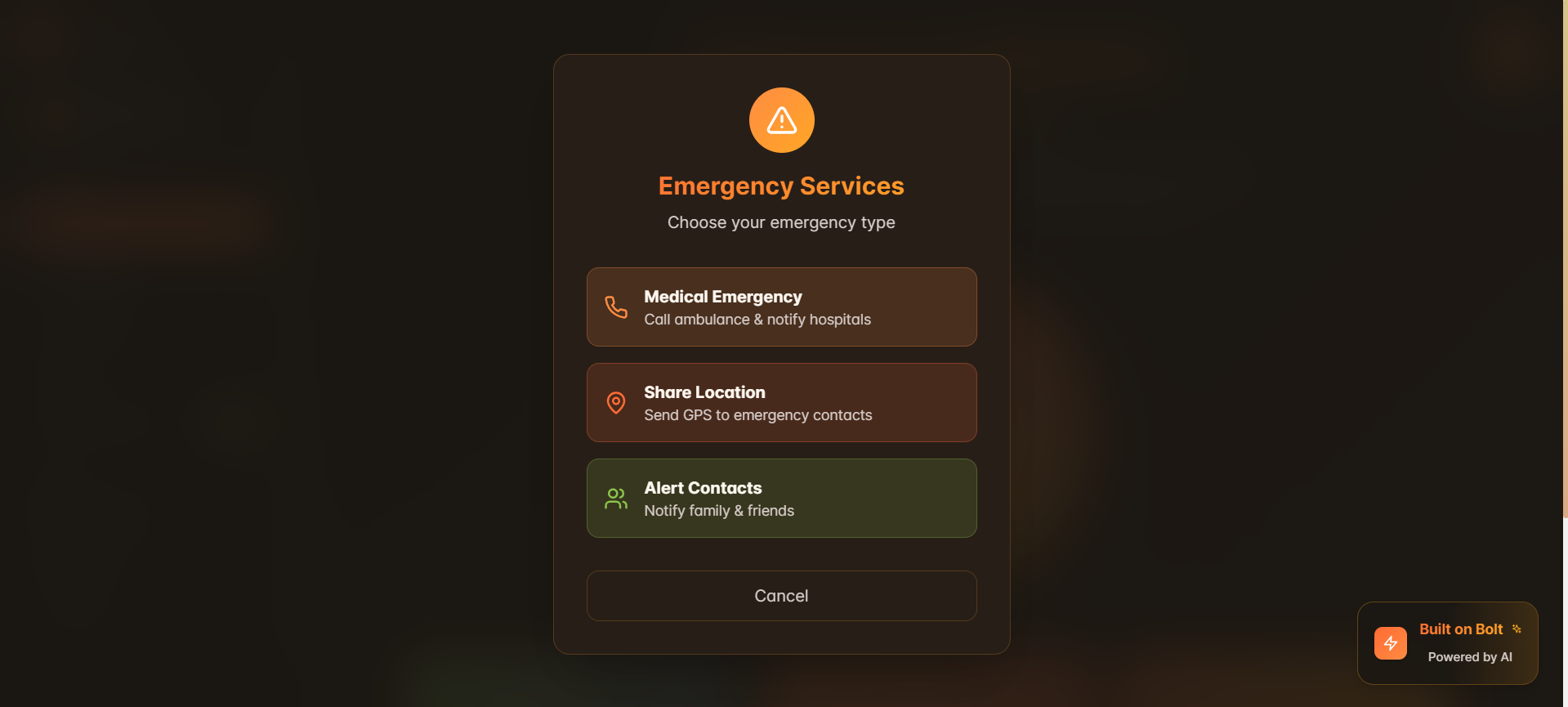
Medora is a global health and donation platform that lets users: Find hospitals worldwide based on conditions or specializations Connect with donors for blood, organs, and other humanitarian needs Store and manage health reports in a multilingual, digital health vault Receive smart alerts for nearby donation needs or emergencies Even with limited real-world integration, Medora simulates a fully working system, showcasing how a single, elegant app can bridge continents, save lives, and redefine how care is accessed.
How we built it
Medora was built entirely on the Bolt platform using a fully no-code approach. The entire app was constructed using a mix of custom prompts written by me and AI-generated prompts via ChatGPT, without any external tools, scripts, or coding environments. All UI/UX logic, layouts, and page structures were designed inside Bolt’s visual builder. Data models for profiles, medicines, consultations, logs, and conditions were created and refined within Bolt. Every screen, animation, icon, and interaction was crafted using Bolt’s built-in logic system and styling utilities. I alternated between my handwritten prompts and ChatGPT-crafted ones to iteratively shape the app’s design and functionality. I followed strict constraints: no video, no audio, no AI agents, and zero placeholder elements—everything is fully usable and bug-free.
Challenges we ran into
The biggest challenge was creating a platform that looks real and feels deeply functional without full backend integrations, due to a lack of access to medical APIs or real patient systems. Designing an app that deals with sensitive topics like health and donation also demanded a careful balance of visual tone: we had to keep it emotionally warm, trustworthy, and globally accessible, all while making it visually stunning. There were also UI layout issues in early prototypes (especially sidebar content clashes), which had to be refined through detailed iteration.
Accomplishments that we're proud of
We’re proud of creating a truly global design system that speaks across borders, languages, and devices. The final version of Medora not only tells the story of a powerful healthcare network—it shows it through intelligent layouts, interactive features, and a fully responsive, modern interface. Despite limited time and no external integrations, we demonstrated how even an MVP can represent a massive real-world solution.
What we learned
We learned how to take a massive, emotional problem—global healthcare gaps—and translate it into a navigable, working product experience. We mastered how to use Bolt’s no-code tools to build quickly, how to simulate real functionality without a live backend, and how important design language is when dealing with serious themes like health, urgency, and compassion. We also learned that the simplest experiences—like finding a hospital or offering help—can feel revolutionary when delivered with clarity and trust.
What's next for Medora
We envision Medora becoming a full-scale product, with: Live hospital integrations via public health APIs Verified donor databases linked to NGOs and government platforms Multilingual AI chat support for patients traveling abroad Integration with blockchain or national ID systems for secure, portable medical records Ultimately, Medora’s journey is just beginning. Our next goal is to turn this powerful concept into a tool used by real people, in real emergencies, to save real lives.
Built With
- bolt.new
- chatgpt


Log in or sign up for Devpost to join the conversation.