-
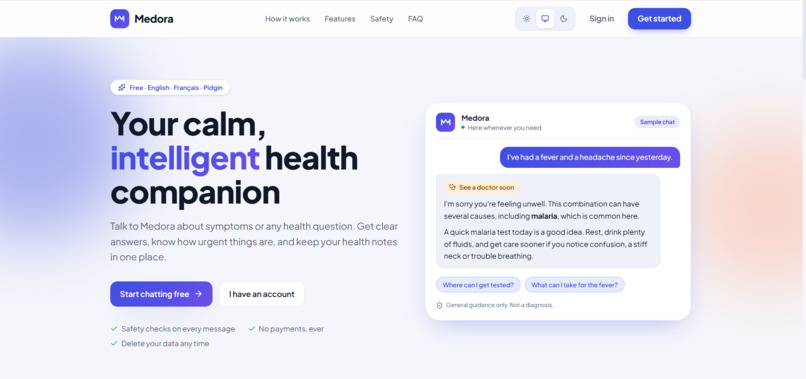
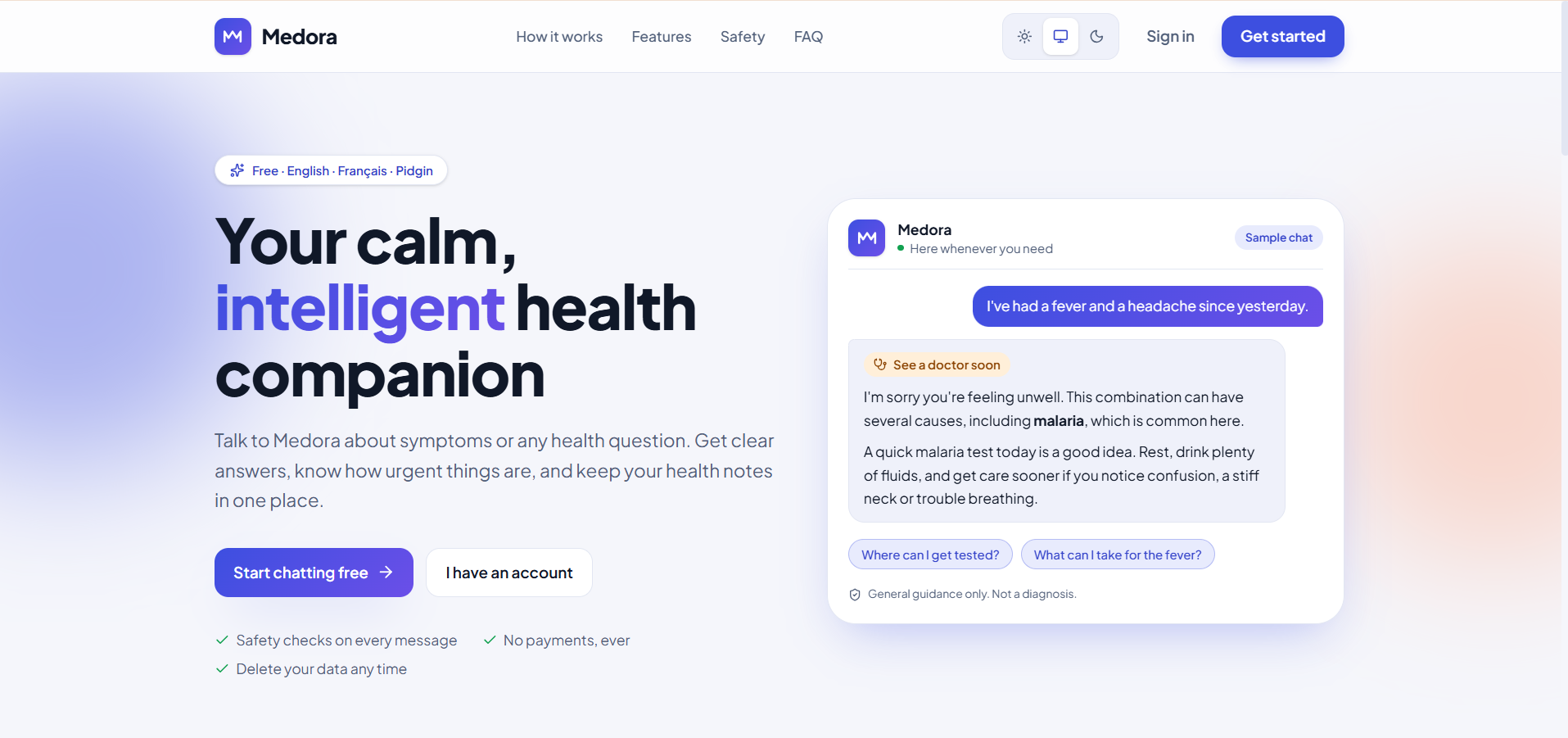
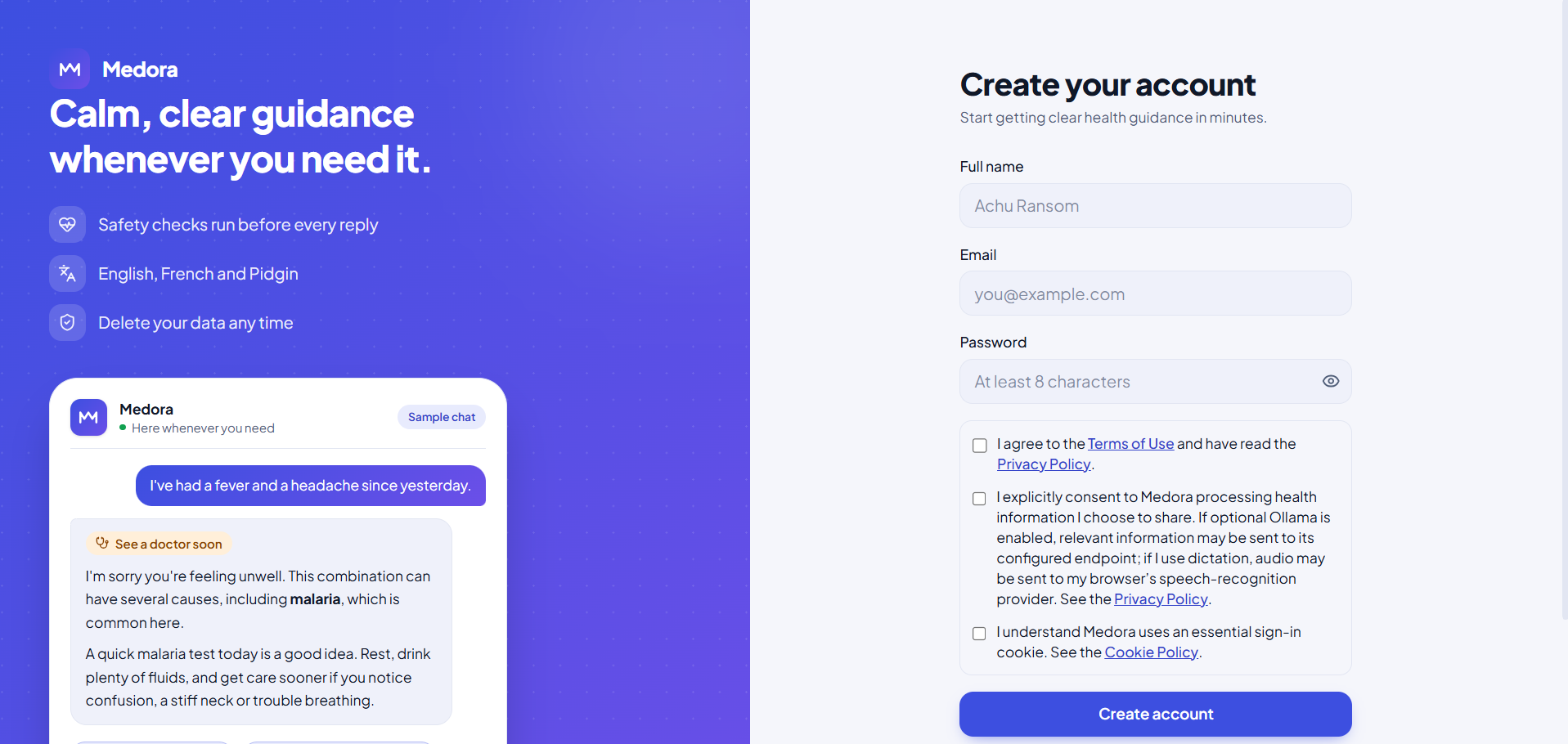
Hero section of medora's website
-
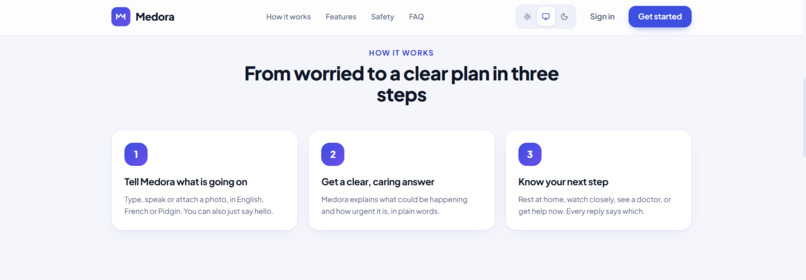
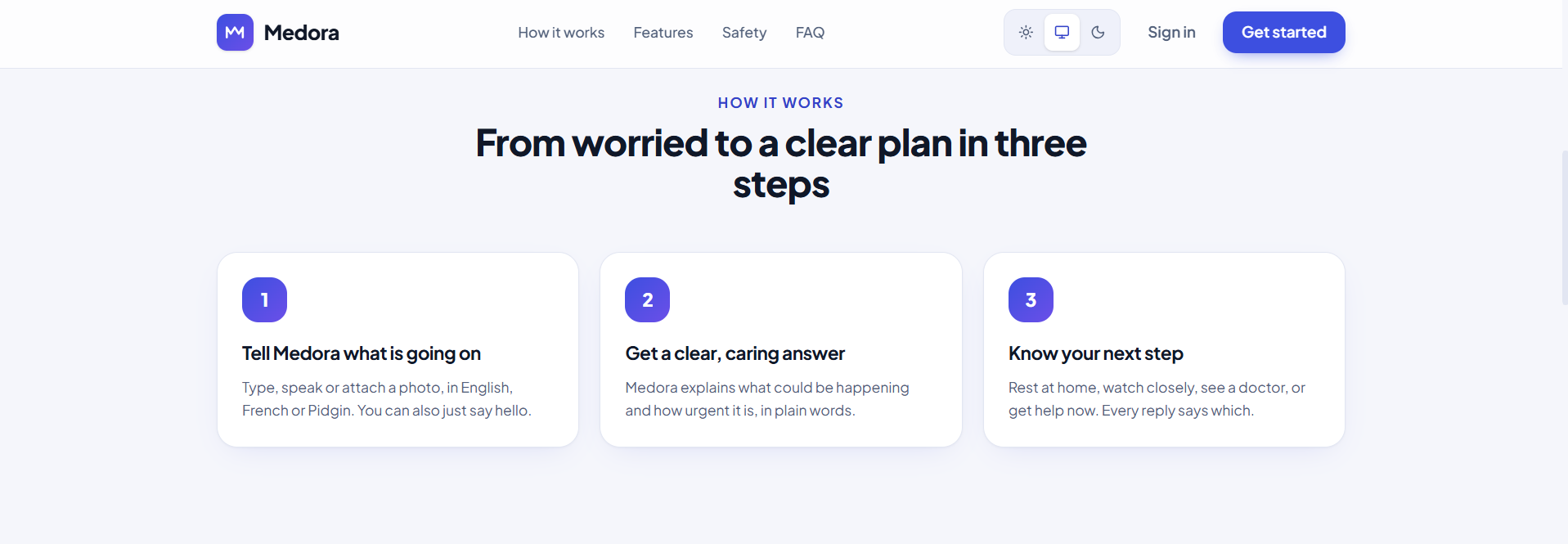
How medora works
-
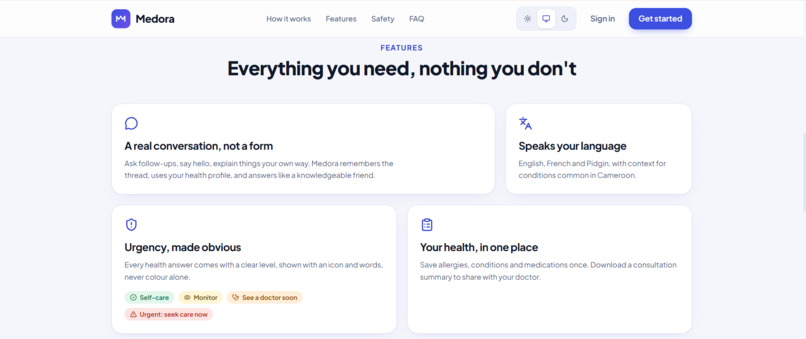
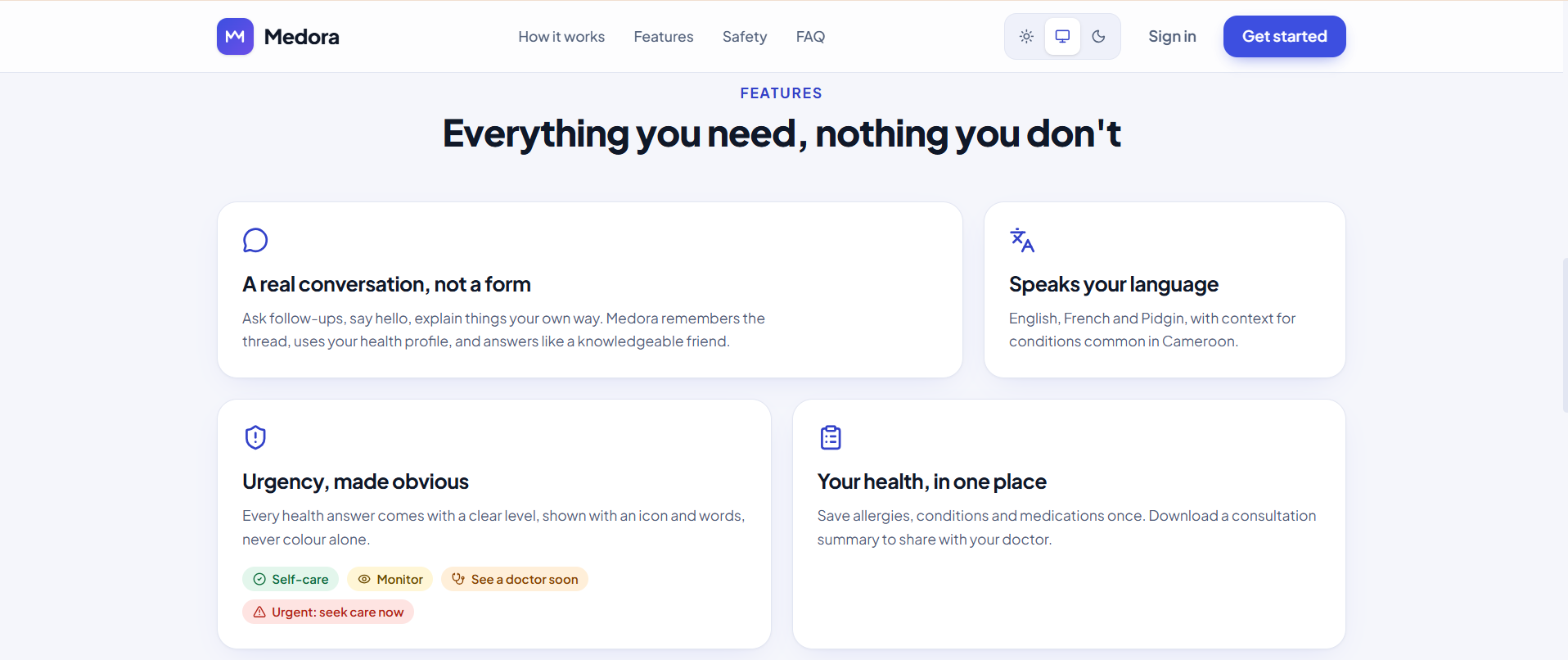
The features of medora
-
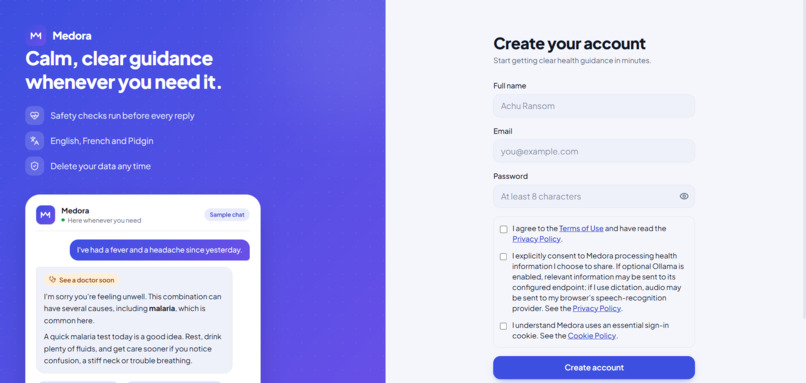
Getting started with medora
-
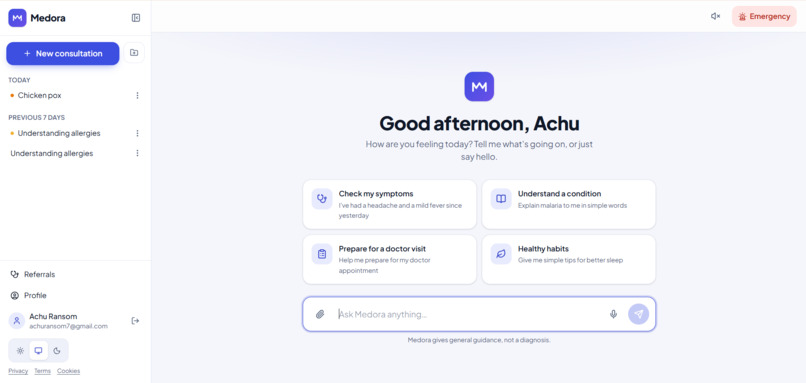
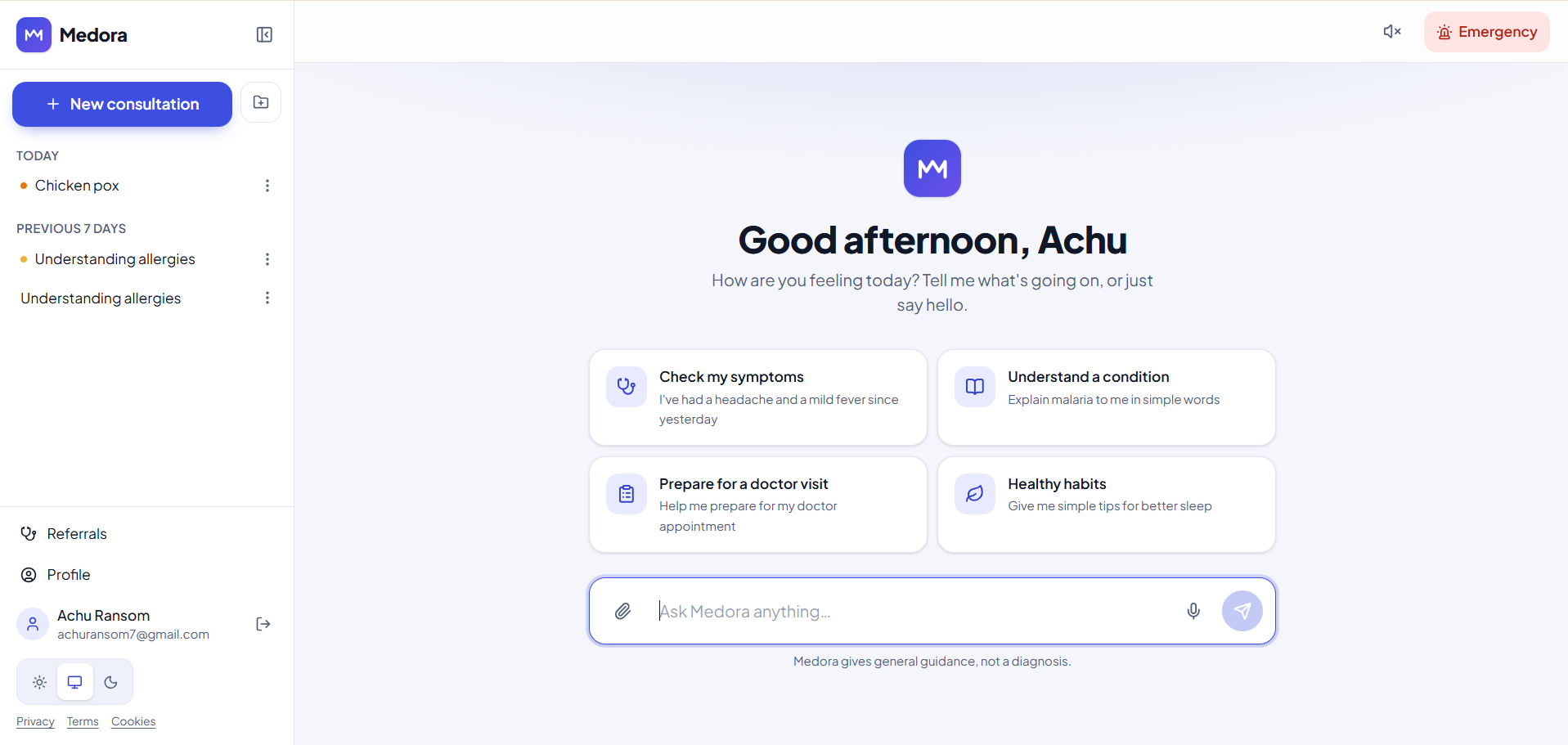
The home page of Medora
Inspiration
I was inspired by a problem I see in everyday life: many people do not know how serious their symptoms are or what the symptoms are telling them and if they know, they may have difficulties describing those symptoms to a medical doctor therefore making thing a bit difficult during consultations, and some cannot easily access timely medical advice or trusted care. I wanted to build something that could help people understand their health concerns more clearly, feel calmer, and know when they should seek help quickly. Medora was inspired by the idea that AI could support health decision-making in a way that is accessible, understandable, and safe.
What it does
 Medora is an AI health assistant that lets users describe their symptoms and receive clear guidance. The app classifies each response by urgency level, including self-care, monitor, see a doctor, and urgent, so users can understand what action they should take. It also helps connect users to nearby doctors and provides referral support when the situation requires medical follow-up.

 The app includes conversation history, summary export, profile preferences, and a local-first fallback mode, so it can still work even without an external API key. The main goal is to make health guidance feel simple, reassuring, and actionable.
How I built it
 I built Medora as a full-stack web application. The frontend uses React and Vite, and the backend uses Node.js and Express with SQLite for storage. I also added authentication, data persistence, and a triage system that checks for red-flag symptoms before giving a final recommendation.

 The core of the project is a safety-first medical triage engine. It combines the model’s guidance with a deterministic set of emergency symptom checks, so that serious problems like chest pain, breathing difficulty, severe bleeding, and stroke-like symptoms escalate to urgent care immediately. I designed the app to be useful even in offline or local-only mode (Well that is for the mobile app since you can't visit a website while being offline), which makes it more practical for real-world use.
Challenges I ran into
 One of the hardest parts was making sure the app was helpful without being unsafe. Medical guidance is a sensitive space, and a model that is too casual or too confident can create risk. I had to build a system that clearly communicates urgency and avoids under-prioritizing emergencies.
 I also had to balance usability with trust. The interface needed to feel calm and approachable, but also honest and clear about serious symptoms. On top of that, I worked through backend integration, auth flow, conversation handling, and referral logic so that the experience feels complete.
Accomplishments that I'm proud of
 I’m proud that I built a working full-stack app with a polished user experience and a real safety model behind it. The project includes symptom-based chat, urgency classification, doctor referrals, conversation persistence, and summary export functionality. I also made the app usable in local mode, which means it does not depend entirely on external APIs to function.

 Most importantly, I created something that demonstrates a real-world idea: AI can help people understand their symptoms and take safer next steps when they are unsure what to do.
What I learned
 I learned that in health tech, safety matters more than novelty. A strong product is not just one with impressive AI output; it is one that is clear, trustworthy, and careful when the stakes are high. I also learned how important deterministic rules are in healthcare systems, because they provide a safety net when model judgment is uncertain.

 Another important lesson was that design and backend architecture matter just as much as the AI itself. A good health app must be easy to use, understandable, and respectful of user anxiety.
What's next for Medora
 The next step for Medora is to make it more robust and more useful in real-world settings. I want to improve multilingual support, expand the doctor network, and refine the health guidance logic based on more detailed symptom pathways. I also want to add stronger follow-up features, better personalization, and more integrations for communication and care coordination.

 Ultimately, I want Medora to become a trusted digital health assistant that helps people understand symptoms, find the right level of care, and connect to support faster when they need it.

