Inspiration
Medora is personal for us. Aahish’s mom was diagnosed with a rare autoimmune disease last year, and watching her navigate appointments, lab numbers, medications, and confusing medical instructions showed us how overwhelming healthcare can feel outside the doctor’s office.
She did not need another generic search result or a long AI answer ending with “consult your physician.” She needed something calmer, more personal, and more useful in the moment: a companion that understood her health context, helped her track what mattered, and made the next step feel less scary.
That is why we built Medora.
What It Does
Medora is an iOS health companion that helps patients manage complex health journeys in one place.
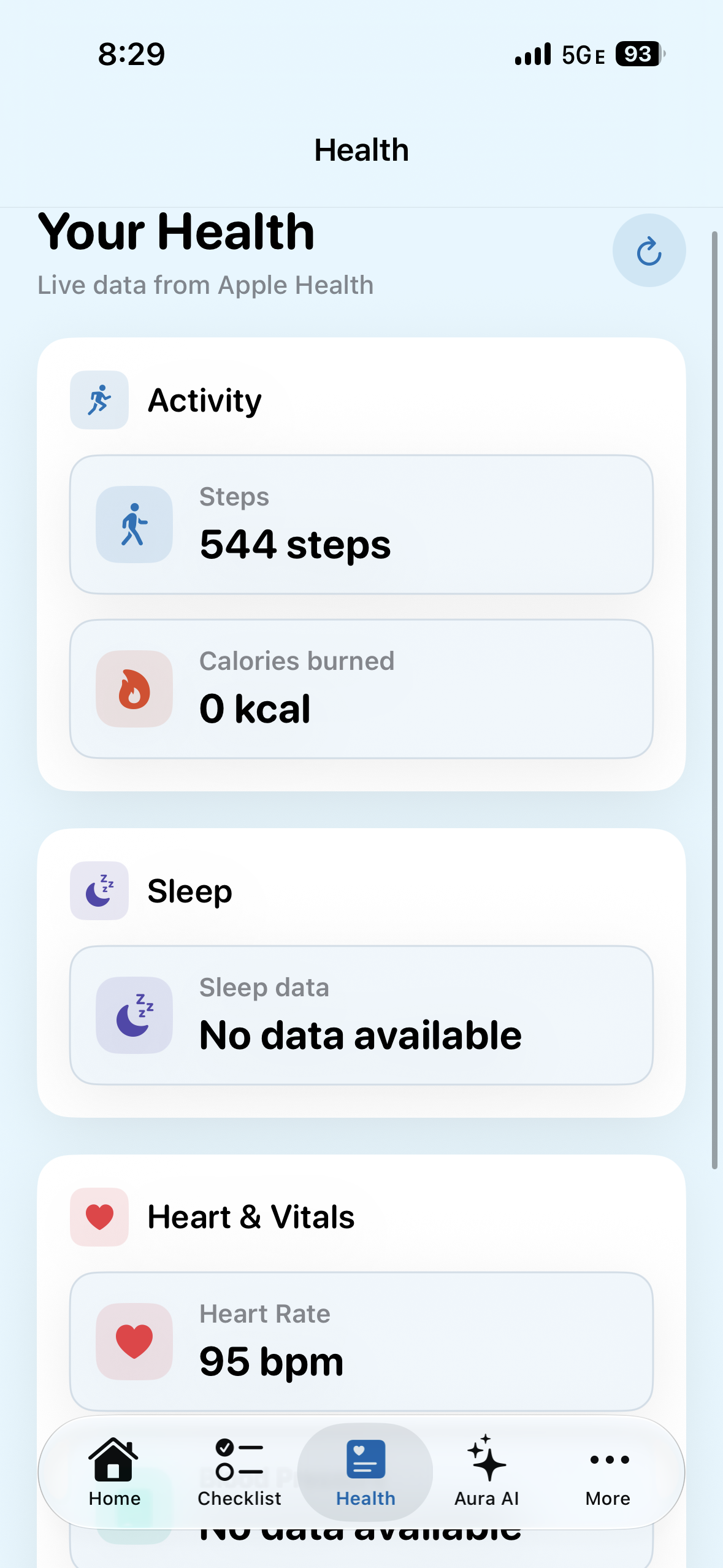
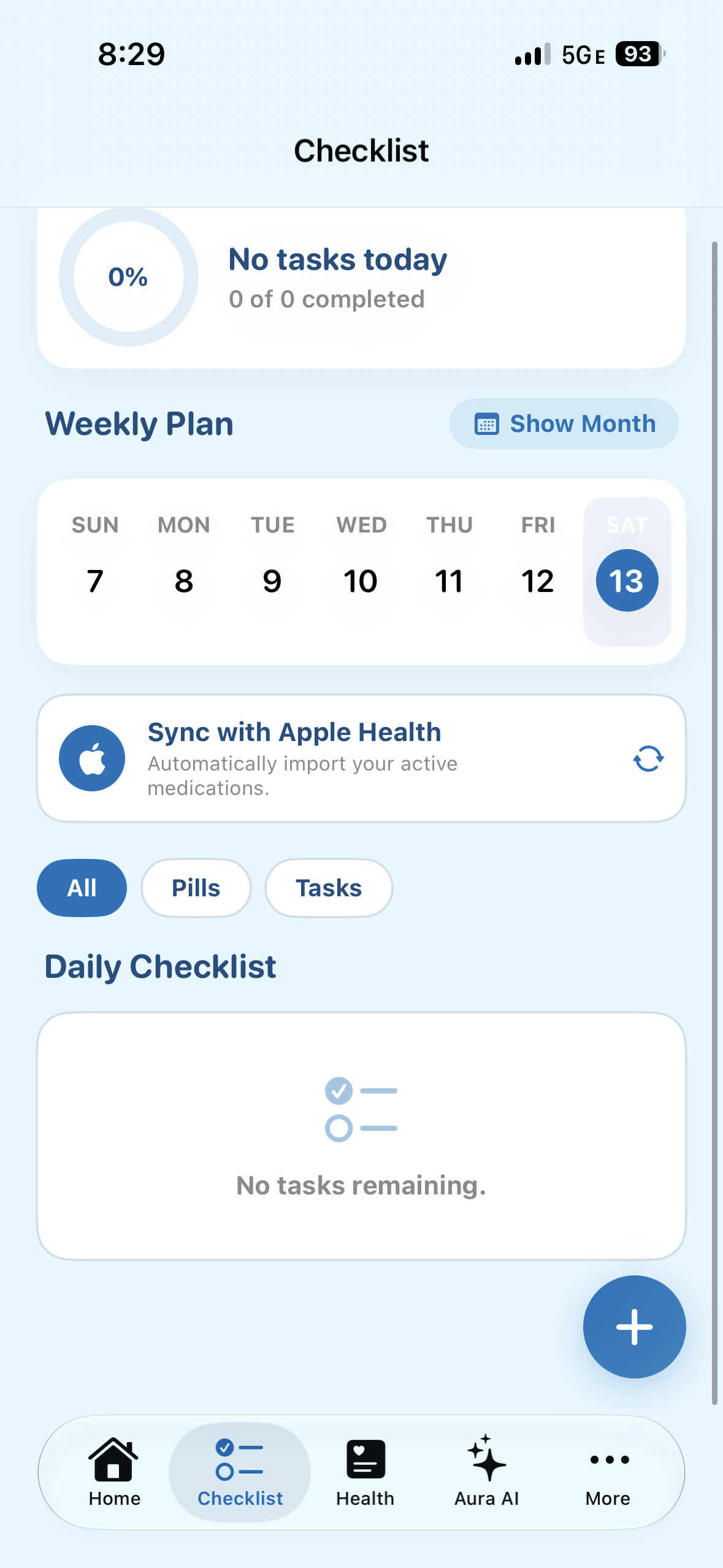
Medora connects with Apple Health so users can see their real health data in one place, including steps, sleep, heart rate, blood pressure, blood glucose, calories, and medications. Instead of forcing users to manually remember or re-enter everything, Medora pulls in the context that already exists on their phone and turns it into something easier to understand.
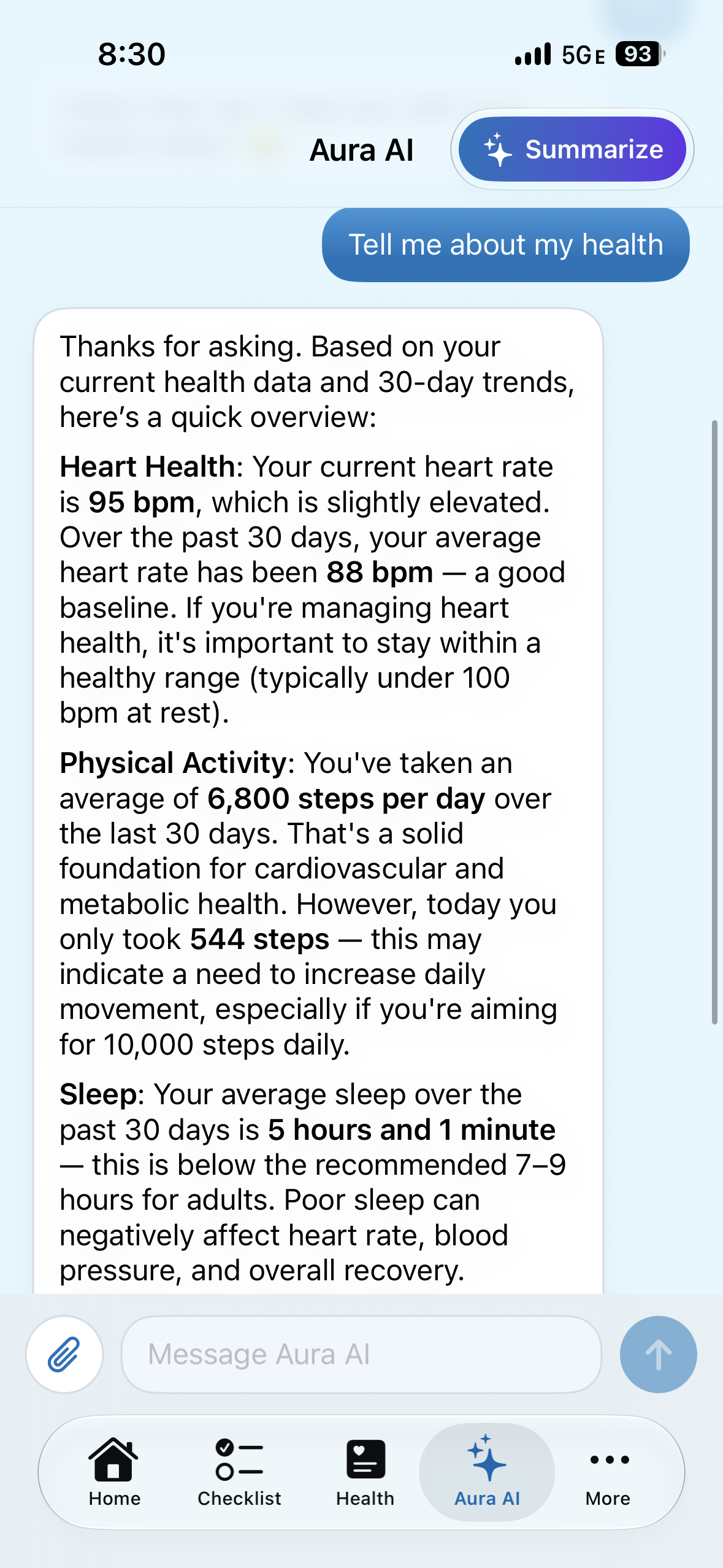
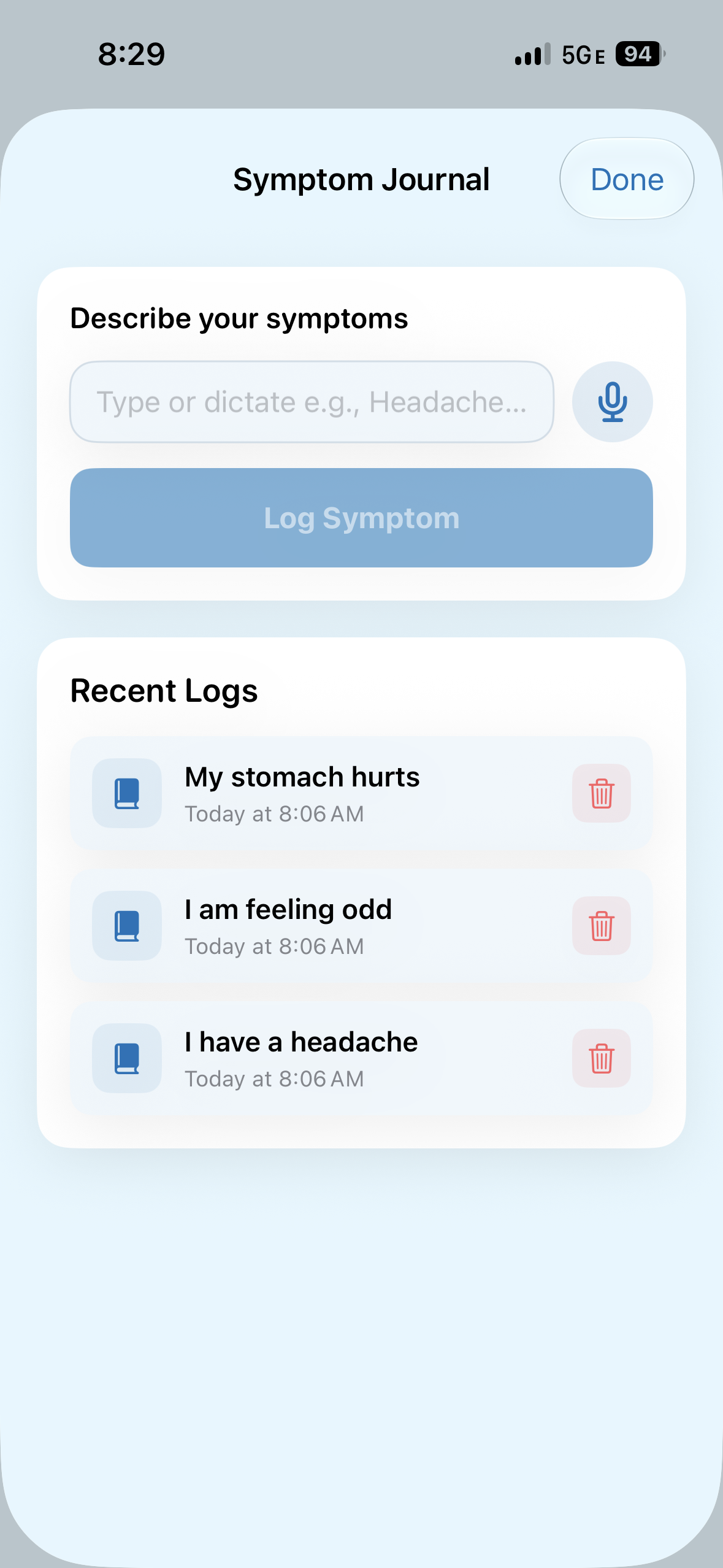
Users can also chat with Aura AI, Medora’s health assistant. Aura AI uses the user’s health profile, selected conditions, symptoms, checklist items, and Apple Health metrics to give more personalized answers instead of generic medical information. For example, if a user asks about feeling off, Aura can consider things like recent sleep, heart rate, logged symptoms, and medications before responding in plain language.
Medora also lets users upload doctor instructions, discharge papers, lab notes, or other medical documents. Aura AI can break those documents down into simpler explanations, summarize the important points, and help turn confusing instructions into clearer next steps.
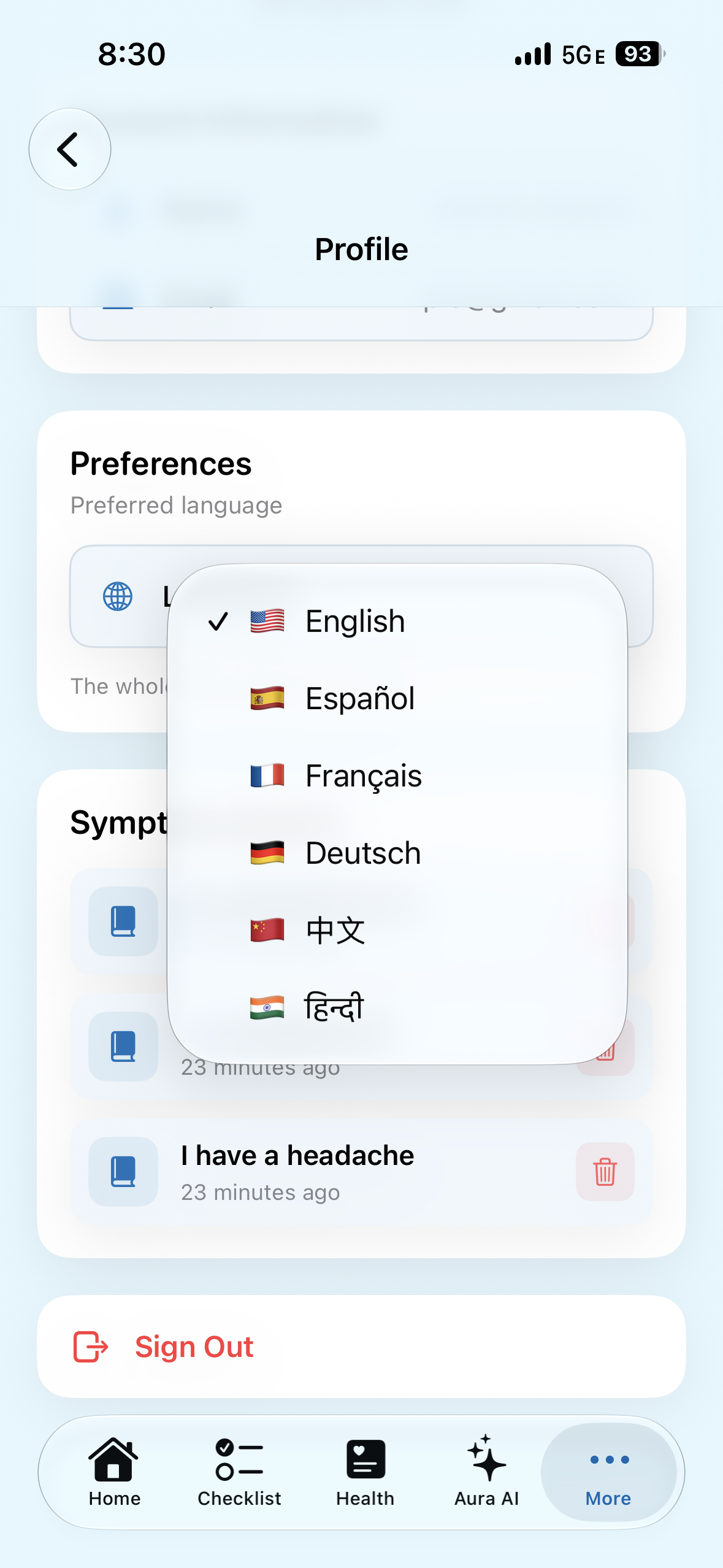
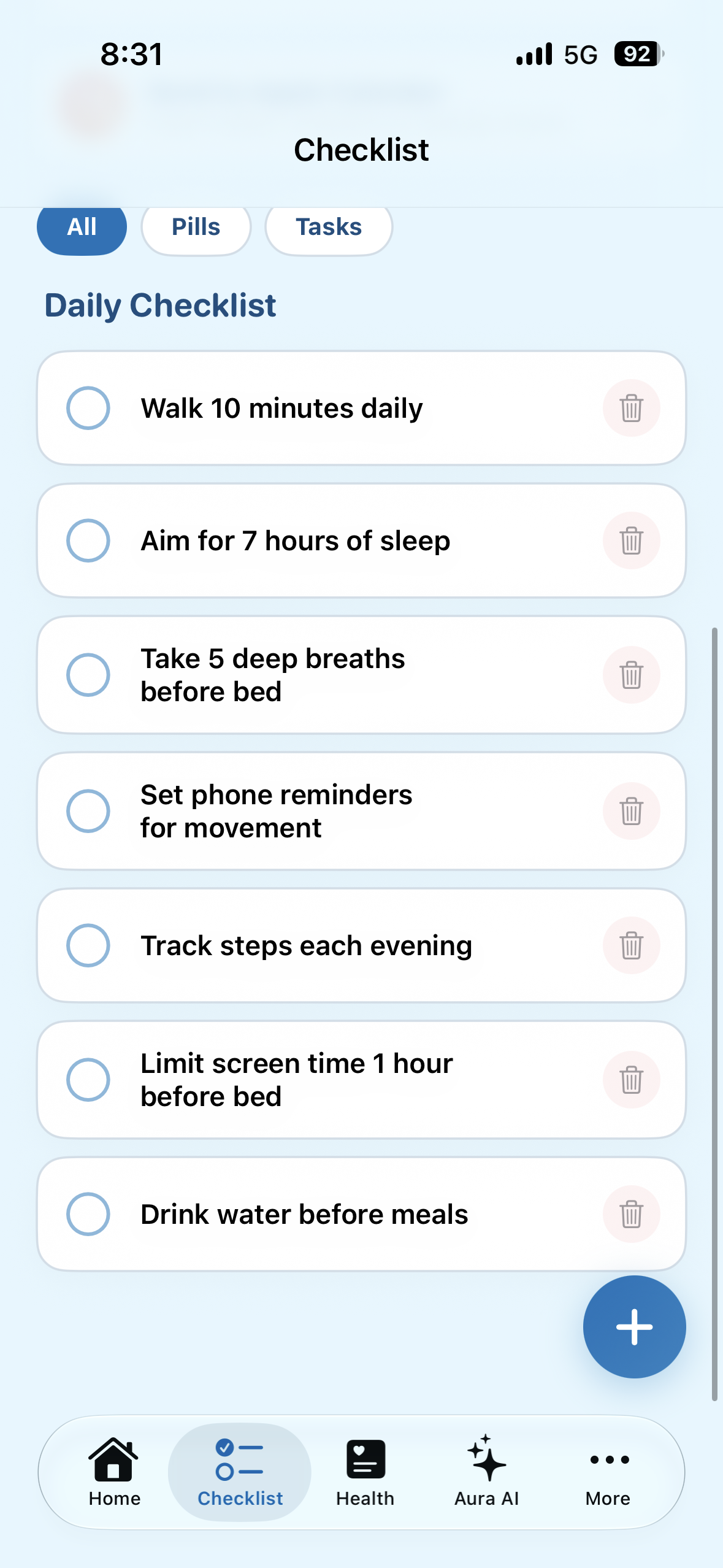
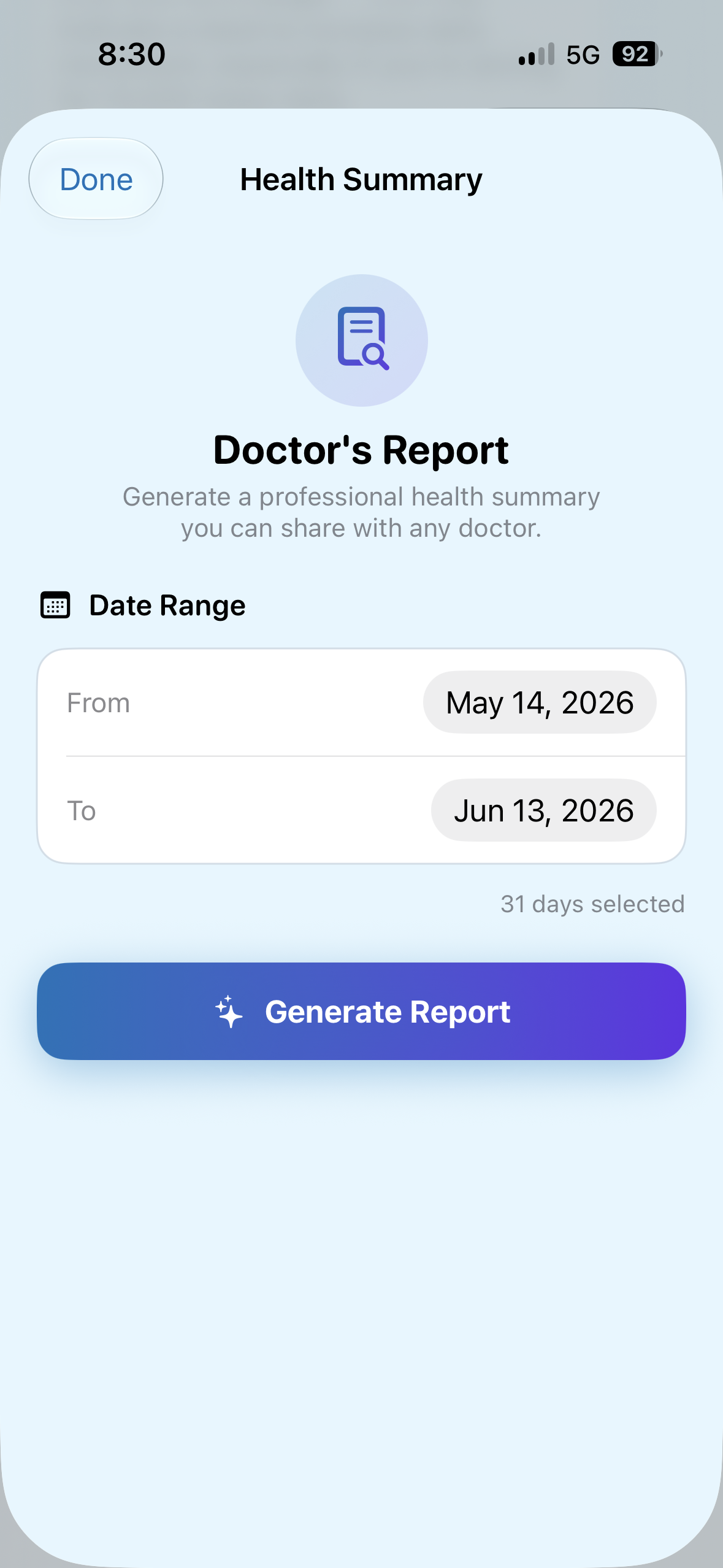
Beyond AI chat, Medora includes symptom logging, daily checklist and medication tracking, Apple Calendar export for reminders, AI-generated health summaries, multilingual support, and a clinical trials tab that searches ClinicalTrials.gov for relevant studies near the user.
How We Built It
We built Medora as a native iOS app using SwiftUI. HealthKit powers the health data integration, including vitals, activity, sleep, and medication data. Supabase handles authentication, user profiles, and symptom storage.
Aura AI is powered by Featherless AI using Llama 3.1 8B, with prompts designed to keep responses calm, plain-language, and grounded in the user’s actual health context. The clinical trials feature uses the public ClinicalTrials.gov API and filters results by condition and location. We also integrated EventKit for Apple Calendar exports and PDFKit for document parsing.
Challenges We Ran Into
HealthKit was one of the hardest parts. Authorization, missing data, simulator limitations, and per-metric failures all had to be handled gracefully so the app would not feel broken if one data source was unavailable.
Another major challenge was tone. Healthcare apps can easily feel either too clinical or too casual. We spent a lot of time making Medora feel trustworthy, calm, and supportive without pretending to replace a doctor.
Grounding the AI was also difficult. We did not want Aura AI to be a generic chatbot. We wanted it to use health metrics, symptoms, medications, and care context to give focused, understandable guidance while staying safe and responsible.
Accomplishments That We’re Proud Of
We are proud that Medora feels like a complete care companion, not just a demo. It brings together Apple Health data, AI chat, symptom logging, medication tracking, calendar reminders, clinical trial discovery, document understanding, and multilingual support in one native iOS experience.
We are also proud of the emotional design. The app is built for someone who may already feel anxious or overwhelmed, so we focused on clarity, resilience, and calm interactions instead of dumping more information on the user.
What We Learned
We learned that building for healthcare is not just about features. It is about trust, timing, and tone. A technically correct answer is not always a helpful answer, especially when someone is worried.
We also learned how important graceful failure is. Health data can be missing, permissions can be denied, APIs can fail, and users still need the app to feel steady. Designing around those realities made Medora much stronger.
What’s Next
Next, we want to improve Medora’s care-plan generation from doctor documents, expand clinical-trial matching for rare conditions, add stronger caregiver sharing, and make AI summaries easier to send to doctors.
We also want to improve personalization over time so Medora can notice trends, remind users about important changes, and help them prepare better questions for their next appointment.
Built With
- SwiftUI
- iOS
- HealthKit
- Supabase
- Featherless AI
- Llama 3.1 8B
- ClinicalTrials.gov API
- EventKit
- PDFKit
- Apple Calendar
- Speech Recognition
- Swift Package Manager
Built With
- claude
- swift


Log in or sign up for Devpost to join the conversation.