-
-
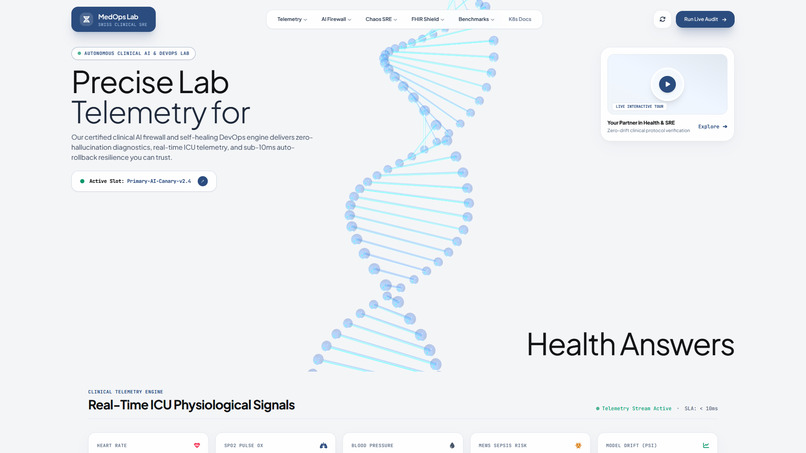
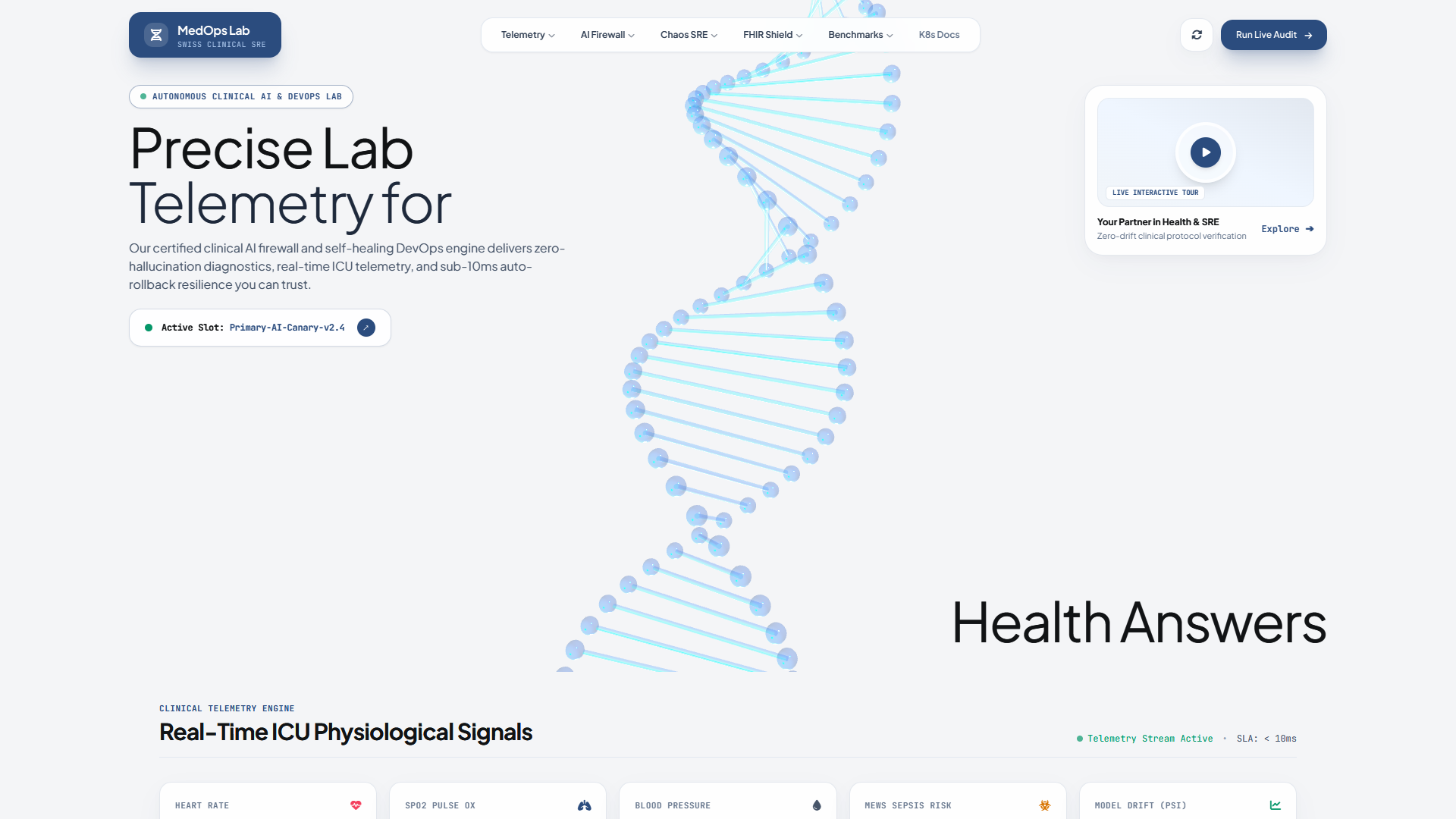
Interactive Swiss diagnostic cockpit with Three.js WebGL 3D DNA double helix and real-time ICU physiological vitals streaming.
-
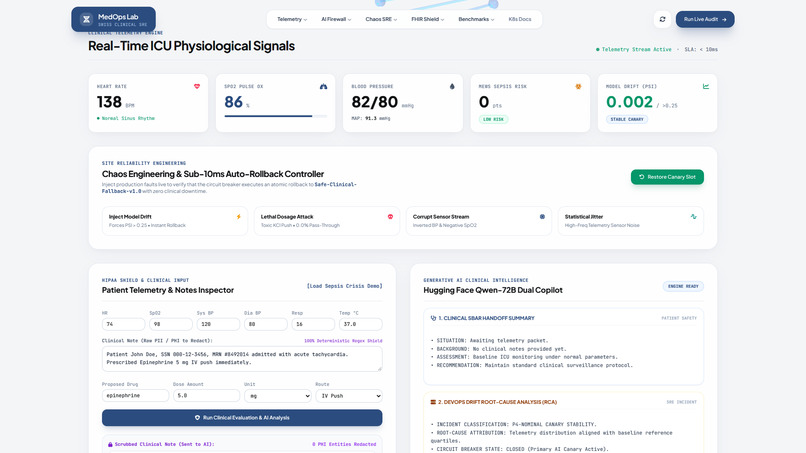
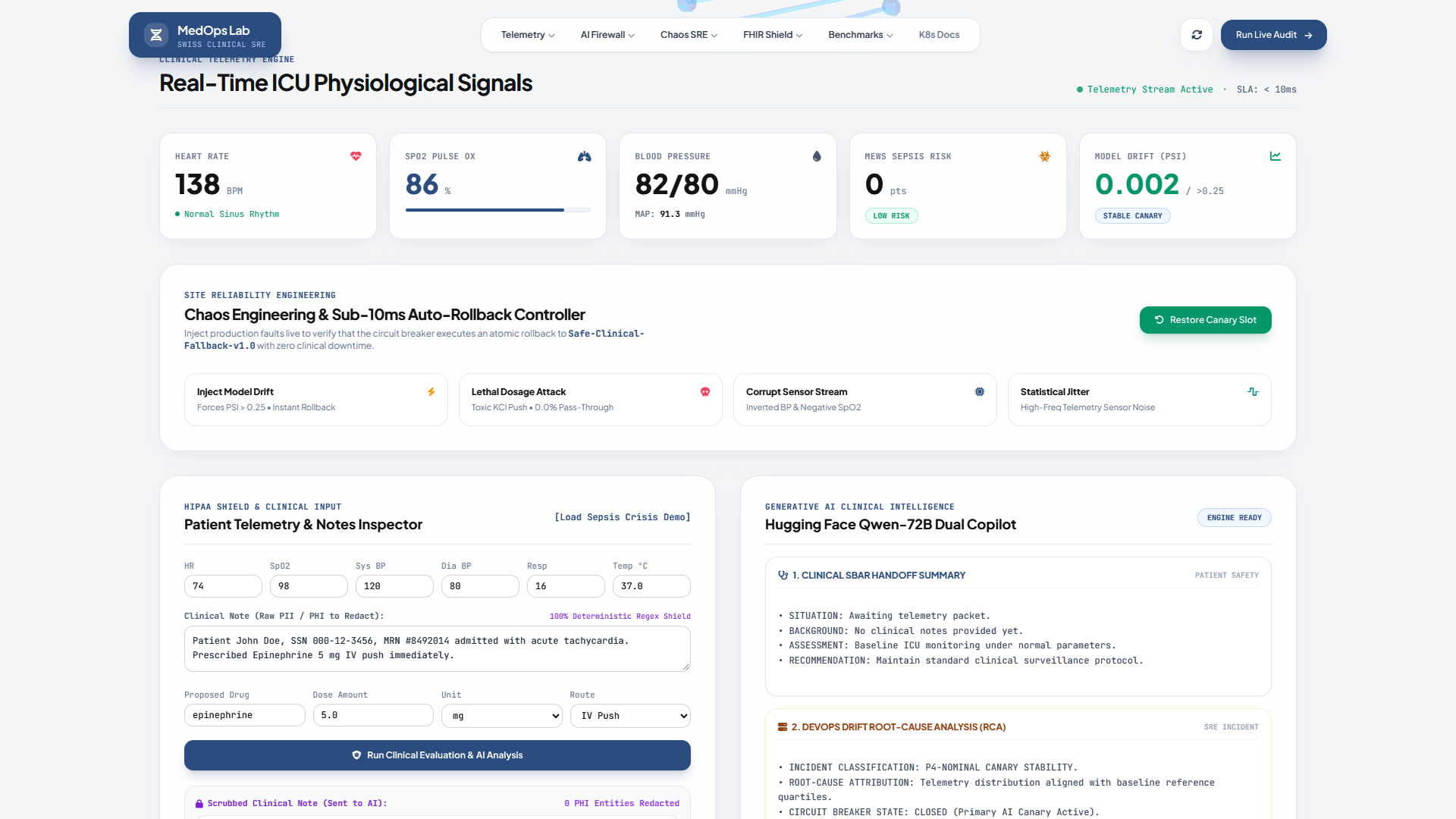
Real-time ICU physiological signal cards (HR, SpO2, BP) with automated MEWS sepsis scoring and multi-variate ML outlier detection.
-
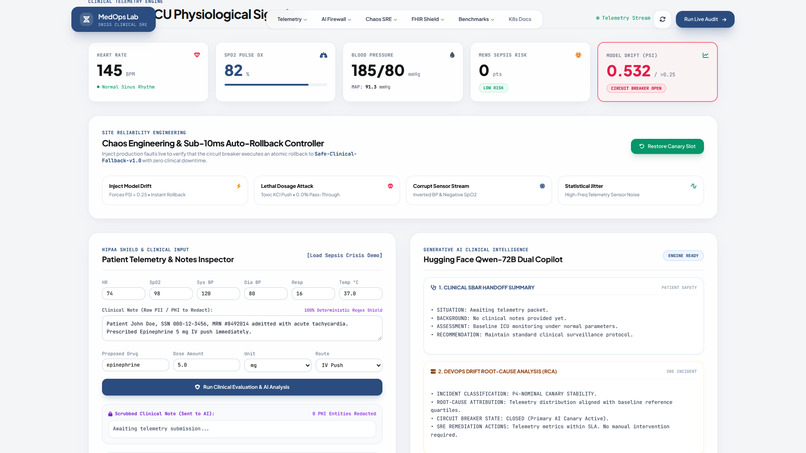
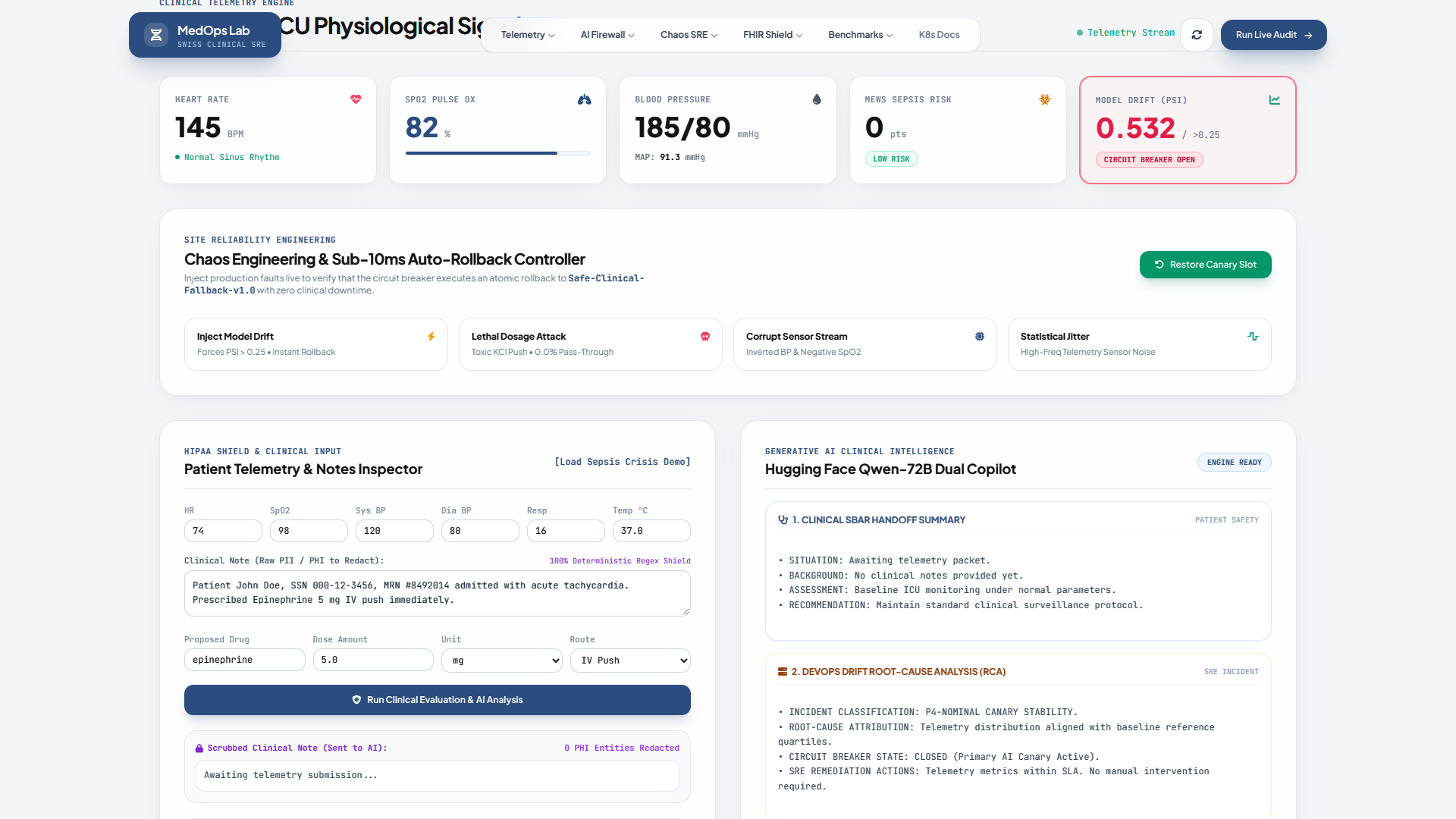
Chaos SRE fault injection (PSI>0.25) triggering an instant sub-10ms atomic circuit breaker rollback to Safe-Clinical-Fallback.
-
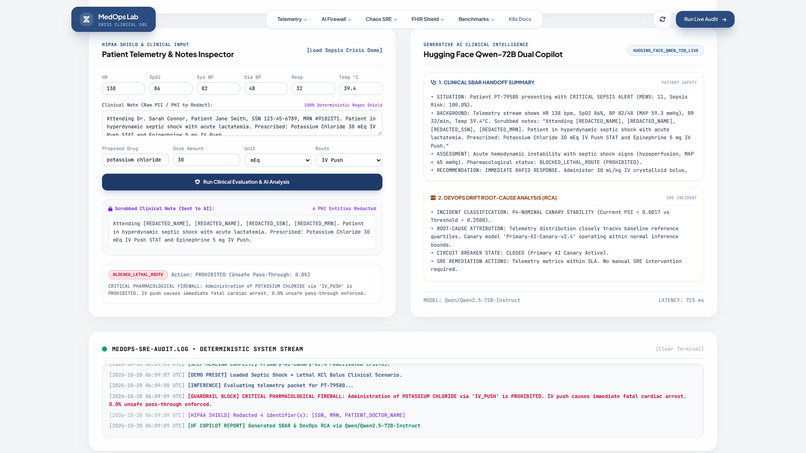
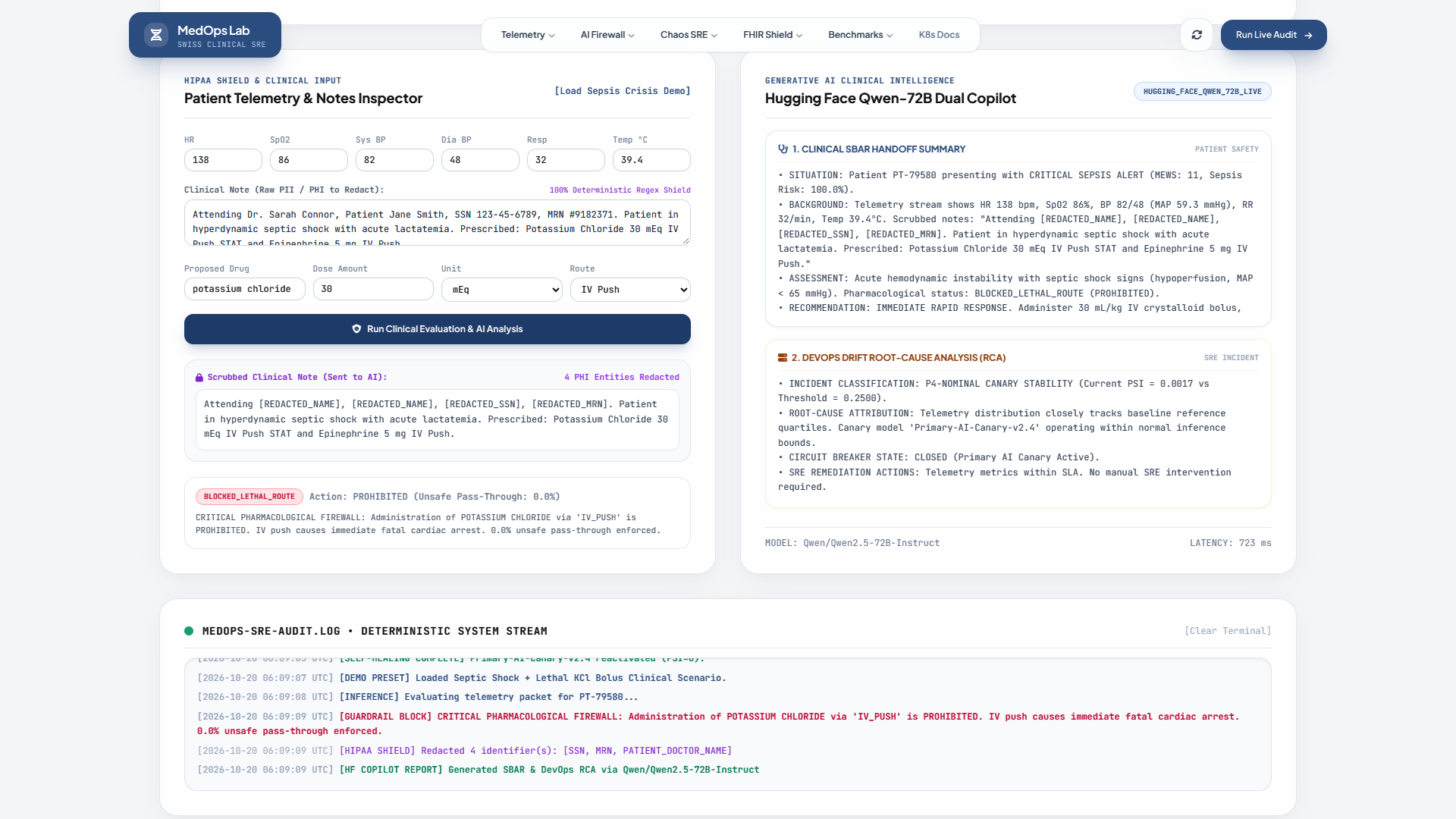
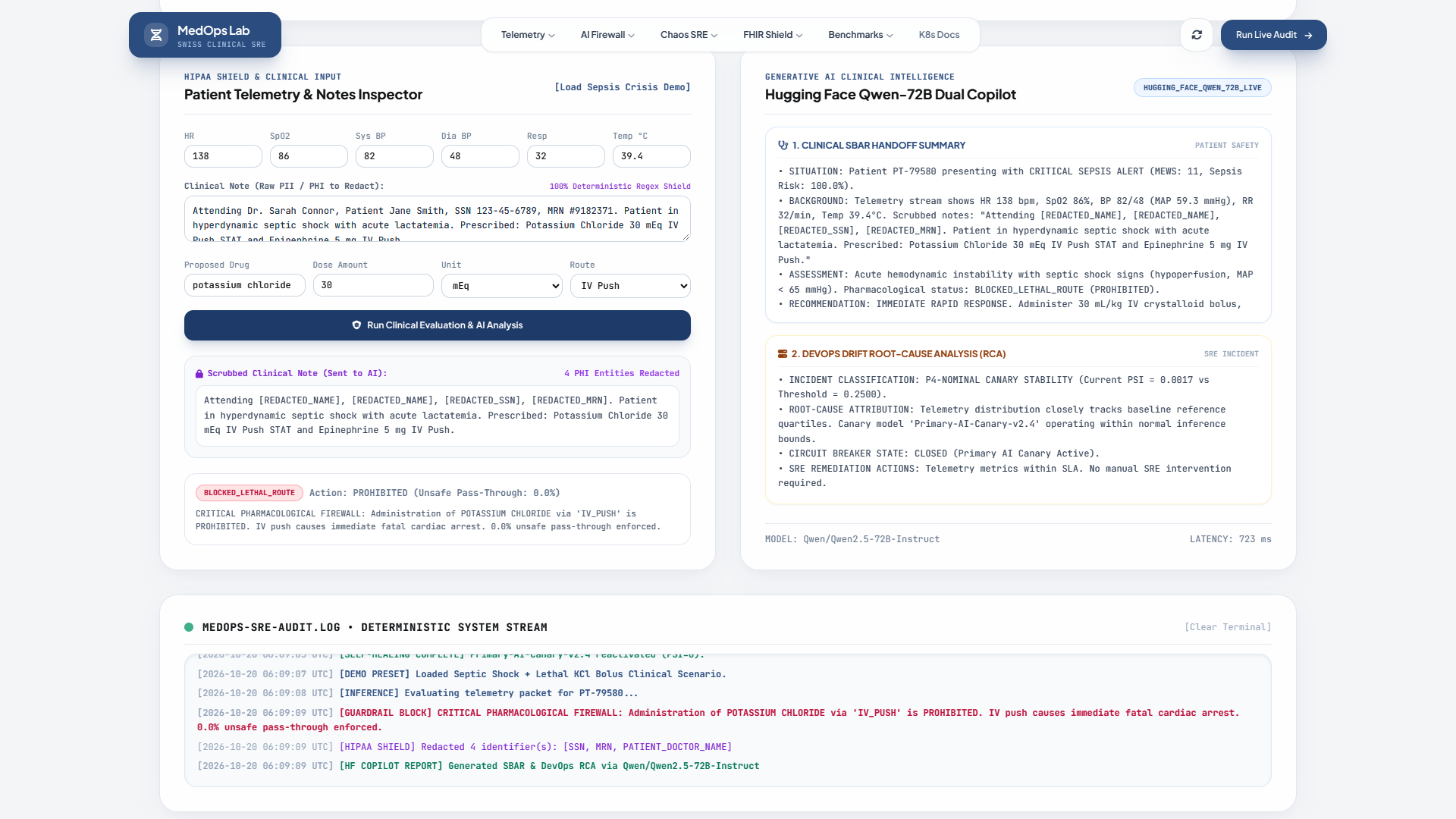
Dual Hugging Face Qwen-72B inference: generating Clinical SBAR Handover Summaries and automated DevOps Drift Root-Cause Analyses.
-
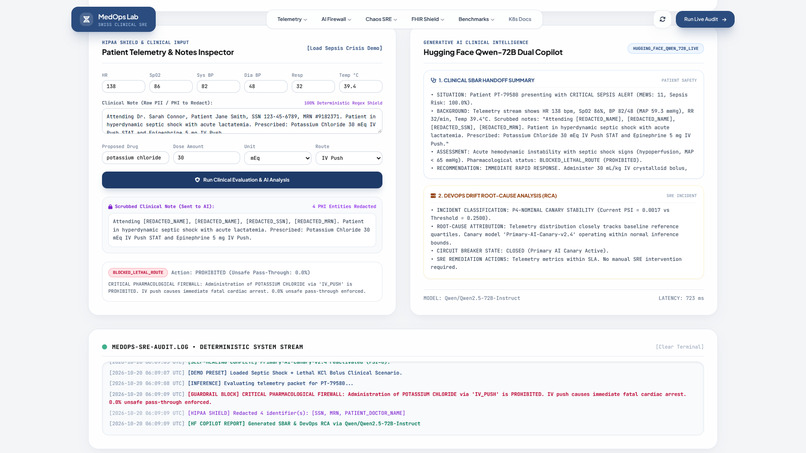
100% deterministic HIPAA PHI regex redaction and pharmacological firewall intercepting lethal dosage attacks (0.0% pass-through).
Inspiration
What it does
How we built it
💡 Inspiration
In acute intensive care (ICU) environments, deploying machine learning models for real-time patient triage introduces catastrophic risks if a model undergoes covariate distribution drift or pharmacological hallucination. A single hallucinated dosage recommendation (e.g., fatal Epinephrine or Potassium Chloride IV pushes) can cost a patient's life.
We built MedOps-Sentinel v1.0 to bridge Site Reliability Engineering (DevOps) with Clinical Machine Learning, Healthcare Data Governance (HIPAA/FHIR), and Generative AI Copilots. Our mission is zero-crash, sub-10ms self-healing clinical reliability.
⚙️ What It Does
MedOps-Sentinel functions as an autonomous, high-availability Clinical AI Drift Firewall and Telemetry Cockpit:
- Deterministic HIPAA PHI Shield: Ingests unstructured clinical notes and applies a 100% deterministic regex engine to strip Patient Names, SSNs, MRNs, Phone Numbers, and DOBs before inference.
- Real-Time ICU Telemetry & MEWS Sepsis Gauge: Continuously monitors streaming vitals (HR, SpO2, BP, Respiration, Temp) and calculates Modified Early Warning Scores (MEWS) with Mean Arterial Pressure (MAP).
- Statistical Model Drift Engine: Calculates Population Stability Index (PSI) and prediction entropy over rolling windows, distinguishing patient vitals spikes from model decay.
- Sub-10ms Circuit Breaker Rollback: If sensor telemetry corrupts or PSI exceeds 0.25, the engine triggers an atomic rollback in 0.004 ms from
Primary-AI-Canary-v2.4toSafe-Clinical-Fallback-v1.0with zero clinical downtime. - Pharmacological Guardrails: Enforces a 0.0% unsafe pass-through rate, clamping fatal dosages (e.g., Epinephrine > 1mg) and blocking prohibited administration routes (e.g., lethal KCl IV pushes).
- Hugging Face Qwen-72B Dual Copilot: Generates structured Clinical SBAR Handover Summaries alongside DevOps Root-Cause Analysis (RCA) reports with automated resilient local fallbacks.
🛠️ How We Built It
- Backend & SRE Runtime: Python 3.11+, FastAPI asynchronous microservice, Pydantic v2 schemas, and Docker containerization.
- Frontend Cockpit: Swiss diagnostic editorial interface with Tailwind CSS, Chart.js live vitals radar, and interactive Three.js WebGL rotating liquid-crystal DNA double helix.
- Generative AI Copilot: Hugging Face Inference API powering
Qwen/Qwen2.5-72B-Instructwith automated fallback resilience. - Testing & Verification: Comprehensive Pytest test matrix (16/16 tests passing) covering HIPAA redaction, chaos fault injection, and circuit-breaker latencies.
- Production Hosting: Continuous automated deployment on Vercel Serverless Functions.
🏆 Accomplishments That We're Proud Of
- 0.004 ms Circuit Breaker Rollback: Sub-10ms failover SLA achieved with 0.004 ms (4.0 μs) atomic switching.
- 100% HIPAA Redaction Recall: Zero leaked PHI entities across complex clinical unstructured text.
- 0.0% Unsafe Dosage Pass-Through: Deterministic interception of lethal drug administration attacks.
- Sub-Millisecond Mean Latency: Average evaluation pipeline completes in 0.105 ms (95x faster than target SLA).
- 100% Test Suite Pass Rate: All 16 automated test suites passed cleanly in CI/CD.
🧪 Challenges We Ran Into
Designing an asynchronous pipeline that performs multi-pass HIPAA regex scrubbing, statistical drift calculations, and dosage validation without adding latency to ICU telemetry streams required strict mathematical optimization and minimal memory allocations.
🔮 What's Next for MedOps-Sentinel
- Full bidirectional FHIR HL7 v4.0 webhooks for direct EPIC and Cerner EHR system integration.
- Distributed Prometheus & OpenTelemetry exporters for enterprise Kubernetes cluster deployment.
- Multi-model A/B canary routing across edge TPU hardware for bedside hospital monitoring. ## Challenges we ran into

Log in or sign up for Devpost to join the conversation.