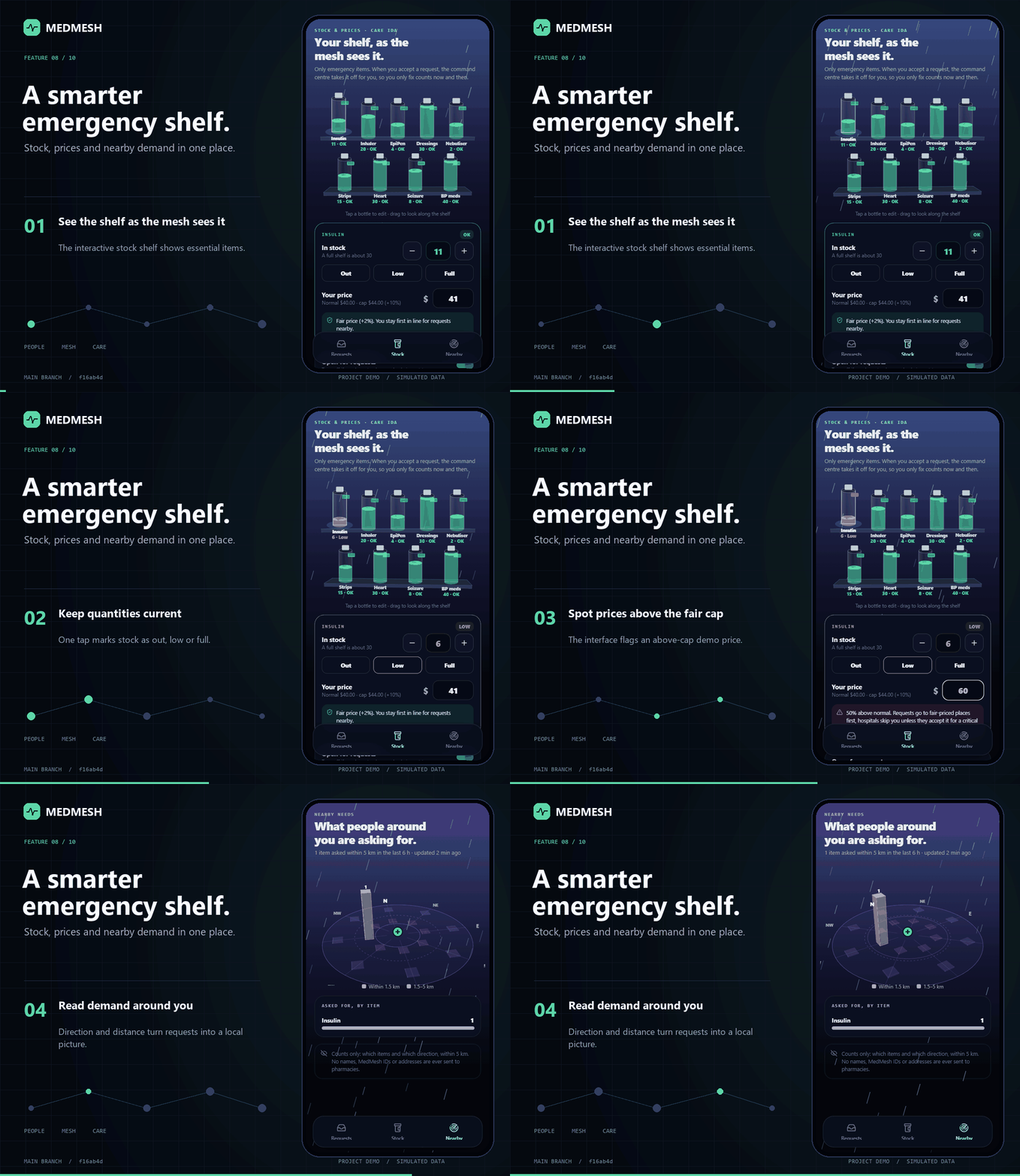
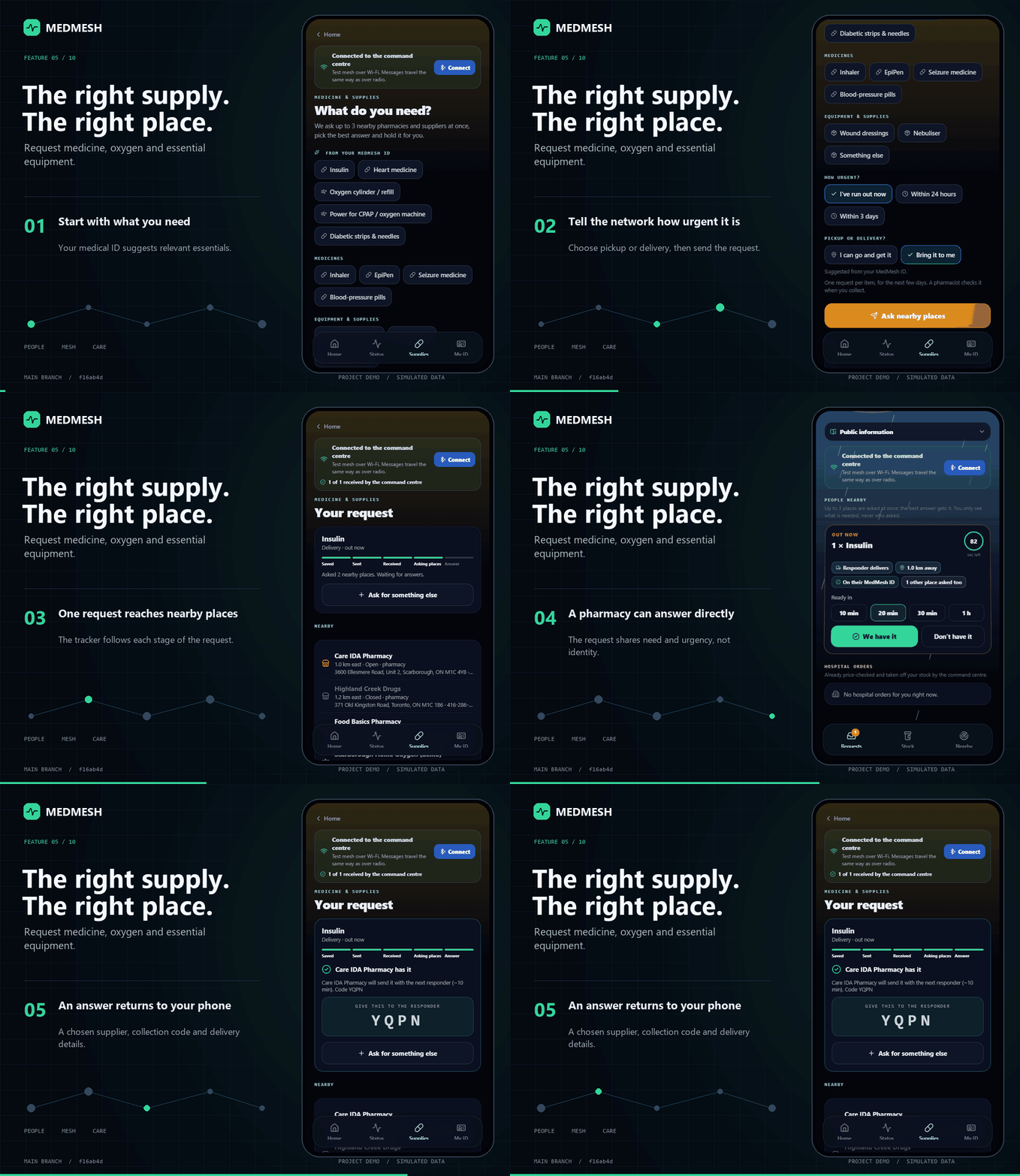
INSPIRATION We started off with a simple question how can people ask for help and share medical information when they are in a vulnerable position and communication is difficult? We wanted to bridge the gap between patients, hospitals, pharmacies, and emergency coordinators into one connected system.
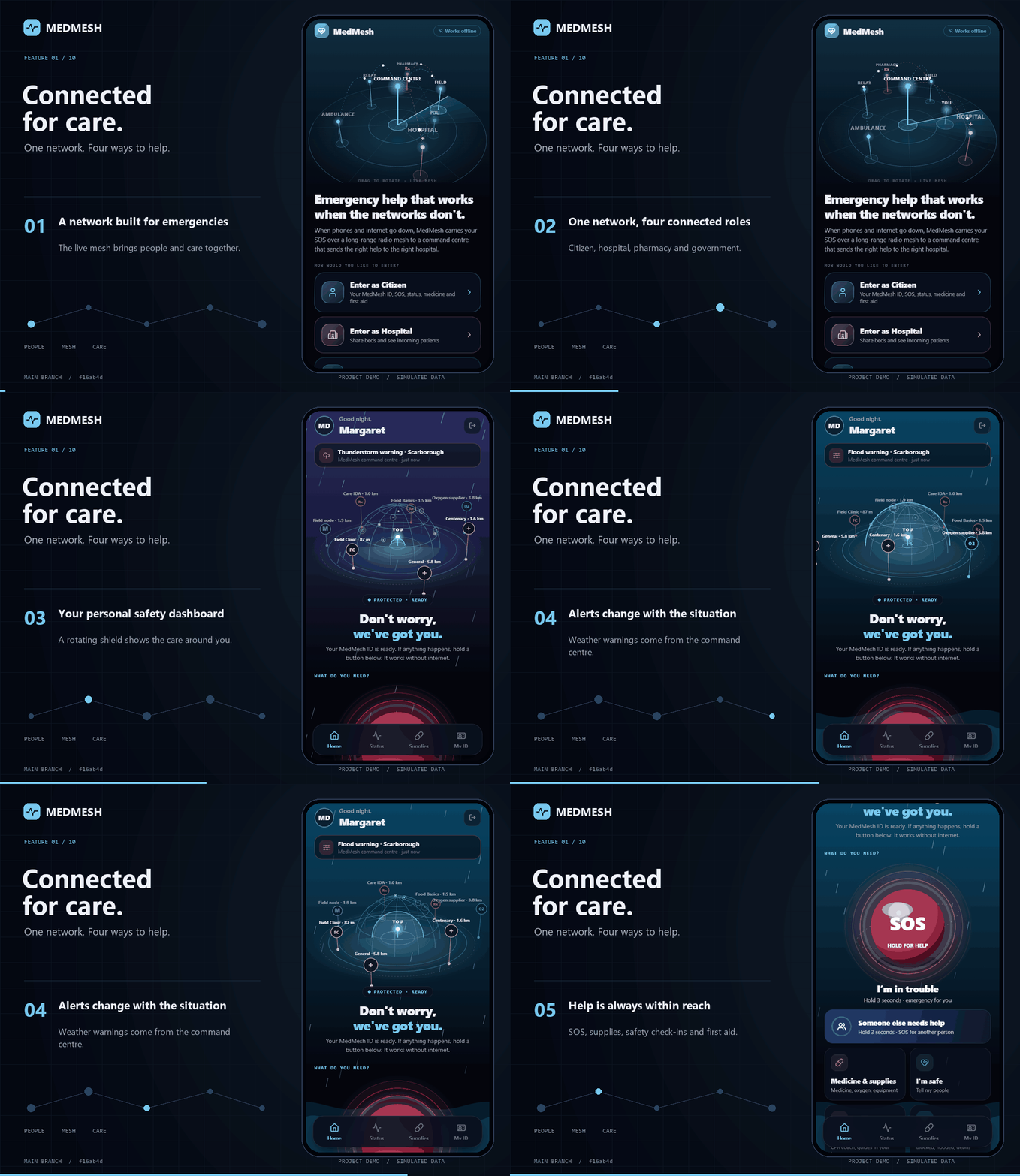
WHAT IT DOES Medmesh connects four roles: citizens, hospitals, pharmacies, and a command center.
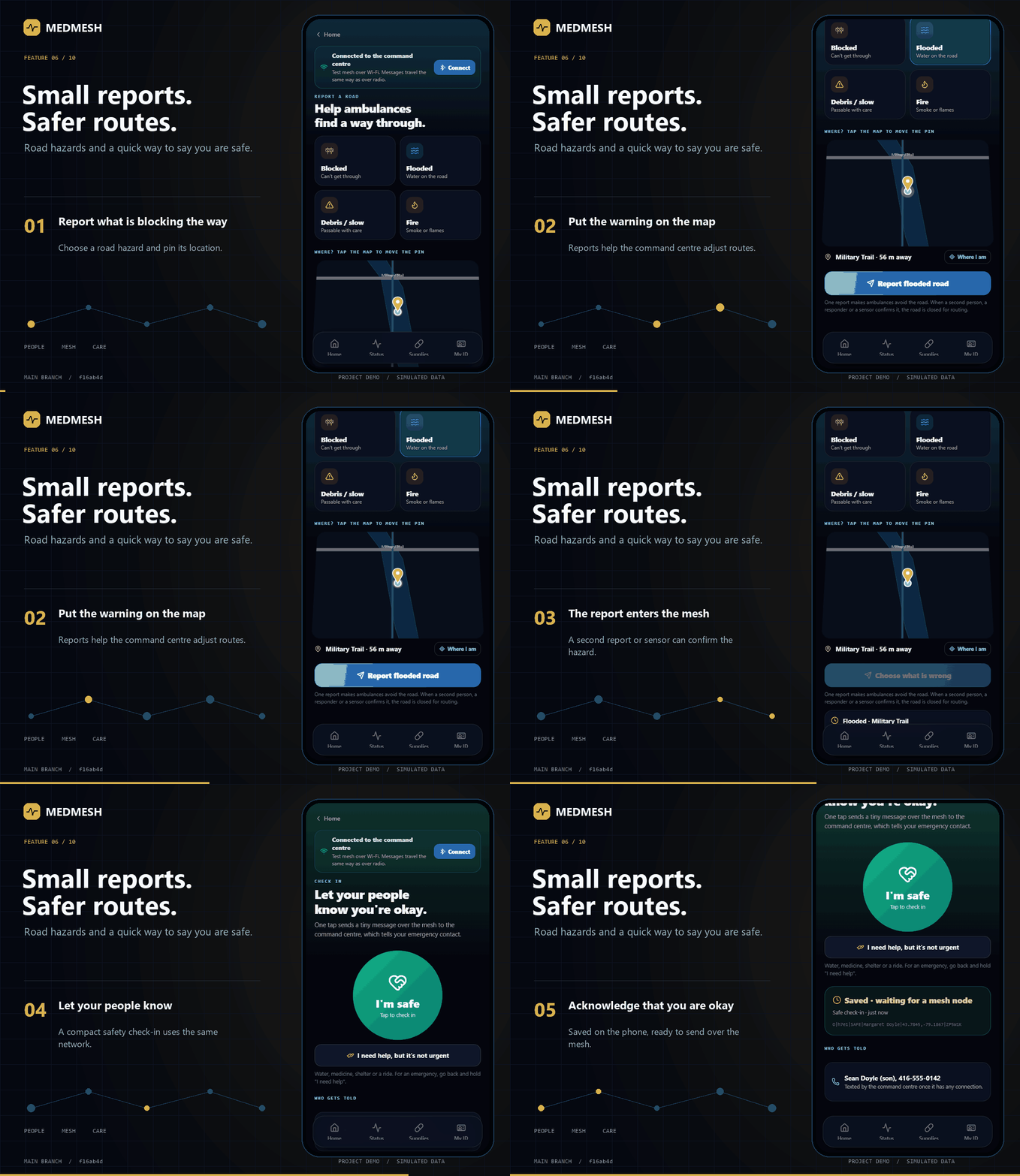
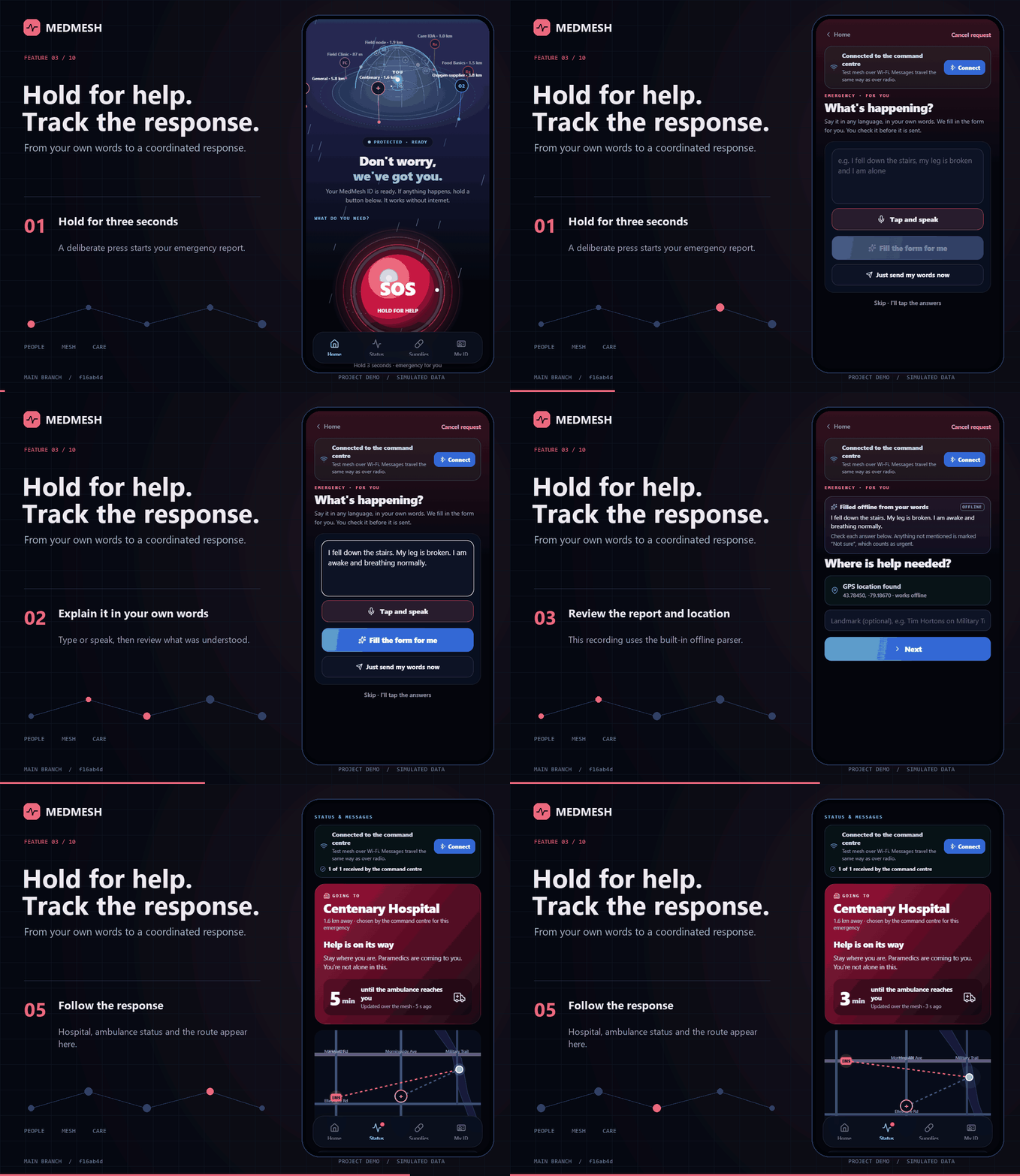
Citizens can create a medmesh id with a qr code that stays on their device and locally saves in the command center's database. Citizens also have access to basic first aid in case they need to perform the assistance procedures in emergencies without internet. They can also send SOS requests by holding a button for 3 seconds, the SOS request collects identification, short emergency questions, and location details.
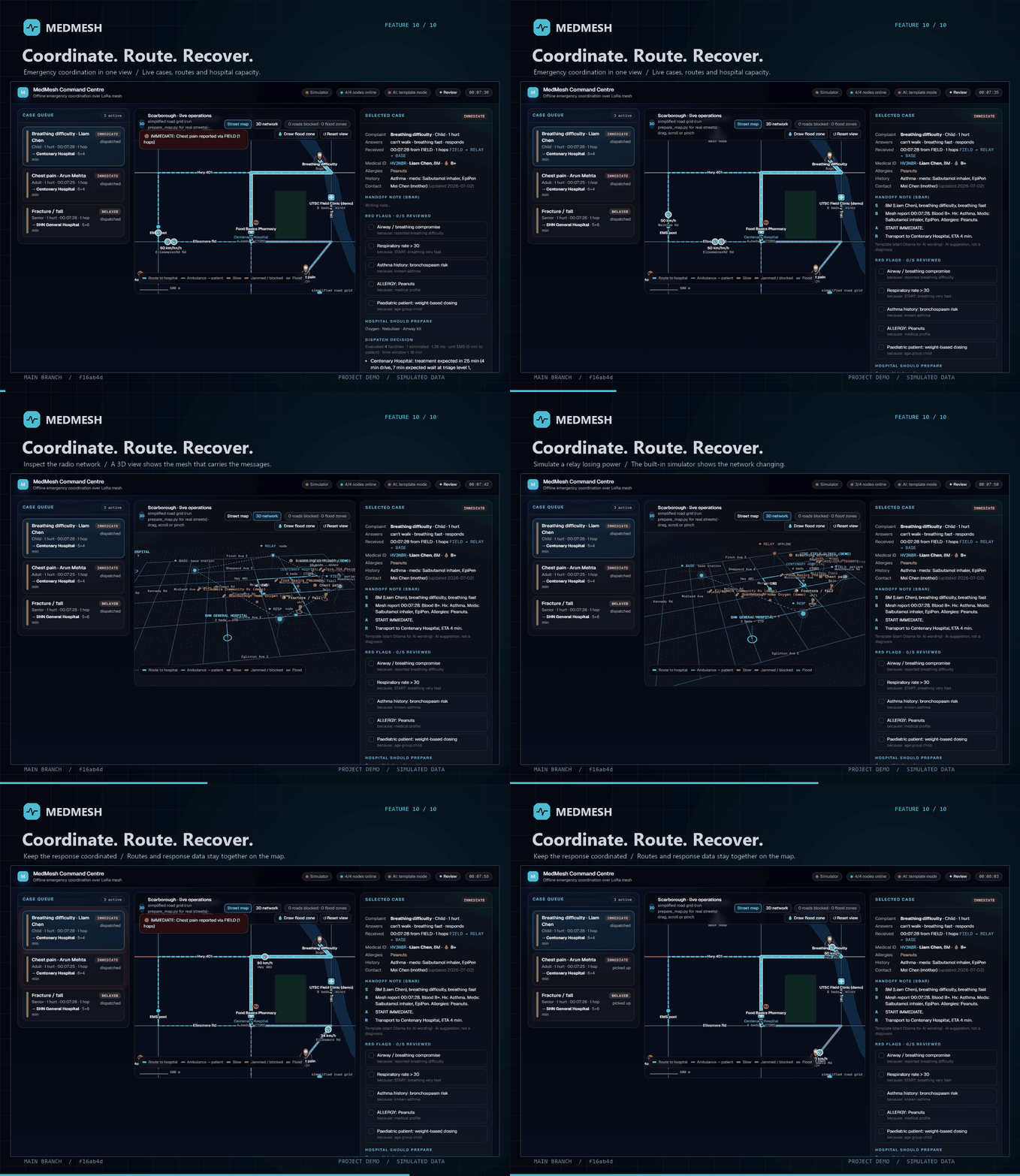
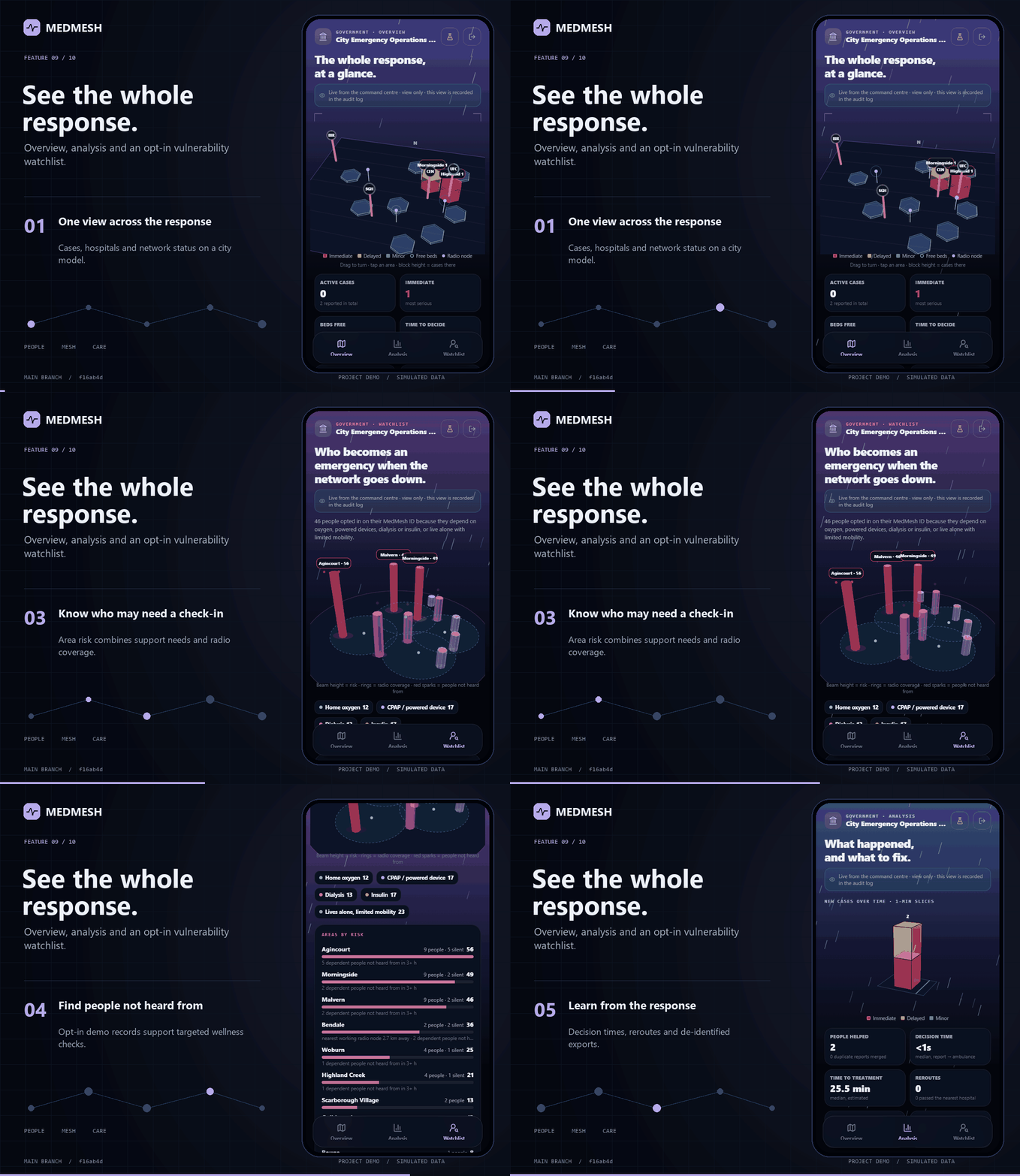
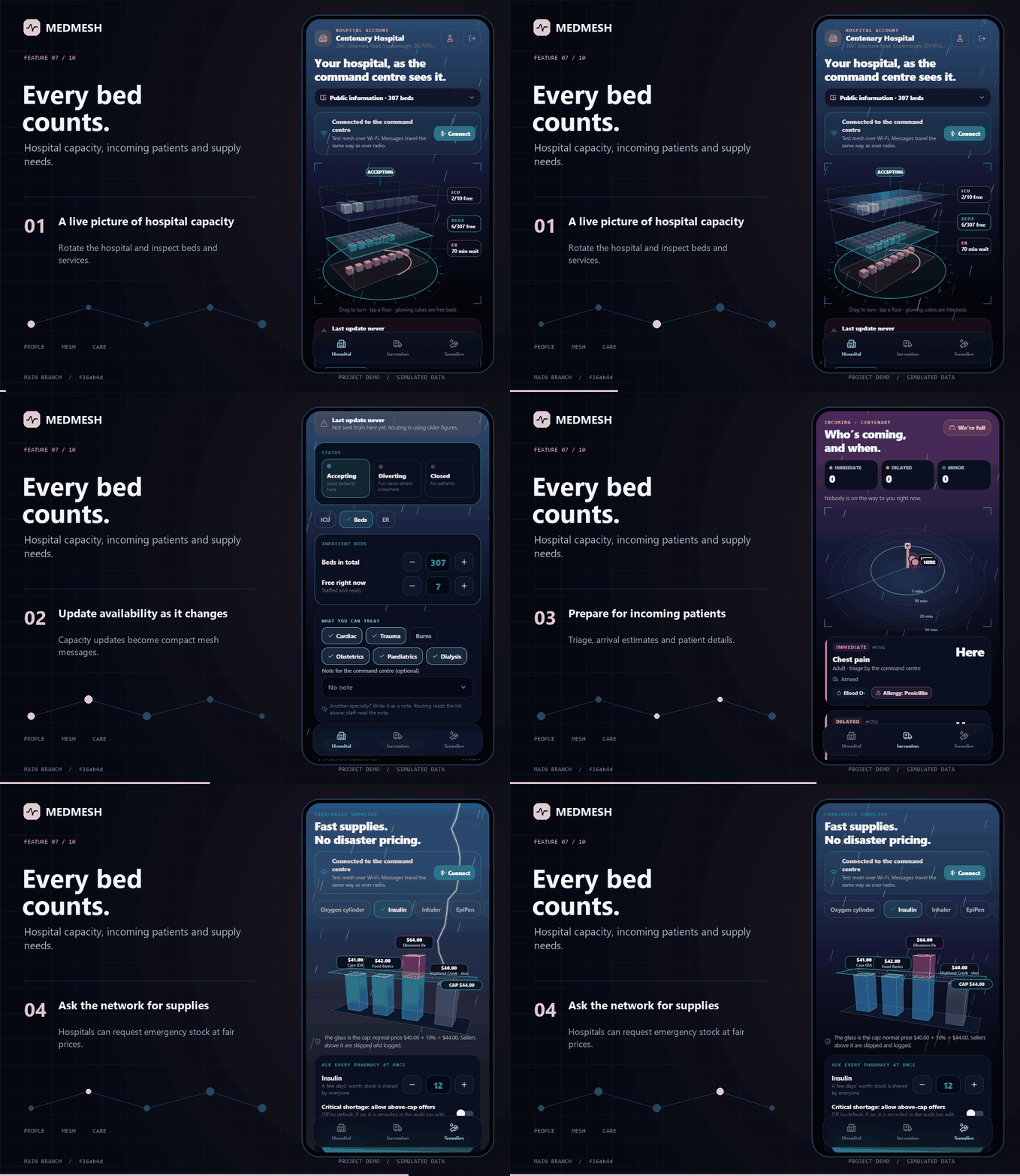
The command center can review requests, dispatch simulated ambulances, and assign a hospital using reported capacity and services. Hospitals can manage availability and confirm patient arrival, while pharmacies can share medicine availability and coordinate supply requests.
HOW WE BUILT IT
Hardware: We used Heltec WiFi LoRa 32 V3 boards with Meshtastic firmware to explore long-range, low-power communication between emergency nodes. Our intended architecture consists of a gateway connected to the command center and field nodes capable of relaying emergency messages. We designed compact pipe-separated messages suitable for LoRa transmission.
Application: We developed the mobile interface using React Native, Expo, and expo-router, with SVG-based visuals for emergency requests and network communication.
Backend: We used FastAPI for command-center functionality and Supabase for application accounts and records. The final demonstration uses simulated message routing to illustrate how emergency requests would travel through the proposed LoRa network.
Testing: We used Playwright and pytest for software testing.
CHALLENGES WE RAN INTO
Our biggest challenge was integrating the physical LoRa hardware with the software. Although we worked on configuring the Heltec boards and connecting the nodes, we encountered persistent communication and configuration issues that prevented us from reliably demonstrating physical message transmission.
Rather than abandoning the project, we adapted our application to simulate the routing process and visually demonstrate how emergency requests would reach the command center. This allowed us to showcase the complete emergency coordination workflow despite the hardware limitations.
ACCOMPLISHMENTS THAT WE'RE PROUD OF
We are proud of developing a multi-role emergency response platform connecting citizens, hospitals, pharmacies, and emergency coordinators within a single application.
Despite significant hardware integration challenges, we successfully built and demonstrated the emergency request, triage, dispatch, and hospital assignment workflows, together with a visualization of our proposed communication network.
WHAT WE LEARNED All of us learned how to solder, connect wires, and understand basic electrical schematics in this hackathon. We also learned about the communication between software and hardware components and how messages can travel without internet using specialized radio waves.
WHAT'S NEXT FOR MEDMESH
Our next priority is achieving reliable physical LoRa communication between nodes and integrating it with the FastAPI backend. We also plan to implement local offline storage and synchronization with Supabase when connectivity becomes available.
Future development includes improving message delivery reliability, using signal metrics such as RSSI and SNR to predict connection failures, and testing the system with real healthcare and emergency-response professionals.
Built With
- arduino
- esp32
- expo.io
- fastapi
- heltec
- lora
- meshtastic
- python
- react-native
- supabase
- typescript


Log in or sign up for Devpost to join the conversation.