Inspiration
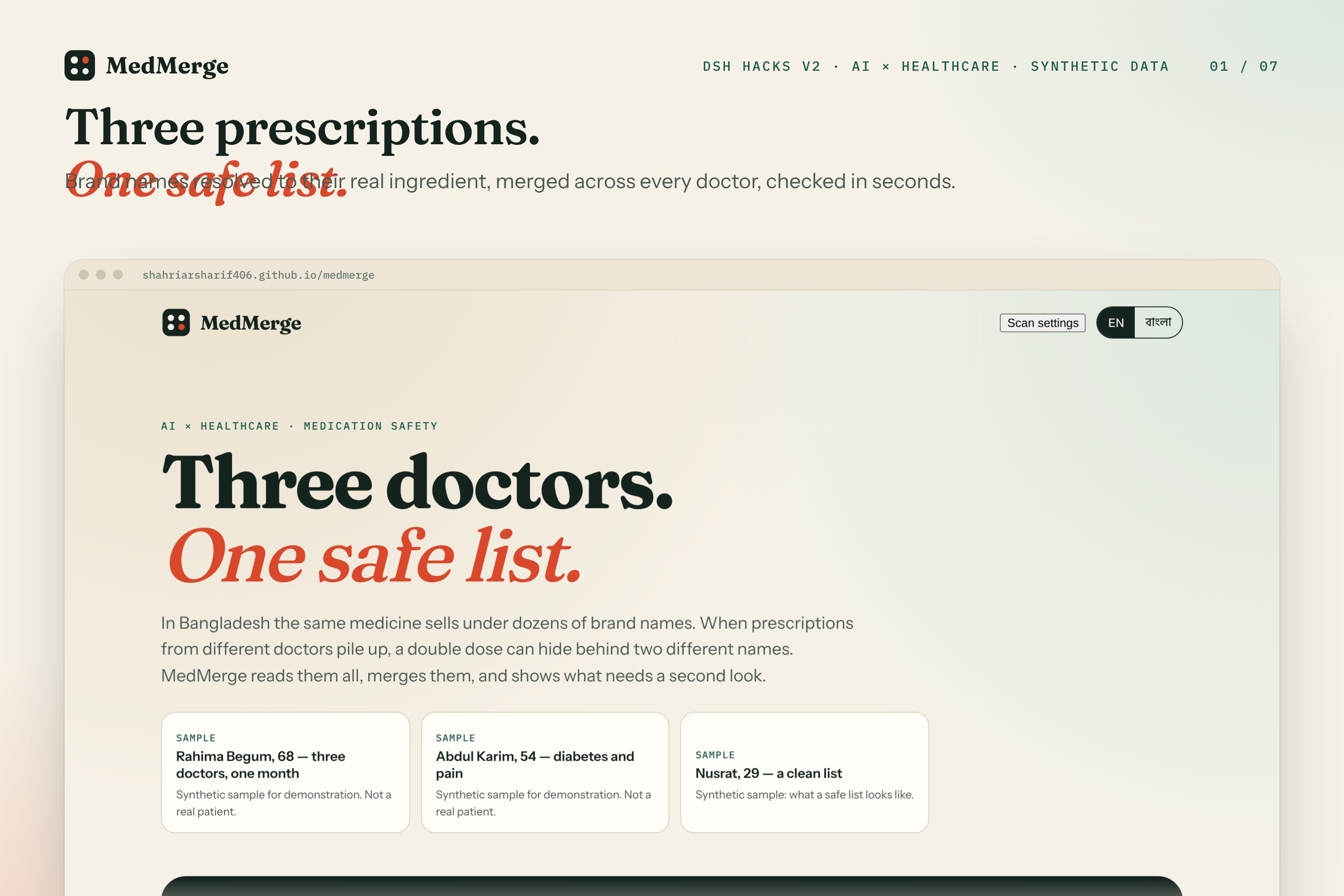
Everywhere in the world, one medicine is sold under many brand names. In Bangladesh, where we started, Napa and Ace are both paracetamol, and Seclo and Losectil are both omeprazole. A patient who sees three doctors in a month ends up with three prescriptions and nobody comparing them, so a double dose can hide behind two different names. The same problem exists wherever brand and generic names differ; we began with Bangladesh, where it is acute.
What it does
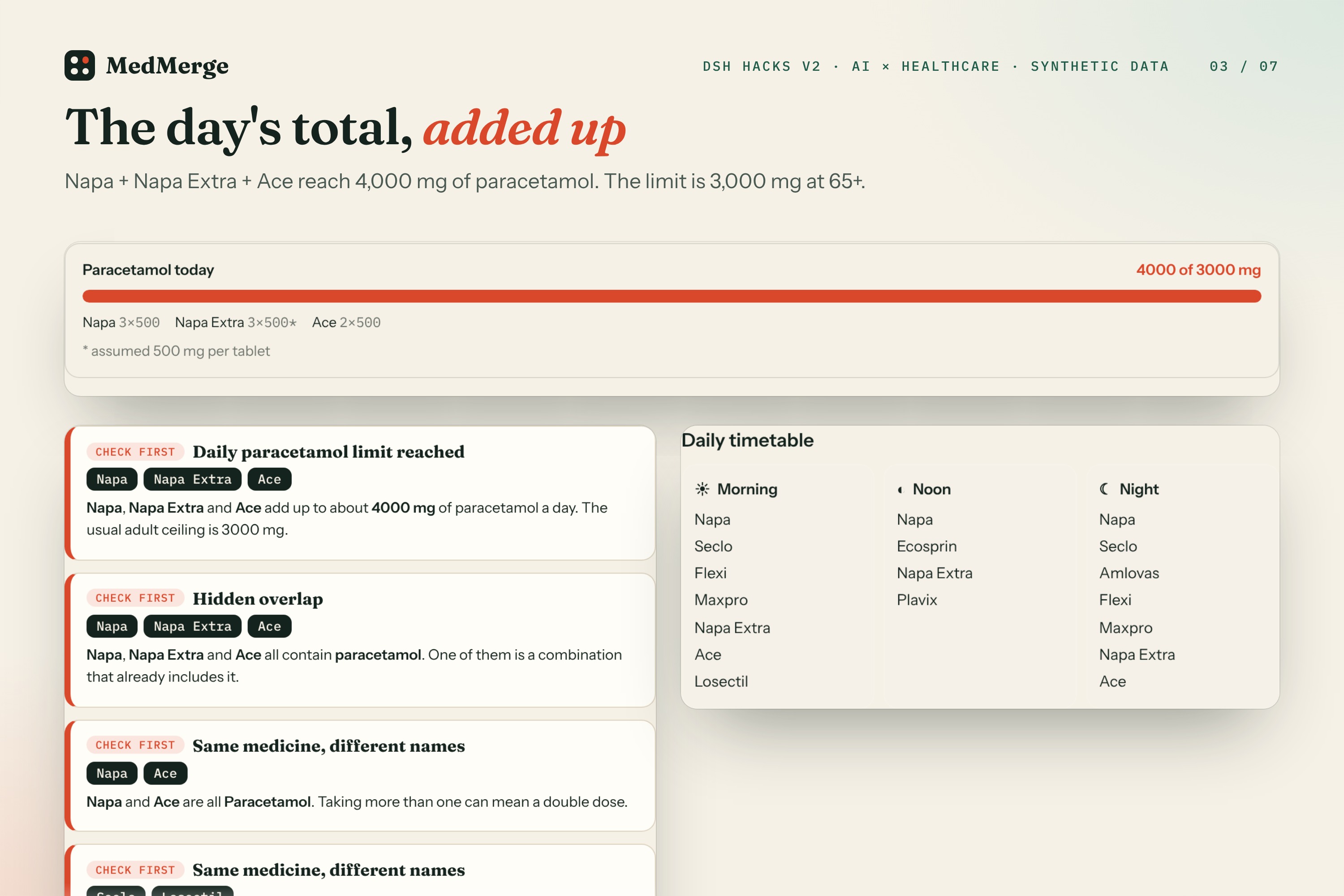
MedMerge takes prescriptions (typed, or a photo scanned with Gemini), turns every brand into its active ingredient, merges them into one list, and flags what needs a second look:
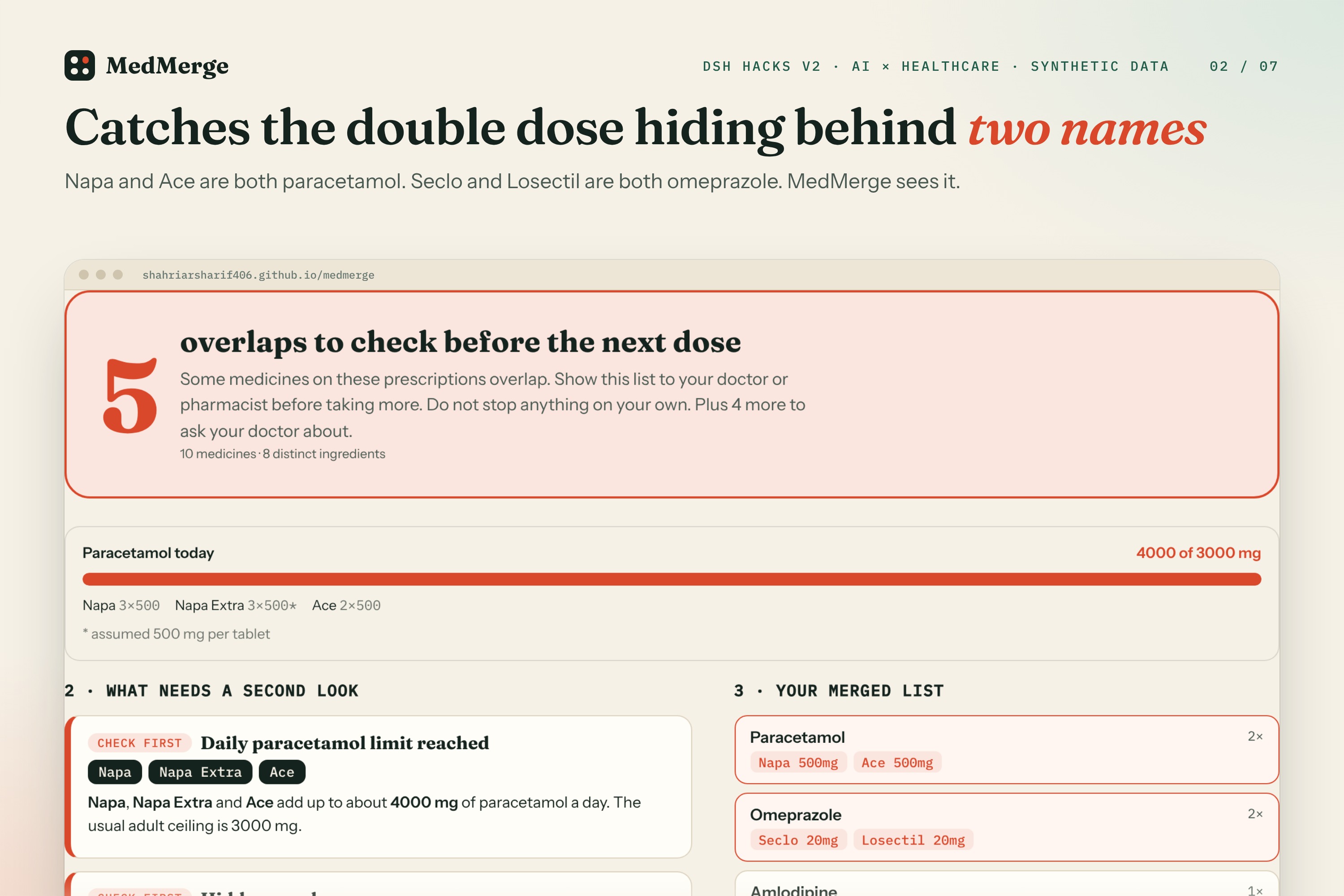
- the same medicine under two names, and hidden overlap inside combination medicines (Napa Extra contains paracetamol)
- two drugs of the same family, and interactions quoted word-for-word from the drug label summary
- a paracetamol meter that adds up the day's total across all prescriptions against the safe limit
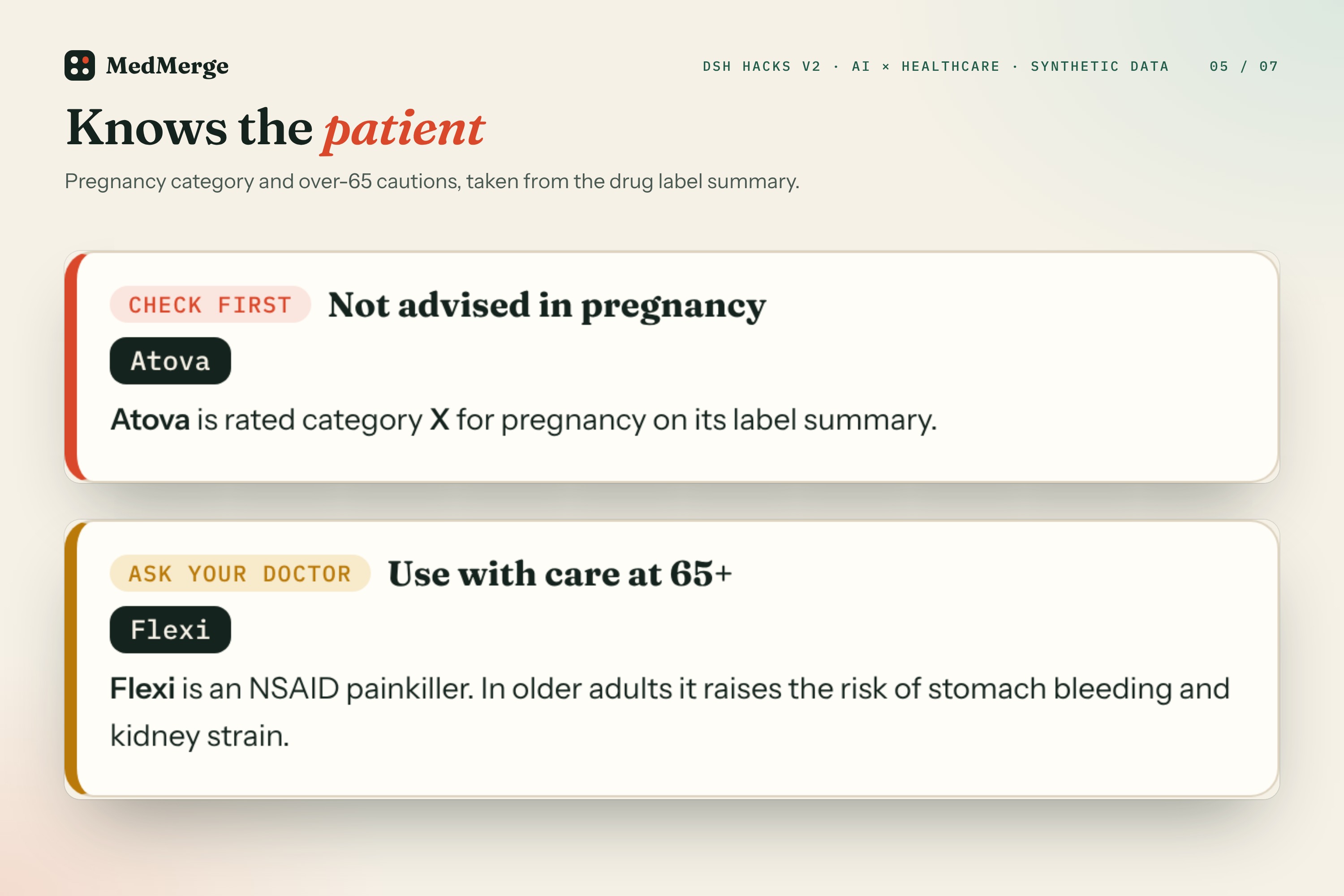
- patient checks: pregnancy category (D/X) and cautions at 65+
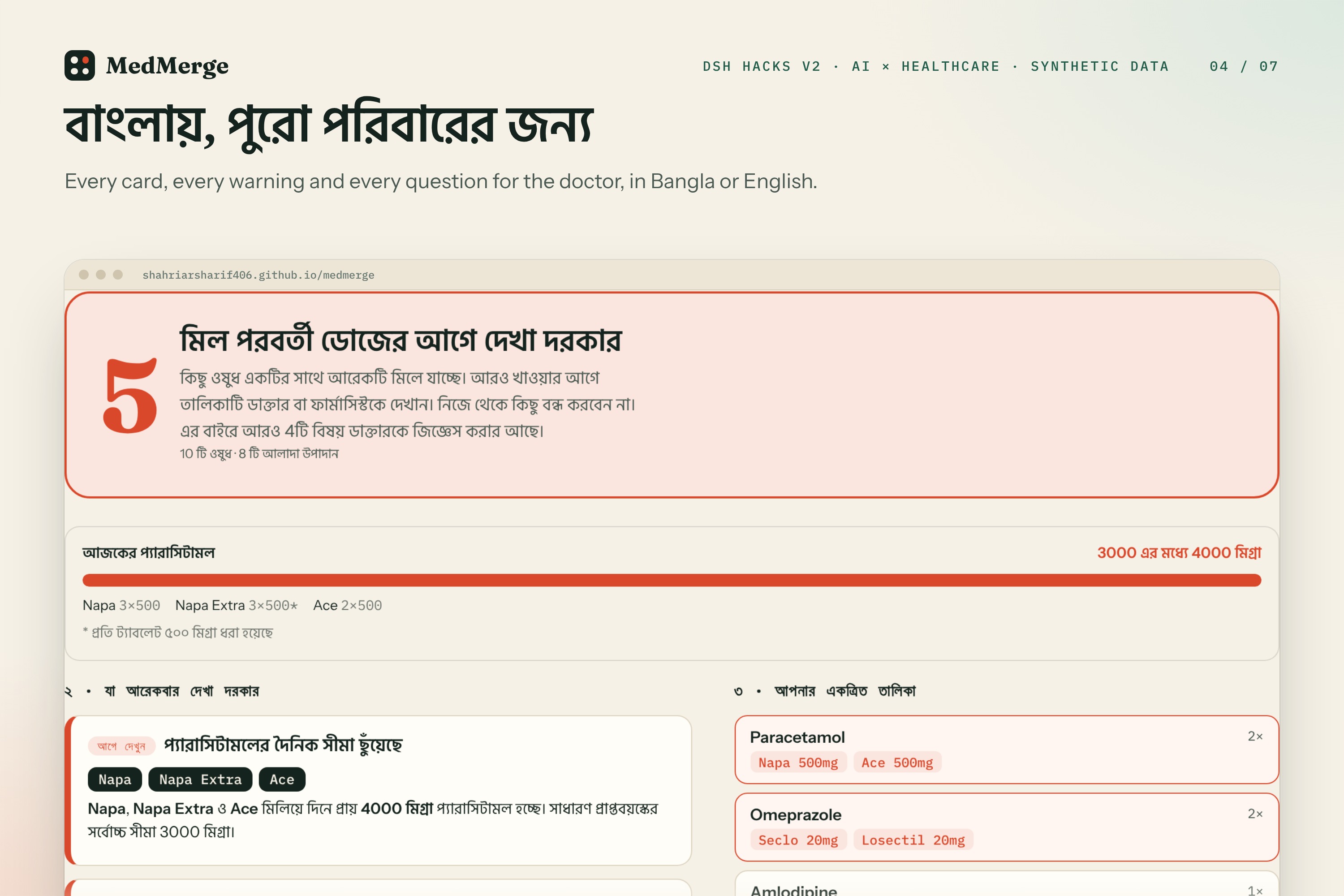
- a morning / noon / night timetable, read-aloud in Bangla or English, and one-tap copy for WhatsApp
- the questions to ask the doctor
Everything is in English and বাংলা.
How we built it
A pure-JavaScript engine (parser, brand-to-generic resolver with fuzzy matching for typos and OCR slips, then ingredient / class / label-text comparison), unit-tested in Node, plus a bilingual single-page UI. The engine is country-neutral; its data today is 12,000+ Bangladeshi brands from the MIT-licensed wsayan/medicinedb. Photo scanning calls Gemini 2.5 Flash straight from the browser with the user's own key. It runs fully client-side, with no server and no stored patient data.
Challenges
Label text is free-form, so we only trust unambiguous class-level matches and always show the exact label sentence instead of paraphrasing it. We also group findings per problem, so a patient sees a handful of clear cards instead of fifteen pair warnings.
Accomplishments
A synthetic three-doctor case surfaces the hidden overlaps, a 4,000 mg paracetamol day and the questions to ask, all on one screen. A clean list correctly shows no alarm.
What we learned
Safety tools must say "ask your doctor", never "stop", and must show their source.
What's next
Support other countries by swapping in national drug data (for example RxNorm or openFDA), clinical validation with pharmacists, an offline mobile app, and a Bangla handwriting benchmark on public Bangladeshi prescription datasets.
Prototype, not medical advice. Interaction text comes from label summaries and is not clinically validated.
