-
-
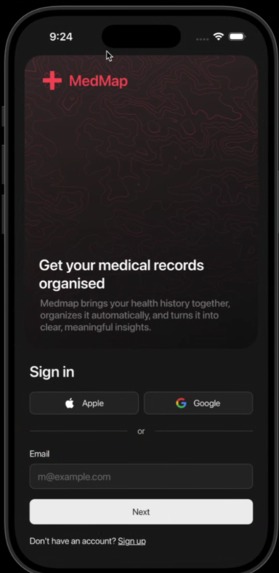
MedMap
-
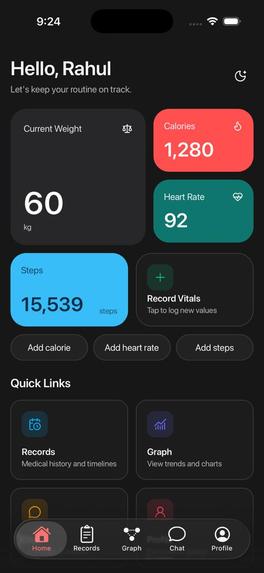
Home
-
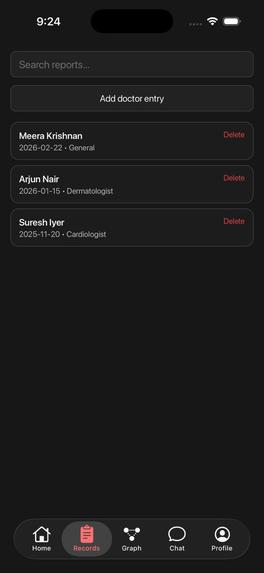
Medical records
-
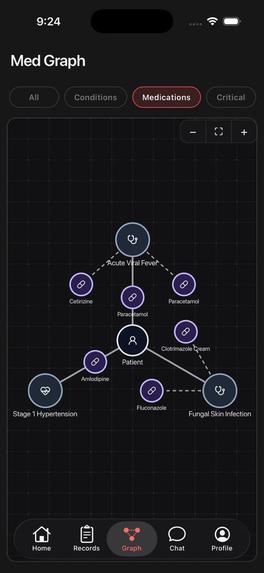
Medmap
-
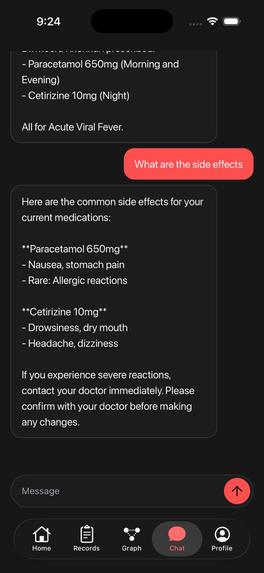
Medbot
-
-
MedMap
Inspiration
Healthcare is fragmented by design. The average patient sees multiple doctors across different hospitals, clinics, and specialties and nobody has the complete picture. We've all been in that moment: sitting in a doctor's office, being asked what medications we're on, and genuinely not knowing the full answer. That moment of uncertainty isn't just frustrating medication errors from incomplete history are the third leading cause of preventable death in the US. We built MedMap because that problem is solvable, and nobody should have to guess about their own health history.
What it does
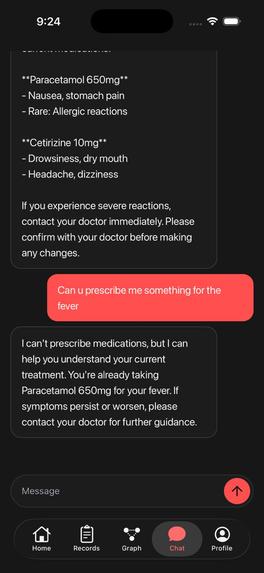
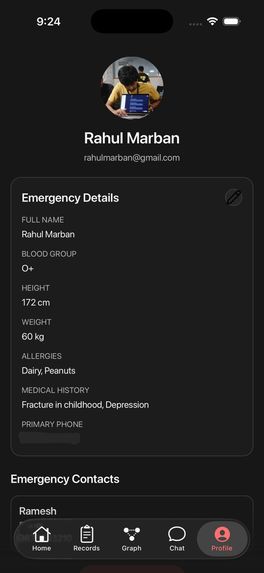
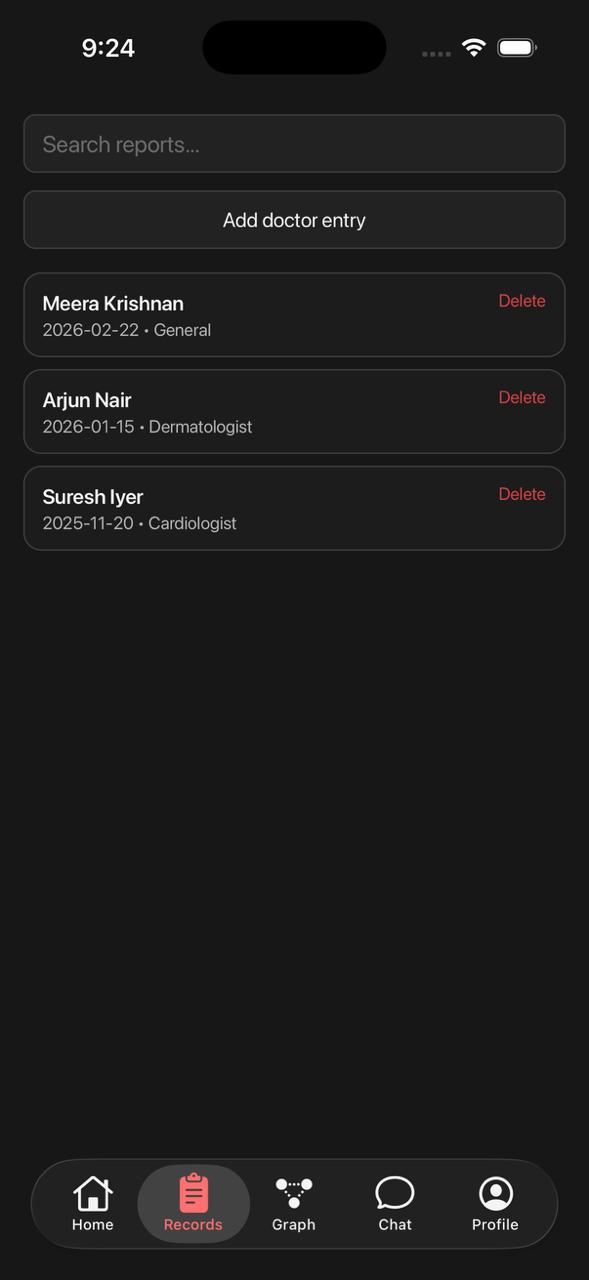
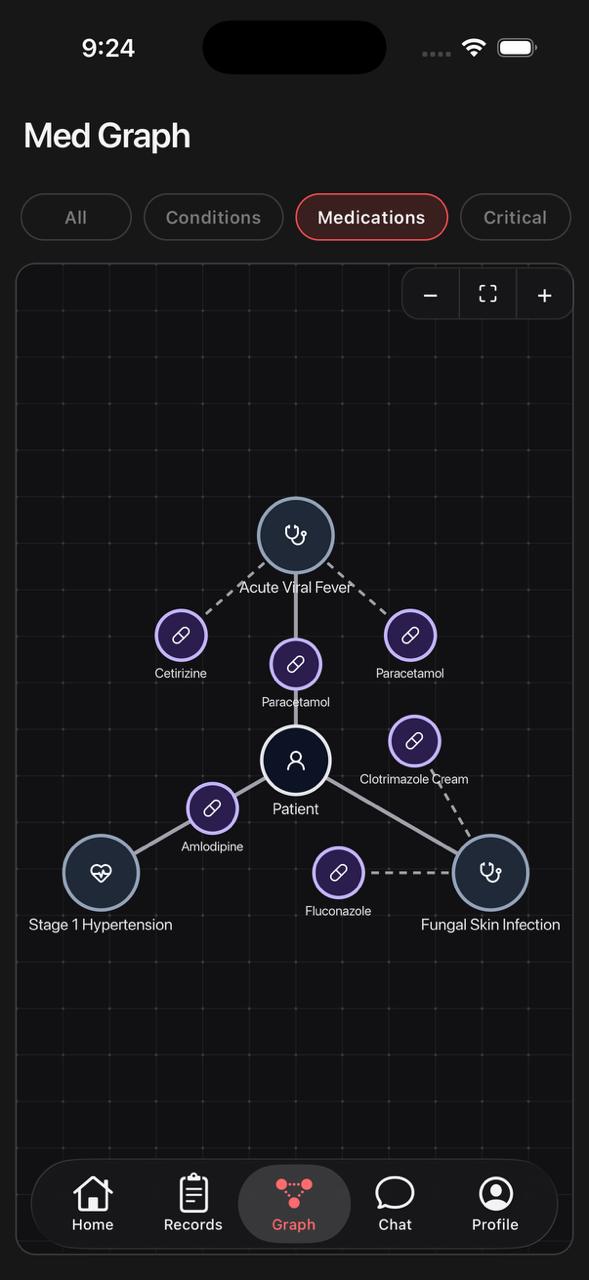
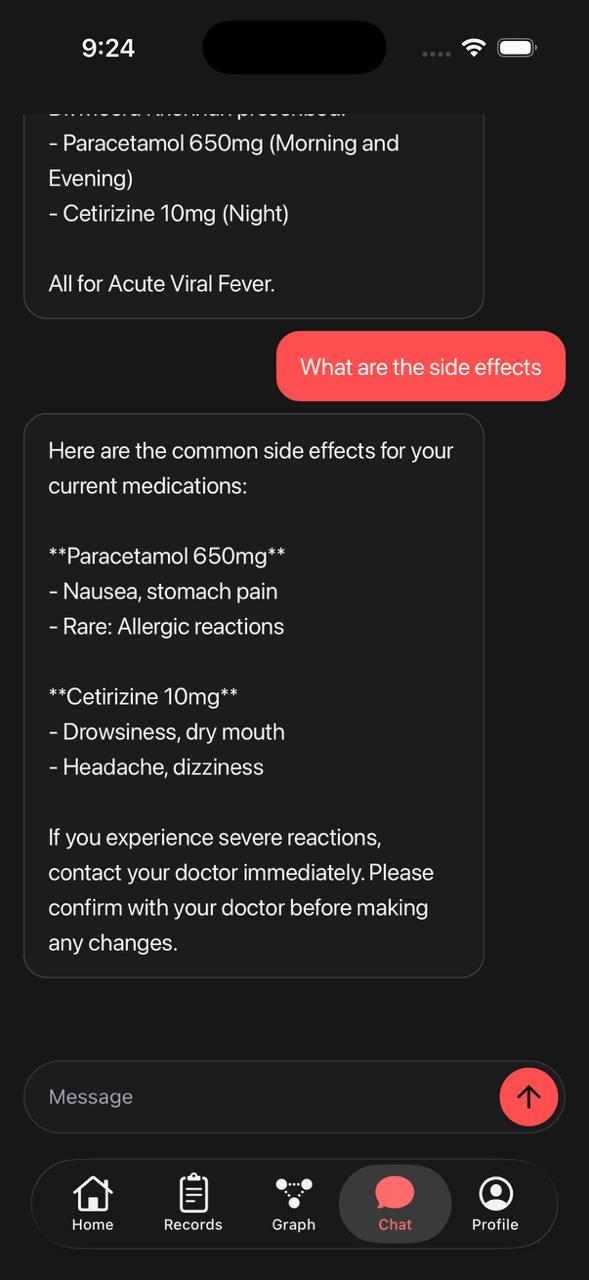
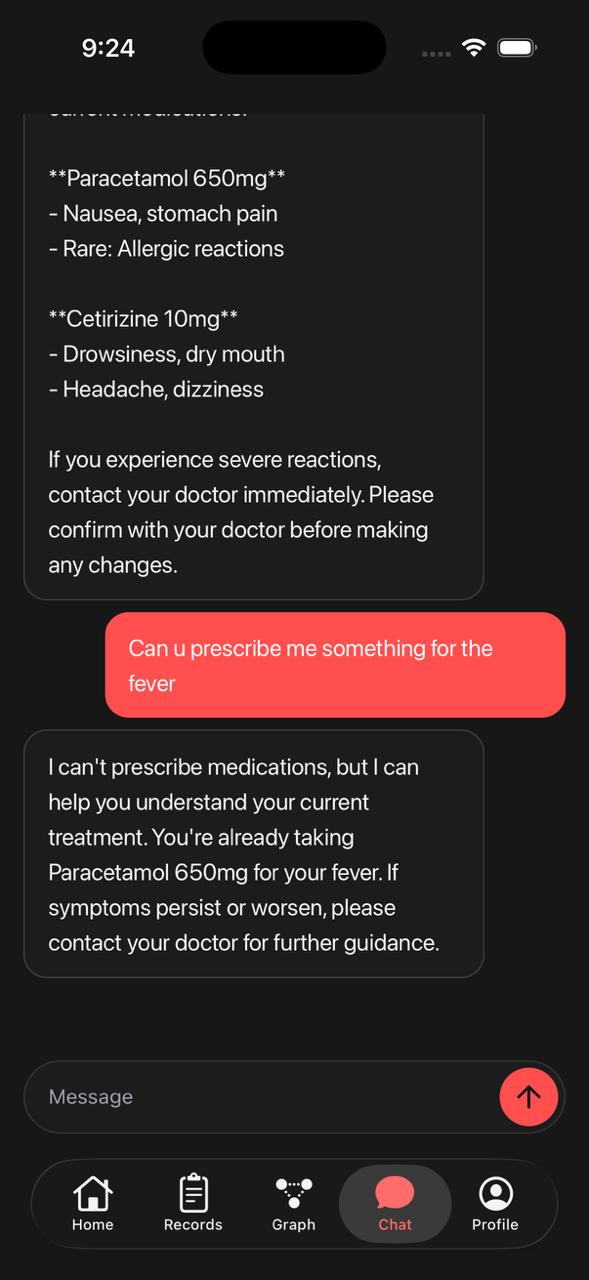
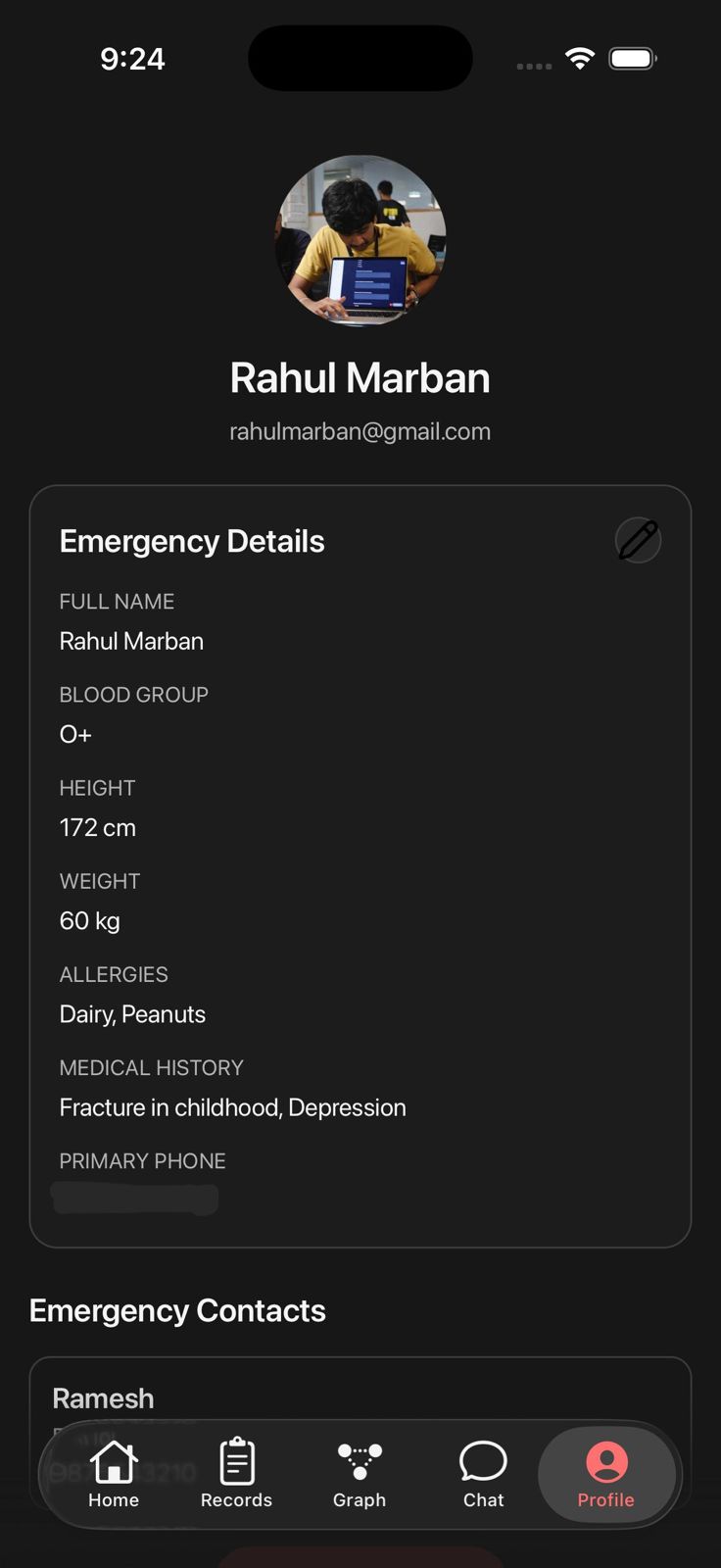
MedMap is a personal medical memory app. It stores your complete medication history, doctor visits, diagnoses, and prescriptions in one secure place. The core feature is MedBot an AI assistant that has full context of your medical records and can answer questions like "what did I take last time I had a cold?", "do any of my current medications interact?", or "prepare a summary for my cardiologist tomorrow." It turns passive health data into an active, conversational tool you can use before, during, and after every appointment.
How we built it
- React Native + Expo Router - cross-platform mobile app for iOS and Android
- Supabase - encrypted Postgres backend storing profiles, medications, doctor visits, and vitals
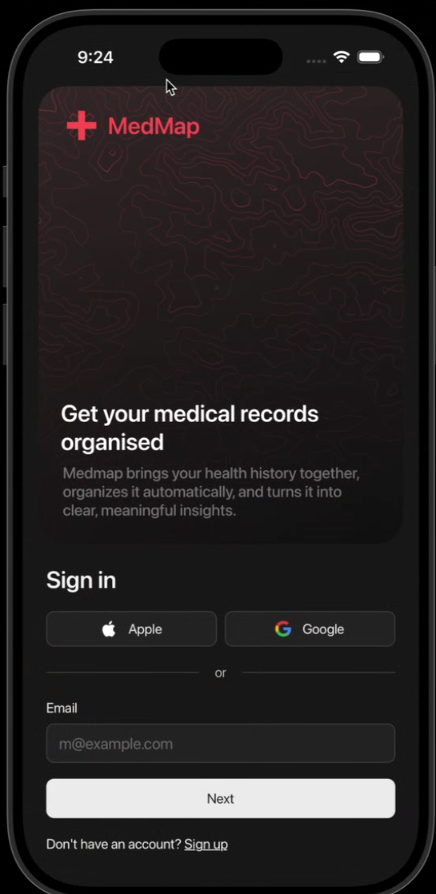
- Clerk - secure authentication and user session management
- React Native Skia - smooth native graphics and UI rendering
- OpenRouter + Arcee Trinity - AI layer that receives the user's full medical context as a system prompt and answers health questions with precision
The AI architecture works by fetching the user's complete Supabase records at session start, building a structured context string, and injecting it into every prompt so MedBot always answers from the user's actual data, not generic knowledge.
Challenges we ran into
We hit instability with free AI model availability on OpenRouter several models we planned to use went offline mid-build, forcing us to adapt quickly. On the database side, getting Supabase Row Level Security right so users could only ever access their own medical data required careful policy design under time pressure.
Accomplishments that we're proud of
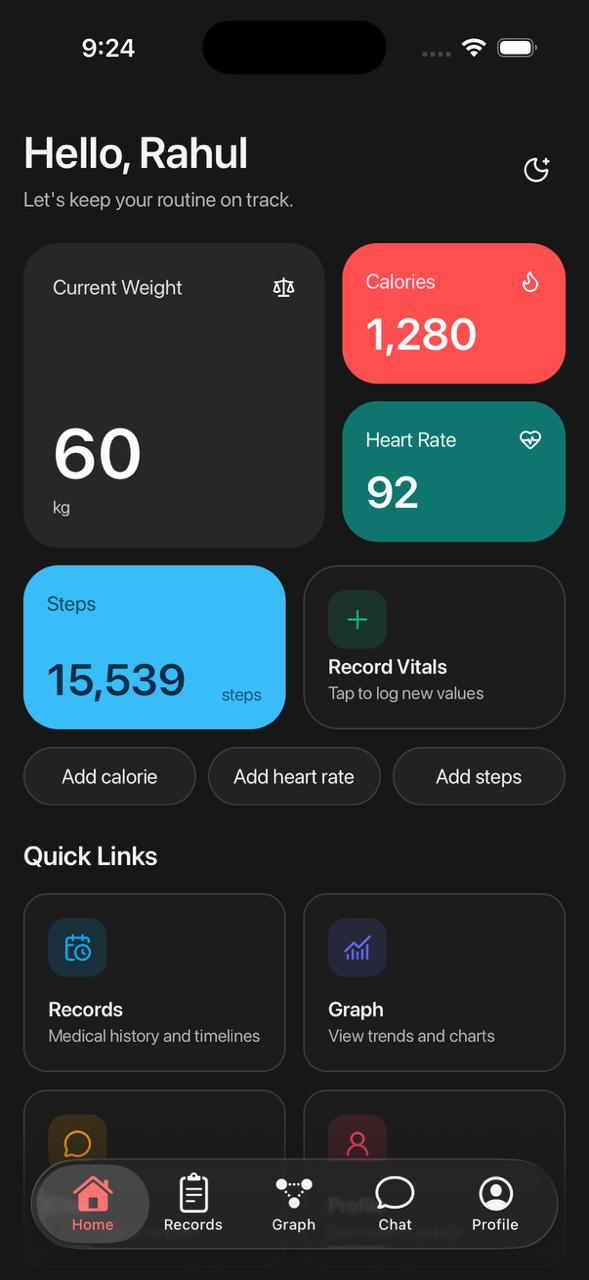
Getting MedBot to answer questions from real user data not hardcoded responses, not generic medical advice, but actual personalised answers from the patient's own history - felt like the moment the project became real. We're also proud of the UI: a glassmorphic style interface that makes something as clinical as medication tracking feel approachable and modern.
What we learned
React Native's networking limitations are real and require different architectural decisions than web. Free AI model tiers are unreliable for anything time-sensitive - stability matters more than capability when you're building under pressure. And perhaps most importantly: the hardest part of building a health app isn't the tech - it's designing something people would actually trust with their most sensitive information. Every decision from auth to data schema to AI scope was made with that trust in mind.
What's next for MedMap
- Medication reminders - push notifications for doses based on frequency and schedule
- Doctor sharing - generate a shareable encrypted summary a patient can send to any doctor before an appointment
- Vitals tracking - log blood pressure, glucose, weight over time with trend visualisation using the vitals table already in our schema
- Drug interaction alerts - proactive warnings when a new medication is added that conflicts with existing ones, powered by the RxNorm API
- Family accounts - let caregivers manage health records for elderly parents or children under one account
- Offline mode - local caching so MedBot can answer basic questions without internet, critical for users in low-connectivity areas
Built With
- clerk
- expo.io
- openrouter
- postgresql
- react-native
- supabase
- typescript


Log in or sign up for Devpost to join the conversation.