-
-
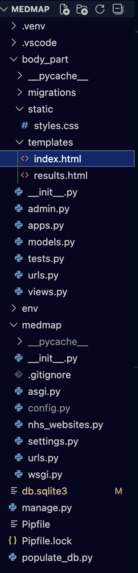
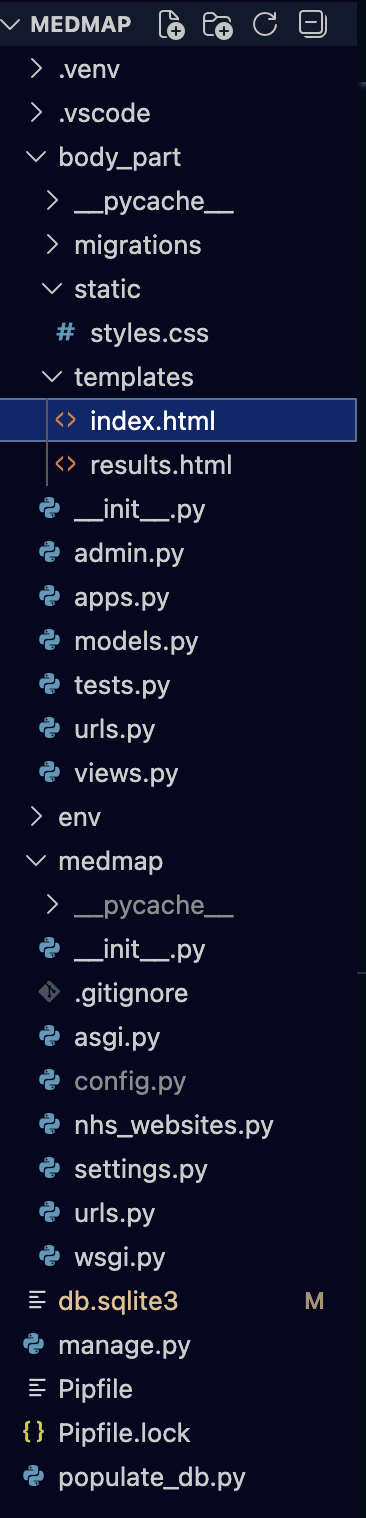
A screenshot of the file tree to show the set-up
-

Terminal, showing that Django is handing requests
-
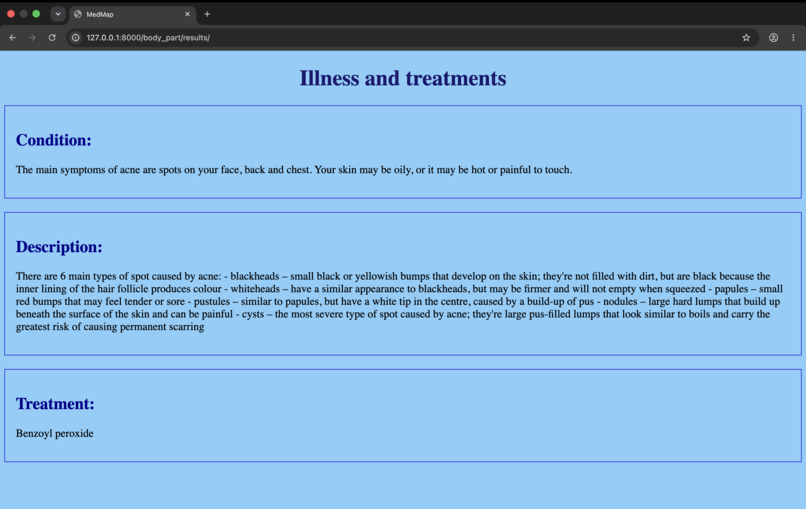
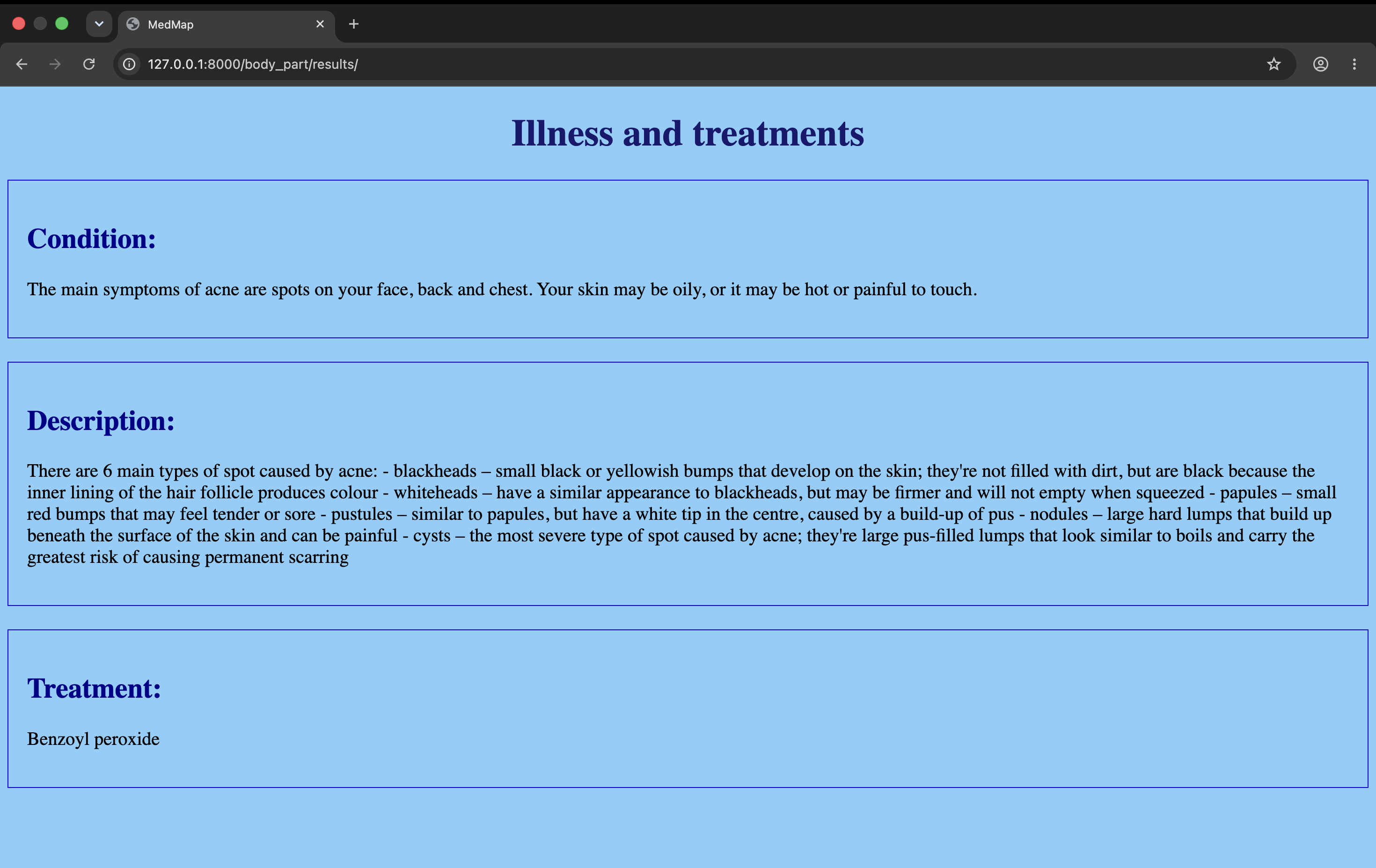
A screenshot showing the condition and a detailed description of it as well as the treatment.
-
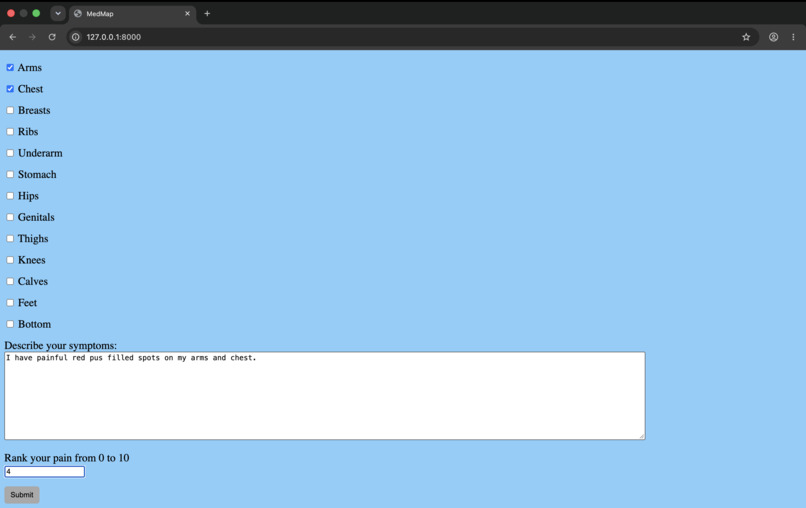
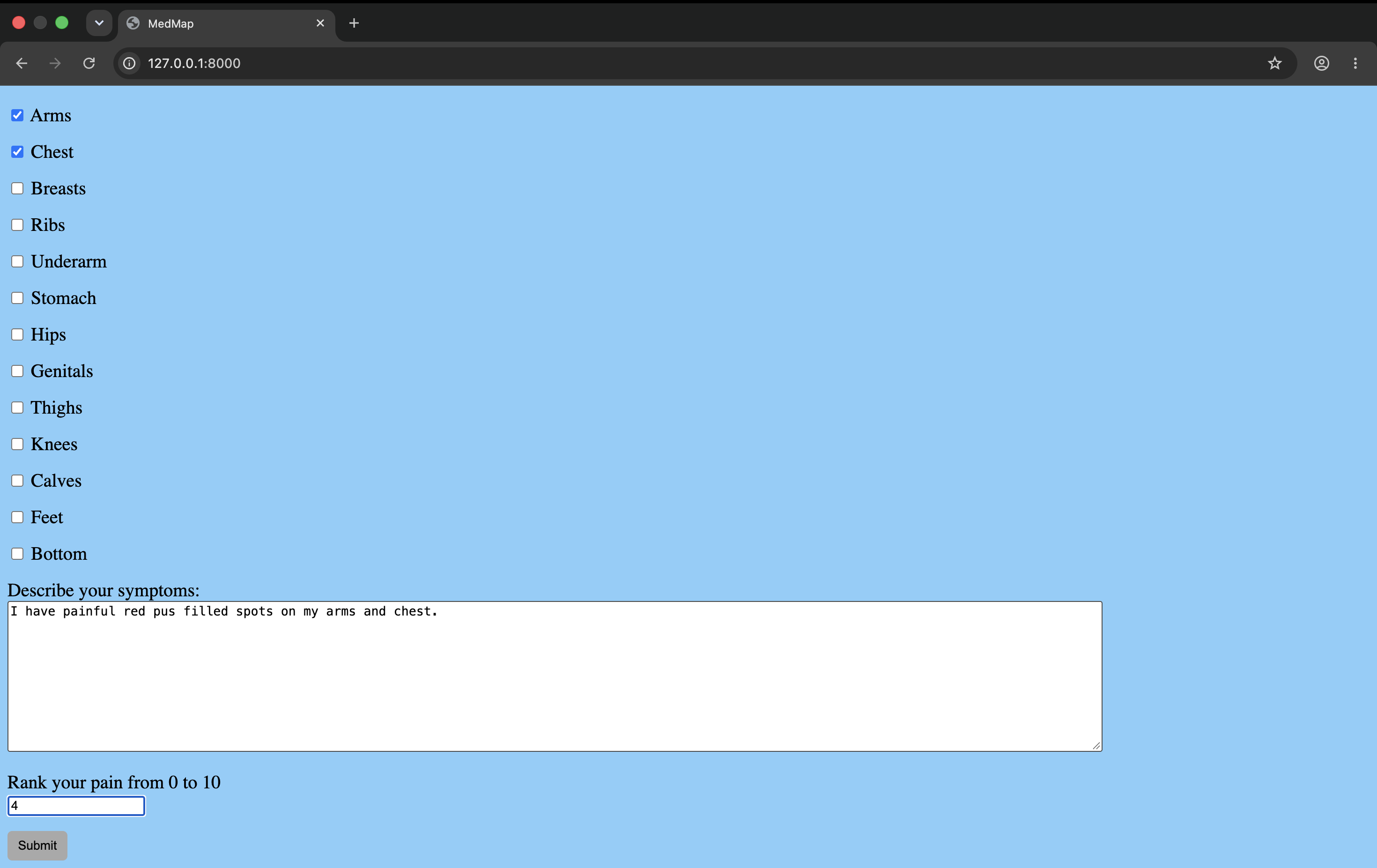
A screenshot showing the form on the home page being filled out
-
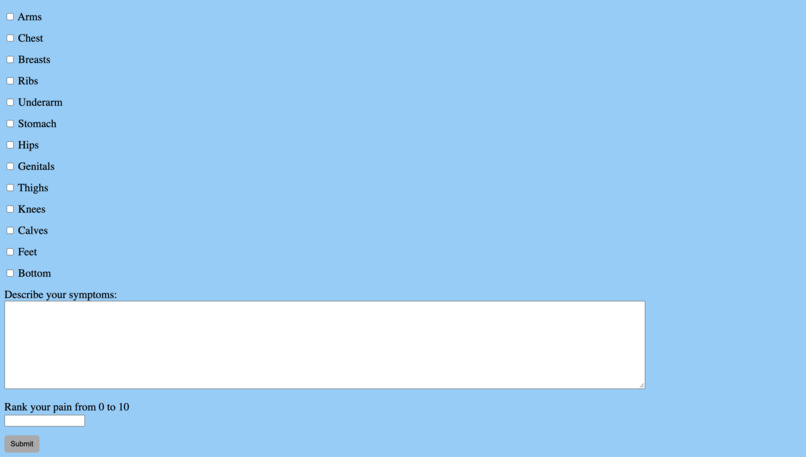
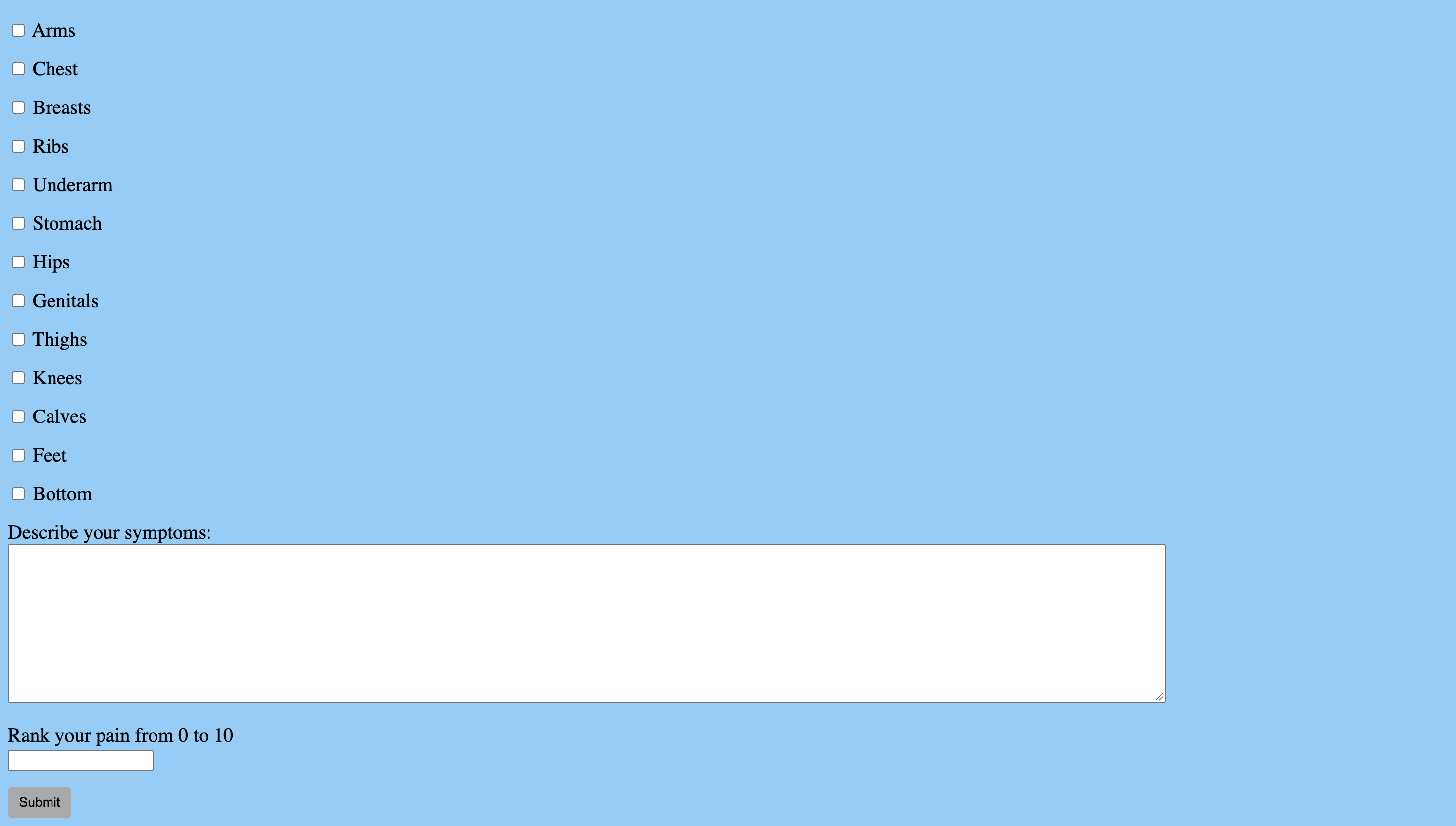
A screenshot of the bottom half of the empty form
-
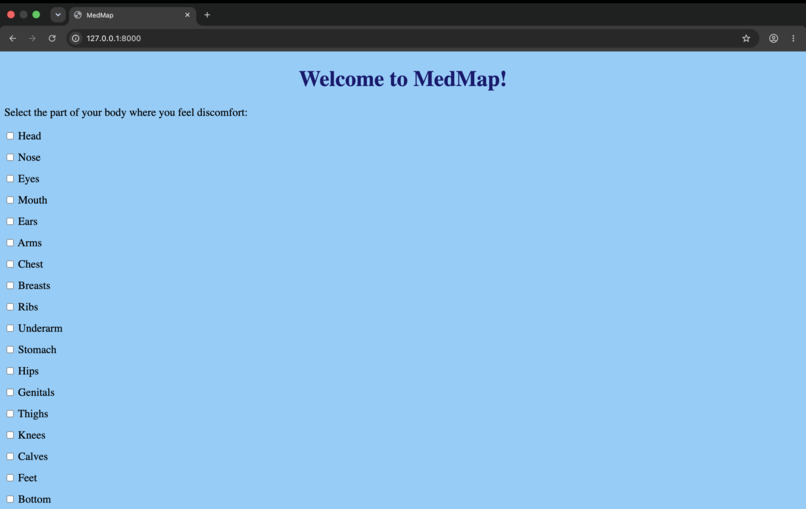
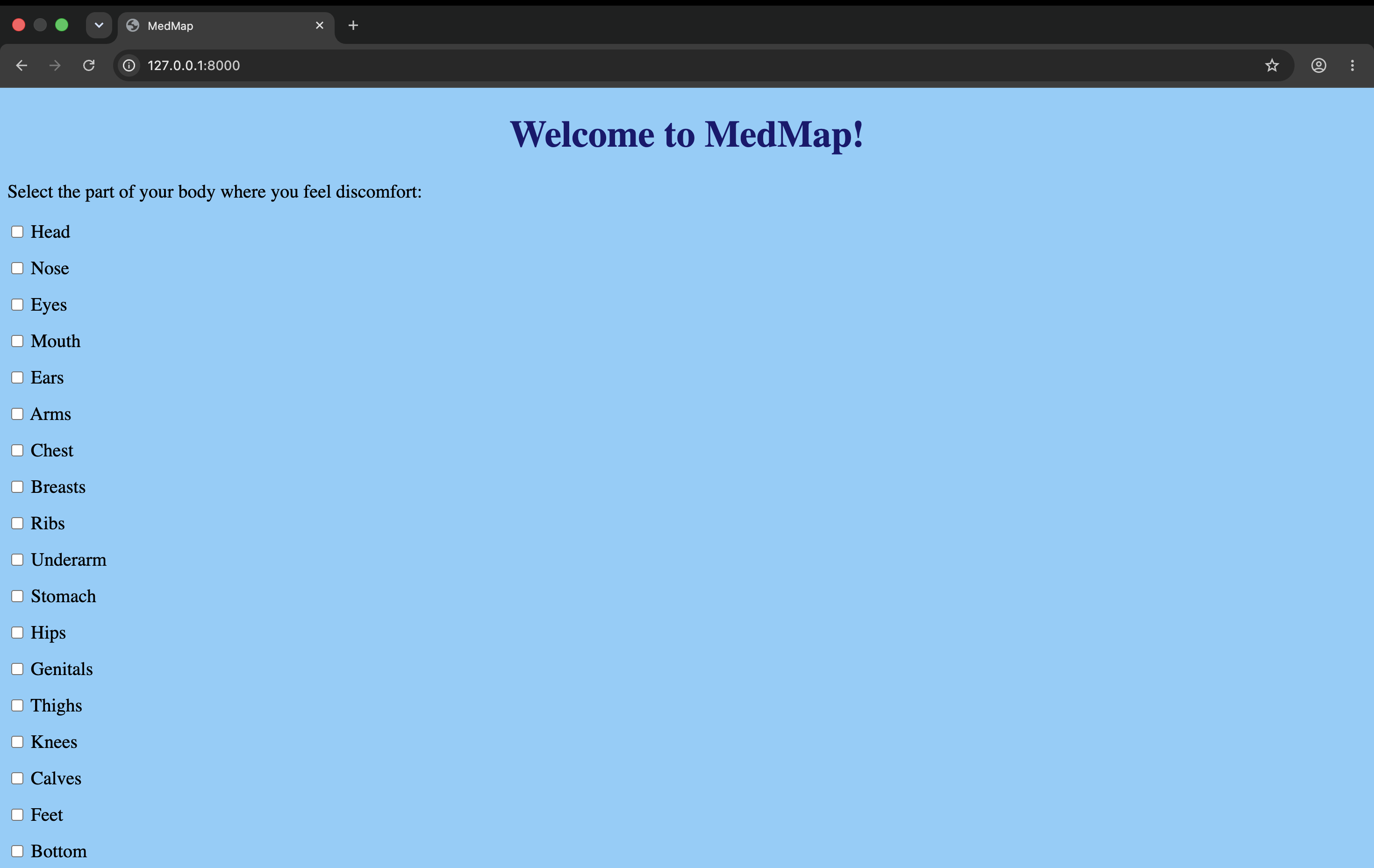
A screenshot of the top half of the empty form

Inspiration
Knowing that NHS waiting lists are very long, I made MedMap, so people can explain their symptoms and put a name to their illness. As well as that, they would be made aware of what treatments they can get rather than waiting to see the GP. Therefore, I am applying for the Hackathon Pathway.
What it does
MedMap is a triage web application that allows users to select affected body areas, rank their pain levels, and describe their symptoms. It uses AI to process the symptoms and queries the NHS Sandbox API to fetch structured clinical conditions, descriptions, and recommended treatments, saving all data securely in a SQLite database
How we built it
I built MedMap using Python and Django for the backend architecture, with a SQLite database handling data storage via custom models. I integrated the OpenAI API for symptom analysis and the NHS Sandbox API for health data. The front- end uses HTML5 and CSS for structured form group and responsive inputs.
Challenges we ran into
The main challenge that I struggled with was managing the NHS Sandbox API's placeholder responses and mapping it dynamically into my database models. Another challenge was resolving foreign key mapping errors between raw strings and database instances during form submissions.
Accomplishments that we're proud of
I was most proud of managing to implement a smooth AI-to-API pipeline that takes raw user inputs and outputs structured medial triage data.
What we learned
I learned how CSS is used to format forms and deepened my understanding of template tags. I learned how to effectively handle external API requests.
What's next for MedMap
My main goal for MedMap would be to transition from the NHS Sandbox environment to a fully live clinical endpoint for real world development to be more confident to push the web application from my local server on to a web server. I would also want to expand the database schema to handle multiple treatment recommendations per condition.

