-
-
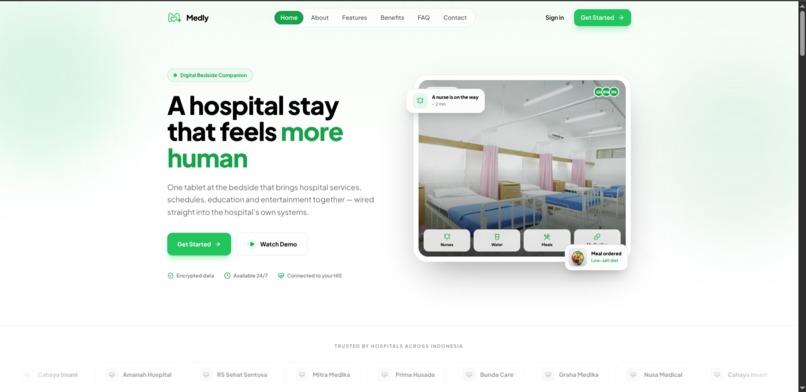
landing page
-
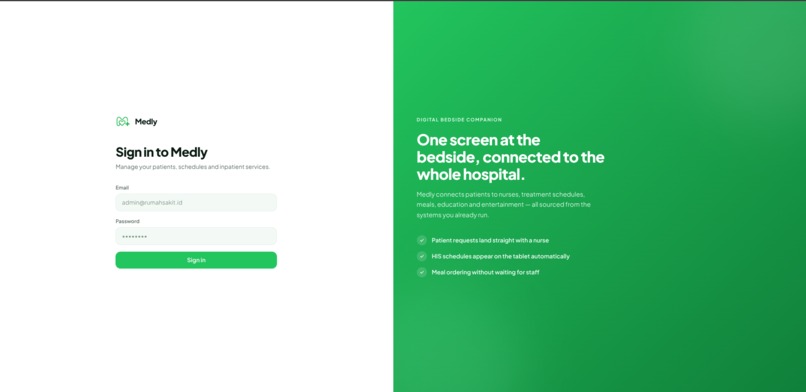
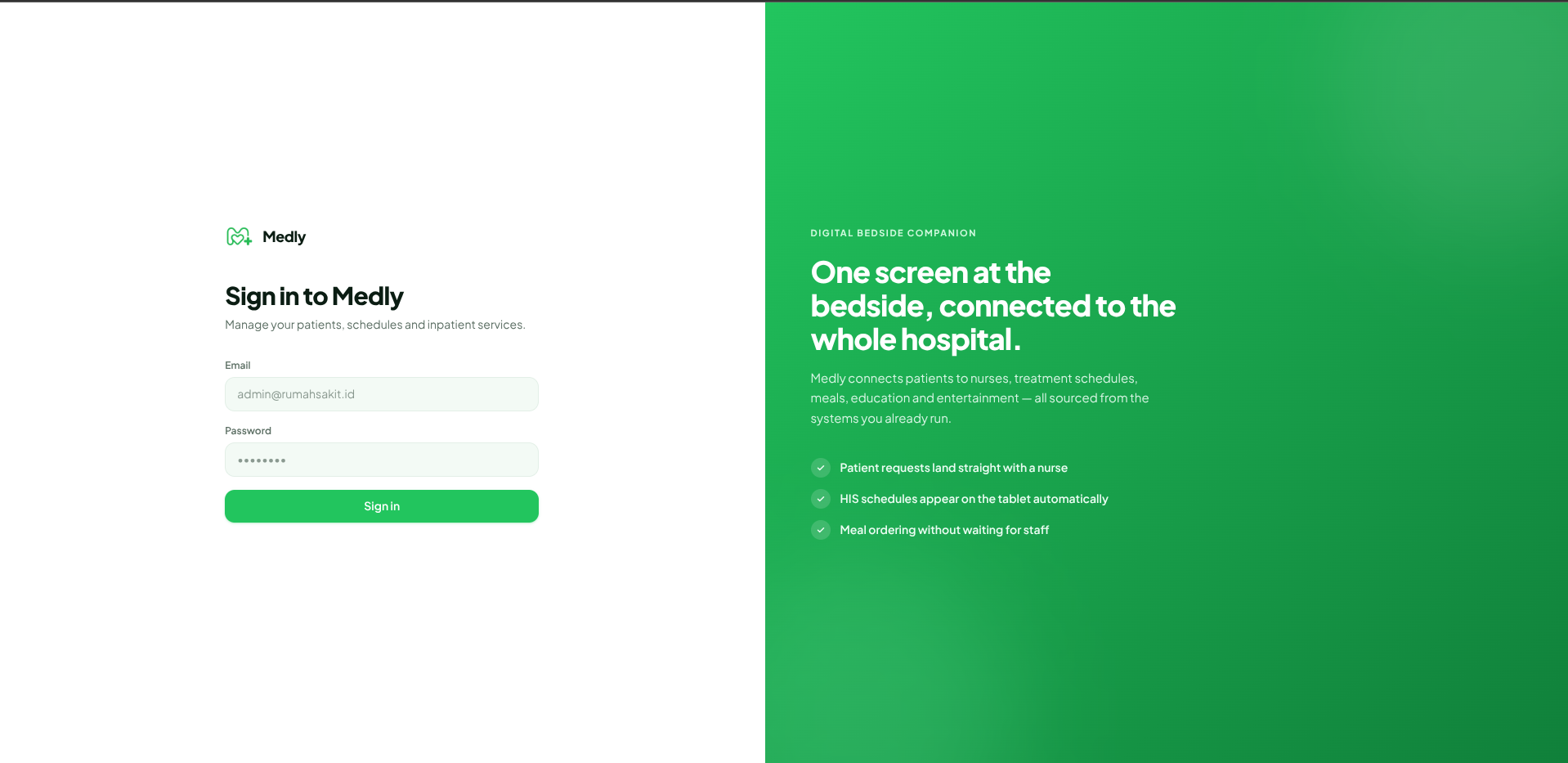
login page
-
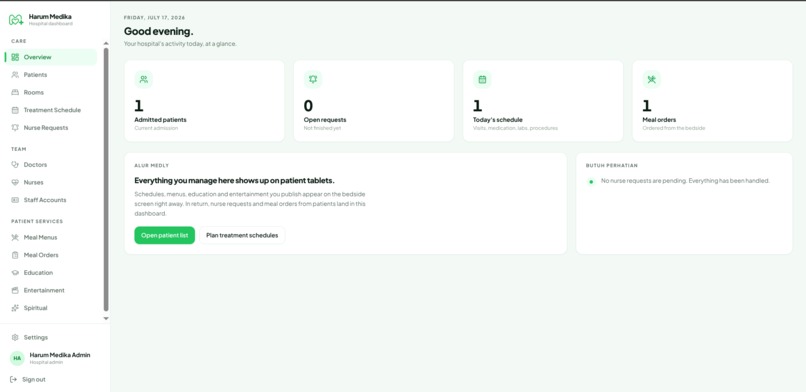
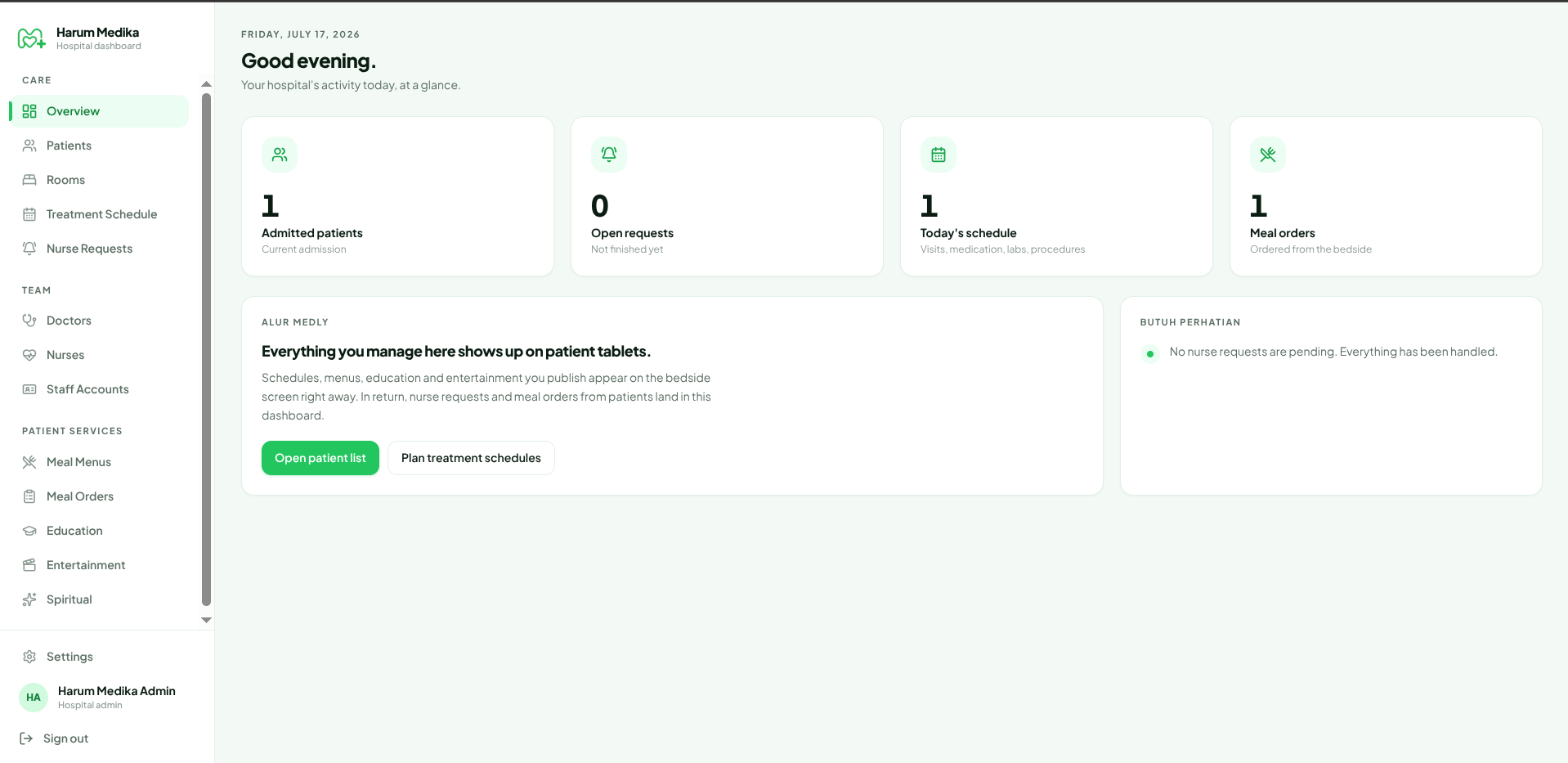
hospital dashboard
-
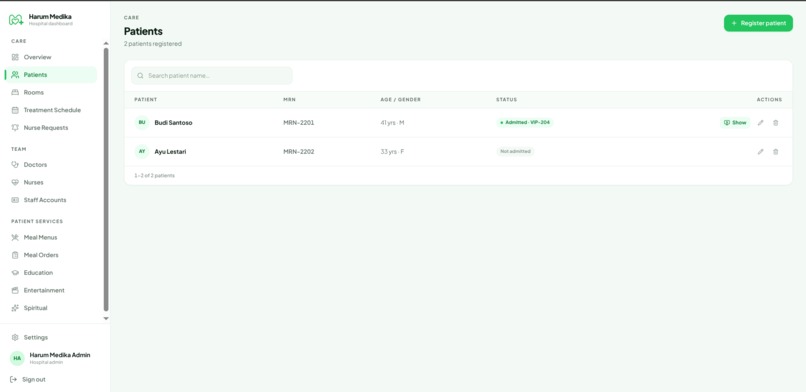
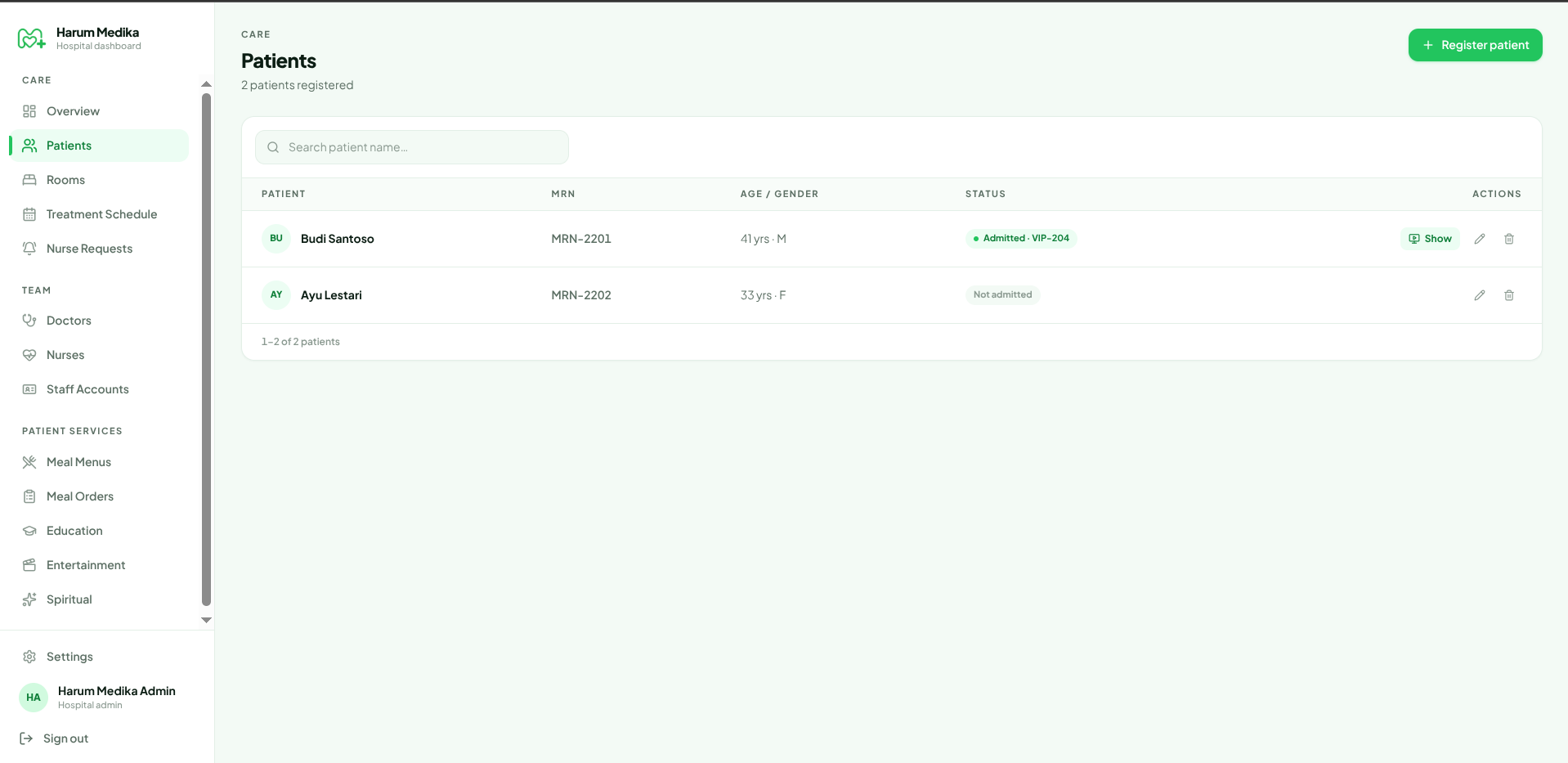
manage Patients
-
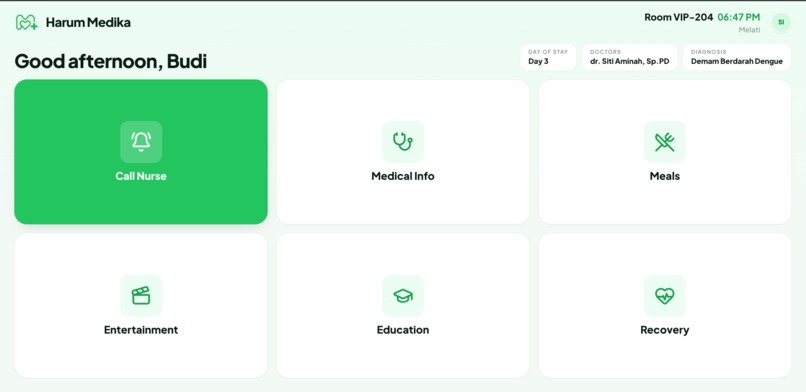
Patients page
-
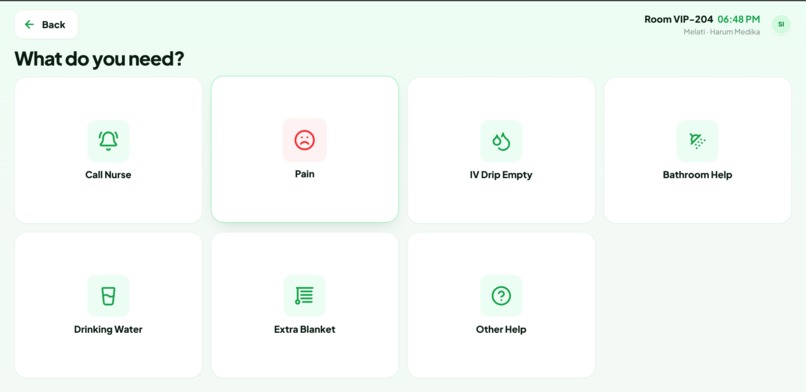
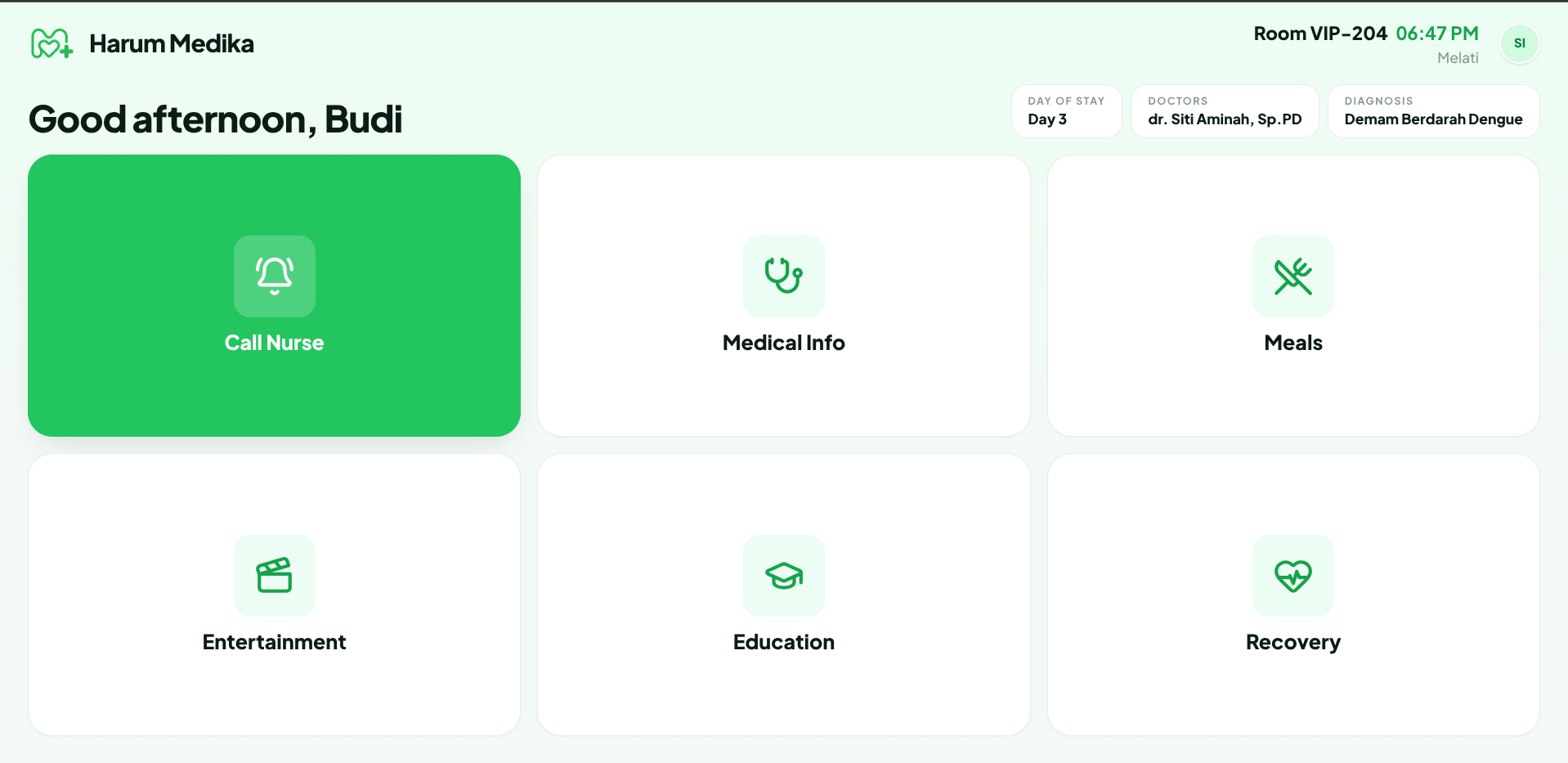
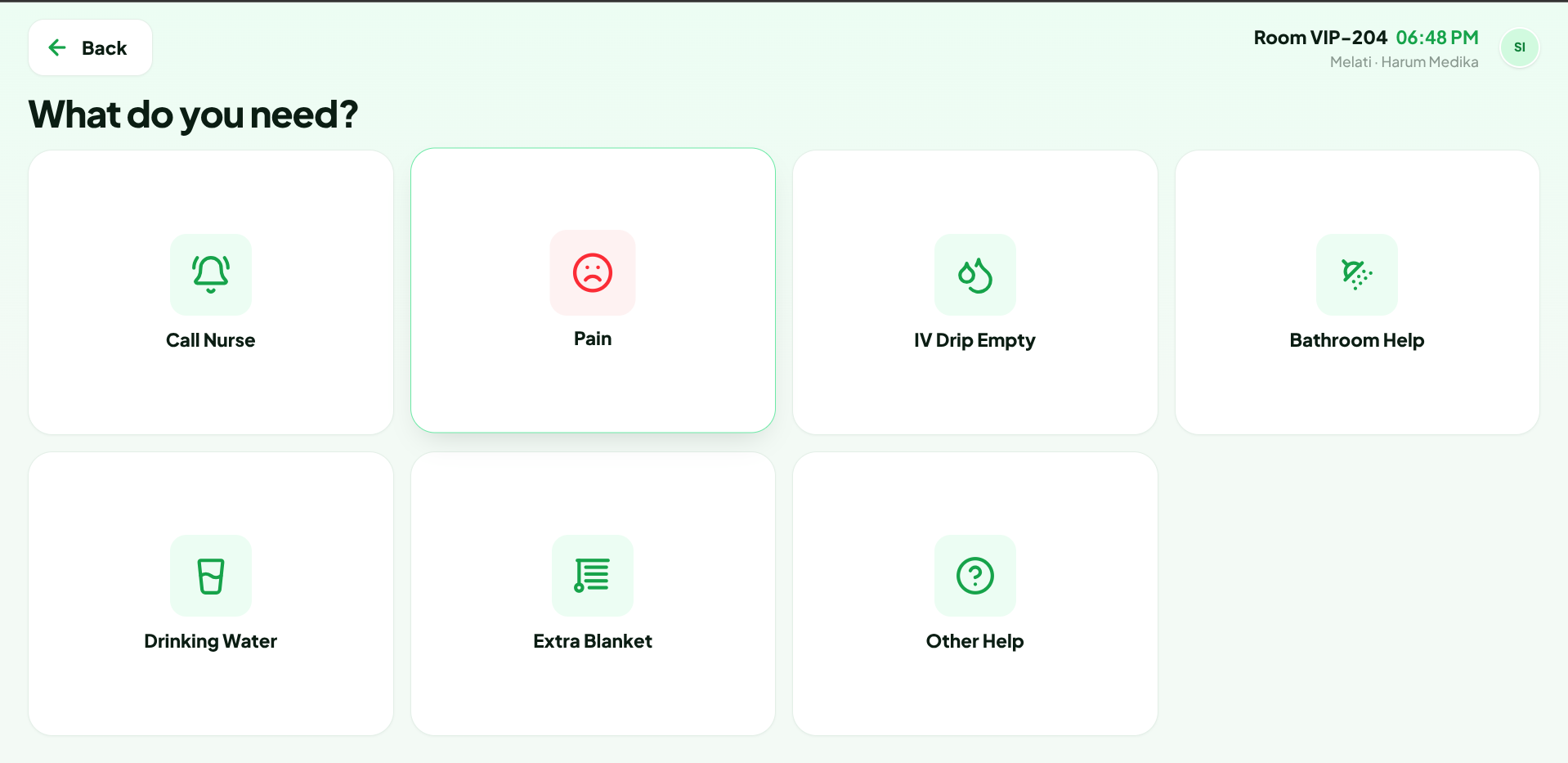
Patients page (Call Nurse)
-
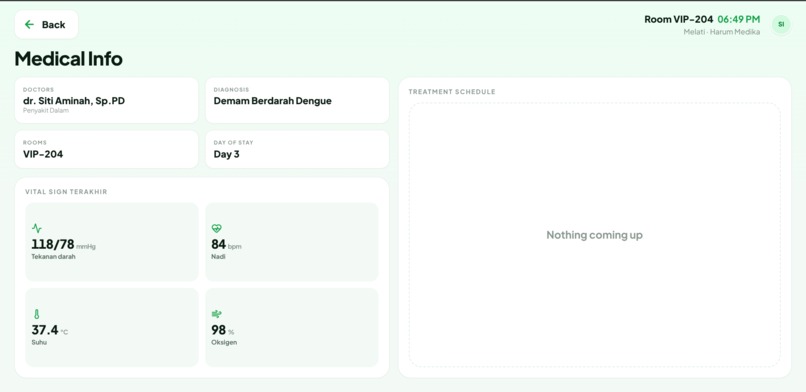
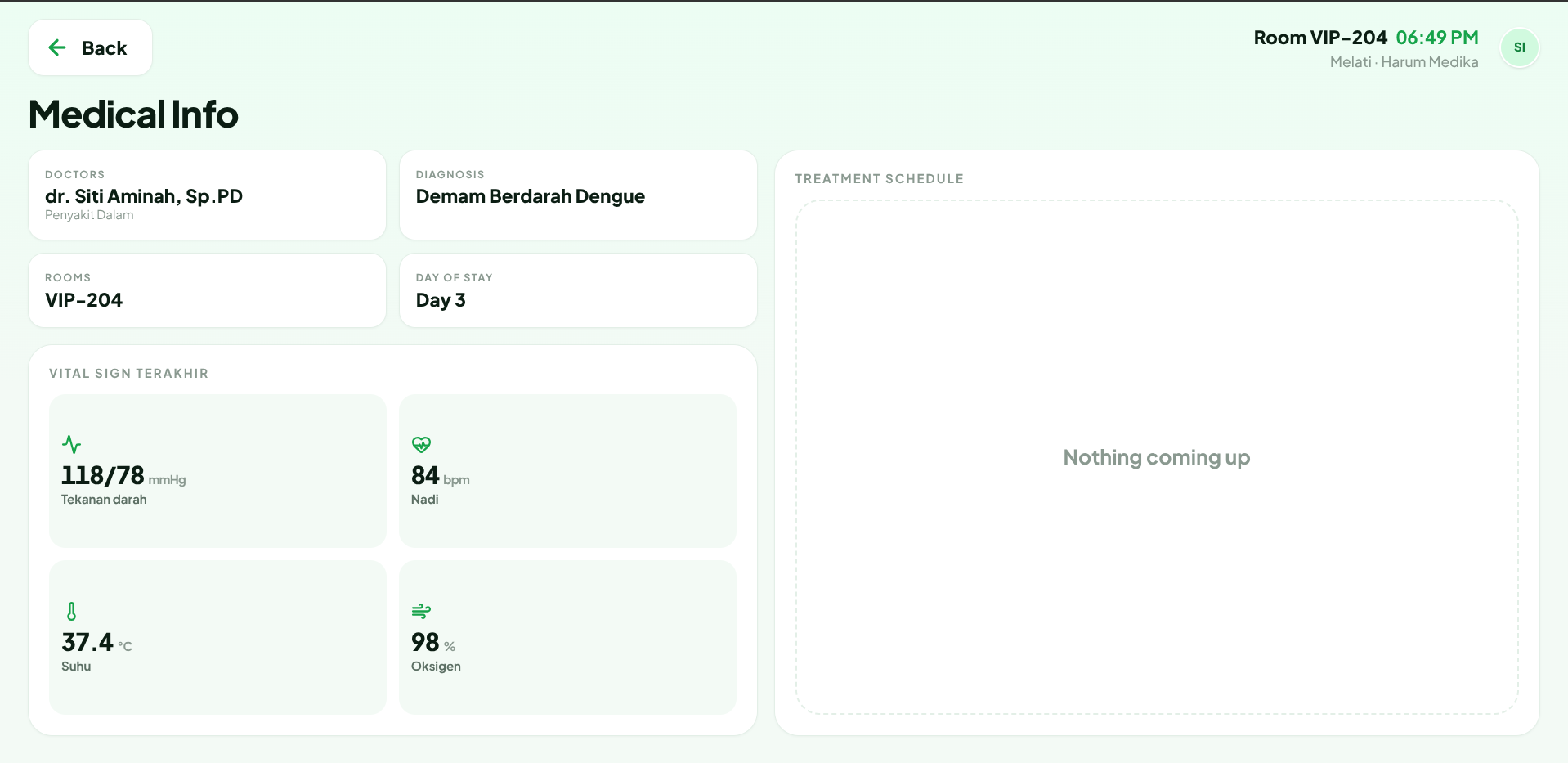
Patients page (Medical Info)
-
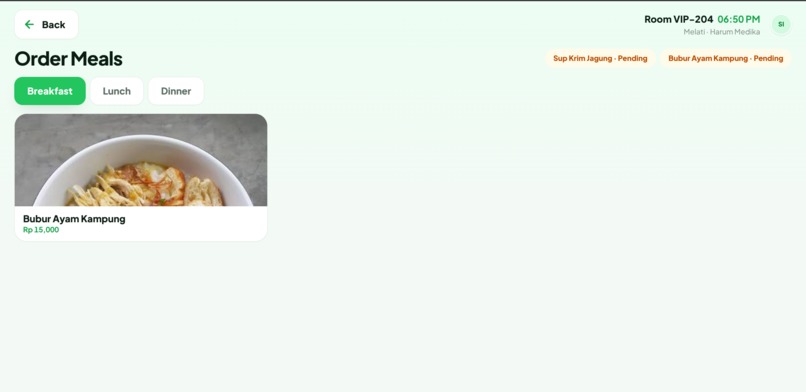
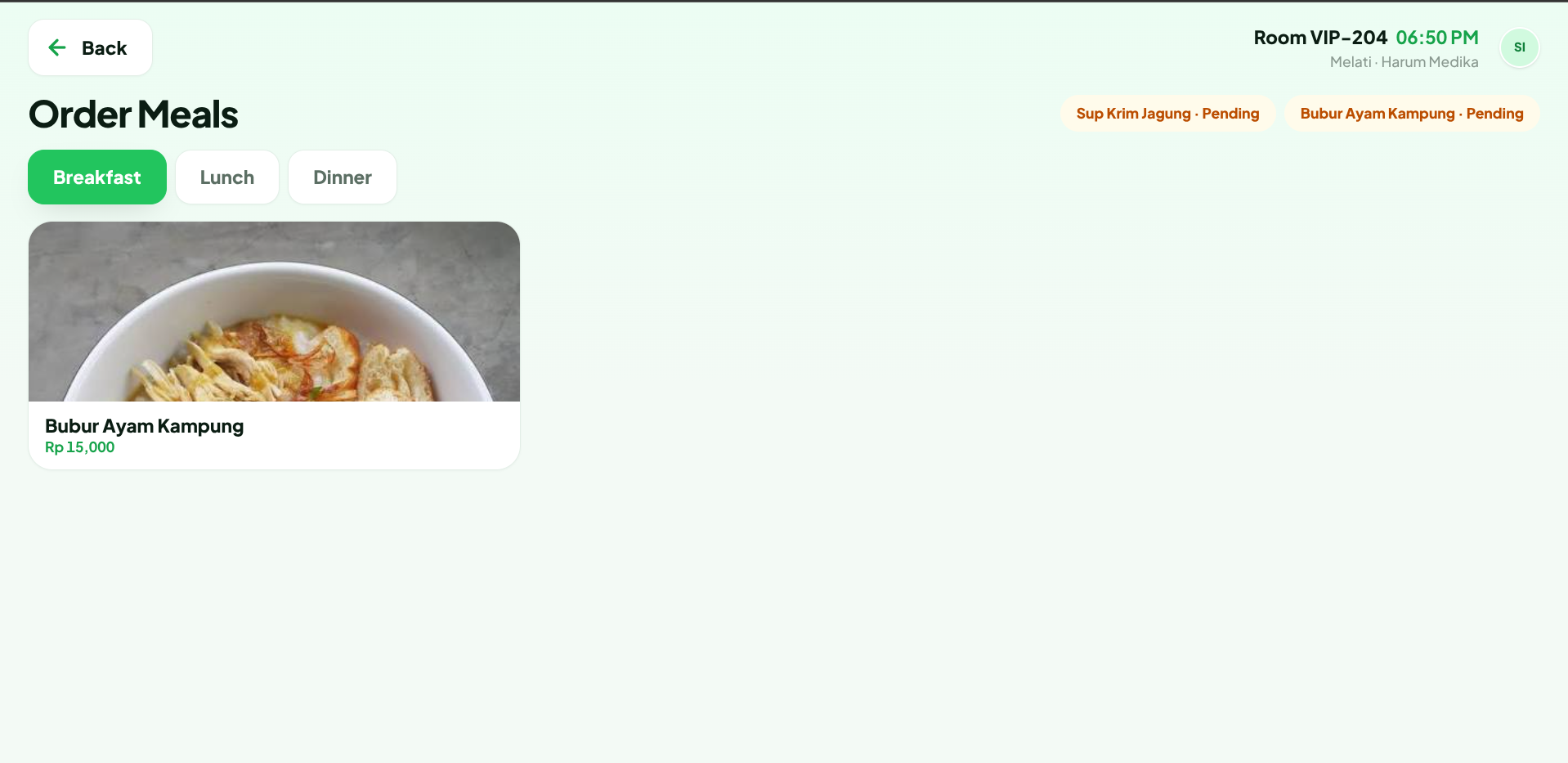
Patients page (Order Meals)
-
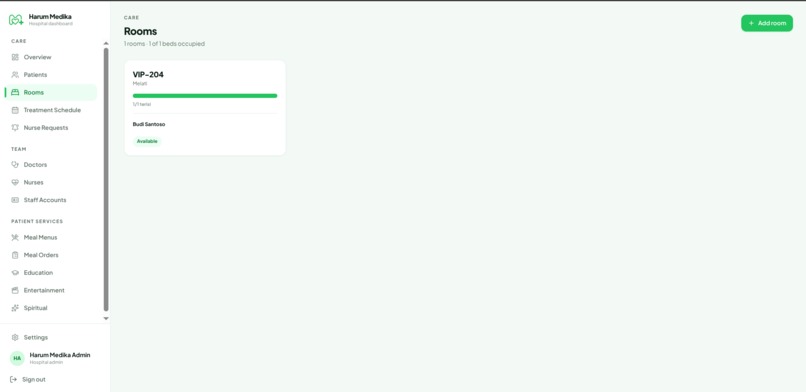
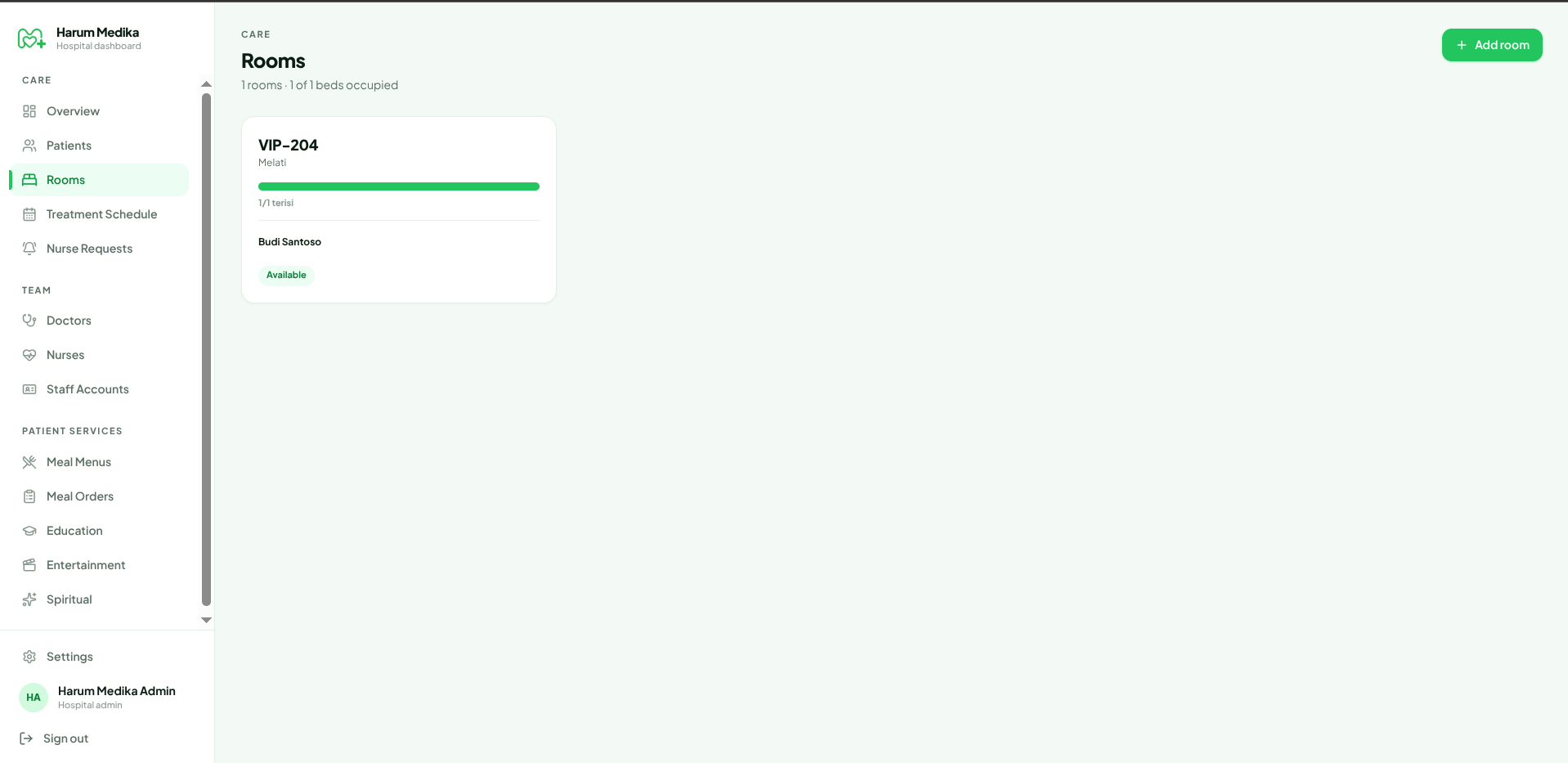
Manage rooms
-
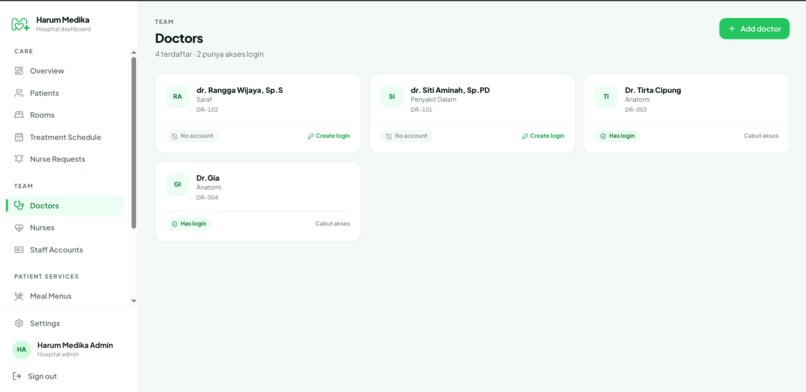
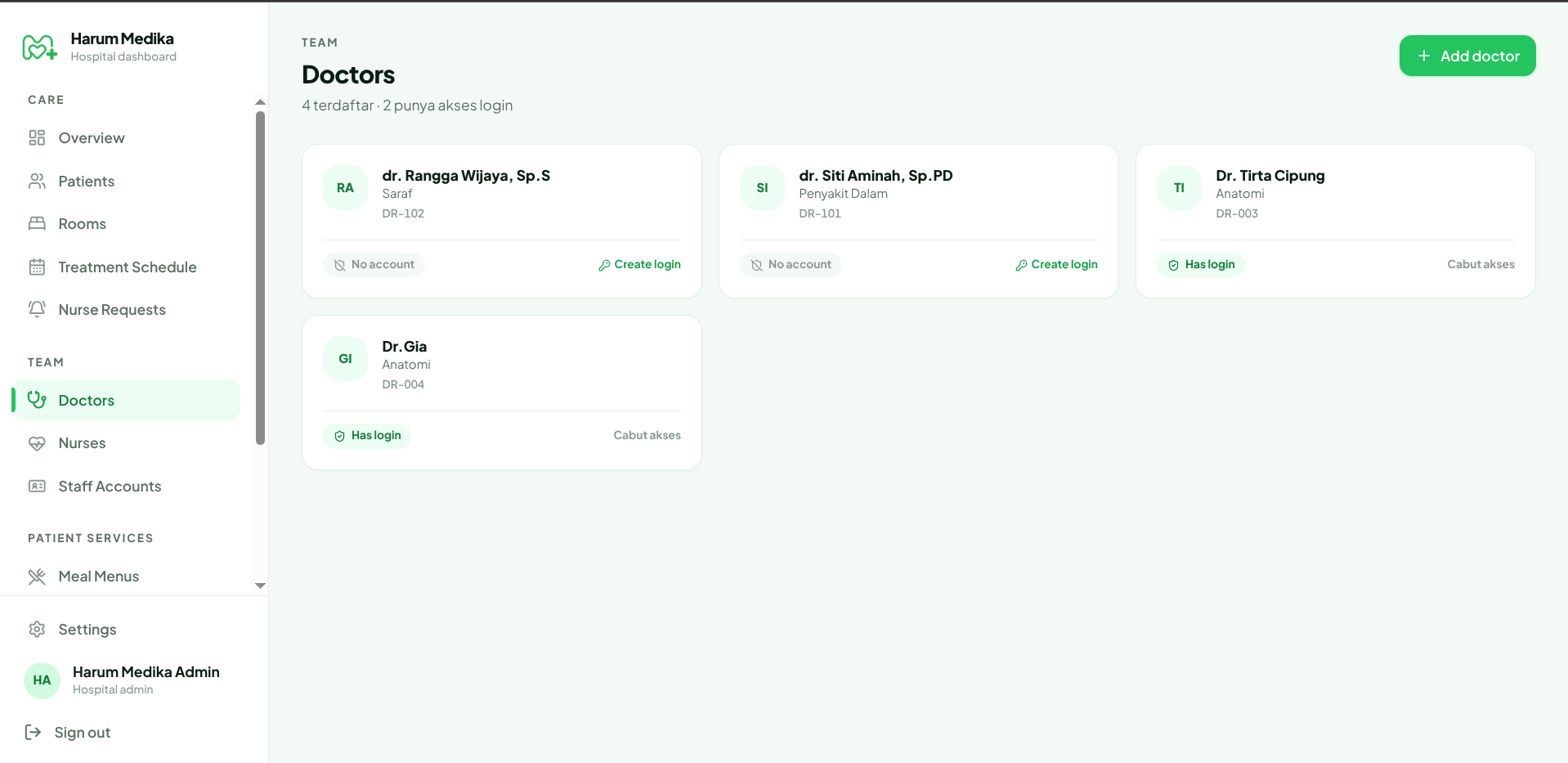
Manage Doctor
-
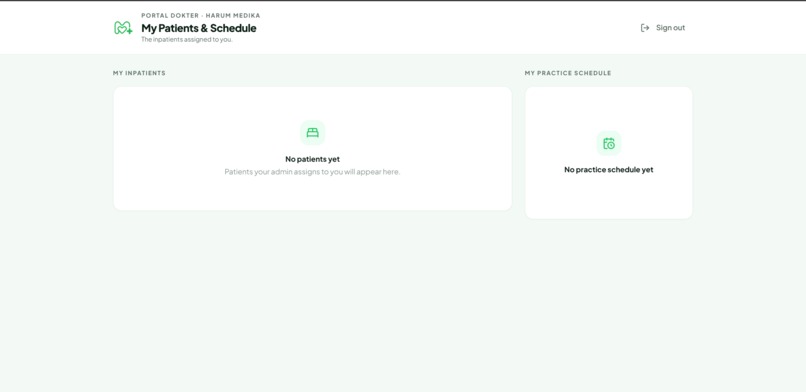
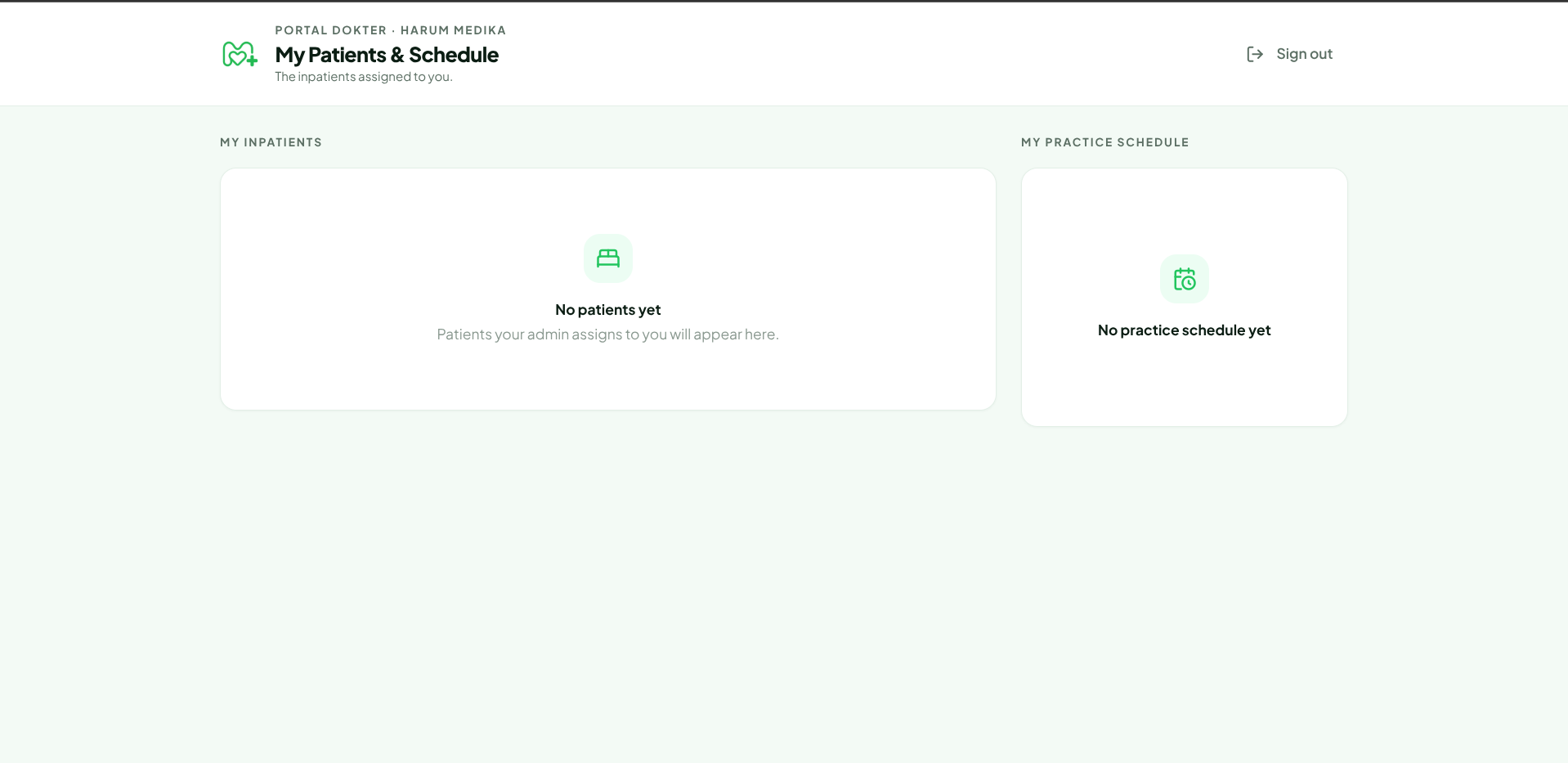
Doctor Dashboard
-
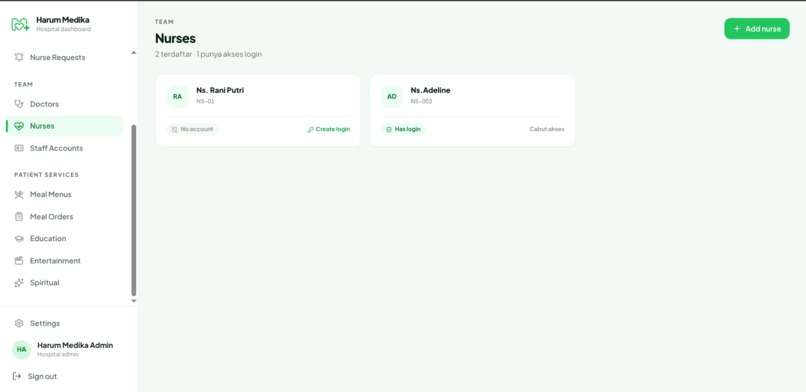
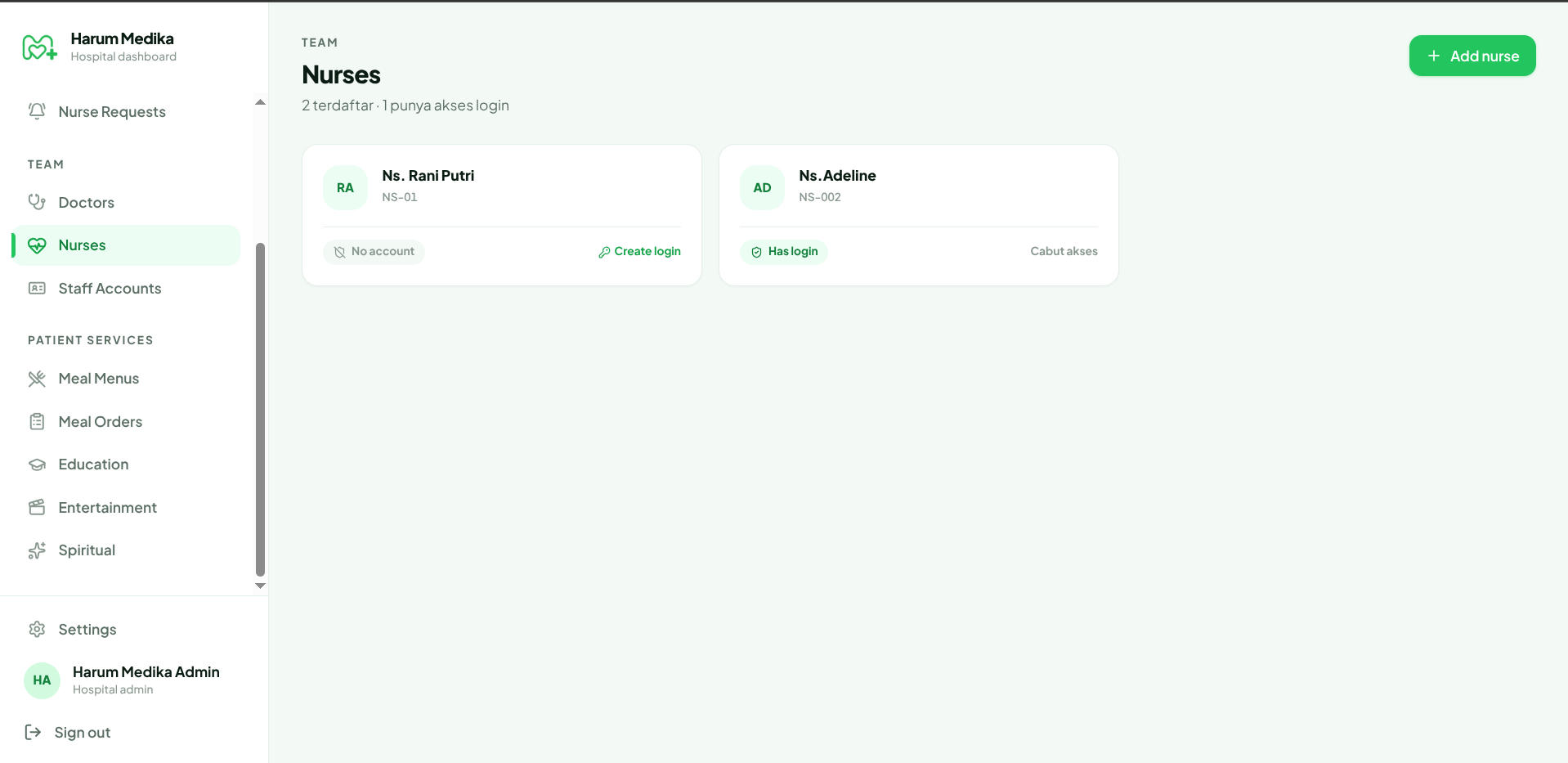
Manage Nurse
-
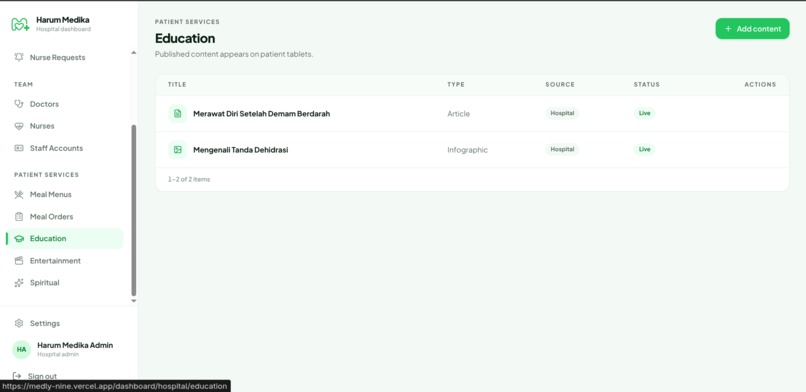
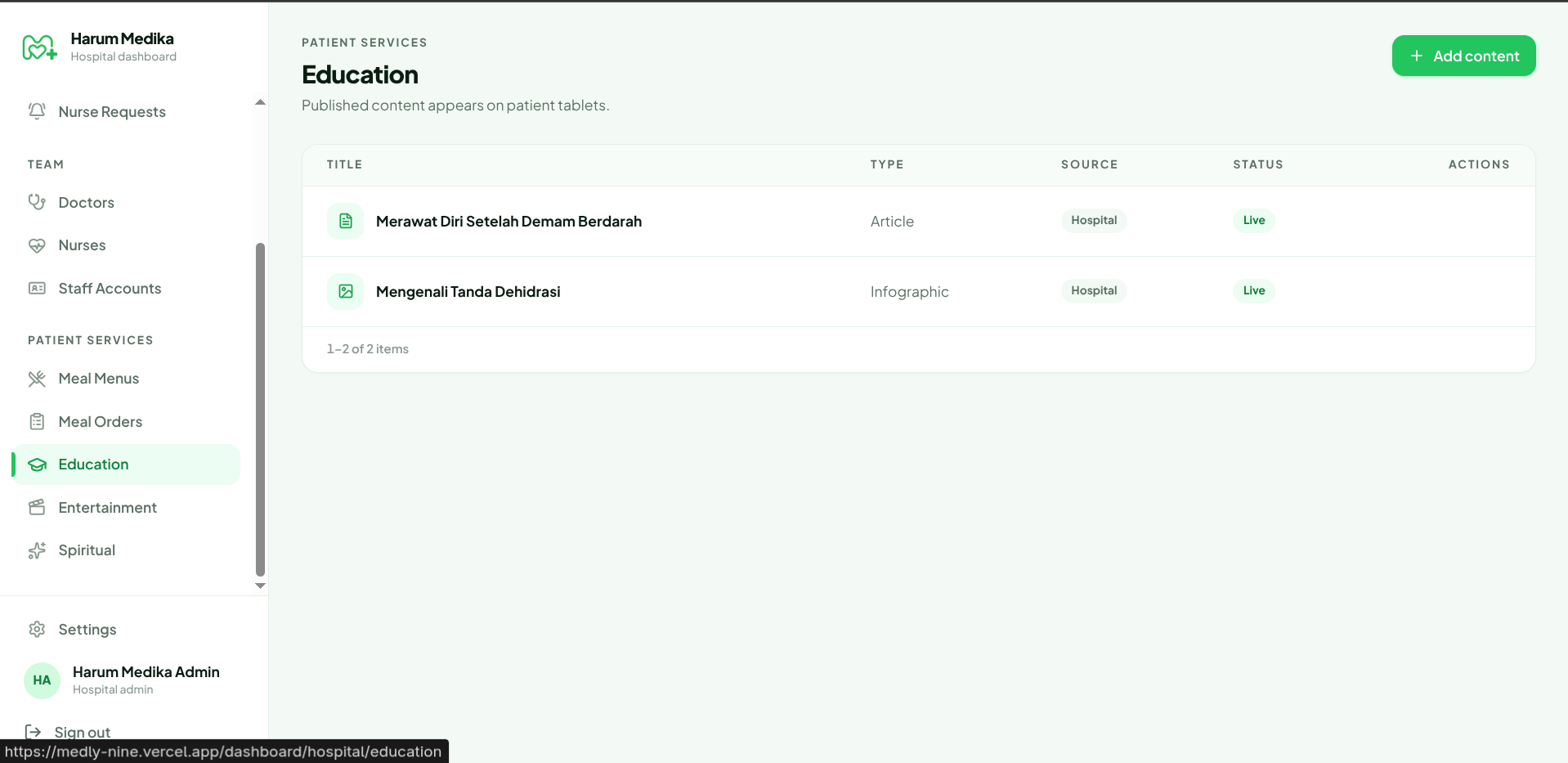
Manage Patient Services (Education)
-
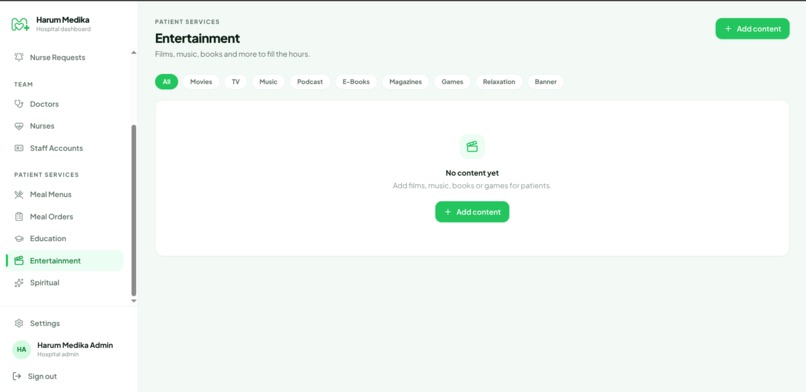
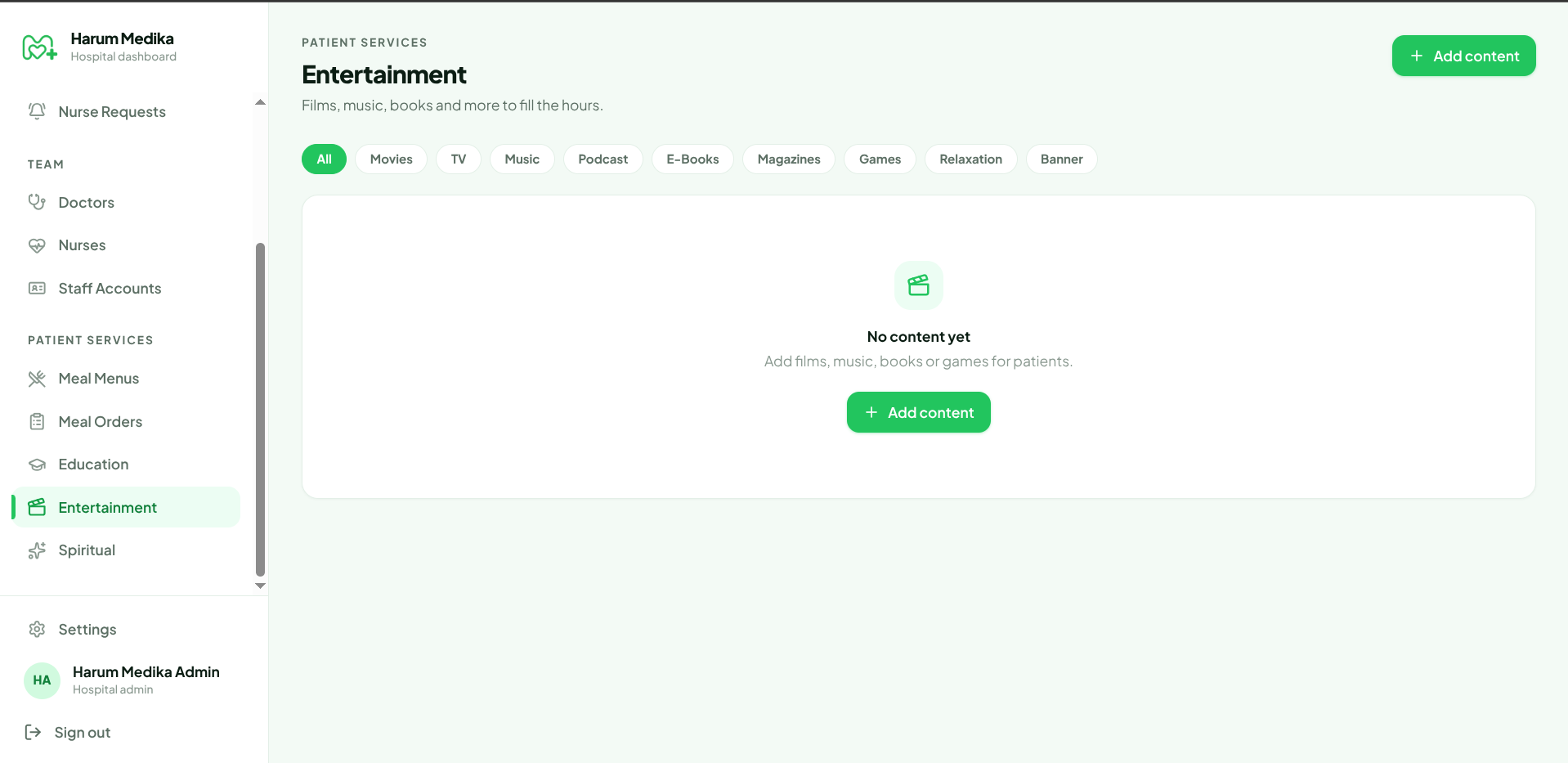
Manage Patient Services (Entertainment)
-
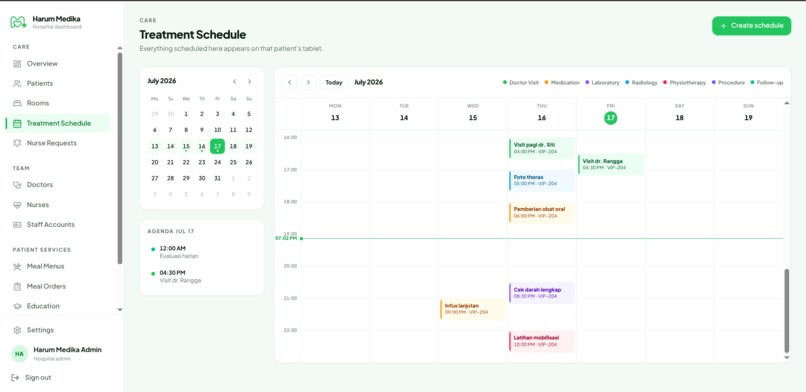
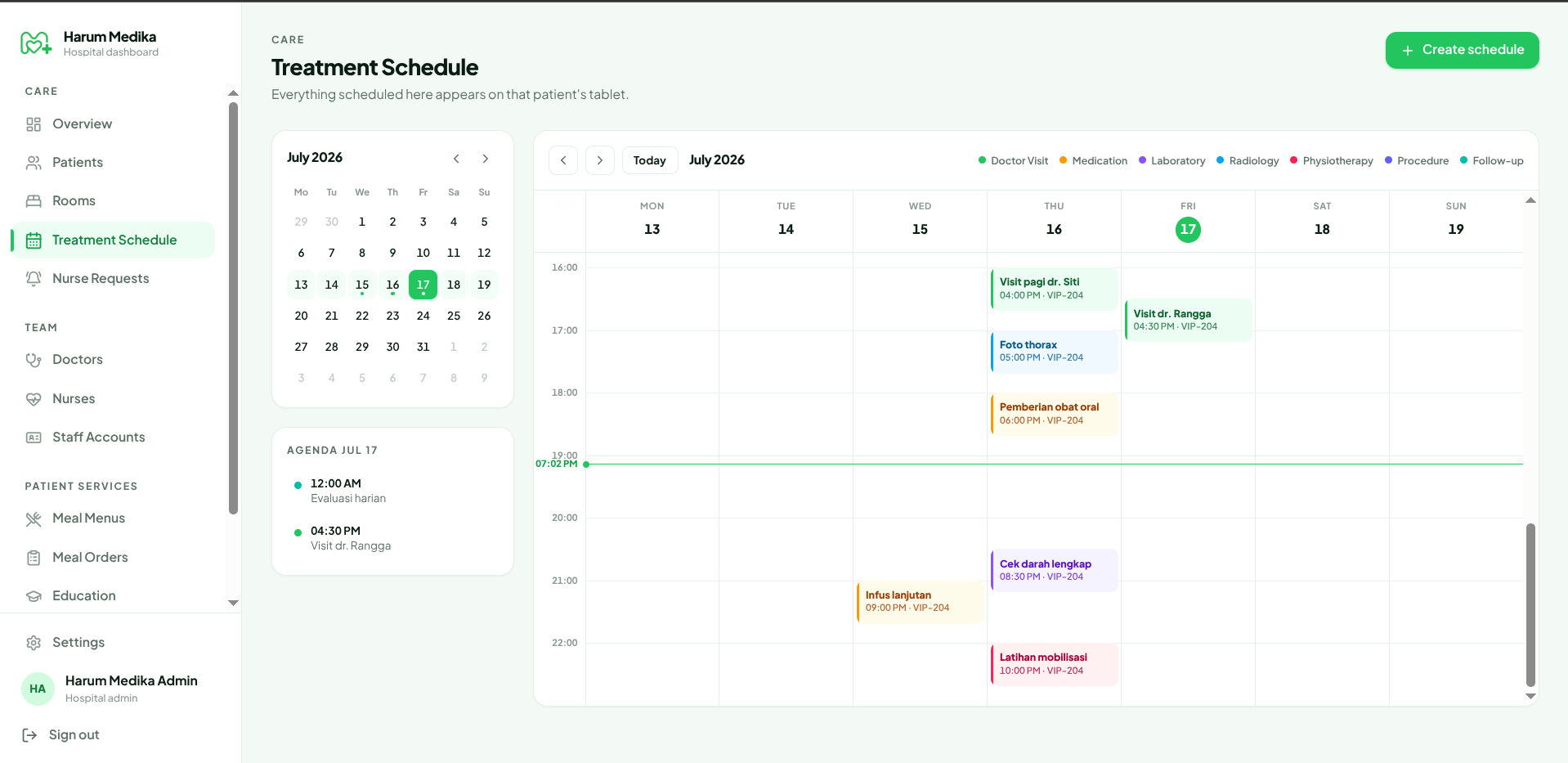
Treatment Schedule
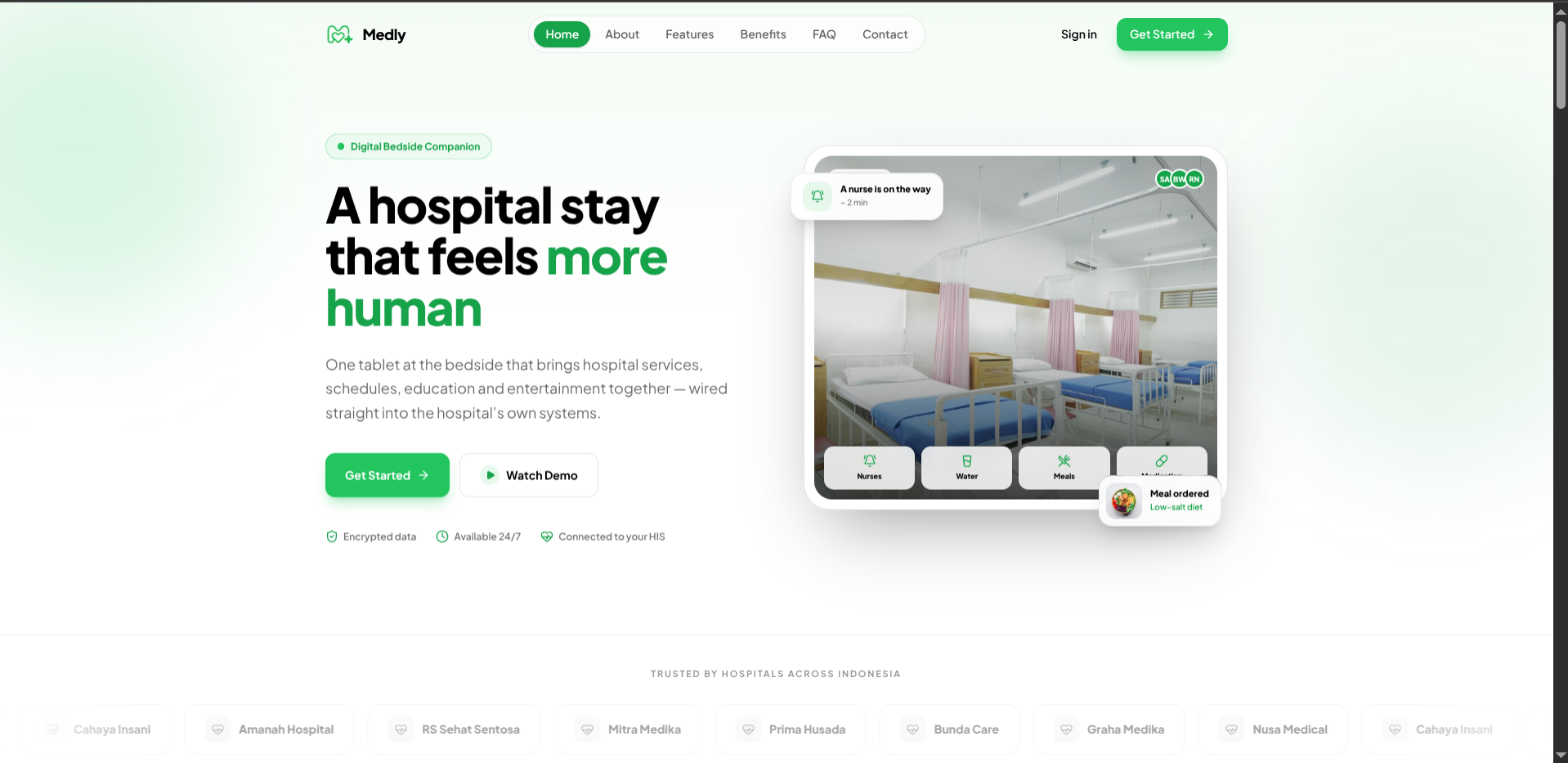
Medly — Digital Bedside Companion
Inspiration
Hospital stays are often designed around clinical workflows rather than the patient experience. While hospitals continue to modernize their internal systems, the bedside experience has changed very little. Patients still spend hours wondering when their doctor will arrive, when medication is scheduled, or how to request help beyond pressing a generic nurse call button.
That traditional nurse call button creates another challenge for healthcare staff. Every request looks identical until a nurse reaches the patient's room, making it difficult to prioritize urgent needs or prepare before responding.
We asked ourselves a simple question:
What if the tablet beside every hospital bed became a true digital companion instead of just another screen?
That question inspired Medly.
What it does
Medly is a Digital Bedside Companion that transforms the bedside tablet into a centralized patient experience platform.
Patients can:
- Request specific nurse assistance such as pain support, an empty IV, bathroom assistance, drinking water, or an extra blanket.
- View their complete treatment timeline, including medications, doctor visits, procedures, laboratory tests, and other scheduled care.
- Track their recovery journey through a simple visual progress interface.
- Access personalized educational content related to their condition.
- Stay engaged with entertainment content that helps reduce boredom during hospitalization.
Healthcare staff manage all patient information through a lightweight Hospital Information System (HIS), allowing every update to be synchronized with the patient's bedside application in real time.
Rather than replacing existing hospital systems, Medly demonstrates how a patient-centered digital layer can improve communication, transparency, and the overall hospitalization experience.
How we built it
We developed Medly as two connected applications.
Patient Application
A responsive bedside interface designed with accessibility in mind, using large touch targets, clear navigation, and a simplified interaction flow suitable for patients of different ages and physical conditions.
Hospital Dashboard
A lightweight Hospital Information System (HIS) enables healthcare staff to manage:
- Patient information
- Treatment schedules
- Nurse requests
- Educational content
- Meal management
- Hospital operations
Changes made by hospital staff are synchronized with the patient application, creating an end-to-end workflow between caregivers and patients.
Challenges we ran into
Healthcare workflows are naturally complex.
One of our biggest challenges was determining what not to build during a hackathon.
Another challenge was designing an interface that remains intuitive for elderly patients, post-operative patients, and users who may have limited digital literacy.
We also focused on building a realistic workflow between patients and healthcare staff while keeping the architecture lightweight enough to demonstrate within the hackathon timeframe.
Accomplishments that we're proud of
- Built a complete end-to-end patient-to-hospital workflow.
- Reimagined the traditional nurse call button into contextual nurse requests.
- Improved treatment transparency through a patient-centered timeline.
- Designed a scalable architecture capable of integrating with existing Hospital Information Systems.
What we learned
Throughout this project, we learned that healthcare innovation is not always about introducing new medical technology.
Sometimes, the greatest impact comes from reducing uncertainty.
By giving patients better visibility into their treatment journey and providing healthcare staff with clearer information about patient needs, communication becomes more efficient and the hospital experience becomes more reassuring.
We also gained valuable experience designing technology that prioritizes accessibility, trust, and simplicity in healthcare environments.
What's next for Medly
Our MVP validates the concept of a Digital Bedside Companion.
Future development includes:
- AI-powered patient assistant
- Family communication portal
- Pharmacy integration
- Laboratory and radiology integration
- Smart room IoT controls
- Patient satisfaction analytics
- Enterprise HIS integration
Our long-term vision is to become the patient-facing digital layer that makes hospitalization more transparent, connected, and human-centered.
Built With
- api
- css
- next.js
- node.js
- postgresql
- react
- realtime
- rest
- shadcn/ui
- tailwind
- typescript


Log in or sign up for Devpost to join the conversation.