-
-
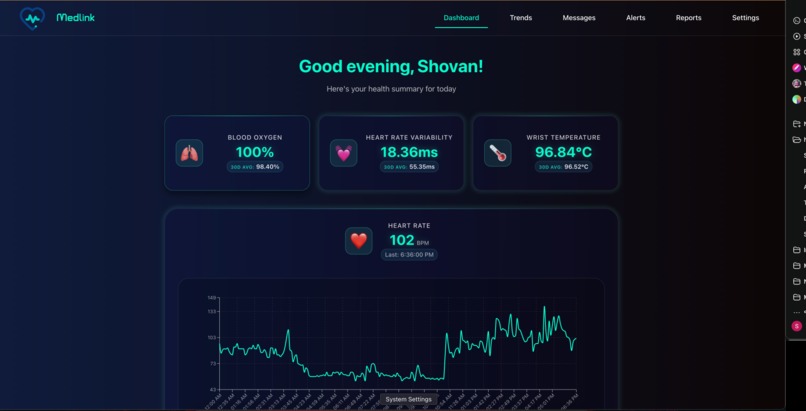
Patients Dashboard
-
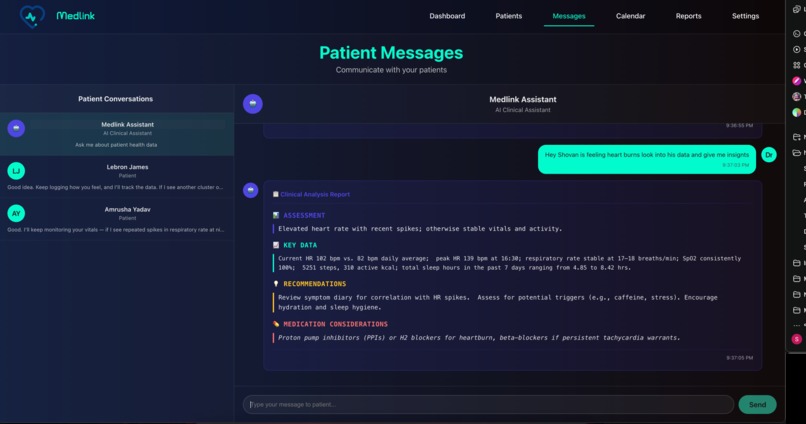
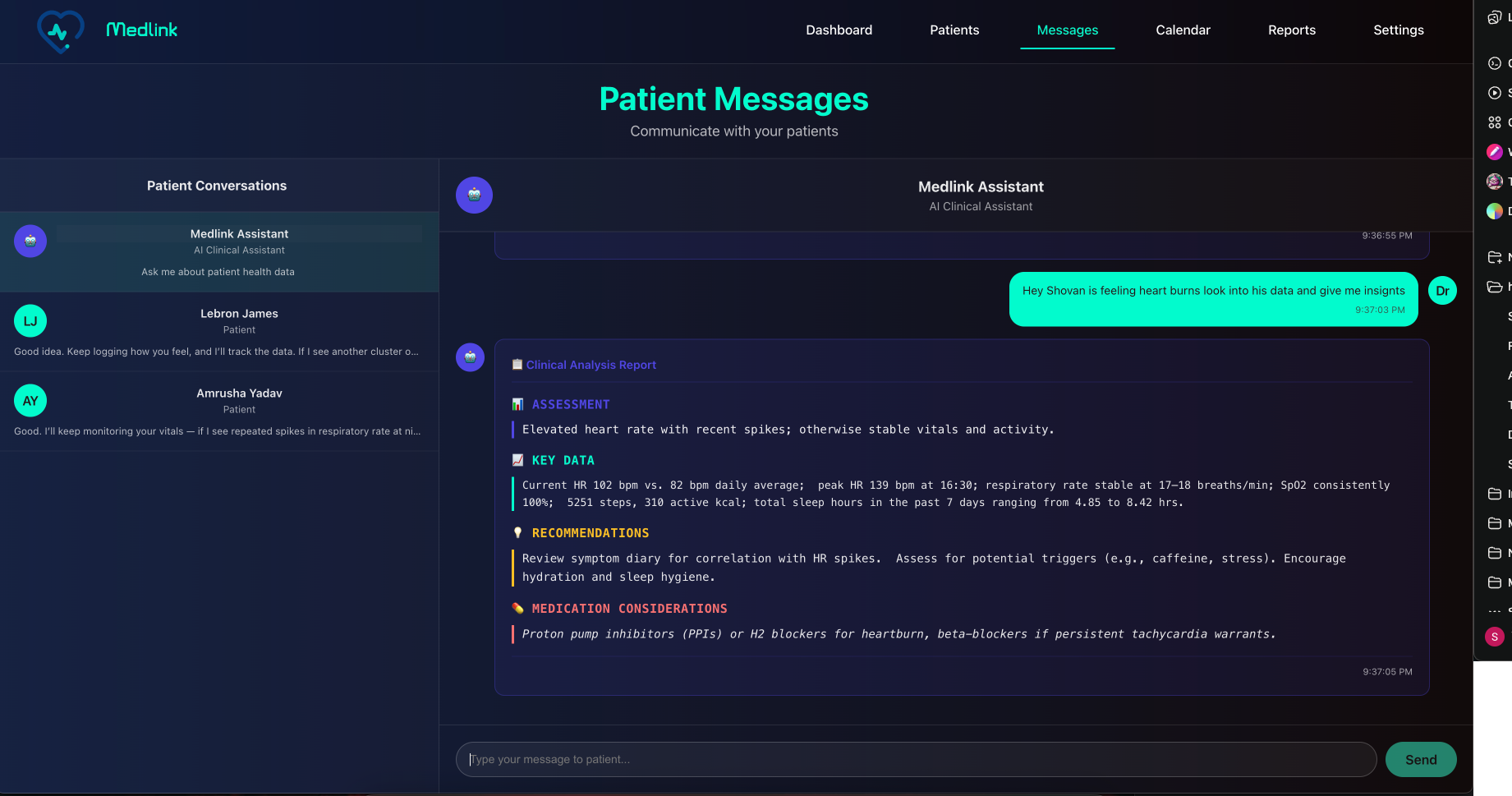
AI-powered Assistant for Doctors
-
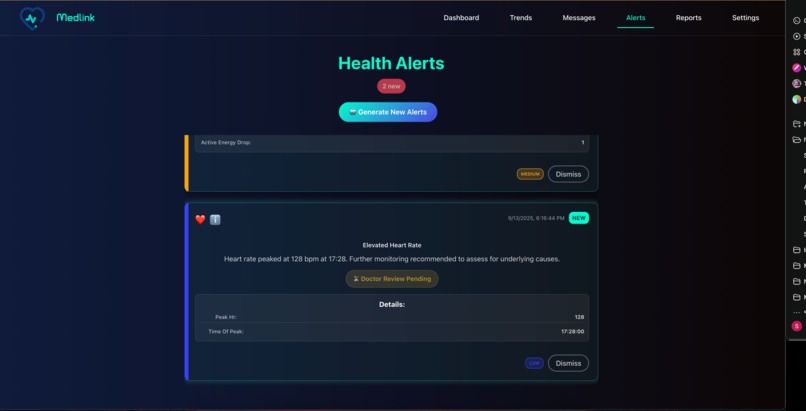
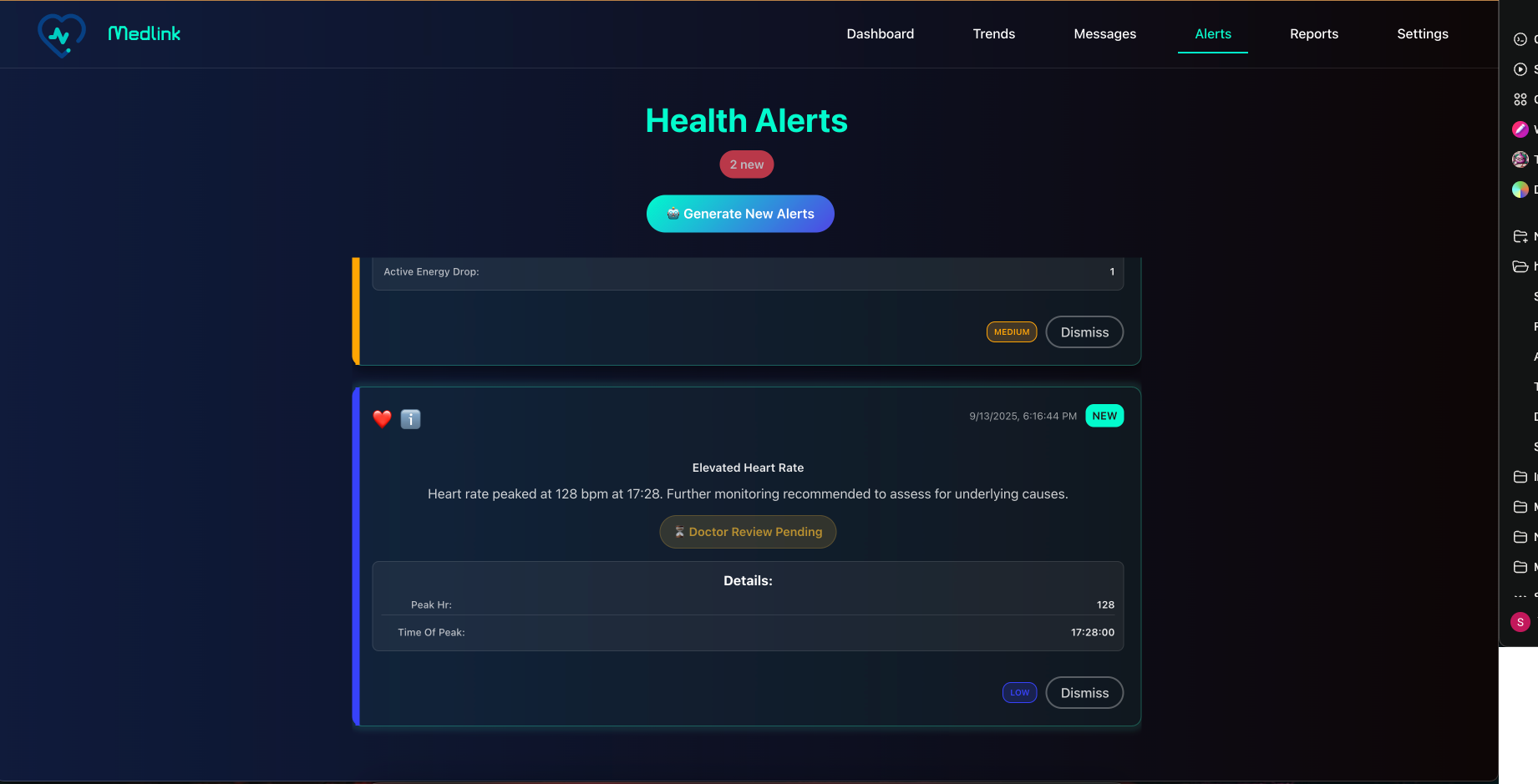
Patient AI-powered health alert
-
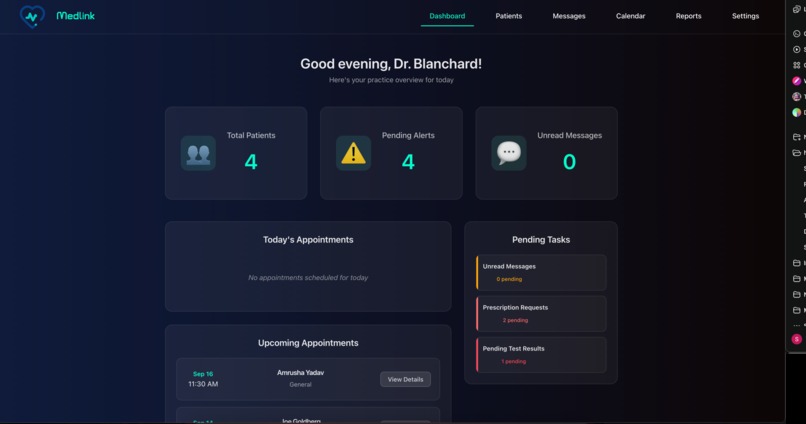
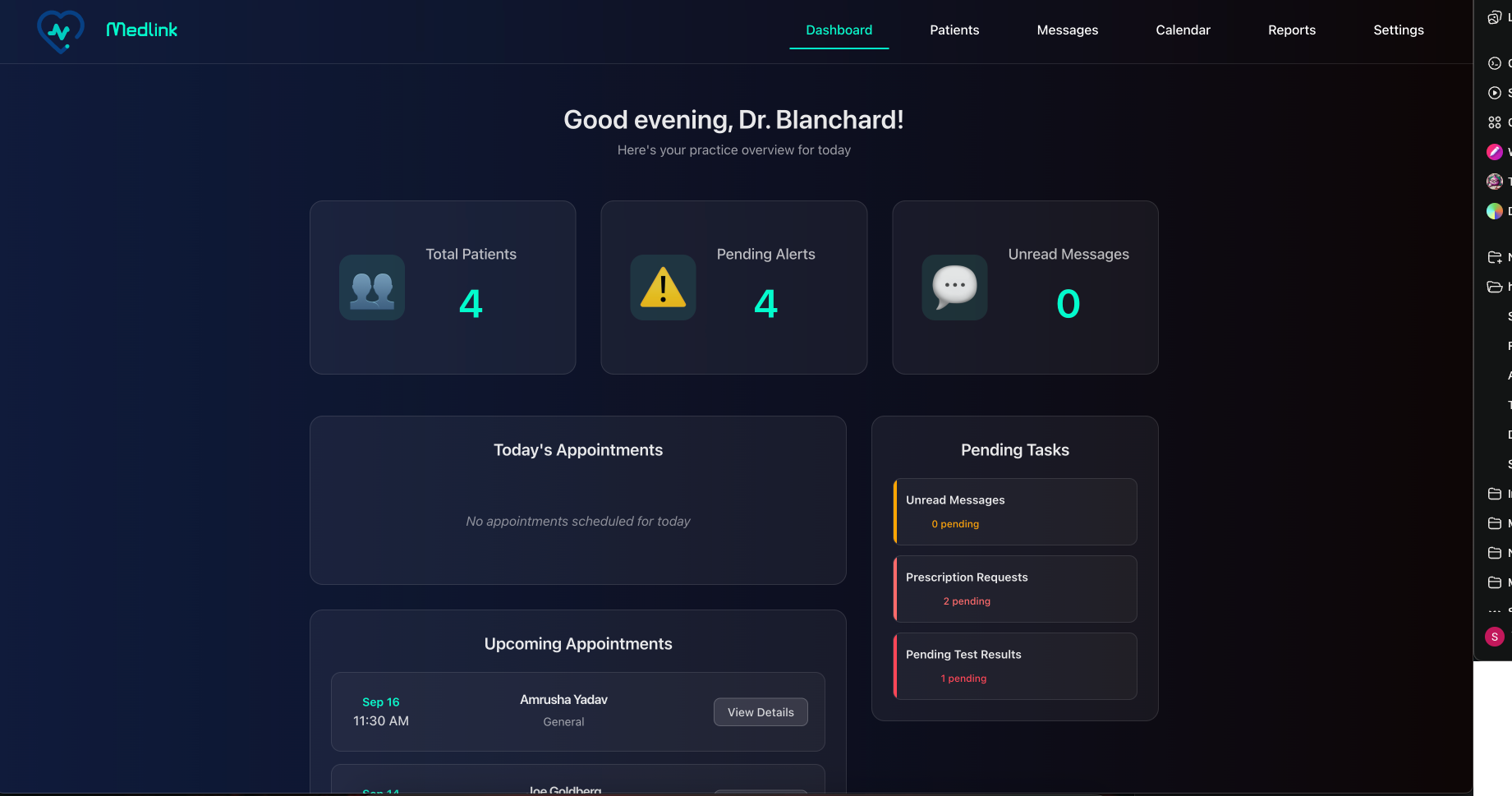
Doctors Dashboard
-
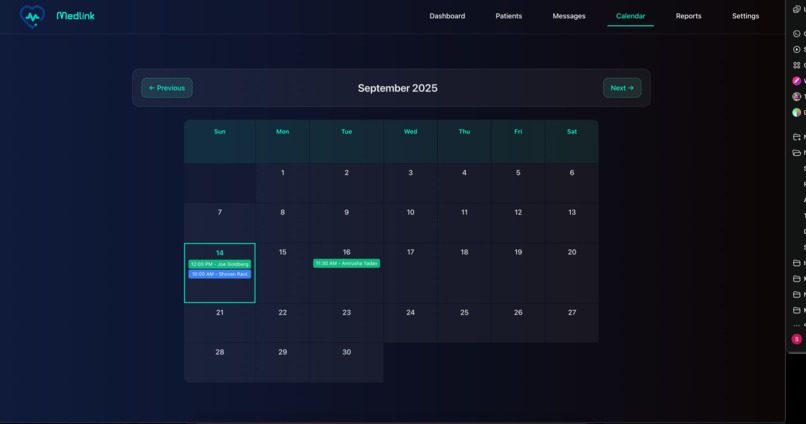
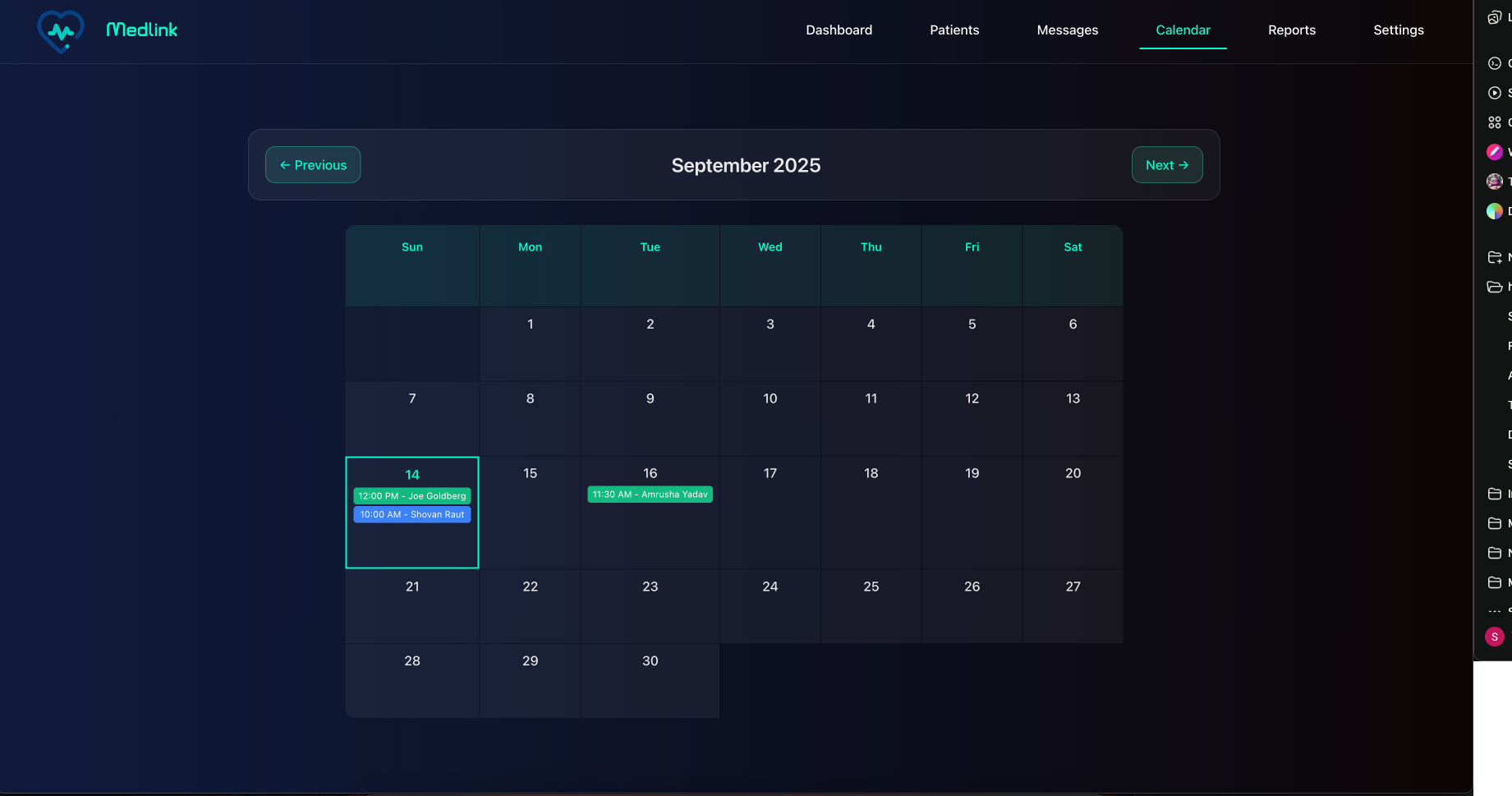
Calendar
-
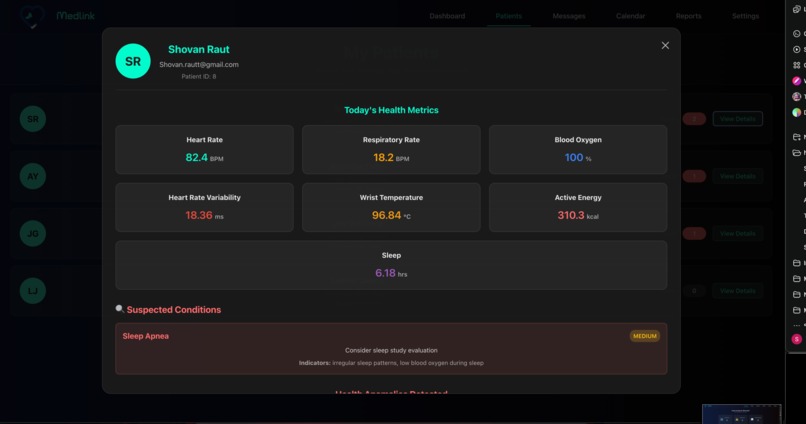
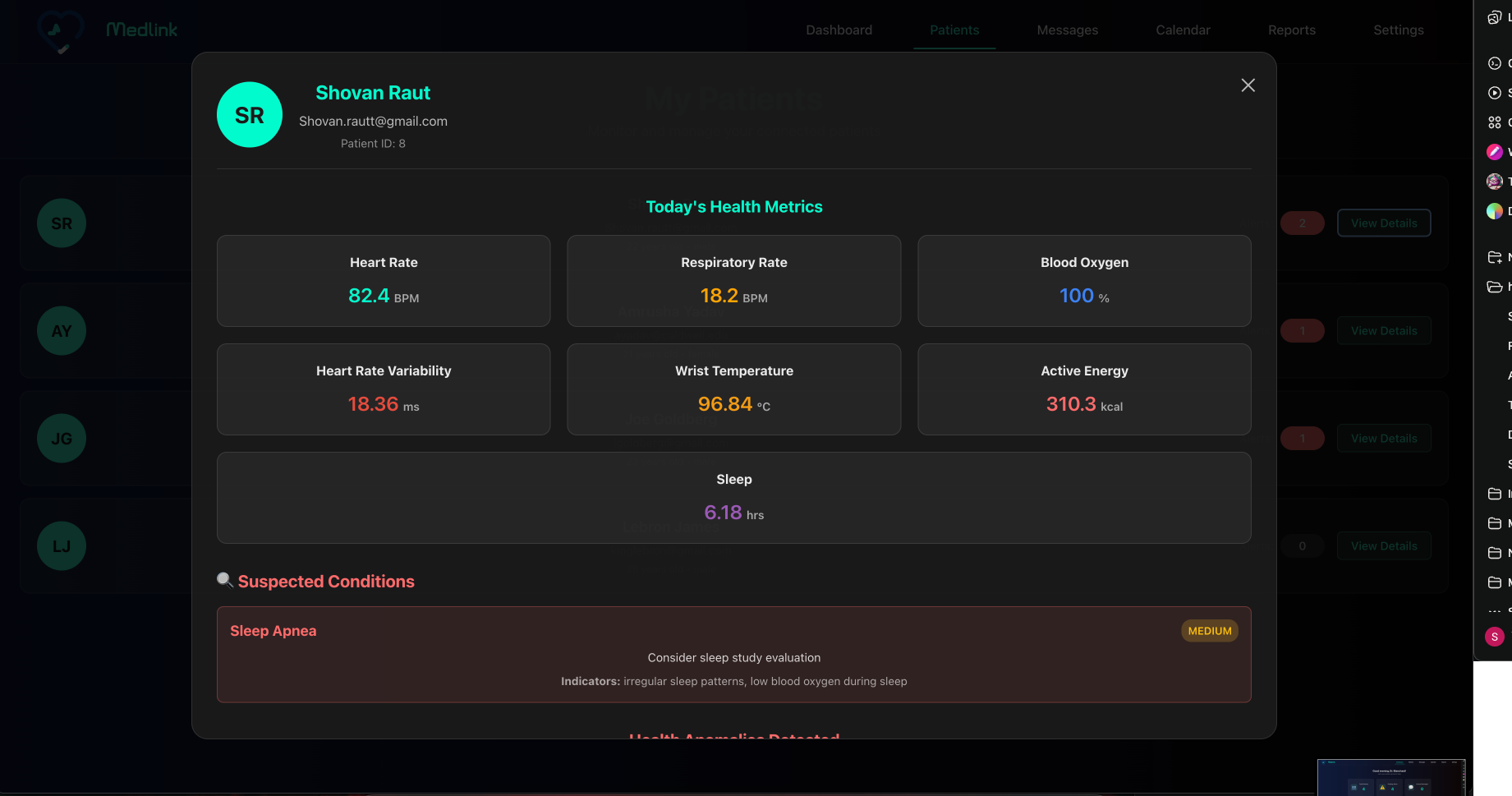
Patients Info from Doctors view
-
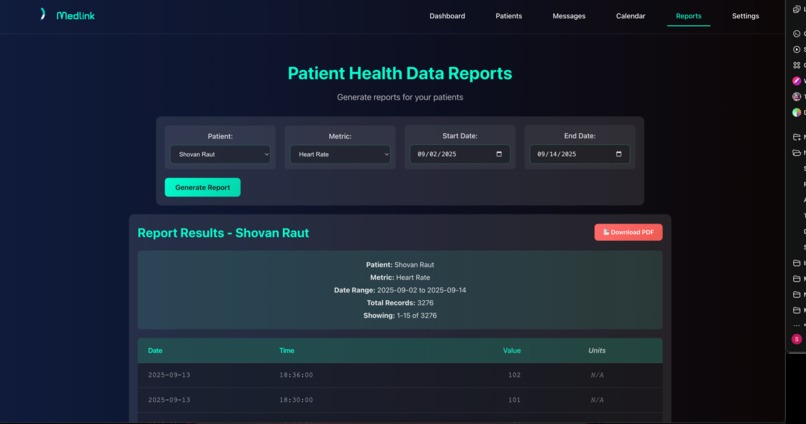
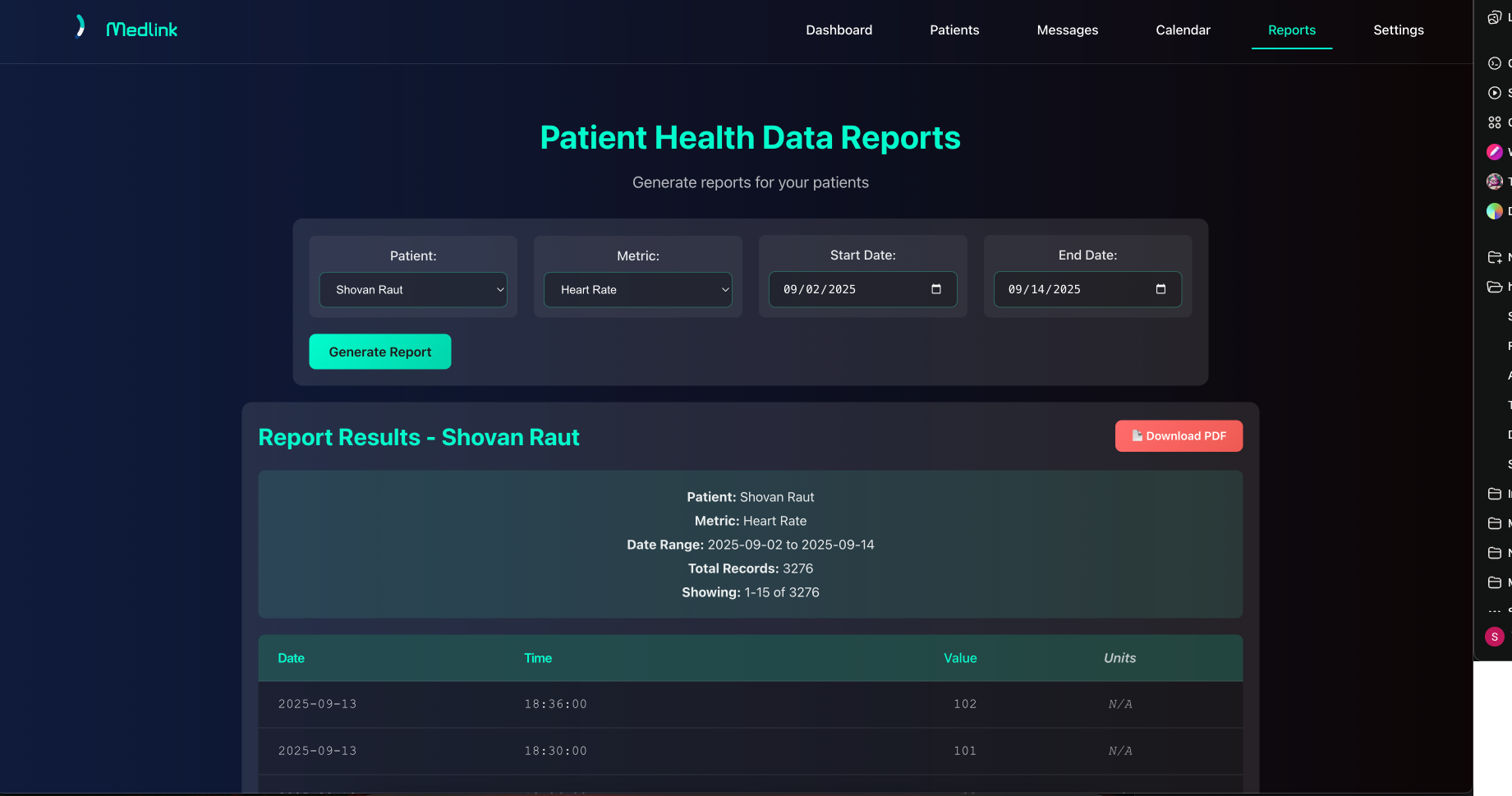
Patients health report Generator
-
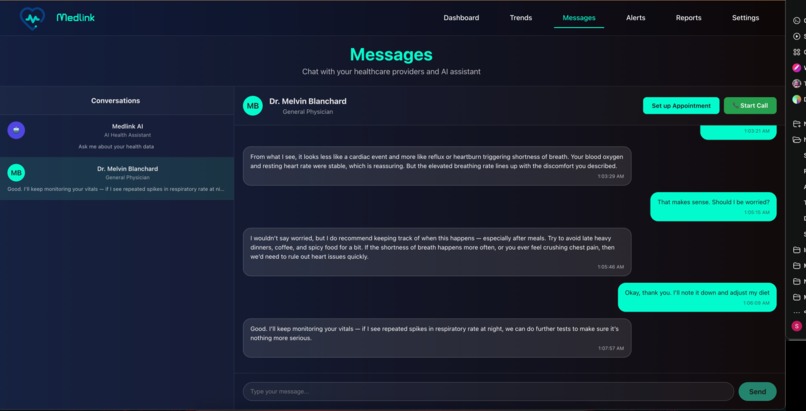
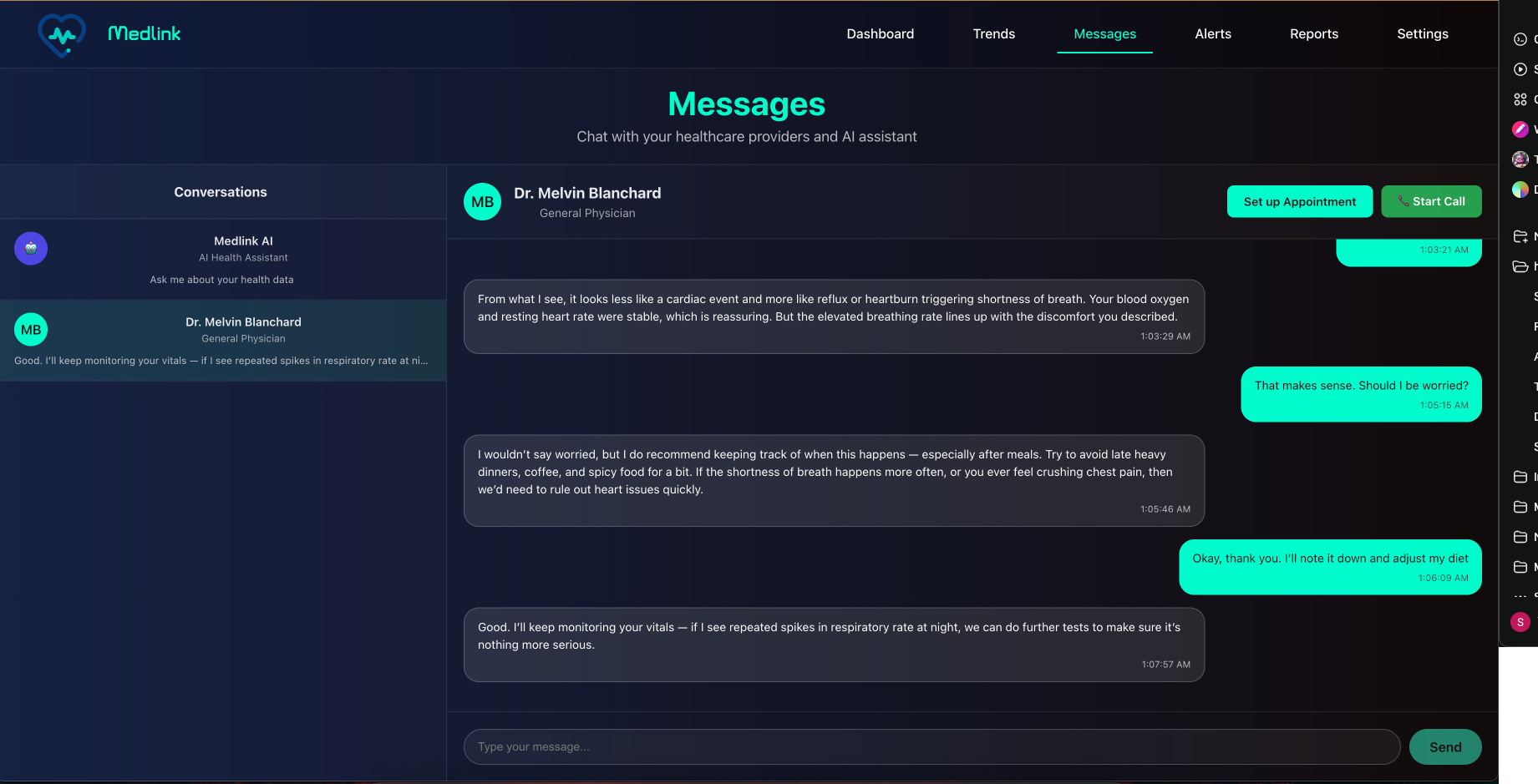
Patient Messages Page
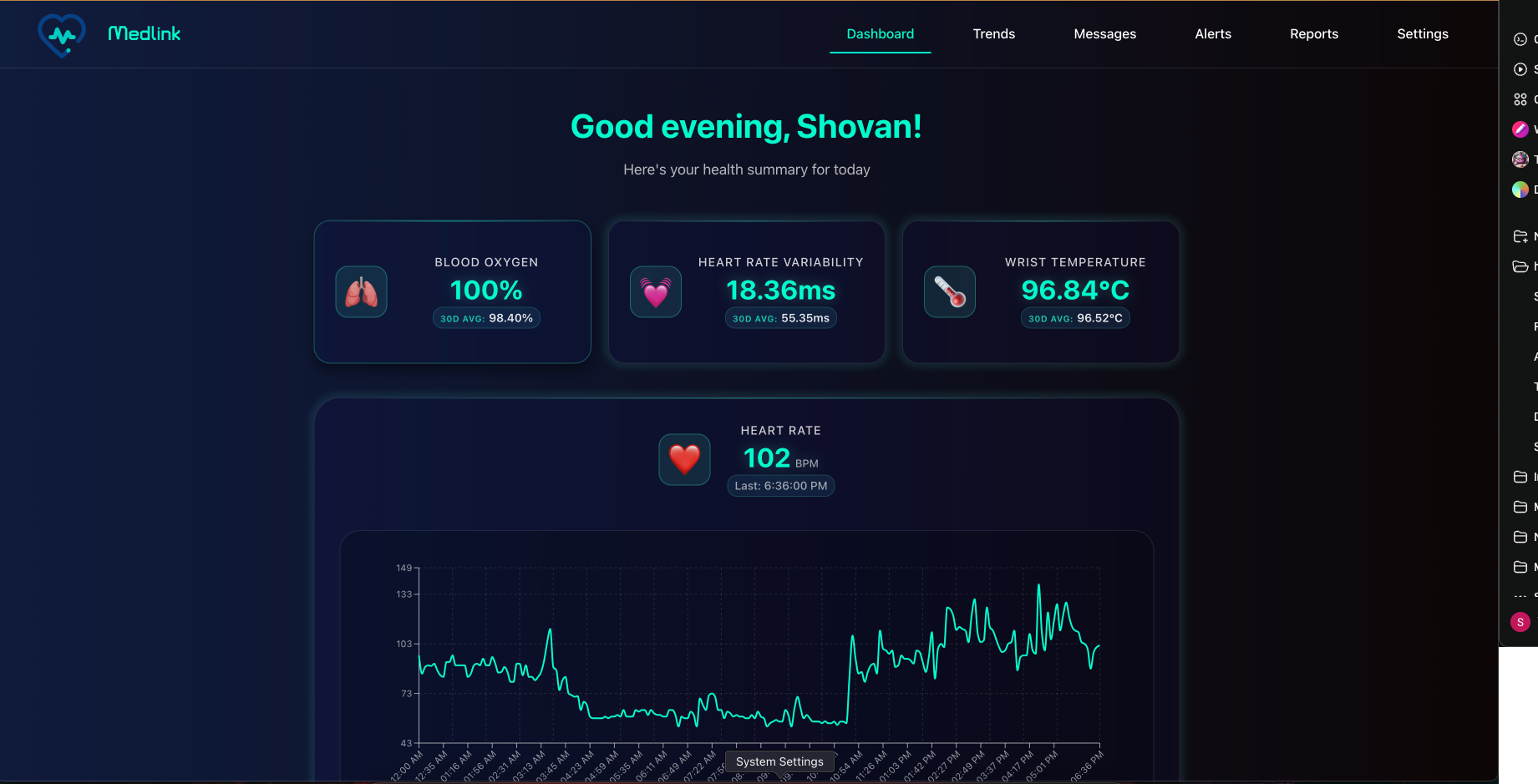
MedLink: Bridging Patients, Doctors, and Data
🌱 Inspiration
The idea for MedLink came from my personal experience growing up in Nepal. Many villages there have Wi-Fi but no doctors, since many physicians move to cities or abroad. People can Google their symptoms — but they can’t consult a real doctor without traveling hours or even days.
I also noticed another issue in everyday healthcare: when you visit a doctor, they only see your vitals in that single moment. If I report dizziness, my heart rate might look normal at that instant — but the spikes from yesterday or irregularities over the week are invisible. This lack of continuous data often leads to incomplete diagnoses.
MedLink was inspired by both problems:
- Making remote care accessible in places with internet but no doctors.
- Giving doctors the full health story instead of one-time snapshots.
📚 What I Learned
Working on MedLink taught me how to combine software, data, and healthcare knowledge:
- Ingesting wearable data into a backend database.
- Designing a PostgreSQL schema for vitals, sleep, appointments, and alerts.
- Building a React + Node.js dashboard for patients and doctors.
- Using Gemini AI to generate clinical summaries from raw health data.
I also learned how crucial continuous monitoring is:
🛠️ How I Built It
- Frontend: React (Vite, React Router DOM, Recharts for visualization, Lottie for animations).
- Backend: Node.js with Express, JWT authentication, bcrypt, and PostgreSQL with
pg. - Database: Tables for users, patients, doctors, real-time and aggregated metrics, sleep, appointments, alerts, and messages.
- Integration: Apple Watch → Apple Health API → ingestion pipeline → PostgreSQL → MedLink dashboard.
- AI Assistant: Powered by Gemini, generating clinical summaries from vitals + patient symptoms.
- Real-Time Features: WebSocket for live alerts and doctor-patient chat.
⚡ Challenges I Faced
- Data Standardization: Different metrics (heart rate, respiratory rate, sleep, etc.) had different sampling rates.
- Visualization: Making charts clear for patients yet useful for doctors.
- AI Summaries: Training Gemini to filter signal from noise without overwhelming doctors.
- Remote Testing: Simulating use cases from Nepal while building in the US — ensuring it works even with low bandwidth.
- Time Constraints: Balancing backend, frontend, and AI features under hackathon deadlines.
🚀 Conclusion
MedLink transforms wearable data into continuous healthcare connections.
- For patients: better understanding of their own health.
- For doctors: continuous trends, not just one snapshot.
- For the world: borderless healthcare — because with Wi-Fi, you have a doctor and your health history right in your pocket.
Built With
- apple-health
- express.js
- gemni-ai
- javascript
- node.js
- postgresql
- react
- restapi
- websocket


Log in or sign up for Devpost to join the conversation.