-
-
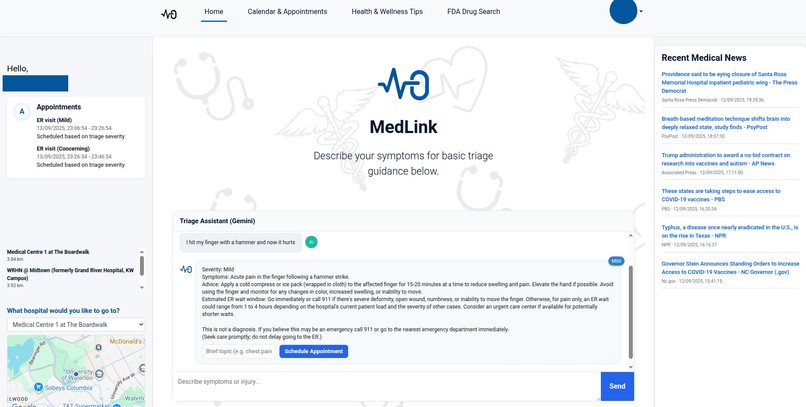
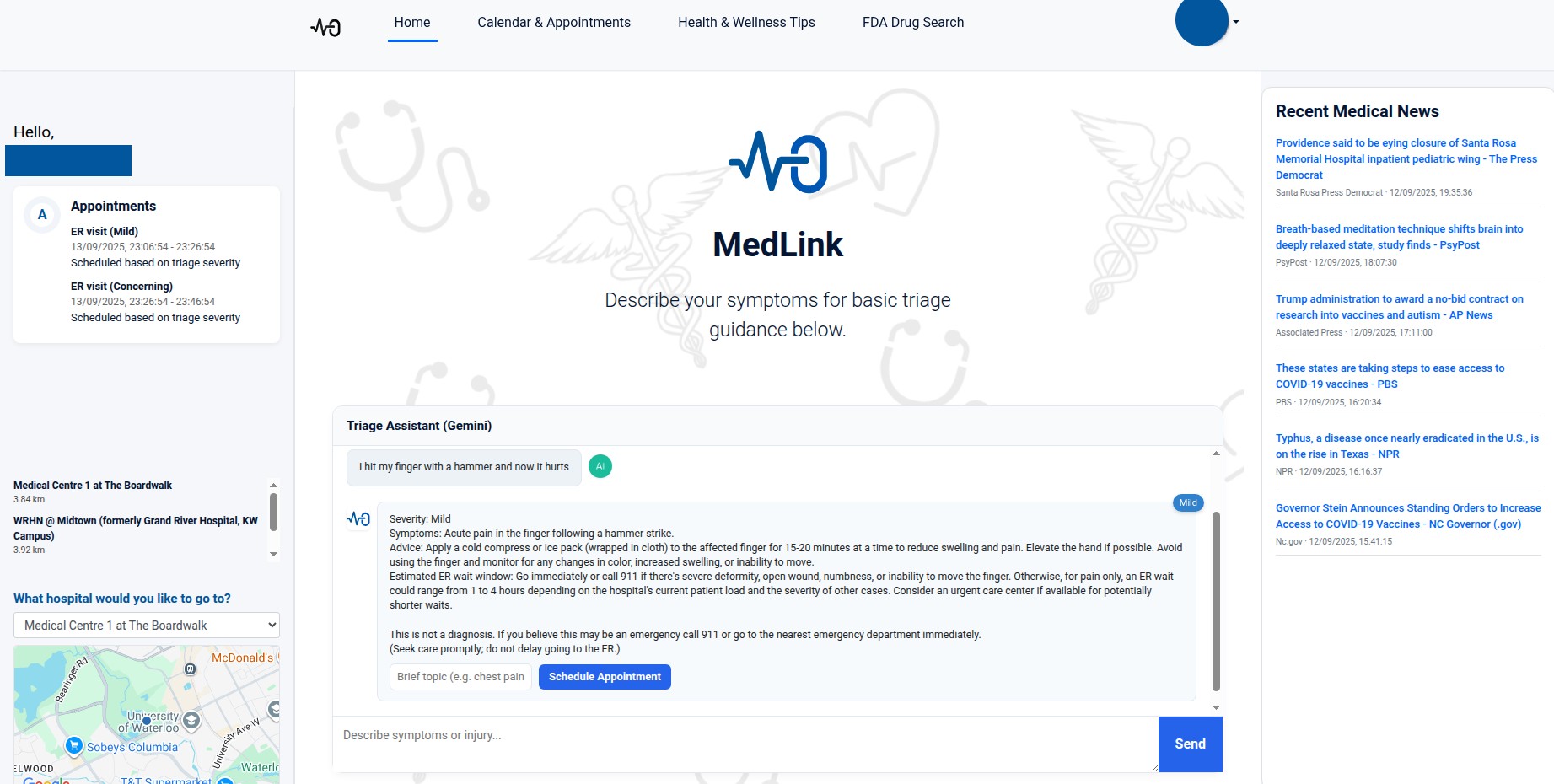
Main Page
-
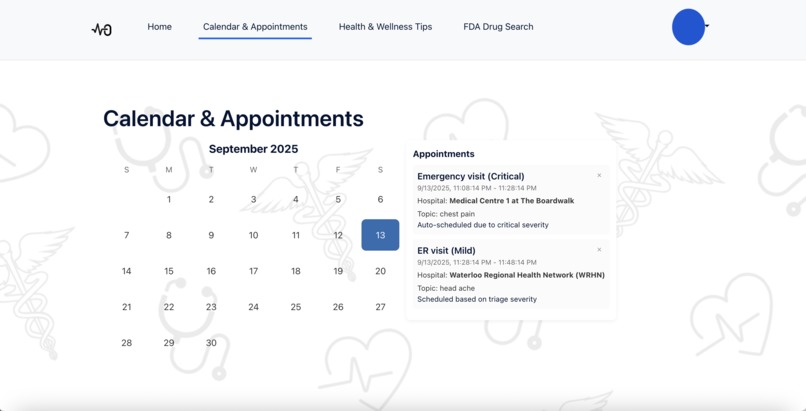
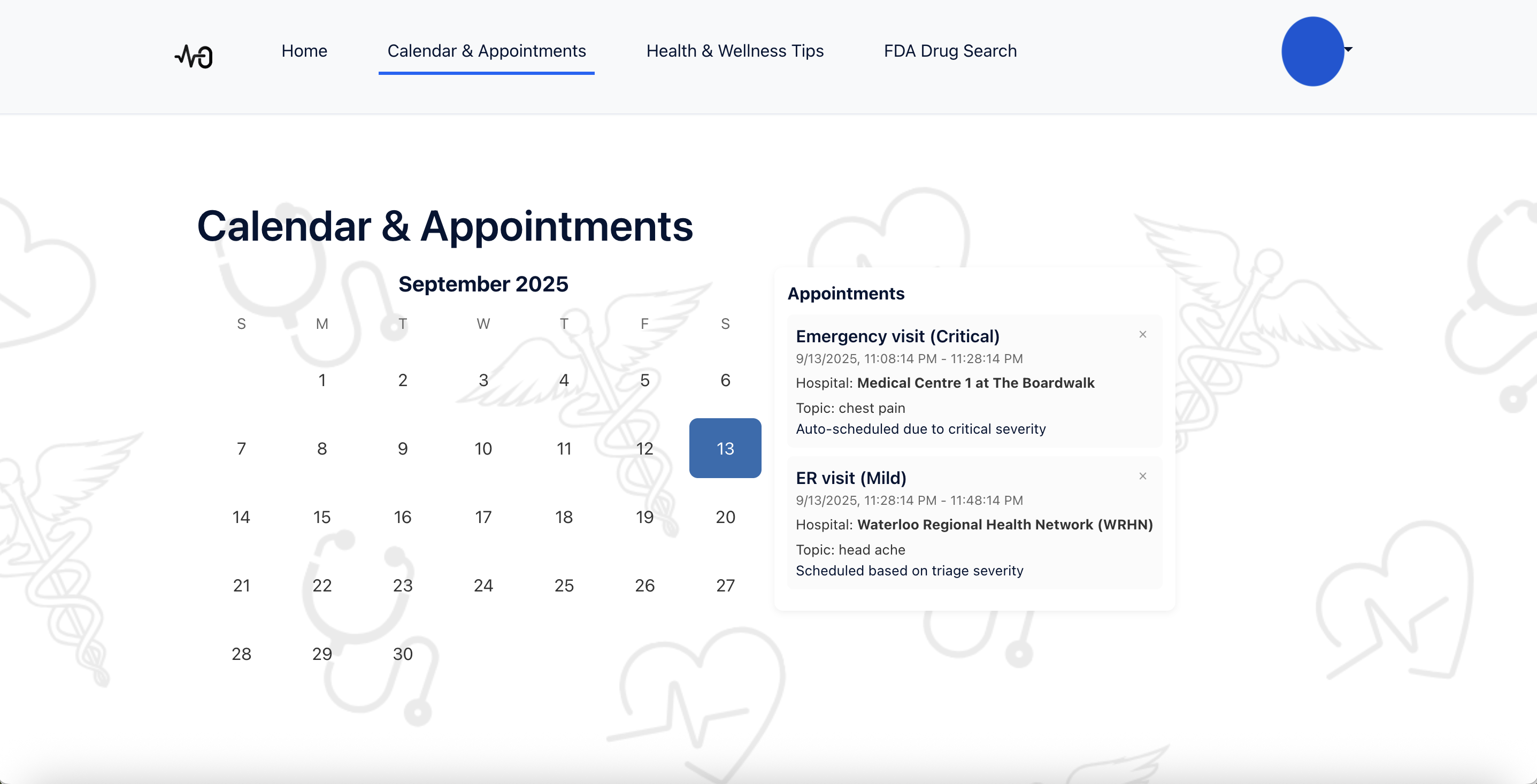
Calendar & Appointments
-
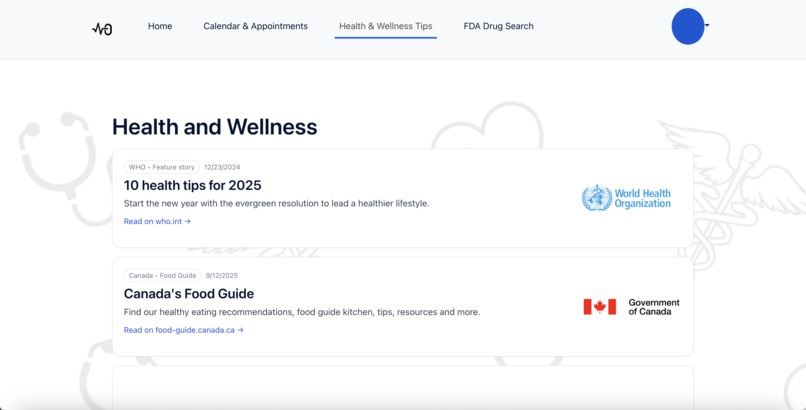
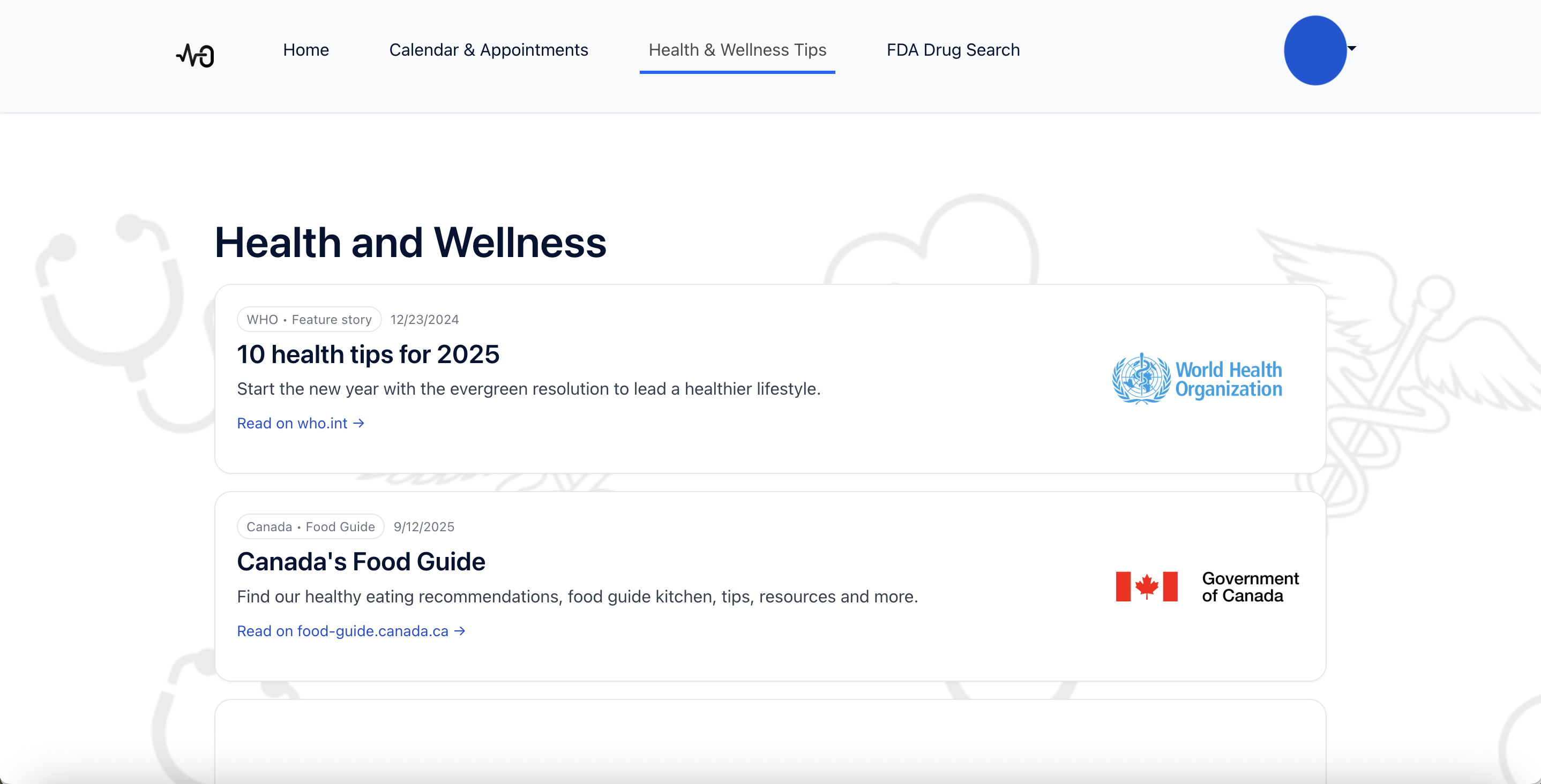
Health & Wellness Tips
-
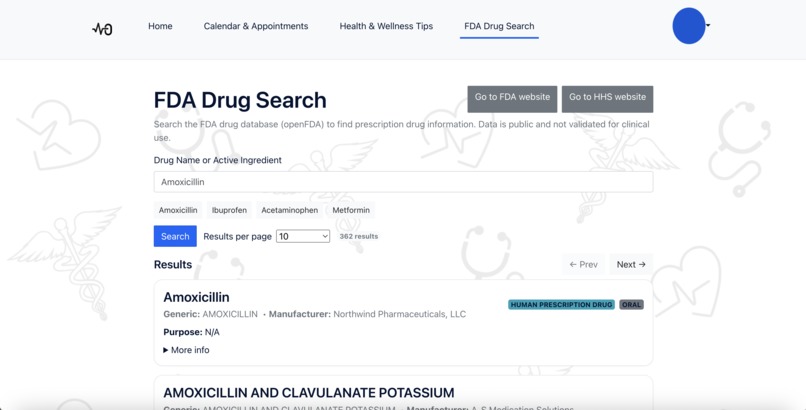
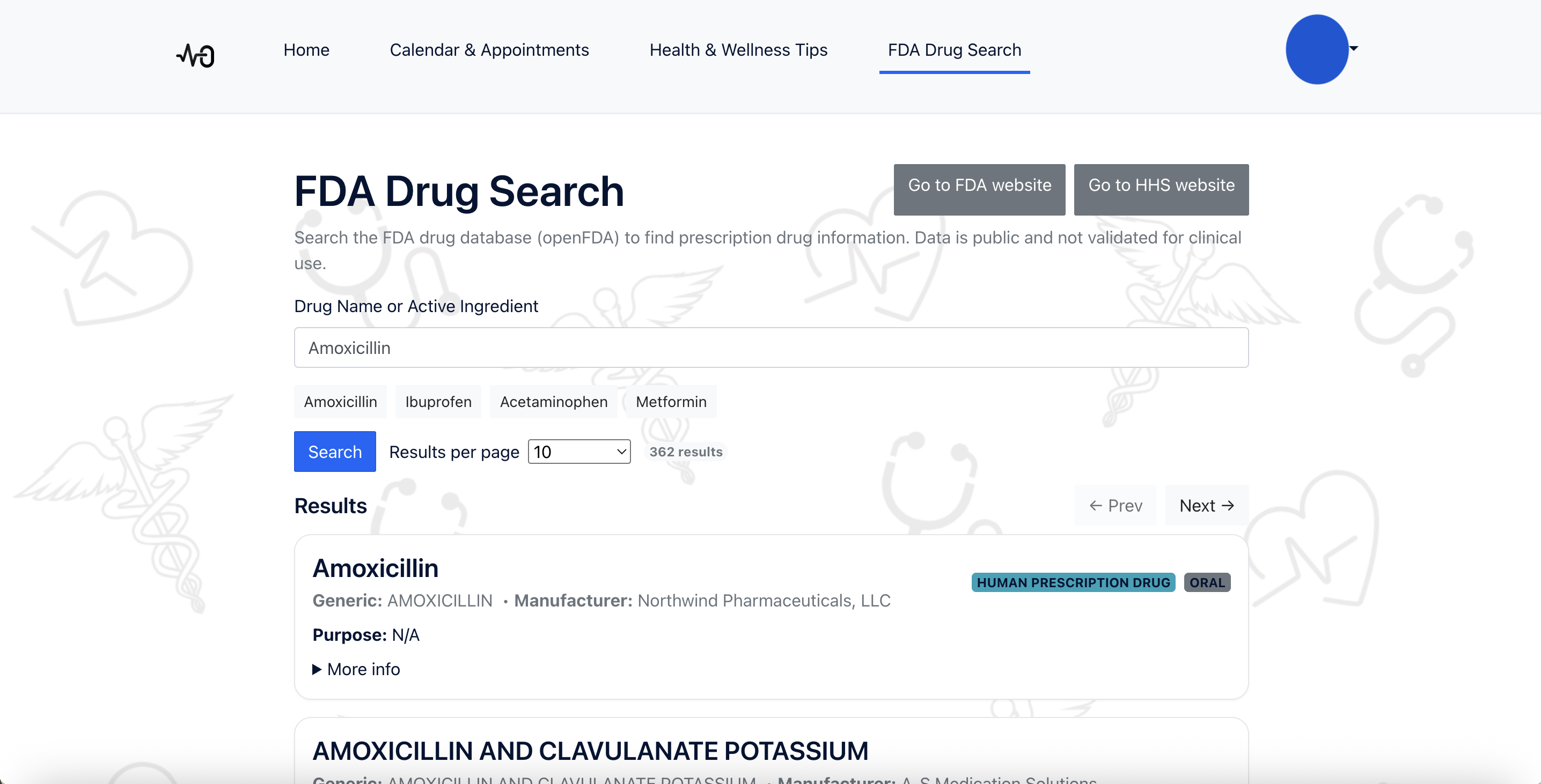
FDA Drug Search
MedLink
Inspiration
In Canada, emergency room wait times are among the longest in the developed world, averaging 8+ hours. With nearly 1 in 5 Canadians lacking a family doctor, many people have no option but to rely on emergency rooms for even basic care. We were inspired by the frustration of waiting in crowded ERs often sick, anxious, and unsure if symptoms were urgent or not. MedLink was born to help patients navigate these challenges with AI guidance and smarter scheduling.
What it does
MedLink is a patient-first web app that:
- Uses an AI-powered triage assistant to evaluate symptoms, provide do’s and don’ts, and suggest next steps.
- Prioritizes serious cases through a severity-weighted scheduling algorithm that dynamically reorders appointments.
- Finds the nearest hospitals and emergency departments with geolocation so patients can choose where to go.
- Offers curated medical news and drug reference lookups to keep patients informed. By combining triage, scheduling, and location awareness, MedLink reduces unnecessary ER visits, accelerates urgent care, and helps patients wait at home comfortably instead of in crowded waiting rooms.
How we built it
- Frontend: Built in React with a lightweight context for persistent appointment storage.
- AI Triage: Integrated a conversational assistant that classifies severity levels and generates actionable guidance.
- Scheduling: Designed a severity-based queueing system balancing urgency with wait time.
- Location services: Leveraged geolocation APIs to rank nearby hospitals by distance and travel time.
- References: Integrated curated feeds for medical news and FDA drug safety lookups.
Challenges we ran into
- Balancing simplicity vs. accuracy in the AI triage so advice remains clear and safe.
- Handling geolocation permissions gracefully and providing useful fallbacks.
- Designing the scheduler logic so urgent cases could jump ahead without losing track of lower-priority patients.
- Keeping the app lightweight while integrating multiple external APIs.
Accomplishments that we're proud of
- Building a severity-aware scheduling system that dynamically reprioritizes care.
- Creating an AI assistant that not only triages but provides practical do’s, don’ts, and remedies.
- Demonstrating that tech can address one of Canada’s biggest healthcare pain points: long emergency wait times.
What we learned
- The importance of user experience in healthcare apps: clarity and reassurance are as valuable as technical accuracy.
- How to integrate multiple APIs into a seamless workflow (geolocation, drug lookups, news feeds).
- That designing healthcare tools requires balancing urgency, accessibility, and empathy.
What’s next for MedLink
- Partnerships with hospitals to test MedLink in real-world triage workflows.
- Expanding the AI assistant’s medical reasoning with more structured symptom databases.
- Adding telehealth integration for direct video consults when ER visits aren’t necessary.
- Scaling beyond Canada to address similar challenges in other countries with physician shortages.
Built With
- bootstrap
- context-api
- css
- css-state-management:-react-context-api-for-lightweight-persistence-ai-assistant:-gemini-api-(for-triage-reasoning-and-patient-guidance)-mapping-&-location:-google-maps-javascript-api
- express.js
- fda-drug-search-api
- gemini
- geolocation-api-scheduling:-custom-severity-weighted-algorithm-(critical-?-low)-data-&-references:-curated-medical-news-feeds-(who
- github
- google-cloud
- google-maps
- google-places
- google-places-api-(new)
- html
- javascript
- jest
- medical-news-api
- next.js
- npm
- public-health-agency-of-canada
- react
- react-test
- reactstrap
- trusted-outlets)-fda-drug-lookup-apis-for-medication-safety-info-dev-tools-&-hosting:-node.js


Log in or sign up for Devpost to join the conversation.