-
-
-
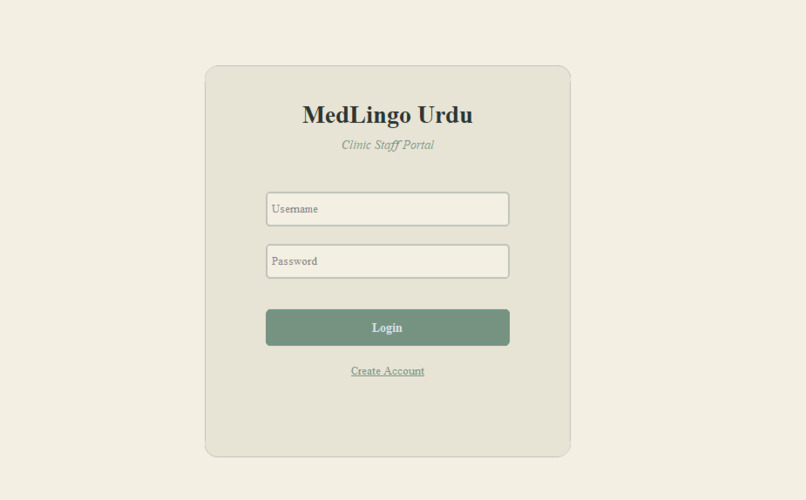
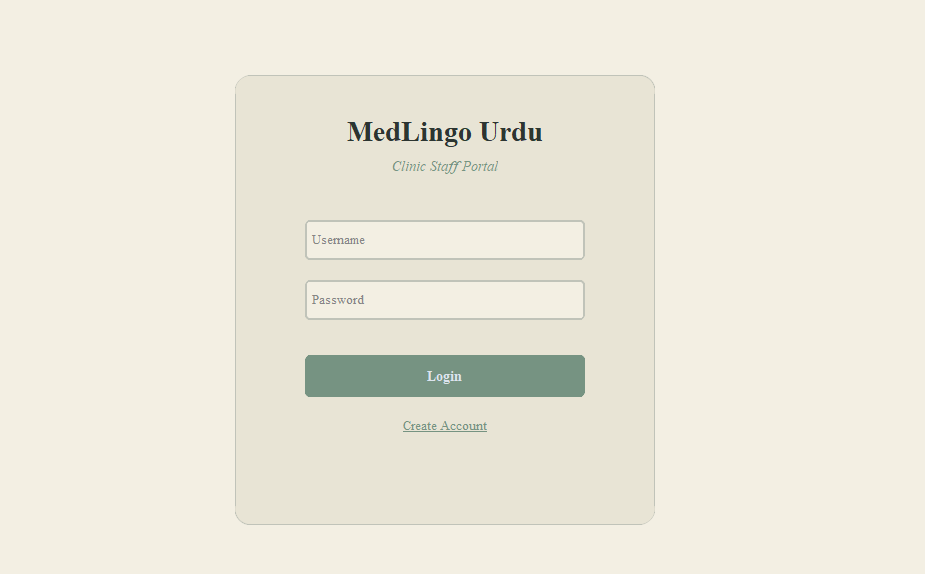
Sign in/Sign up
-
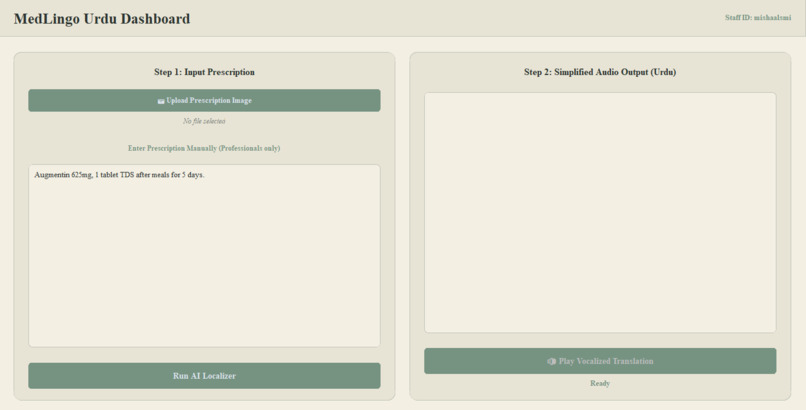
Dashboard
Inspiration
In rural and low-income regions across Pakistan, thousands of patients face severe health risks simply due to low literacy rates and language barriers. While medical consultations happen verbally in local languages, prescriptions are traditionally written by doctors in complex, jargon-heavy English. This creates a dangerous gap at the pharmacy counter. Patients often leave without fully understanding their dosages, timing, or safety warnings. I built MedLingo Urdu to sit directly at the point of care in rural clinics and pharmacies, transforming inaccessible medical text into clear, spoken Urdu instructions.
What it does
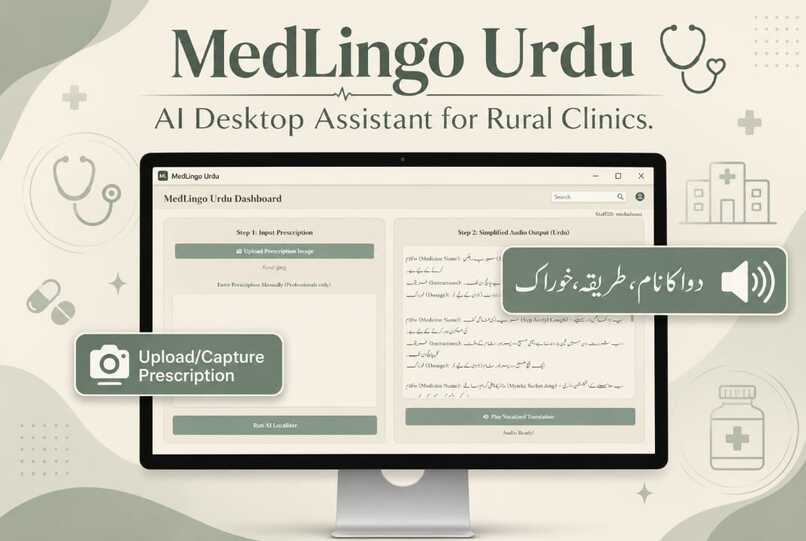
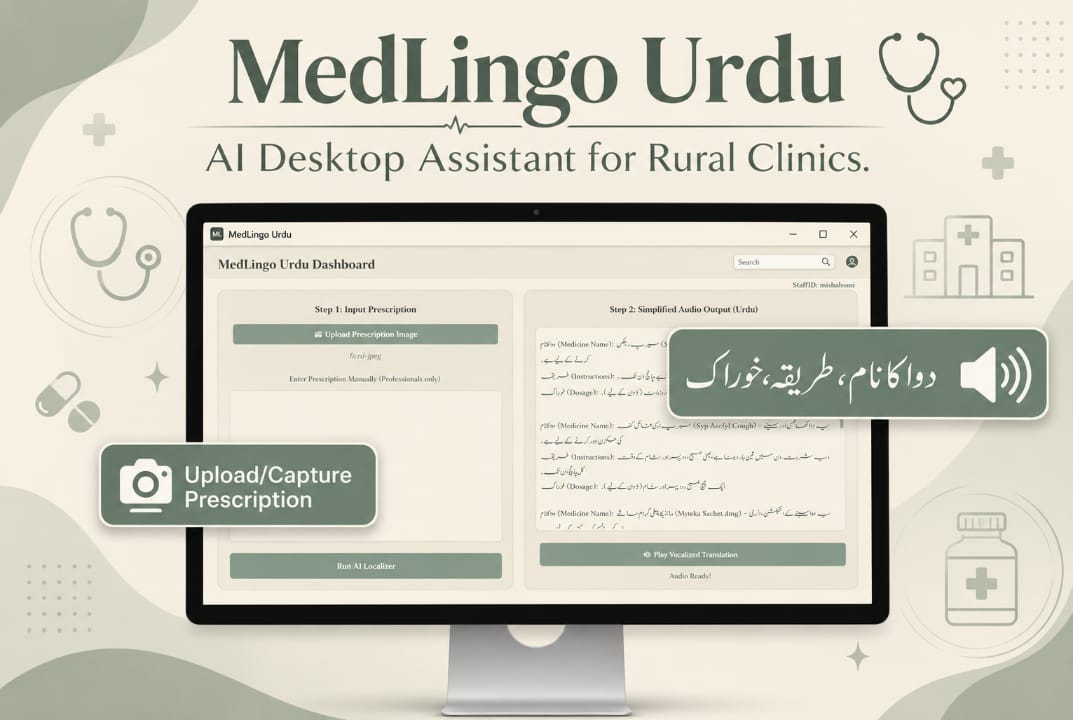
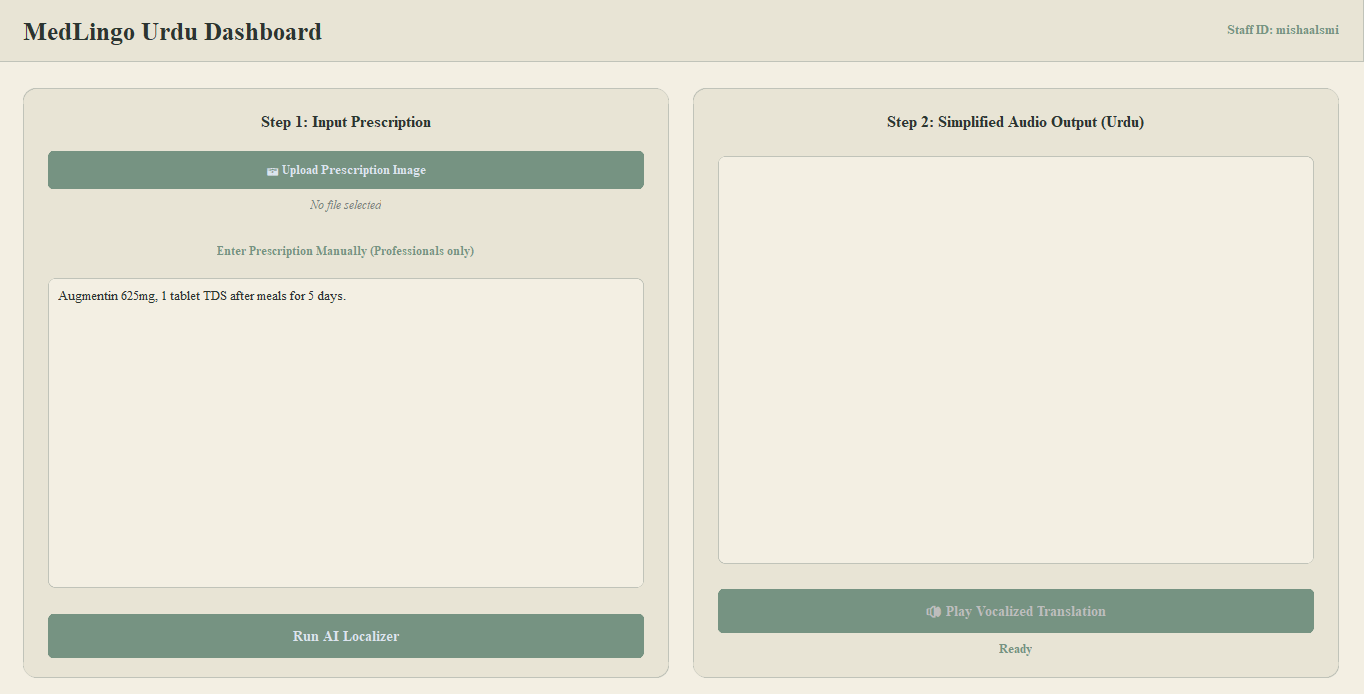
MedLingo Urdu acts as an intuitive, two-step AI Desktop Assistant built specifically for busy frontline healthcare workers and pharmacists in rural clinics. The application bridges a critical health literacy gap by converting complex English medical jargon into clear, spoken Urdu instructions. Pharmacists can instantly upload or capture a photo of a handwritten or printed prescription, or input text manually. The underlying engine then simplifies clinical abbreviations, translates the instructions into natural Urdu text, and reads the dosage details aloud with a single click of an integrated audio button, allowing low-literacy patients to fully understand their care plan.
How we built it
• Built an accessible desktop dashboard optimized for ease of use in fast-paced clinical environments. • Utilized advanced Generative AI APIs to perform precise optical character recognition, context-aware simplification, and accurate Urdu translation. • Integrated a natural-sounding Text-to-Speech framework to output clear, audible Urdu speech directly from the dashboard interface.
Challenges we ran into
• Simplifying dense clinical abbreviations and complex drug names into conversational Urdu that a patient can easily grasp required meticulous prompt engineering. • Ensuring the Nastaliq and Urdu text rendered beautifully and remained completely legible within a compact desktop frame took several layout iterations. • Designing the application architecture with performance optimization in mind so it could handle remote area deployment with unstable internet connectivity.
Accomplishments that we're proud of
• I successfully designed and prototyped a complete dual-input system that takes a raw prescription file and yields localized speech outputs in under a minute. • I created a user interface that specifically accommodates the workflow of rural operators, requiring minimal technical literacy to run the script effectively.
What we learned
• Simplifying dense clinical abbreviations and complex drug names into conversational Urdu that a patient can easily grasp required meticulous prompt engineering. • Ensuring the Nastaliq and Urdu text rendered beautifully and remained completely legible within a compact desktop frame took several layout iterations. • Designing the application architecture with performance optimization in mind so it could handle remote area deployment with unstable internet connectivity.
What's next for MedLingo Urdu
Expanding past Urdu to include regional languages like Pashto, Punjabi, Sindhi, and Balochi, and making a mobile version of this application.
