

Inspiration
The accessibility of local pharmacies doesn't necessarily translate into accessibility of essential drugs/medications, especially when you are abroad. Let's say you are in Russia, and urgently need an allergy medication, say Zyrtec. You don't speak any Russian. You don't know what the main substance of Zyrtec is, so you have no idea what to ask for to the pharmacist (who is looking at you with a confused face), and after looking around, it's pretty clear that they don't sell Zyrtec in Russian pharmacies. This is where Medlingo can play a role. I imagine there are lots of people (including some of our team members) out there who have had a similar experience while abroad. What if we could build an application that only needed a user input of some medication name, and could output the generic ingredient (substance) of that medication in local language (so the Russian pharmacist can easily understand!)? What if we could build an application that went beyond just that and could output the local equivalent of the input medication?
What it does
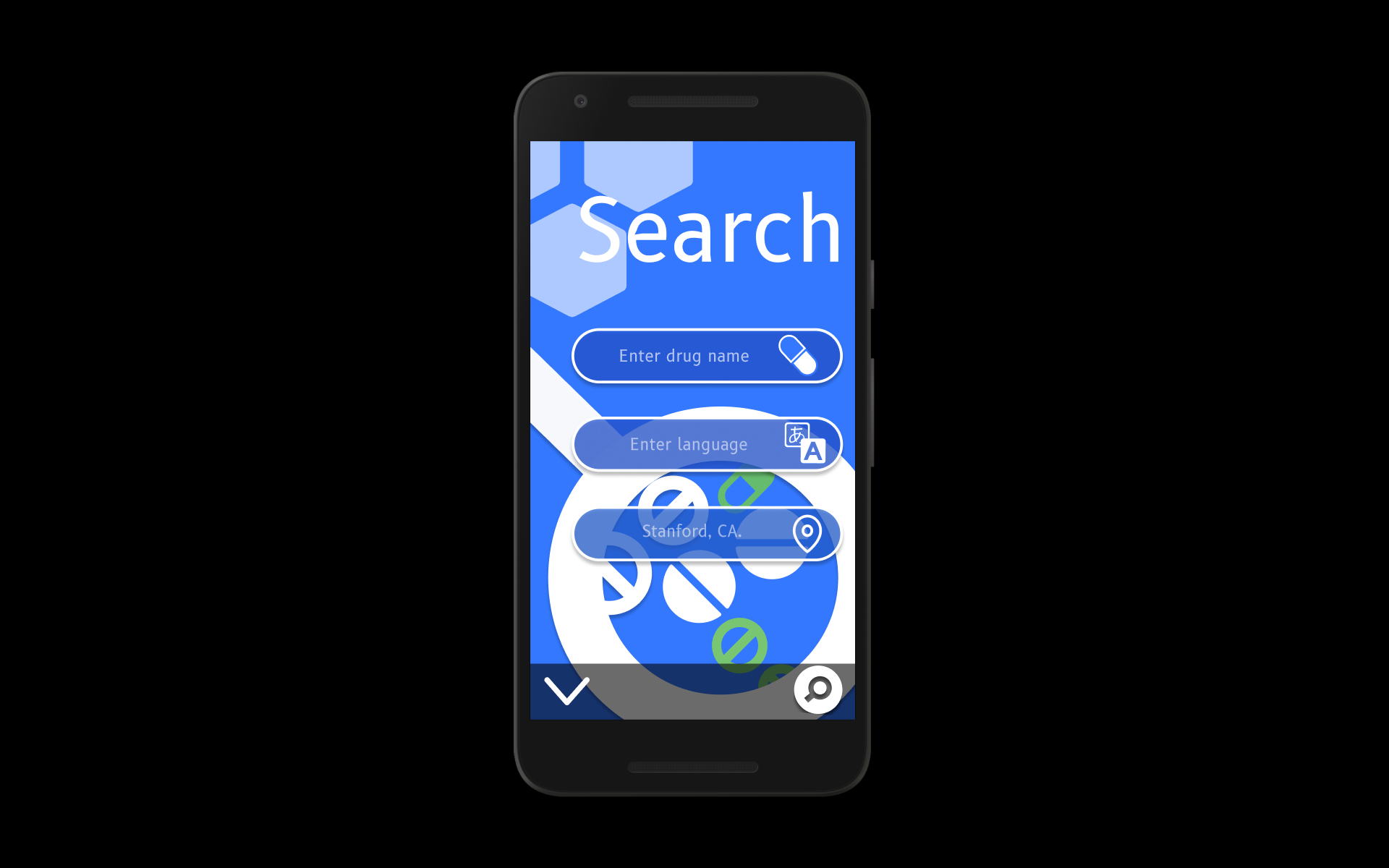
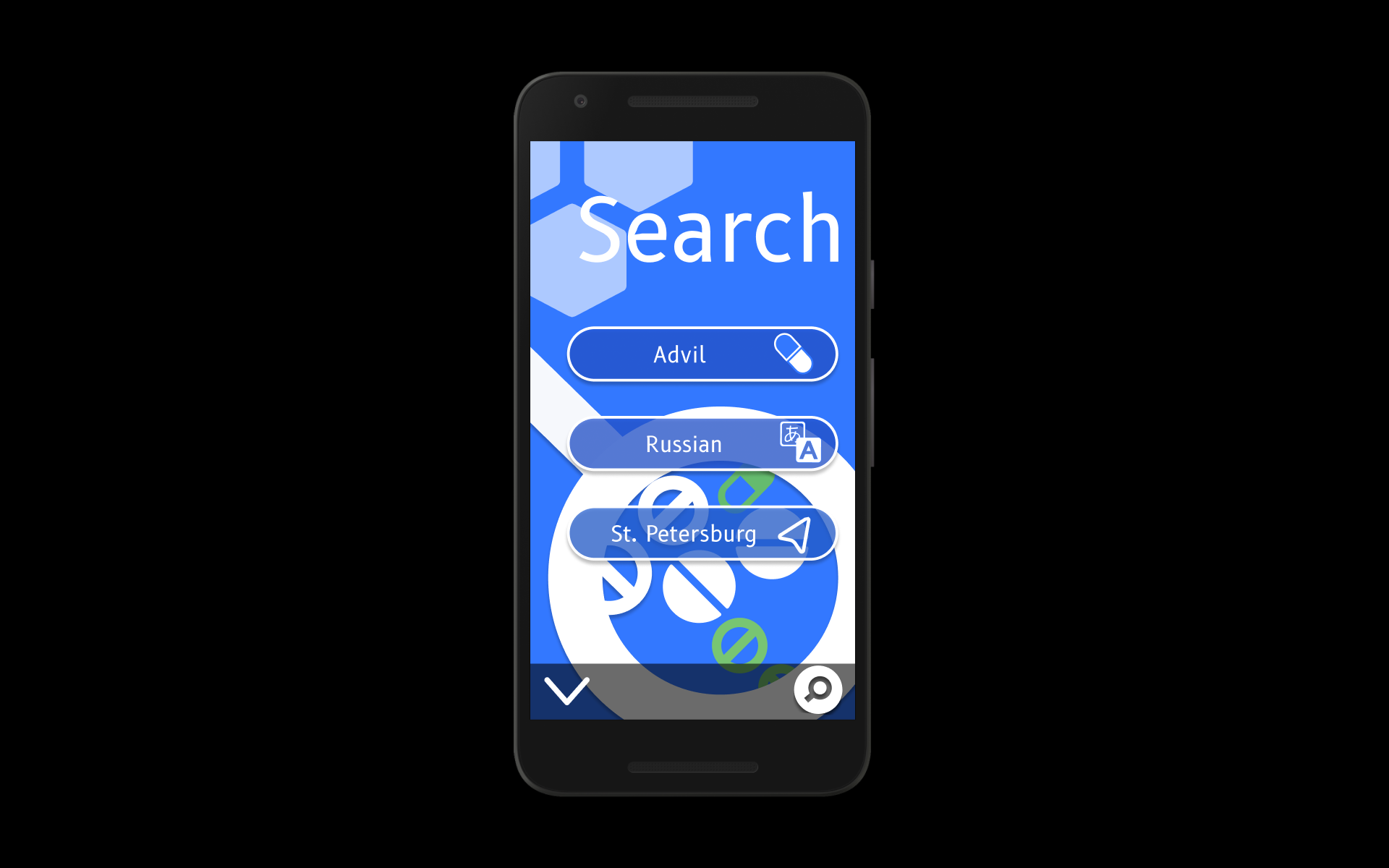
Medlingo allows users to input the name of any drug, then searches for generic matches in the RxNorm database. We take advantage of the fact that drug ingredients and generic often have well-defined translations into foreign languages to return a translated name for the drug along with information about its ingredients. Users can show the output to pharmacists to ensure that they can find the needed drugs despite any language barriers.
How we built it
We wrote Medlingo in React-native for the cross-platform compatibility. In order to find generic drugs, we used RxNorm to find every drug with most similar properties to the input. After picking out the right generic name from the list of outputs, we queried the the Google Cloud translation API. The frontend was designed in Figma and then translated into React.
Challenges we ran into
First and foremost was the fact that none of us are familiar with React-native. We needed to essentially learn this new technology from scratch to complete the app.
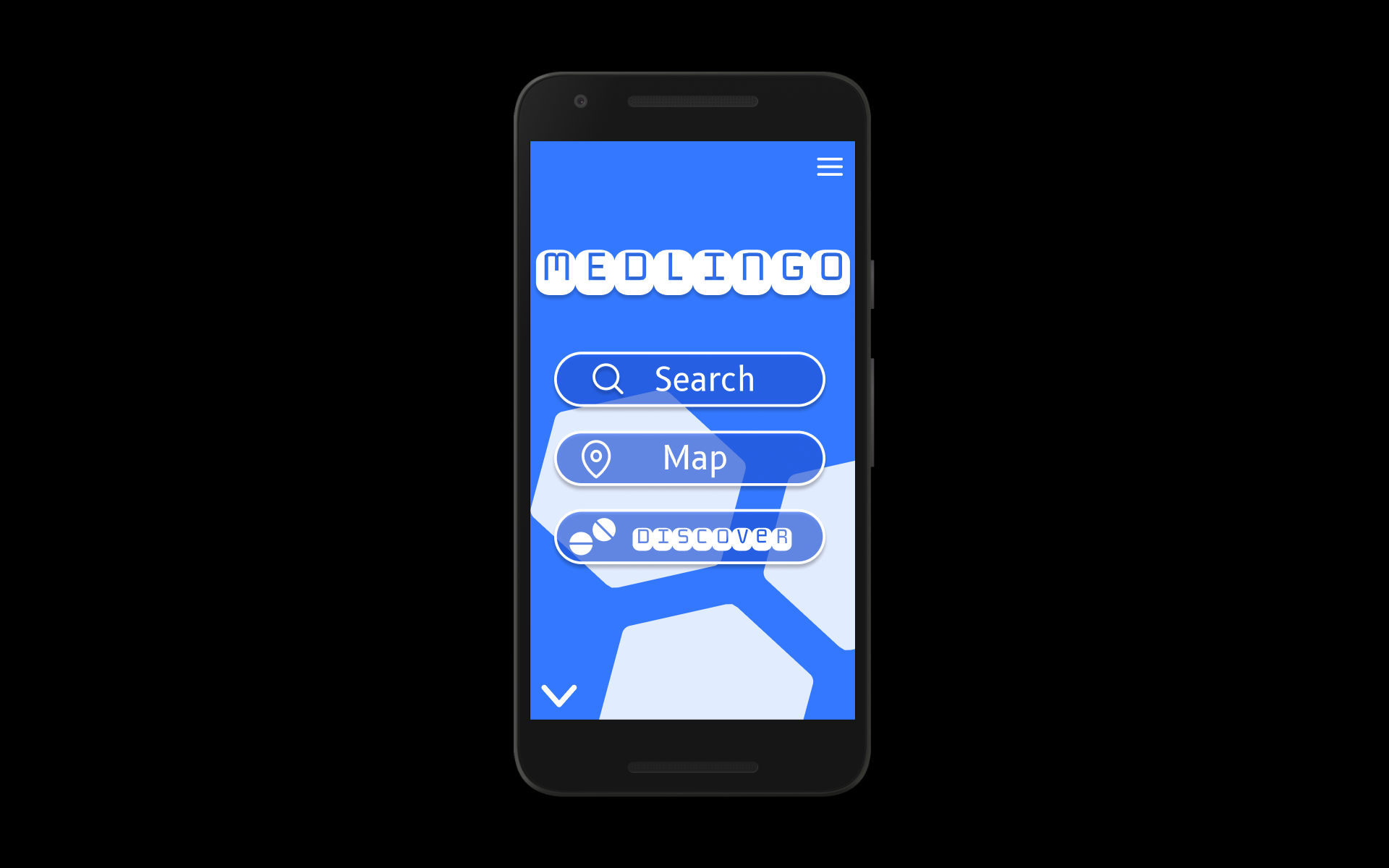
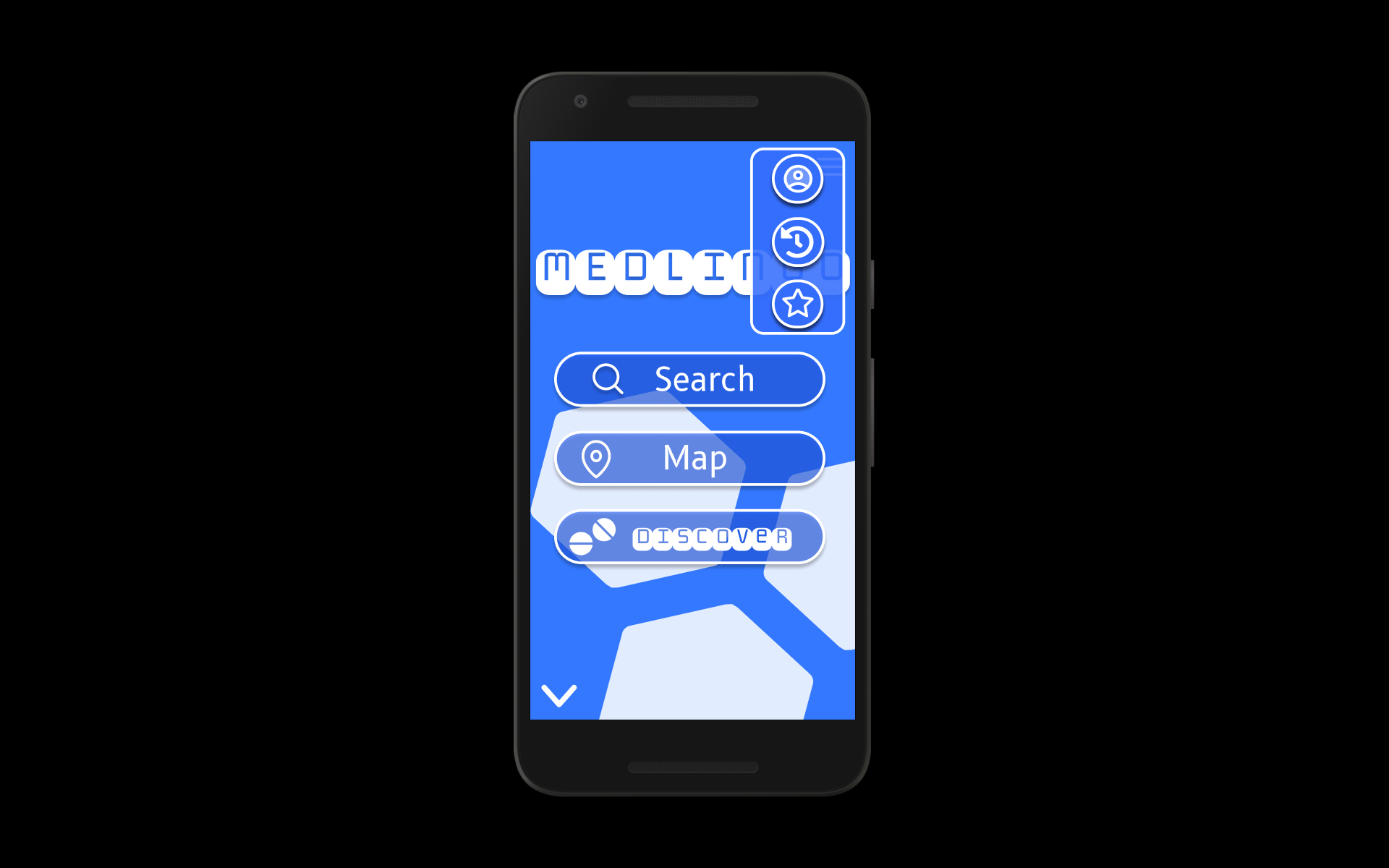
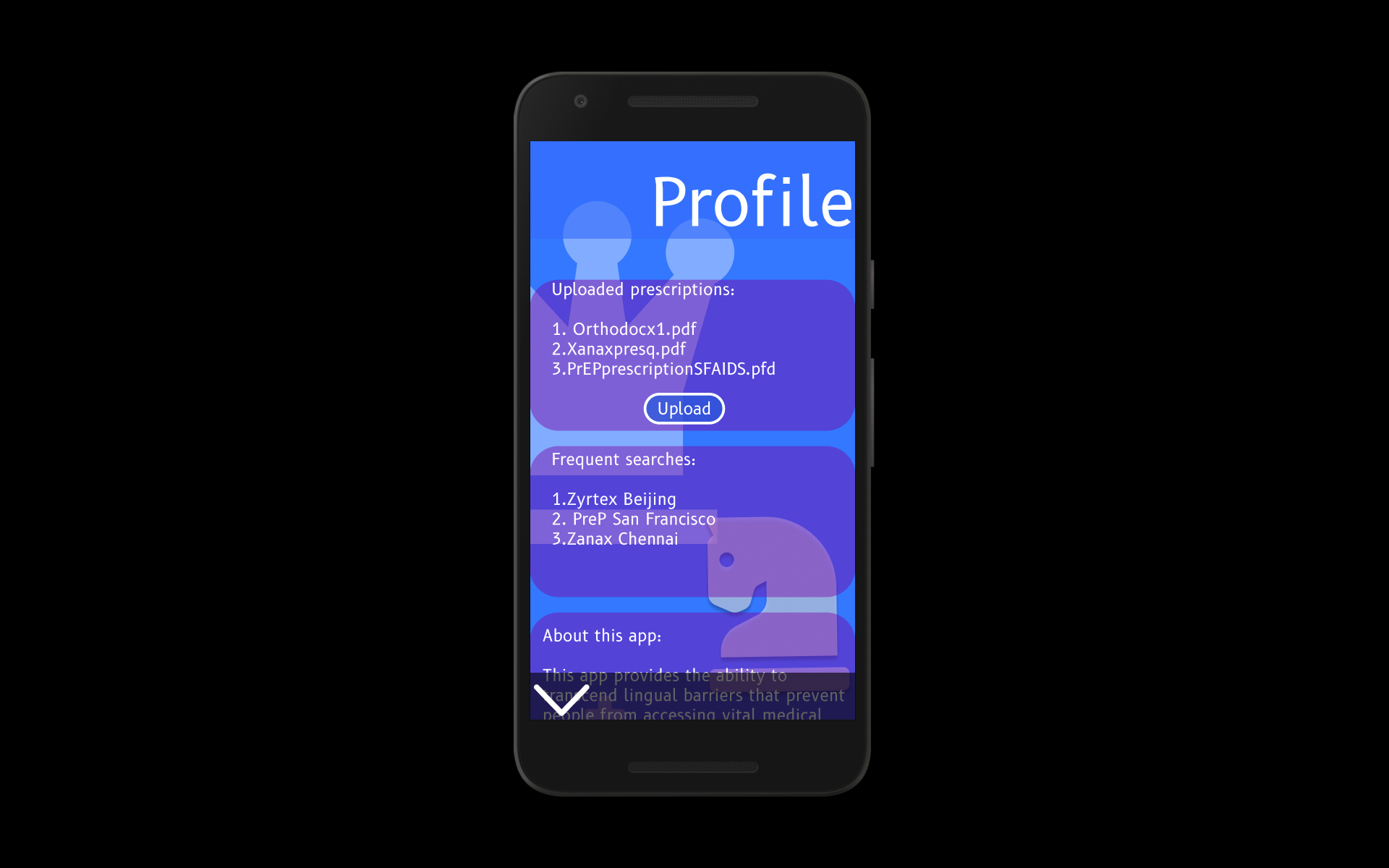
We had trouble with realization of UI/UX. We designed the UI as a prototype in Figma, but due to time constraints found ourselves unable to remake it from scratch in our React app. We ended up combing through what little information Figma gave us about CSS and making some sacrifices in the visual quality of the app in order to finish in time.
We also had issues with RxNorm in particular. RxNorm is a great database for information about certain drugs, but is not entirely complete with respect to the features it claims to have. In particular, we were unable to use RxNorm directly to find ingredients of certain brand-name drugs, since although the API allows us to query for ingredients, not every drug has this information filled in. We ended up taking a indirect approach: we looked for apps with similar use cases and other properties that allowed us to narrow down the database to about 10-20 entries that matched the input. We found that, consistently, these were all identical up to dosages and formatting, so we picked out the entry that showed up in the most of the other ones. We found that this method consistently returned the correct generic name.
Finally, we were unable to find many people to test our app, since we worked fairly far from the event venue and finished late.
Accomplishments that we're proud of
We're proud that we were able to successfully pick out the active ingredients of drug inputs despite having patchy information that prevented us from doing it directly, as well as properly translate the active ingredients.
What we learned
We all came out with substantially more knowledge of React, in particular React-native, and understanding of how to access and make use of APIs.
What's next for Medlingo
We plan to put considerable effort into the UI to bring it up to the level of the prototype. We will offer a map of nearby pharmacies that carry the product in question. Ideally, we would like to try finding not just the name of a generic, but also the local brand name equivalents for a given drug. Moreover, we would like to translate from other languages as well, but this work is hampered by the low availability of international drug databases. The ultimate goal would be to deliver an app that incorporates an image database and computer vision into the application, and allow users to scan their drugs with their phones to retrieve an image of the local equivalent of the same drug/medication.

Log in or sign up for Devpost to join the conversation.