-
-
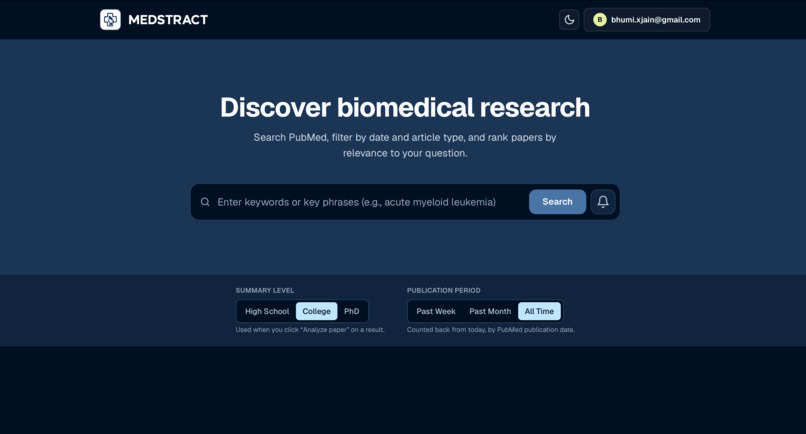
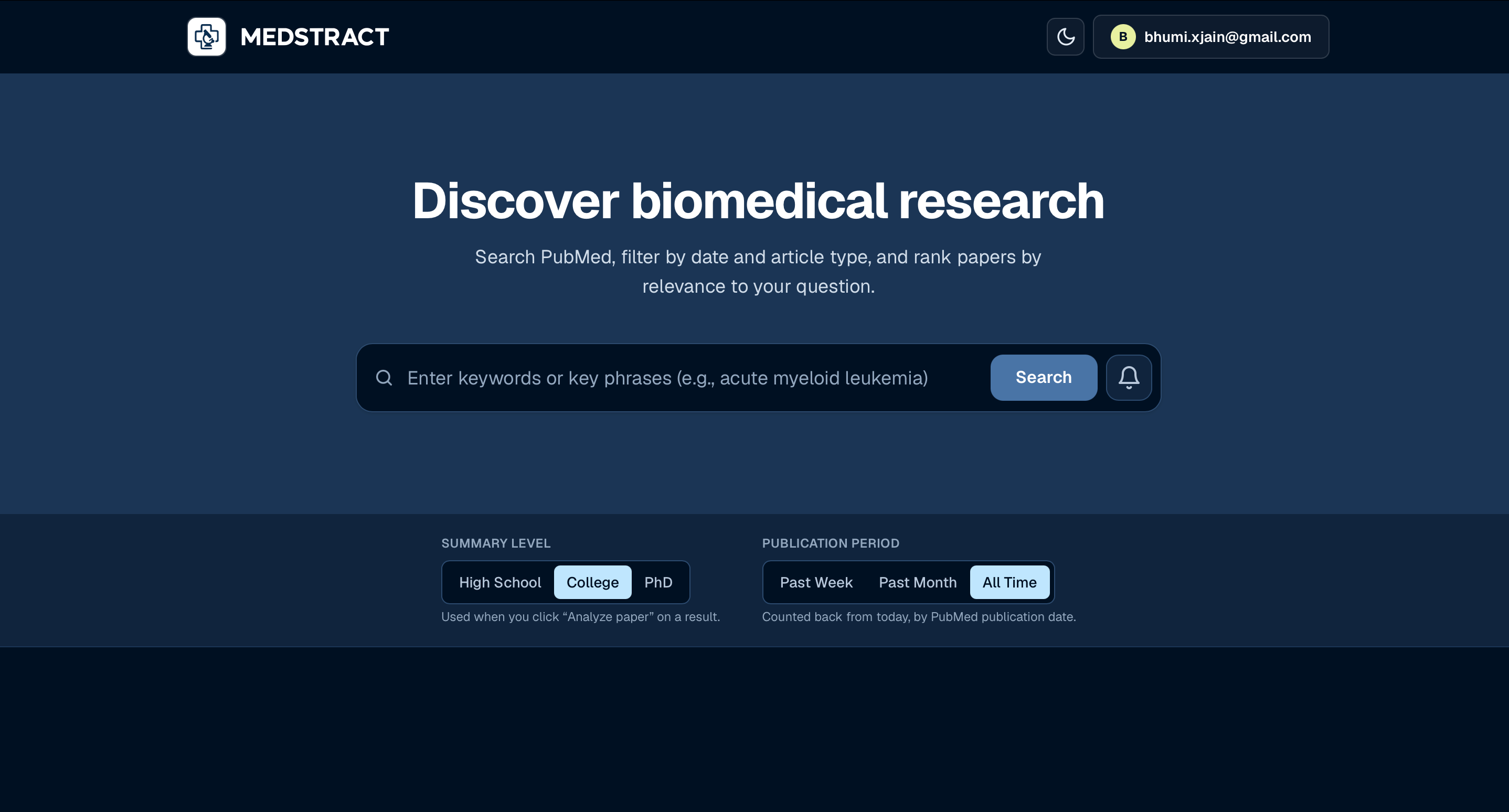
Medstract homepage: The main search page lets users enter research topics, choose a summary level, and select a publication period.
-
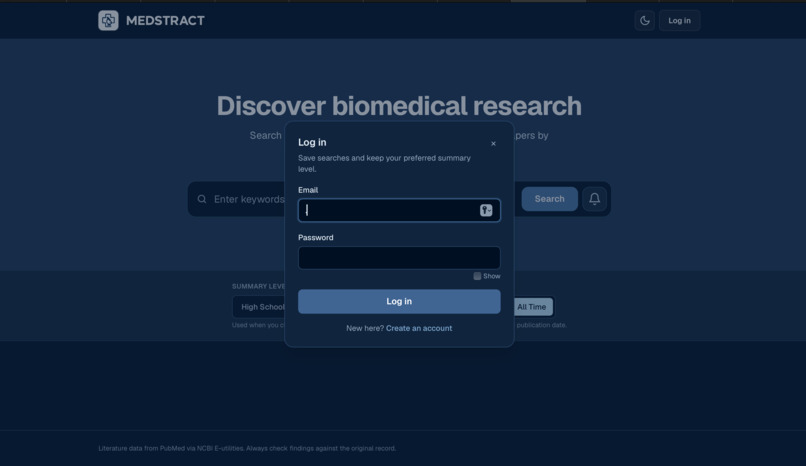
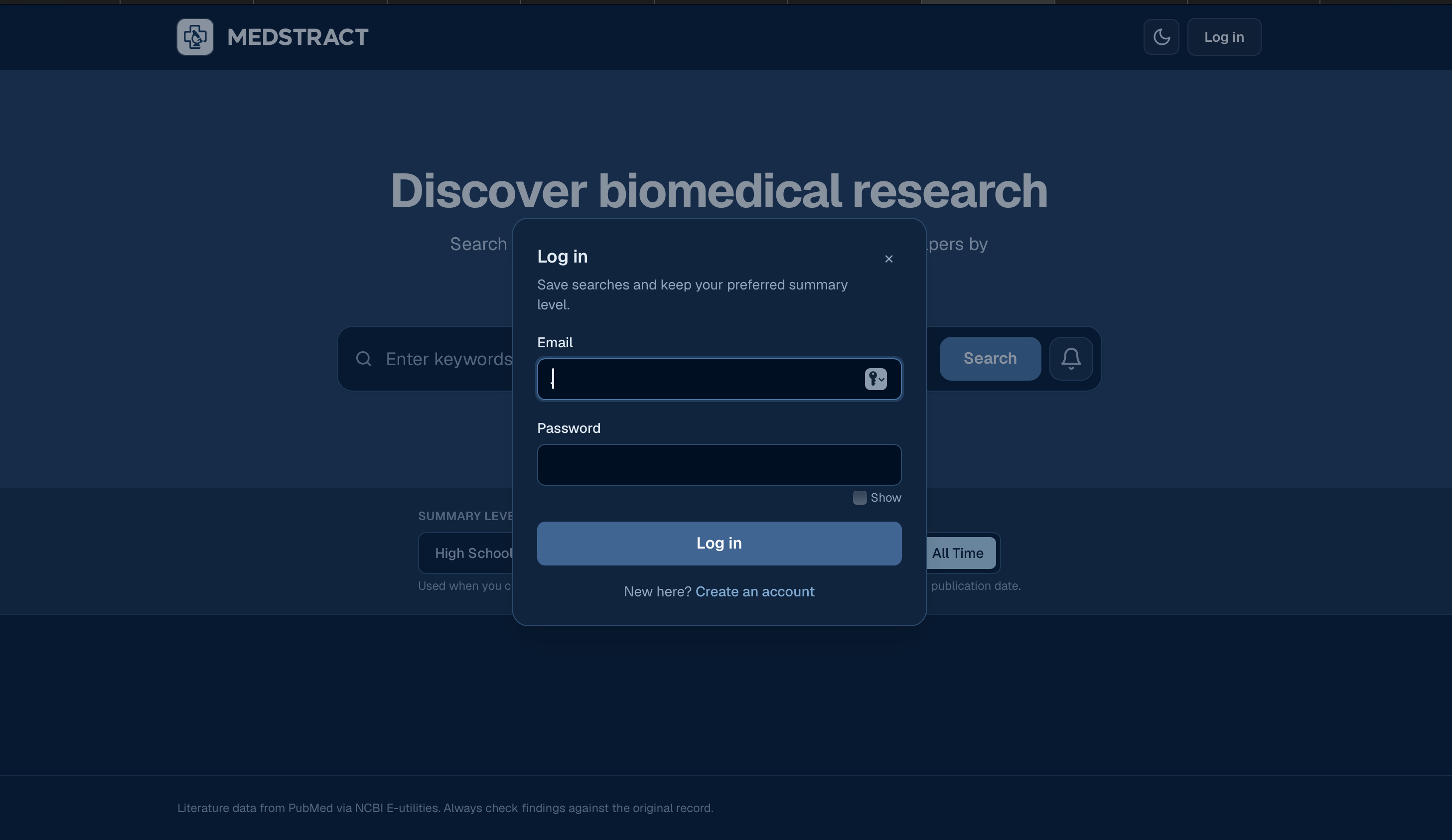
Login page: Users can sign in or create an account to save searches and research preferences.
-
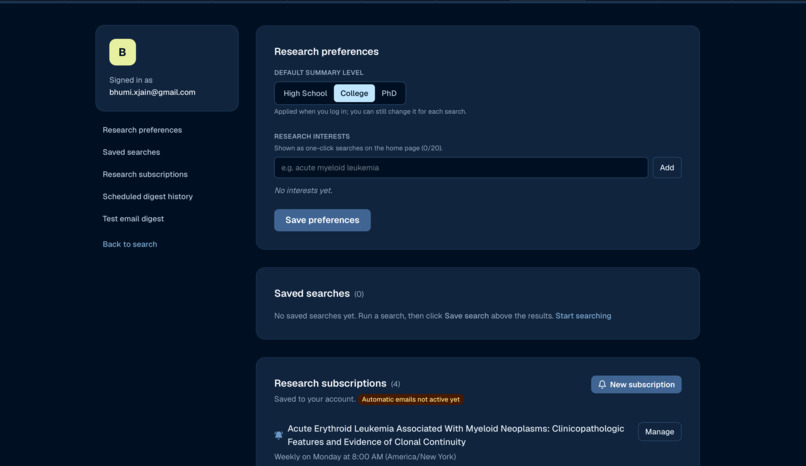
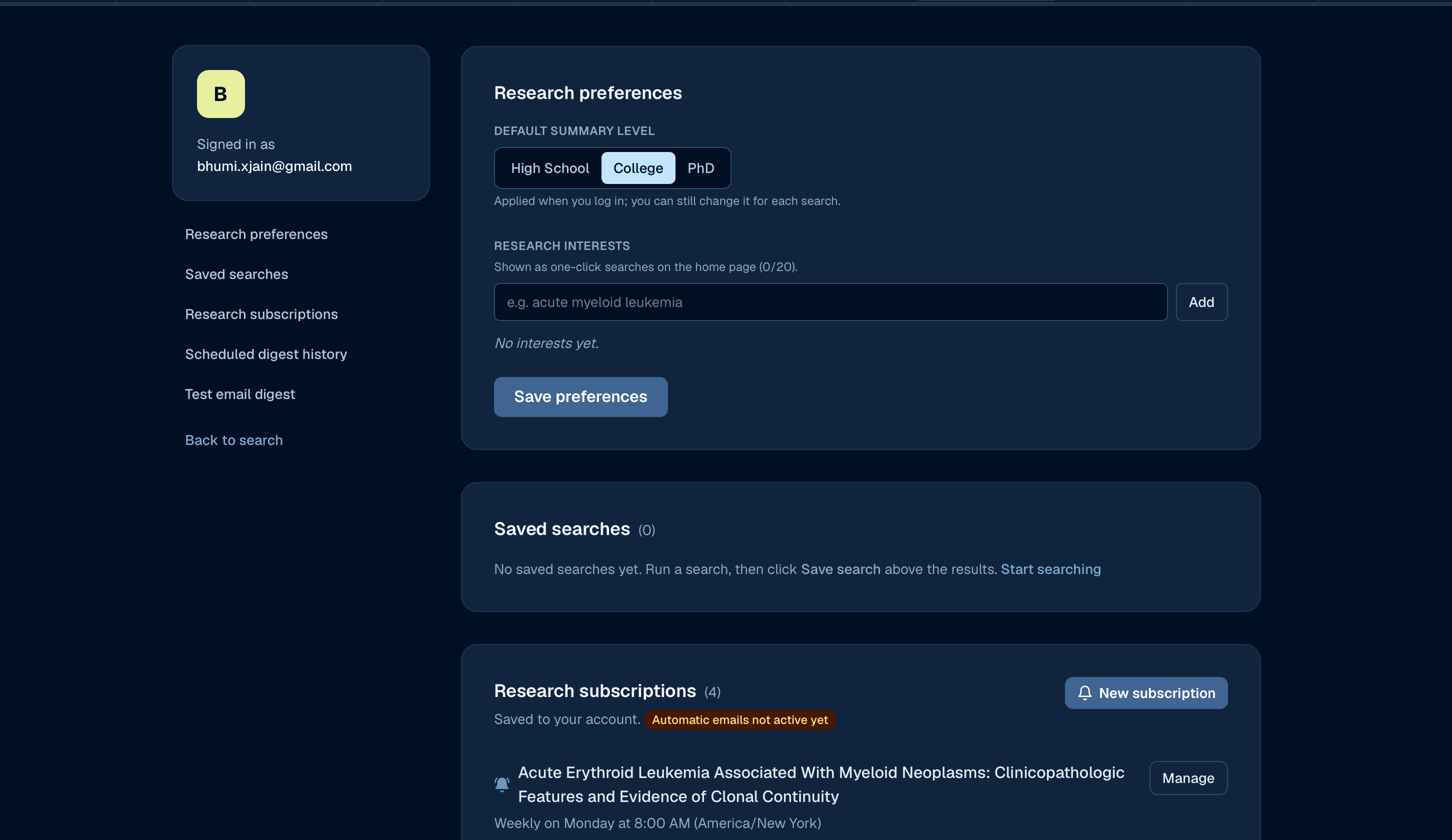
Account dashboard: Users can manage their research preferences, saved searches, and research subscriptions.
-
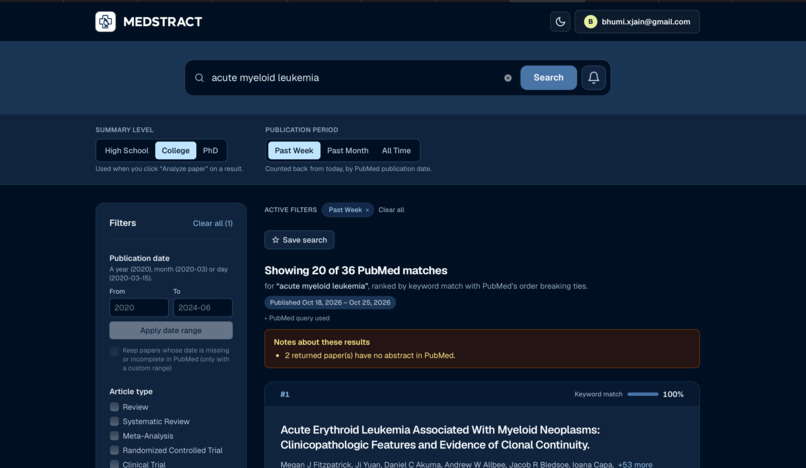
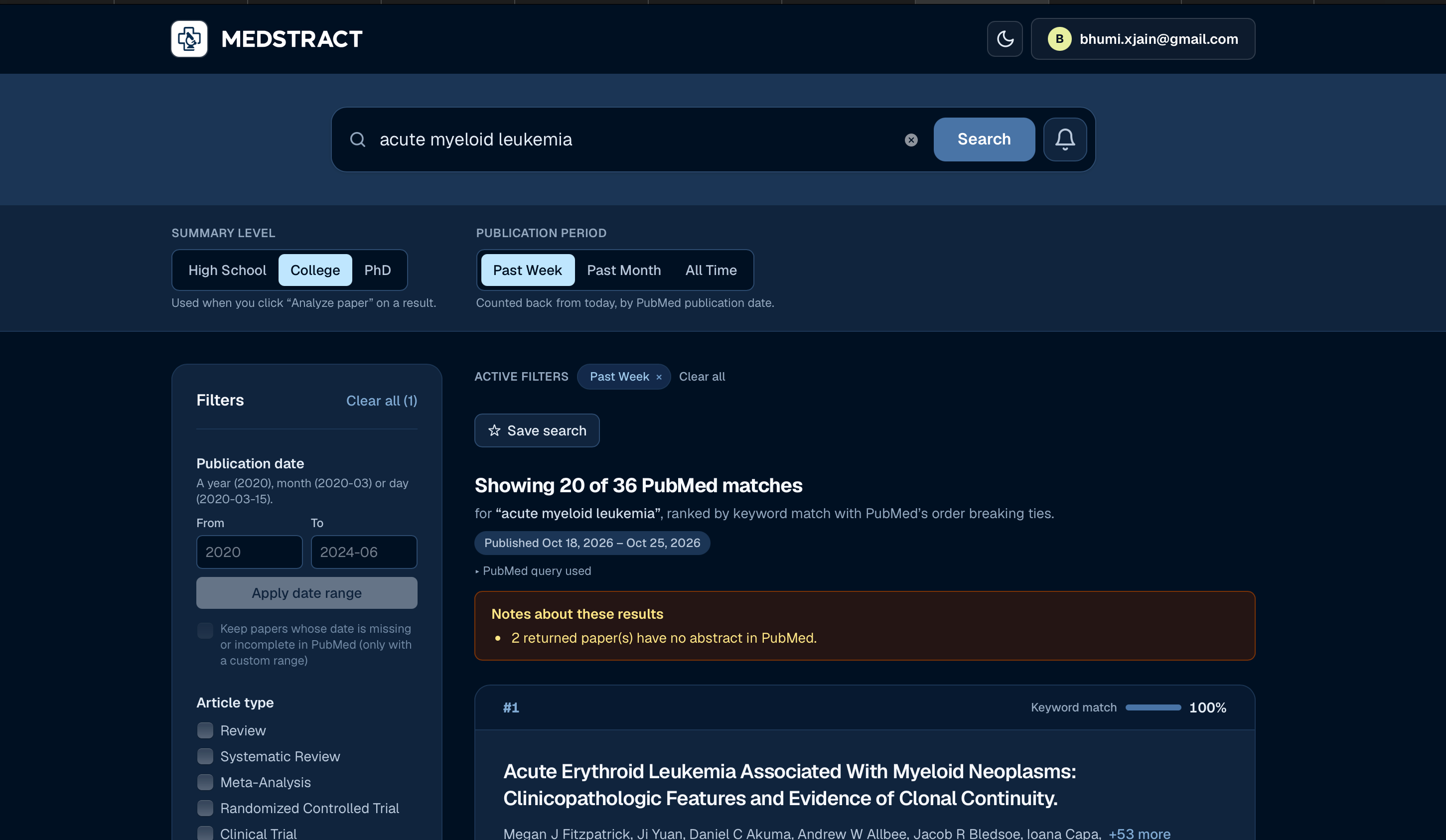
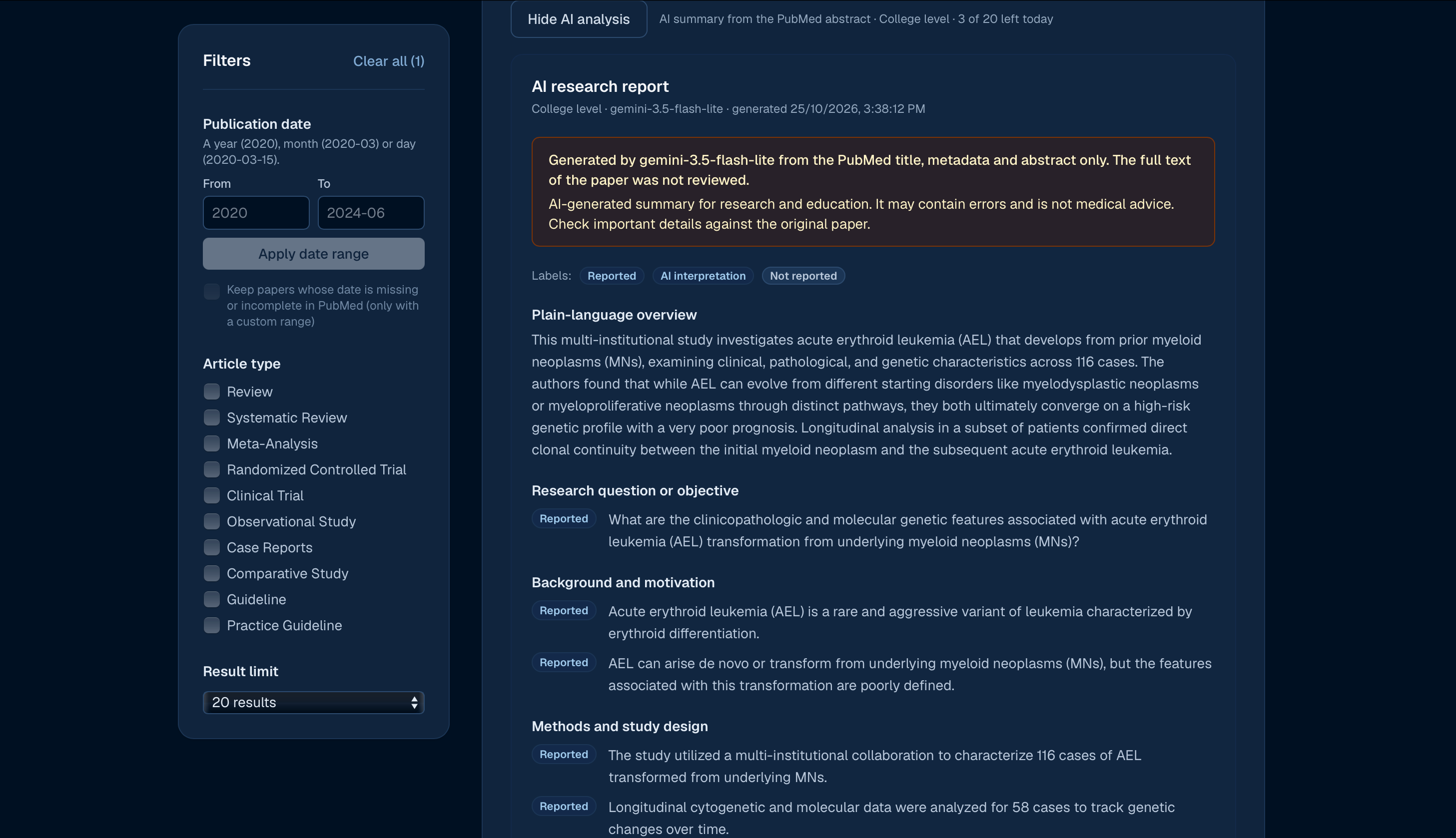
PubMed search results: Users can search biomedical literature and filter papers by publication date and article type.
-
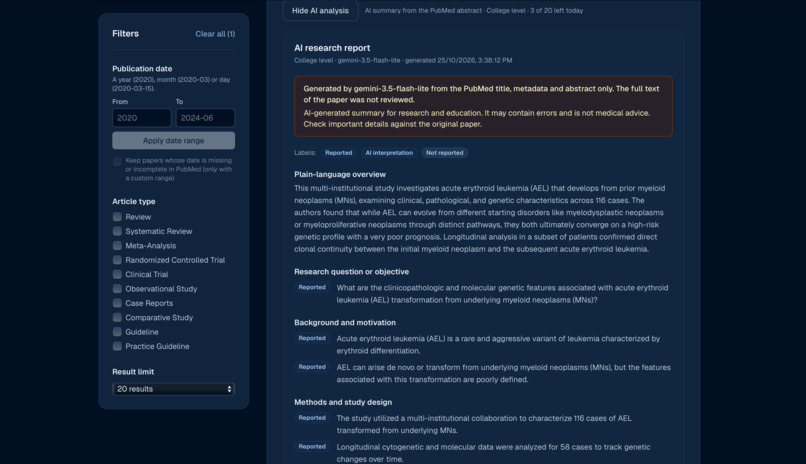
AI research report: Each paper can be analyzed with a structured, plain-language summary of its research question, methods, and findings.
-
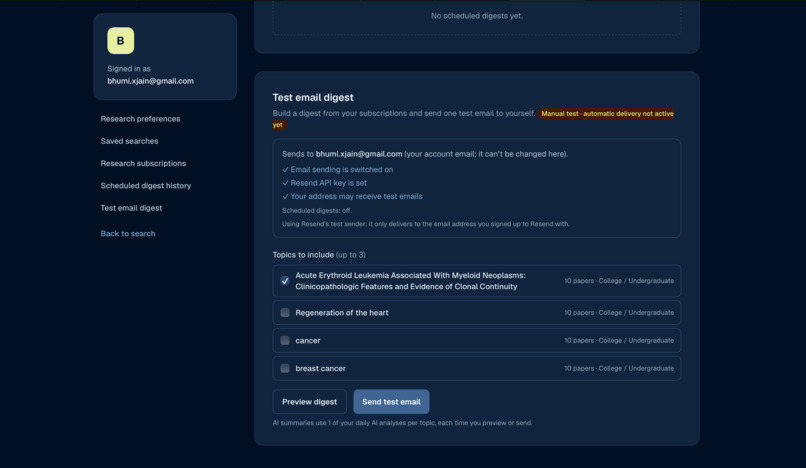
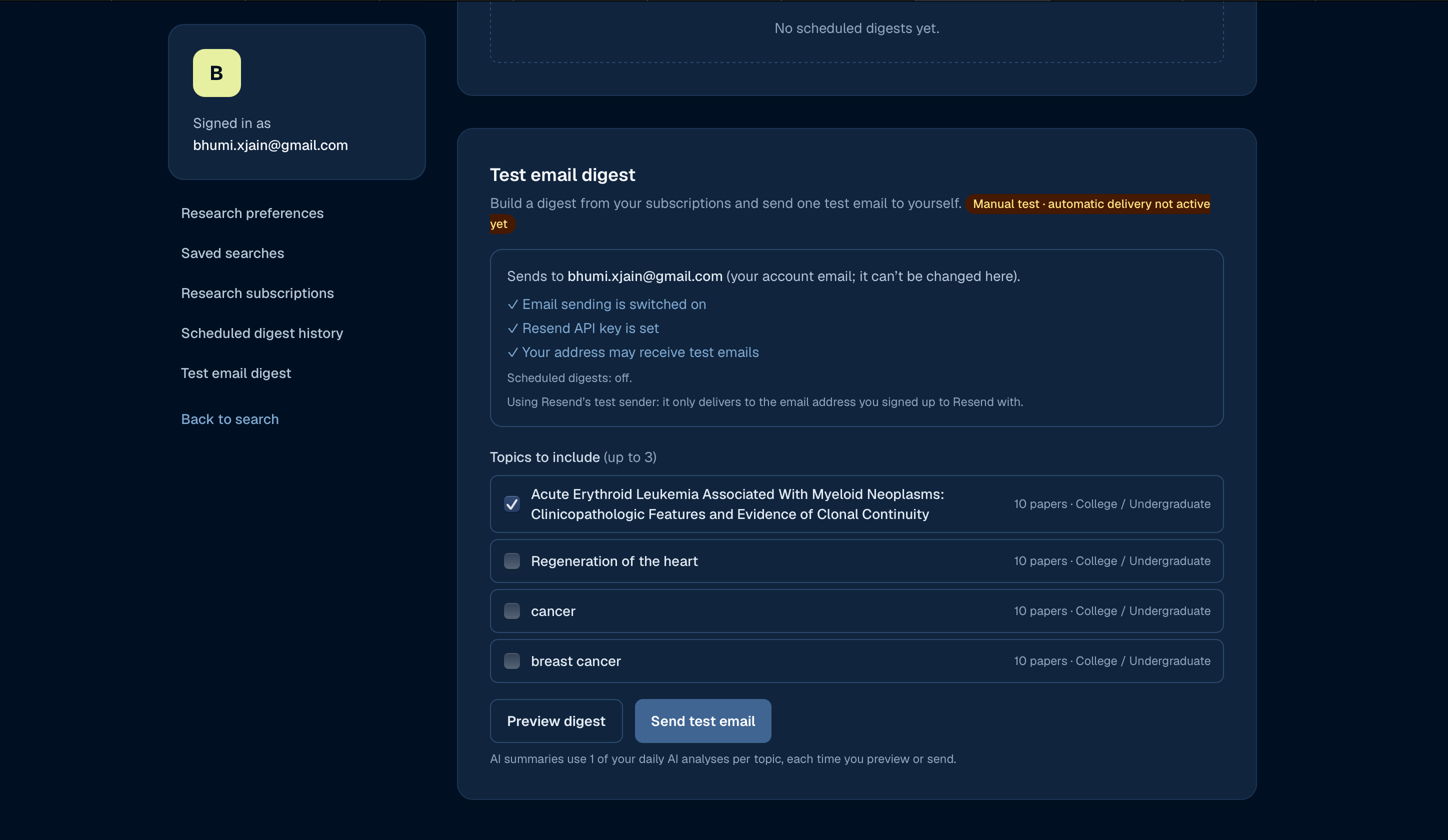
Test email digest: Users can preview and send a test digest to check how their selected research subscriptions appear in email.
-
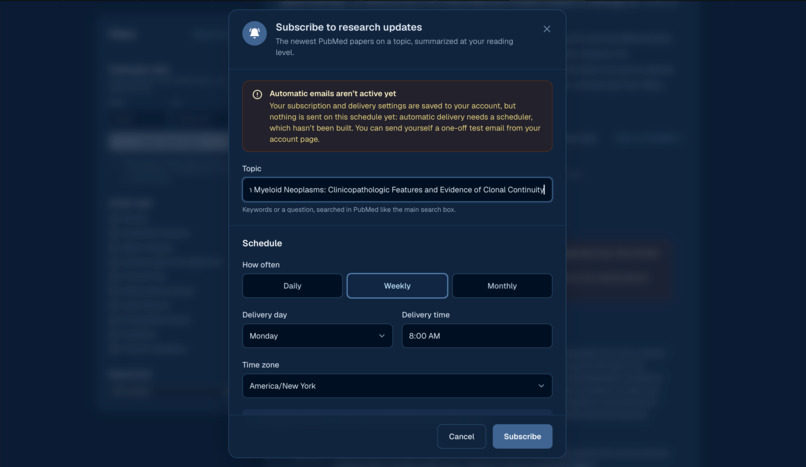
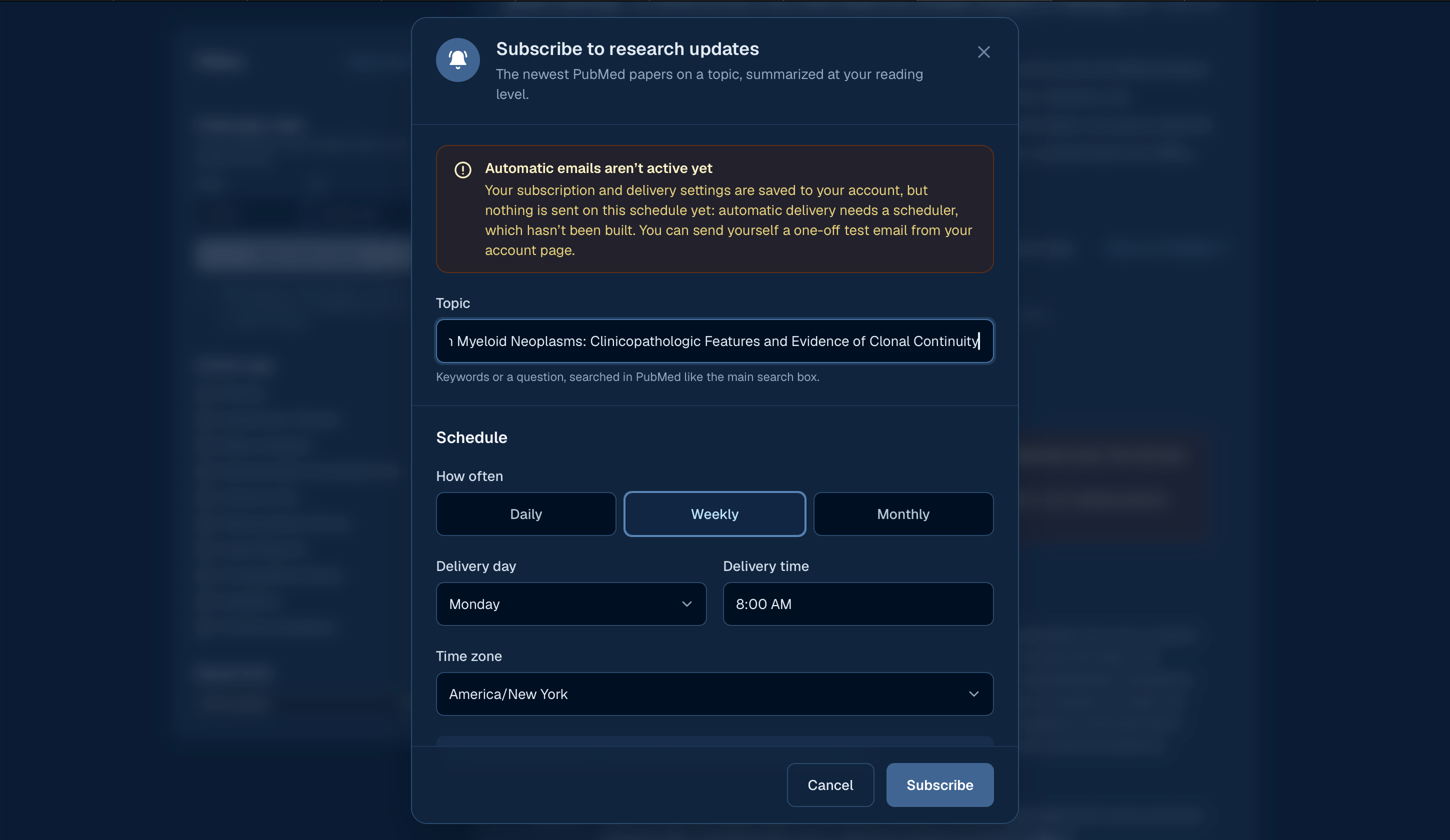
Research subscriptions: Users can set a research topic, choose a delivery frequency, and customize their email schedule.
-
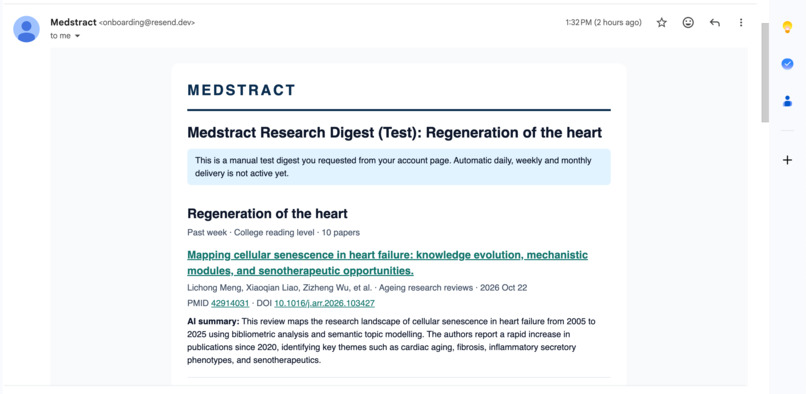
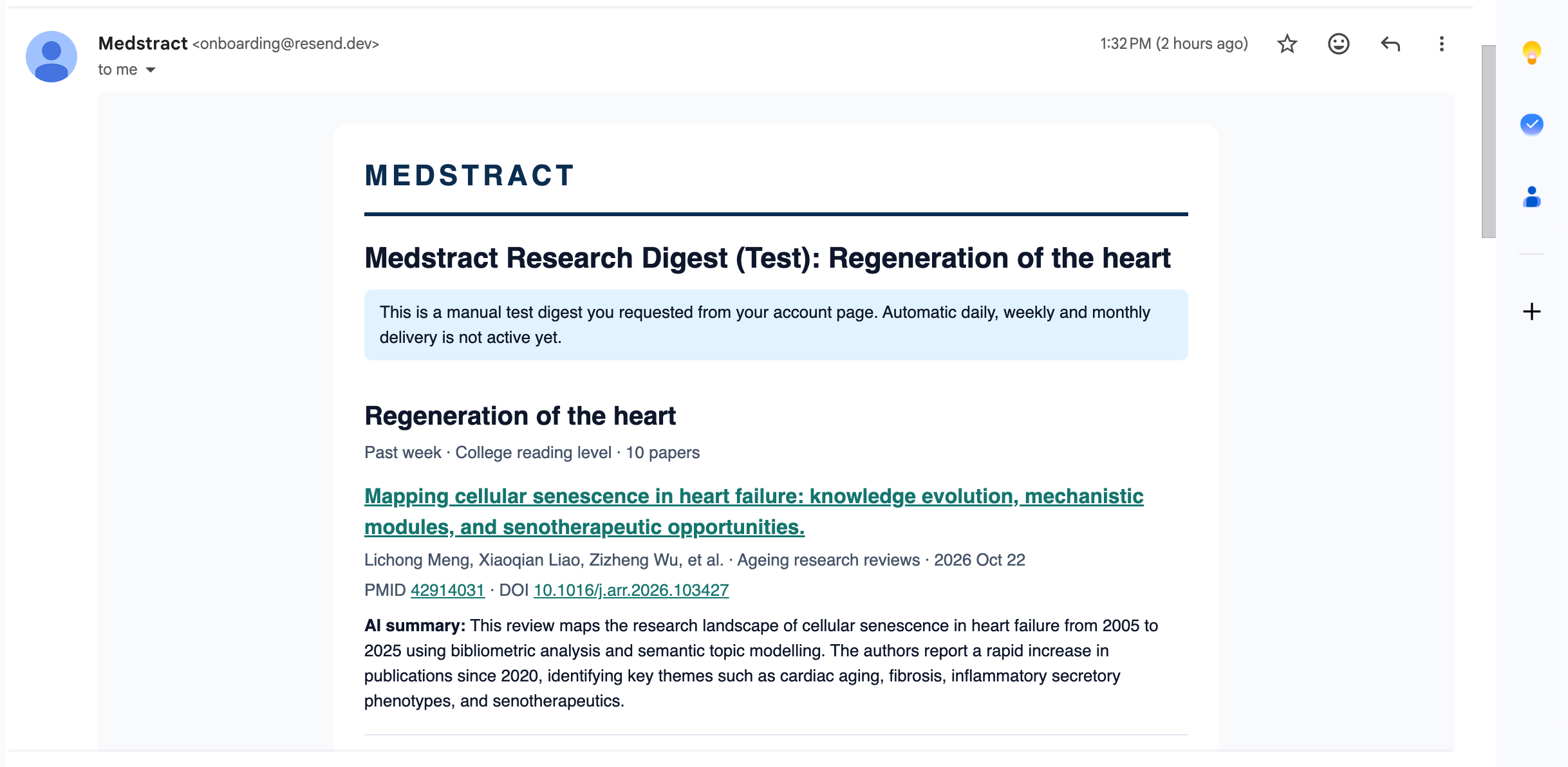
Email digest preview: Medstract delivers research papers with AI-generated summaries in a formatted email digest.
Inspiration
Medstract started with a real problem encountered by a PhD student. She spent at least an hour each week figuring out which papers were important to read for her dissertation project. She wanted to make a tool that improved upon the weekly PubMed alerts used by scientists to make finding the right papers easier and faster than ever. Introducing MedStract, a free-to-use software that sends summarized papers straight to your inbox on the schedule you choose. It was designed for anyone interested in reading articles, whether you are a high schooler working on a research paper or a professor with limited computational experience.
What it does
MedStract is an AI-powered research tool that helps users find recent scientific publications and quickly assess their content through personalized email digests and on-demand summaries. It’s designed with researchers and students in mind to complement the research process. Medstrat is not meant to replace reading the paper itself; instead, it is meant to save valuable time by making it easy to determine which papers need to be read.
The summaries provide a quick overview of the study’s methods and its key findings, helping users determine whether a paper is relevant to their work before investing time to read it in full. With personalized email alerts and summaries at different reading levels, users can keep up with new publications and spend less time screening papers that don’t match their interests.
Users can create alerts by entering any research or search topic, choosing how often they want to receive emails, and selecting a reading level from high school to PhD. Each digest delivers relevant new publications along with AI-generated summaries of their key methods and findings, helping users quickly determine whether a paper deserves a full read. Users can also search for individual papers and generate summaries directly on the website even without an account, making it easy to explore a specific topic without first setting up an email alert.
How we built it
Google Gemini (gemini-3.5-flash-lite) through the google-genai SDK summarizes the paper abstract. Back end: built using FastAPI with Pydantic validation. pulls new papers from PubMed’s official API and uses PostgreSQL to store accounts, preferences, saved searches, and subscriptions. Email digests are sent through Resend Front end: Built with Next.js, TypeScript, and Tailwind CSS v4. Includes light and dark mode with a responsive layout and accessible controls.
What we learned
Our hackathon team consists of two biologists and two computer scientists, and our differing backgrounds were our greatest strength. The biologists brought firsthand research experience and a clear understanding of the problem we needed to solve, while the computer scientists had the technical skills to build the solution. This interdisciplinary collaboration allowed each of us to learn from one another and produce a better product than either group could have built alone.
What's next for Medstract
We plan to keep improving Medstract in several ways. Users will be able to compare and contrast two papers side by side to differentiate their key findings and methodology. We will refine our relevance ranking and add search filters so results better match each user’s interests. We also want to help users find related studies through citations and shared topics, and add a personal library where they can save papers, organize them by project, and shape their interest feed. Finally, users will be able to choose how much detail they want, from a brief summary to a deeper explanation of a paper’s methods, results, and limitations. With these improvements, Medstrat would provide even more support for all levels of researchers.
Built With
- fastapi
- google-gemini
- google-genai
- next.js
- postgresql
- pubmed-api
- pydantic
- resend
- tailwind
- typescript


Log in or sign up for Devpost to join the conversation.