-
-
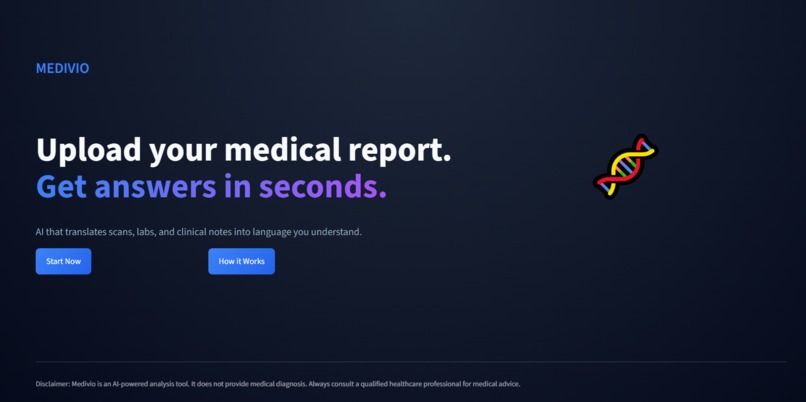
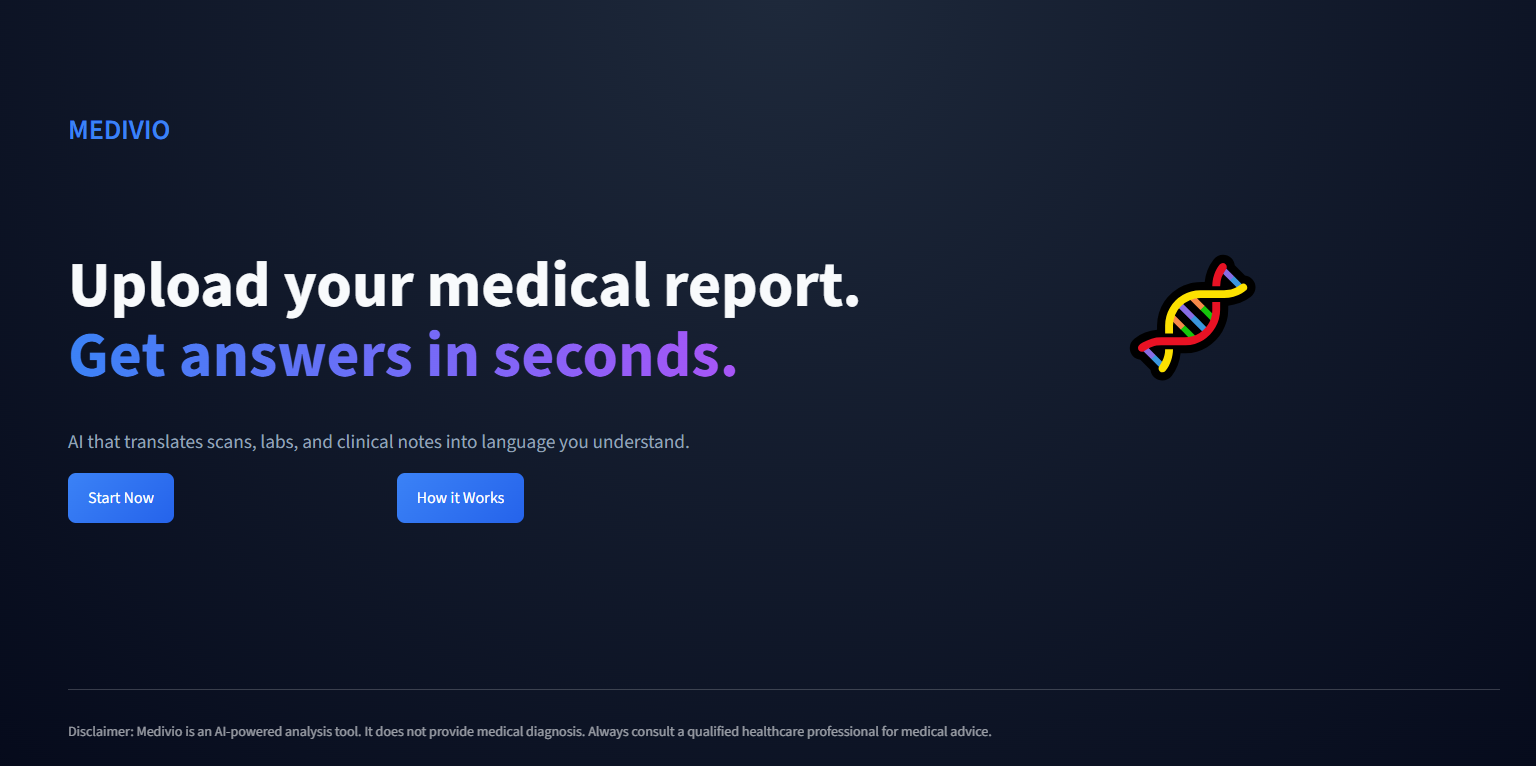
Front Page
-
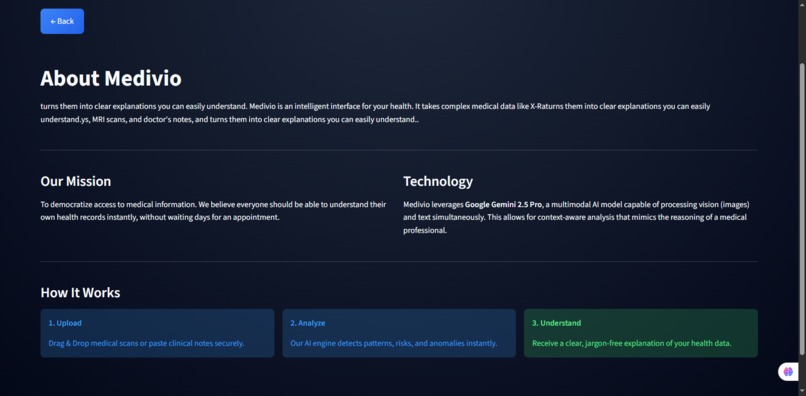
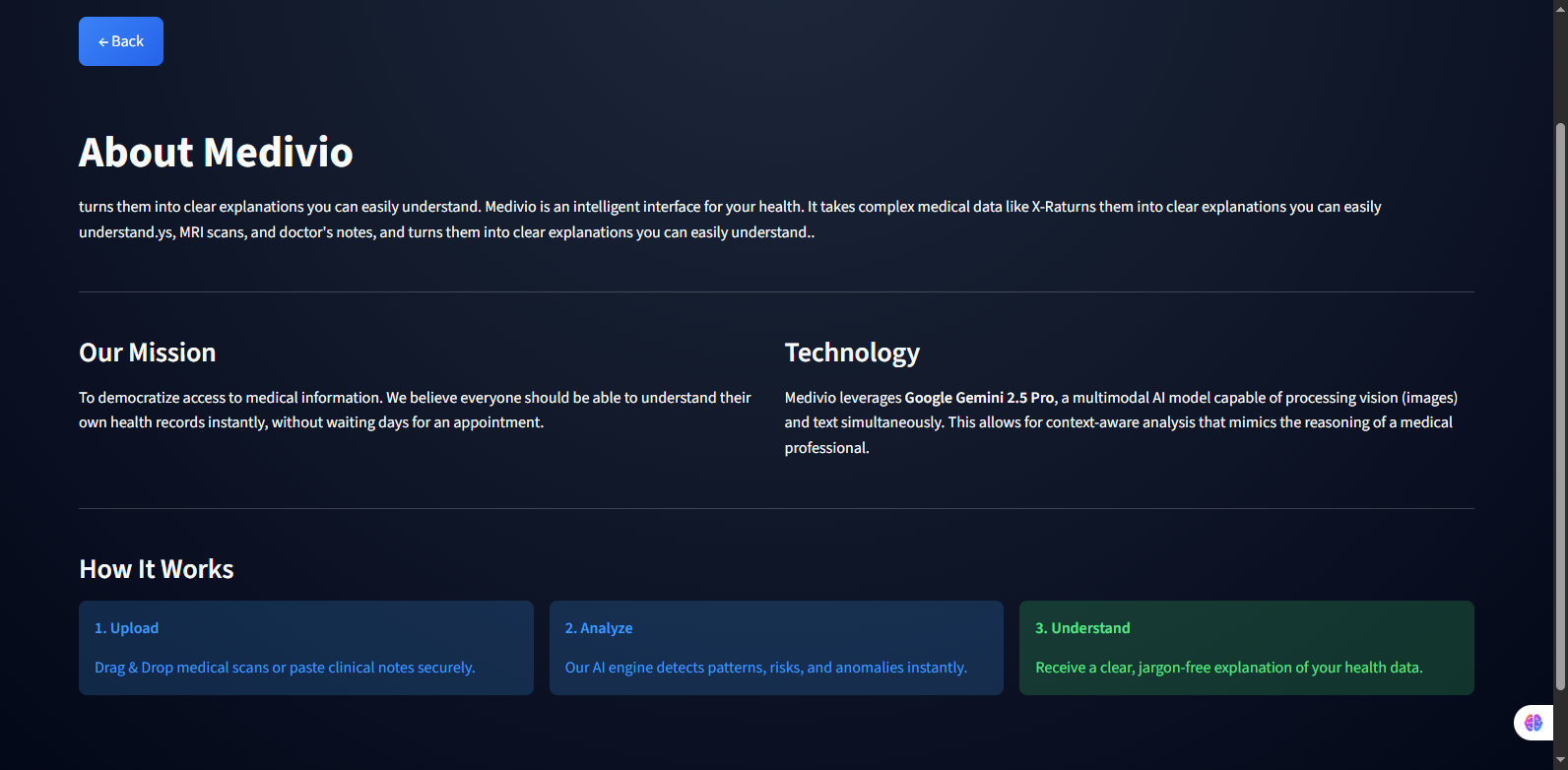
About section
-
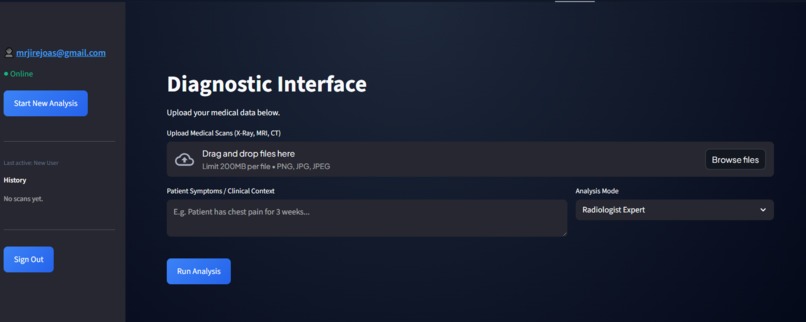
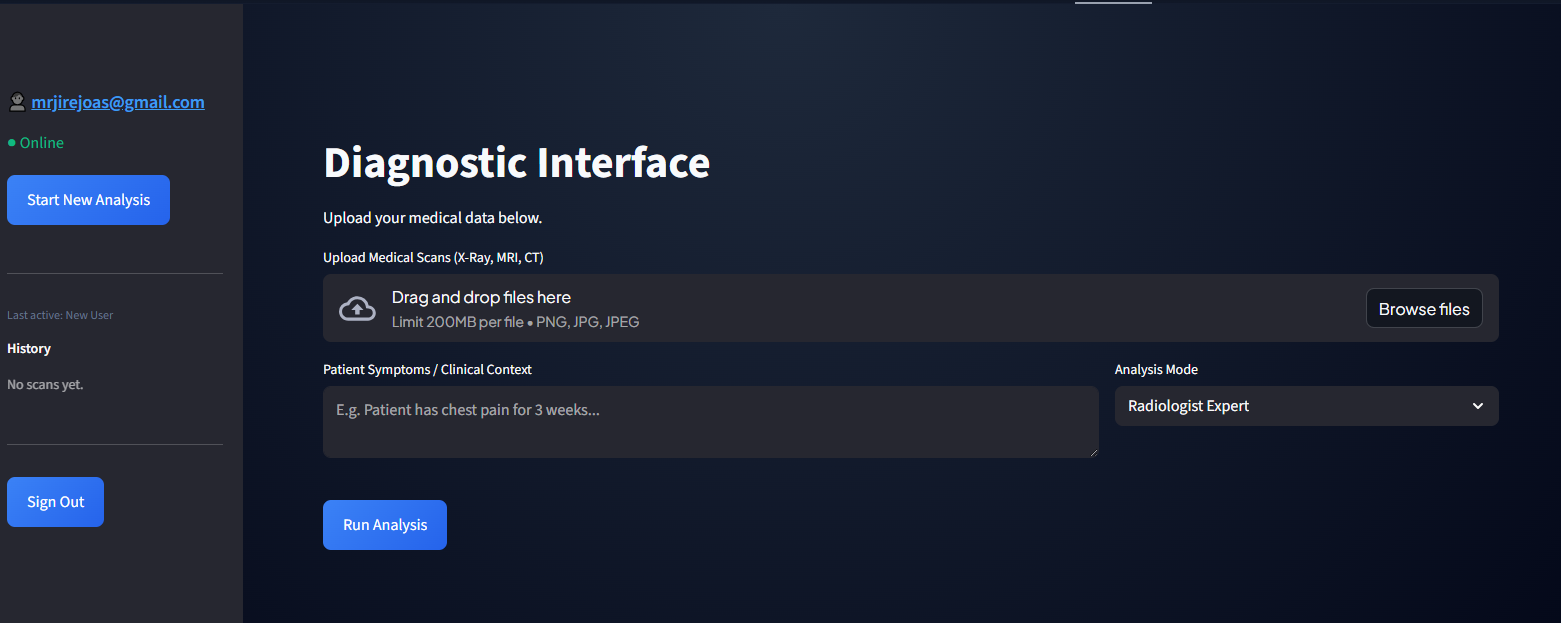
Interface
Inspiration:
I was inspired to build Medivio after seeing how much time doctors and medical students spend analyzing X-rays and other medical scans. I wanted to create a tool that makes it easier to get quick, accurate insights from images, while also learning from the process. The goal was to combine AI with a simple, professional interface that anyone could use.
What it does:
Medivio allows users to upload X-rays or other medical images, enter related health information, and get a clear, organized analysis. The tool also stores user history, so you can revisit previous scans. It’s designed to be fast, accurate, and easy to use for both individuals and professionals.
How I built it:
I built Medivio using Streamlit to create a smooth and interactive web interface, with some HTML and CSS to improve the look and feel. For the AI, I integrated Gemini 2.5 via API, so the app can handle both text and image inputs for multi-modal analysis. I also added user authentication with sign-in, sign-out, and history tracking to make it a complete tool. Finally, I deployed the app on Hugging Face Spaces and Streamlit Community Cloud, so anyone can use it online without installing anything.
Challenges I ran into:
One of the biggest challenges was ensuring the AI responses were accurate and organized while keeping the app simple and responsive. Another challenge was integrating the authentication system for sign-in, sign-out, and storing user history without breaking the UI. Lastly, making everything work smoothly for deployment on Streamlit Community Cloud required careful attention to dependencies and configuration.
Accomplishments that we're proud of:
I'm proud of creating a clean, professional interface that works end-to-end, from user authentication to AI analysis and history tracking.
What we learned:
Through this project, I learned how to integrate multi-modal AI models into a real web app and how to handle user authentication and history tracking in Streamlit. Also, I learned how to make the UI professional and user-friendly using Streamlit, HTML, and CSS. Deployment taught us the importance of organizing dependencies and secrets properly for cloud platforms.
What's next for Medivio :
Next, I plan to improve Medivio’s accuracy by training a domain-specific model on a large dataset of medical images. This will allow the tool to provide more precise and reliable analysis for specific conditions. I also want to add speech output so users can hear the AI’s findings, making the app more accessible and interactive.
Additionally, I aim to integrate geo-localization, so the app can provide location-specific suggestions, such as nearby clinics or testing centers. I also plan to enhance history tracking with trends and personalized recommendations, and add optional image annotation features to let users highlight areas of interest. These updates will make Medivio even more practical, intelligent, and user-friendly.
