🛡️ MediVerify Pro – Project Story
Inspiration
Counterfeit medicines remain a serious global challenge, putting millions of people at risk every year. Patients often have no simple way to verify whether a medicine is authentic, expired, or potentially unsafe. This inspired me to build MediVerify Pro, a platform that combines secure pharmaceutical management with AI-powered medicine verification and guidance.
My goal was to create a solution that helps both healthcare administrators and consumers. Administrators can securely manage medicine inventories and generate unique serial numbers, while consumers can instantly verify products through a public portal or QR code scanning.
What I Learned
Building MediVerify Pro taught me valuable lessons across multiple domains:
- Designing and securing RESTful APIs with Express.js.
- Implementing JWT authentication and password hashing with Bcrypt.
- Managing complex MongoDB data models using Mongoose.
- Integrating Large Language Models through the Groq API.
- Combining AI with real-time web search to reduce hallucinations.
- Building responsive user interfaces with modern JavaScript.
- Implementing QR code scanning directly in the browser.
- Applying rate limiting and security best practices for production-ready applications.
The project also improved my understanding of how AI can be used responsibly in healthcare-related applications by providing guidance rather than diagnosis.
How I Built It
MediVerify Pro follows a MERN-style architecture:
User
  │
  ▼
Frontend (HTML, CSS, JavaScript)
  │
  ▼
Express.js API
  │
  ├── MongoDB Database
  │
  └── AI Health Advisor
        │
        ├── Groq LLaMA 3.3
        └── Brave Search API
Core Components
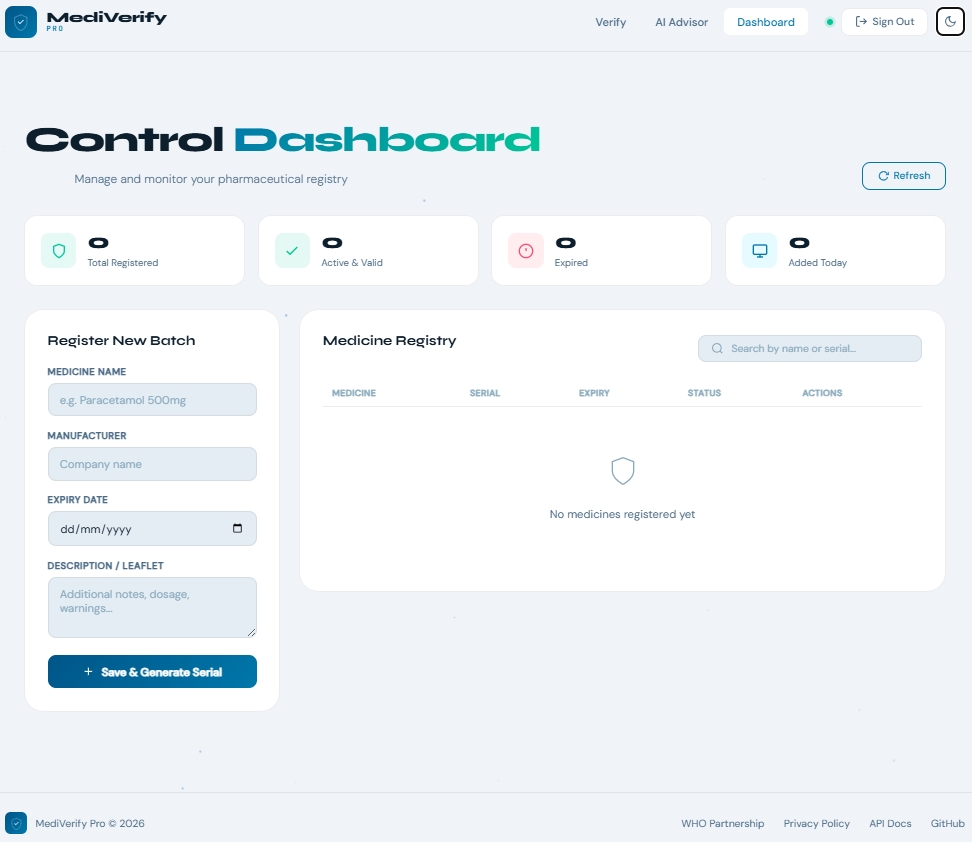
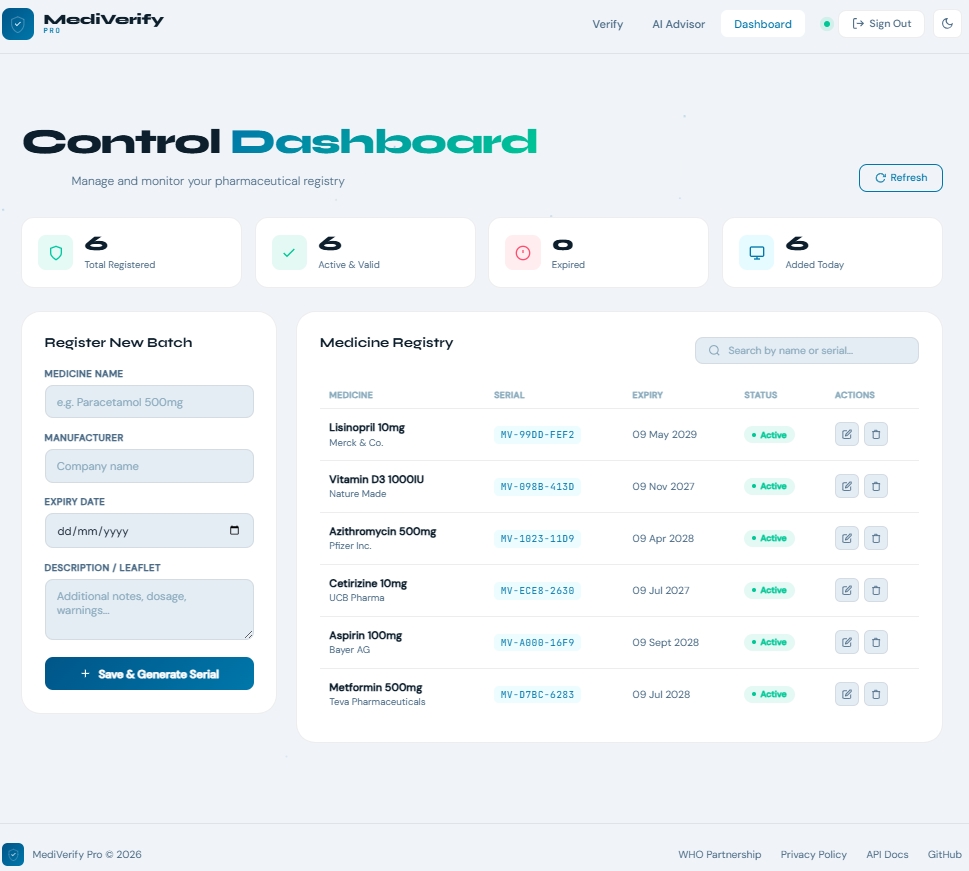
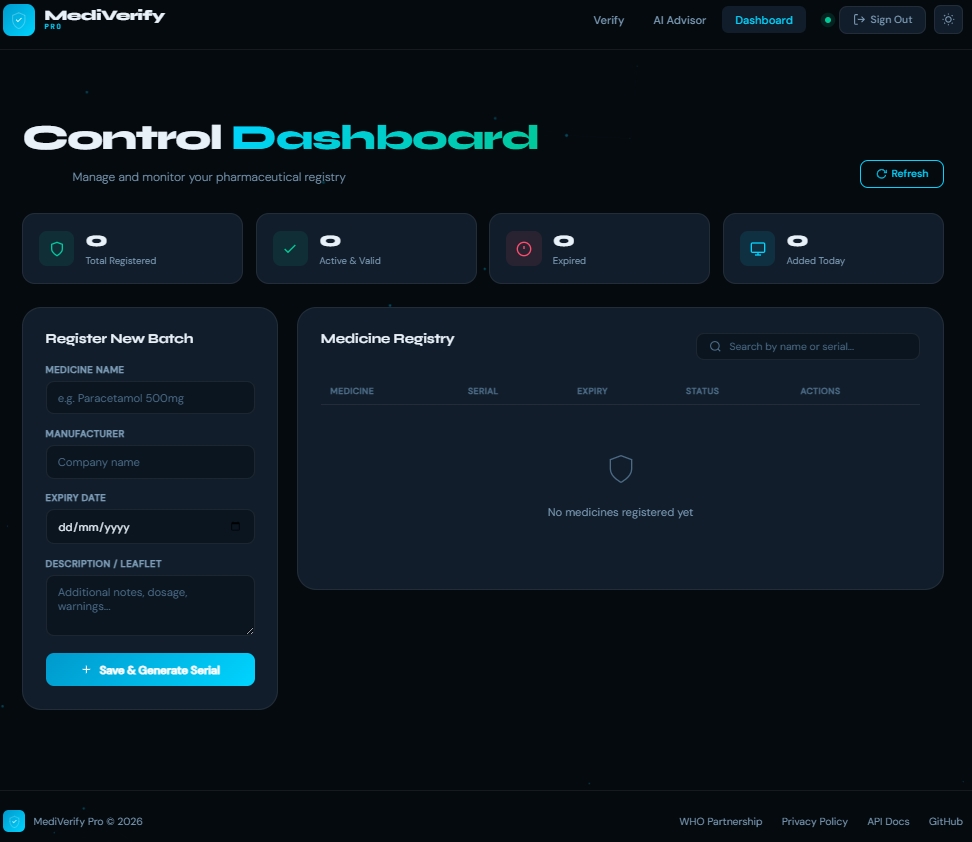
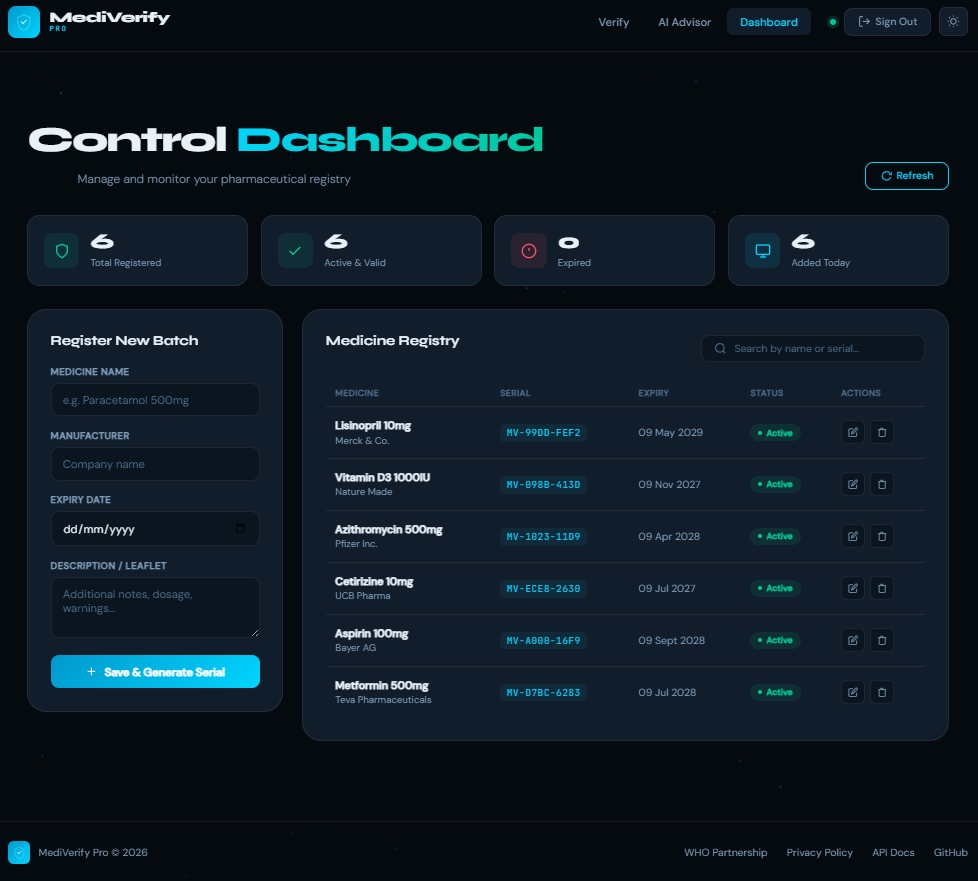
Administrative Portal
- Secure authentication using JWT and Bcrypt.
- Full CRUD operations for medicine management.
- Crypto-generated unique serial numbers.
- Dashboard statistics and inventory monitoring.
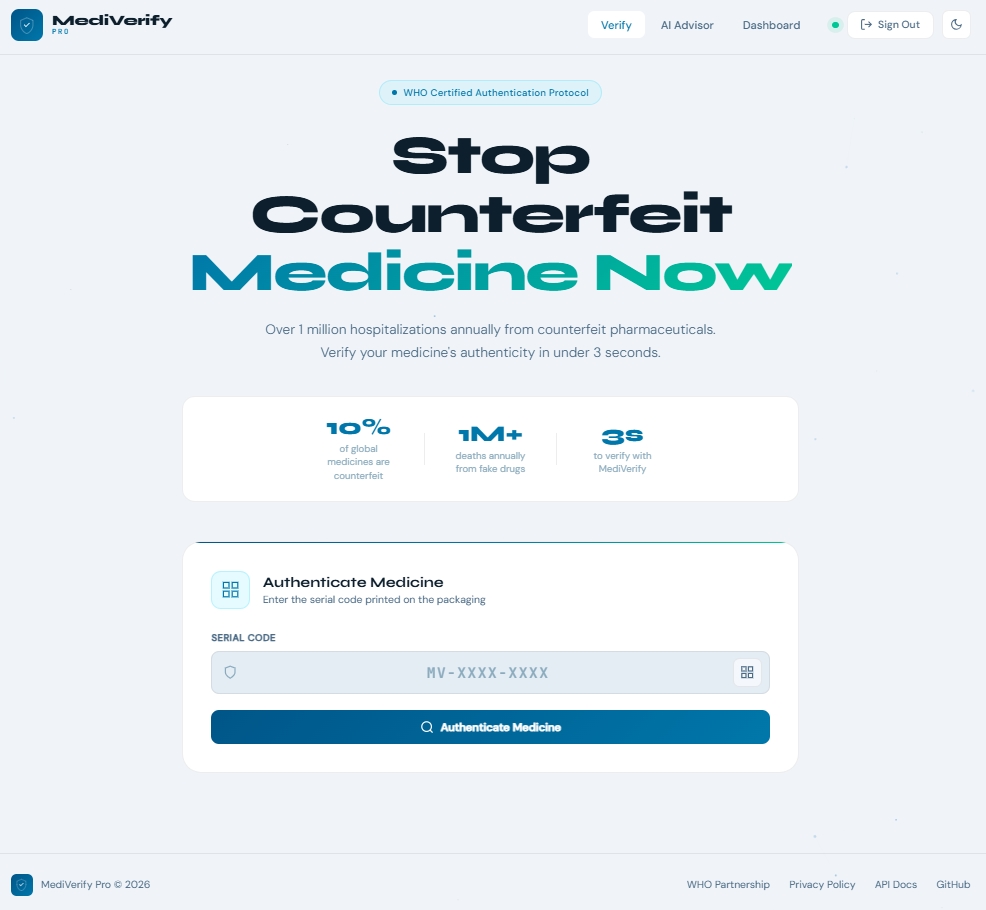
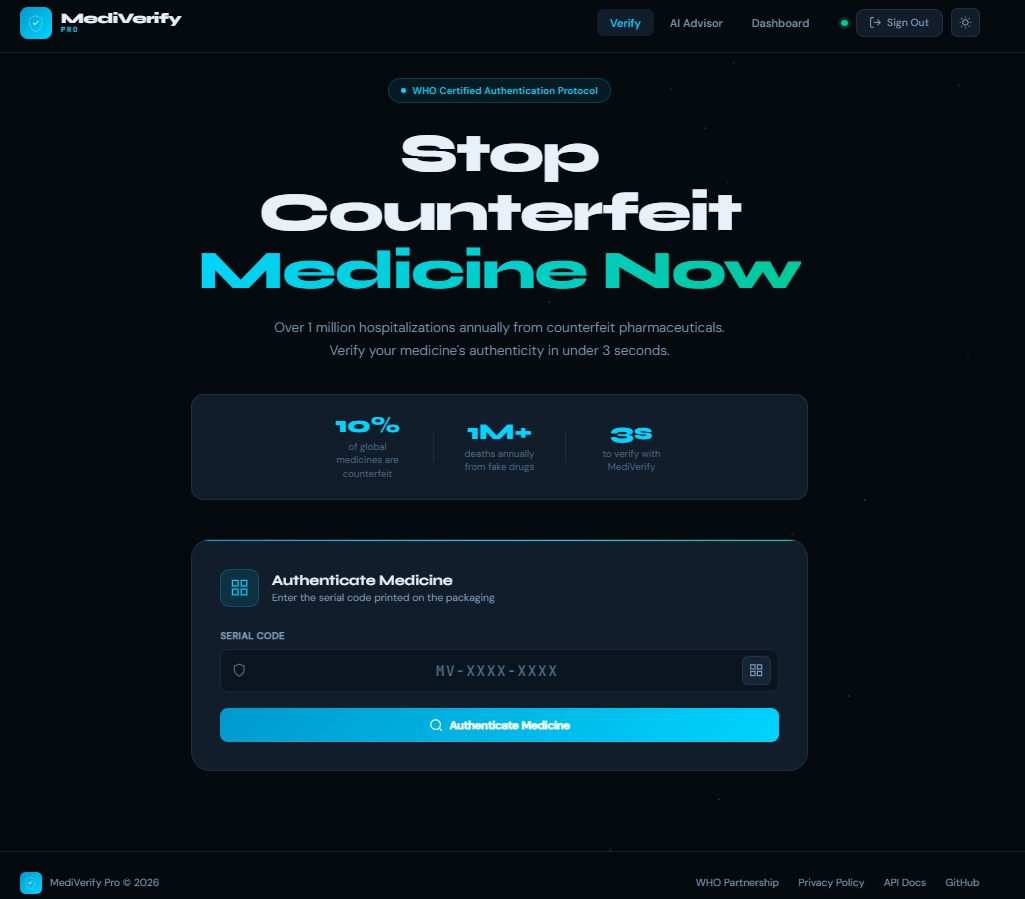
Consumer Verification Engine
- Public medicine authenticity verification.
- Expiry-date validation.
- QR code scanning using jsQR.
- Dynamic verification results without page reloads.
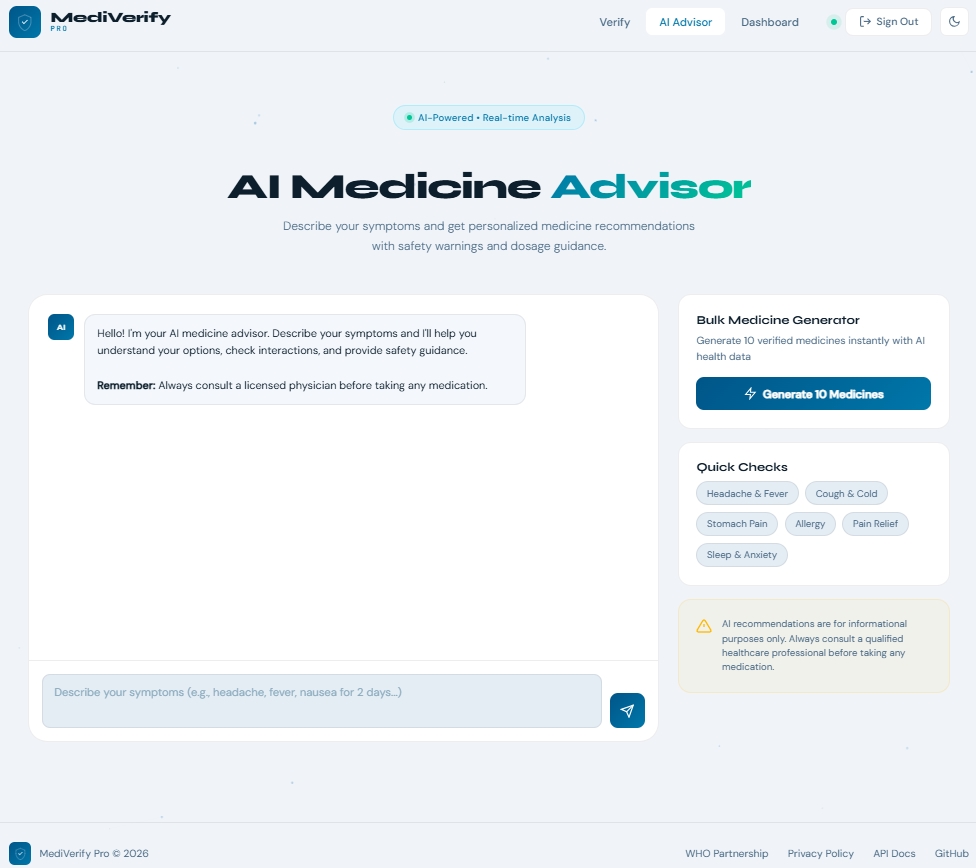
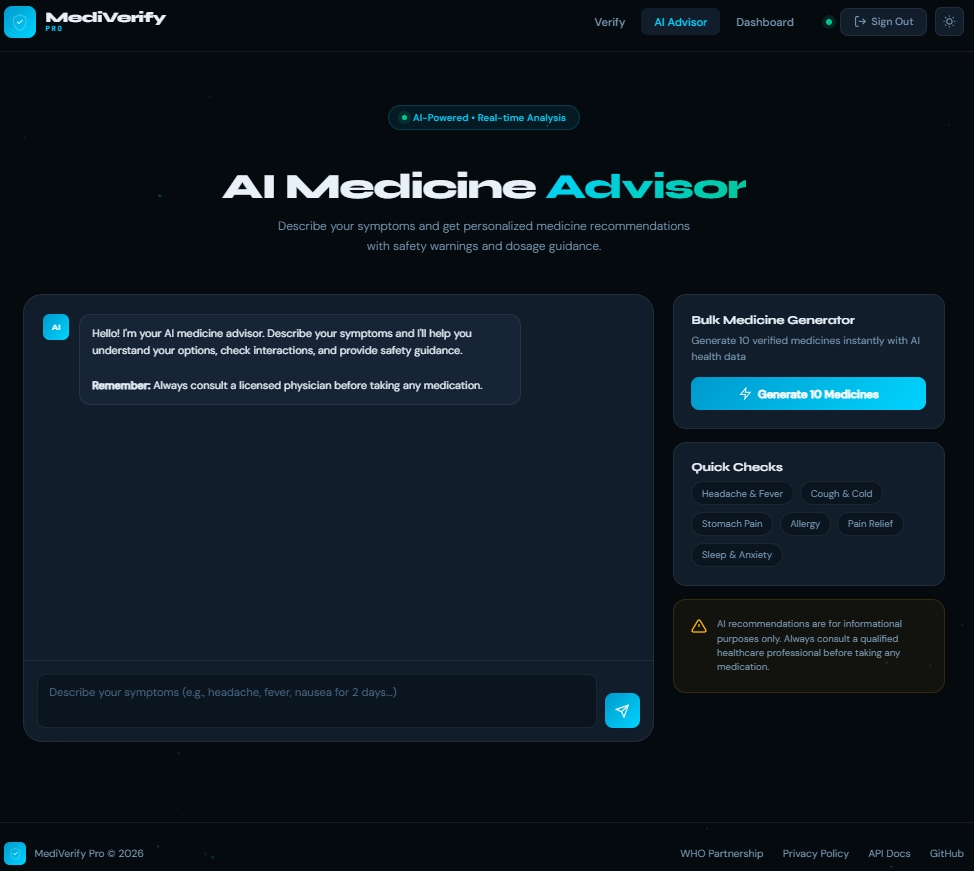
AI Health Advisor
- Conversational symptom guidance.
- Real-time medicine information retrieval.
- Structured medical responses.
- Session-based conversation memory.
Challenges We Faced
1. Reducing AI Hallucinations
One of the biggest challenges was ensuring that medicine-related responses were reliable. Language models can sometimes generate inaccurate pharmaceutical information.
To address this, I implemented a tool-calling workflow where the AI first retrieves real-time information using Brave Search and then generates responses based on verified data.
2. Balancing Safety and Usability
Healthcare applications require special attention to safety. The AI assistant was designed to:
- Avoid medical diagnosis.
- Avoid inventing drug interactions.
- Encourage users to seek professional medical advice when necessary.
- Present information in a consistent, structured format.
3. Serial Number Security
Medicine authenticity depends on the uniqueness of serial numbers. I used cryptographic random generation and collision checking to ensure that each serial remains unique and difficult to predict.
4. Creating a Smooth User Experience
Integrating QR scanning, AI chat, dark/light themes, responsive layouts, toast notifications, and animated backgrounds while maintaining performance required significant frontend optimization and testing.
Accomplishments We're Proud Of
- Built a complete full-stack pharmaceutical verification platform.
- Integrated AI with real-time web search.
- Implemented QR-based medicine verification.
- Developed a secure authentication and inventory system.
- Created a responsive and modern user experience.
- Designed a practical solution addressing a real-world healthcare problem.
What's Next for MediVerify Pro
Future improvements include:
- Blockchain-backed medicine tracking.
- Manufacturer and pharmacy portals.
- Mobile applications for Android and iOS.
- Multi-language support.
- Advanced analytics dashboards.
- Integration with national pharmaceutical databases.
Final Thoughts
MediVerify Pro demonstrates how modern web technologies, cybersecurity practices, and AI can work together to improve transparency in pharmaceutical supply chains. The project was built with a simple vision:
"Medicine is for healing, not for risk."

Log in or sign up for Devpost to join the conversation.