-
-
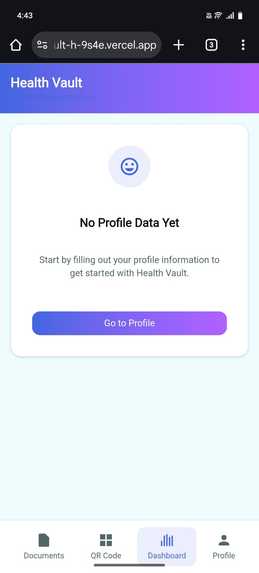
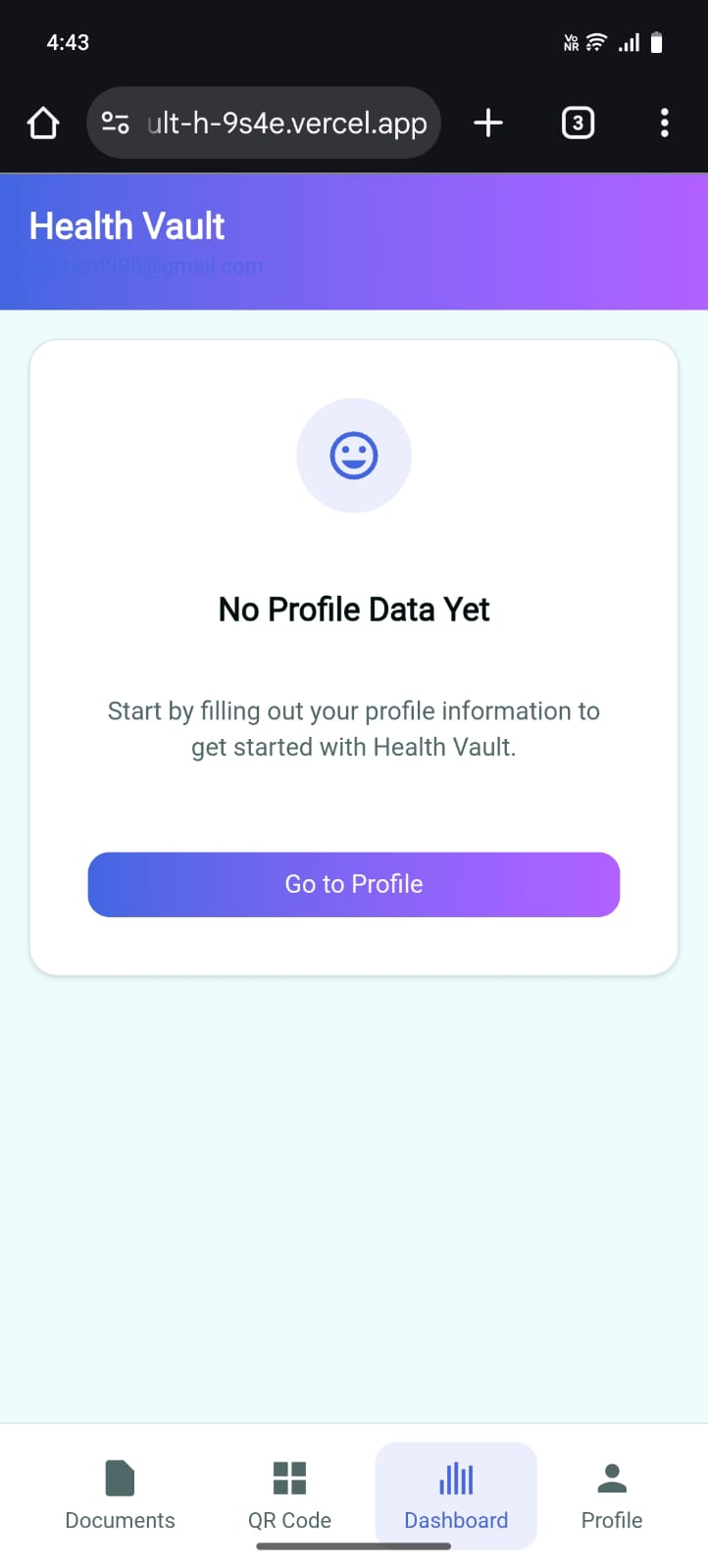
This is the main dashboard of the app. It helps new users get started by showing them how to fill out their health profile.
-
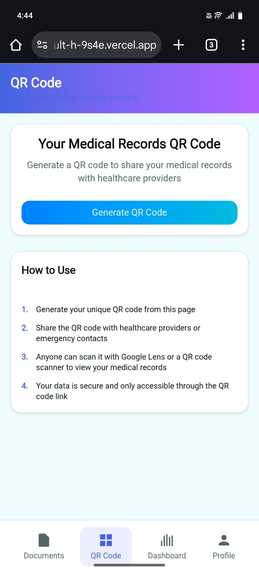
Share health data with doctors fast, even without internet.
-
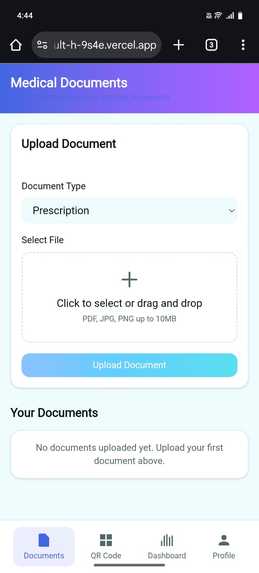
Save medical files.
Inspiration
In India, keeping track of health records is a mess right now. Rich people can use digital apps, but millions of regular people — especially those who come from villages to cities like Pune to see specialists — carry all their medical papers in "plastic bags". These bags have torn prescriptions, faded lab reports, and big X-ray films.
While doing my research, I found two big problems that can lead to avoidable tragedies:
The village-to-city problem: When patients travel for treatment, they often lose or forget their paper records. Doctors then have to repeat costly tests, which wastes time and money.
The emergency problem: After an accident, patients are often unconscious. Doctors and nurses have no way to know if the person has diabetes, a penicillin allergy, or a rare blood group. This can cause dangerous mistakes.
I built MediVault to fix this. It’s not just a storage app. It’s a system that makes your medical data as easy to carry as your phone, so it can help save lives.
What it does
MediVault is a Progressive Web App (PWA) that works like a digital health ID card you can use on any phone.
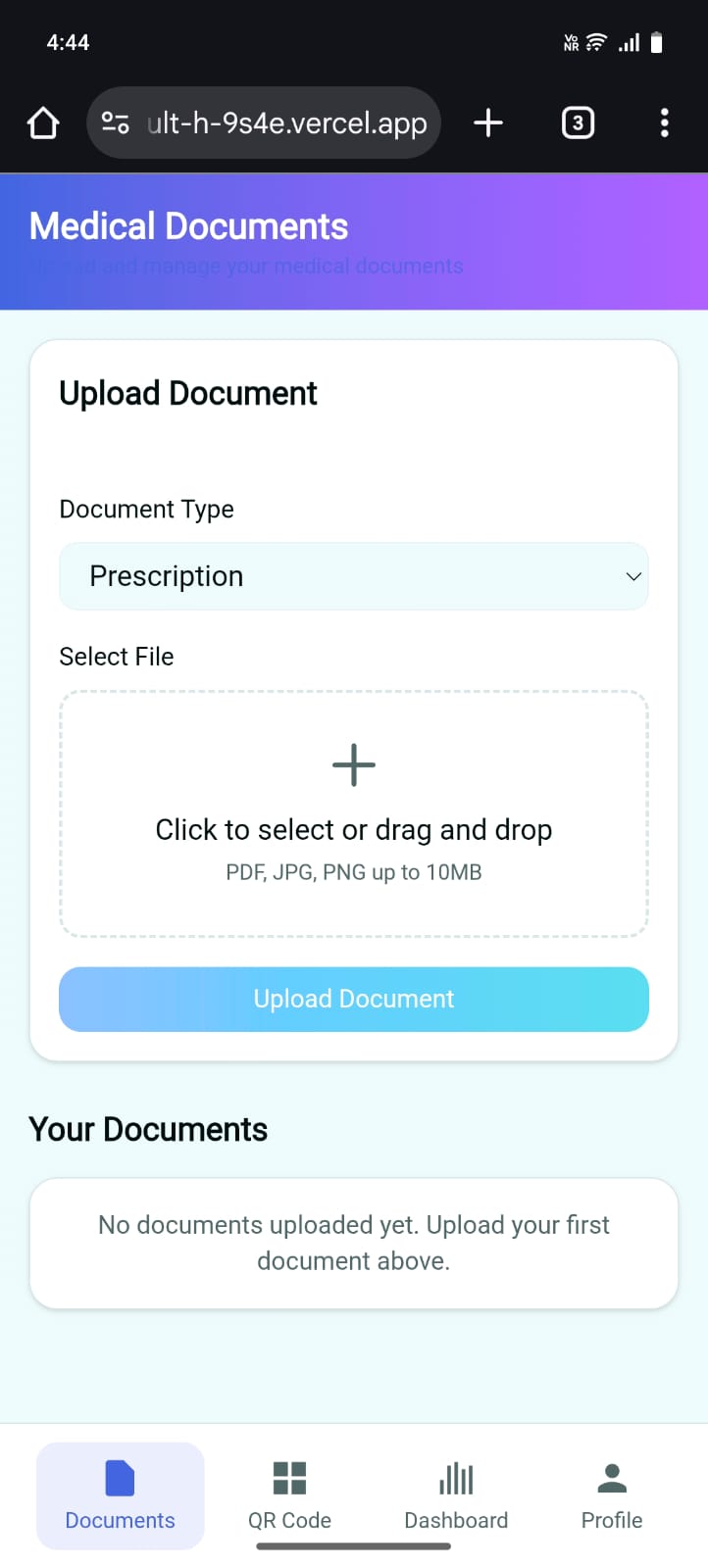
Easy Upload: You can upload medical papers to a safe online locker, sorted by type like reports, prescriptions, etc.
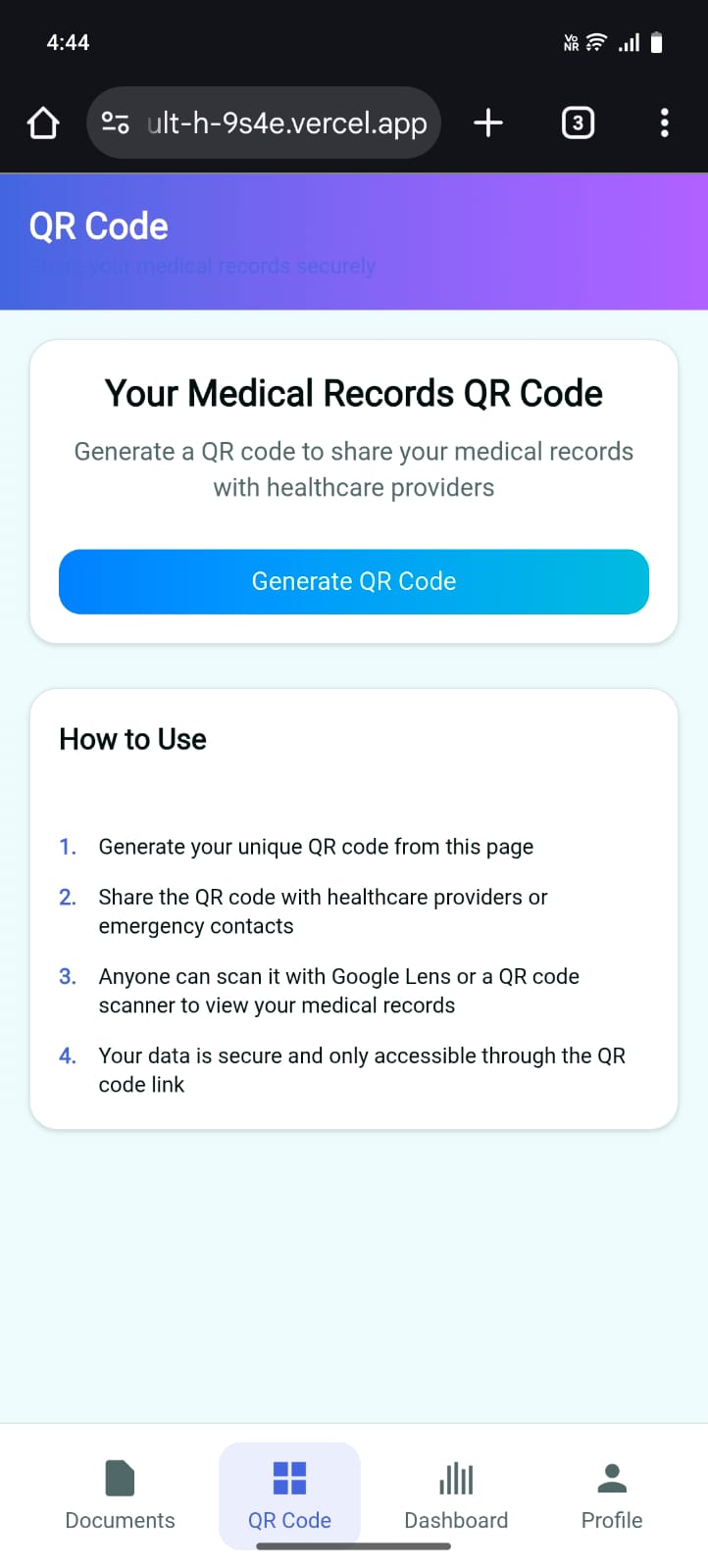
QR Code for Emergencies: The app makes a special QR code. You can print it on a card or keep it on your phone lock screen. If there’s an emergency, a doctor can scan it and see your basic health info right away. The doctor doesn’t need to log in, and you control what they see.
Works Everywhere: It’s a web app, so it runs on cheap Android phones too. It works even with slow 3G/4G internet and you don’t have to download a big app.
How we built it
Every tech choice was made to fix real-life problems:
Next.js 16 & React 19: I used the newest tools so the app opens in less than 2 seconds, even with slow internet.
Supabase & Row Level Security (RLS): To keep data safe and build trust, I set up RLS. This means each person’s medical data is fully locked. Even a database admin cannot see it without permission.
PWA Service Workers: I added strong offline saving. So if a patient is in a hospital basement with no network, they can still open their latest prescription.
Challenges we ran into
Building a real healthcare tool had two big problems:
- Privacy vs. Speed Problem: In a medical emergency, every second matters. But medical data is very private. We needed a way for doctors to see a patient’s info instantly, without a long login, while still keeping the data safe.
The Fix: We built a token system for the QR code. The link in the QR has a special, time-based code. This lets doctors see only the emergency info in “view-only” mode. It keeps the patient’s main account fully secure.
- App Install Problem: Making the “Install App” button work the same on cheap Android phones and on iPhones was really hard.
The Fix: We stopped using basic setup files. Now our app checks which phone and browser you use, then shows step-by-step instructions for adding it to your home screen on that device.
Accomplishments that we're proud of
The 2-Second Rule: Even with large medical files, we made our app fast. Using http://Next.js 16, the dashboard loads in under 2 seconds, even on slow 3G internet.
Security Setup: We added Row Level Security (RLS) with Supabase. This isn’t just a small feature — it’s a promise. It means your medical data is locked away. Even if someone runs a full database search, they cannot see your info.
Easy Sharing: We built a QR code system that works with Google Lens. Patients don’t need a special app. They just show their phone or a printed card, and the doctor can see the info right away.
What we learned
Building MediVault changed how we think about making apps. We went from "add more features first" to "think about the user first":
Good Design Saves Lives: We learned that for older people or users in villages, clean and simple design is not just nice to look at — it’s necessary. If a button is too small or a menu is hard to find, the app is useless when it matters most.
Web Apps Work Better: This project showed that in India, web apps (PWAs) are better than regular apps from the Play Store. Not having to download a 100MB app makes the difference between someone using it or deleting it to free up space.
Your Data, Your Control: We realized the future of healthcare is not hospitals holding your data. It’s patients holding the main key to their own data.
What's next for MediVault: Secure QR-Based Health Record Sharing
We see this hackathon project as just the first step. Here’s what we plan to build next:
- Scan doctor notes with AI: We’re adding a tool that reads handwritten prescriptions and turns them into automatic medicine reminders.
- Support for Marathi and Hindi: Because we’re in Pune, our first goal is to add Marathi and Hindi. That way, patients in villages can use the vault in their own language.
- Work without internet: We’re building a feature that saves your last 5 medical reports on your device. So even with zero signal, you can still see important health info.
- One account for the whole family: A single dashboard where you can manage medical records for your kids and your parents, all from one secure login.
Built With
- auth
- css
- github
- lucide
- next.js
- postgresql
- postman
- react
- rls
- shadcn/ui
- storage
- supabase
- tailwind
- typescript
- vercel

Log in or sign up for Devpost to join the conversation.