-
-
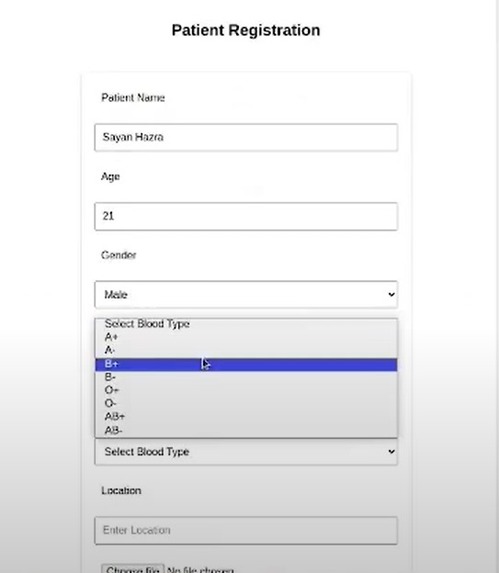
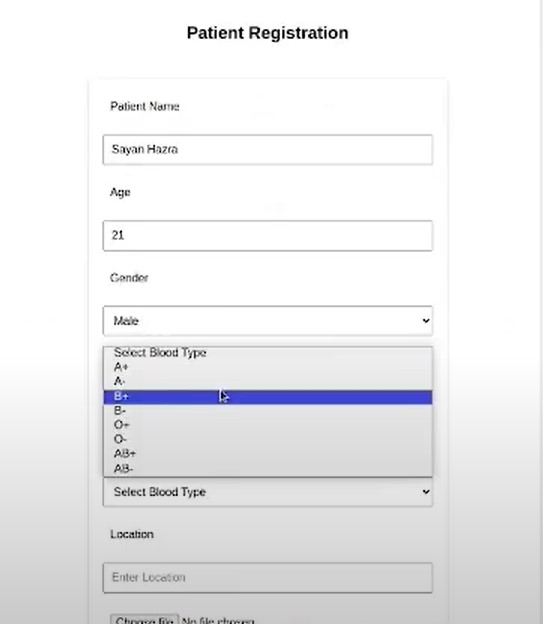
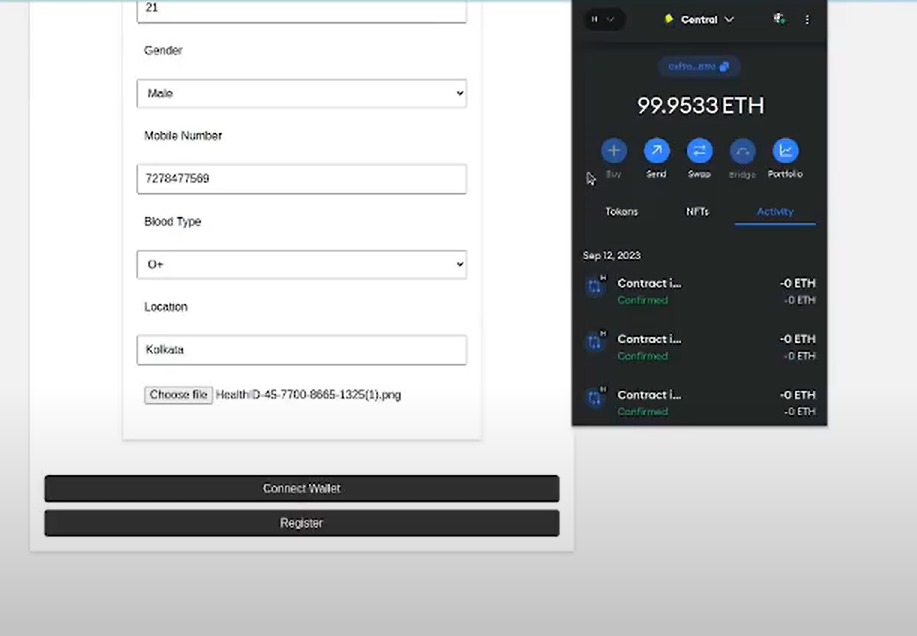
Patient Registration
-
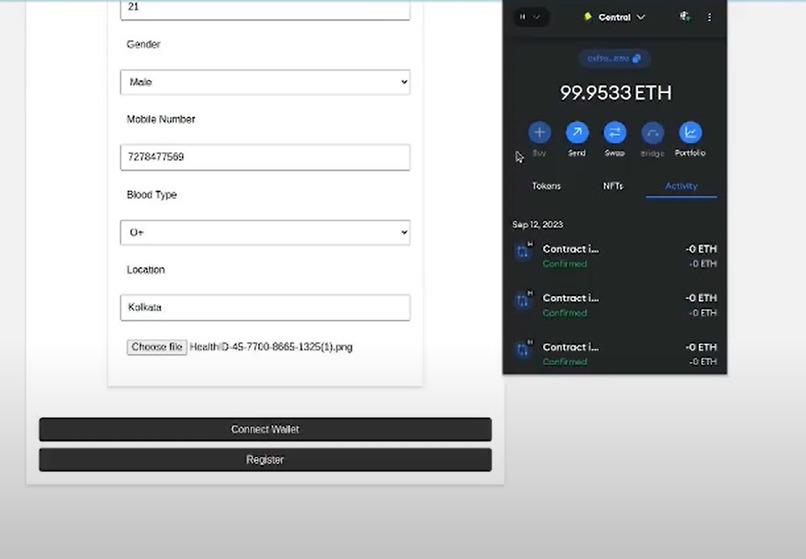
Patients Tab
-
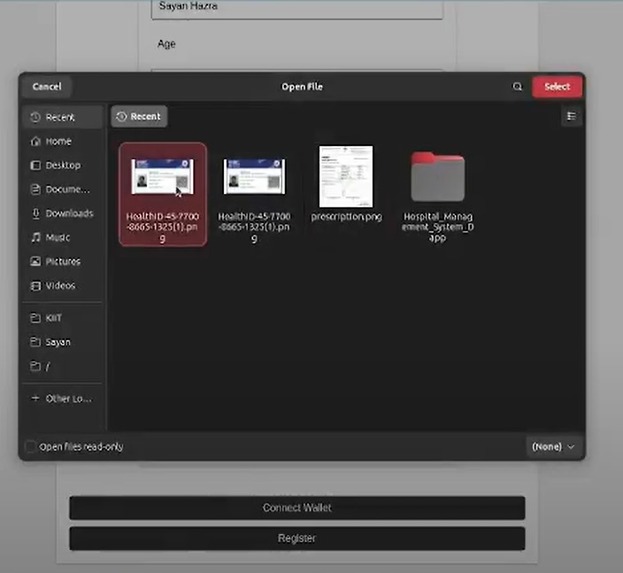
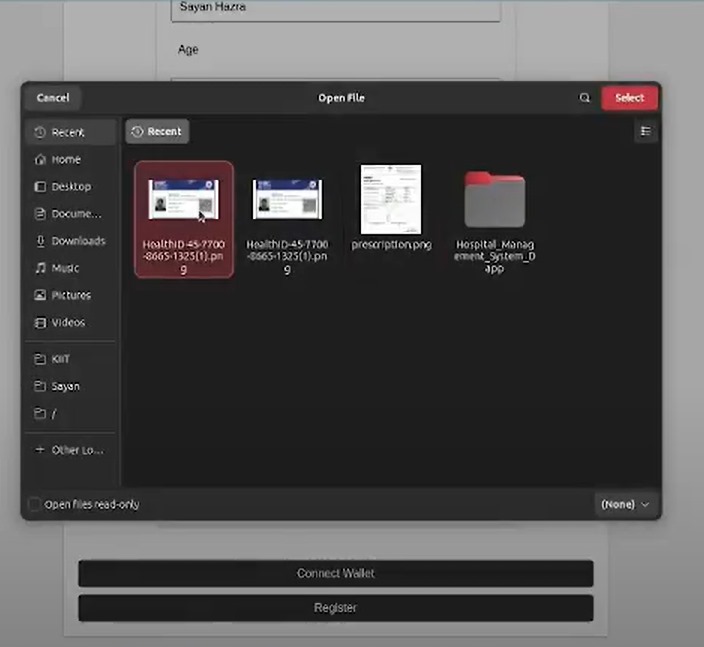
Upload Documents
-
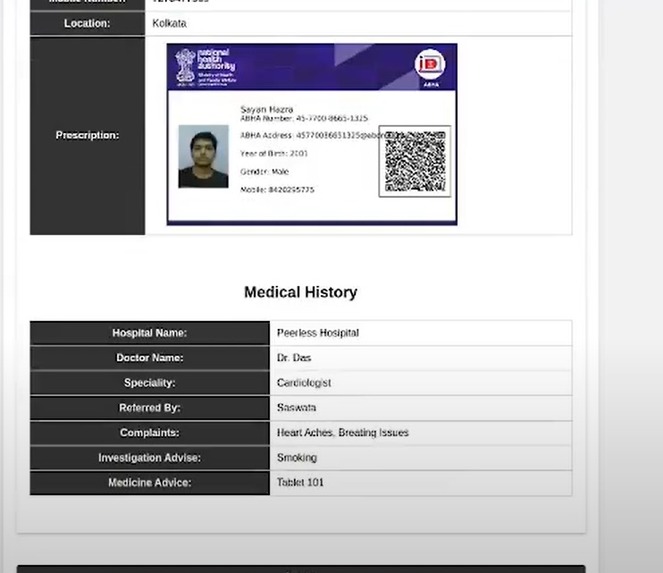
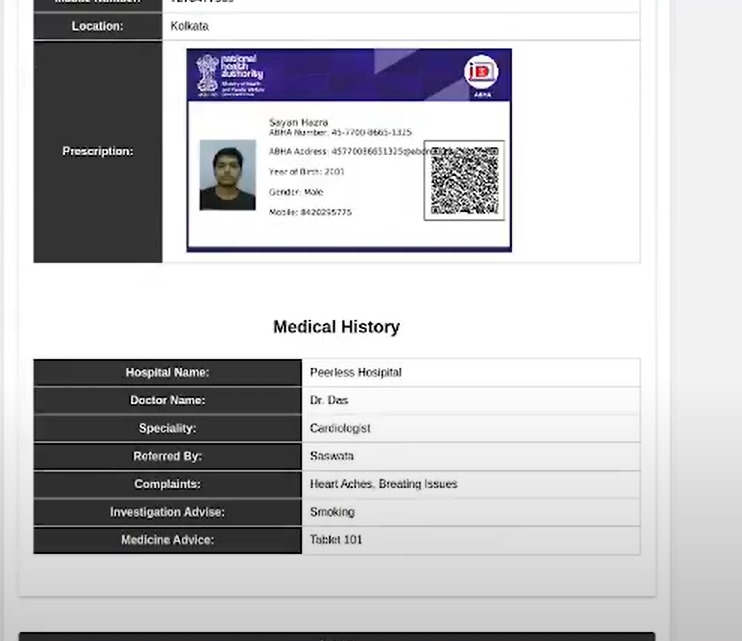
LookUp Records
Inspiration
Traditional paper-based medical records have been largely replaced by Electronic Health Records (EHRs) due to their efficiency and data redundancy reduction. However, EHRs face significant challenges in terms of interoperability and data privacy. The Government of India has taken a step toward addressing this by introducing the National Health Data Management (NHDM) initiative to define interoperability standards.
What it does
The proposed blockchain application for managing health records has several use cases, including:
- Improved data security: The use of blockchain technology ensures that medical records are secure and tamper-proof, reducing the risk of data breaches and unauthorized access.
- Better data integrity: The decentralized nature of the blockchain network ensures that medical records are accurate and up-to-date, reducing the risk of errors and inconsistencies.
- Increased efficiency: The centralized and easily accessible database of medical records allows healthcare providers to make faster and more informed decisions, leading to improved patient care.
- Improved interoperability: The proposed blockchain application enables the efficient flow of data between different healthcare providers, leading to improved collaboration and better patient outcomes.
- Smart contracts for healthcare services: The smart contract functionality of the blockchain network enables automated and trustless execution of healthcare services, such as insurance claims processing, appointment scheduling, and prescription refills, leading to improved efficiency and reduced costs for healthcare providers. Overall, the proposed blockchain application for managing health records has the potential to transform the healthcare industry and provide a secure, efficient, and interoperable solution for managing medical records.
How we built it
- Creating a blockchain-based system that ensures seamless interoperability of EHRs, allowing healthcare providers and systems to securely exchange patient data while adhering to NHDM standards.
- Implementing robust privacy mechanisms within the blockchain system to safeguard sensitive patient information and comply with data protection regulations.
- Designing user-friendly interfaces and tools that enable healthcare professionals to easily access and update EHRs on the blockchain.
- Demonstrating the potential of blockchain to enhance data security, reduce data redundancy, and streamline the healthcare data ecosystem.
Challenges we ran into
However, it is important to note that there are limitations to this approach. The following are some of the limitations:
- Standardization and interoperability: The need for standardization and interoperability between different systems is a significant challenge that needs to be addressed. The lack of standardization can lead to data inconsistencies and errors, which can affect patient care.
- Regulatory challenges: The regulatory landscape for blockchain technology in healthcare is still evolving, and there are several legal and regulatory challenges that need to be addressed. For example, there are concerns about data privacy and security, which need to be addressed to ensure that patient data is protected.
- Technical challenges: The technical challenges of implementing a blockchain application for managing health records are significant. For example, the scalability of the blockchain network needs to be addressed to ensure that it can handle the large volume of medical records generated by healthcare providers.
- Adoption challenges: The adoption of blockchain technology in healthcare is still in its early stages, and there may be resistance from healthcare providers and patients to adopt this new technology. In conclusion, while the proposed blockchain application for managing health records has the potential to transform the healthcare industry, there are several limitations that need to be addressed to ensure its success.
Accomplishments that we're proud of
Our mission is to revolutionize healthcare data management, ensuring that medical records are easily accessible to trusted individuals, yet impenetrable to unauthorized access. With our solution, we're not just enhancing EHRs; we're building a new era of healthcare data integrity and accessibility.
What we learned
Medical History and personal information is private data and it is vulnerable to many Data Leaks in this current healthcare system. Private data in this sector should be handled with utmost care and seriousness, as any breach to the data would lead to both emotional and social dilemma.
What's next for MediVault 1.0
The future scopes of the proposed blockchain application for managing health records are significant. Some of the potential future scopes are:
- Improved patient outcomes: The use of blockchain technology in healthcare can lead to improved patient outcomes by providing healthcare providers with accurate and up-to-date medical records, leading to better diagnosis and treatment.
- Increased patient engagement: Patients can have more control over their health information, leading to increased patient engagement and empowerment.
- Data monetization: The sharing of data anonymously can lead to improved research and development in healthcare, leading to new treatments and therapies.
- Improved supply chain management: The use of blockchain technology can improve the supply chain management of pharmaceuticals and medical devices, leading to improved efficiency and reduced costs.
- Improved regulatory compliance: The use of blockchain technology can improve regulatory compliance by providing a secure and transparent record of transactions. Overall, the future scopes of the proposed blockchain application for managing health records are significant and have the potential to transform the healthcare industry. By providing a secure, efficient, and interoperable solution for managing medical records, blockchain technology can improve patient outcomes, increase patient engagement, and lead to new treatments and therapies.

Log in or sign up for Devpost to join the conversation.