Inspiration
Healthcare is often reactive, with diseases detected only after symptoms appear. We wanted to build an AI-powered platform that encourages preventive healthcare by creating a digital health twin capable of predicting potential health risks before they become serious.
What it does
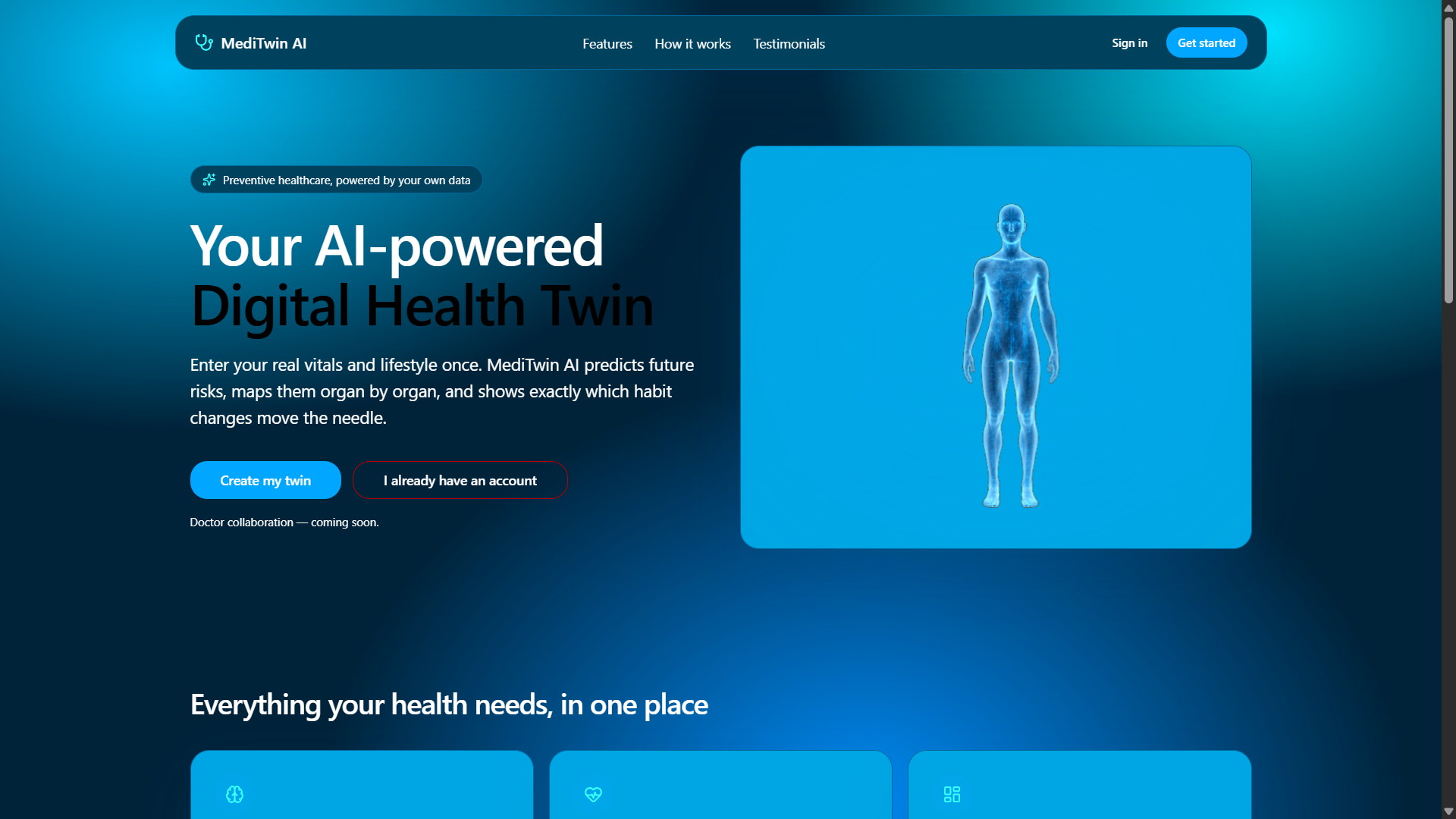
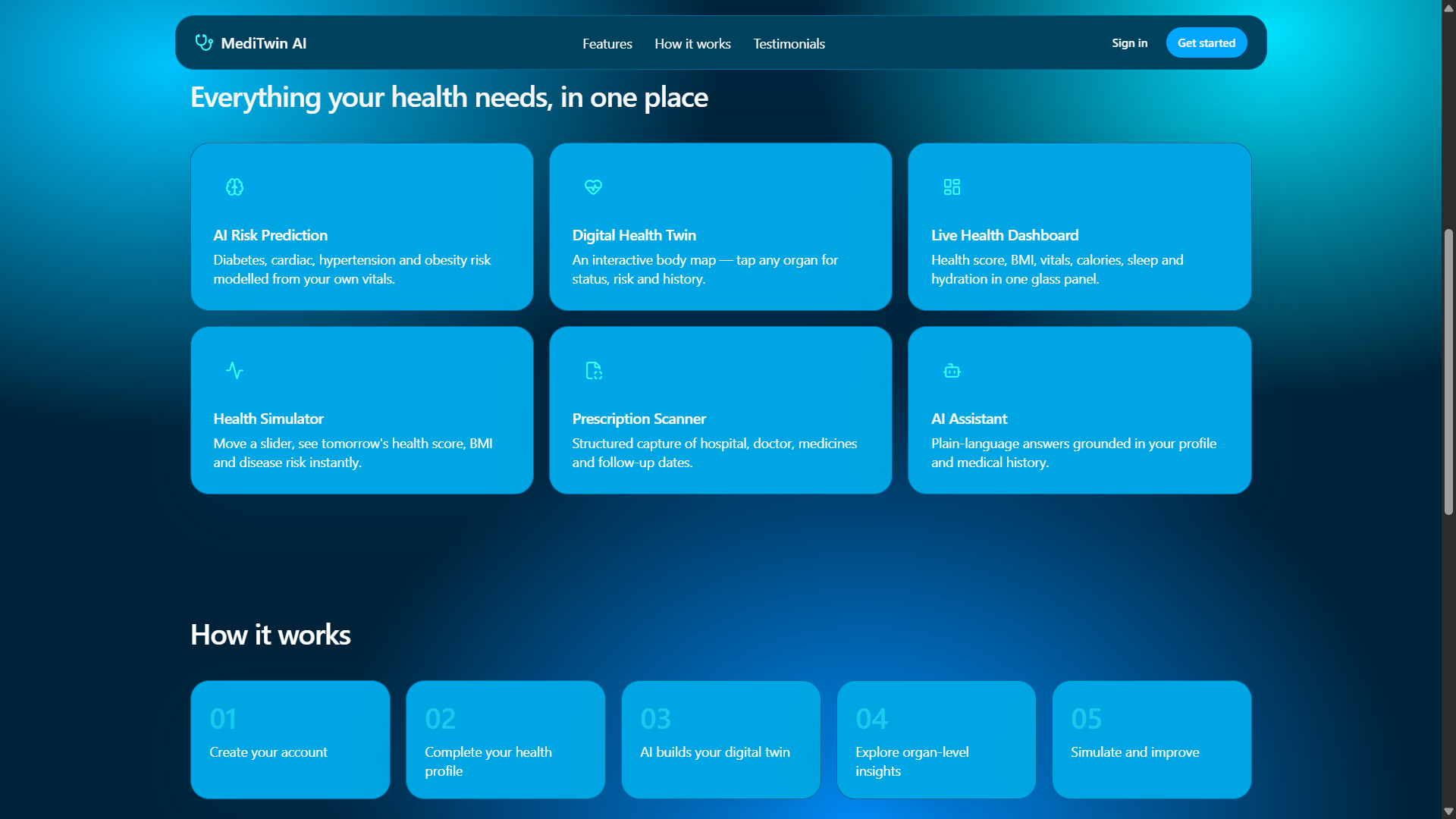
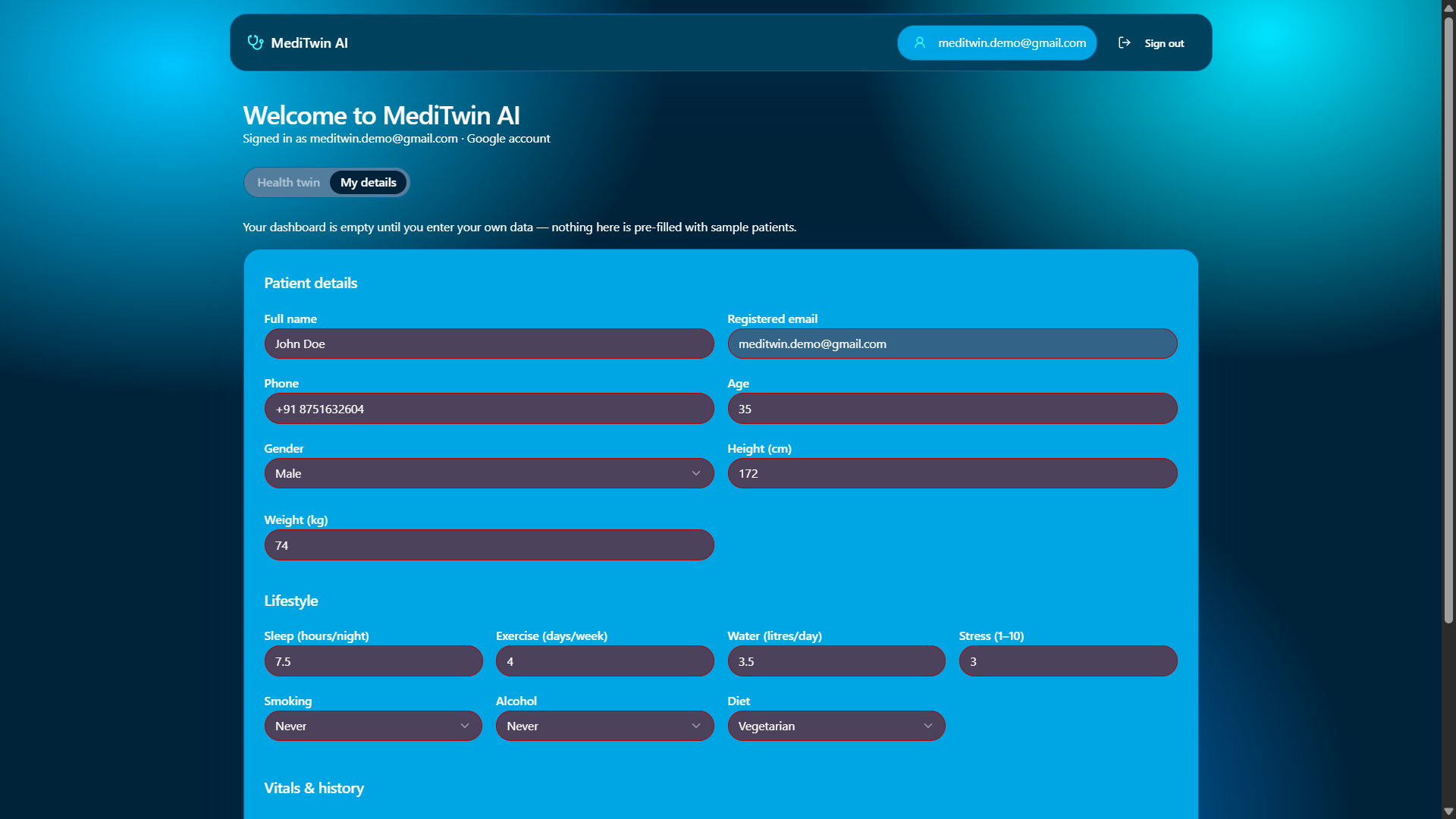
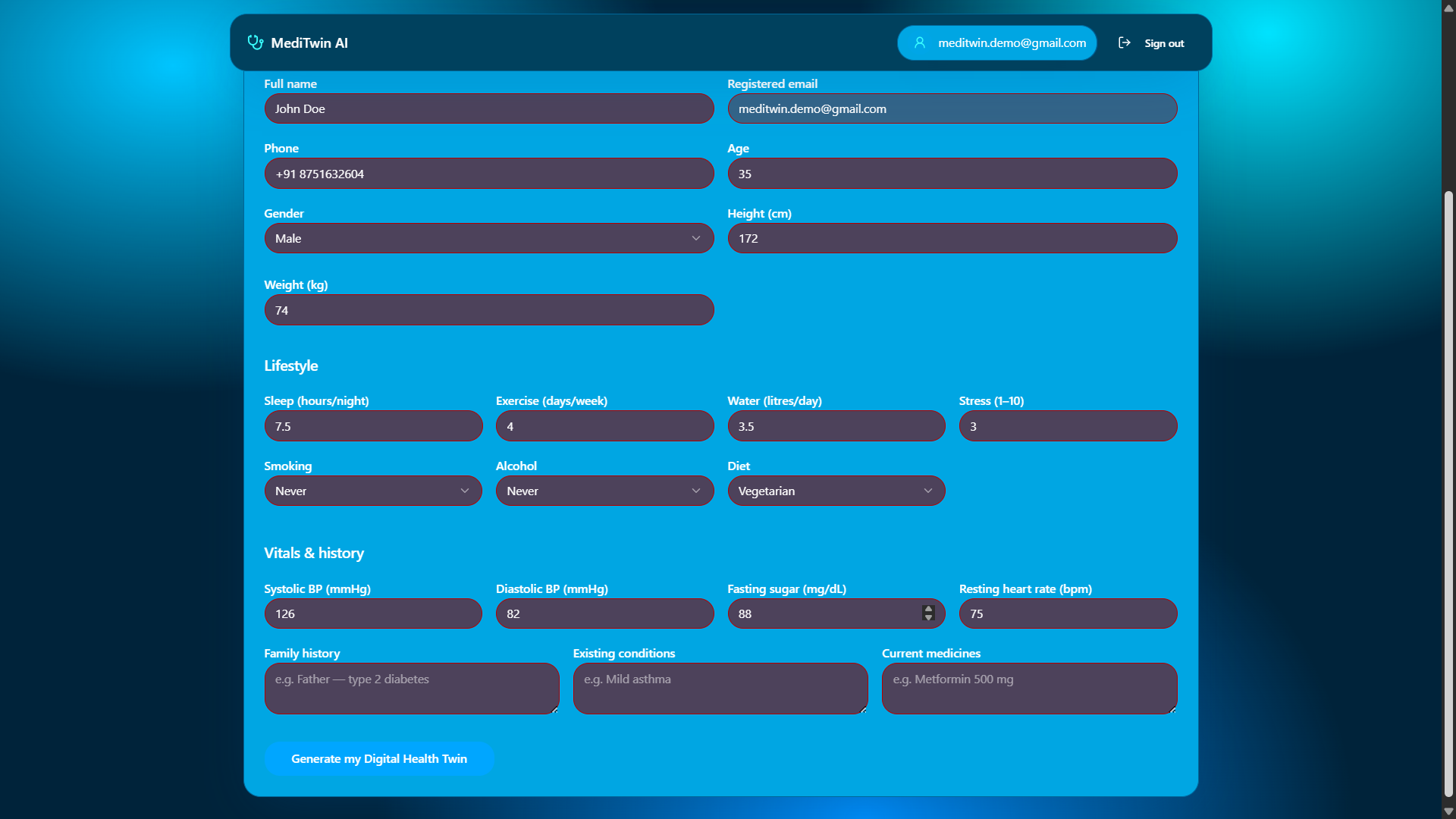
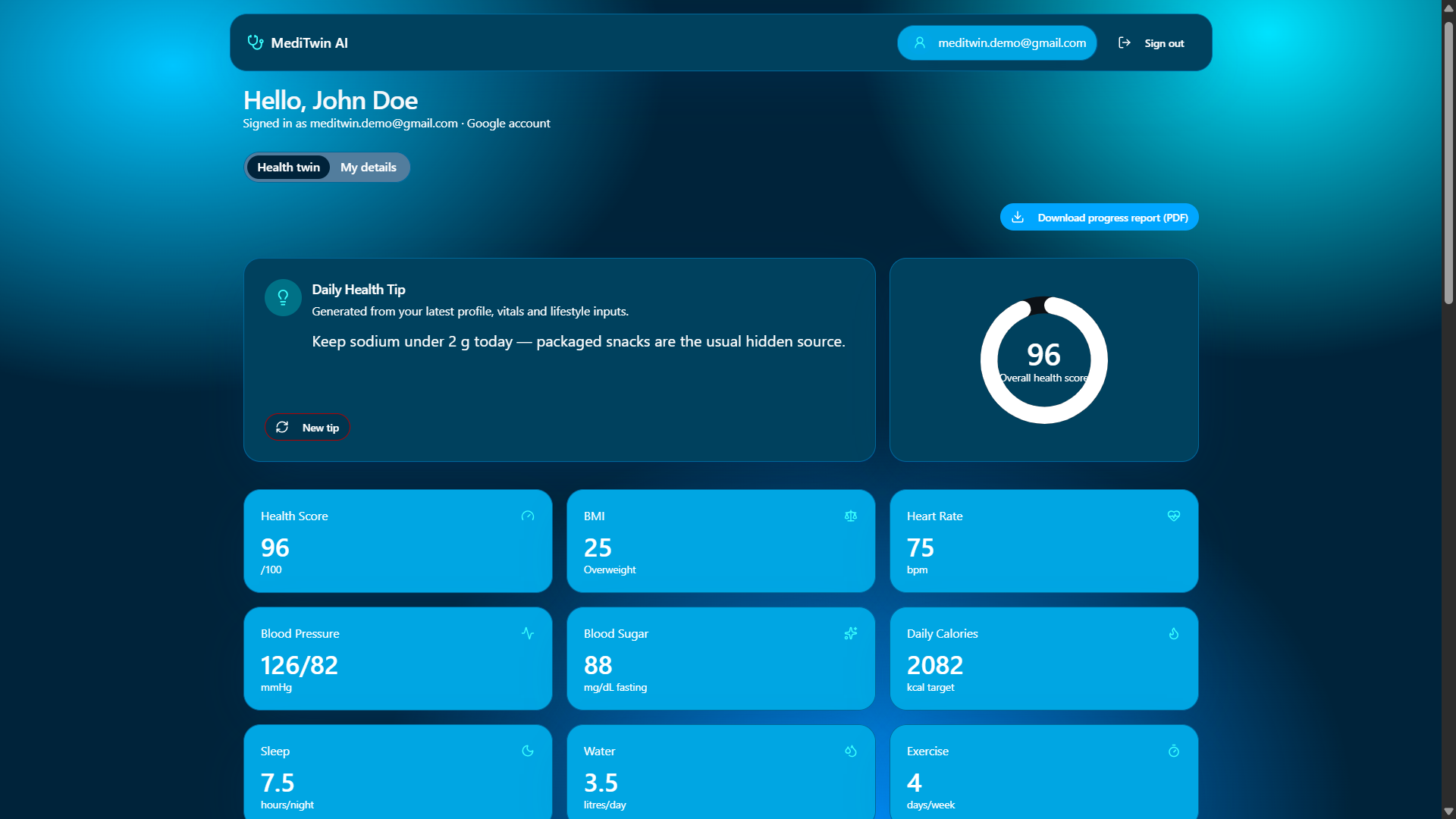
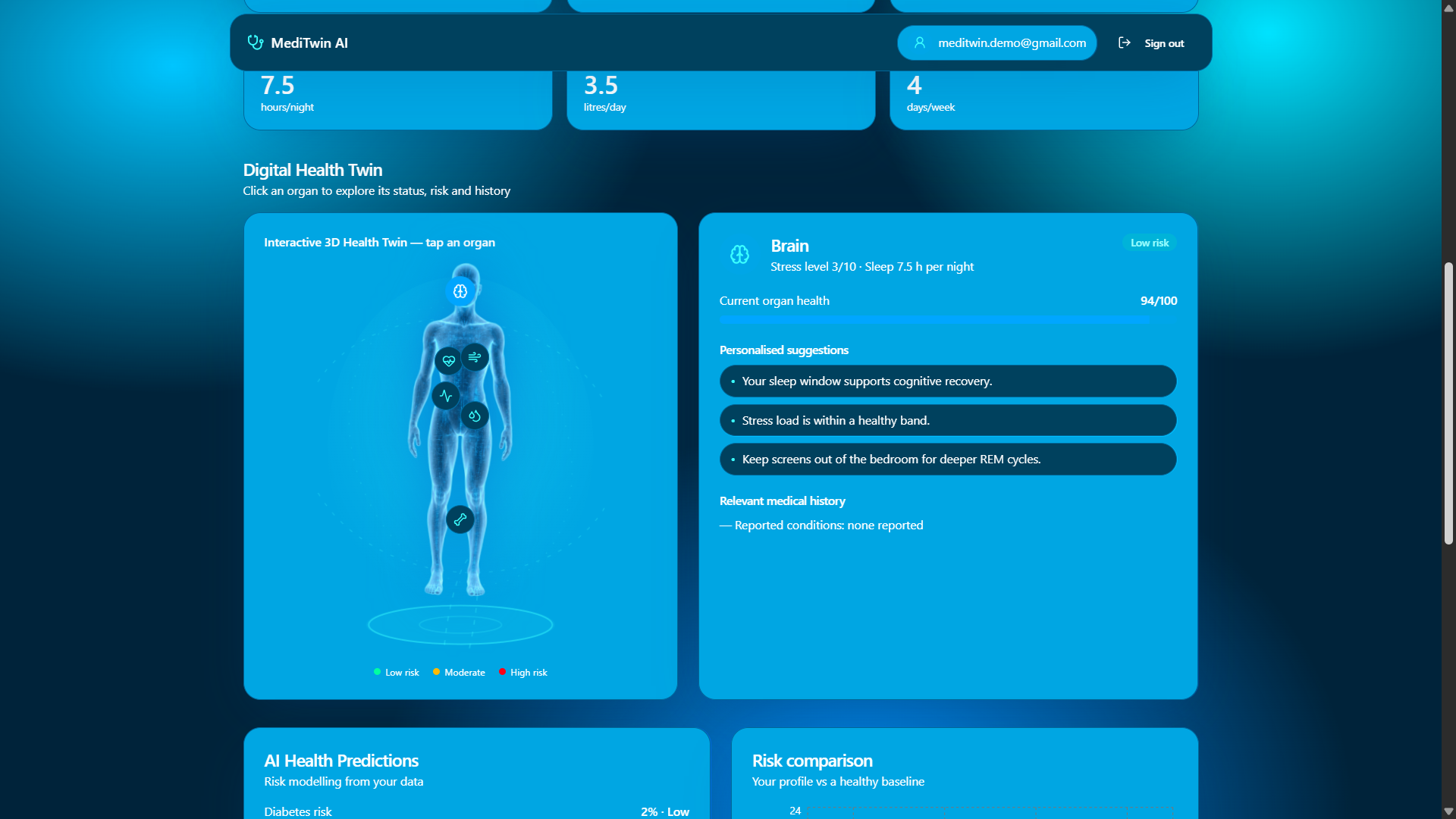
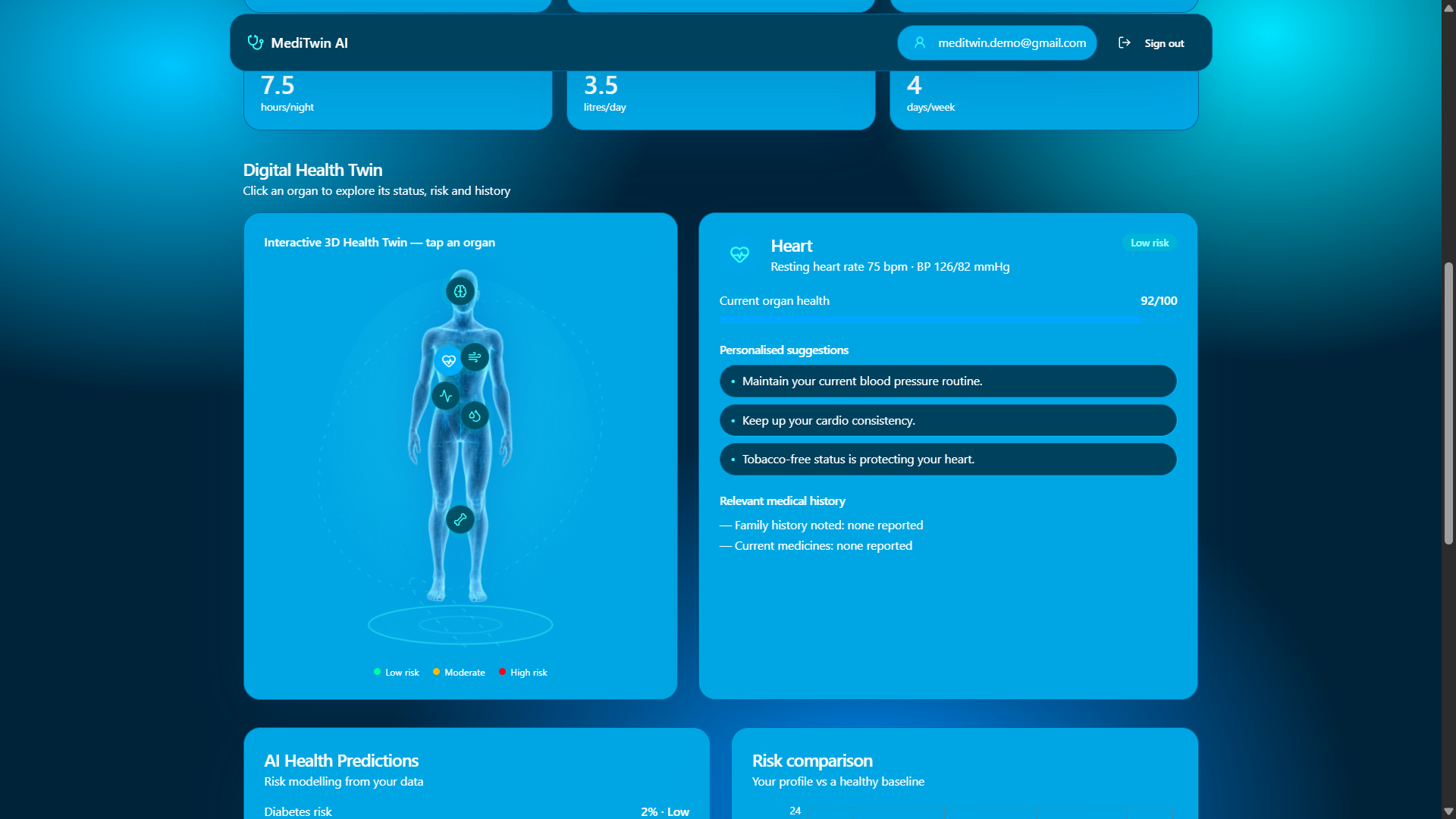
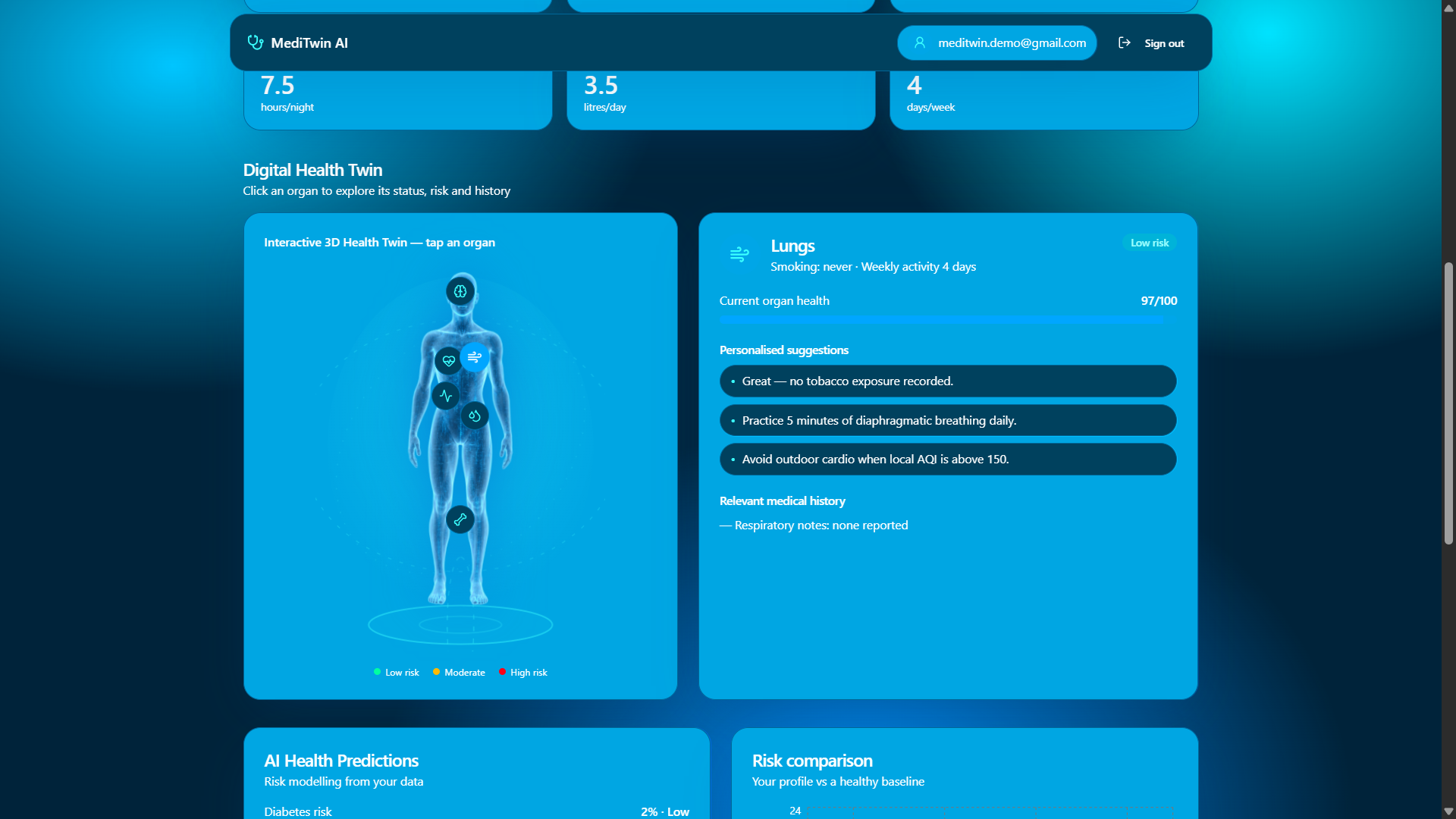
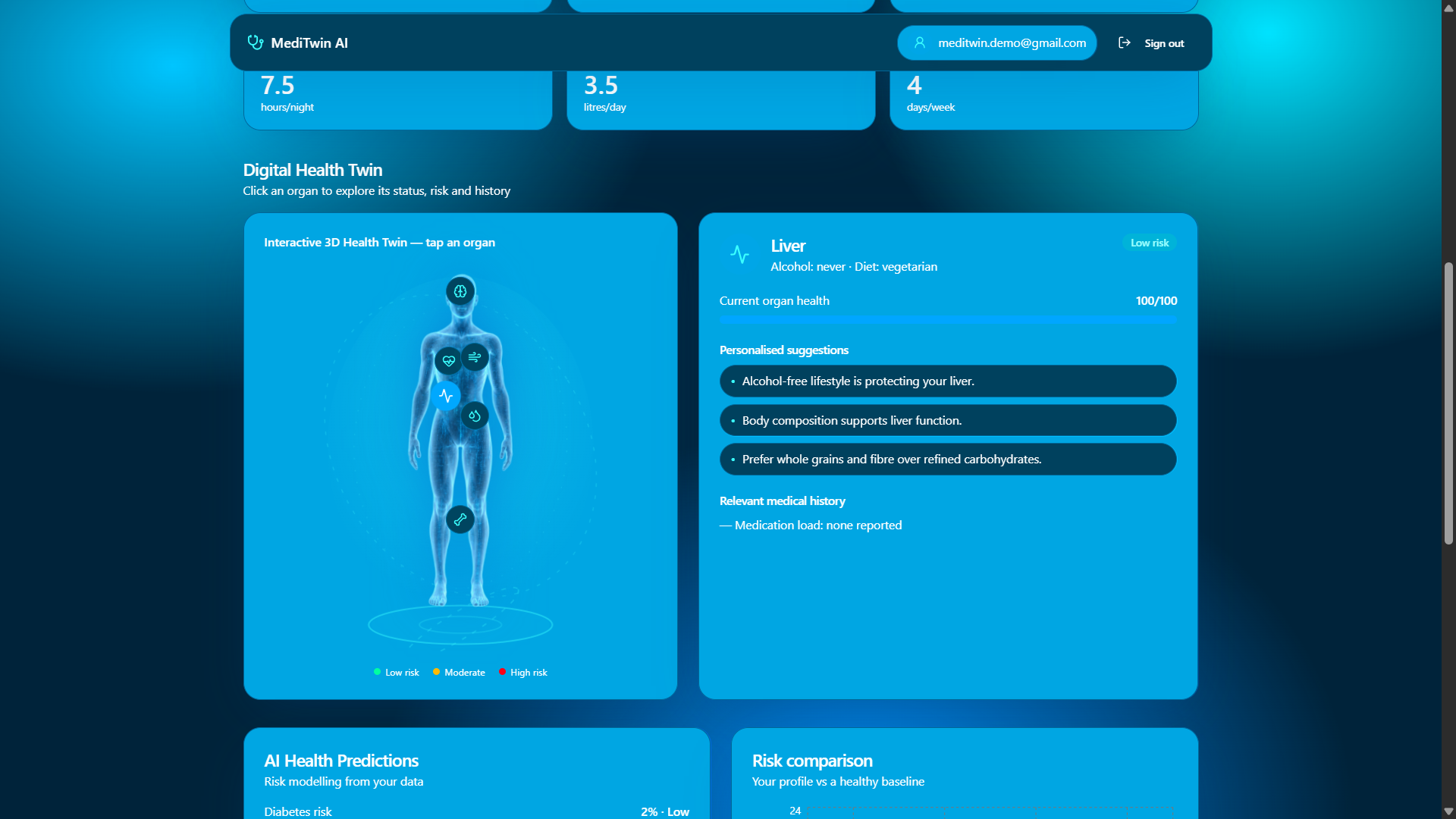
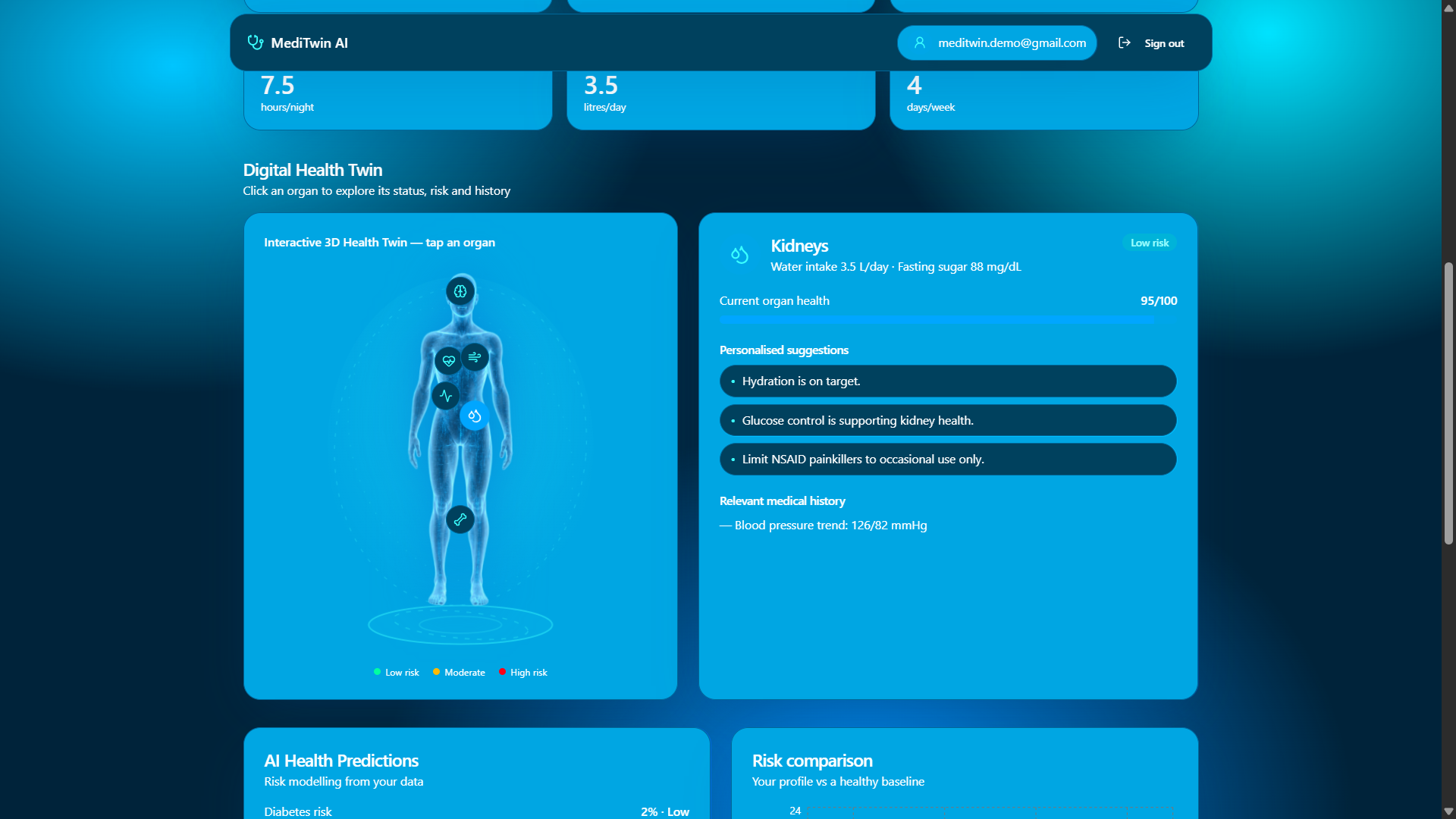
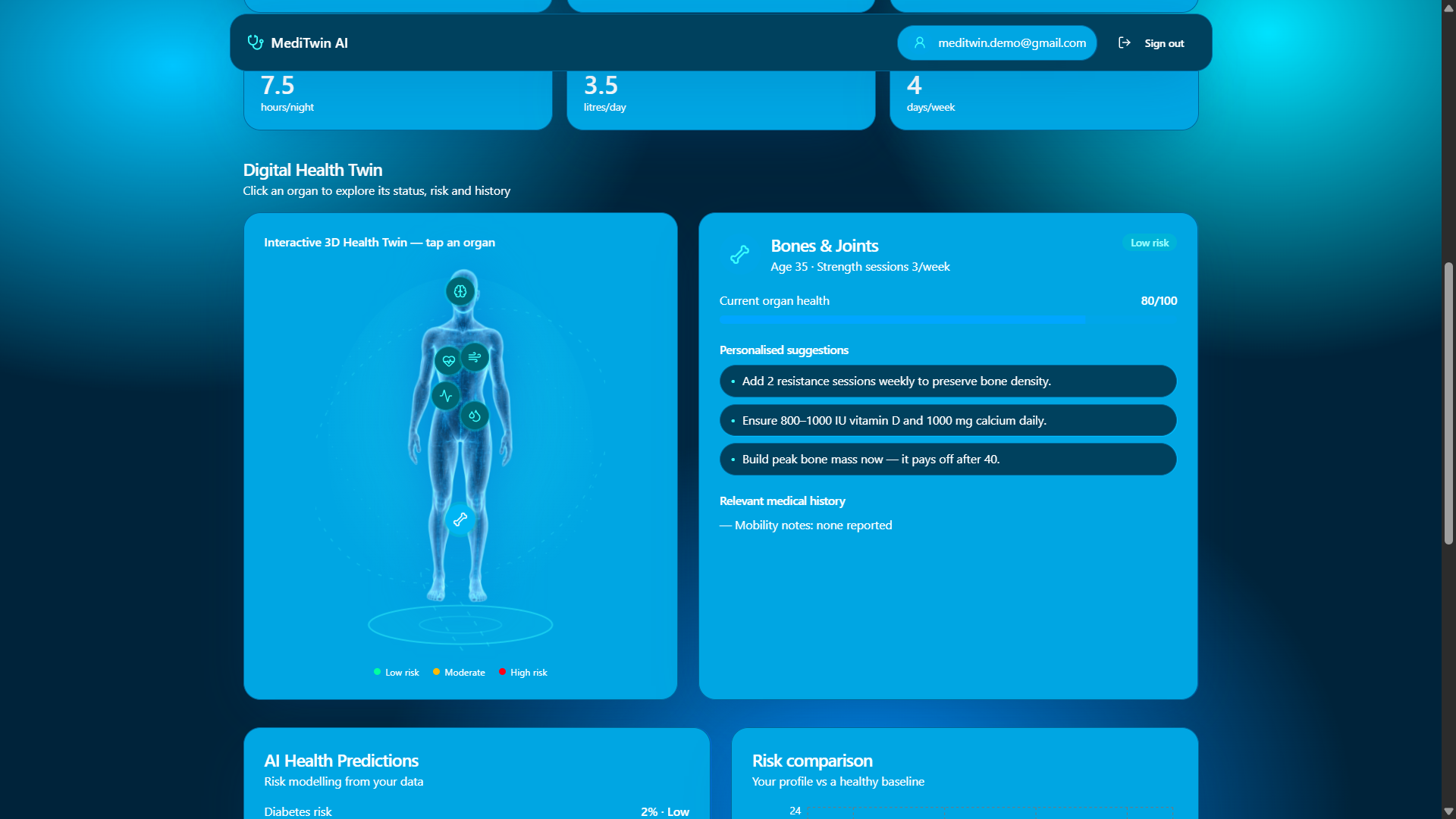
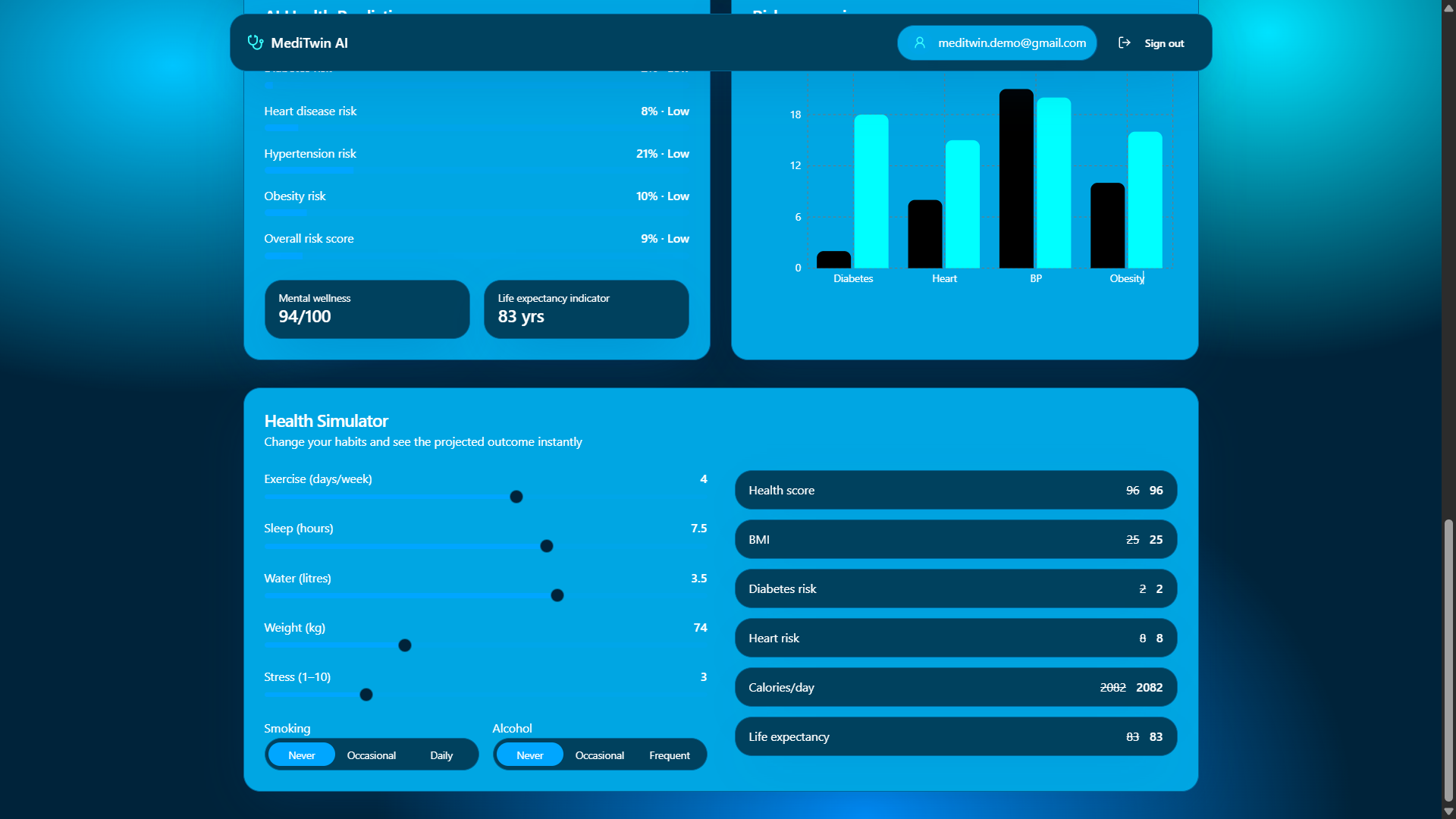
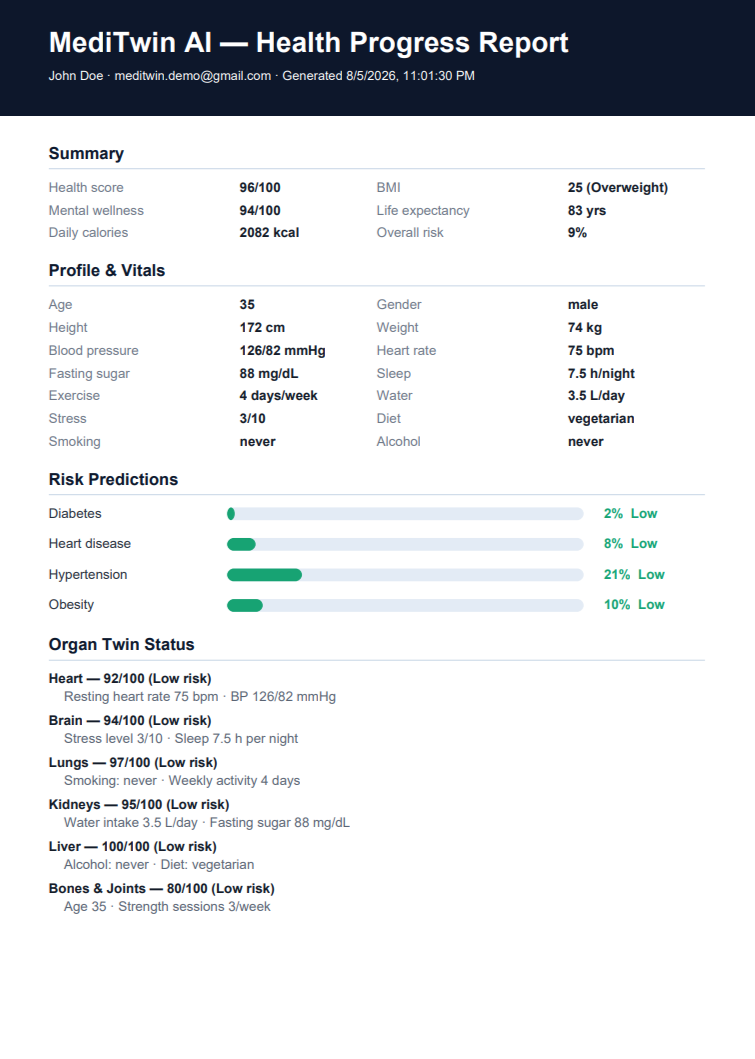
MediTwin AI creates a personalized digital health twin using user information such as age, height, weight, medical history, and lifestyle. It analyzes the data with AI to predict future health risks, visualize health trends, simulate lifestyle changes, and provide personalized health recommendations through an interactive dashboard and AI assistant.
How we built it
We built MediTwin AI using Next.js, React, TypeScript, Tailwind CSS, Three.js, and Framer Motion for the frontend, FastAPI for the backend, Supabase for authentication and database, Gemini API/OpenAI API for AI-powered recommendations and chatbot, and Machine Learning models (Scikit-learn/XGBoost) for health risk prediction.
Challenges we ran into
- Designing a realistic digital health twin with an intuitive user experience.
- Integrating multiple AI features into a single workflow.
- Presenting complex health data in a simple and interactive way.
- Creating accurate prediction models while keeping the application fast and responsive.
Accomplishments that we're proud of
- Developed a visually engaging futuristic healthcare dashboard.
- Built an AI-powered digital health twin with personalized predictions.
- Created an interactive Health Simulator that shows how lifestyle changes can affect future health risks.
- Combined AI chat, health analytics, and predictive insights into one seamless platform.
What we learned
We learned how to integrate machine learning, large language models, modern web technologies, and interactive data visualization to create a practical AI healthcare application. We also gained valuable experience in designing user-centric interfaces for complex health information.
What's next for MediTwin AI
We plan to integrate wearable devices such as Fitbit and Apple Health, support medical report analysis through OCR, improve prediction models with real-world datasets, enable doctor collaboration, and provide continuous health monitoring with real-time AI insights to make preventive healthcare more accessible.
Built With
- authentication
- axios
- fastapi
- fiber
- firebase
- framer
- gemini
- gsap
- lucide
- motion
- next.js
- numpy
- openai
- pandas
- postgresql
- scikit-learn
- storage
- supabase
- tailwind
- tanstack
- three
- three.js
- typescript
- vision
- xgboost


Log in or sign up for Devpost to join the conversation.