Inspiration
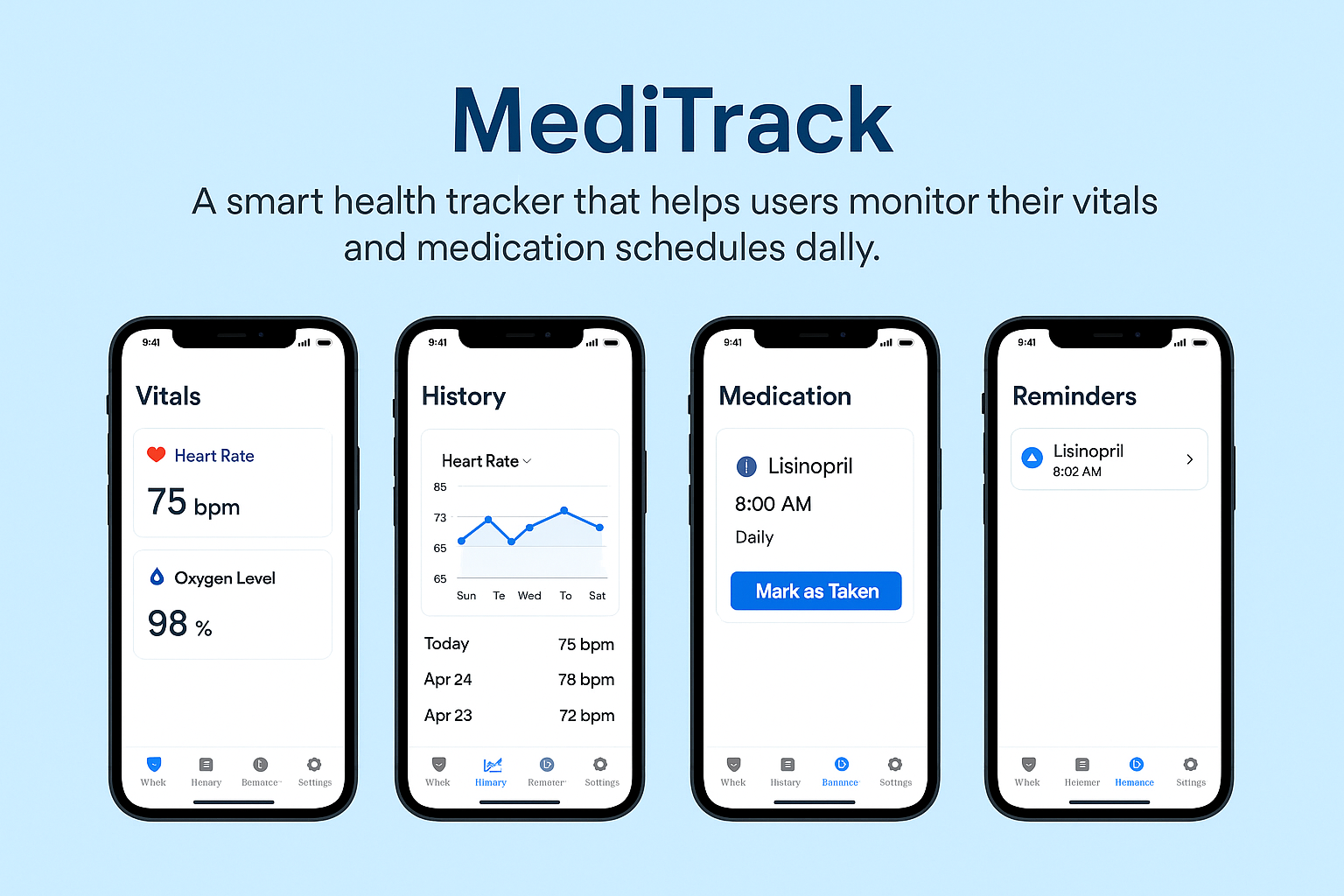
The inspiration behind MediTrack came from observing how many people, especially the elderly and those with chronic conditions, struggle to consistently track their health data and medication schedules. We wanted to build a simple yet powerful tool that empowers users to take control of their health.
What it does
During the development of MediTrack, we learned: The importance of intuitive UI/UX for healthcare-related apps. How to securely store and manage sensitive user health data. The real-life needs of patients through user feedback and research.
How we built it
Frontend: Built with React Native to ensure cross-platform compatibility (iOS and Android). Backend: Node.js and Express, with MongoDB for data storage. APIs: Integrated with wearable health devices via standard health APIs to fetch real-time vitals like heart rate and oxygen level. Security: Implemented strong encryption and authentication to ensure privacy and HIPAA compliance.
Challenges we ran into
Designing an interface that was easy for all age groups to use. Ensuring accurate and real-time syncing with wearable devices. Balancing features without overwhelming the user.
Accomplishments that we're proud of
Successfully developed a working prototype within the project timeline. Achieved seamless integration with wearable devices for real-time health monitoring. Received positive feedback from early testers, especially seniors, for ease of use. Built a secure, user-friendly medication reminder system that helps prevent missed doses. Ensured data privacy with end-to-end encryption and user authentication.
What we learned
How critical user feedback is in designing a health-focused application. Balancing usability and functionality is essential when building apps for older users. Integration with third-party APIs (e.g., health trackers) requires thorough testing and fallback planning. Building trust is key in health tech – transparency and security must come first.
What's next for MediTrack
Expand features to include telemedicine and chat with doctors or caregivers. Add AI-powered health trend predictions based on user vitals over time. Implement multilingual support to reach a wider audience. Partner with clinics and pharmacies for automated prescription syncing. Launch on app stores and begin a wider beta testing phase.

Log in or sign up for Devpost to join the conversation.