About MediTrack
The Idea Behind It
We came up with the idea for MediTrack because managing health-related information is not always easy. Medicines, appointments, prescriptions, and medical reports are often kept in different places, making it difficult to keep everything organized.
We wanted to build something that could bring these things together in one place and make everyday healthcare management a little easier. That's how MediTrack started.
What We Built
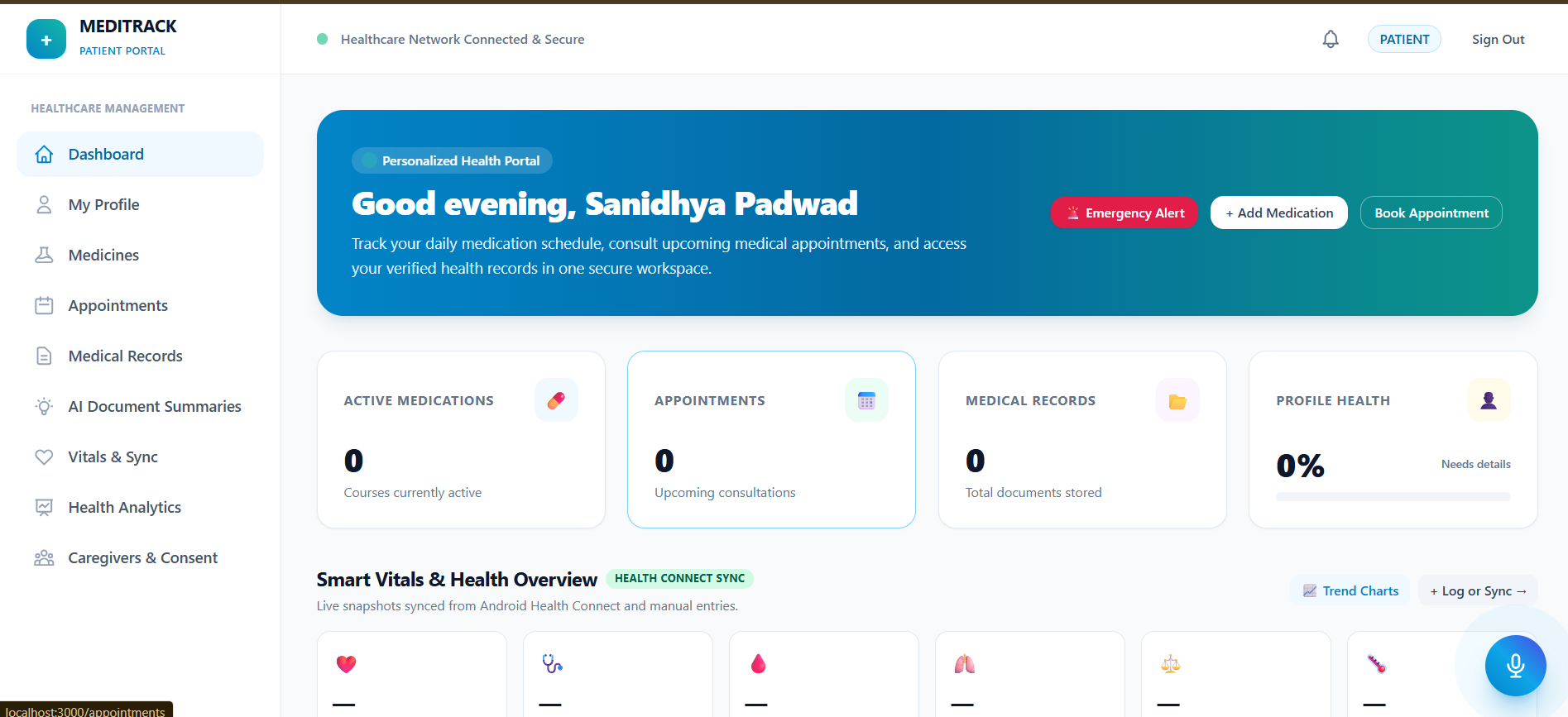
MediTrack is a healthcare management application that helps users keep track of their medicines, appointments, and medical records without having to switch between different tools.
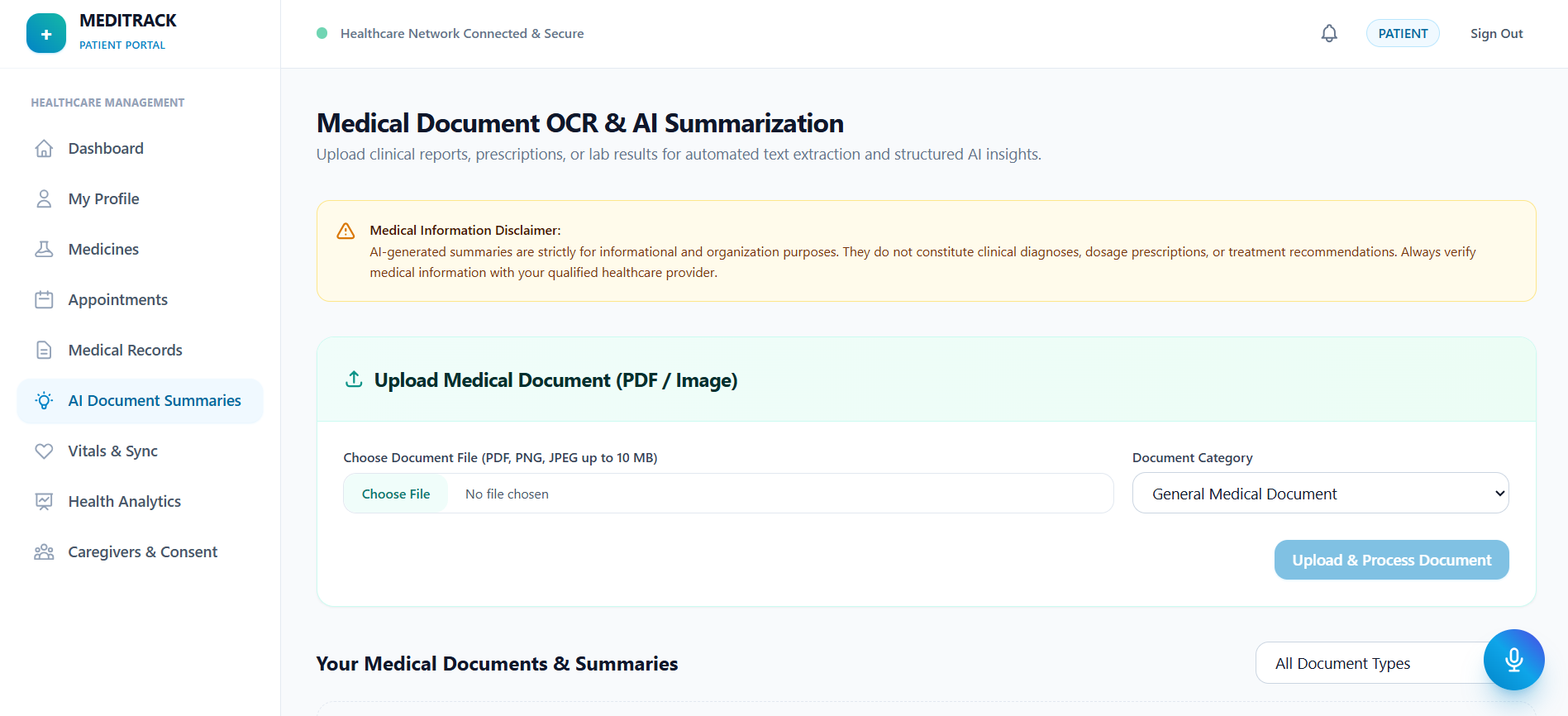
Users can manage their medication details, keep track of upcoming appointments, and store medical documents such as prescriptions and lab reports. We have also integrated AI to help summarize supported medical documents so that users can get a simpler overview of their contents.
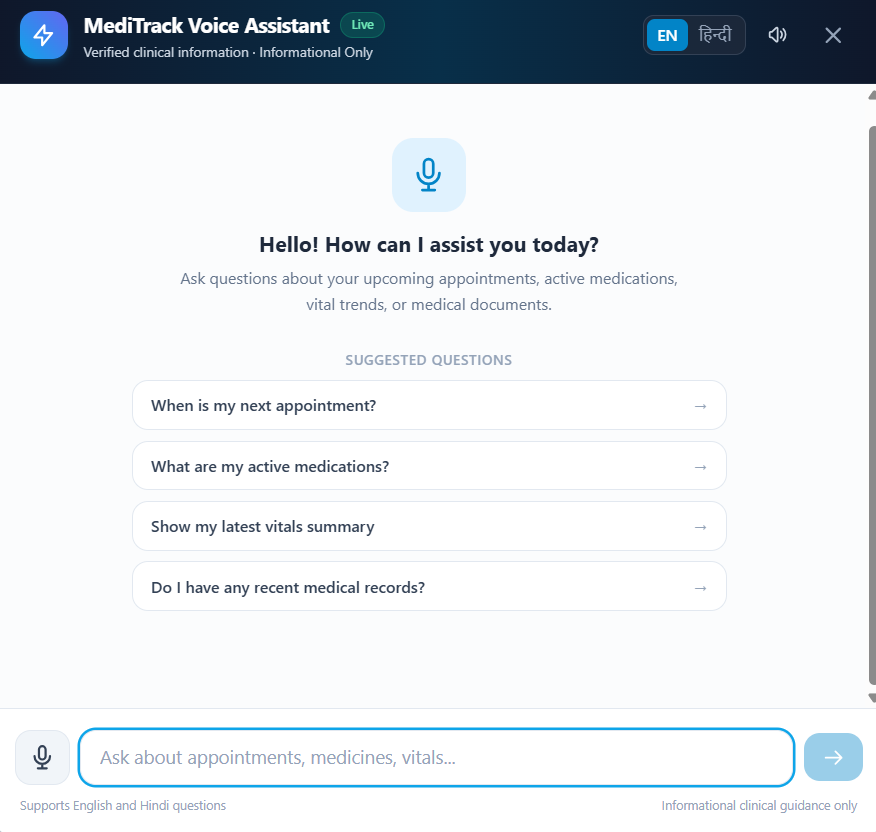
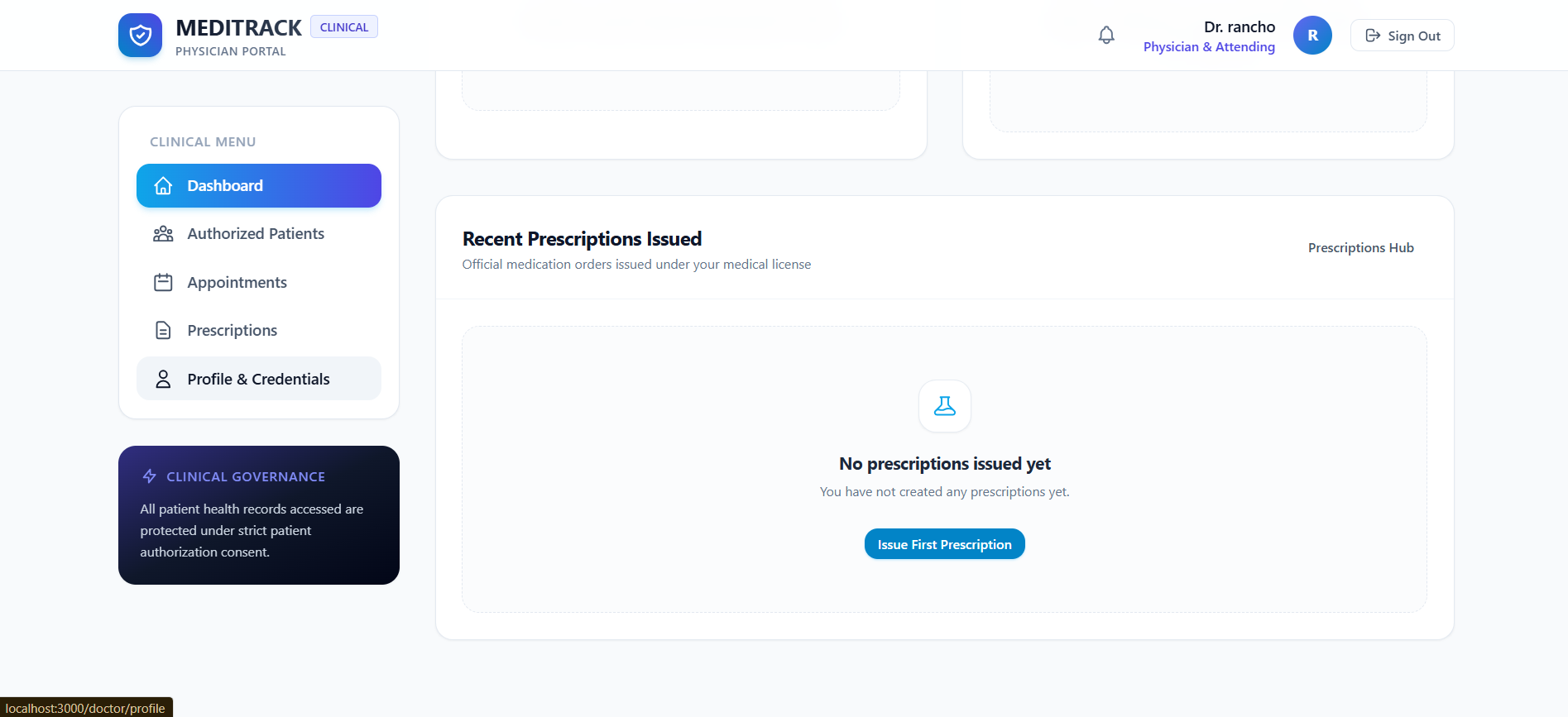
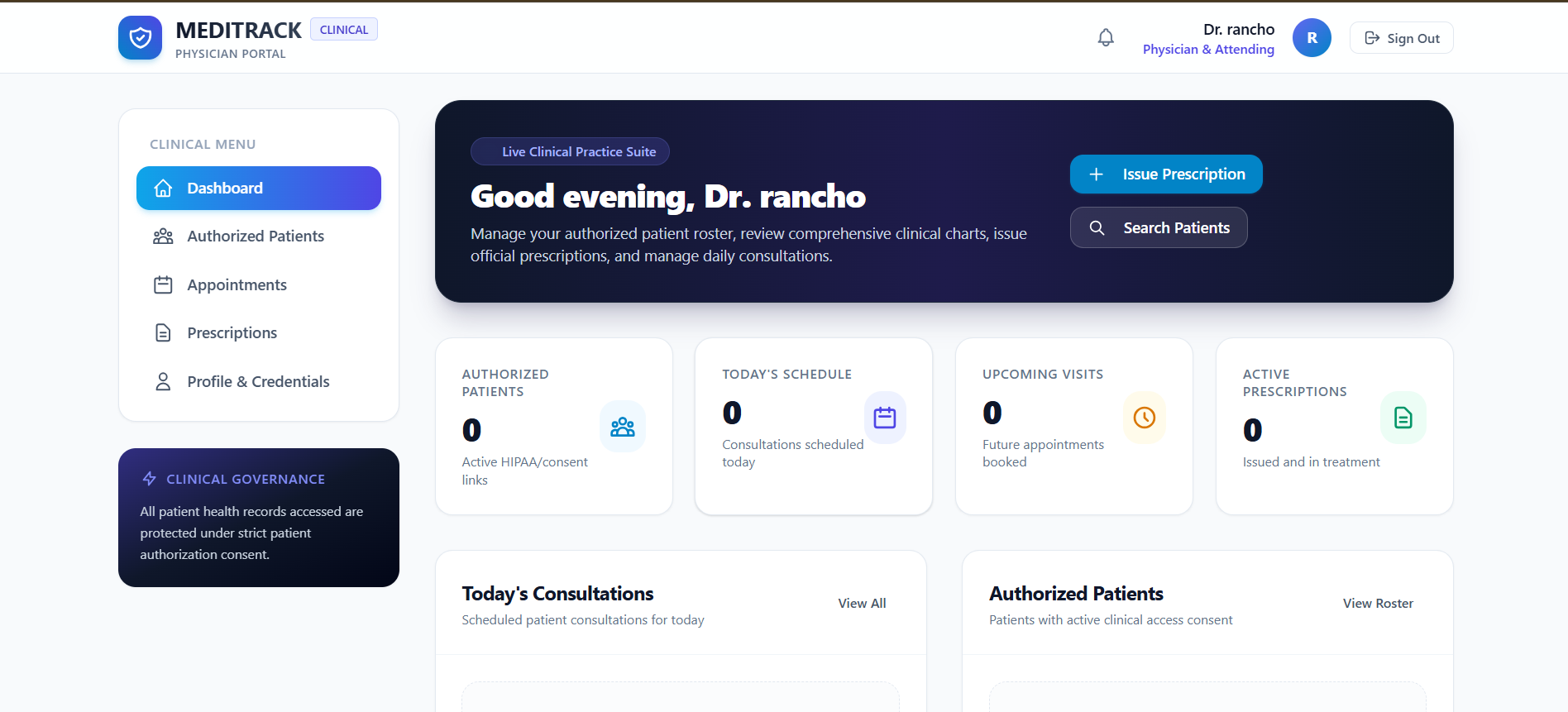
The application also includes a dashboard for important health information, role-based access for different types of users, and a voice assistant that we are developing to make interaction more convenient.
How We Built It
We used Next.js and TypeScript to build the frontend, FastAPI with Python for the backend, and PostgreSQL to store application data. We used SQLAlchemy and Alembic for database management, OCR.space for text extraction from documents, and Gemini for AI-based summaries.
Instead of trying to build everything at once, we worked on the project in phases. We started with the basic patient features, connected them to the backend and database, and then worked on additional functionality. Testing each part separately helped us find and fix issues as we went along.
Challenges Along the Way
One of the main challenges was making sure that all the different parts of the application worked together properly. Sometimes, a page would be ready on the frontend but the corresponding API integration would need more work. We also faced issues with document processing because external OCR services can occasionally fail or limit requests.
Working through these problems taught us not to depend on everything working perfectly on the first try. We learned to test integrations separately, check API responses, debug errors, and make changes without breaking features that were already working.
Since MediTrack deals with healthcare information, we also had to pay attention to authentication, user permissions, and keeping sensitive configuration files out of the code repository.
What We Learned
Building MediTrack gave us practical experience with full-stack development, database design, API integration, testing, and working with AI services. We also learned that adding a new feature is only one part of development; making sure it works reliably with the rest of the application takes just as much effort.
We realized that AI can help make medical information easier to understand, but it should not replace a doctor's advice or professional medical judgment.
What's Next?
We want to explore Amazon Alexa+ integration so that users can interact with supported MediTrack features in a more natural, conversational way. We also plan to improve the reliability of document processing and continue refining the overall user experience.
MediTrack is still a work in progress, and there is more we want to improve. For us, this project is an opportunity to learn by building something practical that could make managing everyday healthcare a little less complicated.
Built With
- alembic
- amazon
- android
- artificial-intelligence
- fastapi
- gemini-api
- generative-ai
- healthcare
- kotlin
- next.js
- ocr.space
- postgresql
- python
- react
- rest-api
- sqlalchemy
- typescript
- voice-assistant

Log in or sign up for Devpost to join the conversation.