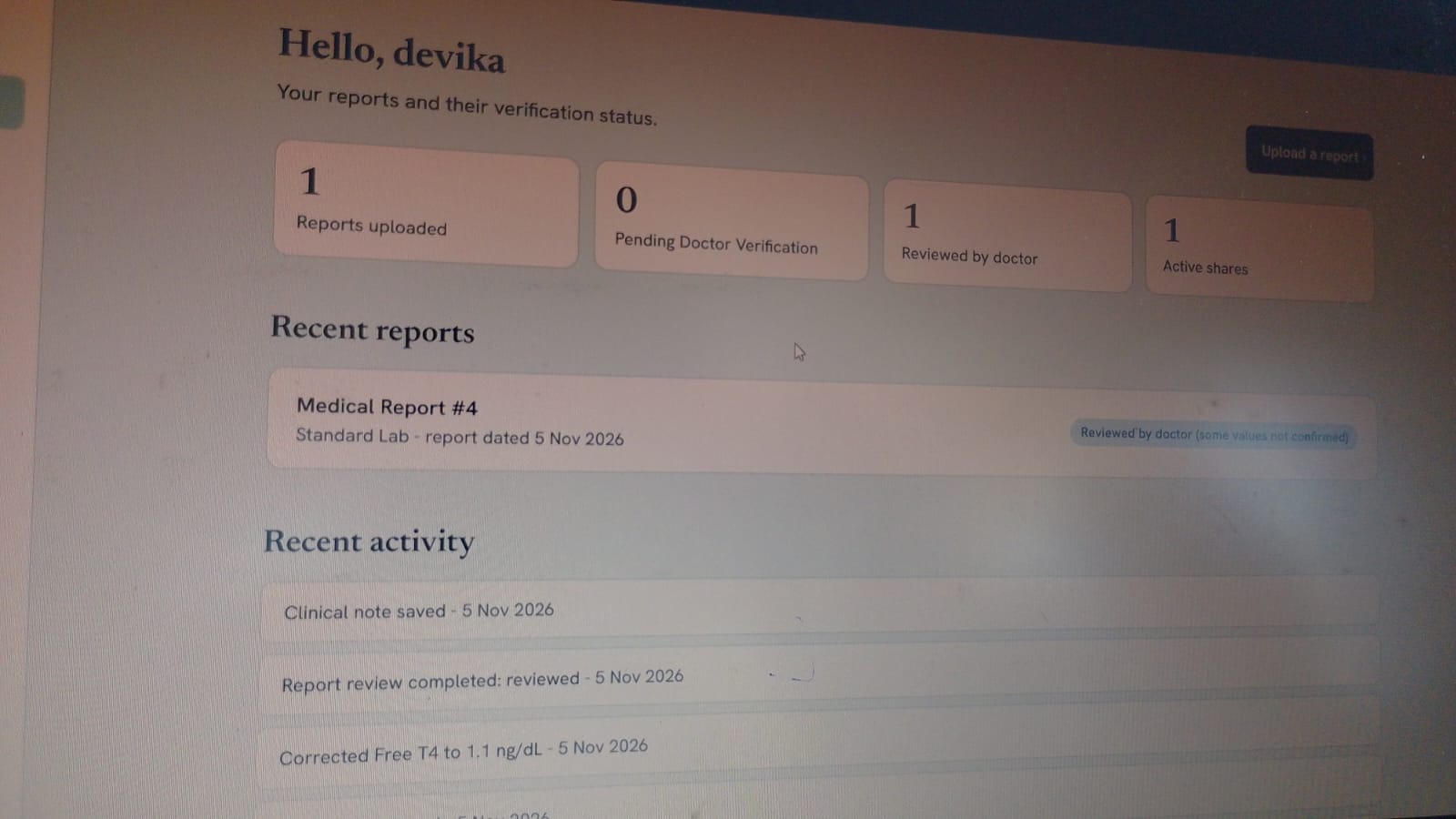
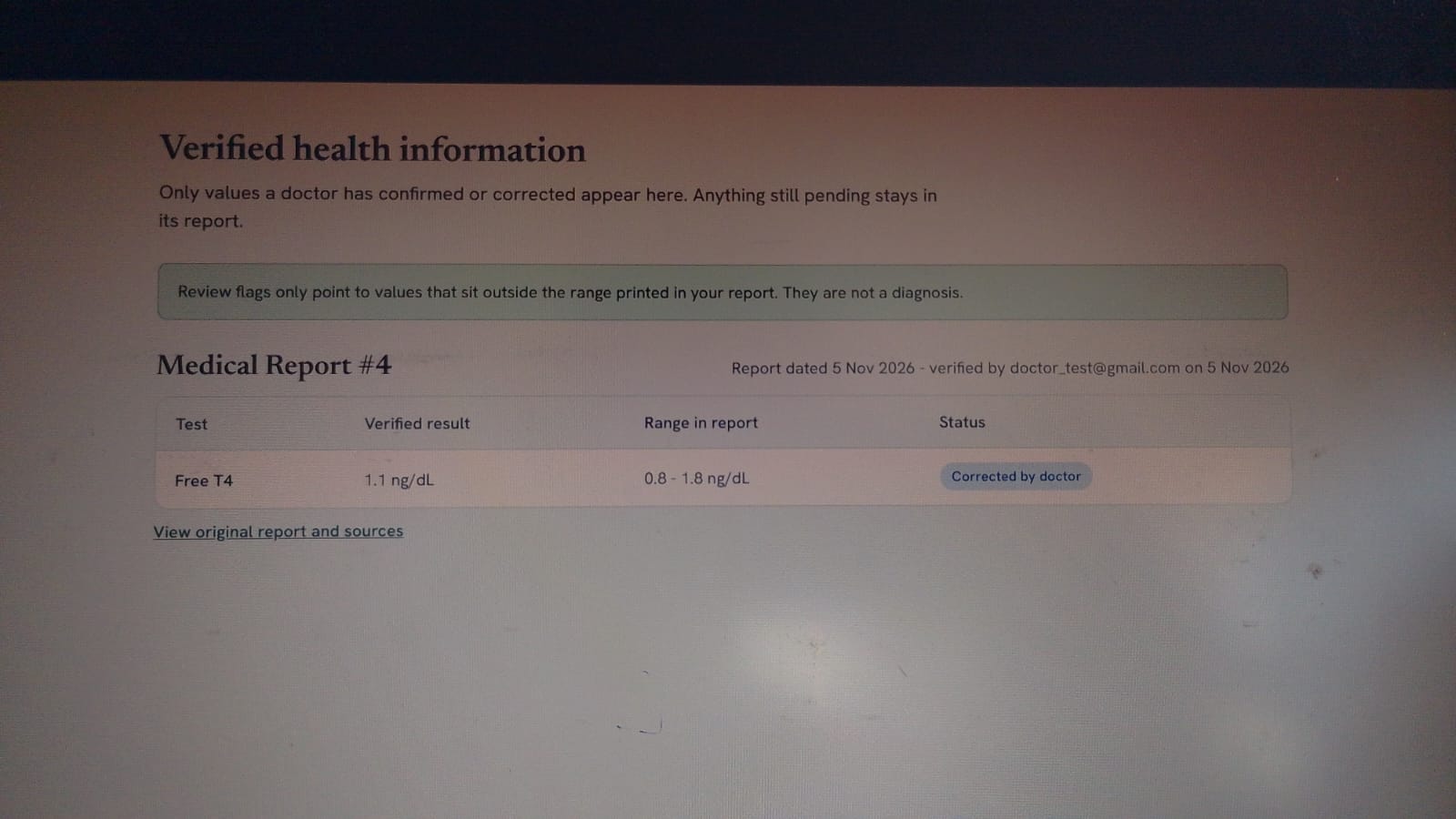
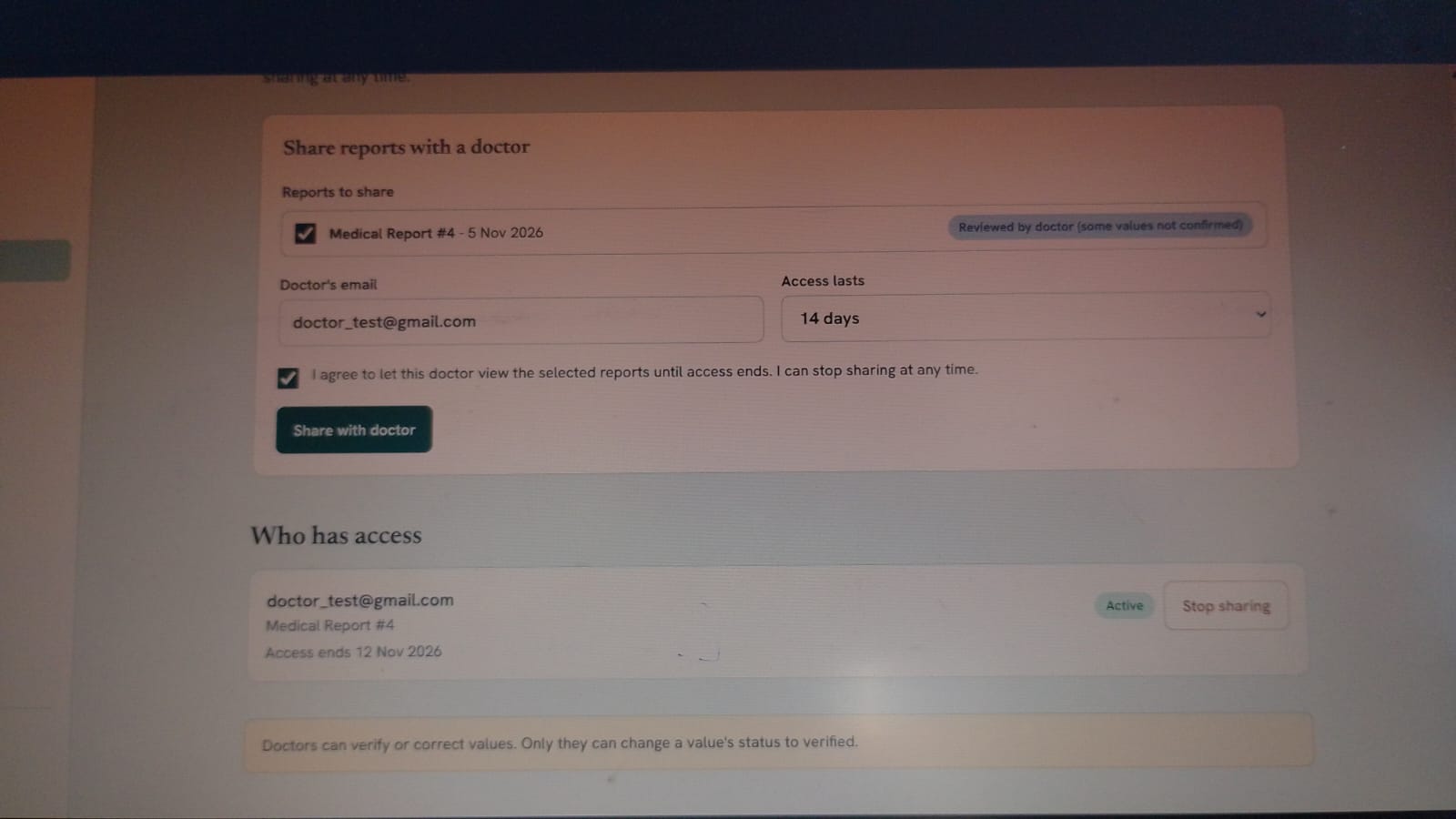
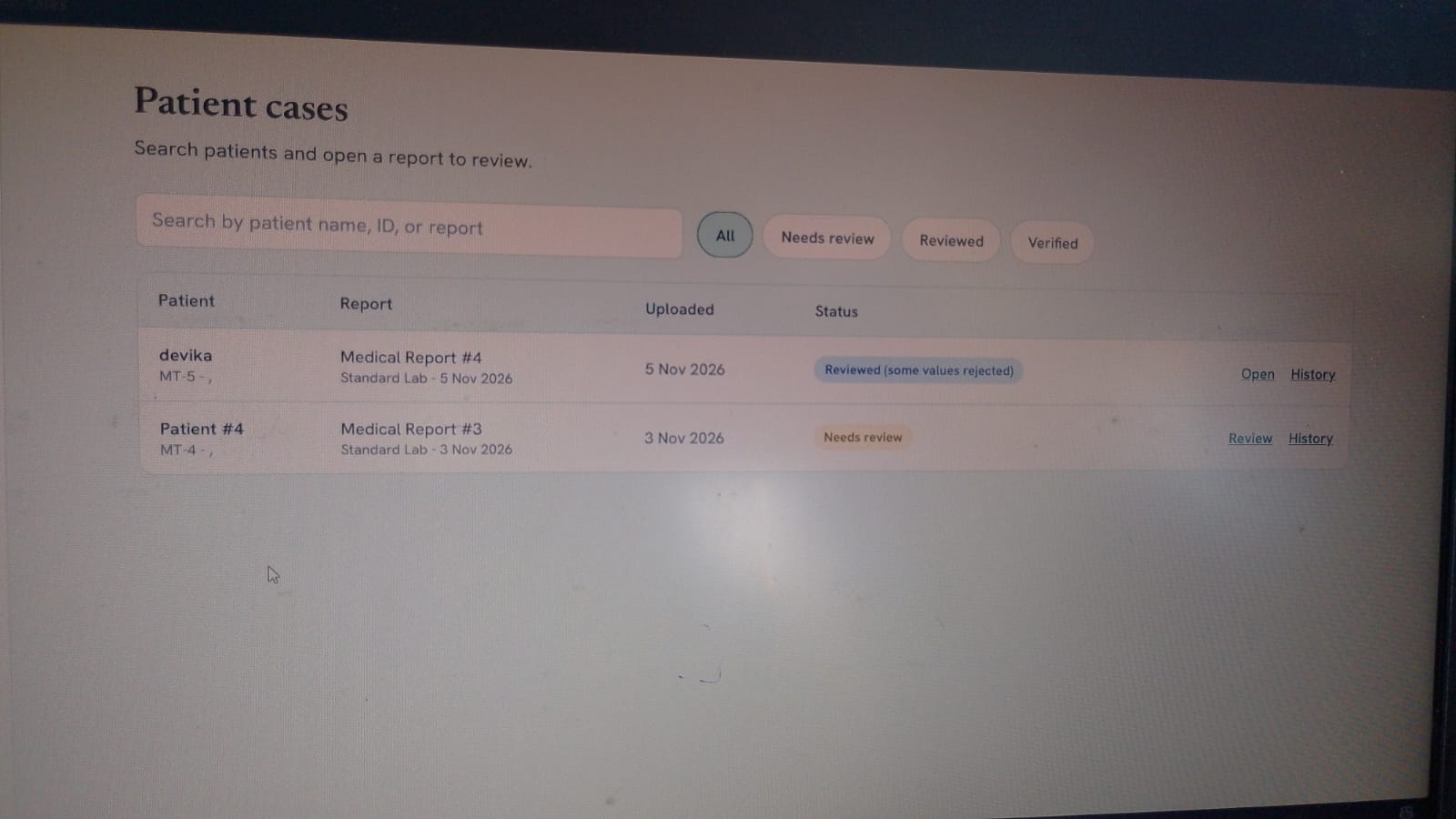
What happens to a patient’s medical data after the report lands in their hands? That was the question that started MediCare.
Most reports are still PDFs. Scanned pages. Images. A patient might have files from three different hospitals and two labs. Meanwhile, doctors are manually digging through these documents, hunting for key values, comparing old reports to see what’s changed. It’s tedious. We saw a gap between the physical report and the actual health record. We didn’t want to replace the doctor. We just wanted to make the process less painful. So we built MediCare.
It’s an AI-assisted platform for managing and verifying medical reports. The workflow is straightforward:
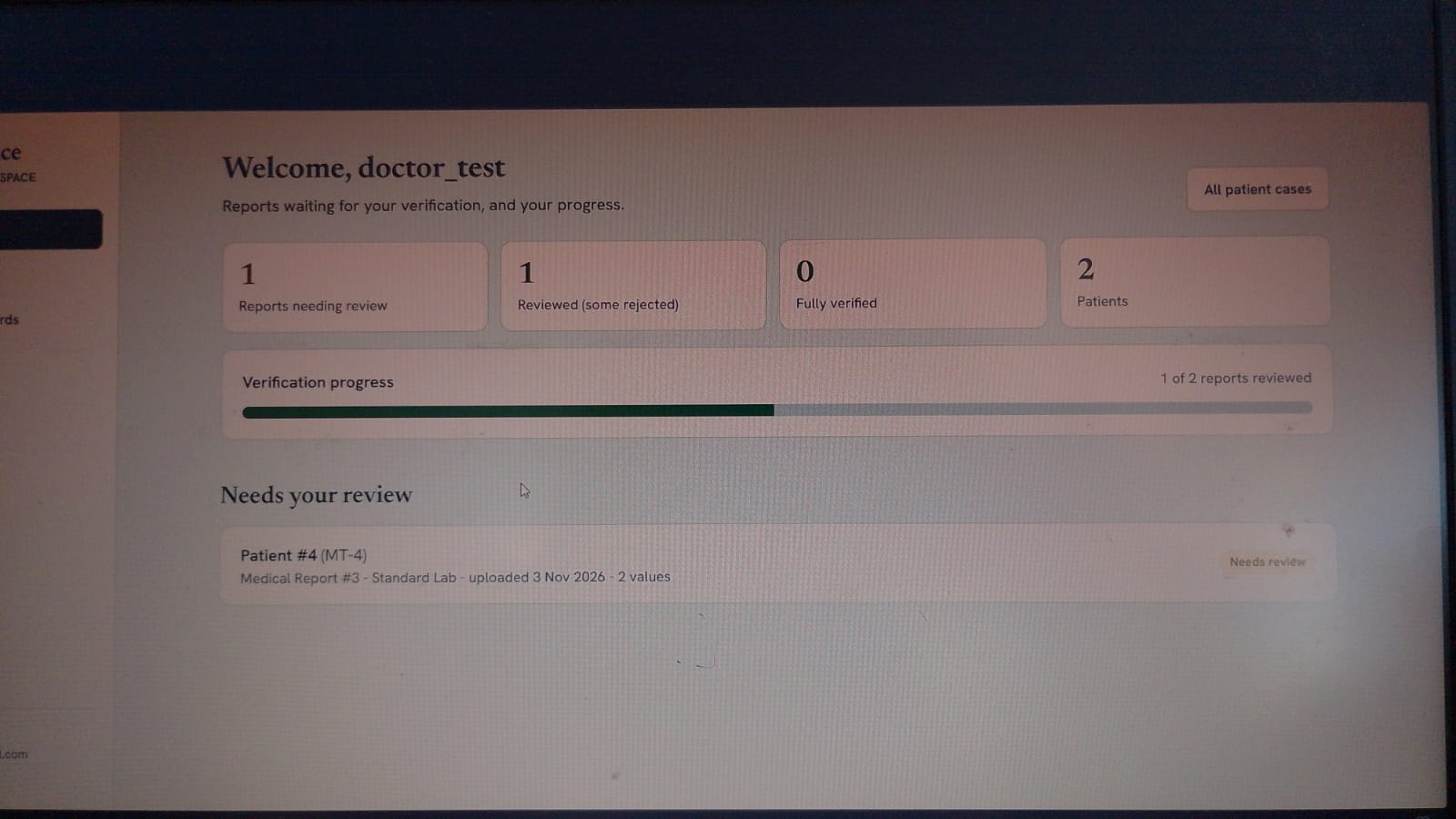
Patient uploads report → AI extracts info → Evidence is displayed → Doctor verifies → Verified data enters the patient record.
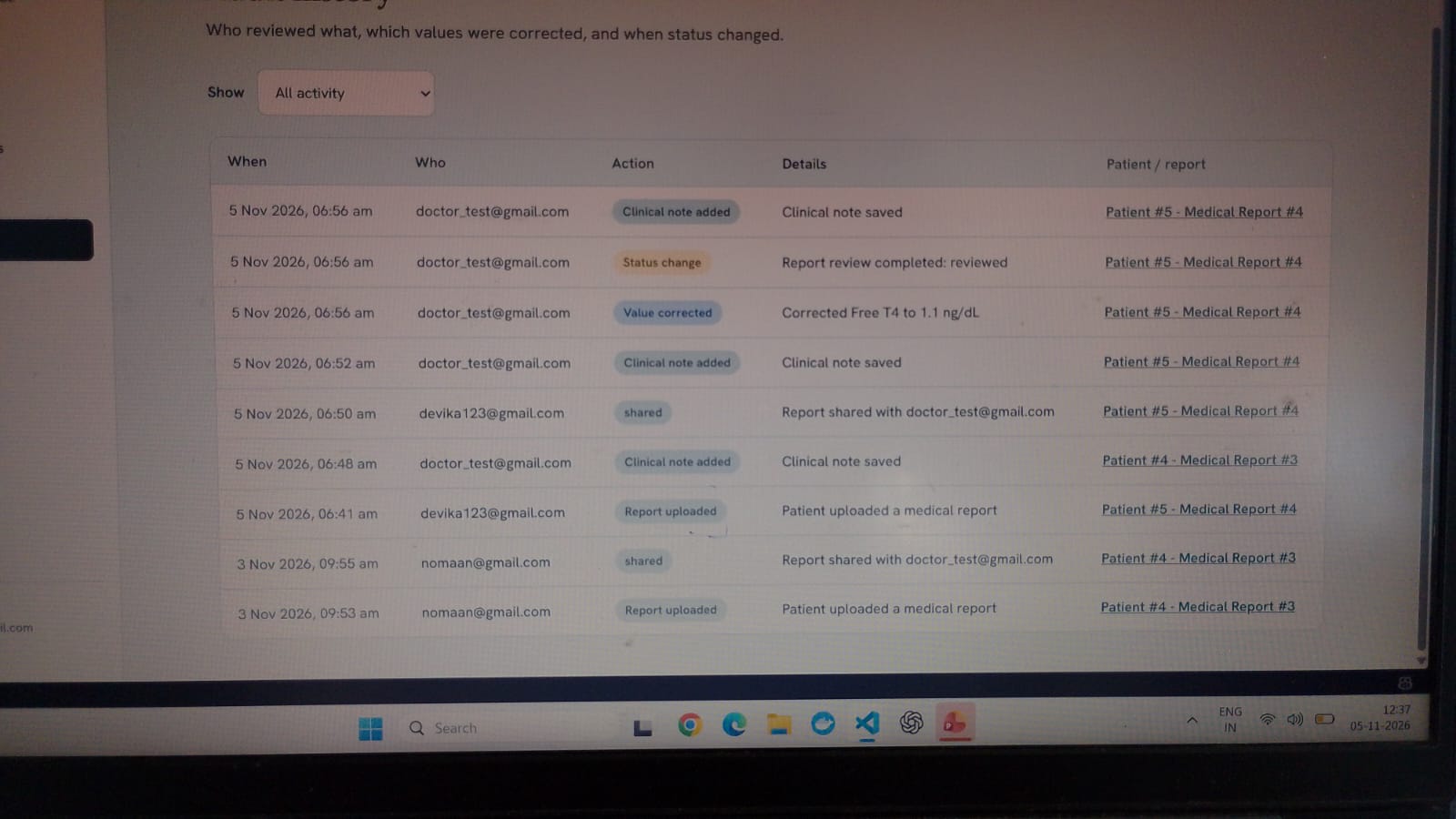
When a report comes in, MediCare pulls out the useful bits: test name, value, unit, reference range, date, and the source text from the original page. We didn’t want a black-box AI result. Every extracted value needs to link back to the document. Doctors need to know where it came from. MediCarae also flags values outside the reference range and helps compare them against previous reports.
But here’s the catch: AI doesn’t get the final say.
The doctor sees the original report side-by-side with the AI extraction. They can verify the values, correct mistakes, or flag anything that looks off. Only information the doctor verifies becomes trusted patient data.
We built this as a full-stack app. Separate interfaces for patients and doctors, handled by React.js and Tailwind CSS. The backend runs on Python and FastAPI, managing authentication, role-based access, uploads, processing, APIs, sharing permissions, and communication between the frontend, database, storage, and AI services. PostgreSQL handles structured data—users, reports, extracted values, verification logs, notes, and audit trails. Original files sit in secure cloud storage; the database holds the metadata and relationships.
On the AI side, reports go through OCR first. Then the extracted text is processed to identify relevant medical values and their supporting evidence. We designed the system around human-in-the-loop verification. AI reads and organizes. The doctor verifies. Simple division of labor.
Building this taught us that AI healthcare isn’t just slapping an API onto a website. The biggest lesson was trust and traceability. If AI pulls a value, the user needs to see where it came from. That’s why we focused on source evidence and keeping the original report visible, rather than treating the AI output as gospel. We also got a deeper handle on role-based access, secure file handling, database design for medical records, API communication, OCR and structured extraction, verification workflows, audit logs, and designing AI features with clear boundaries.
One major hurdle was deciding how much responsibility to give the AI. Early on, we thought about AI simply reading a report and spitting out an answer. But in healthcare, that’s risky. Misinterpretation. Hallucination. Serious problems if the AI gets it wrong or invents something not in the report. So we shifted. AI became an assistant, not a decision-maker. It extracts, organizes, provides evidence, and highlights potential issues. The doctor verifies before it enters the trusted record. Another challenge was designing the flow between the original report, AI output, verification, and the final patient record without confusing the user.
MediCare isn’t about “AI replacing the doctor.” It’s about helping doctors work with medical information faster, while they stay in control. The original report is the source of truth. AI-generated data is just extracted information pending verification. We also wanted patients to have a clearer view of their own health data instead of chasing scattered files across platforms.
MediCare is a foundation. In the future, we plan to improve document processing, support more report types, enhance historical comparison, add stronger consent and sharing controls, and explore integration with healthcare systems where it makes sense. Our long-term goal is building a trusted layer between medical documents, AI, doctors, and patients. AI makes the information easier to handle. But important healthcare decisions remain with the humans who should make them.
Built With
- ai
- fastapi
- javascript
- openrouter
- python
- react
- sqlite
- tailwindcss

