-
-

Our Logo
-
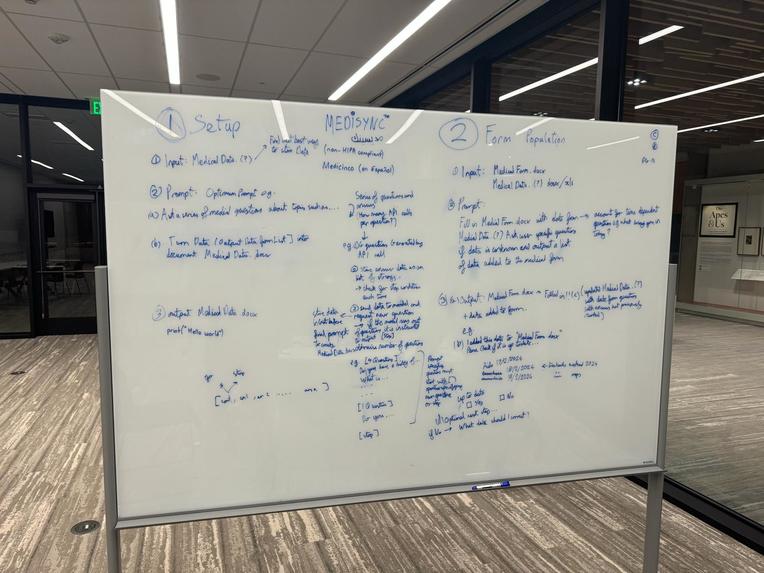
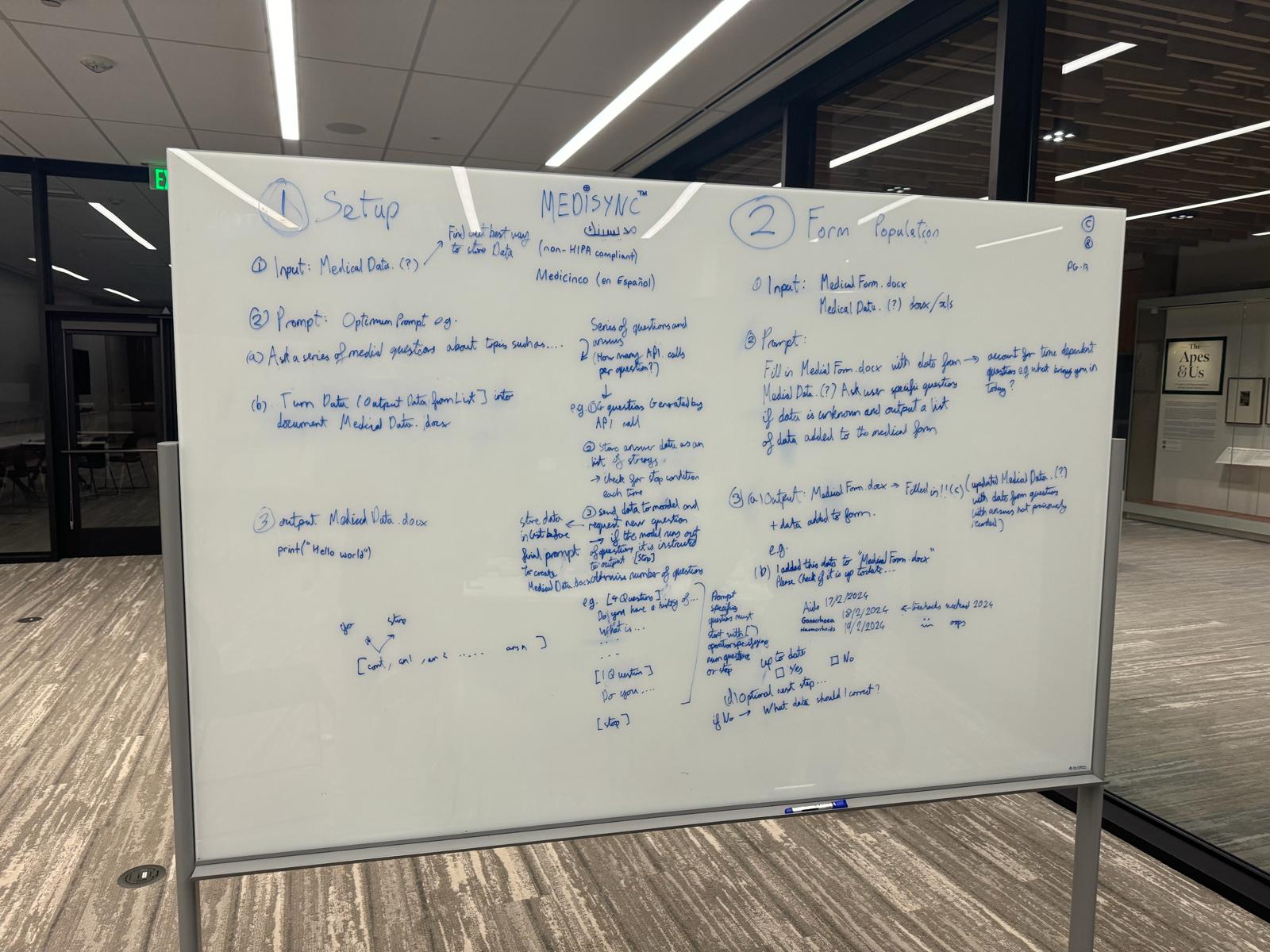
Our Ideation Process
-
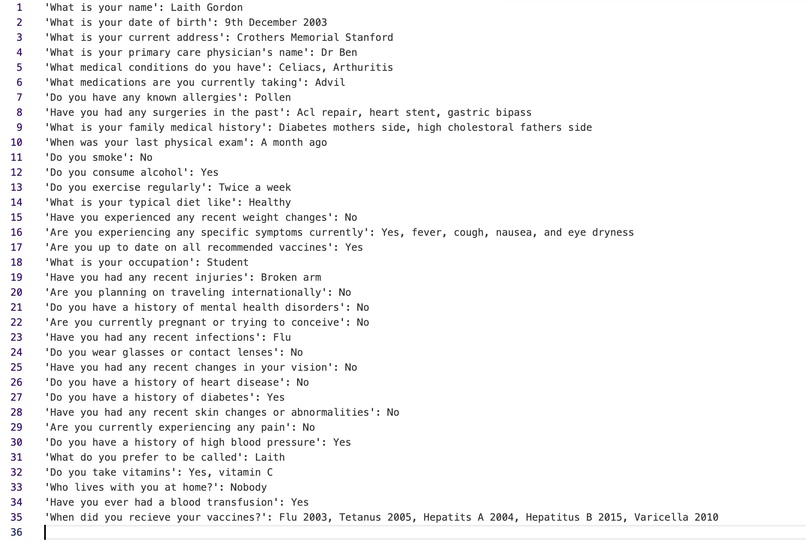
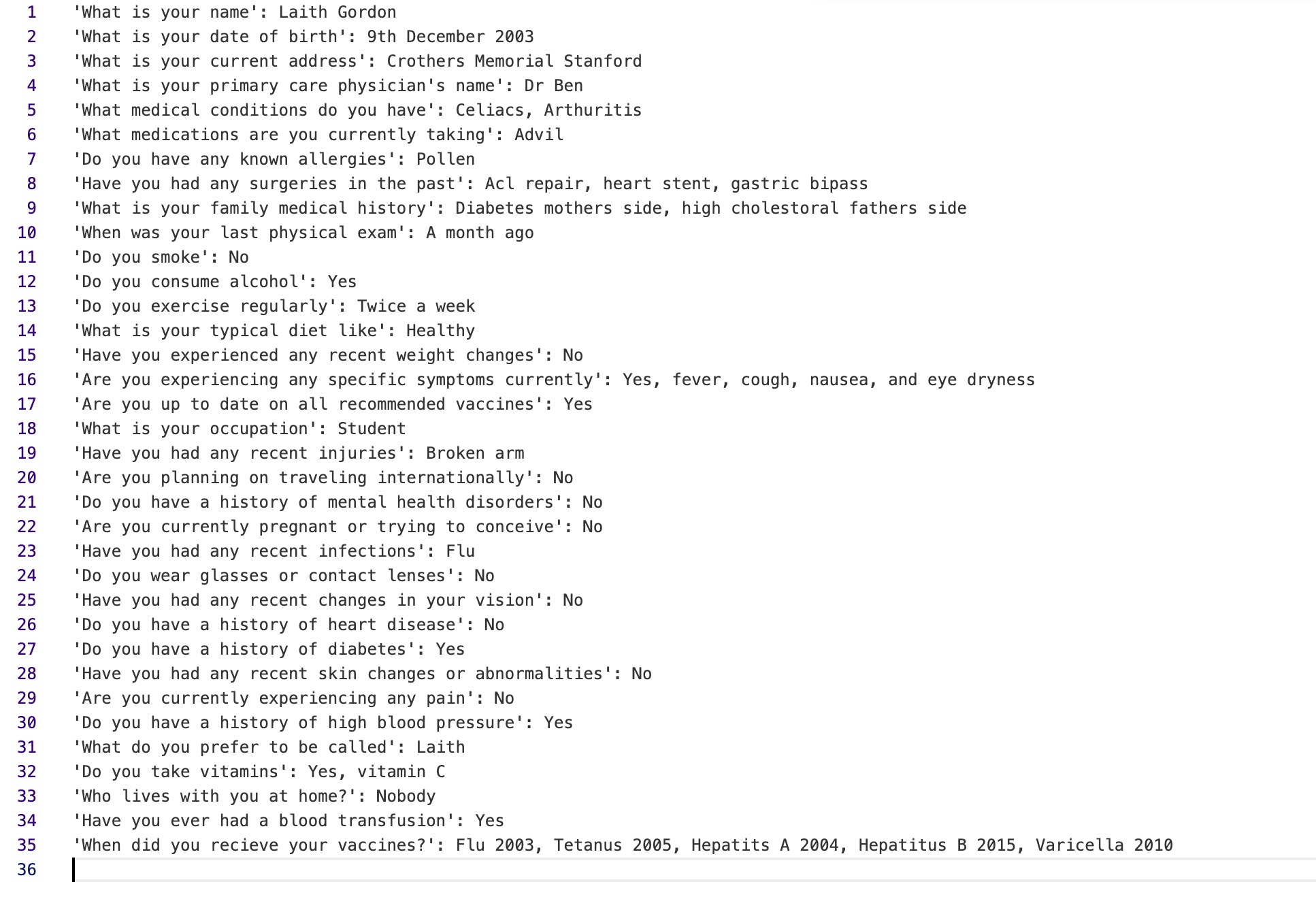
How Medical Data is stored after the user is asked questions.
-
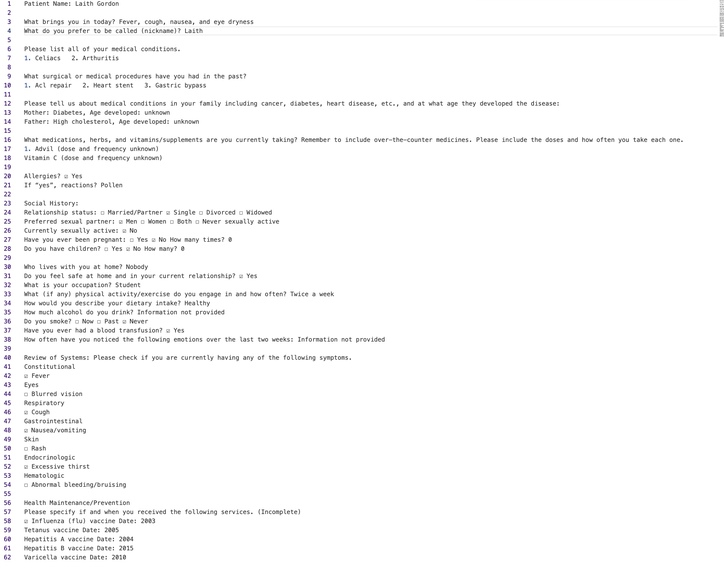
The sample form filled out with user medical data


Inspiration
The inspiration behind Medisync came from observing the extensive time patients and medical staff spend on filling out and processing medical forms. We noticed a significant delay in treatment initiation due to this paperwork. Our goal was to streamline this process, making healthcare more efficient and accessible by leveraging the power of AI. We envisioned a solution that not only saves time but also minimizes errors in patient data, leading to better patient outcomes.
What it does
Medisync uses AI algorithms to automate the process of filling out medical forms. Patients can speak or type their information into the app, which then intelligently categorizes and inputs the data into the necessary forms. The patient's data will be continually updated with future questions as their medical history progresses. All data will be securely stored on the user's local machine. The user will be able to quickly and securely input their medical data into forms with different formats from different institutions. This results in a faster, more efficient onboarding process for patients.
How we built it
We built Medisync using Natural Language Processing (NLP). Our development stack includes Python for backend development. We modeled a user-friendly interface that simplifies the data entry process. We uploaded common medical forms from the internet, we then scraped them for information and then using Open Ai's API call we populated the form outputting the final result in an md file.
Challenges we ran into
Some challenges we faced were parsing the forms correctly and breaking down the questions into the relevant health categories. The output of the program was dependent on the level of understanding of the data that was available to fill the forms. Thus, in depth question generation was a challenge we had to overcome. We also had to understand how our project can be HIPAA compliant so that it can be released to the end user. Medical data is highly sensitive and personal and there are lots of privacy laws to product individuals. Going forward we have a detailed plan on how to make our service HIPAA compliant.
Accomplishments that we're proud of
We are proud of developing a functional prototype that demonstrates a significant reduction in time spent on medical paperwork. Our pilot tests on random users showed a 70% decrease in patient onboarding time. Receiving positive feedback from patients. Furthermore, there is a huge issue surrounding human error in these forms. As they are repetitive long-form tasks it is easy for people to make a mistake. We are very proud to have made a product that makes patients safer and healthier by reducing error in medical forms.
What we learned
Throughout this project, we learned the importance of interdisciplinary collaboration, combining expertise in AI, software development, and healthcare to address a common challenge. We gained insights into the complexities of healthcare regulations and the critical role of data privacy. This project also honed our skills in AI and ML, particularly in applying NLP techniques to real-world problems. Overall we have learnt the importance of solving a complex problem from many angles to create a solution in a time efficient manner. Combining new and old skills in a highly effective way.
What's next for Medisync
Moving forward, we plan to make sure that Medisync fully meets HIPAA compliance and test our service with many more users. We are also exploring partnerships with hospitals and healthcare systems to integrate our solution into their existing workflows. Additionally, we aim to incorporate AI-driven analytics to provide healthcare providers with insights into patient data, further enhancing the quality of care. Allowing our service to fill out more forms faster. We also hope to improve the user experience and workflow of inputting user data by highlighting missing information from forms that users have filled out. In this we will make sure that we gather the right data in the fewest questions and thus in the most efficient way for our end user.
Built With
- openai
- python


Log in or sign up for Devpost to join the conversation.