Inspiration
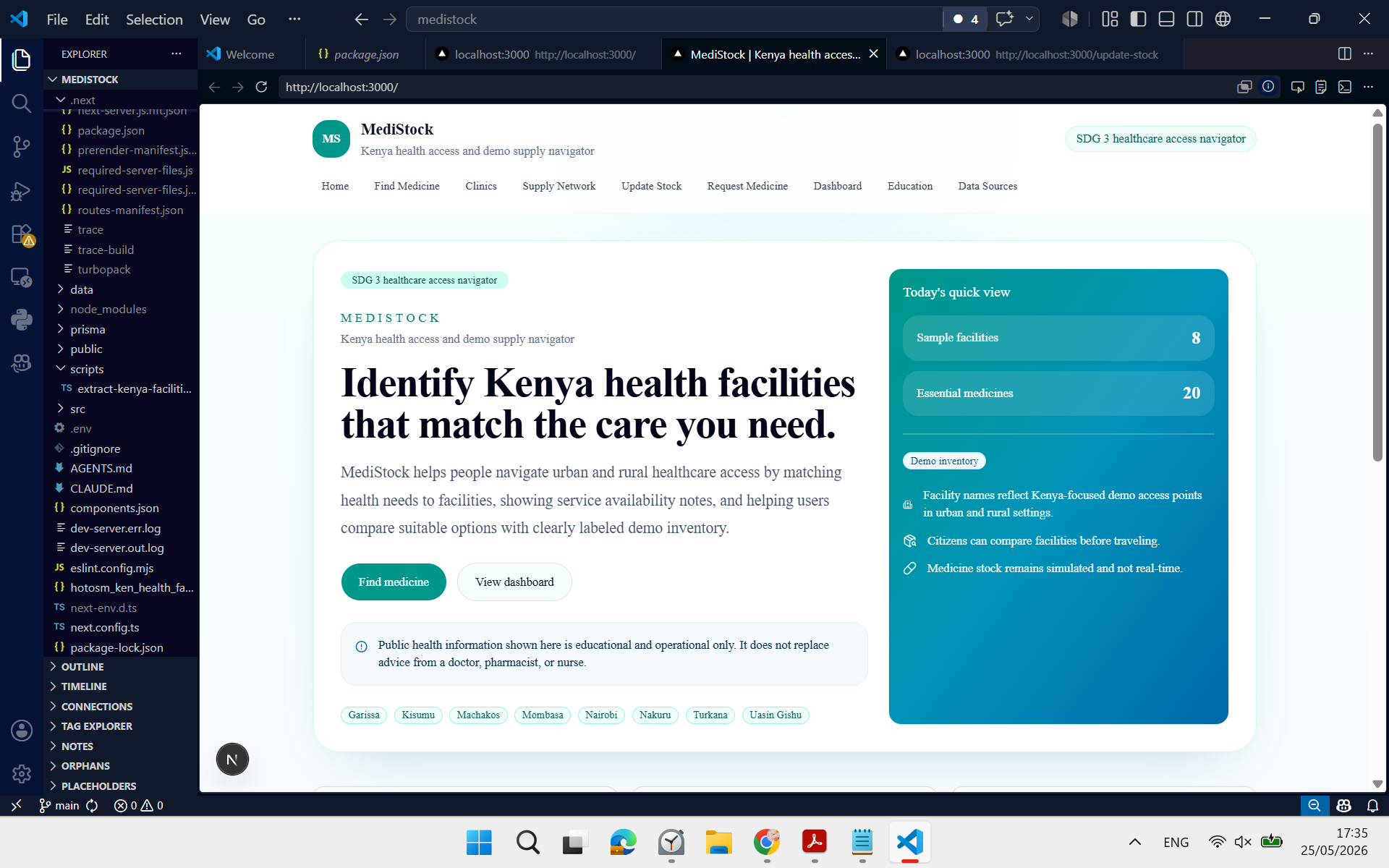
MediStock was inspired by a simple but important SDG 3 problem: many people do not just need medicine, they need help finding the right health facility that provides the care they need. In both urban and rural contexts, healthcare access can be limited by distance, unclear service availability, and difficulty navigating where to go. I wanted to build a tool that makes healthcare access easier to understand and easier to act on.
What it does
MediStock is a Kenya-focused healthcare access navigator. It helps users:
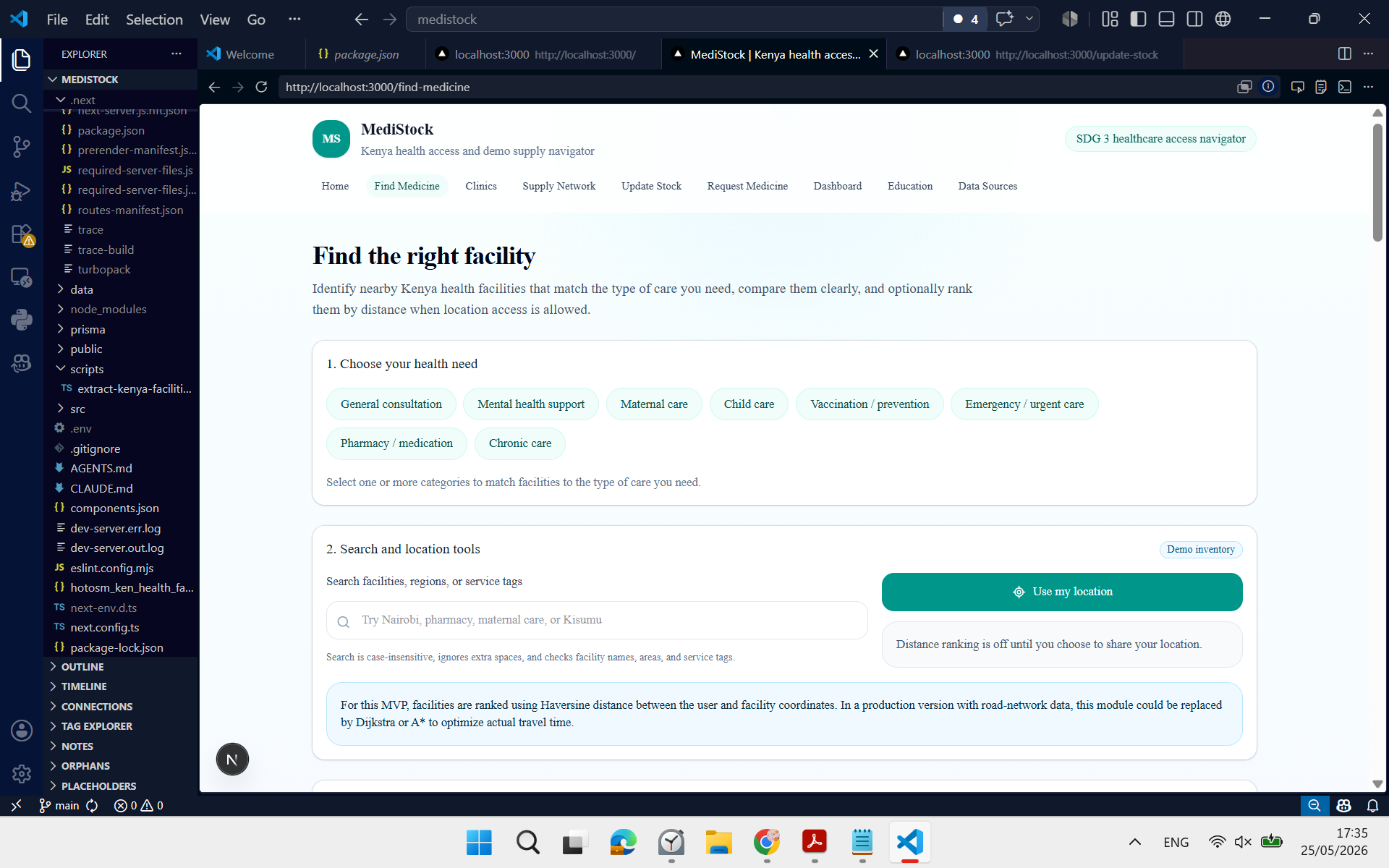
- choose a health need category such as maternal care, child care, vaccination, mental health support, emergency care, pharmacy access, or chronic care
- find facilities that match those needs
- search facilities using robust case-insensitive matching
- compare multiple facilities side by side
- optionally use browser geolocation to rank matching facilities by distance
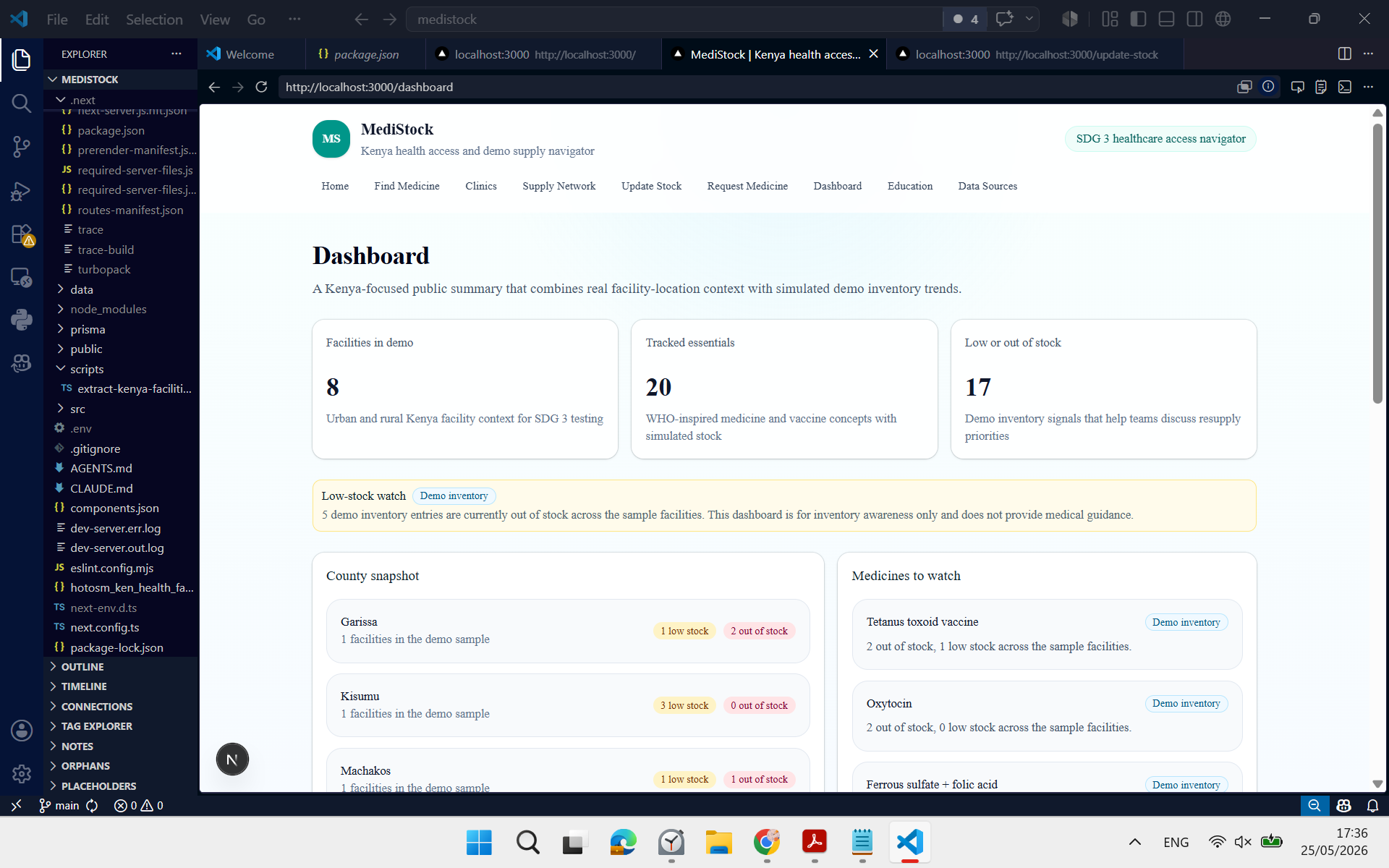
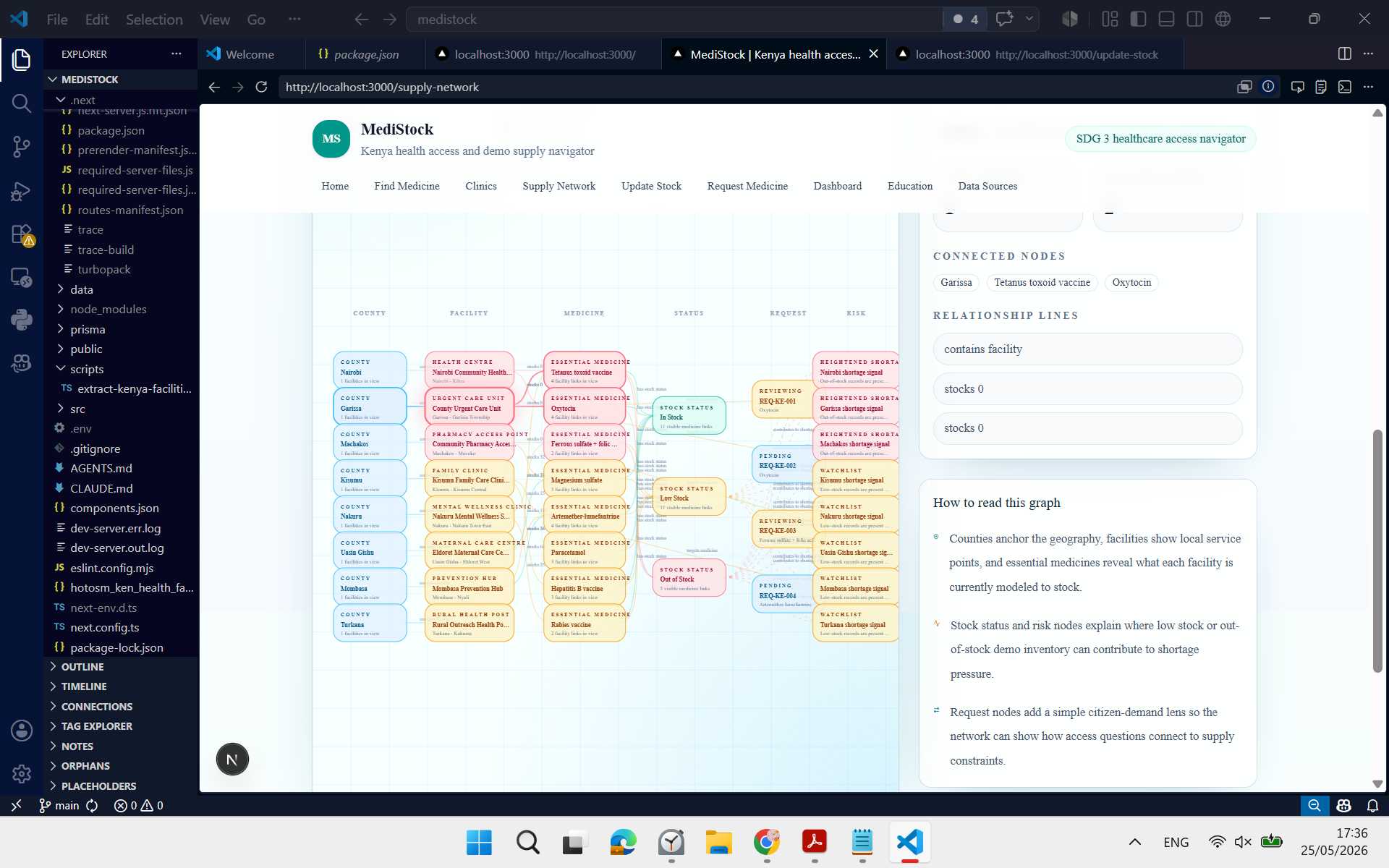
- explore a supply-network view that connects counties, facilities, medicines, requests, stock status, and shortage risk
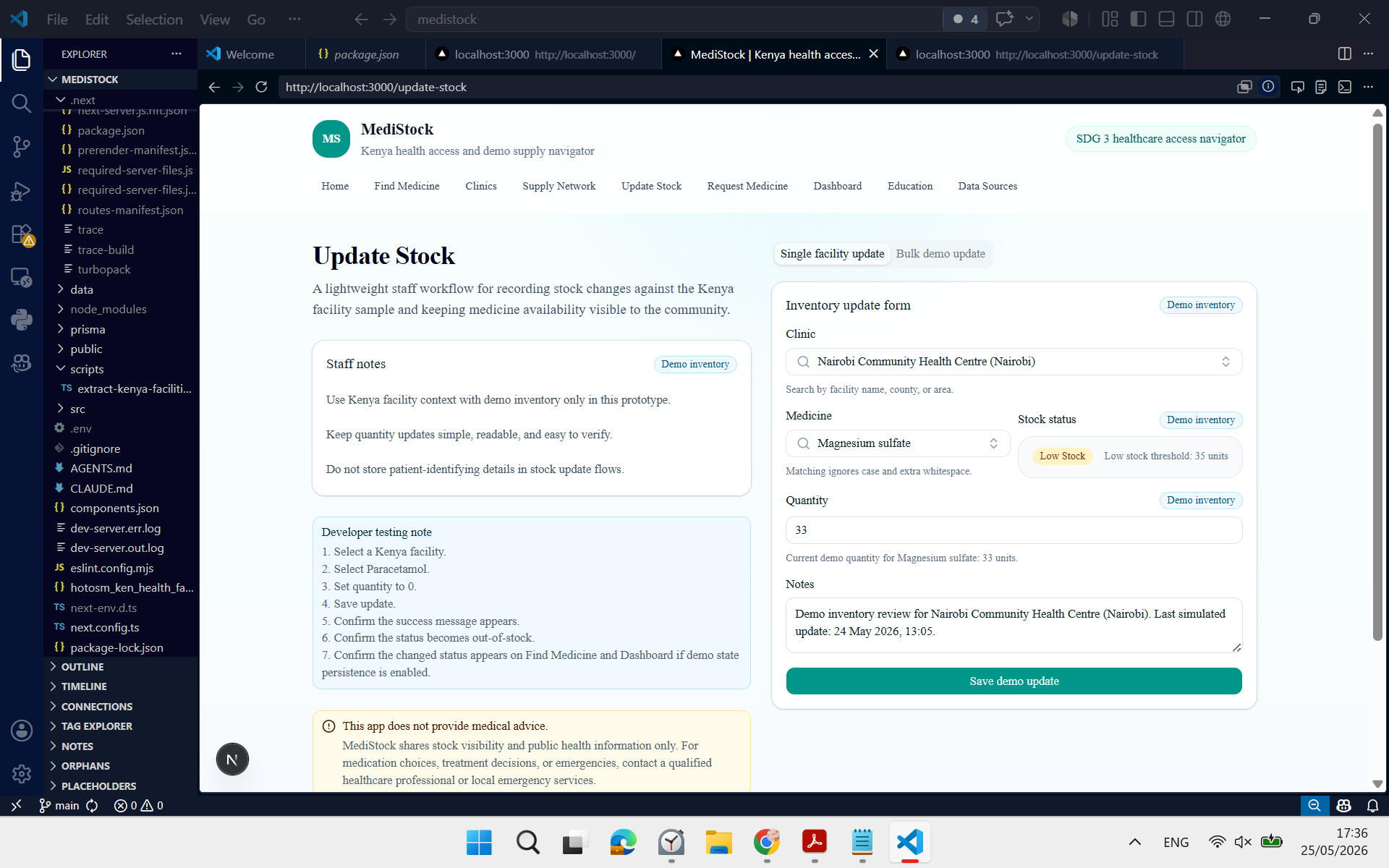
The app also includes demo inventory updates, request flows, and a public dashboard, while clearly labeling all stock values as demo inventory only.
How I built it
I built MediStock with Next.js, TypeScript, Tailwind CSS, and a modular component structure designed to be easy to analyze and extend. I separated:
- facility data
- essential medicine data
- demo inventory state
- search normalization helpers
- distance calculation utilities
- graph logic
- feature UI components
I added curated Kenya-style facility data, healthcare service tags, safe non-diagnostic guidance messages, and local demo inventory persistence. For location-aware ranking, I used the Haversine formula to calculate straight-line distance between the user and facilities.
Challenges I ran into
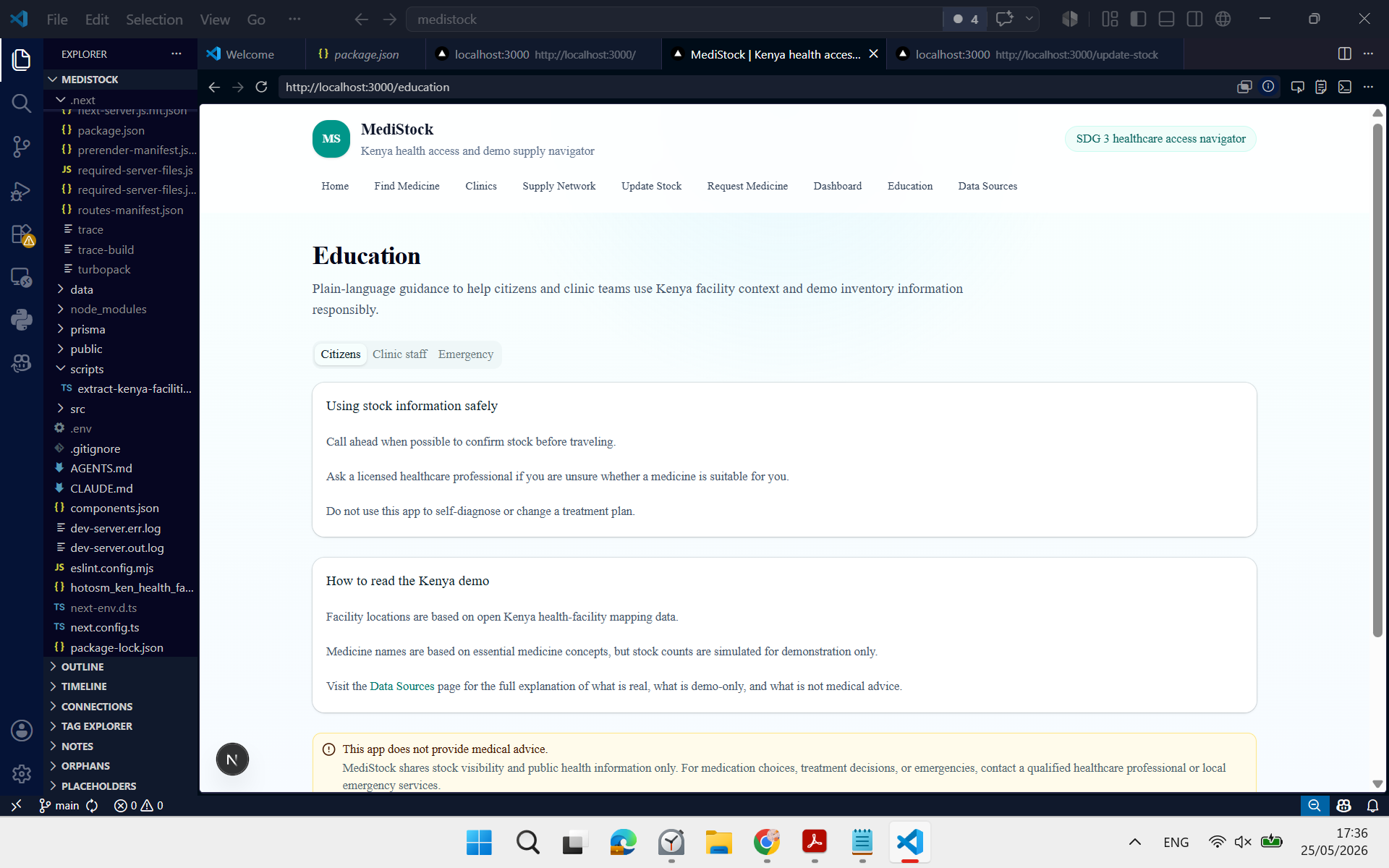
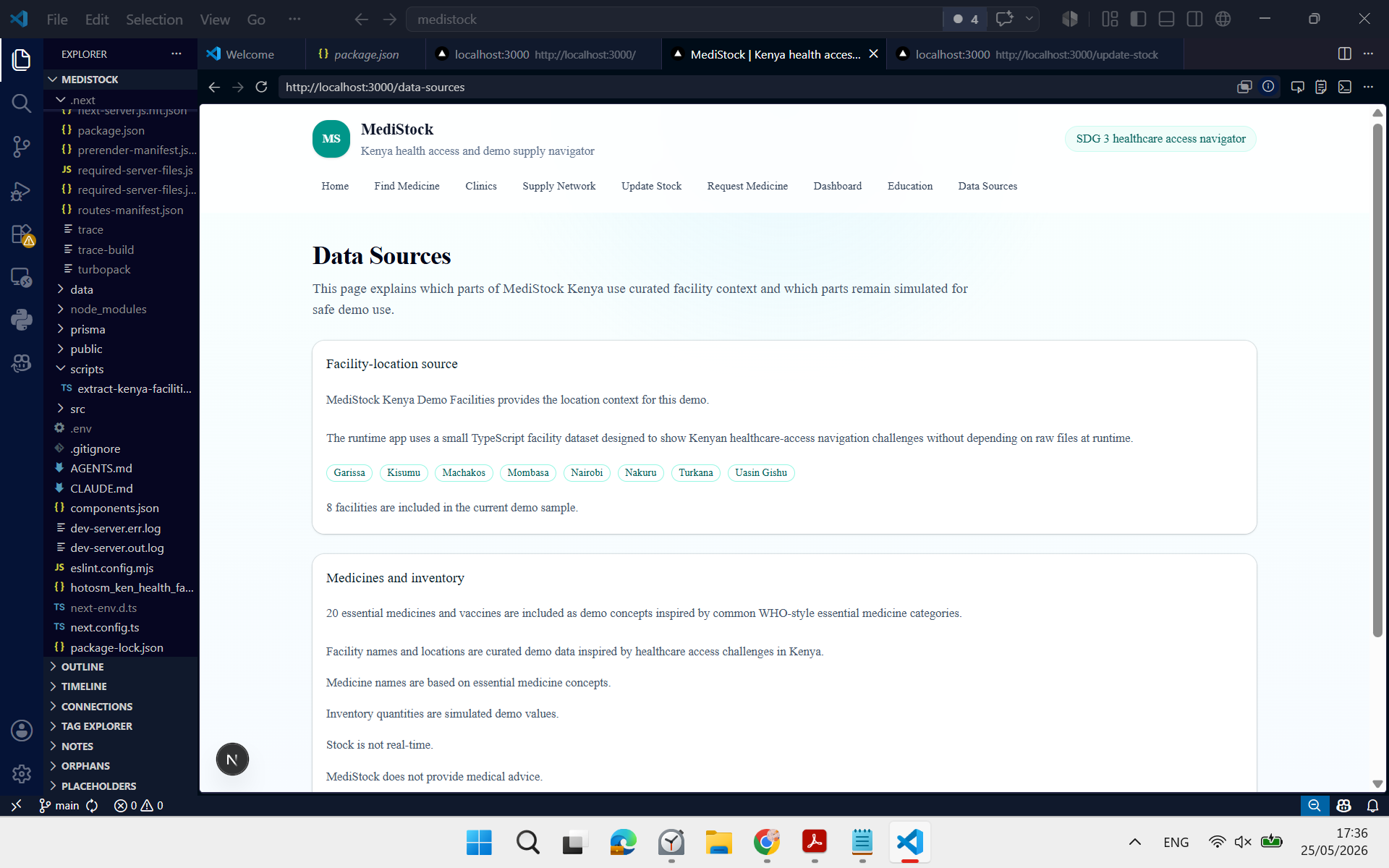
One challenge was balancing realism with safety. I wanted the app to feel practical and relevant to healthcare access in Kenya, while making sure it did not imply real-time stock, diagnosis, or medical advice.
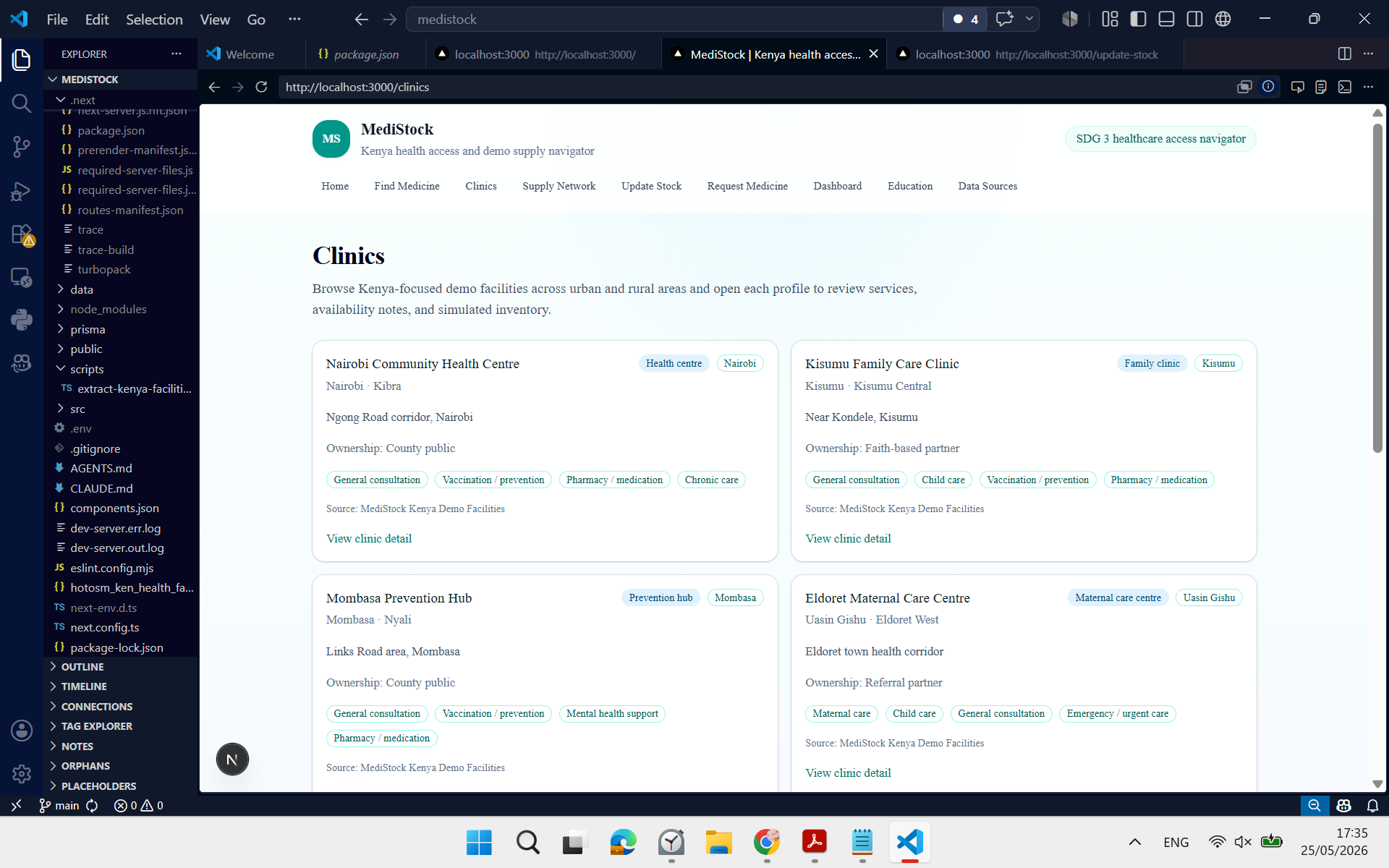
Another challenge was data design. I needed facility information that felt realistic and useful for navigation, but also clean enough for a hackathon codebase and automated repository analysis. I also had to make search and form behavior more forgiving so users would not need exact spelling or formatting.
Accomplishments that I'm proud of
I am proud that MediStock became more than a stock tracker. It now works as a health access navigator tied closely to SDG 3.8, with:
- health-need-based facility matching
- nearby facility ranking with optional geolocation
- multi-facility comparison
- a Kenya-focused service and access context
- a supply network explorer for understanding shortages and risk
- clear safety disclaimers and demo labels throughout the app
I am also proud that the codebase is organized cleanly for automated analysis without relying on a README file.
What I learned
I learned that healthcare access tools need more than search boxes. They need structure, safe guidance, understandable data, and transparency about what is real versus simulated. I also learned how important clean architecture is when a repository will be analyzed automatically for documentation and presentation generation.
What's next for MediStock
Next, I would like to:
- connect to verified facility and service datasets
- support better regional expansion across Kenya
- add more realistic road-network routing and travel-time estimation
- improve filtering for availability windows and care pathways
- integrate a stronger backend workflow for facility-side updates
- explore partnerships with public health and community access initiatives
MediStock is designed as a step toward better healthcare navigation, clearer service discovery, and improved access to essential care.
Built With
- localstorage
- next.js
- prisma
- react
- recharts
- shadcn/ui
- tailwind-css
- typescript

Log in or sign up for Devpost to join the conversation.