-
-
Product Logo
-
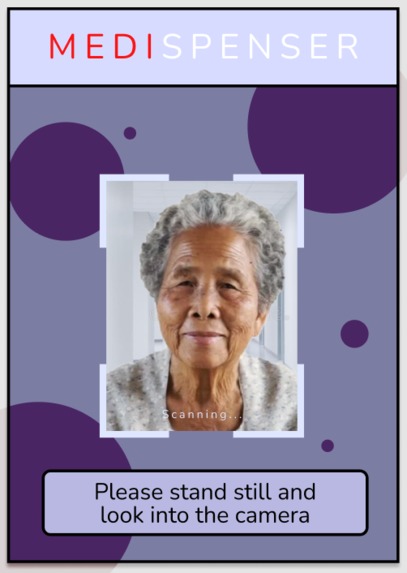
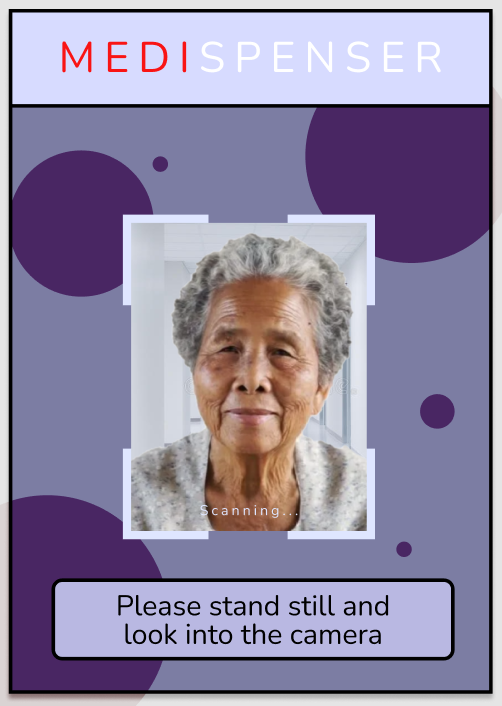
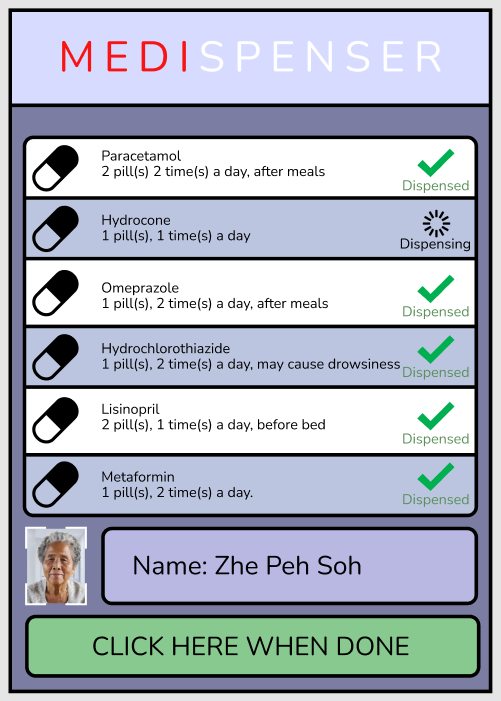
Vending Machine scanning screen
-
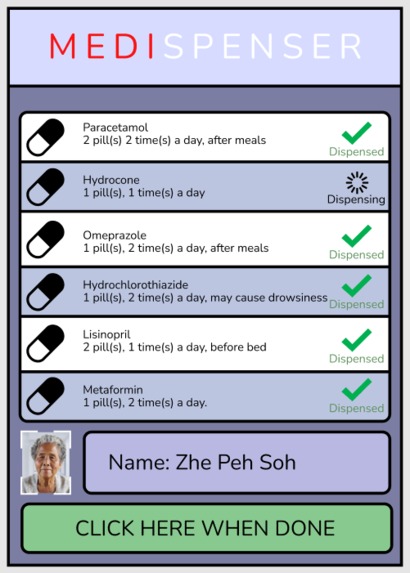
Vending Machine dispensing screen
-
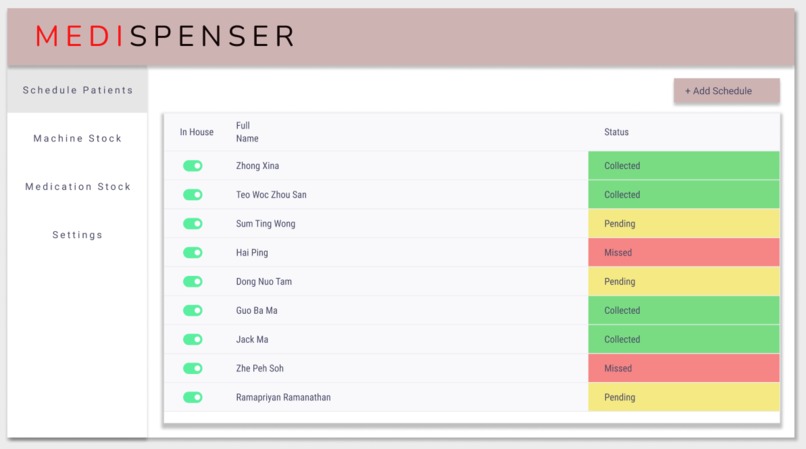
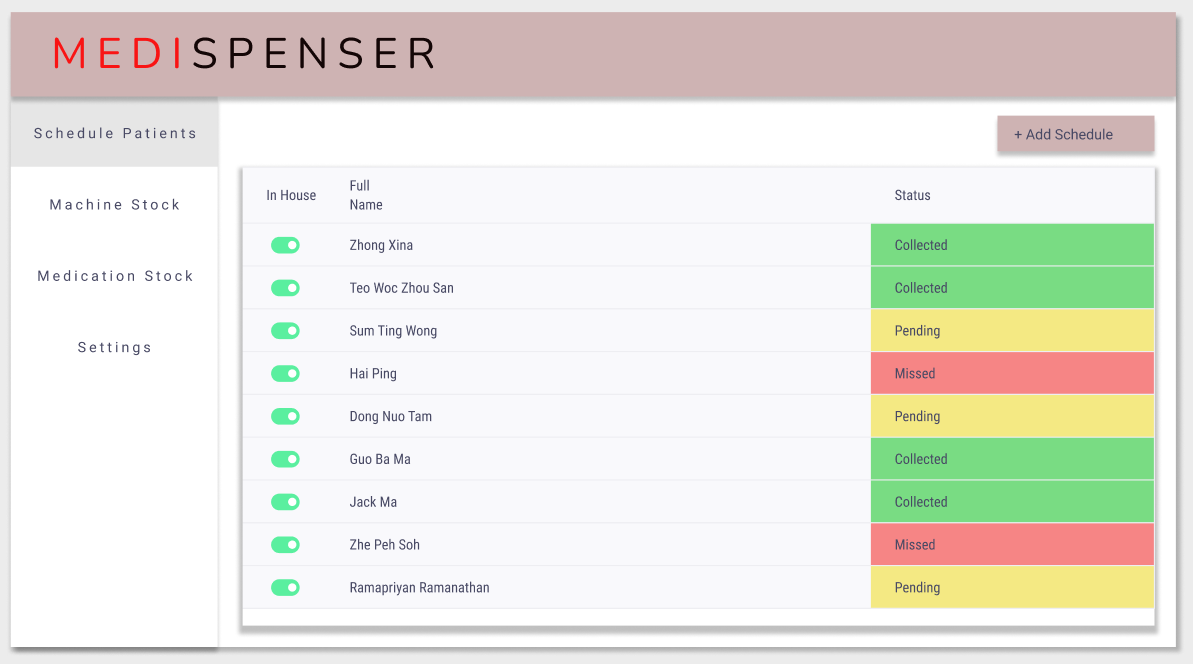
User Page
-
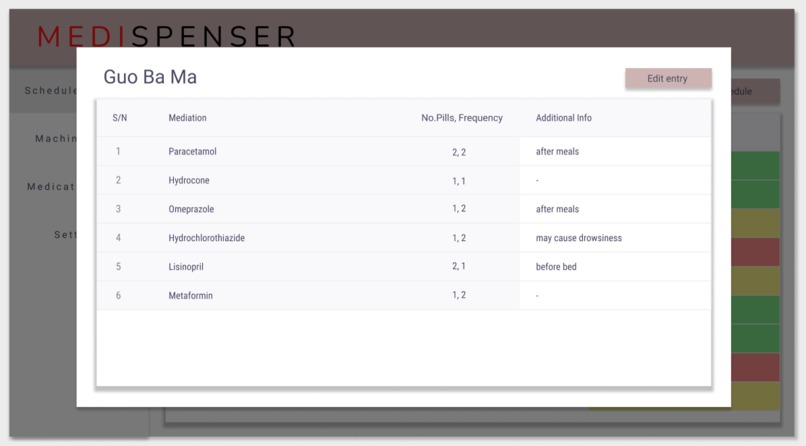
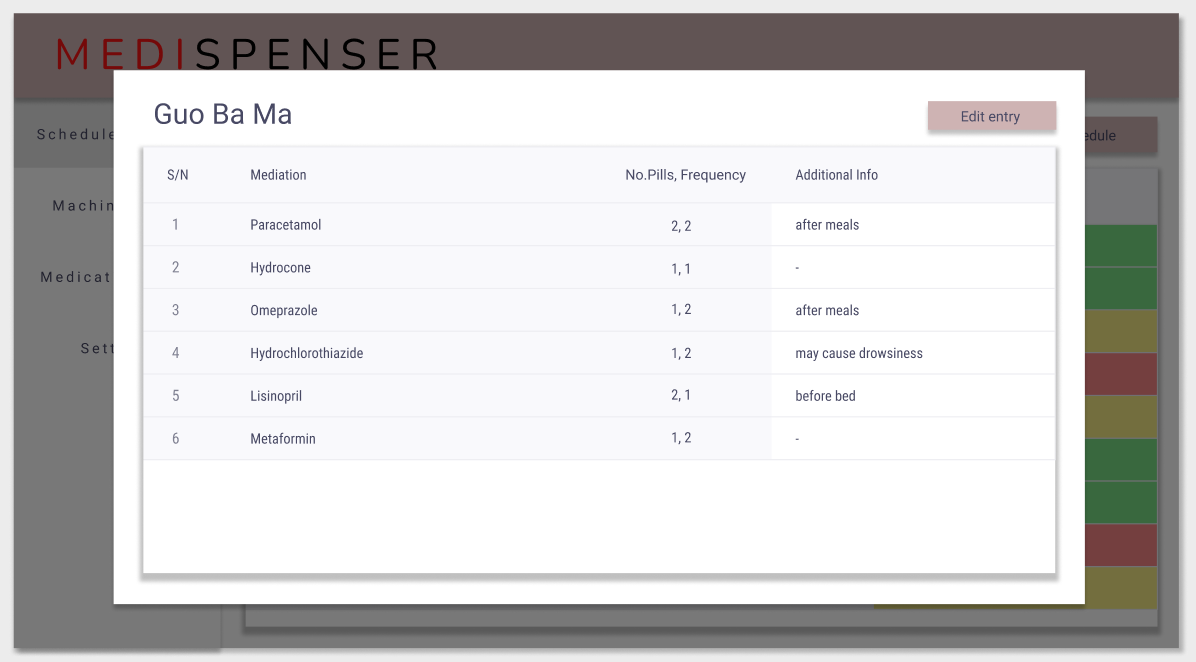
onClick user
-
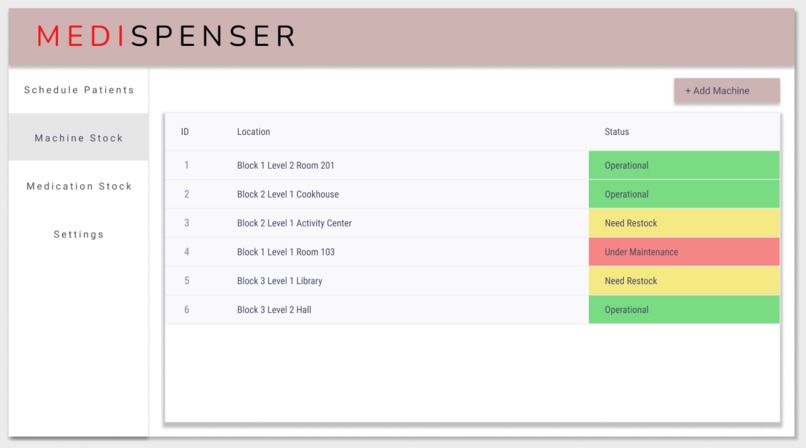
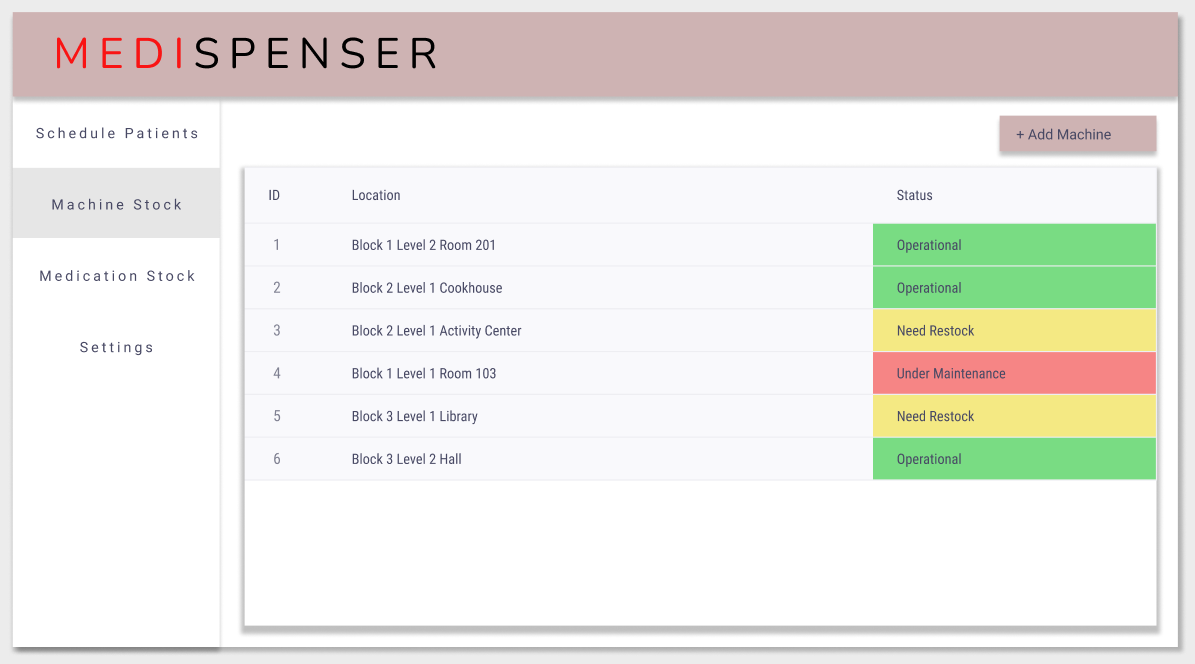
Machines Page
-
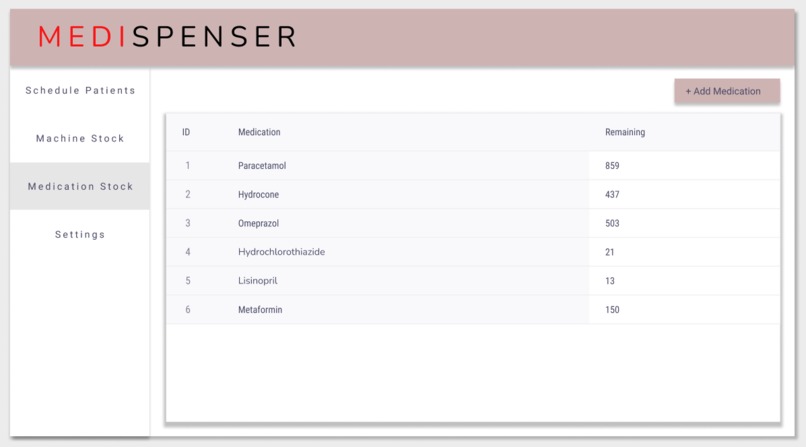
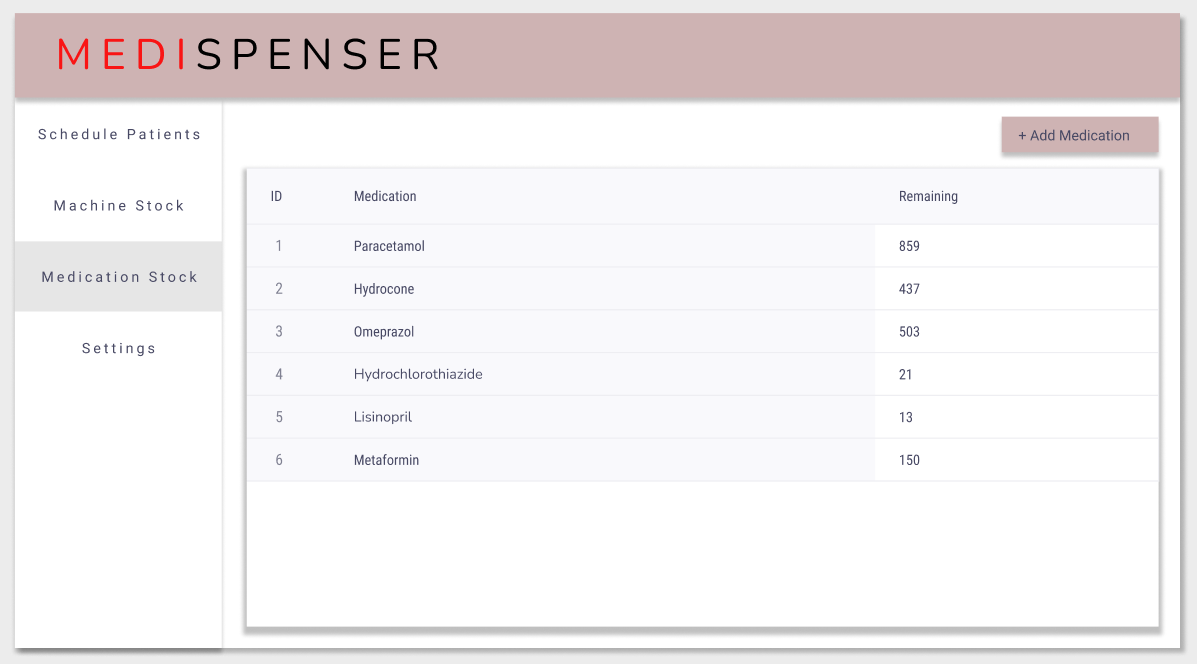
Medicines Page

Inspiration
We knew we wanted to work on the healthcare track because of how crucial it was and its potential to help others, but we were not sure how to best go about it. As we brainstormed what ideas we could put forward in the competition, we ended up recalling the times we had spent volunteering at old folk homes before. With personal experience and prior knowledge lighting the spark, we researched the topic more and realised how important it was that elderly people take their medication on time, and in the right quantity. This led us to formulate a better way for residents to know what medicines they need to take, passing on the burden of remembering the details or tracking the timings to a automated system instead.
What it does
It automates distribution of medications for nursing home residents. Instead of nurses and caretakers spending time to give out and keep track of the many different medications every resident requires, the vending machine can take over that role and free up their time for other essential tasks.
How we built it
We split into two pairs, with one pair handling the Computer Vision model for facial recognition and Backend, while the other team handled the UI and the front end. For Computer Vision, we utilised a pre-trained model from google and retrained it to recognise specific faces. This is only meant to be a proof of concept. When deployed in real life scenarios, it would require some photos of the residents of the Nursing Homes in order to train the model first.
For the web-application, our prototype on figma visualises what we plan to accomplish using React JS and Material UI. The web application is a single-page crud application with a localised database running on a Postgres cluster to keep track of the data that has been written. For deployment, we will likely use proper hosted databases such as AWS cloud.
Challenges we ran into
Some of the challenges we faced were related to the theoretical construction of our prototype, as well as how we could distinguish it from competitors. We also found deciding on the utility our solution would have to be a challenge, as we wanted it to be useful, but not too broad as to dilute our ability to create and showcase our solution. A lack of recent experience and medical expertise also proved challenging, requiring research and hypothesising on our part to overcome it.
Accomplishments that we're proud of
We are proud of our progress as a team, from brainstorming about multiple ideas, narrowing it down, and then improving on that idea. In particular, we are proud on how we designed the MEDIspenser to be a source of convenience for our target audience of nursing homes, yet distinguished enough from competitors that our product can stand on its own. Granted, refinement is certainly necessary, nevertheless, we are happy with our progress thus far.
Another accomplishment we are proud of, is conceptualizing the tech stack that we intend to work with, and then creating a sufficiently informational prototype that could display our design and user considerations.
What we learned
We learned a lot about the world of elderly healthcare, common concerns on both the part of the elderly as well as the nursing care providers. We also learnt about keeping the user experience in mind, and applying our technology in a user friendly way to make things easier and more convenient. Part of this included making design choices on what MEDIspenser will track and require, and what differences we will make from our initial design choices. We also had to consider scalability, business suitability, and looking at things from multiple perspectives.
What's next for MEDIspenser
Next would be designing and building the prototype, before testing it out at a nursing home. The prototype can then be improved based on the user experience and feedback from the nursing home. Following which, we can then partner with a larger organisation to distribute it and improve the efficiency of the medication distribution systems at more places. At a much further time, with better funding, distribution and research, we can look into diversifying its applications for areas such as households and hospitals.
Built With
- google-teachable-machine-api
- keras
- material-ui
- postgresql
- react


Log in or sign up for Devpost to join the conversation.