-
-
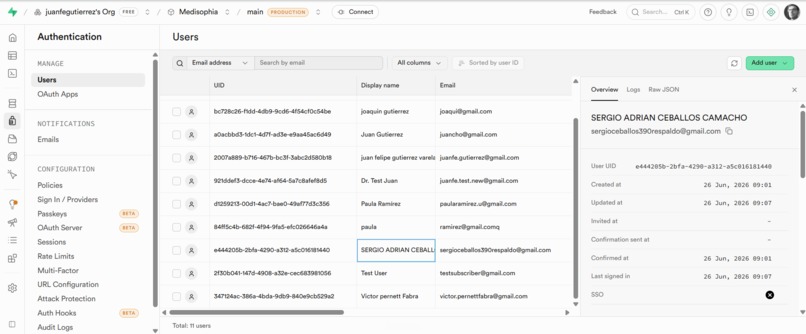
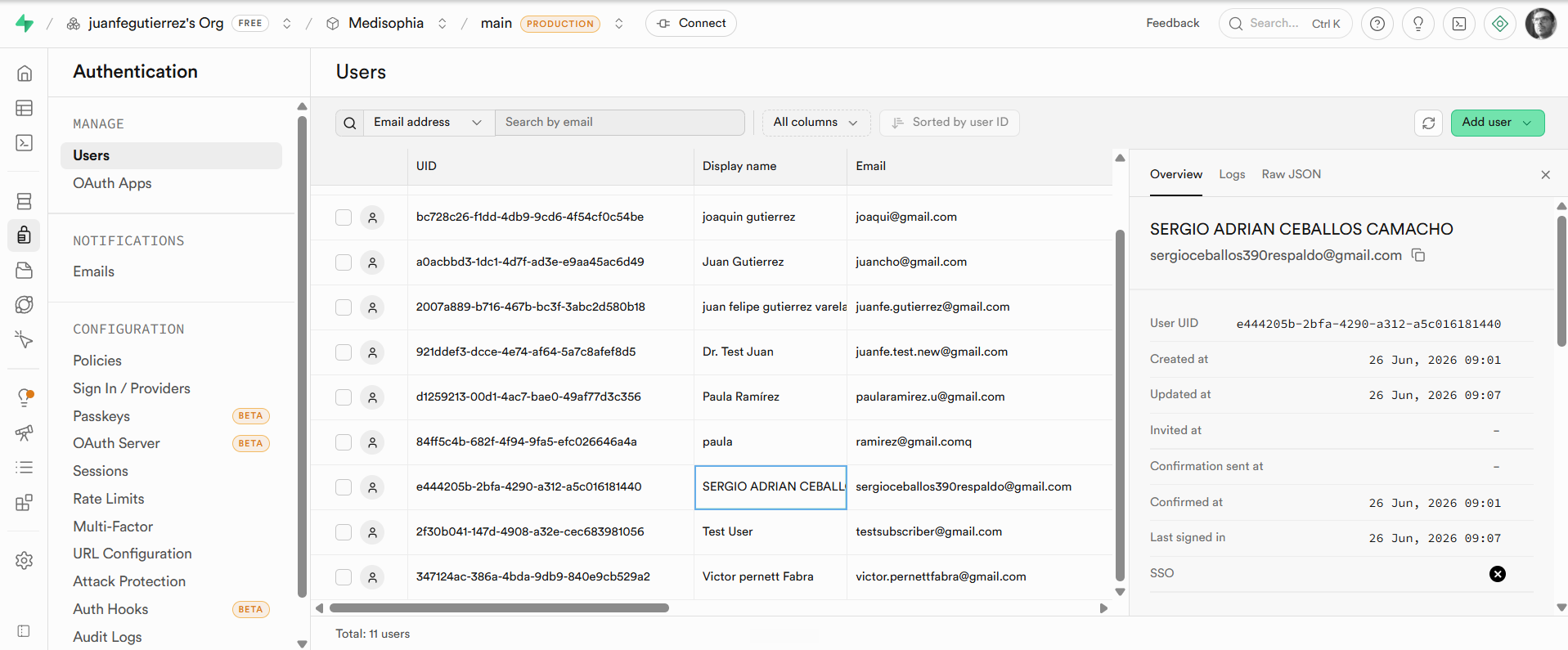
Cliente registrado en Supabase, confirmado 26 jun 2026 09:01 — cuenta activada automáticamente por el webhook de Wompi.
-
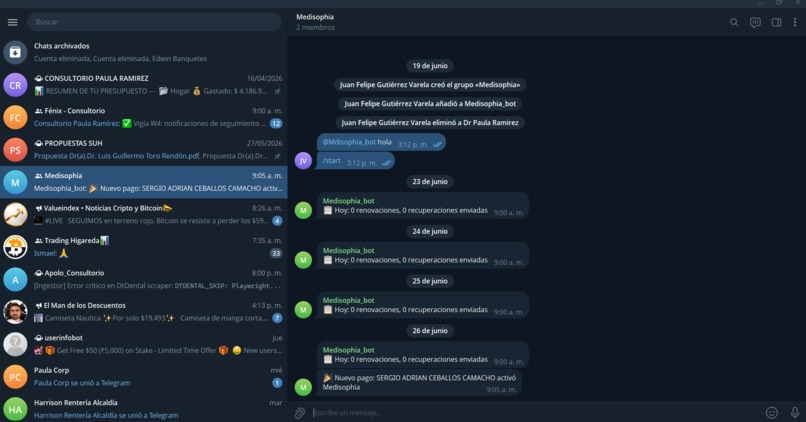
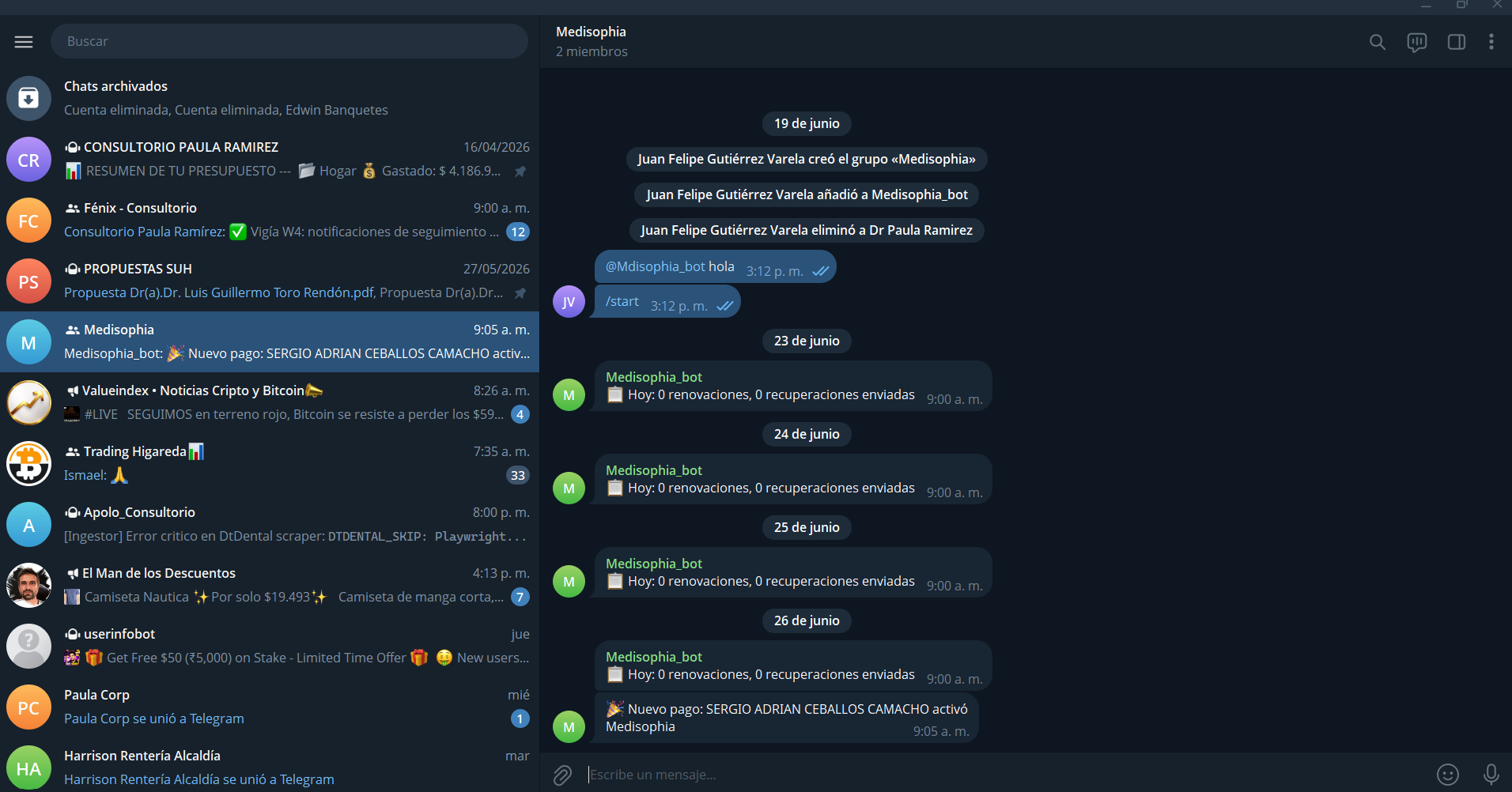
Notificación automática en Telegram: pago de Sergio Ceballos activó Medisophia, sin operador humano de por medio.
-
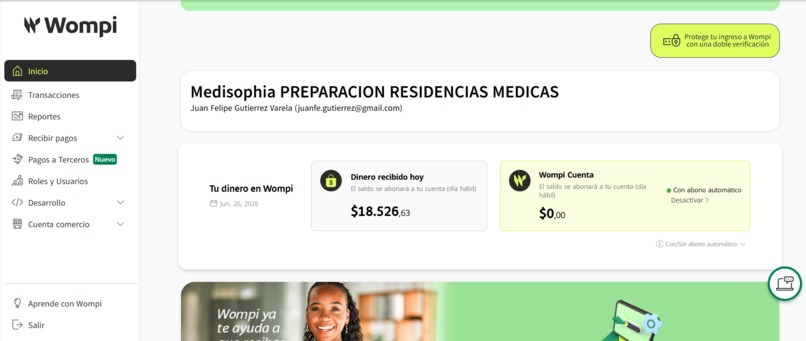
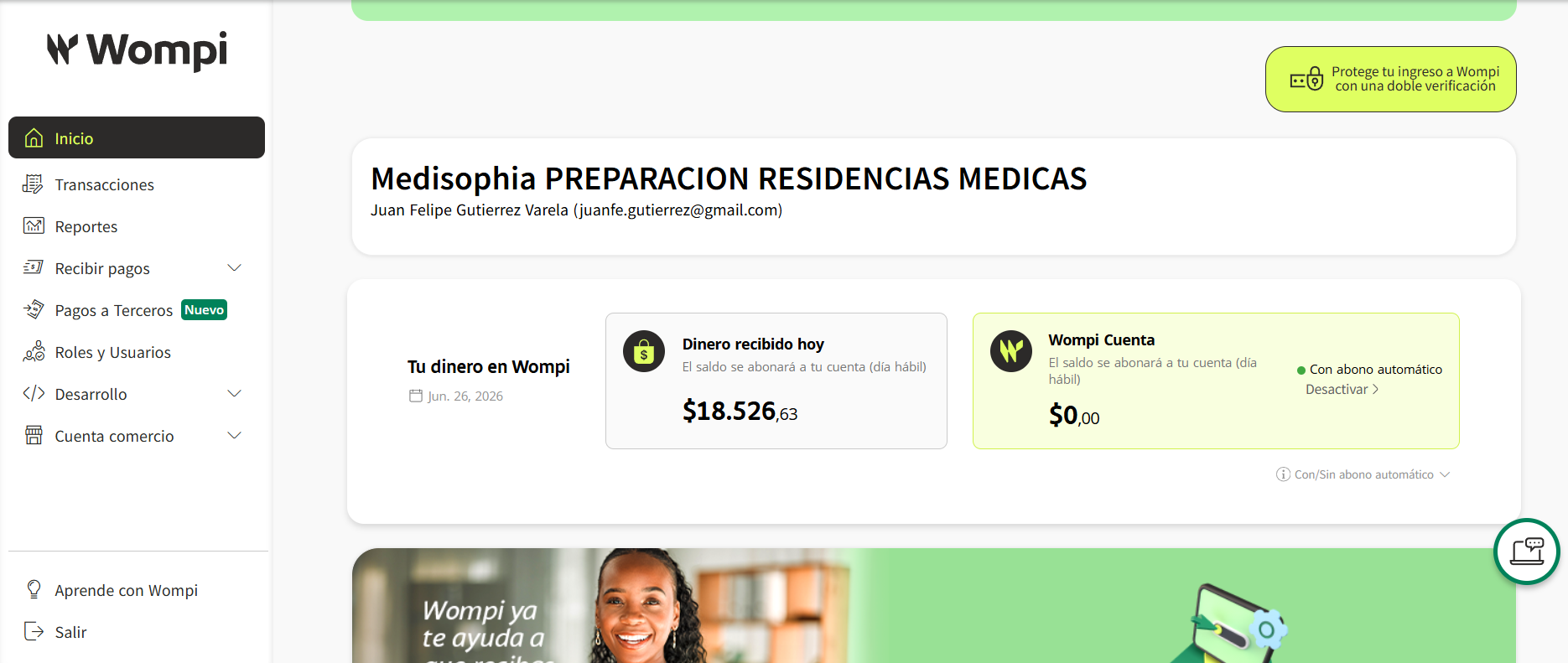
Primer pago real en Wompi — $18.526,63 COP acreditados el 26 jun 2026, primera venta arms-length de Medisophia.
-
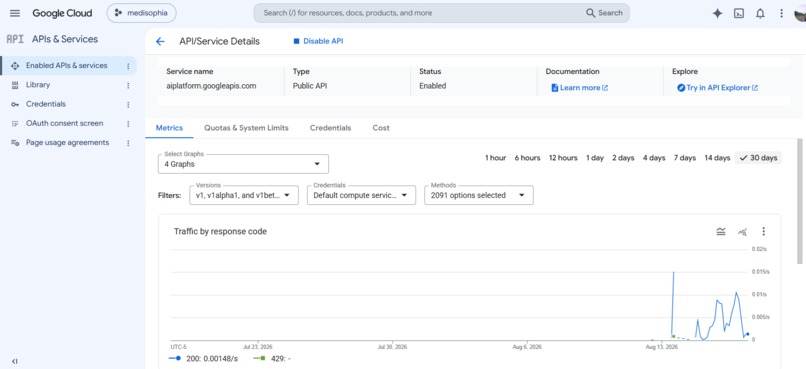
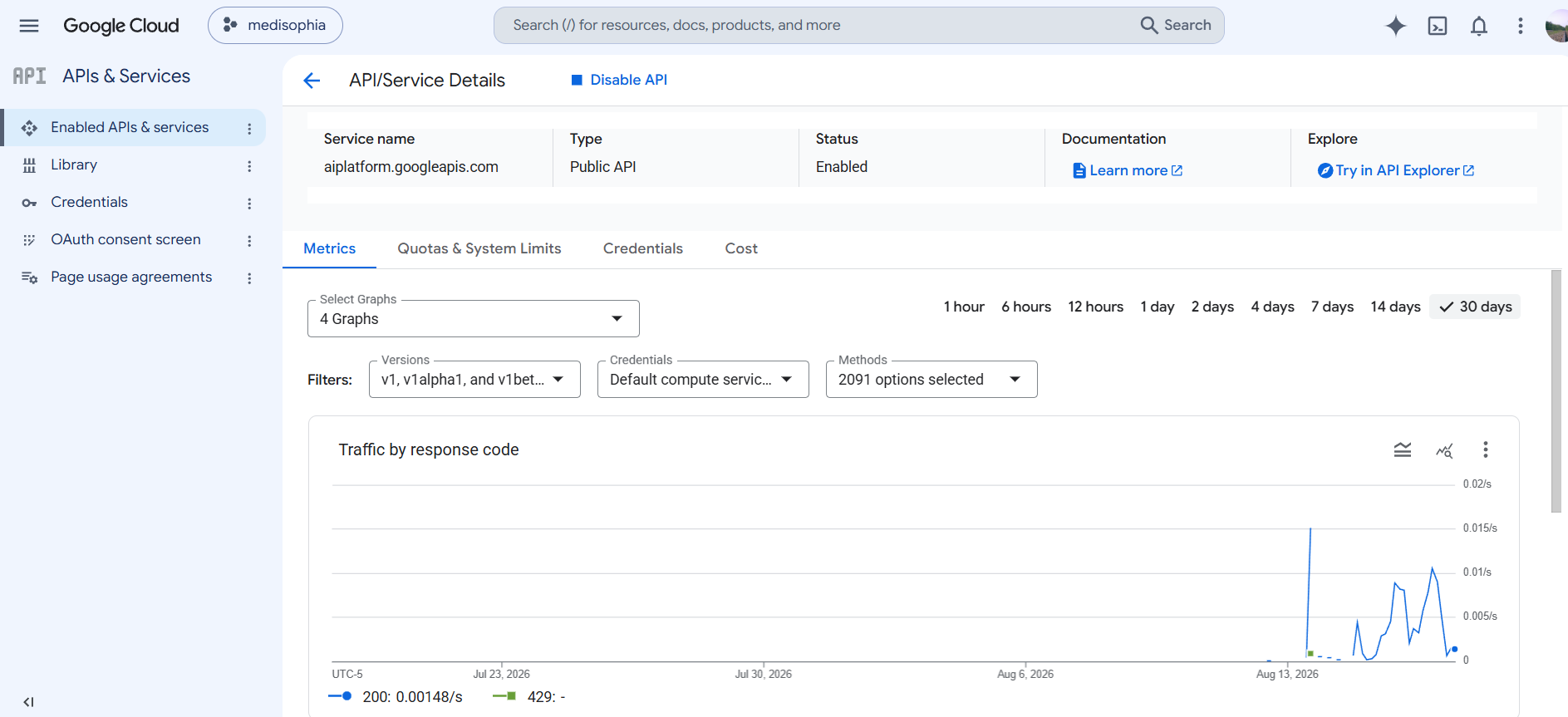
Tráfico real a la API de Vertex AI (Gemini) en el proyecto medisophia — uso en producción, no solo configurado.
-
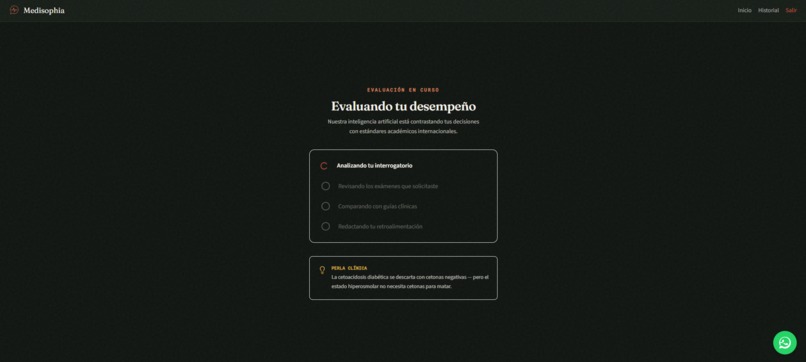
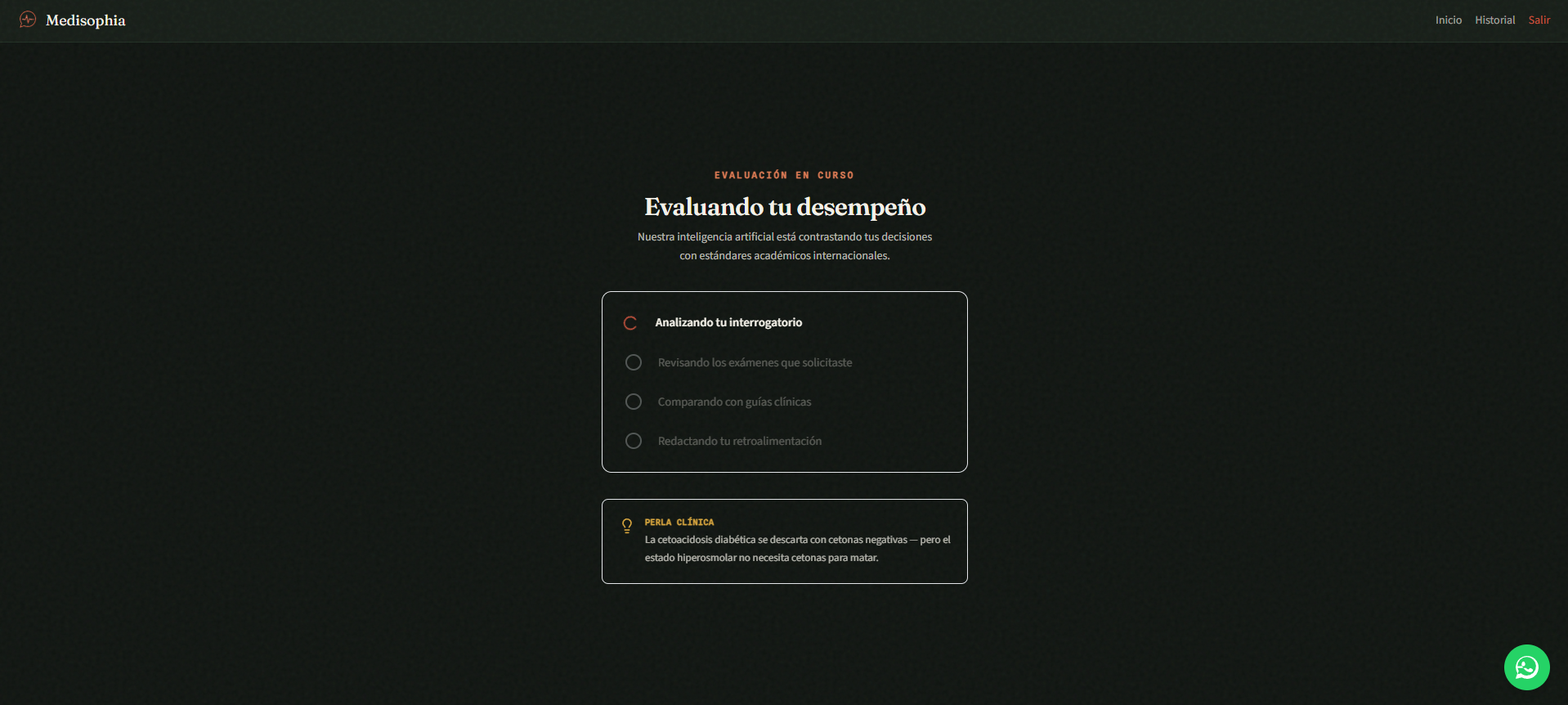
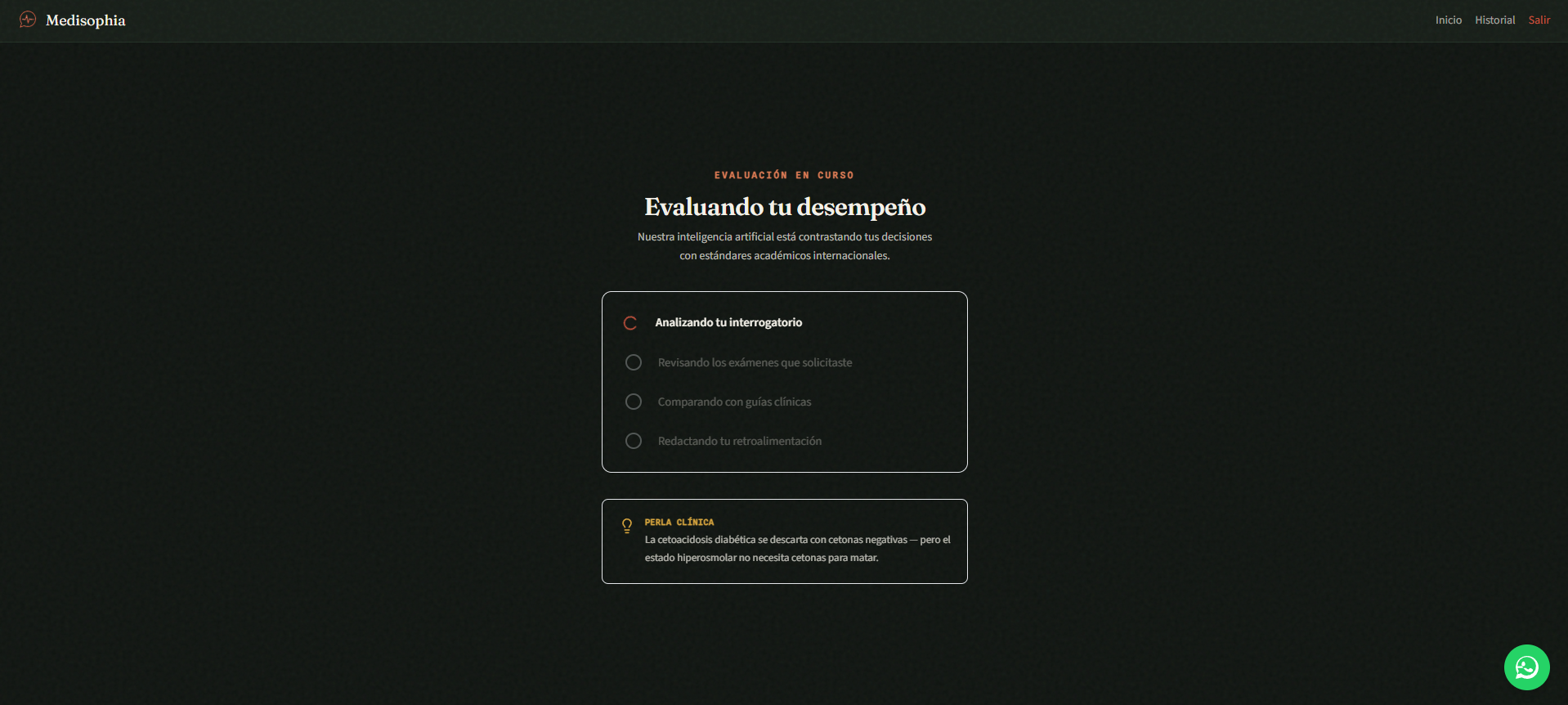
La IA evaluando el caso: contrasta las decisiones del médico contra guías clínicas internacionales antes de dar el veredicto.
-
-
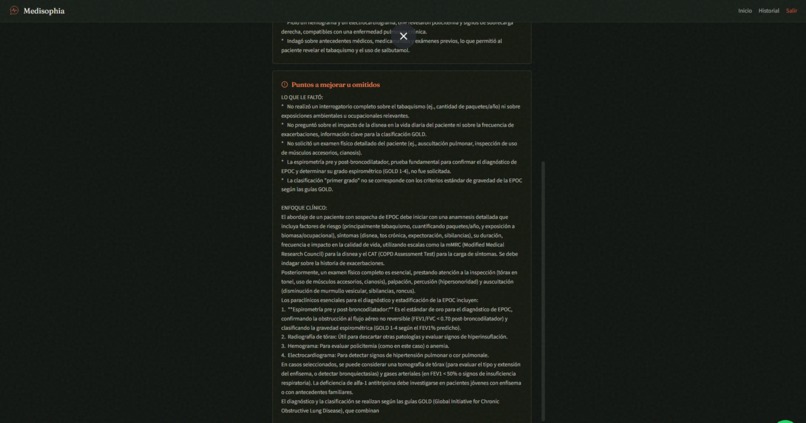
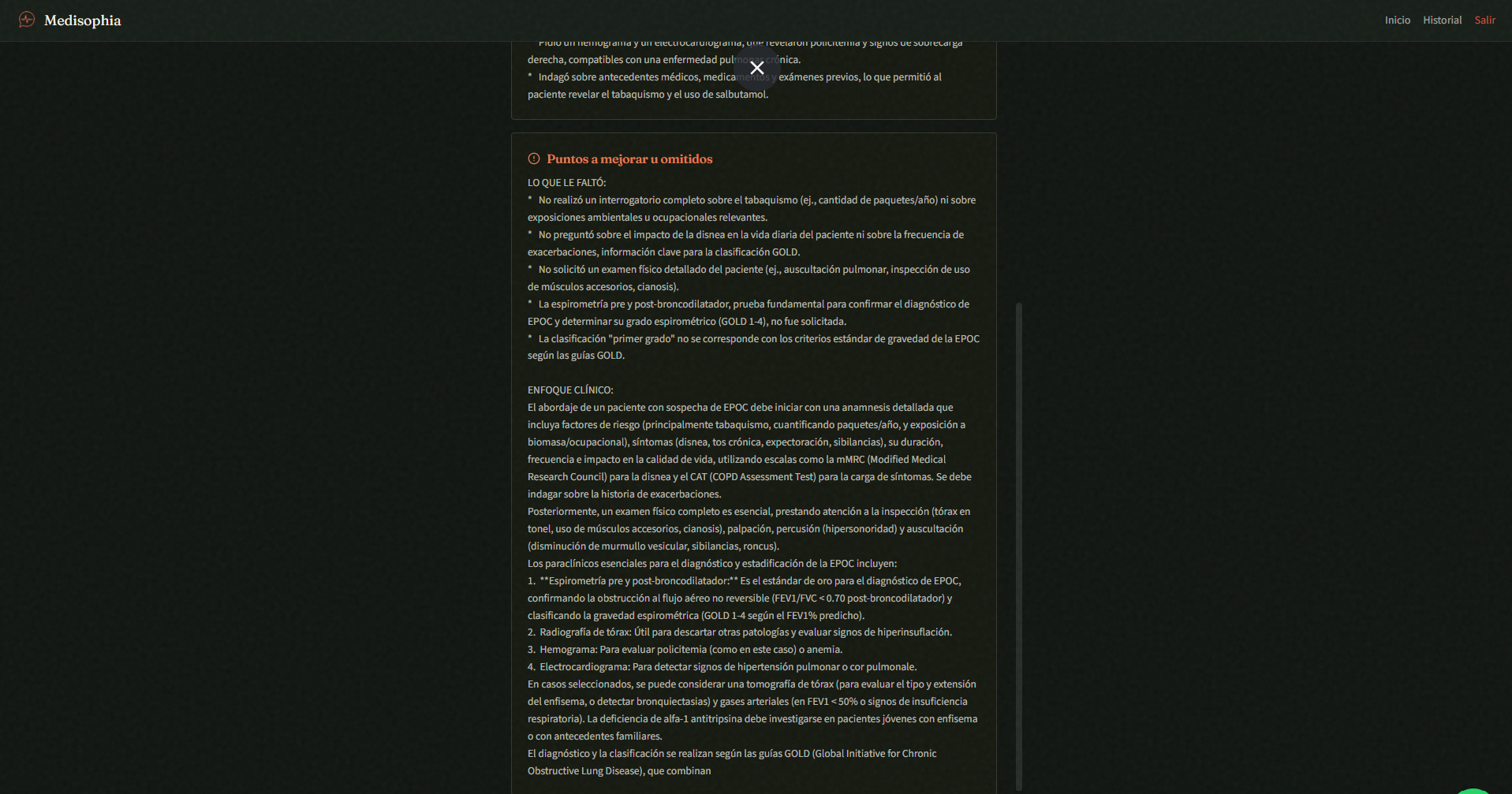
Retroalimentación detallada: la IA explica qué le faltó al médico y el enfoque clínico correcto, citando guías GOLD para EPOC.
Inspiration
My son Joaquín was born with hypoxia. He came through with no after-effects because a team of trained professionals, with the right technology in place, knew exactly what to do in the minutes that mattered. That left me with a question I couldn't shake: that happened in a private hospital, with everything in its favor — what happens to doctors facing the same kind of critical trauma without that same access? Looking for that answer, I ended up studying how Colombian general practitioners prepare for the residency admission exam at Universidad de Antioquia. That's where Medisophia started.
What it does
Medisophia is an AI virtual patient for doctors preparing for their residency admission exam. Unlike a question bank, it doesn't hand out information — it only reveals findings when the doctor asks the right question or orders the right test, just like a real patient. When the doctor gives a diagnosis, the same AI evaluates it against real clinical scales (CURB-65, Wells, Killip, Glasgow, HEART, SOFA), backed by specialist physician oversight, and cites verifiable sources instead of inventing authority.
How we built it
I'm not a doctor or an engineer. I directed a team of AI agents — Claude (Anthropic) and Antigravity (Google's agentic IDE on Gemini) — to build and ship the backend, the database, the payment integration, and the WhatsApp automations, the same way I'd direct a dev team. The runtime patient runs on Gemini 2.5 Flash via Vertex AI. Payments go through Wompi, and a webhook activates subscriptions automatically. n8n workflows send the WhatsApp welcome message the moment someone pays, and run daily to re-engage inactive users or remind them to renew.
Challenges we ran into
The hardest problem wasn't the AI — it was getting a doctor from an ad click to actually opening the simulator. Early in the campaign, 95% of visitors left without ever touching the demo, because the landing page made them decide again after the ad already promised a no-signup trial. We're closing that gap by making the ad link open the simulator directly. On the product side, we also had to fix a subtler bug: the case's random seed wasn't persisting across turns, so the patient's underlying pathology could silently drift mid-conversation.
Accomplishments that we're proud of
Our first real, arms-length sale came with zero paid acquisition cost — a physician in my family sent one WhatsApp message to her colleagues, and someone paid the next day. That validated the core thesis: among doctors, trust travels doctor to doctor. The whole path from payment to onboarding to renewal reminders now runs without me touching it.
What we learned
Paid ads can drive traffic, but for a peer-trust product like this, they don't close the gap that a doctor vouching for another doctor does. The bottleneck was never the AI's clinical quality — it was the friction between the promise and the first interaction.
What's next
Two lines beyond the product itself: a specialty-based evaluation committee and physician-ambassador network, paid per case reviewed, that could also let any university configure Medisophia to its own criteria — and a B2B version for hospitals, evaluating not just diagnostic accuracy but full triage quality (bedside manner, timely questions, correct test orders) to cut down on patients bounced between departments.
Built With
- claude
- docker
- express.js
- gemini-2.5-flash
- github
- google-cloud
- google-cloud-run
- n8n
- node.js
- postgresql
- react
- supabase
- tailwind-css
- typescript
- vercel
- vertex-ai
- vite
- whatsapp-business-api
- wompi
- ycloud


Log in or sign up for Devpost to join the conversation.