-
-
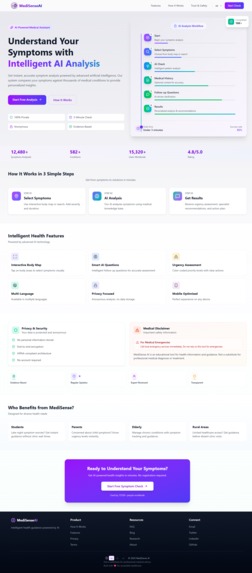
Landing
-
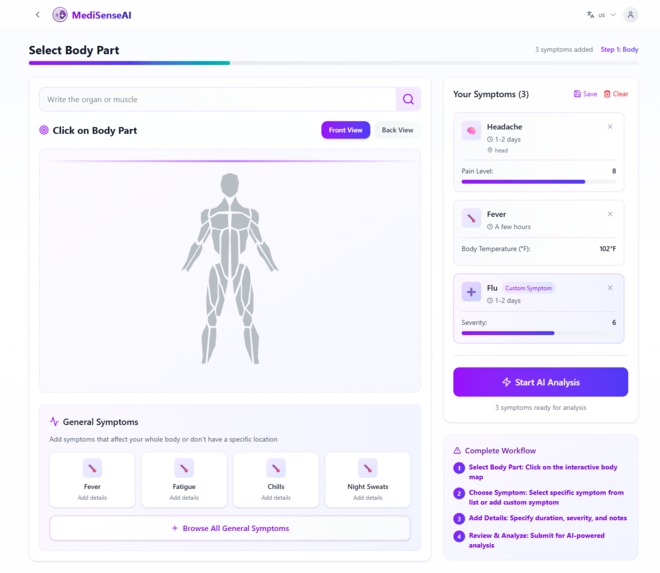
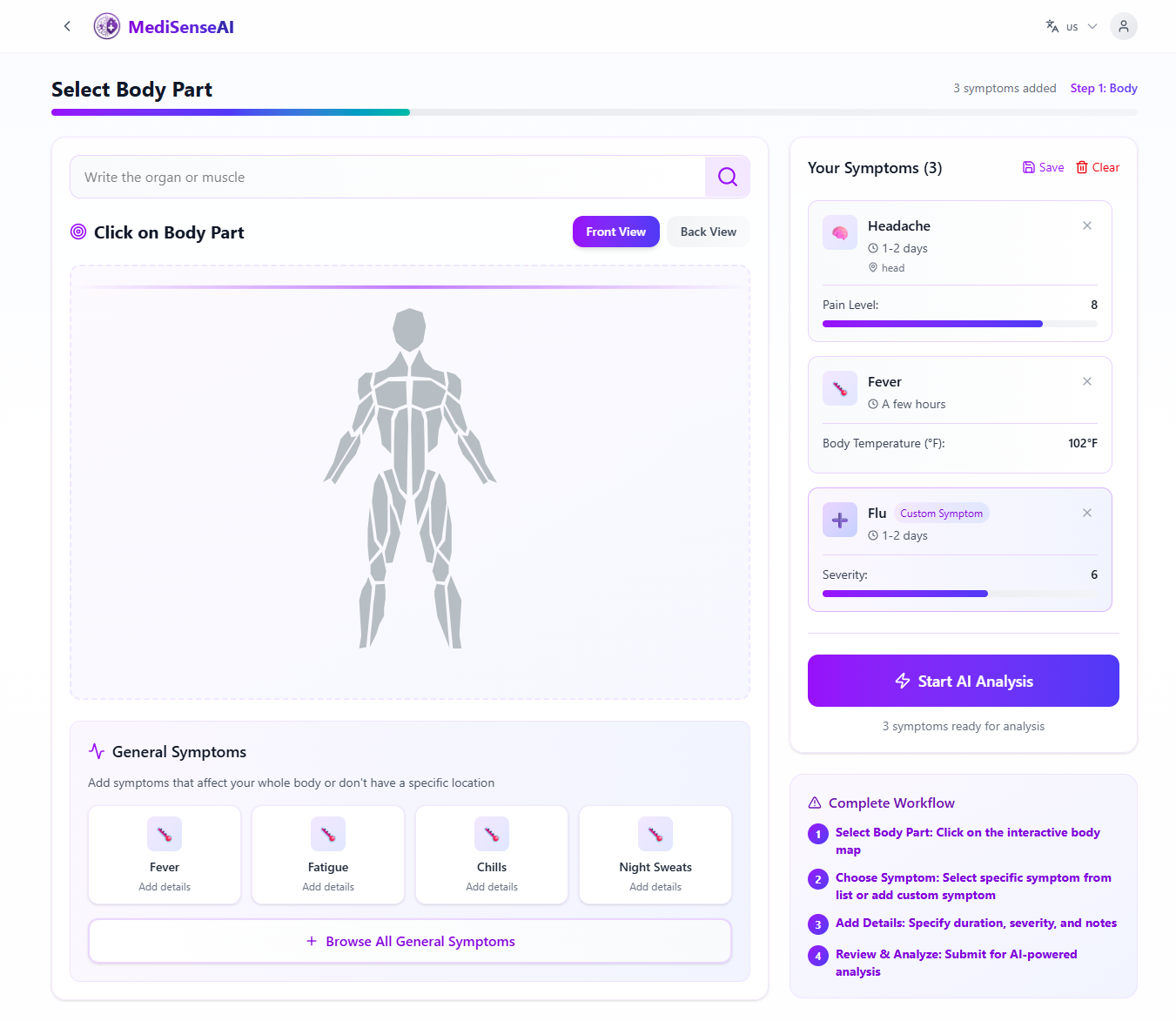
Organ/Muscle Selection
-
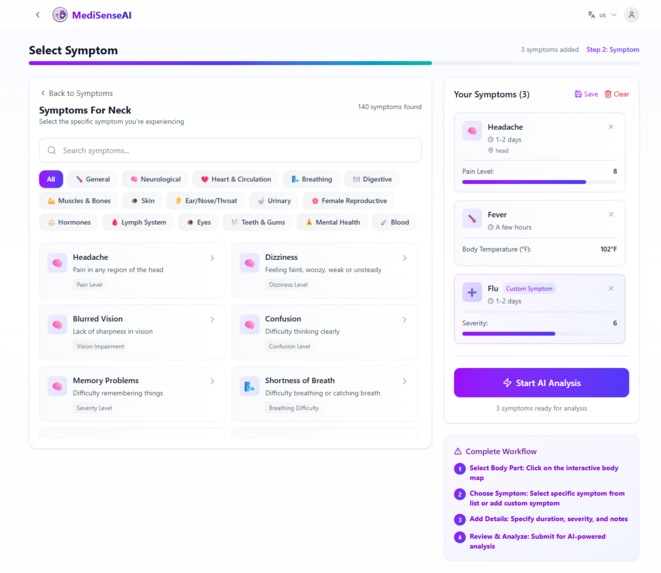
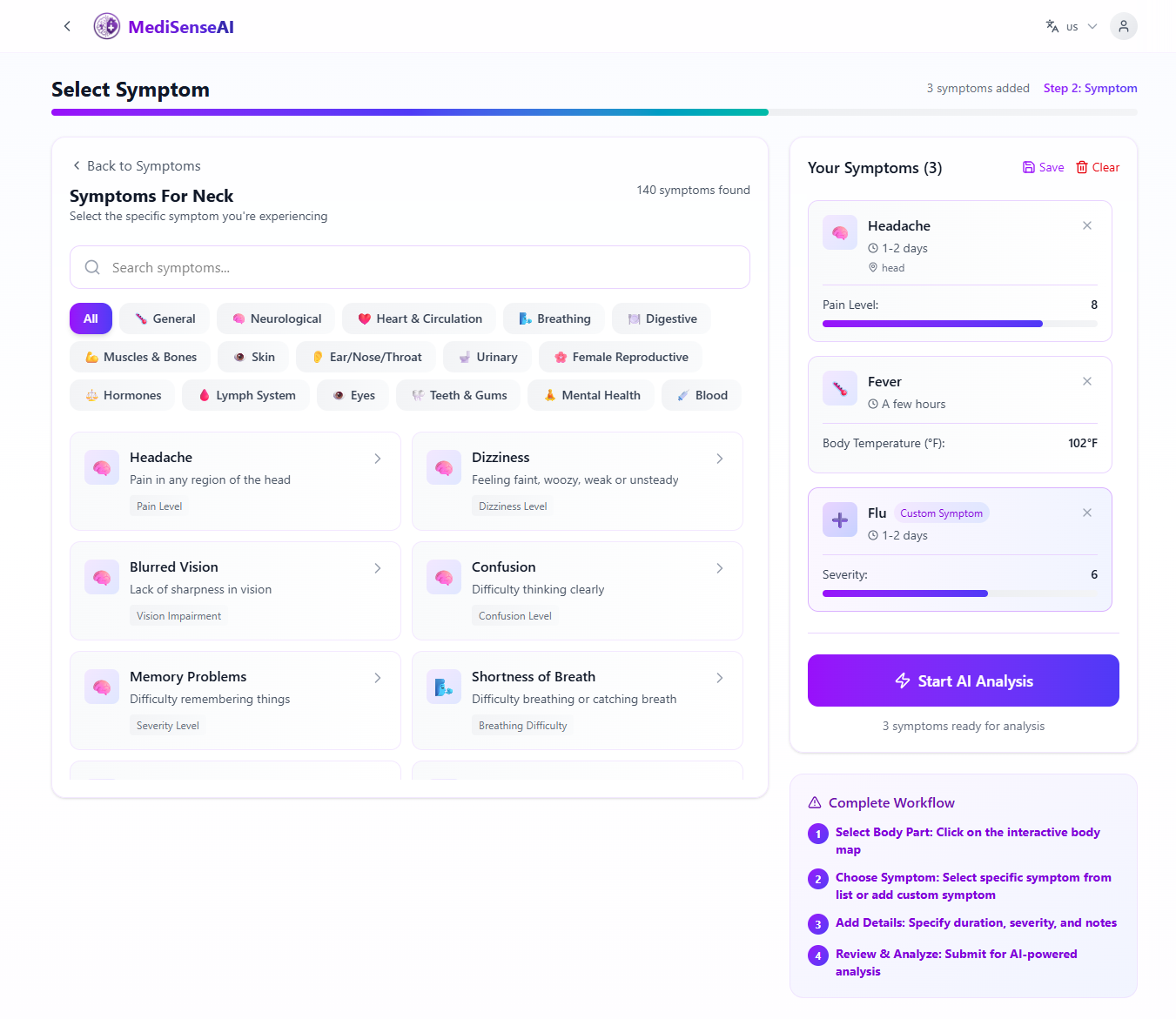
Symptom Selection
-
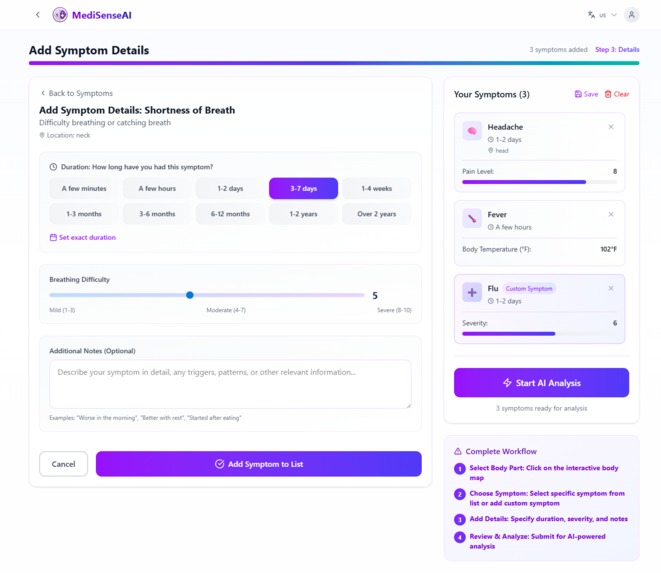
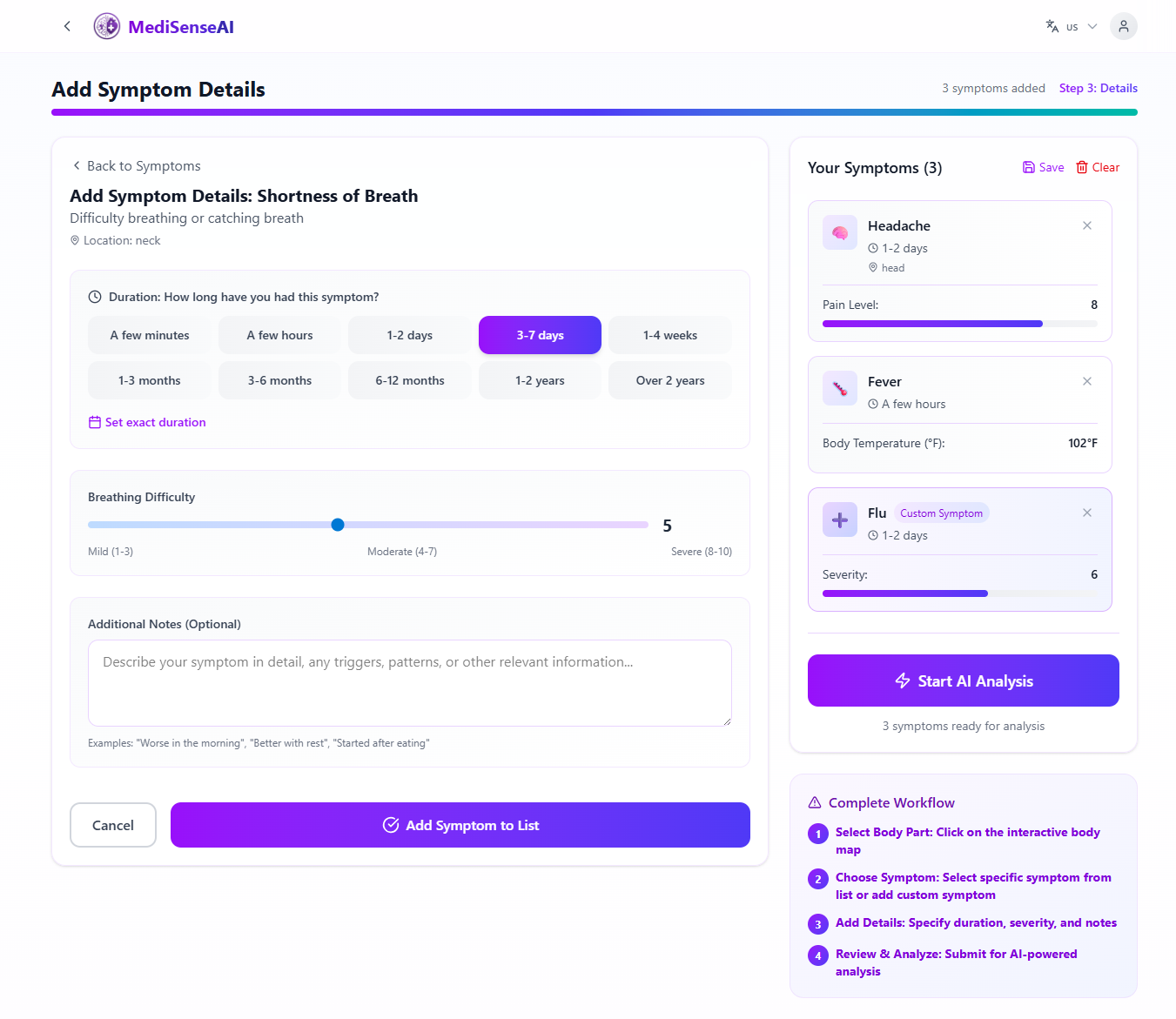
Symptom Detail
-
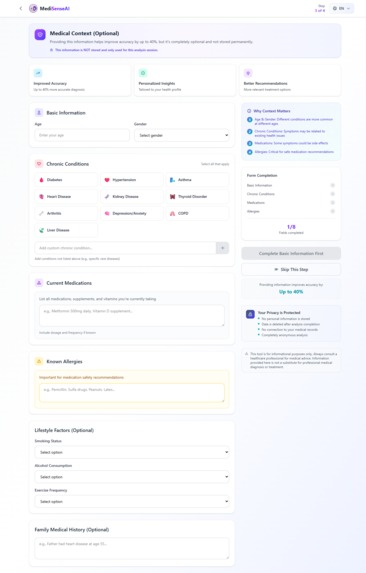
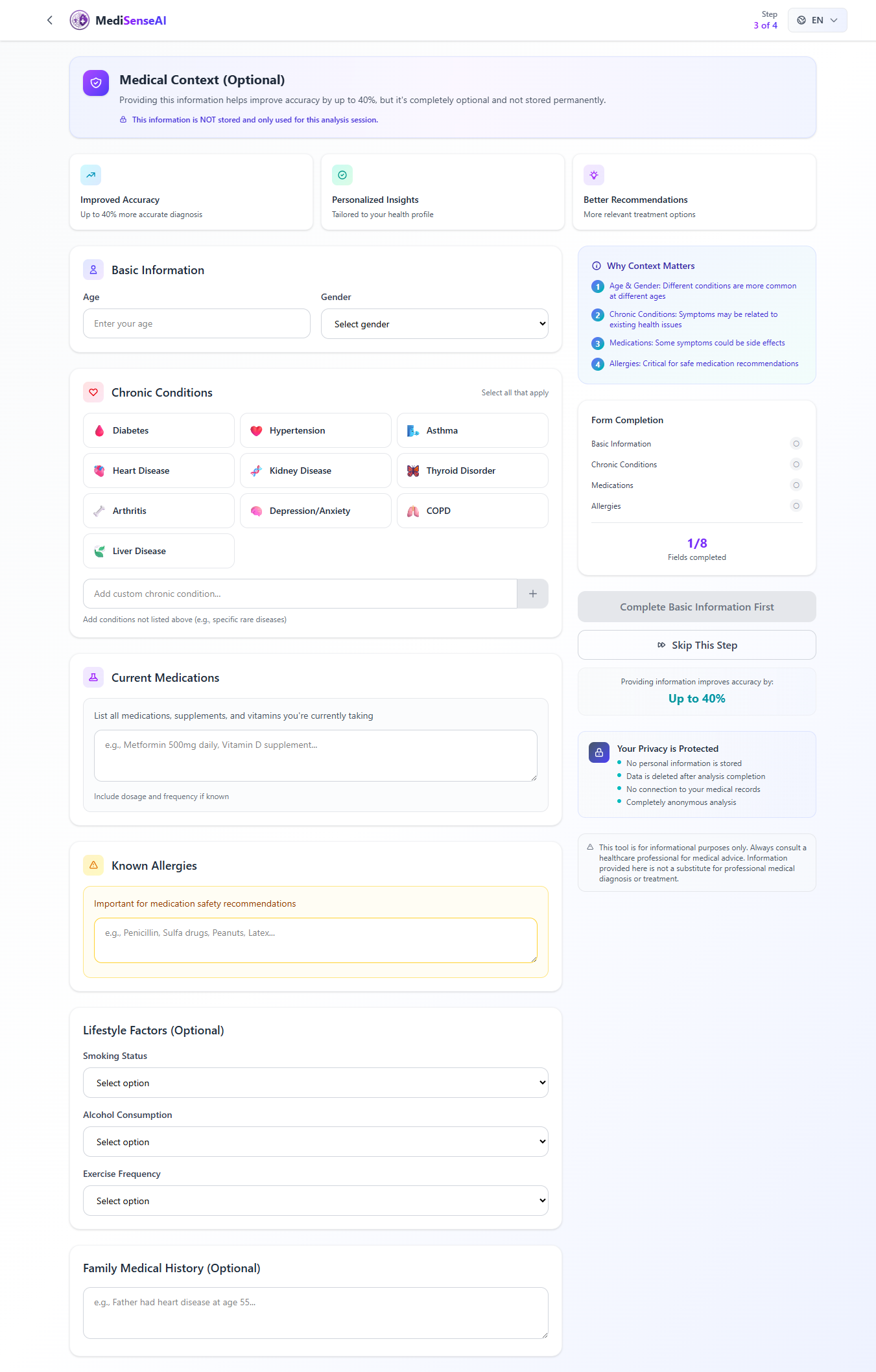
Medical History
-
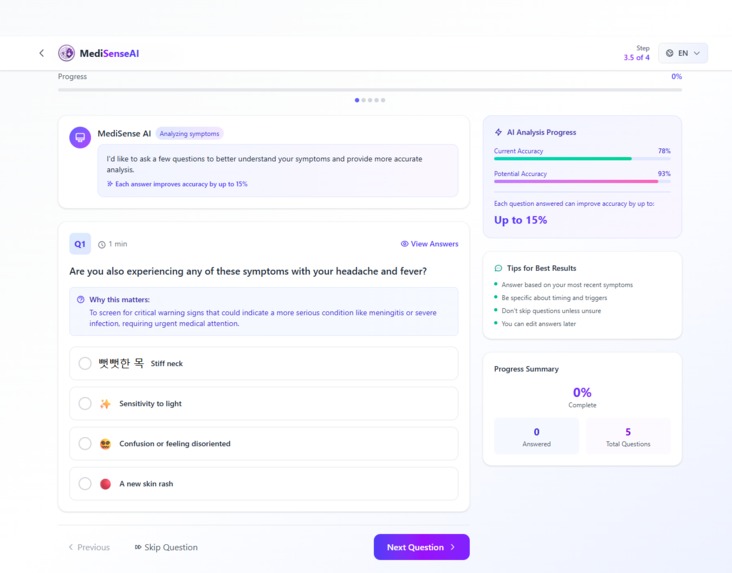
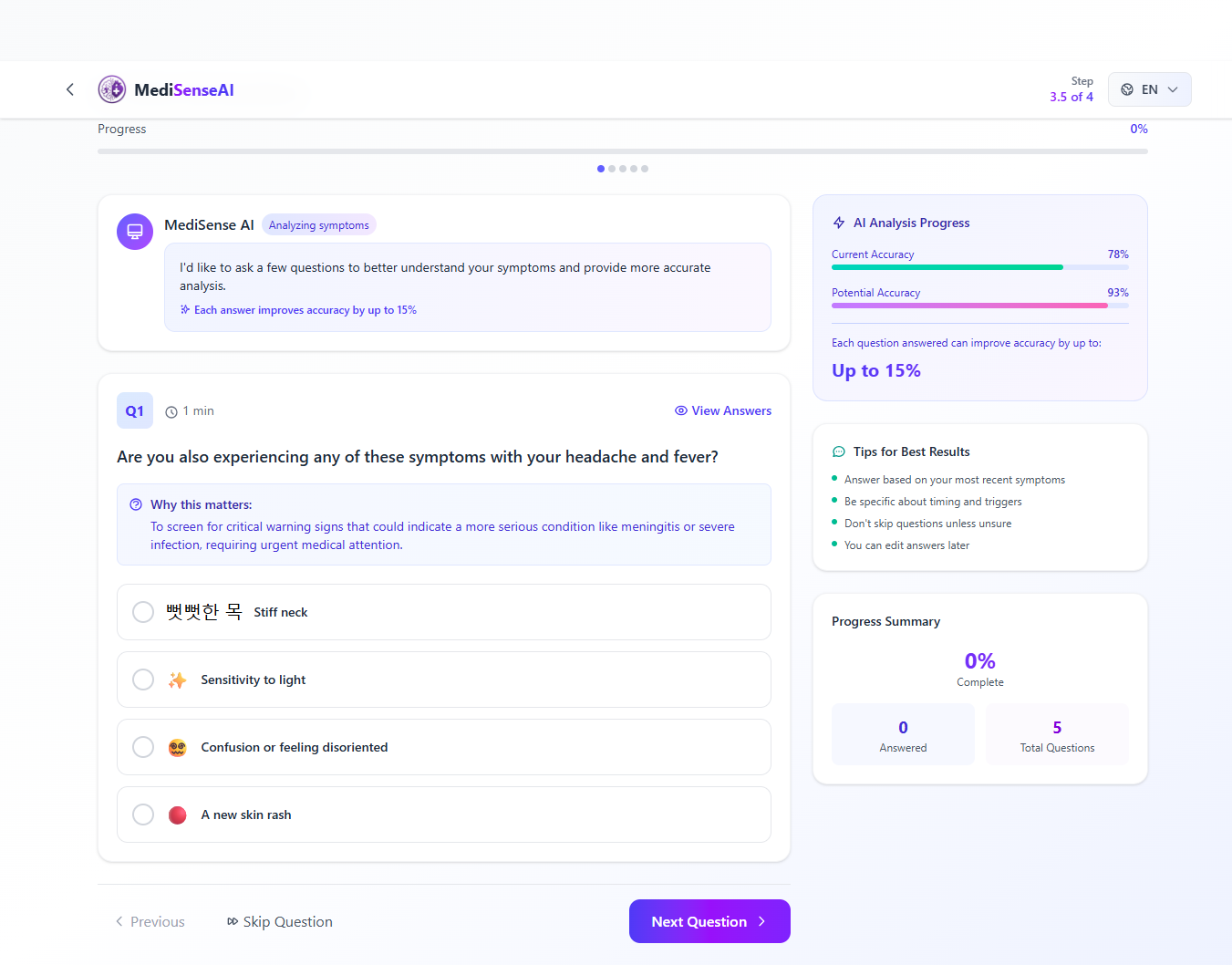
Follow Up Questions
-
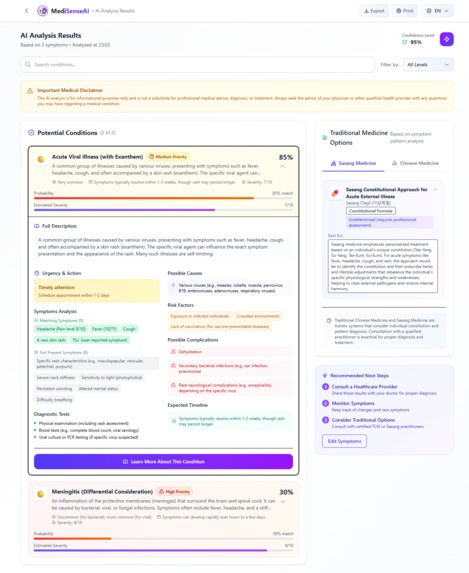
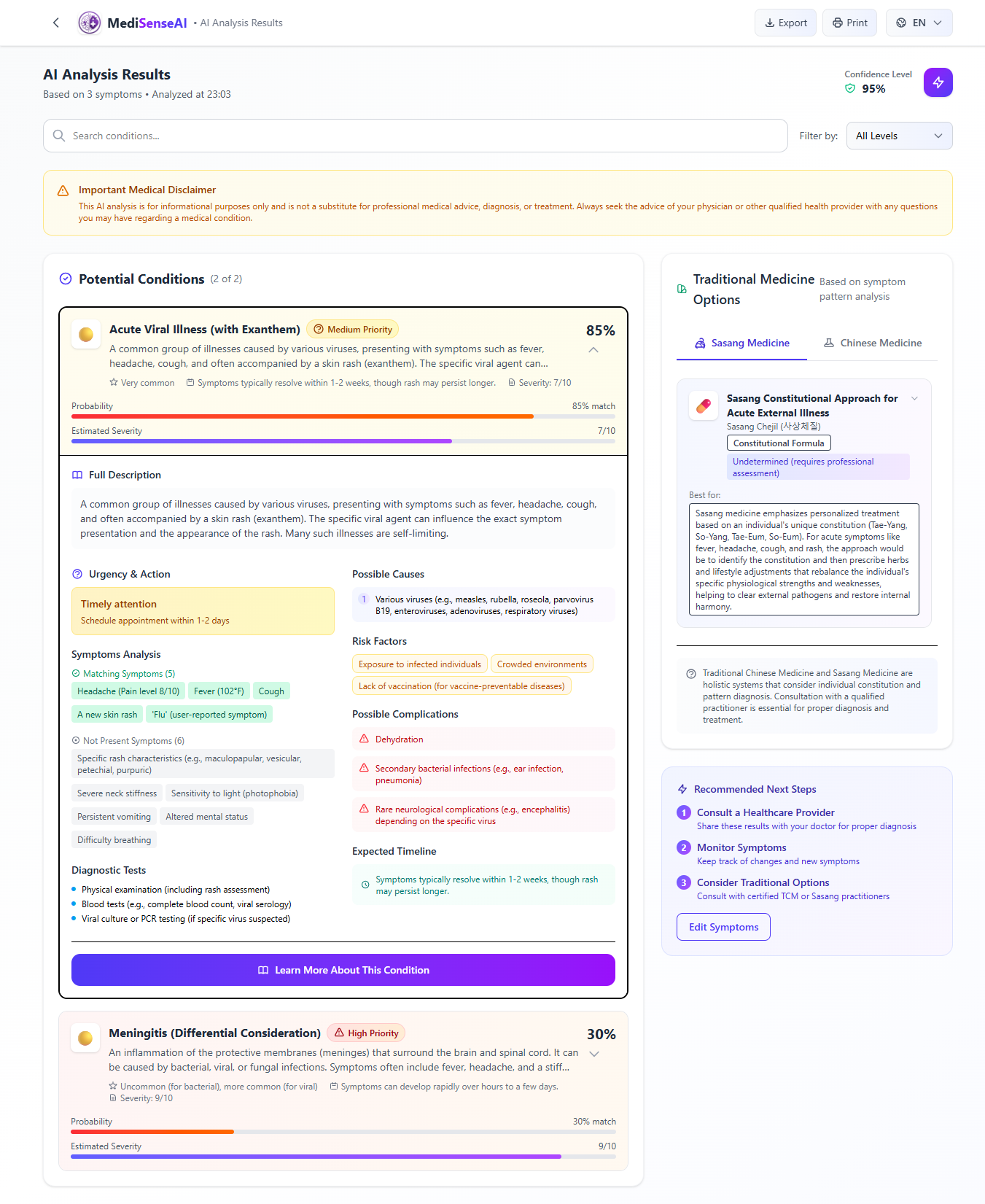
Results
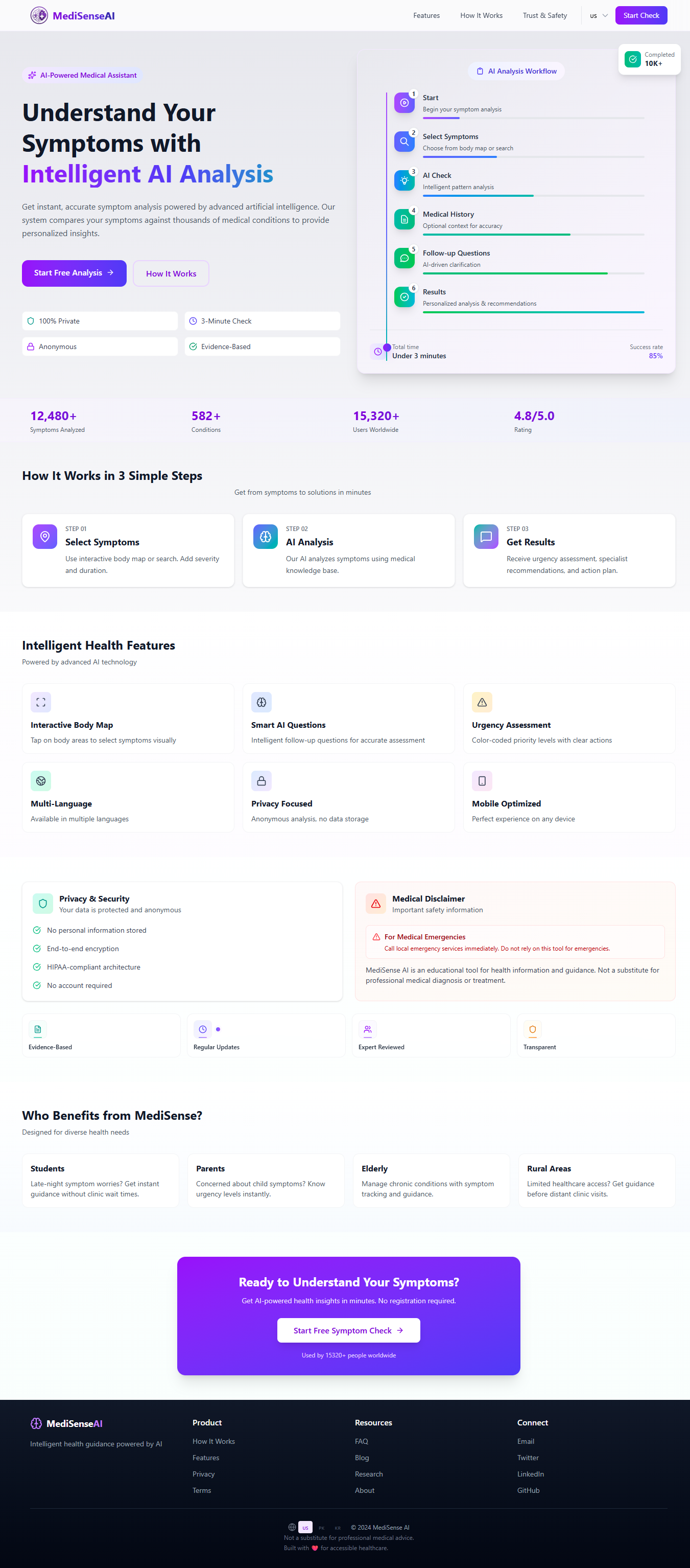
Medisense (Advanced AI-Powered Visual Symptom Analyzer)
Medisense is an AI-powered symptom analysis platform that removes the need for typing, medical terminology, and language fluency allowing anyone to understand their health through simple visual interaction.
Updates we did for the final round:
Changes List
- Navigation – keep
- Hero – enhance
- Stats Bar – enhance
- How It Works – keep + add "Science Behind It"
- Body Map Showcase – NEW
- AI Analysis Result – NEW
- Dual Healing Systems – NEW
- Who Is It For / Use Cases – keep + add archetypes
- Features – keep + bento layout
- Trust & Safety – keep + add hallucination prevention
- Testimonials – NEW
- Comparison Table – NEW
- Final CTA – keep + enhance
- Footer – keep
Changes Summary
The website will maintain its core structure while enhancing visual and interactive elements such as the Hero and Stats Bar. New sections like Body Map Showcase, AI Analysis Result, Dual Healing Systems, Testimonials, and Comparison Table will be added to improve engagement and clarity. Existing sections will be refined with added details, like the "Science Behind It" in How It Works, archetypes in Who Is It For, a bento layout in Features, and hallucination prevention in Trust & Safety. Overall, the updates aim to make the site more informative, visually dynamic, and user-centric while keeping key elements like Navigation, Footer, and Final CTA intact.
Summary
Medisense is an advanced AI-powered symptom analyzer designed to make health assessment accessible, intuitive, and privacy-safe for everyone. Traditional symptom checkers rely heavily on text input, medical vocabulary, and chatbot conversations, which creates barriers for people who lack medical knowledge, are not fluent in English, or struggle to describe their symptoms accurately.
Medisense solves this by introducing a visual, tap-based interaction system using detailed interactive body diagrams. Users simply tap the area where they feel discomfort, and the AI takes over—guiding them through intelligent follow-up questions, analyzing symptom patterns, and generating structured health insights in real time.
The platform provides:
- Possible conditions based on symptom patterns
- Severity classification (mild, moderate, severe)
- Confidence-based analysis
- Intelligent triage guidance
- Doctor-ready symptom summaries
- Recommendations from Asian traditional medicine systems such as Sasang and Traditional Chinese Medicine
Medisense is built with a privacy-first architecture where no personal health data is stored, ensuring complete confidentiality and user trust.
The goal is to democratize access to early health guidance and empower people to make informed decisions regardless of language, education, or location.
Inspiration
Existing symptom checkers often feel complex, stressful, and inaccessible. Many users struggle to:
- Describe pain using correct medical terminology
- Communicate symptoms clearly
- Understand chatbot-based systems
- Trust platforms with sensitive health information
This problem is especially serious in:
- Rural communities with limited healthcare access
- Non-English speaking populations
- Elderly users unfamiliar with digital systems
- Students and individuals experiencing health anxiety
Additionally, most modern AI health tools ignore traditional medical systems that billions of people trust and rely on.
Medisense was inspired by the need to create a system that understands users visually and intelligently without forcing them to adapt to medical or technical complexity.
What it does
Medisense transforms symptom analysis into a guided, intelligent, and user-friendly process.
1. Interactive Visual Symptom Selection
Users interact with a detailed anatomical body diagram and tap directly on the area where they feel discomfort.
This eliminates:
- Typing
- Medical terminology
- Language dependency
2. AI-Powered Intelligent Triage
The AI analyzes the selected symptom location and determines:
- Symptom relevance
- Urgency level
- Whether medical history is needed
This creates a personalized and adaptive workflow.
3. Dynamic Follow-Up Questions
The system generates contextual follow-up questions based on:
- Selected body part
- Symptom type
- Severity indicators
This improves accuracy while keeping the experience simple.
4. Condition Analysis and Severity Classification
The AI provides structured insights including:
- Possible conditions
- Severity level classification
- Risk awareness guidance
This helps users understand how serious their symptoms may be.
5. Doctor Preparation Summary
Medisense automatically generates a structured summary including:
- Symptom location
- Duration
- Severity
- AI analysis
This can help users communicate more effectively with medical professionals.
6. Traditional and Modern Medicine Integration
Medisense integrates:
- Modern medical reasoning
- Sasang Constitution Medicine
- Traditional Chinese Medicine
This creates culturally inclusive and holistic guidance.
7. Multilingual and Accessibility-Focused Design
The platform is designed for:
- Non-English speakers
- Low literacy users
- Elderly users
- Global accessibility
8. Privacy-First Operation
Medisense does not store:
- Personal data
- Symptom history
- Medical information
All analysis happens in real time.
This ensures:
- Maximum privacy
- Zero risk of data misuse
- High user trust
How we built it
Medisense uses a modern full-stack AI architecture.
Frontend
- React-based interface
- Interactive SVG anatomical diagrams
- Responsive and mobile-friendly design
- Fully visual interaction system
Backend
- Node.js runtime
- Express API framework
- Real-time request processing
- Scalable architecture
AI Engine
Powered by Gemini AI from :contentReference[oaicite:0]{index=0}, responsible for:
- Symptom reasoning
- Follow-up generation
- Condition analysis
- Severity classification
- Summary generation
Architecture
- MERN-based architecture
- No database storage
- Real-time processing
- Stateless design for privacy
Medical Logic Integration
Custom logic layer combines:
- Symptom mapping
- Condition association
- Traditional medicine principles
- Modern medical reasoning
Challenges we ran into
Building Medisense required solving several complex problems:
1. UX and Medical Accuracy Balance
Making the system simple without losing meaningful accuracy.
2. Visual Symptom Mapping
Mapping hundreds of symptom possibilities to body regions.
3. Intelligent AI Workflow Design
Ensuring the AI asks relevant questions without overwhelming users.
4. Multi-System Medical Integration
Combining modern and traditional medicine into one system.
5. Privacy-Safe Personalization
Delivering personalized insights without storing user data.
Accomplishments that we're proud of
Eliminated the typing barrier
Users can interact entirely visually.
Created an inclusive healthcare interface
Accessible regardless of language or medical knowledge.
Built a privacy-first AI health system
Zero data storage ensures maximum confidentiality.
Developed adaptive AI symptom analysis
The system dynamically responds to each user.
Integrated traditional medicine with AI
Bridging cultural and technological healthcare systems.
What we learned
Through building Medisense, we learned:
- Accessibility is essential for healthcare technology
- Visual UX can outperform text-based systems
- Privacy increases user trust
- AI must be designed around human needs
- Cultural inclusivity improves global usability
What's next for Medisense
Immediate Goals
- Full public deployment
- Real user testing
- Performance optimization
Short-Term Goals
- Telemedicine integration
- Symptom tracking features
- Improved AI accuracy
Long-Term Vision
- Expansion to Ayurveda and Unani medicine
- Partnerships with healthcare providers
- Rural healthcare deployment
- Region-specific AI training
- Global scaling
Impact and Vision
Medisense represents a shift toward human-centered healthcare technology.
It removes traditional barriers such as:
- Language
- Medical knowledge
- Technical complexity
- Accessibility limitations
By combining AI intelligence, visual interaction, and privacy-first design, Medisense makes early health guidance more accessible, understandable, and inclusive.
The long-term vision is to make intelligent health guidance universally accessible—regardless of geography, education, or socioeconomic status.

Log in or sign up for Devpost to join the conversation.