-
-
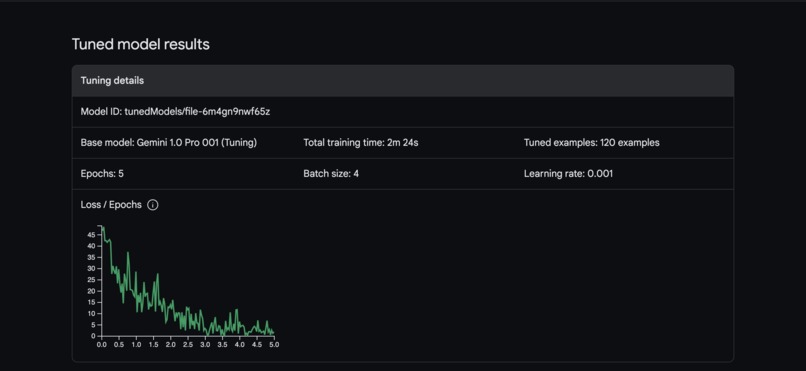
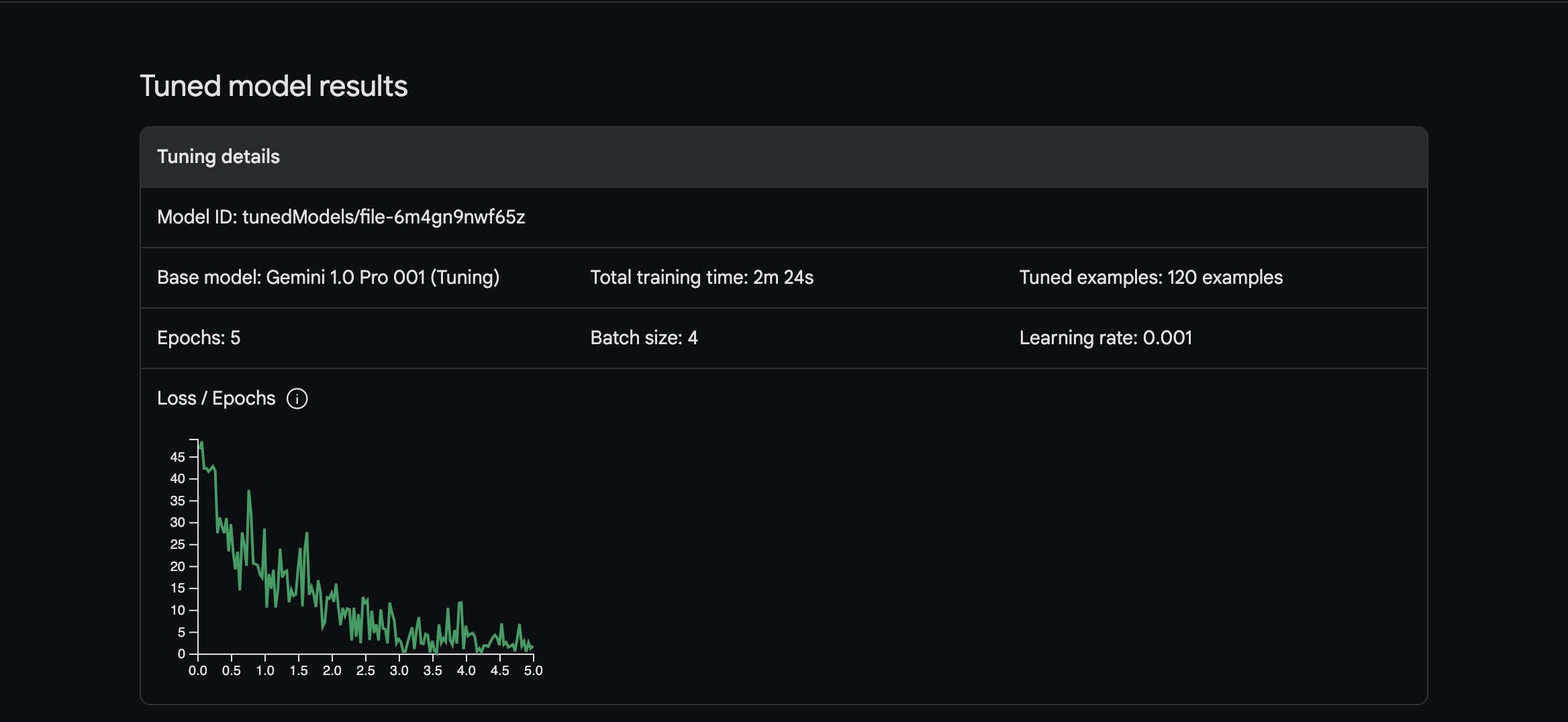
tuned model
-
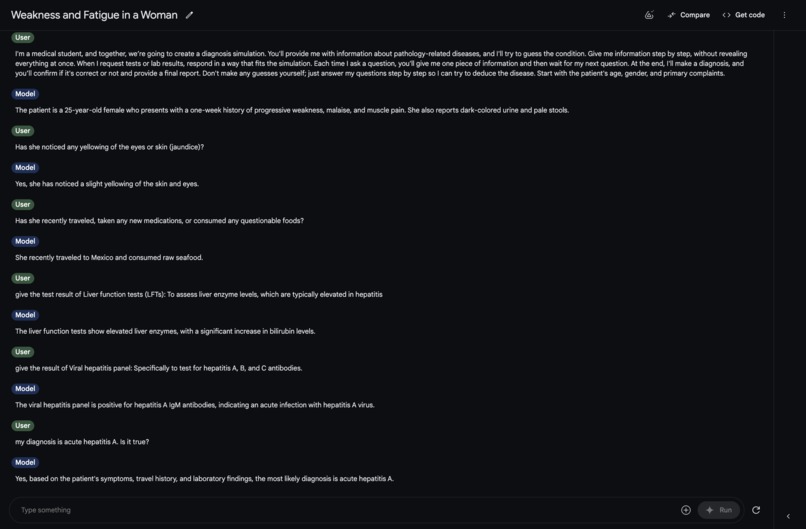
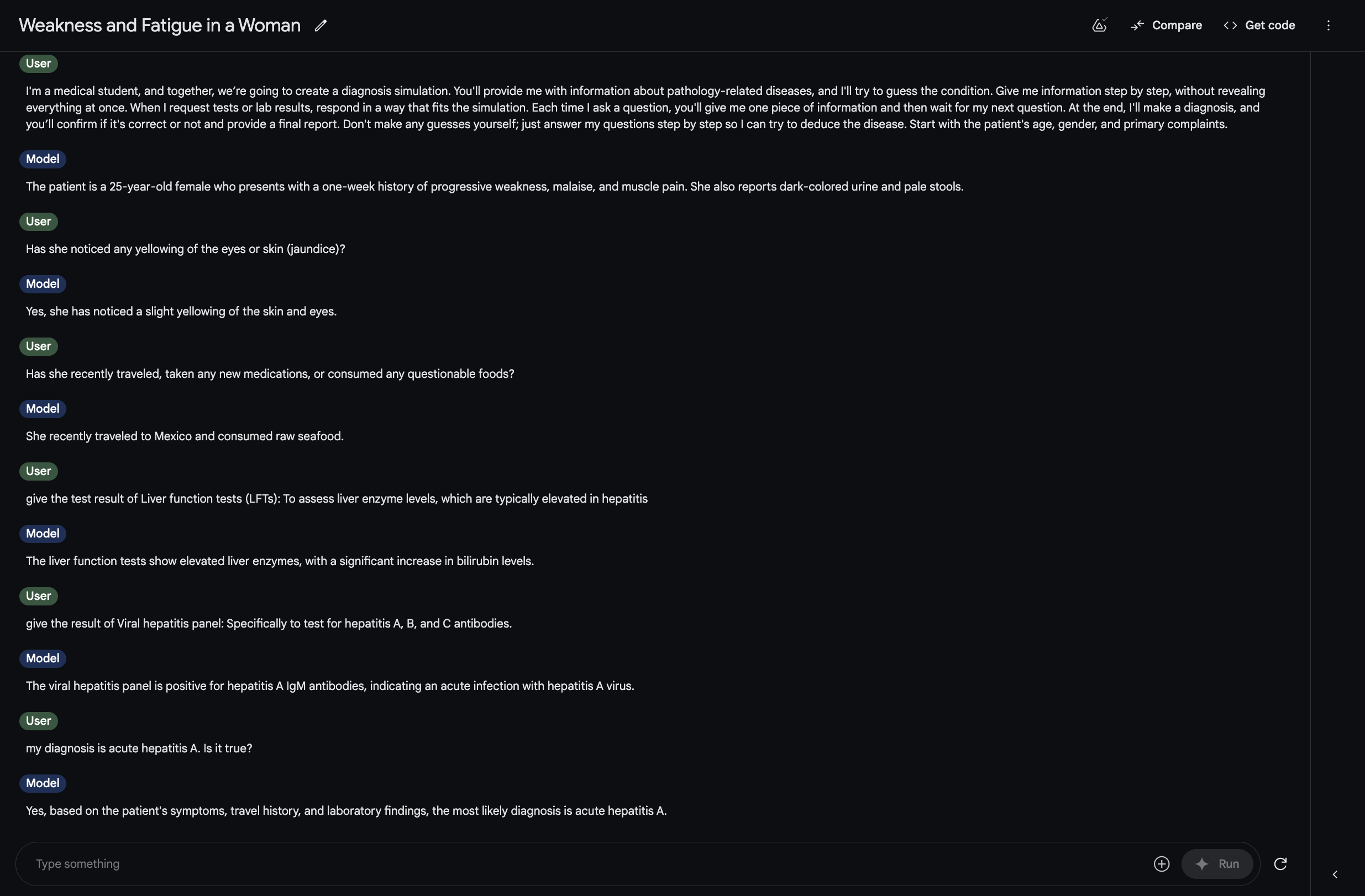
ai studio chat
-
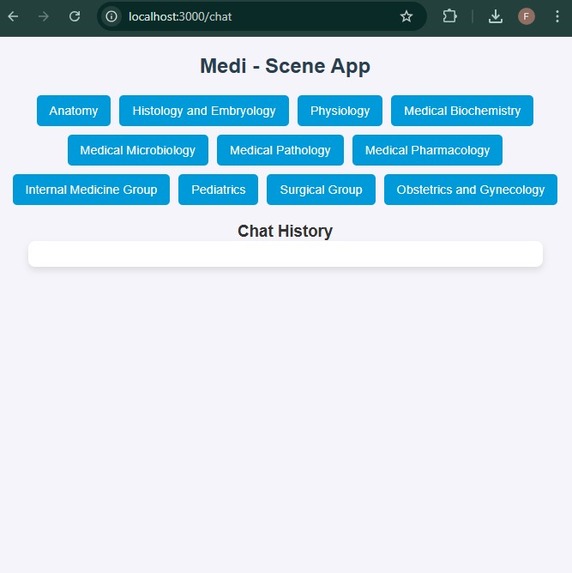
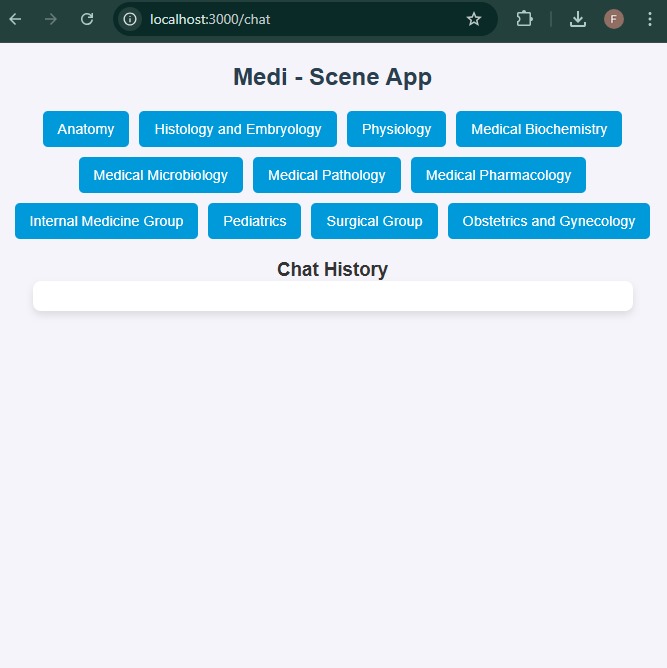
home page of app
-
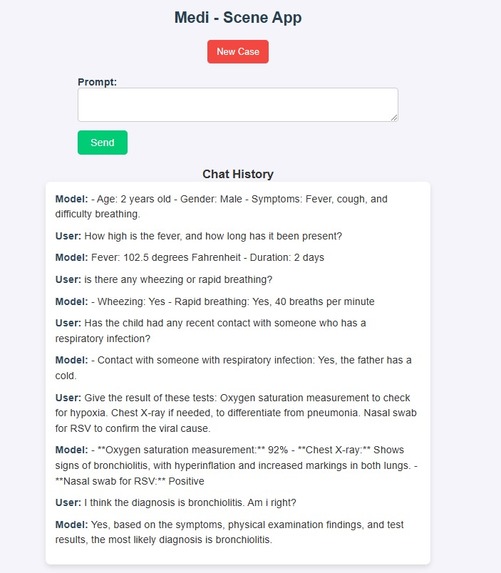
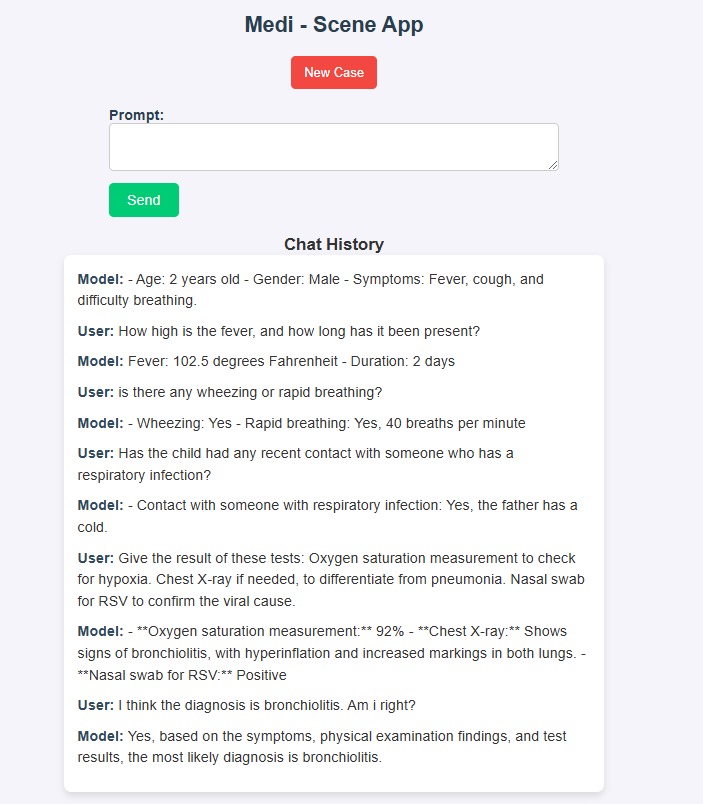
chat history
Inspiration
The idea for Medi-Scene emerged from a desire to bridge the gap between theoretical knowledge and practical experience in medical education. Clinical skills are essential for medical students, yet hands-on practice can sometimes be limited due to resource constraints. Medi-Scene aims to simulate real-world medical scenarios, allowing students to engage in step-by-step case management and diagnostic processes in a risk-free, virtual environment. This approach helps build confidence and critical skills in patient assessment, emergency management, and diagnosis.
What it does
Throughout this project, I gained valuable insights into both technical and medical fields. On the technical side, I learned to fine-tune AI models using Gemini 1.0 Pro AI Studio, which allowed us to create an AI capable of responding accurately to medical scenarios. Additionally, I improved my skills in working with JavaScript, Node.js, and integrating Google APIs, especially around authentication and model deployment. This experience deepened my understanding of deploying AI models in real-time applications and utilizing them to meet specific educational needs.
How we built it
Medi-Scene was built using a combination of front-end and back-end technologies. We used JavaScript and .ejs for a smooth, user-friendly front end, and Node.js with Express to manage server functionality. For the AI model, we fine-tuned a base model in Gemini 1.0 Pro AI Studio with datasets designed around common medical education scenarios, including topics relevant to the Medical Specialization Exam (TUS). Using Google authentication and .mjs extensions streamlined the integration of AI responses within the simulation environment.
Challenges we ran into
Building Medi-Scene presented several technical and logistical challenges. One significant hurdle was creating a reliable AI model that could respond accurately across diverse medical fields. To address this, we spent considerable time curating a high-quality dataset that reflects common scenarios in medical education, as well as fine-tuning the model in Gemini 1.0 Pro AI Studio. Another challenge was integrating Google’s authentication to ensure secure and seamless access to the model. We had to adapt Google’s cURL commands for Node.js, which required experimenting with different configurations. Designing an intuitive user interface that facilitated smooth interactions between users and the AI model was also a priority, and it took several iterations to get the prompt-response workflow right.
Accomplishments that we're proud of
We’re proud to have developed a functional, AI-powered simulation tool that medical students can use to practice clinical scenarios in a realistic, interactive environment. Fine-tuning the AI model to handle complex medical questions and provide case-based guidance was a major milestone for our team. Another accomplishment was creating a seamless integration with Google’s authentication system, ensuring secure access for users. Testing Medi-Scene with real medical students and receiving positive feedback on its effectiveness and ease of use has been especially rewarding, as it demonstrates the potential of this tool to enhance medical education.
What we learned
This project deepened our understanding of integrating AI into practical, real-world applications, especially in a field as nuanced as medicine. We learned a lot about the importance of fine-tuning datasets to meet the unique needs of specific users, as well as the challenges that come with handling medical data in a way that remains educational yet responsible. Additionally, we improved our skills in managing authentication systems and embedding AI responses in a chat-based format. Building this tool has also underscored the importance of user experience design, as we worked to make interactions with the AI model both intuitive and informative.
What's next for MediScene
Moving forward, we aim to expand Medi-Scene’s capabilities to cover a wider range of medical specialties and complex scenarios, offering even more diverse training opportunities. We’re also exploring ways to implement more advanced AI models to enhance diagnostic accuracy and incorporate more dynamic responses. Another goal is to integrate features that allow instructors to customize scenarios and track student progress, creating a more tailored learning experience. With feedback from students and educators, we plan to continually refine and adapt Medi-Scene to ensure it remains a valuable tool for future healthcare professionals.
Built With
- axios
- css-frameworks:-node.js
- ejs
- gemini
- google-cloud
- html
- javascript
- nodemon

Log in or sign up for Devpost to join the conversation.