-
-
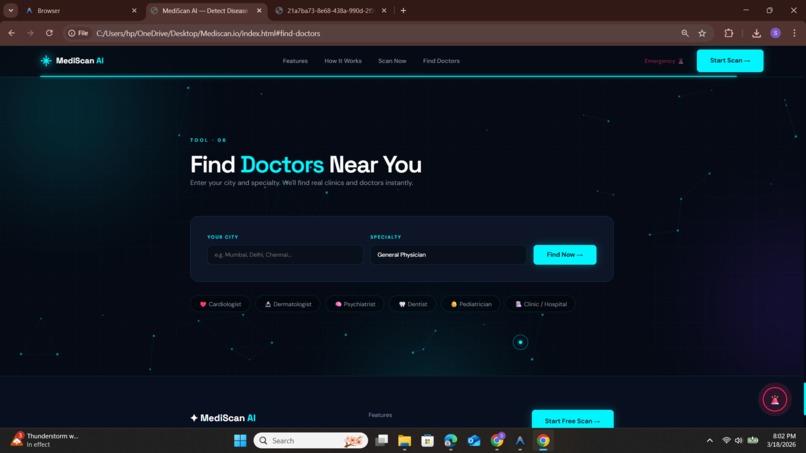
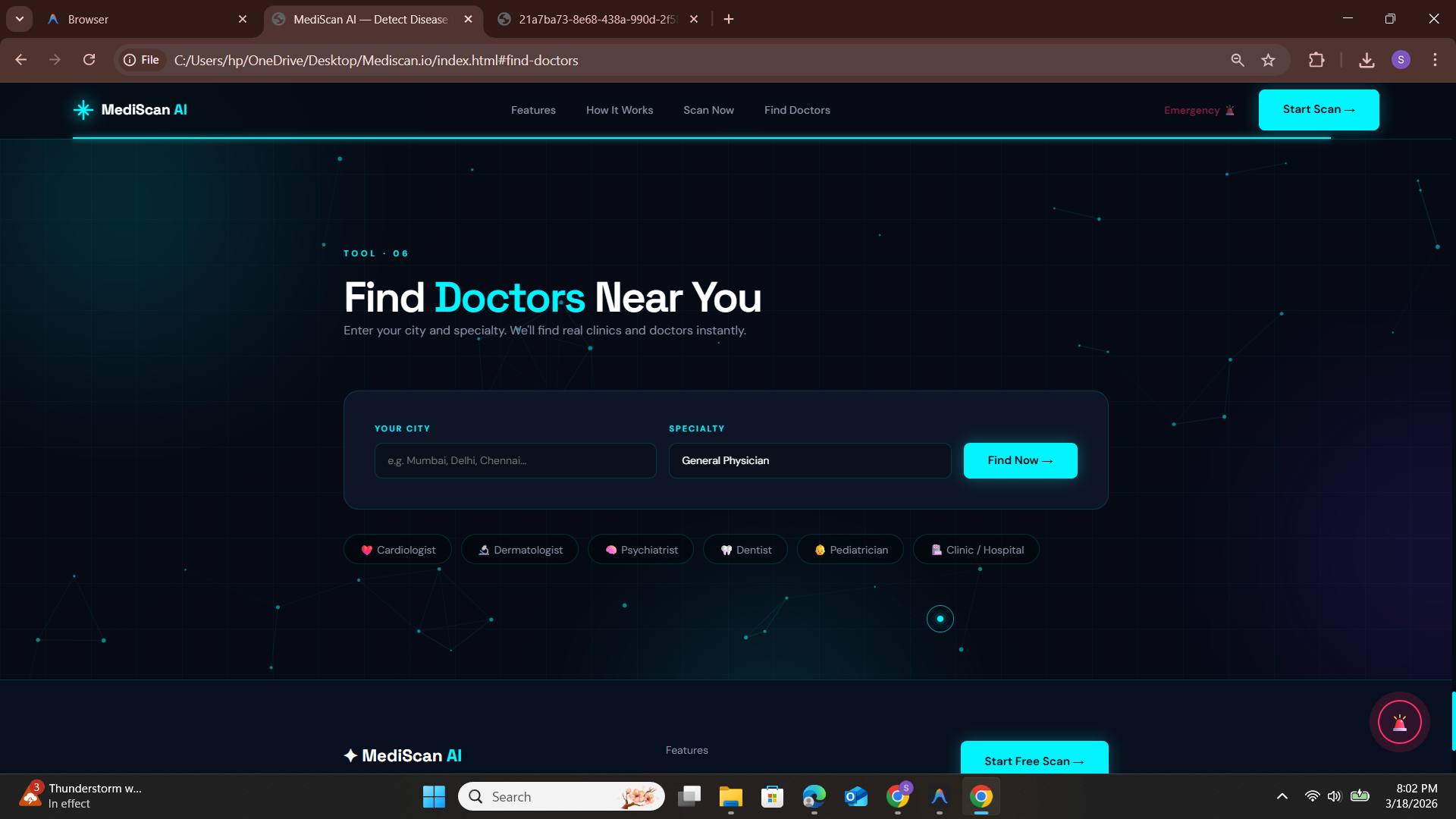
The doctor finder page where users enter their city and specialty ( Dermatologist, Psychiatrist etc.) to find nearby doctors instantly.
-
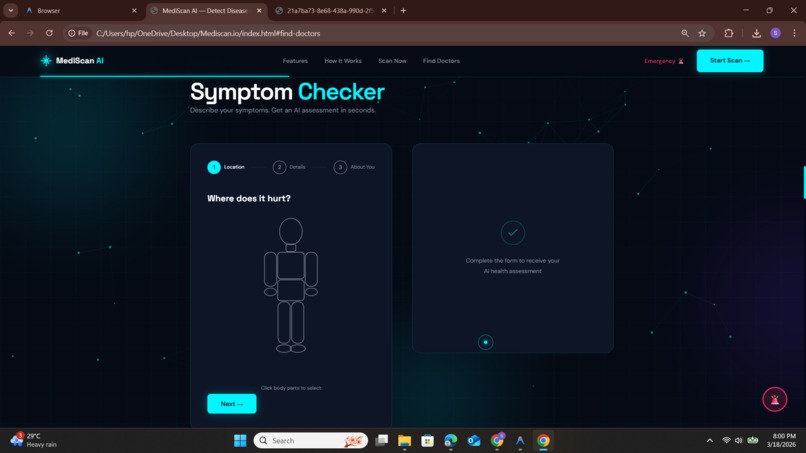
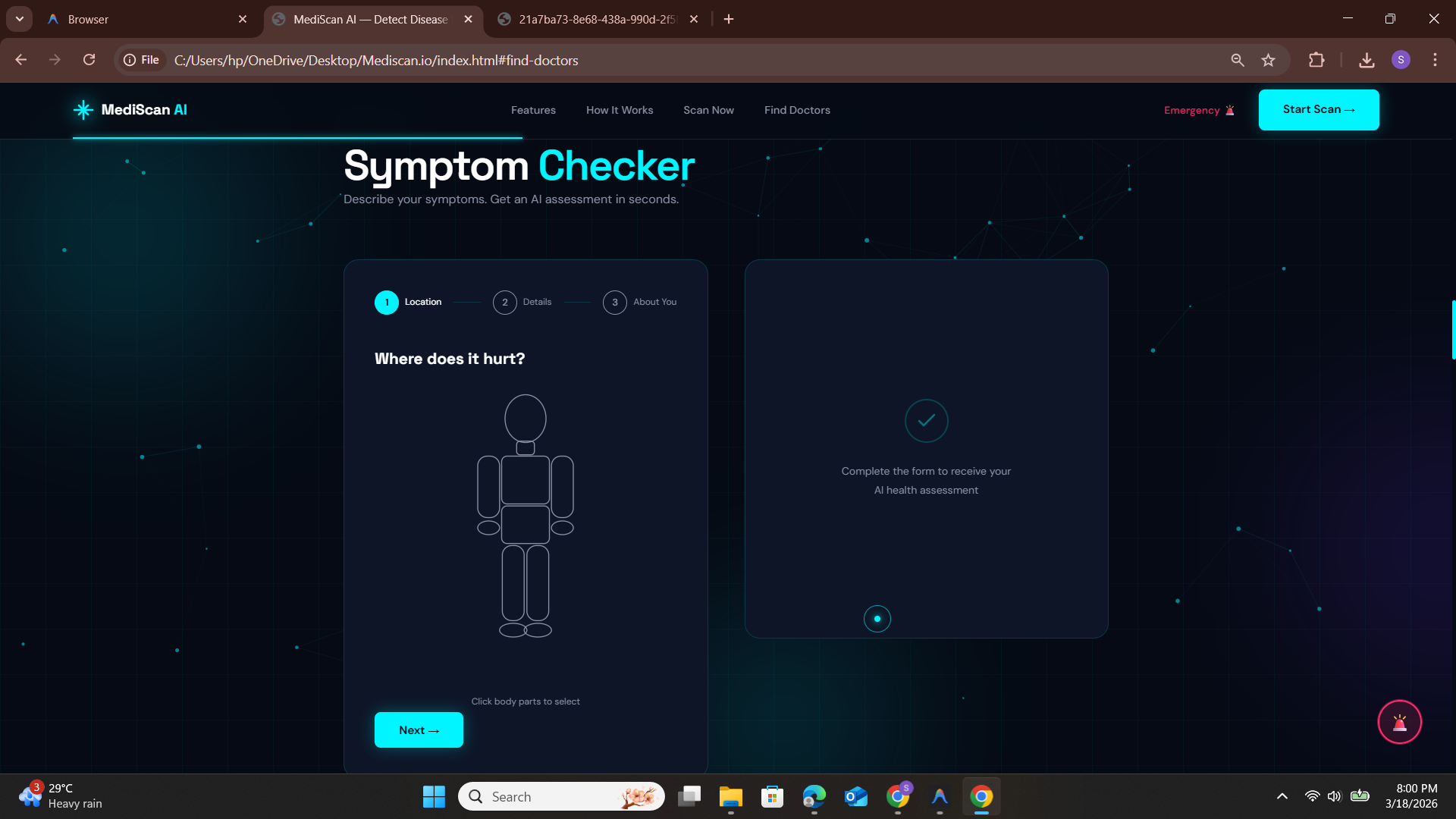
The interactive body diagram where users click body parts to select where it hurts — Step 1 of the 3-step symptom form.
-
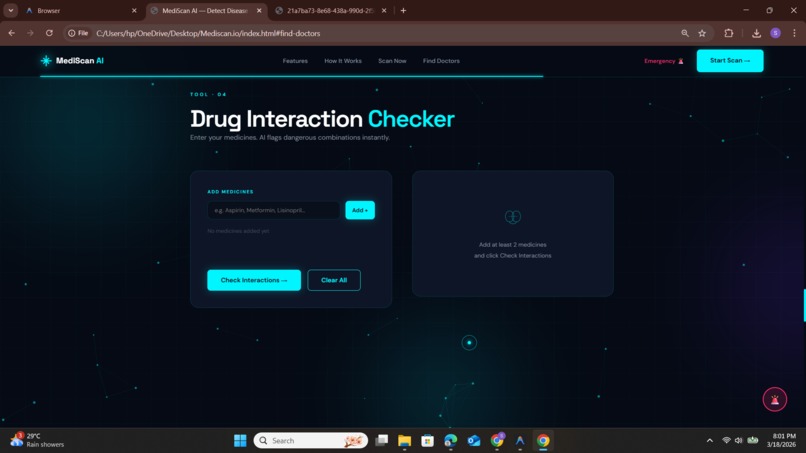
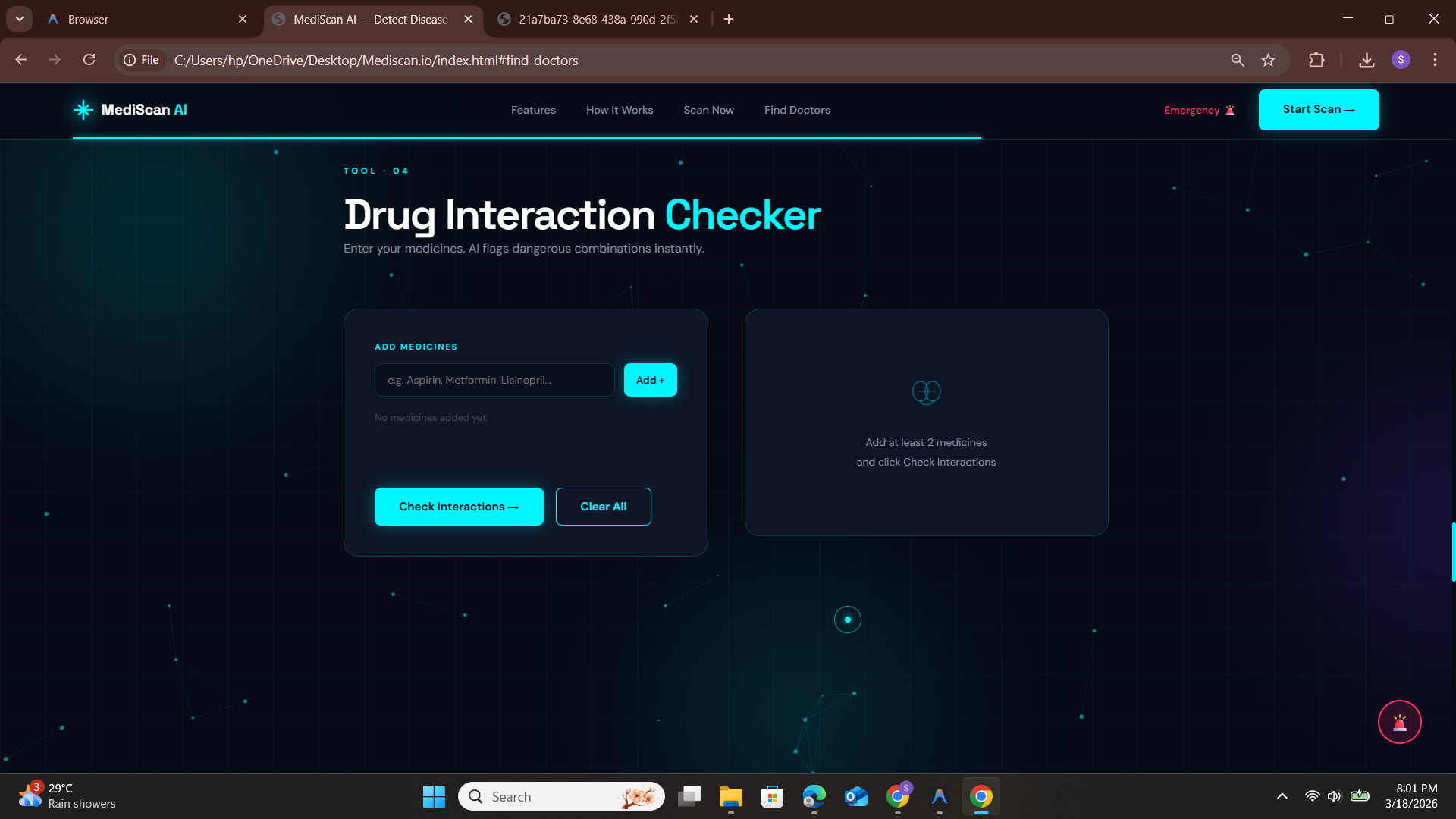
The medicine input tool where users add medicines like Aspirin or Metformin and click "Check Interactions" to detect dangerous combinations.
-
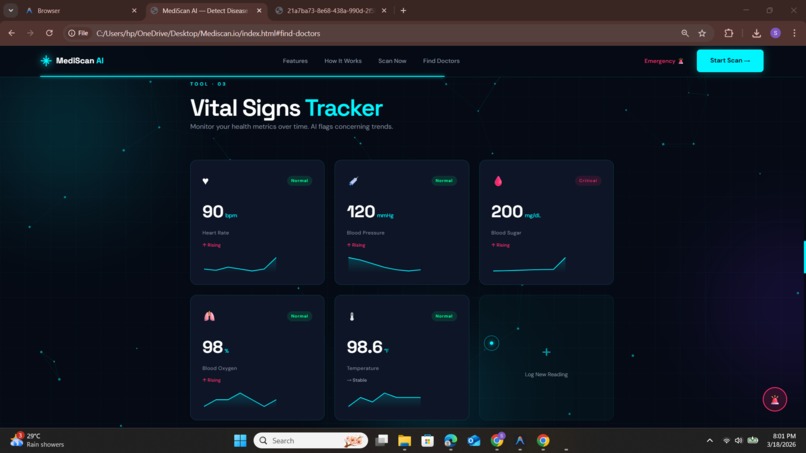
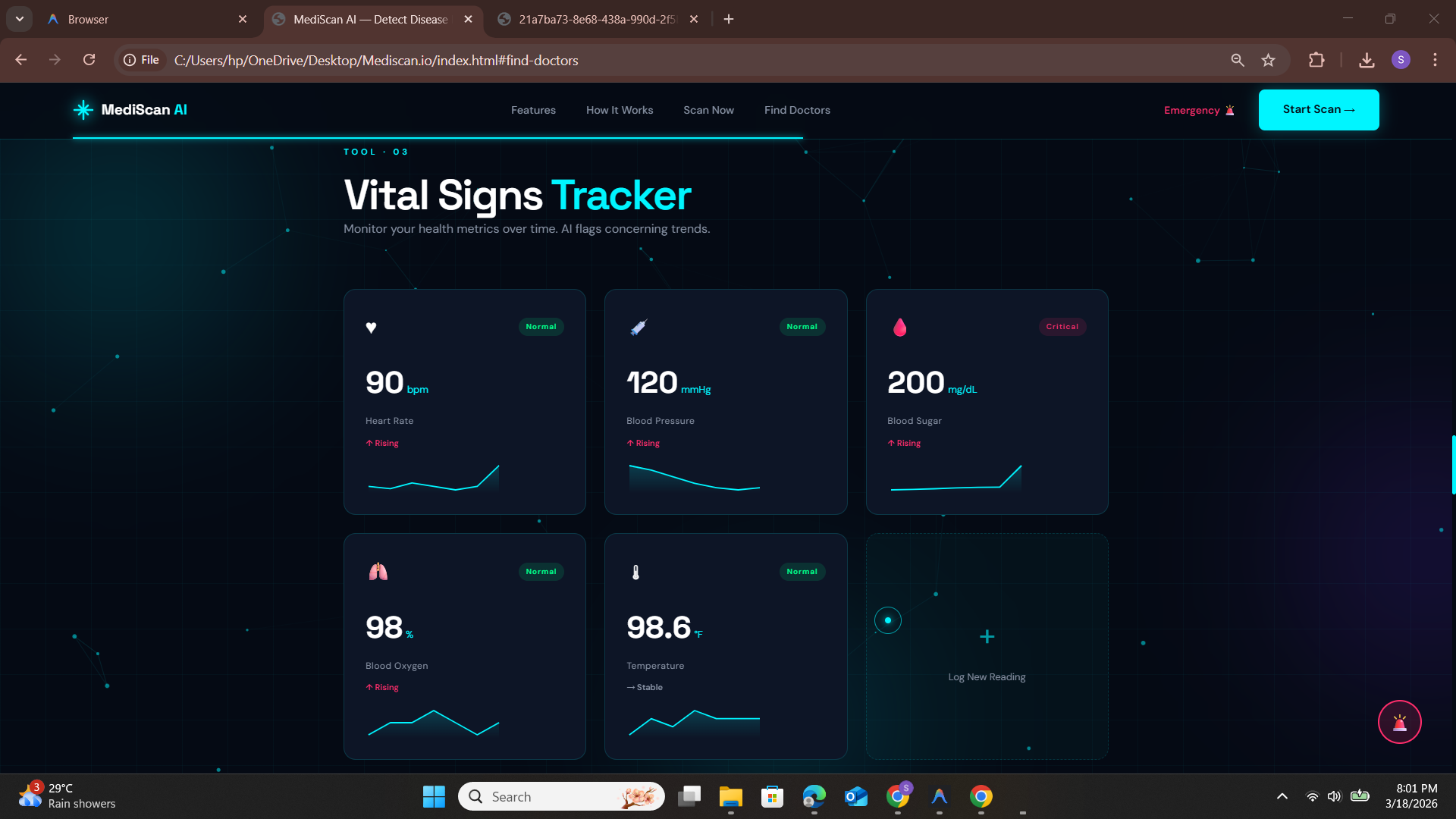
The dashboard showing Heart Rate , Blood Pressure , Blood Sugar , Blood Oxygen (98%) and Temperature (98.6°F) with trend charts.
-
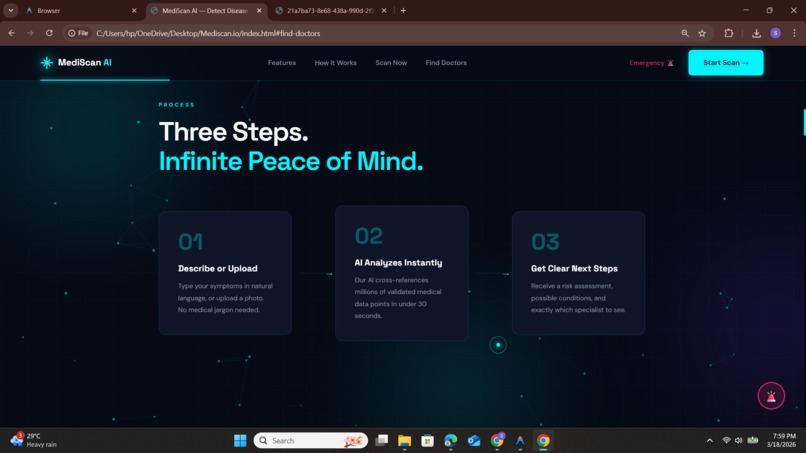
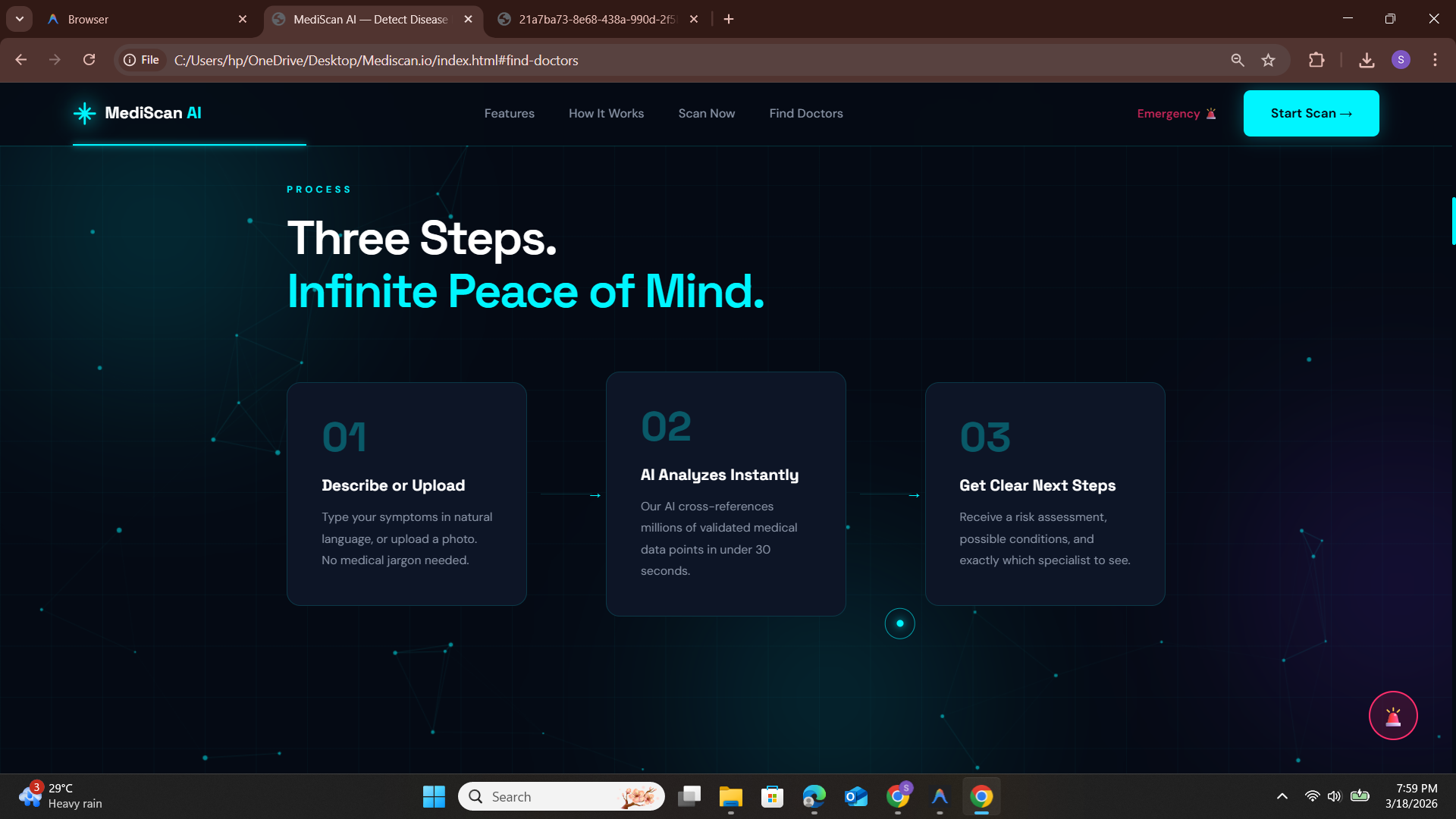
Describe or Upload → AI Analyzes Instantly → Get Clear Next Steps."
-
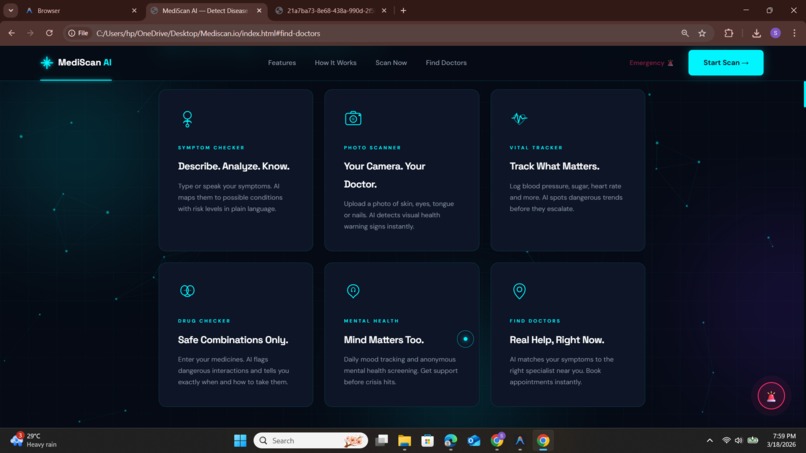
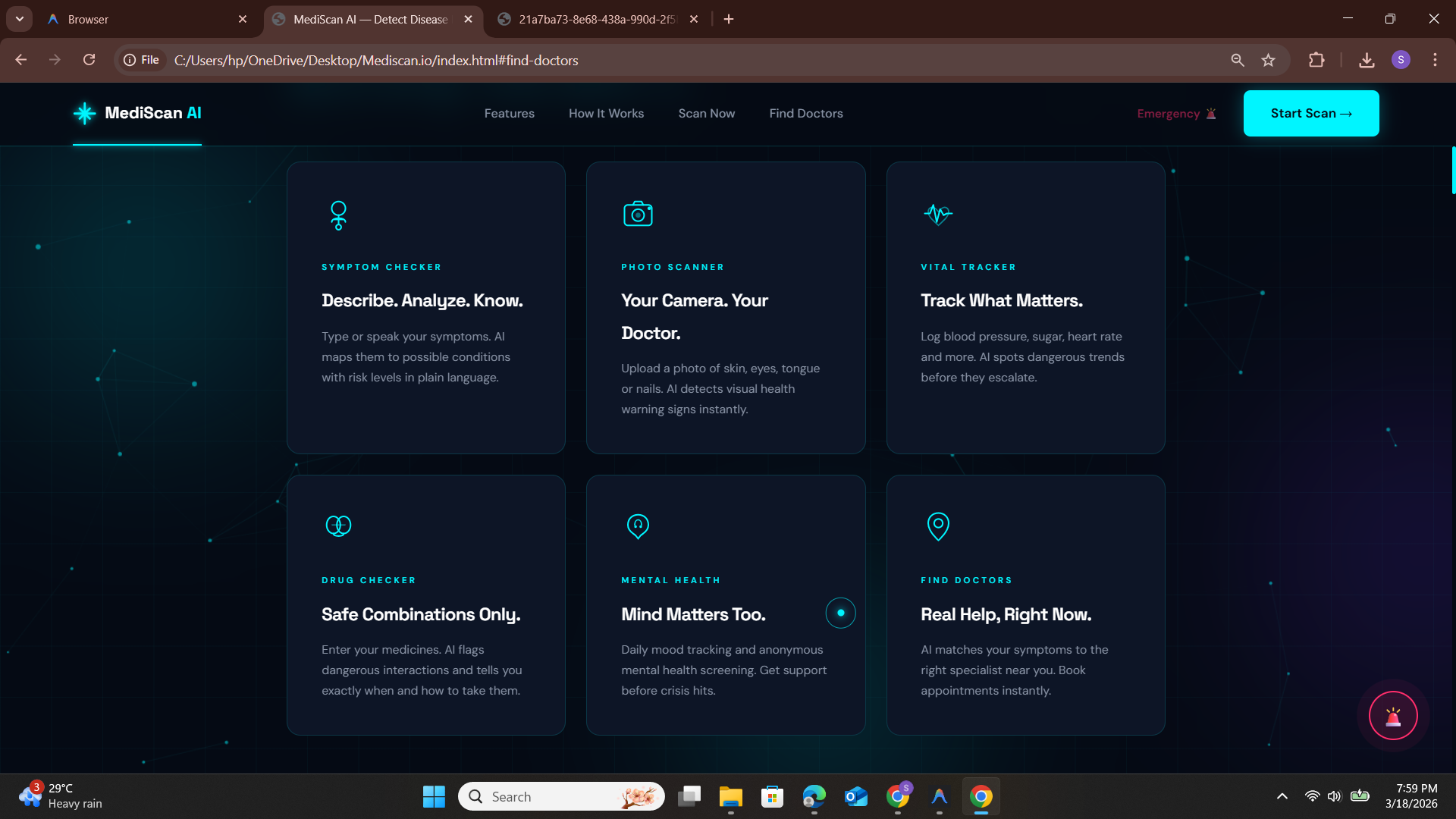
Symptom Checker, Photo Scanner, Vital Tracker, Drug Checker, Mental Health and Find Doctors
-
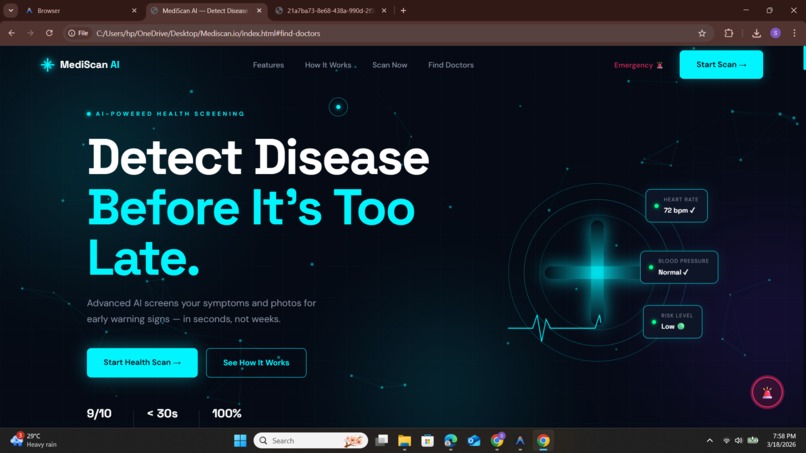
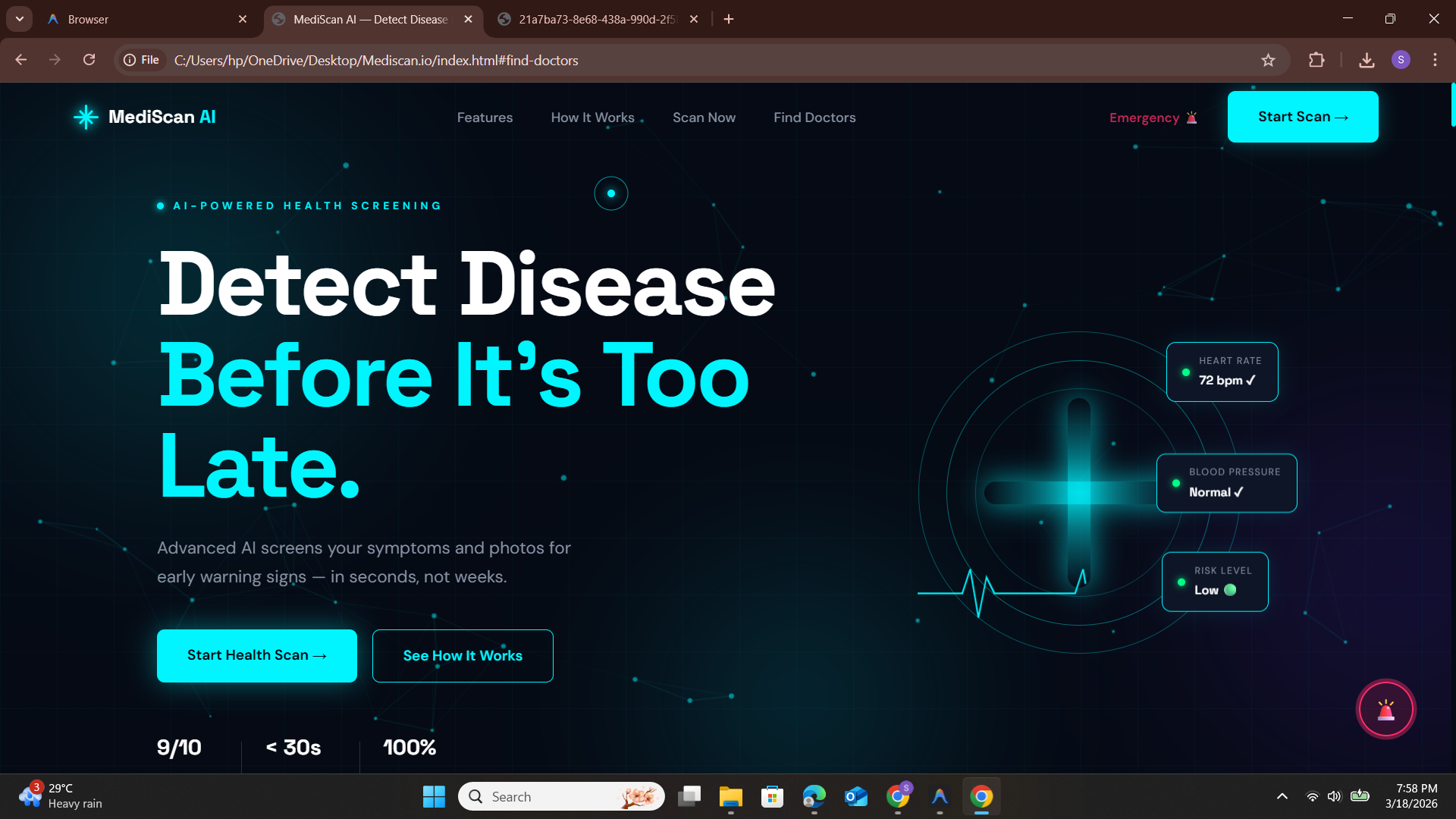
The main landing page with the headline "Detect Disease shows the ECG animation, health stat cards and the two main CTA buttons.
Inspiration
Every day, millions of people wake up with symptoms they don't understand — a strange rash, chest discomfort, fatigue that won't go away. Most ignore it. Some can't afford a doctor. Others live too far from one. We asked ourselves: what if AI could be that first line of defense? What if anyone, anywhere, could get an instant health screening from their phone — for free?
The inspiration came from a simple but devastating statistic: 9 out of 10 lives can be saved when disease is detected early. We built MediScan AI to make early detection accessible to everyone, not just those who can afford it.
What it does
MediScan AI is a free, AI-powered health screening platform that helps people detect early warning signs of disease in seconds.
Symptom Checker — Describe your symptoms via text or voice. AI returns top 3 possible conditions with risk levels and plain language explanations.
Photo Health Scanner — Upload a photo of skin, eyes, tongue or nails. AI detects visual warning signs instantly.
Vital Signs Tracker — Log blood pressure, heart rate, blood sugar and more. AI identifies dangerous trends over time.
Medicine Interaction Checker — Enter your medicines and AI flags deadly combinations before they cause harm.
Mental Health Screener — Anonymous daily mood tracking and depression screening with personalized support suggestions.
Find Doctors — AI matches your symptoms to the right specialist near you with one-tap emergency calling.
Everything is free, anonymous and available 24/7.
How we built it
How we built it
We built MediScan AI using an AI-native development workflow:
Google's Antigravity — Used to rapidly design, build and deploy the full application without writing code manually. Antigravity's AI-native environment made it possible to go from idea to live product in under 48 hours.
OpenAI API (GPT-4o) — Powers all AI features including symptom analysis, photo scanning via vision capabilities, drug interaction checking, mental health screening and health report generation.
OpenAI Vision API — Enables photo-based health scanning by analyzing uploaded images of skin, eyes, tongue and nails to detect visual warning signs.
Supabase — Handles database storage and user authentication while keeping all sensitive health data private and secure.
Vercel — Deployed the live application for instant global access with zero downtime.
Framer Motion — Added smooth animations and micro-interactions throughout the interface for a polished user experience.
The entire app was built in under 48 hours using Google's Antigravity platform and OpenAI's API, proving that purpose-driven applications can be shipped rapidly without sacrificing quality or impact.
Challenges we ran into
Medical accuracy vs accessibility — Finding the right balance between giving useful health information and not causing unnecessary panic was our biggest challenge. We spent a lot of time crafting the AI system prompt to be reassuring but honest, and always directing users to real doctors.
Photo analysis reliability — Getting consistent results from the Claude Vision API across different lighting conditions, skin tones and image qualities required careful prompt engineering and extensive testing.
Privacy concerns — Health data is extremely sensitive. Ensuring zero data retention and complete anonymity while still providing personalized AI responses required careful architecture decisions.
Avoiding overdiagnosis — We had to ensure the AI never confidently diagnoses conditions, only screens and suggests. Getting this tone right in the AI responses took many iterations.
Emergency situations — Designing the UI so that users in genuine emergencies are immediately directed to call 112 rather than waiting for AI analysis was a critical safety consideration.
Accomplishments that we're proud of
Built a fully functional AI health screening platform in under 48 hours using AI-native development tools
Created a Claude Vision-powered photo scanner that can identify potential health warning signs from a simple phone photo — something previously only possible with expensive medical equipment
Designed an interface so simple that someone with zero technical knowledge can get an AI health screening in under 30 seconds
Successfully handled the ethical complexity of medical AI — building a tool that is genuinely helpful without replacing or undermining real medical professionals
Built a platform that works for both English and Hindi speakers, making it accessible to hundreds of millions of people across India who are underserved by the current healthcare system
Achieved complete user anonymity — no account needed, no data stored, no tracking
What we learned
AI-native development is a superpower — Using tools like Lovable.dev and Claude API, a small team can build in hours what used to take weeks. The barrier to building impactful products has never been lower.
Prompt engineering is everything in healthcare AI — The difference between a helpful and a harmful medical AI comes down entirely to how you instruct the model. We learned to be extremely precise about tone, disclaimers and escalation paths.
Simplicity saves lives — The more features we added, the more we realized that the most impactful thing we could do was make the core experience — describe symptoms, get risk level, know what to do next — as simple as humanly possible.
Design matters in healthcare — A scary or confusing UI can cause real harm. We learned that color, typography and copy choices in a health app carry genuine responsibility.
AI is a tool, not a doctor — The most important lesson was understanding the boundary between AI screening and medical diagnosis, and designing every interaction to reinforce that boundary clearly.
What's next for MediScan AI
Vernacular language support — Expanding to 10+ Indian languages including Tamil, Telugu, Bengali and Marathi to reach the most underserved communities
WhatsApp bot — Most people in rural India use WhatsApp. We plan to build a WhatsApp integration so users can get health screenings without even opening a browser
Offline mode — Building a PWA that works without internet access for users in low-connectivity areas, storing AI responses locally for common conditions
NGO and government partnerships — Working with healthcare NGOs and ASHA workers in rural India to deploy MediScan AI as a frontline screening tool
Wearable integration — Connecting with smartwatch data to enable passive vital sign monitoring and proactive health alerts
Clinical validation — Partnering with medical institutions to validate our AI screening accuracy against real clinical outcomes
Emergency response network — Building a system that connects users in medical emergencies directly to nearby volunteers trained in first aid
Built With
- google-antigravity
- openai-api
- react
- supabase
- vercel

Log in or sign up for Devpost to join the conversation.