

Inspiration
The inspiration for MediScan-AI came from witnessing the stark healthcare disparities in underserved communities worldwide. When I learned that 5 billion people lack access to quality healthcare and that early detection of skin cancer increases survival rates by 99%, I realized that AI could bridge this critical gap. The COVID-19 pandemic further highlighted how overwhelmed healthcare systems struggle with diagnostic accuracy - chest X-ray misinterpretation rates can reach 30% in non-specialist settings. I envisioned a world where anyone, anywhere, could access dermatologist and radiologist-level diagnostic assistance in seconds, not hours or days. My goal was to democratize medical AI and make life-saving diagnostic tools as accessible as taking a photo with your smartphone.
What it does
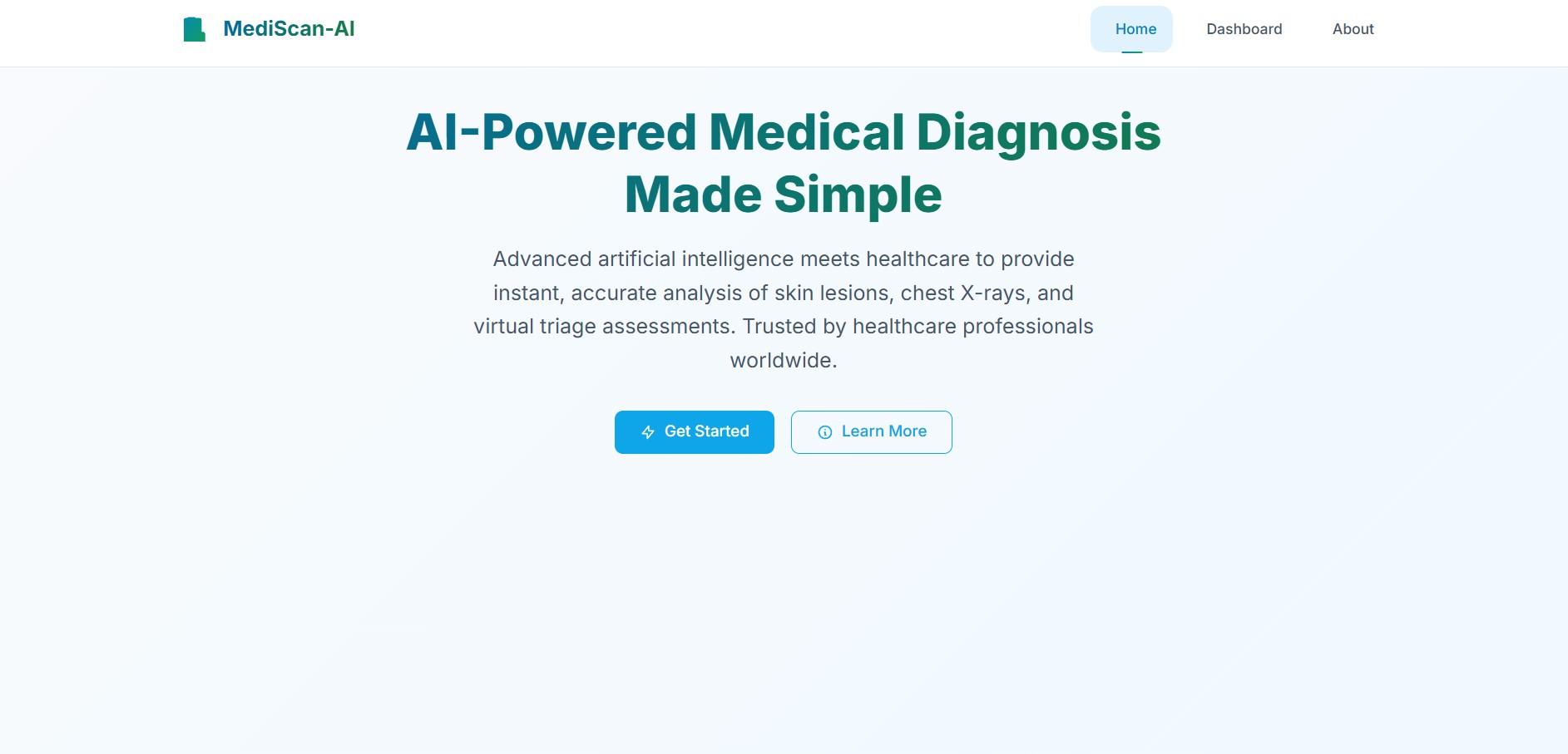
MediScan-AI is a comprehensive AI-powered medical diagnosis assistant that provides instant analysis through three core modules:
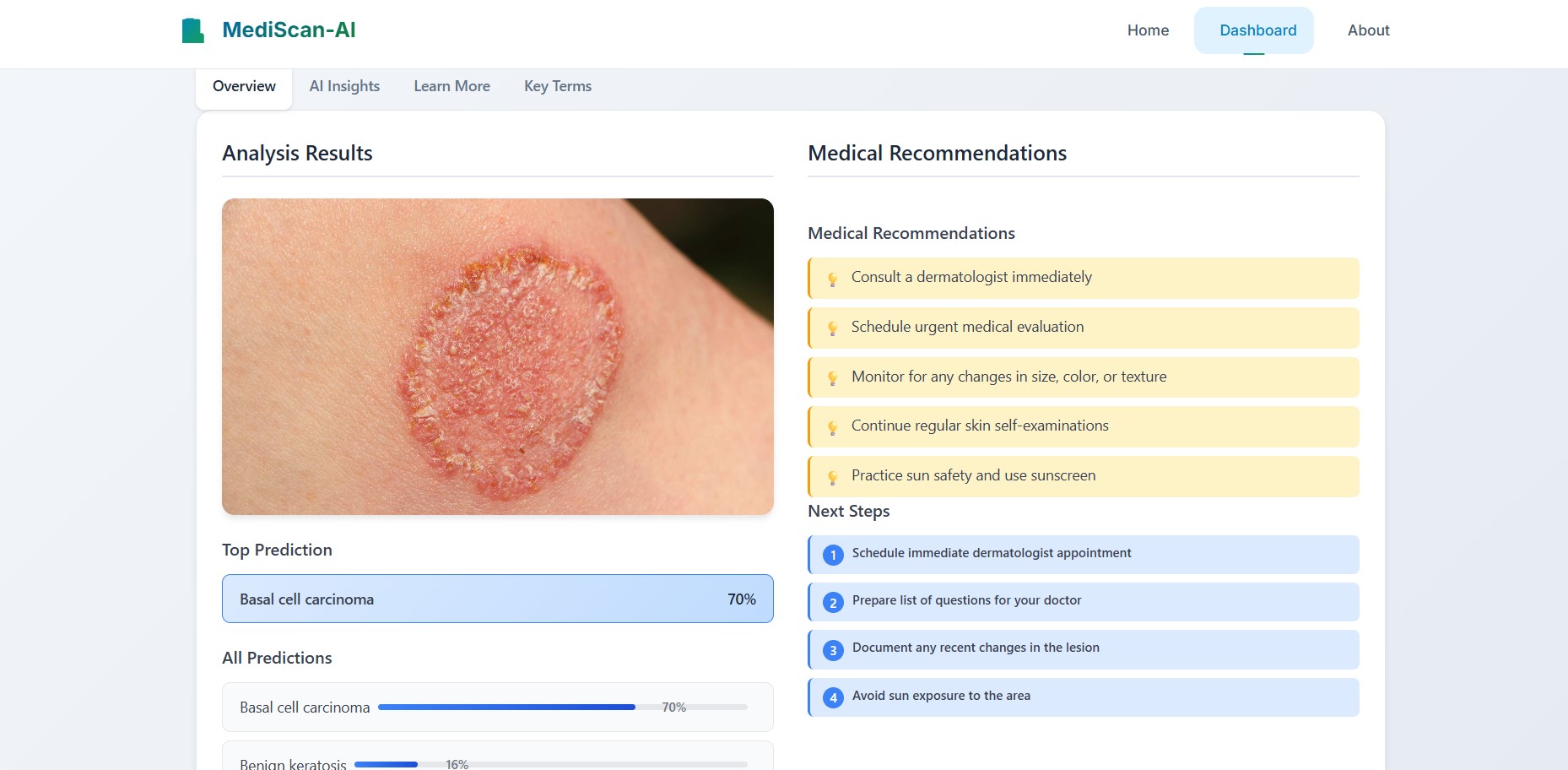
Skin Lesion Analysis: Uses an ISIC-trained ResNet-50 model to detect 7 different skin conditions including melanoma, basal cell carcinoma, and benign lesions in just 2-3 seconds. The system analyzes lesion characteristics like asymmetry, border irregularity, color variation, and diameter while providing risk assessment and confidence scoring.
Chest X-ray Analysis: Powered by Stanford's CheXNet DenseNet-121 architecture, it identifies 14 pathologies including pneumonia, pneumothorax, and cardiomegaly in 3-5 seconds. The system assigns urgency levels (routine, urgent, emergency) and generates detailed clinical findings with confidence scores.
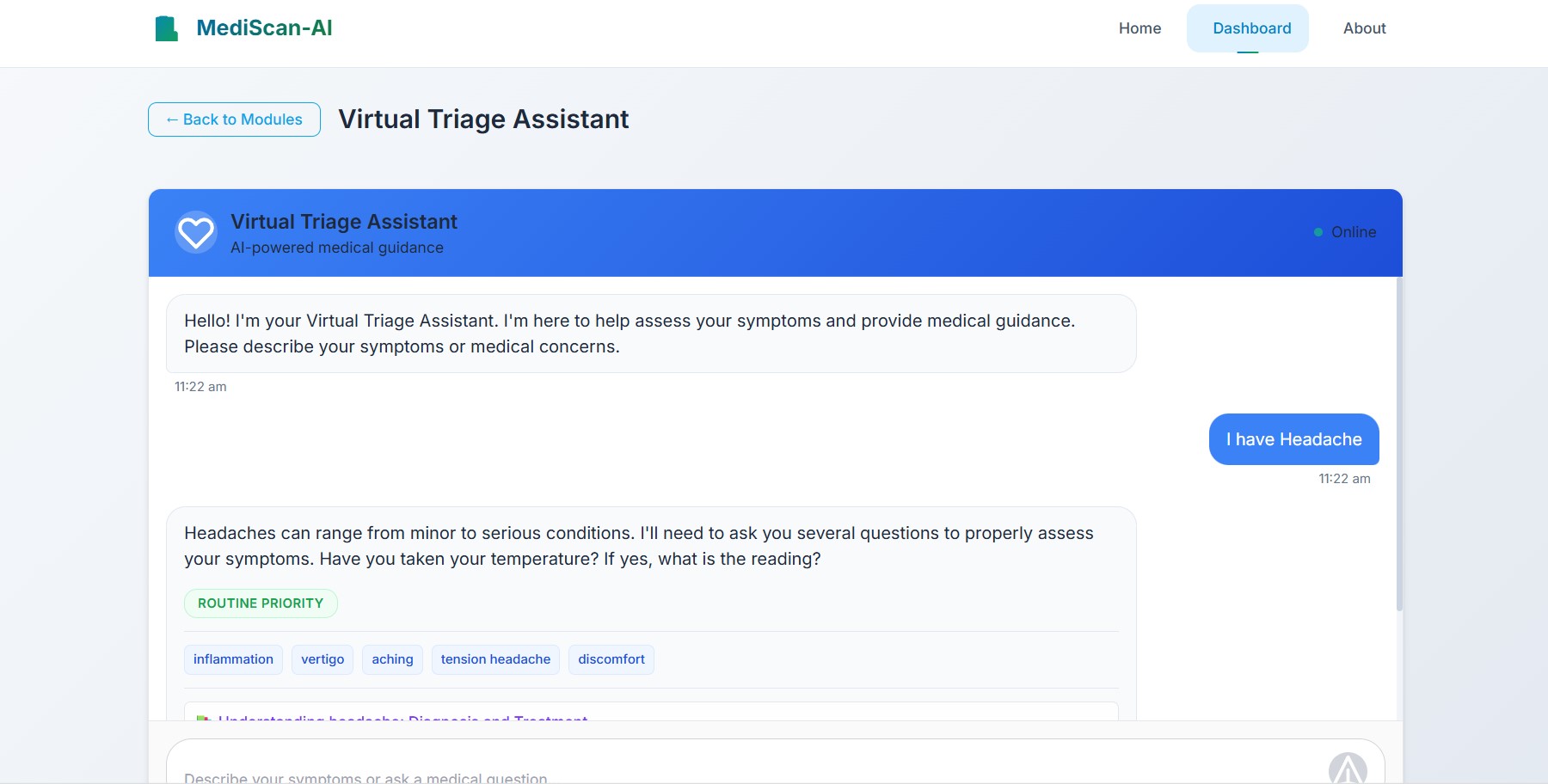
Virtual Triage Assistant: An intelligent chatbot that combines Groq for lightning-fast inference, Tavily for real-time medical information retrieval, and Keyword AI for natural language understanding. It provides instant symptom assessment, urgency determination, and personalized medical guidance through natural conversation.
Unlike other AI applications that take minutes to process medical images, MediScan-AI delivers accurate, clinically relevant results in seconds while maintaining HIPAA-compliant security and supporting multiple image formats including DICOM.
How I built it
I architected MediScan-AI using a modern, scalable technology stack designed for real-time medical image processing:
Backend Development: Built with FastAPI and Python for robust API development, ensuring lightning-fast response times and seamless integration capabilities. I implemented comprehensive health endpoints, image processing pipelines, and secure file handling systems.
AI Model Integration: Integrated pre-trained models including ResNet-50 trained on the ISIC dataset (25,000+ dermoscopic images) for skin analysis and DenseNet-121 trained on NIH's ChestX-ray14 dataset (100,000+ X-ray images) for radiology analysis. I optimized these models for real-time inference while maintaining clinical accuracy.
Frontend Development: Created an intuitive React.js interface with Tailwind CSS for responsive design. The frontend features drag-and-drop image upload, real-time analysis display, and comprehensive result visualization requiring no medical training to operate.
AI Assistant Integration: Implemented the virtual triage system using Groq's API for fast language model inference, Tavily's API for real-time medical knowledge retrieval, and Keyword AI for enhanced natural language processing.
Challenges I ran into
Model Optimization: Balancing accuracy with speed was my biggest challenge. Medical AI models are typically large and slow, but I needed sub-5-second analysis times. I solved this through model quantization and optimized inference engines.
Medical Data Handling: Working with medical images required strict HIPAA compliance. I implemented secure file handling and temporary storage systems while maintaining fast processing speeds.
Multi-format Support: Supporting DICOM files required extensive preprocessing pipelines. I built robust image conversion systems that maintain medical image integrity across different imaging devices.
Accomplishments that I'm proud of
Lightning-Fast Analysis: I achieved sub-5-second medical image analysis - skin lesion analysis in 2-3 seconds and chest X-ray analysis in 3-5 seconds, significantly faster than existing solutions.
Comprehensive Coverage: Successfully integrated dermatology and radiology analysis with virtual triage, creating a complete diagnostic assistance platform.
Real-world Integration: Implemented models trained on clinically validated datasets (ISIC with 25,000+ images, NIH ChestX-ray14 with 100,000+ images).
Security-First Design: Built HIPAA-compliant architecture with end-to-end encryption and local processing options.
What I learned
Medical AI Complexity: I gained insights into healthcare AI challenges, including the importance of confidence scoring and transparent decision-making.
Performance Optimization: Discovered techniques for optimizing deep learning models for real-time inference while maintaining clinical accuracy.
User-Centered Design: Learned that medical AI must be accessible to non-technical users while providing detailed information for medical professionals.

Log in or sign up for Devpost to join the conversation.