-
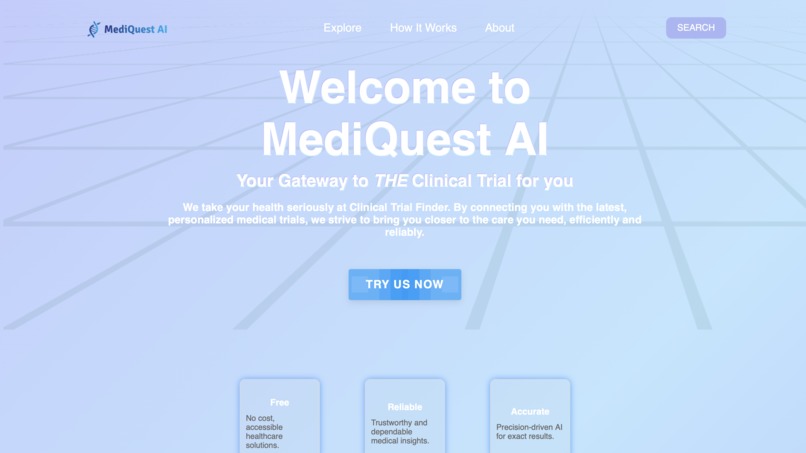
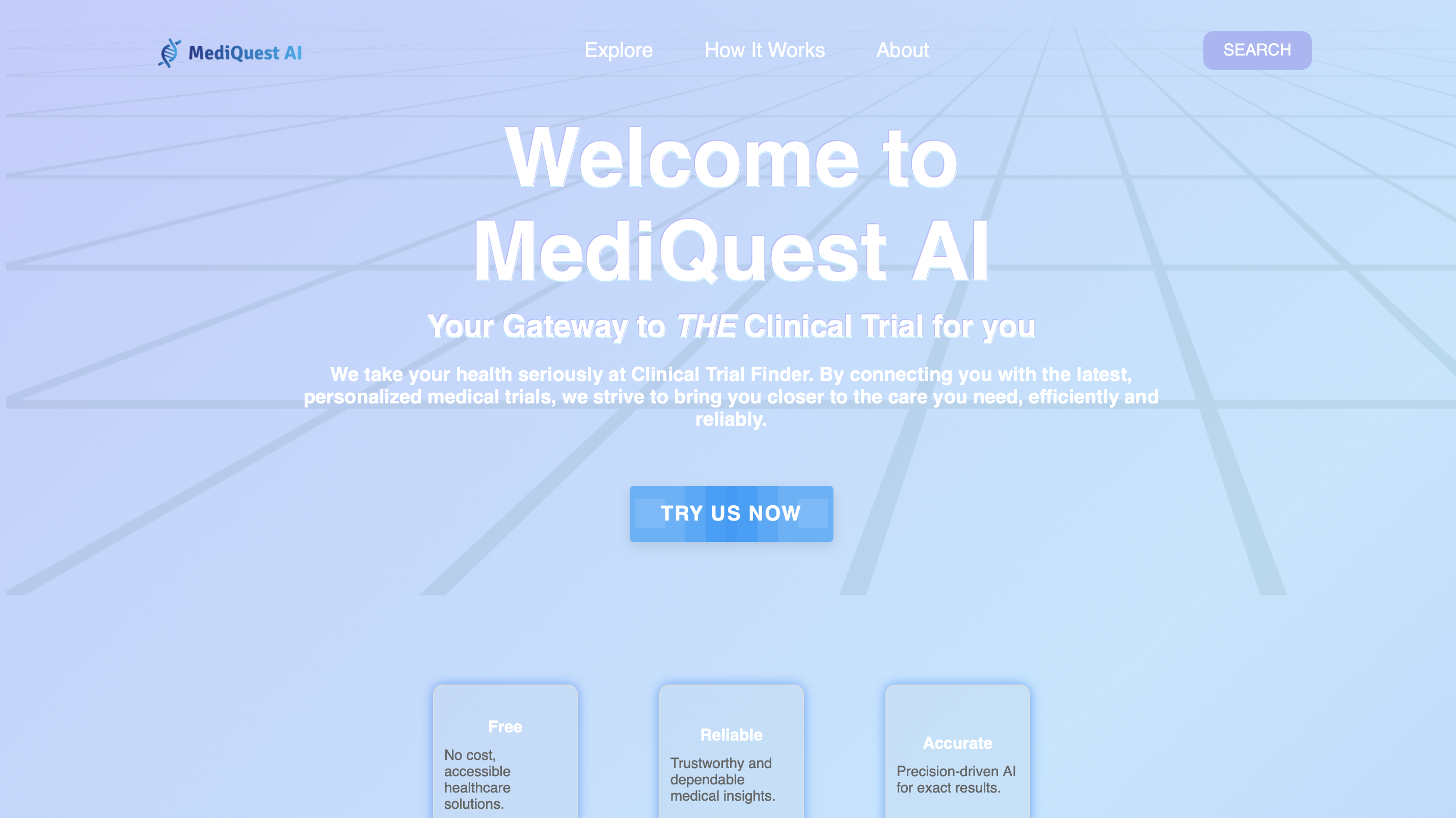
Home Page
-
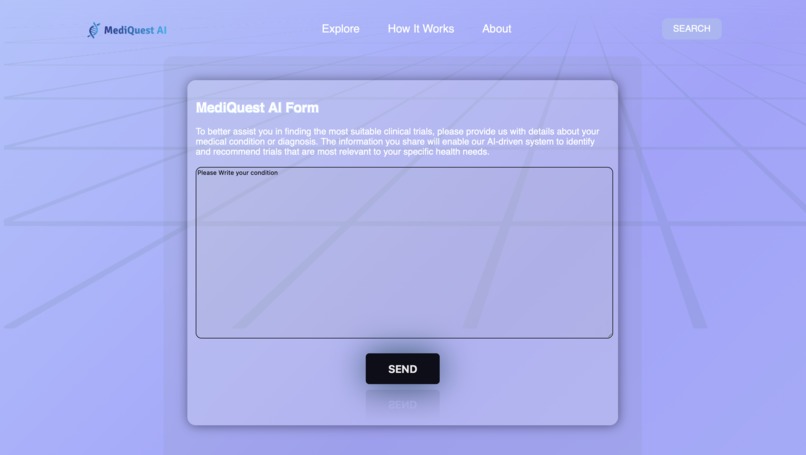
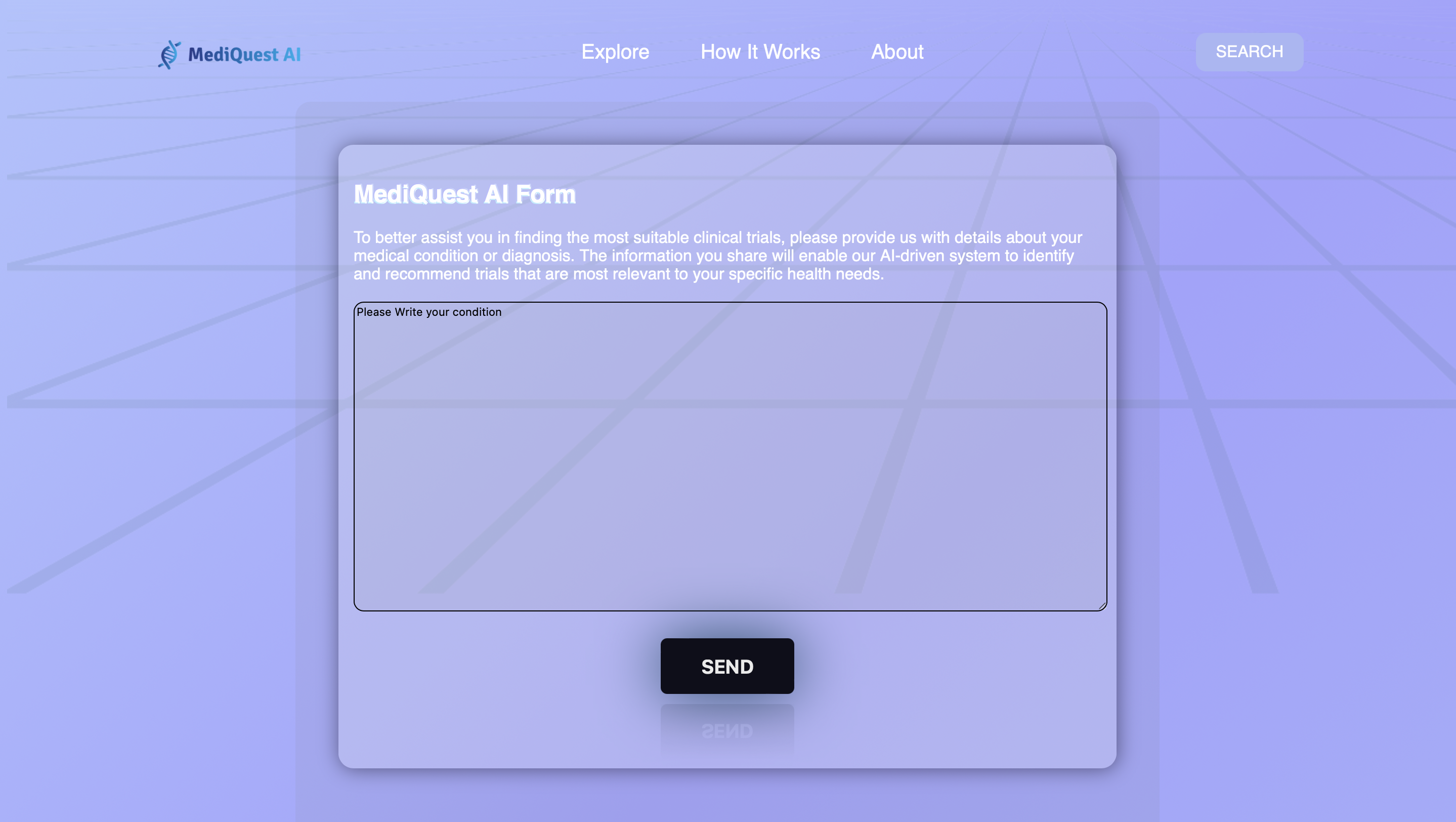
Search Page
-
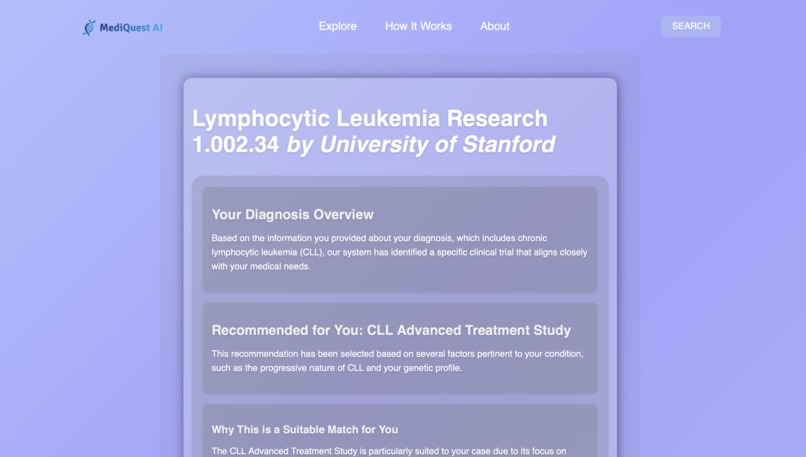
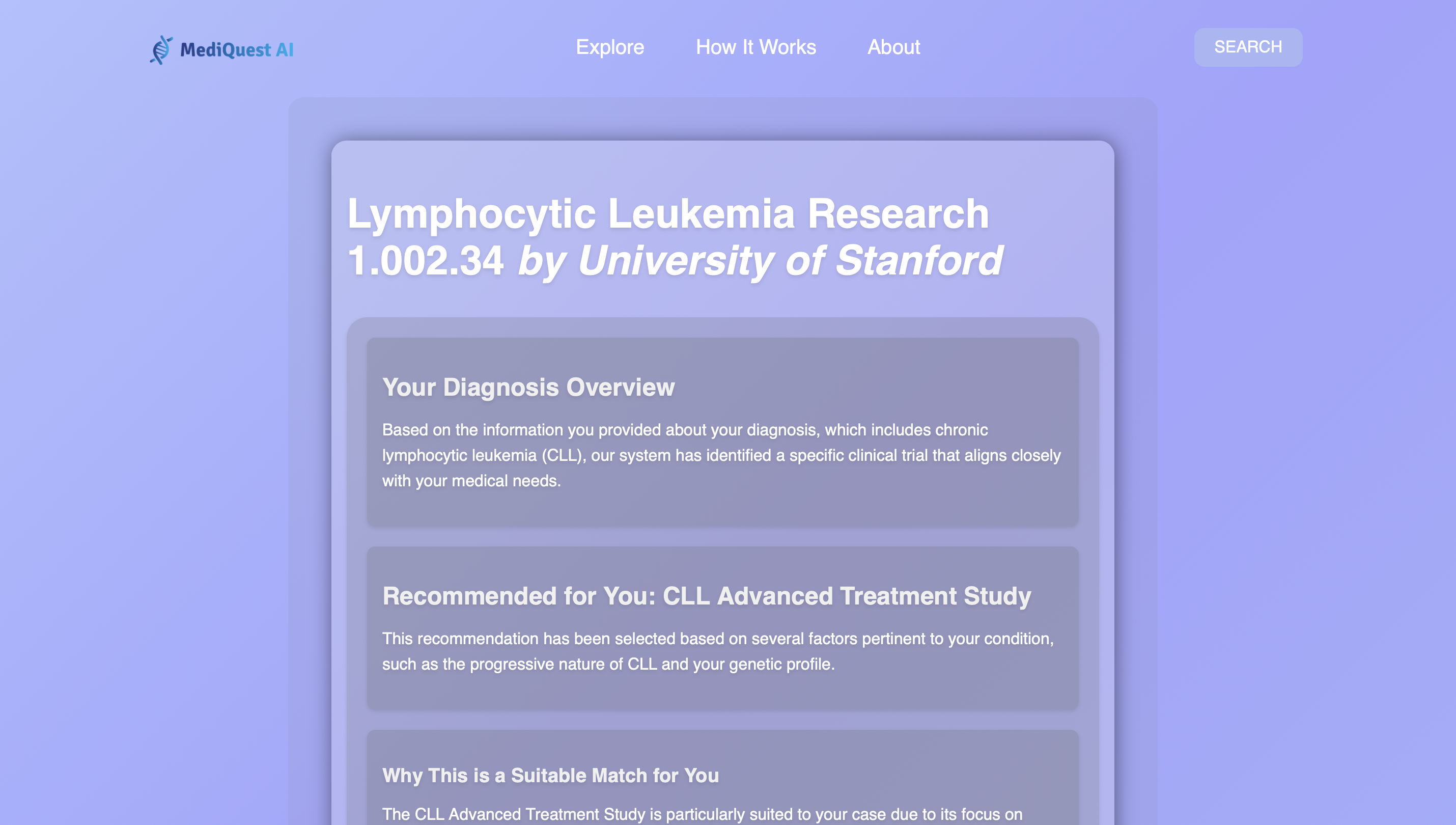
Search Result
-
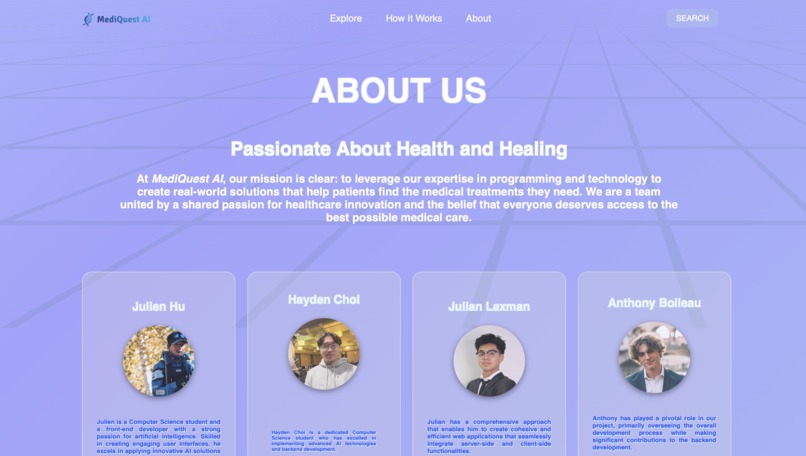
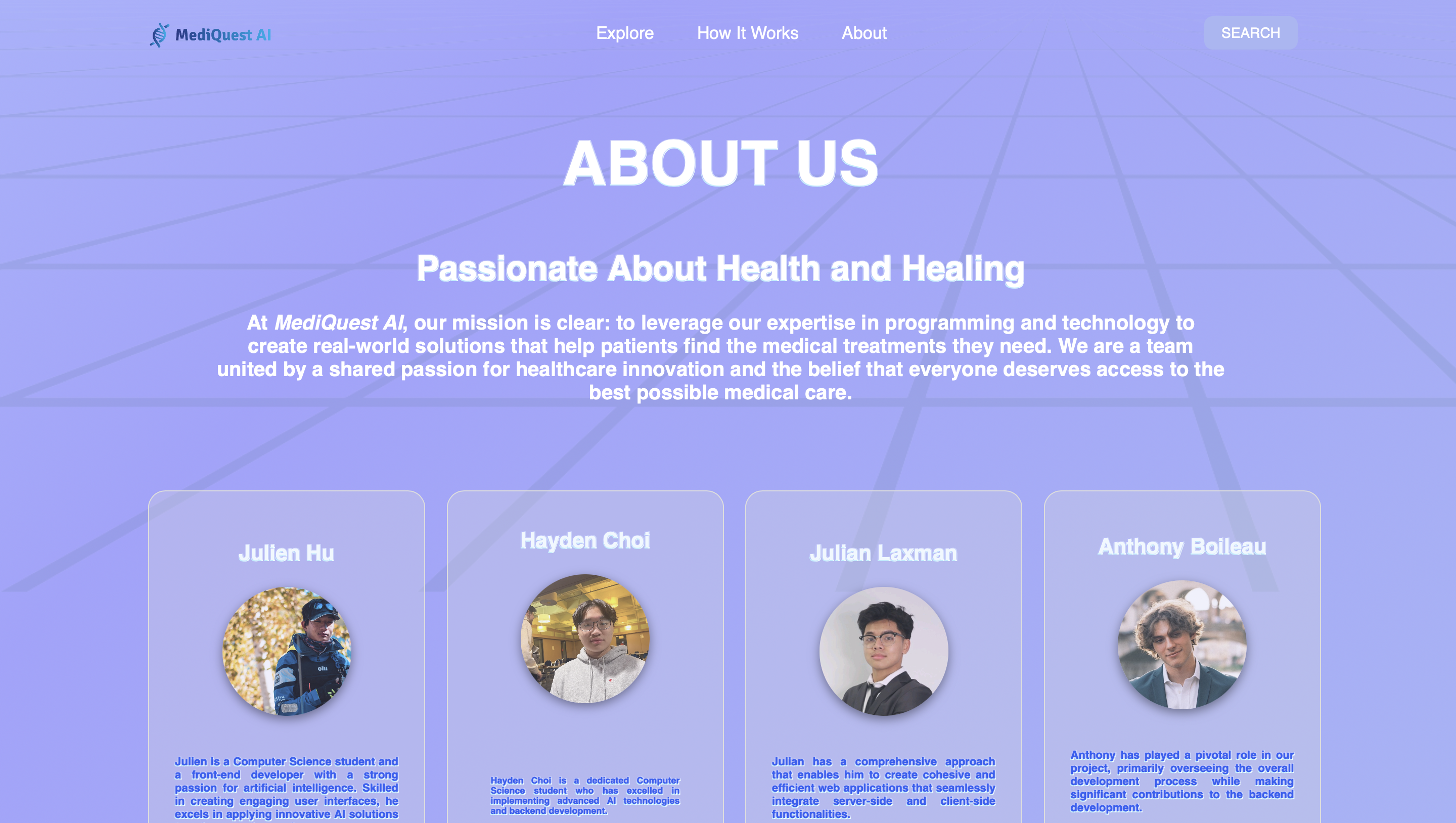
About Us Page
-
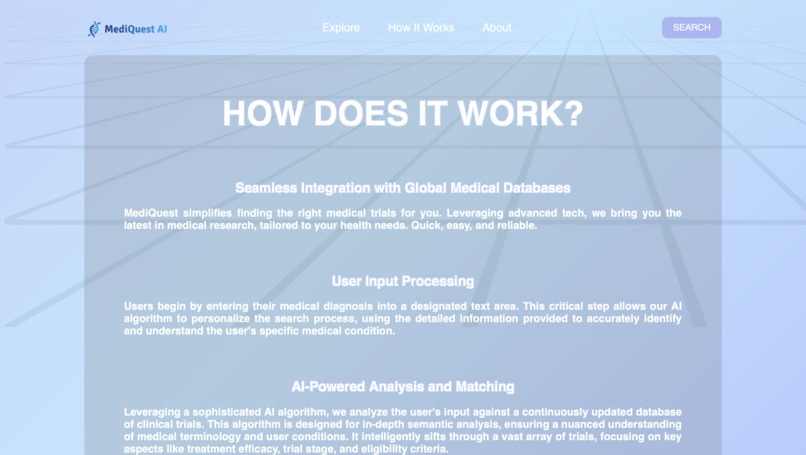
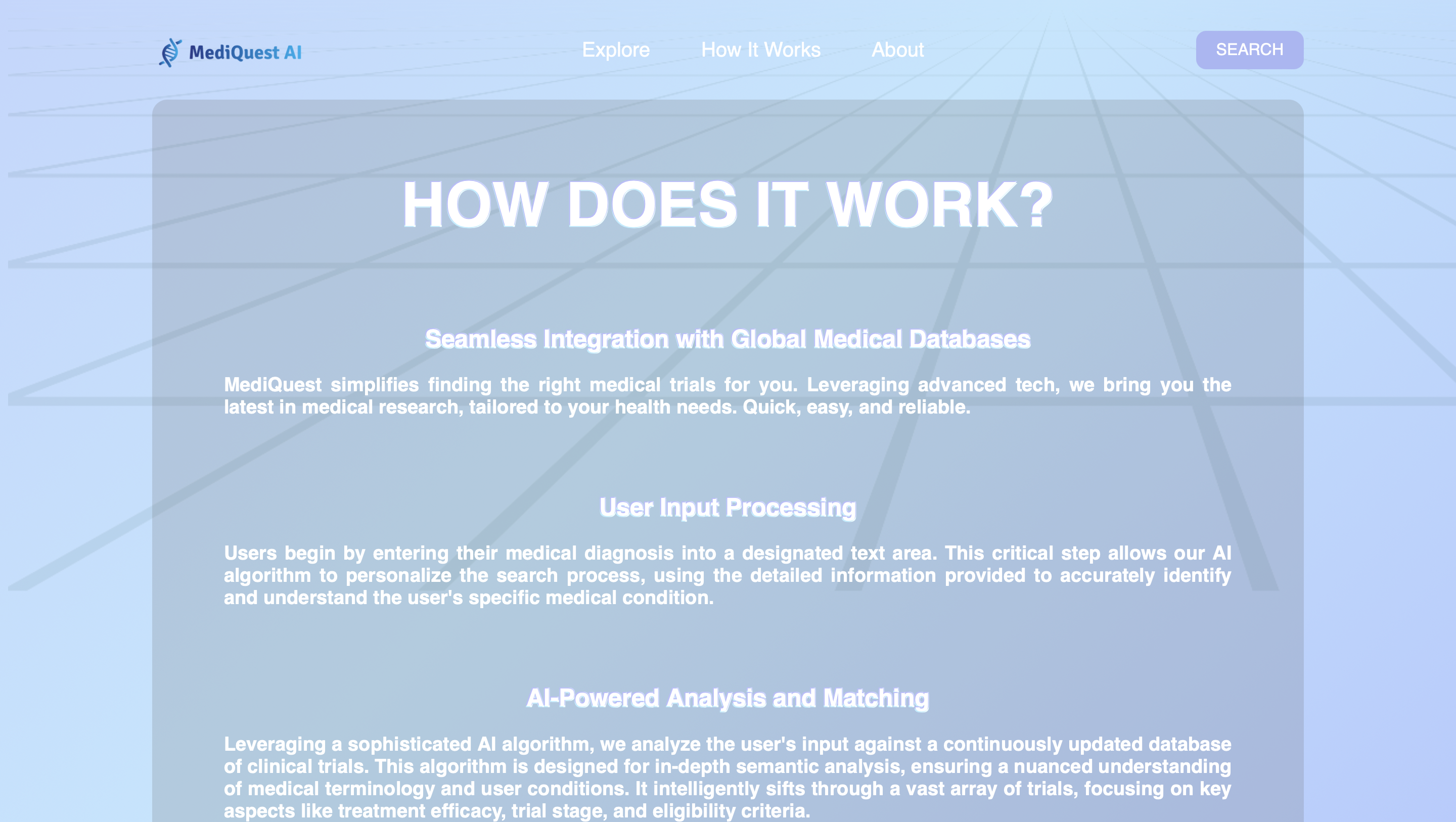
How it Works Page
Inspiration
Everywhere we hear, "(data) is the new currency." And yet our understanding of it is limited. As developers, we have decided to make it more accessible to the people we think need it most: people who have an illness. Often, medical information is not explicit to the general public, and we cannot grasp its simpler meaning. That's why we are on a mission to vulgarize it.
What it does
We take data from medical research websites and make it comprehensible to patients leveraging AI to parse through it, rendering the best fitting study depending on the patient's needs.
How we built it
Using HTML and CSS heavy code, we built the frontend mostly using Svelte, a powerful and easy alternative to React.js. For the backend, it is necessary to think of it as a pipeline. We first take the user input, format it through Python, send it to ChatGPT that has loaded the data-filled file, and it sends back the frontend at the client's disposal.
Challenges we ran into
The first challenge we ran into was the data access. The first API we used was unformatted data, due to poorly regulated data entry. If the data is unformatted, then it is difficult to standardize it, especially with how much time we had left. The second challenge was the choice of frameworks. The number of tools available to the devs is very large, and it is very easy to get lost in framework changes if you aren't completely sure of how your project is going to turn out. Since we had trouble with the first API, the second issue did not help.
Accomplishments that we're proud of
We found a way around both challenges. As a solution to the search, we decided to pivot towards multiple databases instead of the one we originally intended, to have a bit more latitude regarding data mining. This gave us a bit of hope, which in turn solved the second problem, and we had a better idea of how to tackle the project. We are proud of our resilience in the face of a failing idea, and going through with it no matter the obstacles.
What we learned
That HTML cannot be linked directly to Python using a framework. If it can be, why is it so difficult? We also learned that the medical field is a data rich field, but in order to make a very interesting and useful product, you need a doctor to vulgarize to you. Just "formatting data" is pretty much useless if you don't understand the data in the first place.
What's next for MediQuest AI
This project feels more like an open-source project, constantly improved with new implementations and completely different ways to think. This aligns well with our philosophy: accessible medical information to people with no medical background.
Built With
- ai
- css3
- html5
- javascript
- python
- svelte


Log in or sign up for Devpost to join the conversation.